0% • 9 min left

Who Was Napoleon Bonaparte: A Journey from Corsica to Immortal Legacy

January 19, 2026
Napoleon Bonaparte was a Corsican-born officer who rose through the French Revolution and crowned himself Emperor of the French in 1804. His wars reshaped Europe, and after defeat at Waterloo he died in exile on Saint Helena in 1821. His Civil Code still shapes civil law in many countries.

Part of: The Napoleonic Era (1799–1815): Empire, War and Peace

Who Was Napoleon Bonaparte: A Journey from Corsica to Immortal Legacy

Key facts

Born
15 August 1769, Ajaccio, Corsica
Died
5 May 1821, Saint Helena
Title
Emperor of the French (1804–1814 and 1815)
Major legacy
The Napoleonic Code (Civil Code of 1804)
Decisive defeat
Waterloo, 18 June 1815
Final exile
Saint Helena, 1815–1821

Timeline

Tap a step for details. Arrow keys move between steps.

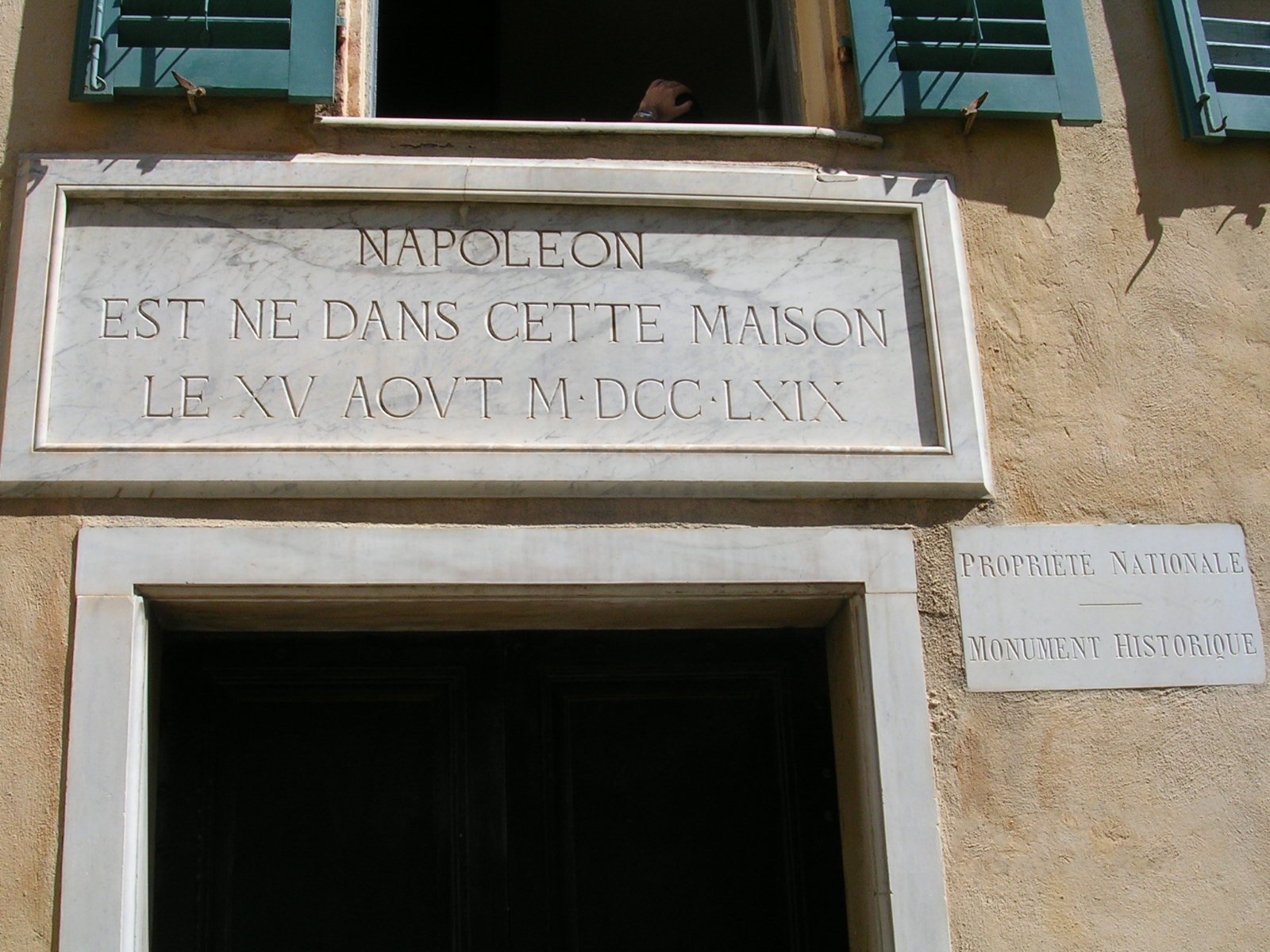
  1. 15 August 1769

    Born in Ajaccio, Corsica

    The house in Ajaccio, Corsica, where Napoleon was born
    febs, CC BY 2.0, via Wikimedia Commons

    Napoleon was born in Ajaccio, on Corsica’s west coast, in the year after the island passed from Genoa to France. His family spoke Italian and Corsican at home, and he learned French later, at school on the mainland.

  2. 1779

    Enters the military school at Brienne

    At about nine he is sent to the royal military school at Brienne, where his Corsican accent and modest background make him an outsider among noble classmates. He still shows real strength in mathematics and history.

  3. 1785

    Qualifies as an artillery officer

    After leaving Brienne in 1784 he studies at the École Militaire in Paris, and in 1785 he qualifies as an artillery officer. Artillery demanded precise calculation and practical skill, which suited his talents.

  4. 22 December 1793

    Promoted to brigadier general after Toulon

    Royalists had called British forces into Toulon, and the republican siege ended with the allies withdrawing by sea. Napoleon took charge of the artillery and planned the bombardment that helped drive them out. On 22 December he was promoted to brigadier general, aged 24.

    Also in 1793:More from 1793

  5. 5 October 1795

    Uses cannon against royalist insurgents in Paris

    Royalist insurgents rose against the government in Paris, and Napoleon was given the job of defending it. On 5 October, which the revolutionary calendar called 13 Vendémiaire, he used massed cannon fire to disperse the crowds. The episode earned him the nickname “General Vendémiaire”.

  6. March 1796

    Takes command of the French Army of Italy

    Aged 26, Napoleon takes command of the French Army of Italy. He moves fast and beats Austrian and Sardinian forces one after another. The Treaty of Campo Formio in October 1797 gives France large gains.

  7. 1 August 1798

    Nelson destroys the French fleet at the Battle of the Nile

    During the Egyptian expedition, Admiral Nelson destroys the French fleet at the Battle of the Nile, cutting the army off from France. Scholars with the army record Egypt’s monuments and natural world in detail. In July 1799 soldiers find the Rosetta Stone, which later helps scholars decipher hieroglyphs.

  8. 9 November 1799

    The coup of 18 Brumaire makes him First Consul

    Napoleon returned to France in October 1799 and joined the coup of 18 Brumaire, which overthrew the Directory. He became First Consul, and the republic survived on paper while power concentrated in his hands.

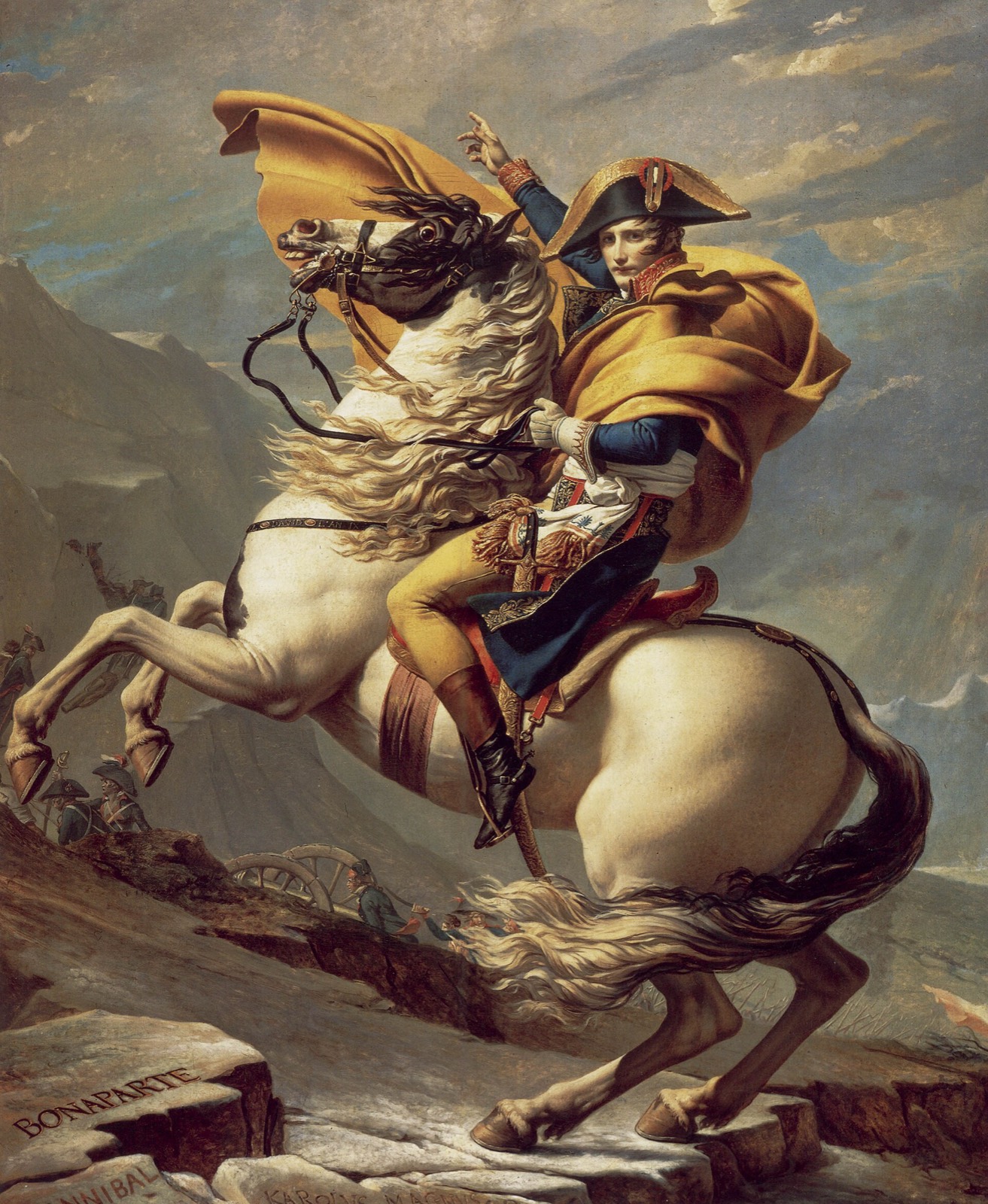
  9. May 1800

    Crosses the Alps into Italy

    Painting of Napoleon on a rearing horse crossing the Alps
    Jacques-Louis David, public domain, via Wikimedia Commons

    Napoleon leads an army over the Great St Bernard Pass in mid-May 1800, with the crossing taking place around 15 to 20 May. The unexpected route lets him strike Austrian forces in northern Italy by surprise. The scene later becomes one of the most famous images of his career, shown in David’s heroic painting.

  10. 2 December 1804

    Crowned Emperor of the French at Notre-Dame

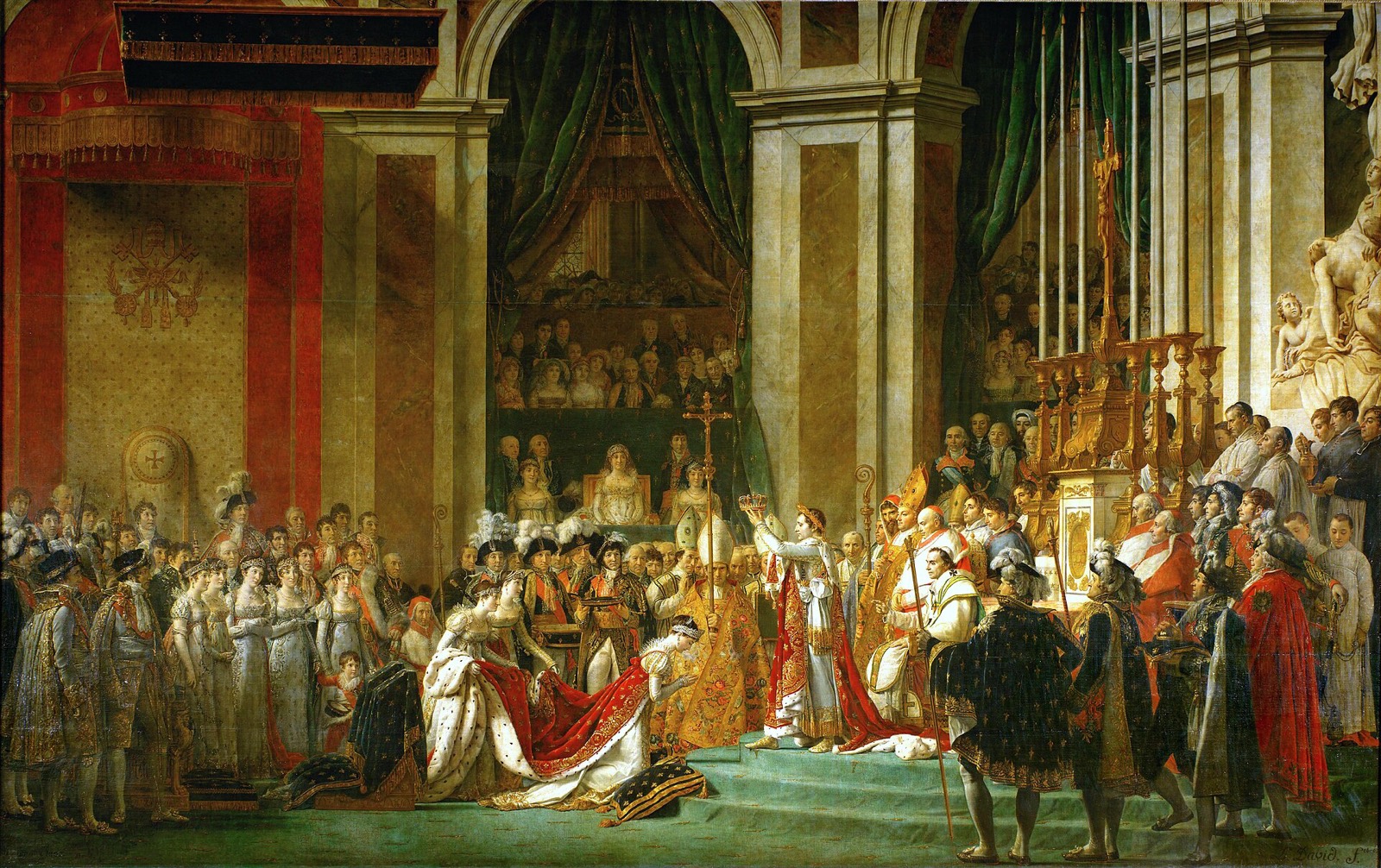
    The Senate had proclaimed him emperor in May 1804. At the coronation he placed the crown on his own head and then crowned Joséphine, with Pope Pius VII present. David’s huge painting of the scene was begun in 1805 and finished in 1807.

    Also in 1804:More from 1804

  11. June 1812

    Invades Russia with a vast army

    Napoleon crossed the Niemen in late June 1812 with an army usually put at around 600,000 men. He entered Moscow on 14 September to find much of the city abandoned and burning. He ordered the retreat on 19 October, and hunger, disease and cold destroyed much of the army.

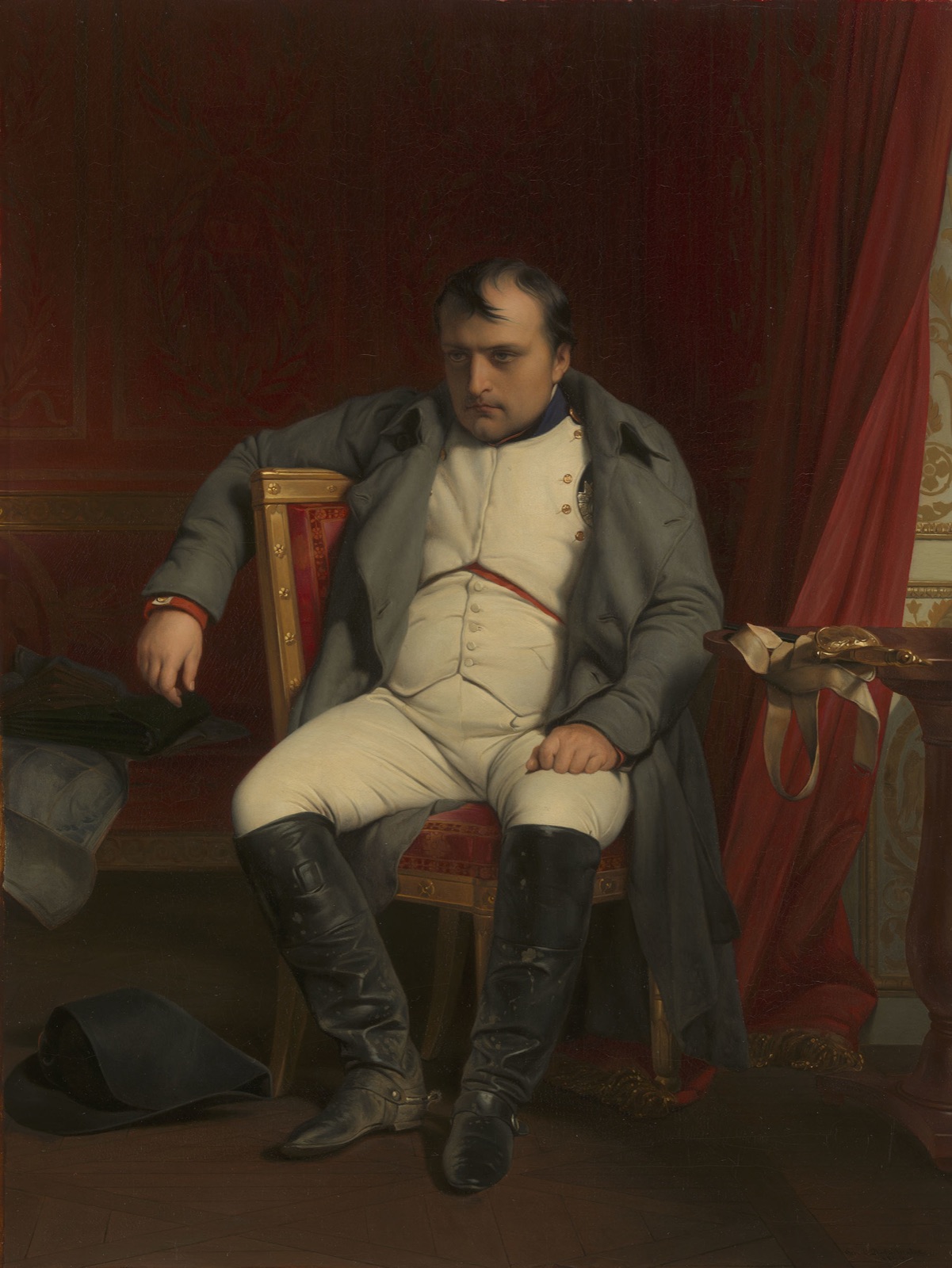
  12. April 1814

    Abdicates at Fontainebleau and is sent to Elba

    Painting of Napoleon seated and dejected at Fontainebleau
    Paul Delaroche, public domain, via Wikimedia Commons

    After Allied armies entered Paris in March 1814, Napoleon signed his abdication at Fontainebleau on 6 April. A treaty of 11 April let him keep the imperial title and gave him sovereignty over Elba. He was then sent to that small island off the Italian coast.

    Also in 1814:More from 1814

  13. March–June 1815

    Escapes Elba for the Hundred Days, then is defeated at Waterloo

    Napoleon landed in southern France on 1 March 1815 and reached Paris on 20 March, starting the Hundred Days. At Waterloo on 18 June, about 72,000 French troops faced about 68,000 men under Wellington. Prussian forces arriving later in the day joined the Allied side, and Napoleon was defeated.

    Also in 1815:More from 1815

  14. 5 May 1821

    Dies in exile on Saint Helena

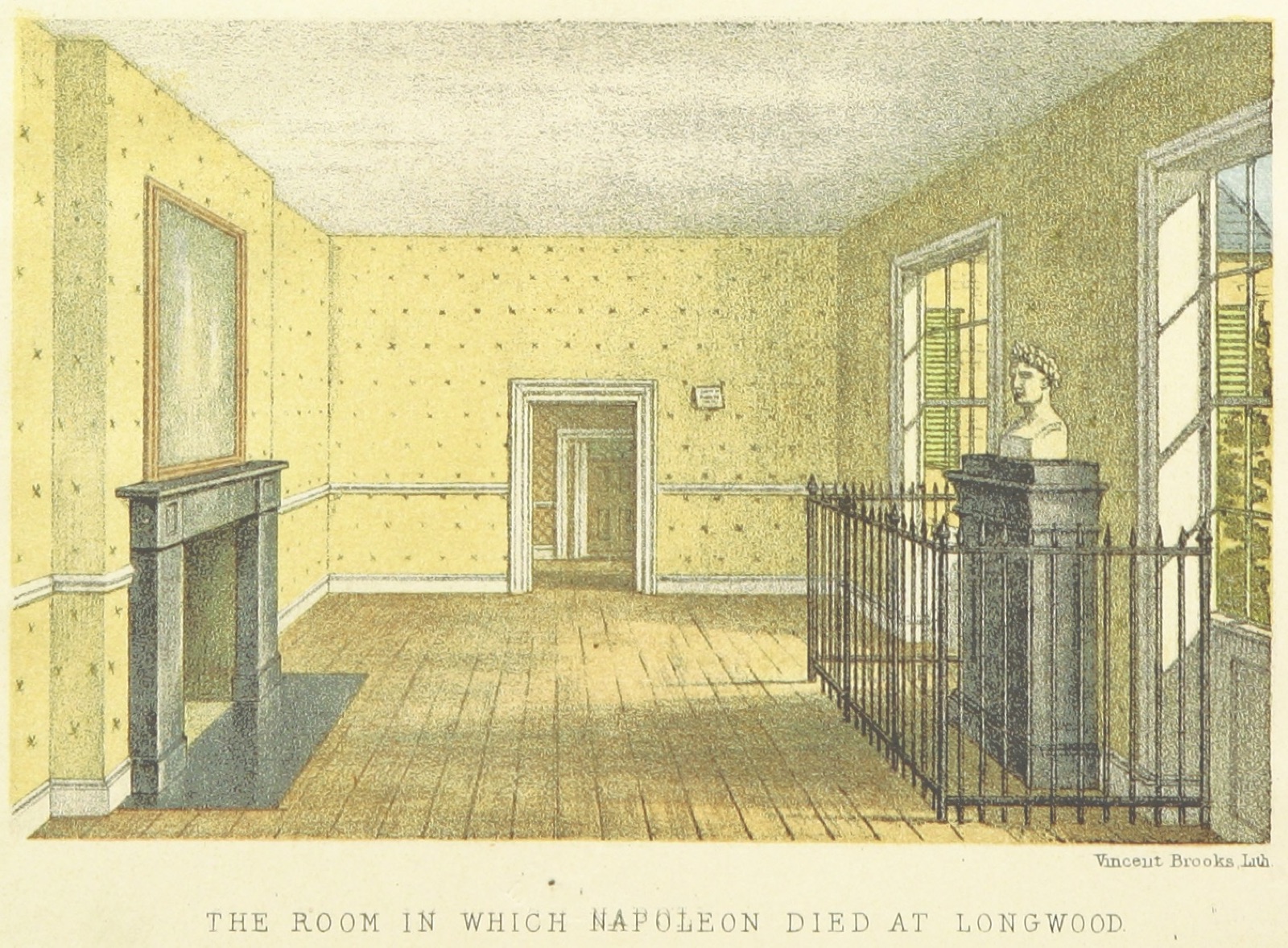
    Engraving of the room at Longwood House on Saint Helena where Napoleon died
    This file is from the Mechanical Curator collection , a set of over 1 million images scanned from out-of-copyright books and released to Flickr Commons by the B, public domain, via Wikimedia Commons

    He had reached Saint Helena in October 1815 and lived under close guard at Longwood House. A post-mortem on 6 May pointed to stomach cancer, but poisoning theories have never been fully settled.

Maps

Tap a map to zoom

  • Eighteenth-century engraved map of the island of Corsica with its coasts, towns and districts

    Corsica in an Italian map of 1764, five years before Napoleon was born at Ajaccio on the island's west coast.

    Unknown author, public domain, via Wikimedia Commons

  • Political map of Europe in 1812 showing the French Empire, its dependent states and its neighbours before the invasion of Russia

    Europe in 1812, at the height of the French Empire, just before Napoleon's invasion of Russia.

    William Robert Shepherd, public domain, via Wikimedia Commons

  • French map of the island of Elba from 1814 with the coast, roads and towns

    Elba in 1814, from a Paris booklet printed soon after Napoleon arrived there following his first abdication.

    J. B. Tardieu, 1814, public domain, via Wikimedia Commons

In five minutes

Who was Napoleon Bonaparte? He was a Corsican-born officer in the French army who rose to power during the Revolution, crowned himself Emperor of the French in 1804 and spent the next decade reshaping Europe through war.

He lost his throne in 1814, returned for the short Hundred Days in 1815, was defeated at Waterloo and died in exile on Saint Helena in 1821. He is remembered both as a brilliant commander and as the man behind a civil code that still shapes law in many countries.

For the wider period, read our guide to the Napoleonic Era (1799–1815).

Why he still matters

Napoleon is one of the most studied and argued-over figures in European history. Some historians see a reformer who gave France durable laws, a national bank and a school system that trained officials.

Others see a ruler whose wars cost millions of lives across Europe. Both views rest on evidence, and the most useful way to read him is to keep them side by side.

Origins: from Corsica to the military school
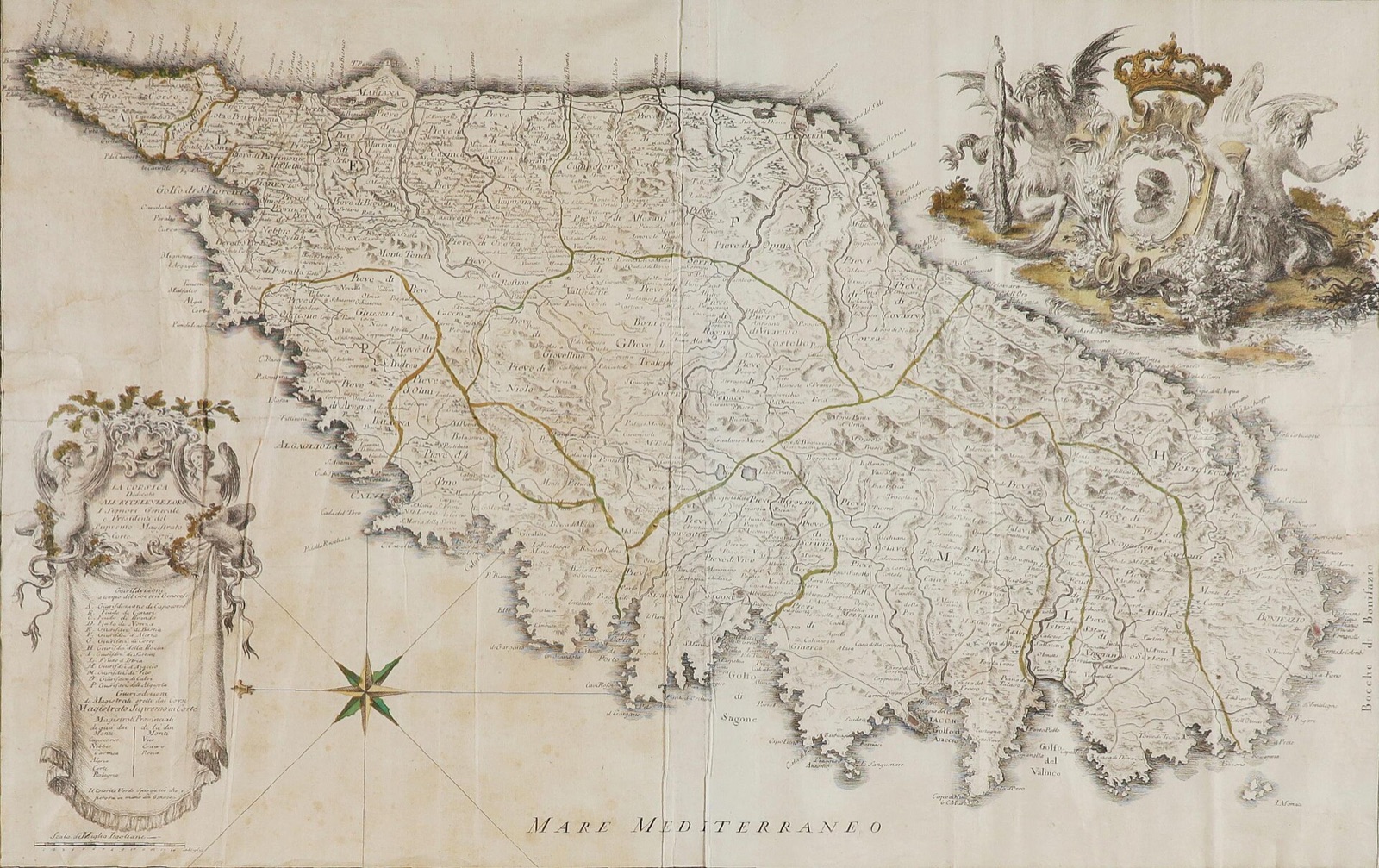
Eighteenth-century engraved map of the island of Corsica with its coasts, towns and districts
Corsica in an Italian map of 1764, five years before Napoleon was born at Ajaccio on the island's west coast. Unknown author, public domain, via Wikimedia Commons

Napoleon was born on 15 August 1769 in Ajaccio, a town on the west coast of Corsica. The island had passed from the Republic of Genoa to France only a year earlier, and his family spoke Italian and Corsican at home.

His father, Carlo Bonaparte, was a lawyer, and his mother, Letizia Ramolino, raised a large family. Napoleon was one of eight children who survived childhood.

At nine he was sent to a military school at Brienne, in north-eastern France. His Corsican accent and modest background set him apart from classmates from noble families, but he was strong in mathematics and history.

In 1784 he moved on to the École Militaire in Paris, and in 1785 he qualified as an artillery officer. Many biographers link that sense of being an outsider to the drive he showed in later years.

Rising through the Revolution

The Revolution opened doors for capable officers without famous names. In 1793 royalists holding the Mediterranean port of Toulon had called in British forces.

When the artillery commander was wounded during the siege, a young officer named Napoleon took charge of the guns and planned the bombardment that helped drive the British and their allies out by sea. The port returned to republican hands in December 1793.

On 22 December, aged 24, he was promoted to brigadier general.

In October 1795 royalists rose against the revolutionary government in Paris, and the government gave Napoleon the job of defending it. On 5 October 1795 (13 Vendémiaire in the revolutionary calendar) he used massed cannon fire against the insurgents, and the rising collapsed.

The episode earned him the nickname “General Vendémiaire” and brought him to the attention of Paul Barras, one of the five Directors who governed France from late 1795.

The campaigns that made his name

In March 1796, aged 26, Napoleon took command of the French Army of Italy. He moved fast, struck where his enemies were divided and beat Austrian and Sardinian forces one after another.

The Treaty of Campo Formio, signed in October 1797, gave France large territorial gains and made him a national hero.

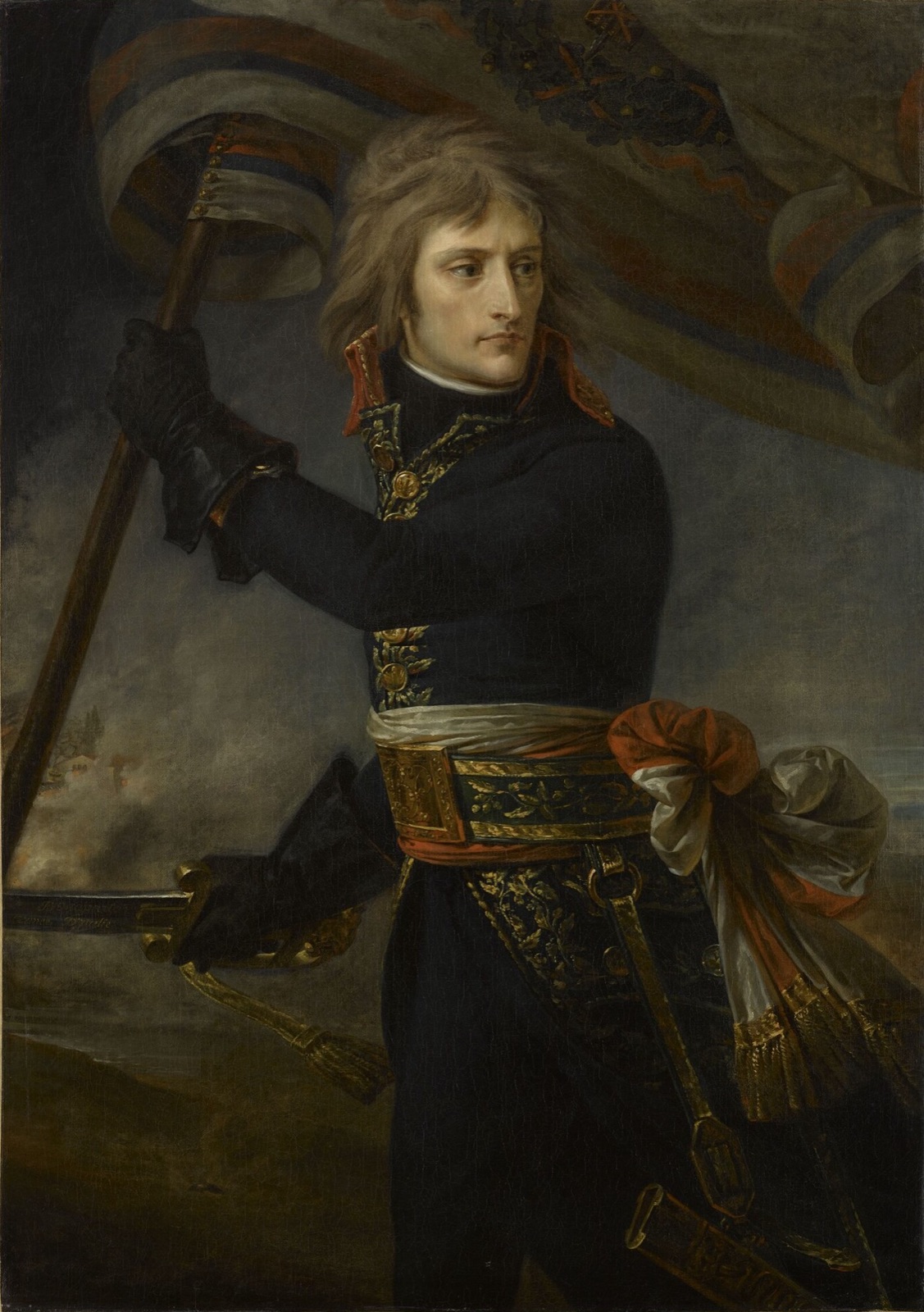
The fighting at Arcole in November 1796 became his most famous image. Antoine-Jean Gros later painted him on the bridge there with a flag in his hand.

The real battle lasted several days, so the picture idealises a fight that was far harder and more confused than it looks. Historians often treat the painting as an early example of how Napoleon shaped his own public image.

In 1798 he led an expedition to Egypt, partly to threaten British interests and the route to India. The expedition soon lost its fleet.

Admiral Nelson destroyed the French ships at the Battle of the Nile on 1 August 1798, cutting the army off from home. The expedition still left a lasting cultural legacy.

Scholars who travelled with the army recorded Egypt’s monuments and natural world in great detail, and in July 1799 soldiers found the Rosetta Stone. That stone later became the key to reading Egyptian hieroglyphs.

Napoleon himself left Egypt in August 1799, leaving his army behind.

From general to emperor

Napoleon returned to France in October 1799. On 9 November, in the coup known as 18 Brumaire, he helped overthrow the Directory.

He became First Consul, and in 1802 Consul for Life. The republic survived on paper, but power ran through his hands.

The coronation

On 18 May 1804 the Senate proclaimed him Emperor of the French. On 2 December 1804 he was crowned at Notre-Dame Cathedral in Paris, with Pope Pius VII in attendance.

The pope had travelled to Paris to take part, but Napoleon took the crown and placed it on his own head before crowning Joséphine, his wife. Historians often read this gesture as a claim that his power came from himself rather than from the Church.

Jacques-Louis David’s enormous painting of the scene, begun in 1805 and finished in 1807, presents the moment in grand, official style.

What he built: law and the state

The most durable part of Napoleon’s work was legal. The Civil Code, promulgated on 21 March 1804 and later known as the Napoleonic Code, guaranteed equality before the law, protected property and set clear rules for contracts, family life and inheritance.

Its ideas spread to territories under French control and influenced civil codes in many other countries.

The Code also has a darker side. It placed married women under their husbands’ legal authority: a wife generally needed her husband’s permission to sign a contract, and the family was organised around the husband’s protection and the wife’s obedience.

Historians point out that these family provisions were not substantially reformed until the twentieth century.

Napoleon also rebuilt the state. The Bank of France was founded in 1800, the Legion of Honour was created in 1802 to reward civil and military service, and a network of state secondary schools called lycées trained the officials and officers the state needed.

The high point of his empire
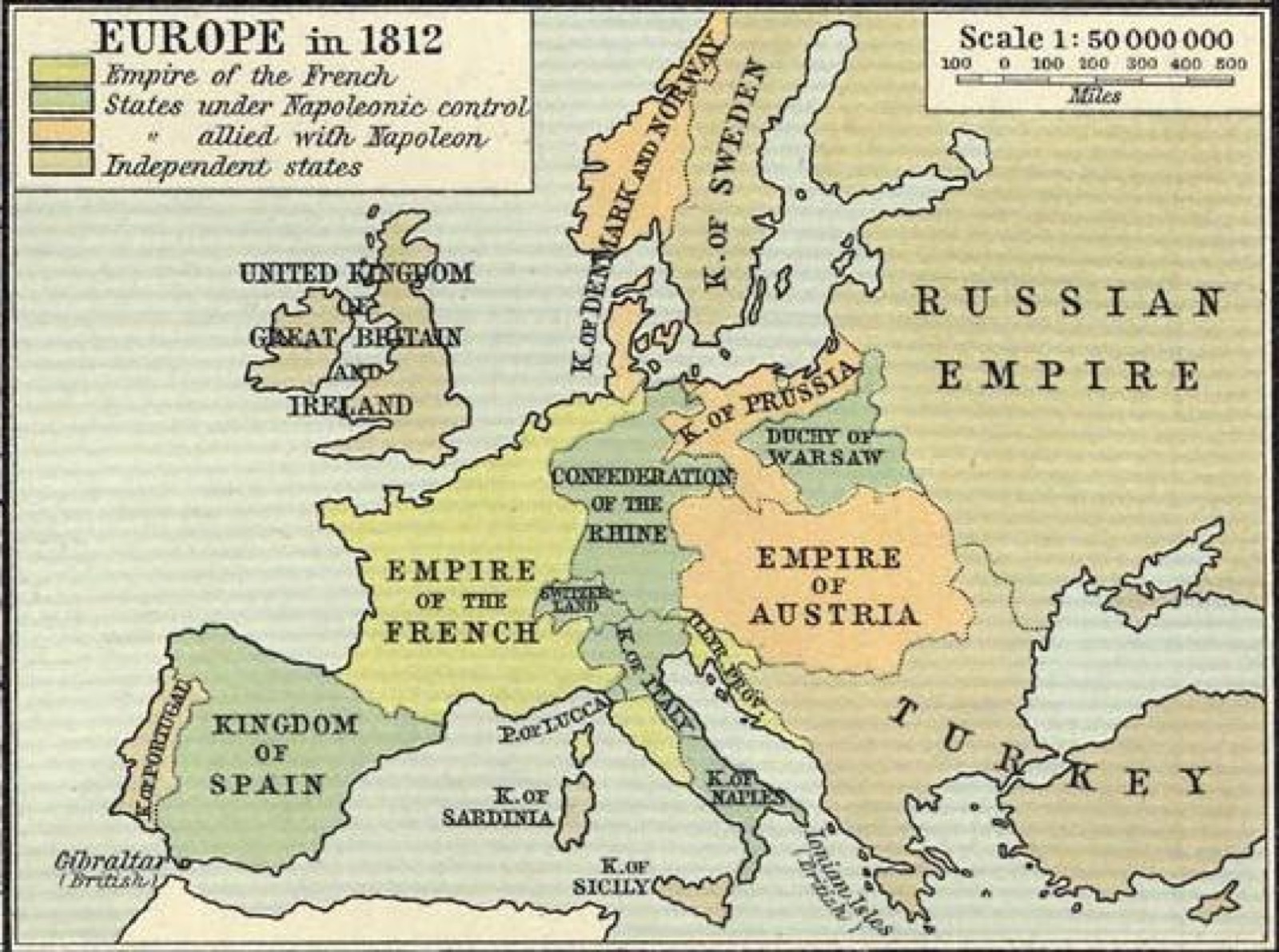
Political map of Europe in 1812 showing the French Empire, its dependent states and its neighbours before the invasion of Russia
Europe in 1812, at the height of the French Empire, just before Napoleon's invasion of Russia. William Robert Shepherd, public domain, via Wikimedia Commons

By 1812 French power covered most of continental Europe. Napoleon placed members of his family on several thrones and redrew borders to suit French interests.

In 1810 he married Marie-Louise of Austria, and in March 1811 she gave birth to a son, who was given the title King of Rome.

Yet the empire rested on constant war. His Continental System, decreed in 1806, tried to shut Britain out of European trade.

It damaged economies, encouraged smuggling and bred resentment, and many governments came to see him as the source of their troubles.

Russia, abdication and Elba

In June 1812 Napoleon invaded Russia at the head of a vast army. Its size is usually given as around 600,000 men, although some estimates of the starting force are lower, and it drew soldiers from many of the lands under French control.

The Russian army avoided a decisive battle and fell back. Napoleon entered Moscow on 14 September, but he found the city largely abandoned and much of it burning.

On 19 October he ordered the retreat. Hunger, disease and bitter cold destroyed much of the army on the road home.

Estimates of how many men returned range from about 40,000 to 100,000.

Allied armies entered Paris in March 1814. Napoleon signed his abdication at Fontainebleau on 6 April.

A treaty of 11 April let him keep the imperial title but gave him sovereignty over the small island of Elba, off the Italian coast.
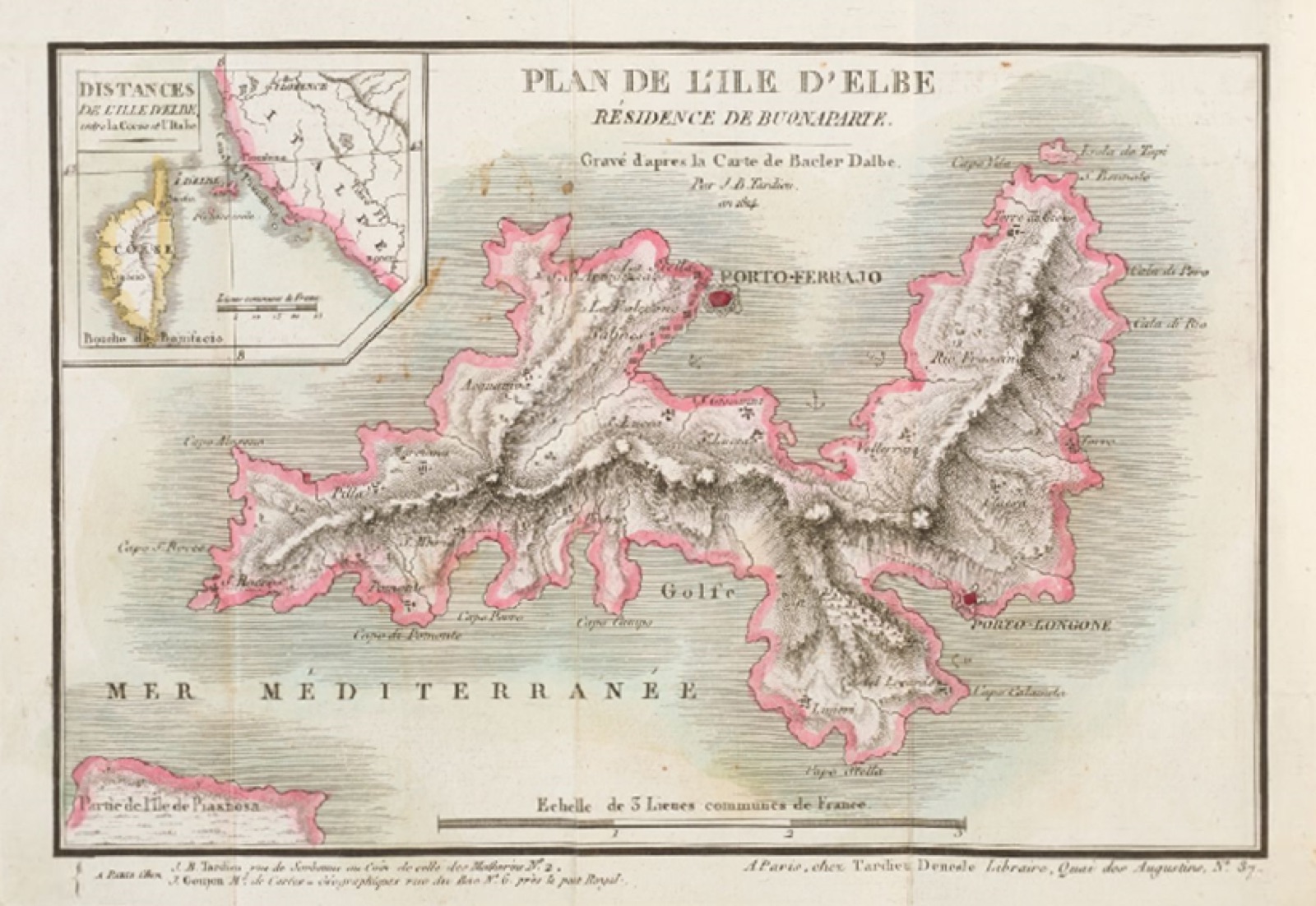
French map of the island of Elba from 1814 with the coast, roads and towns
Elba in 1814, from a Paris booklet printed soon after Napoleon arrived there following his first abdication. J. B. Tardieu, 1814, public domain, via Wikimedia Commons

The Hundred Days and Waterloo

On 26 February 1815 Napoleon left Elba. He landed in southern France on 1 March and reached Paris on 20 March.

The short period of his return to power is called the Hundred Days. The Allied powers, Britain and Prussia among them, regrouped against him.

The decisive battle came on 18 June 1815 at Waterloo, south of Brussels. Britannica gives the French about 72,000 men and Wellington’s Anglo-allied army about 68,000.

Prussian troops, estimated at between 45,000 and 60,000 depending on the source, arrived later in the day and joined Wellington’s side. Napoleon was defeated, and the Hundred Days ended.

Exile on Saint Helena

After Waterloo Napoleon surrendered to the British. He was sent to Saint Helena, a remote island in the South Atlantic, and arrived there in October 1815.

He lived under close guard at Longwood House and died there on 5 May 1821.

A post-mortem examination the next day, on 6 May, concluded that stomach cancer, with bleeding ulcers, had caused his death. Doubts persisted.

Later tests of hair samples found raised levels of arsenic, but such a reading does not show who gave it or whether the exposure was deliberate. The poisoning theory has never been fully settled, so the medical explanation is the best-supported answer rather than the only one debated.

Why his empire fell

His fall had several causes that reinforced each other. The Russian campaign destroyed the army that had held his empire together.

Years of war had left many people in France and across Europe exhausted, and his rivals learned to act together. The settlement agreed at the Congress of Vienna after his defeat aimed for a balance of power, and it restored many of the dynasties he had displaced.

Historians rate the laws and institutions he left very highly, and many of them outlasted his empire. They also count the cost.

His wars caused heavy losses among soldiers and civilians, and estimates of total deaths, military and civilian, run from about three million to more than six million. Historians say precise figures cannot be fixed.

Seeing both the reformer and the warlord is the most useful way to understand what he did.

What exams ask

In AP-style essays and history exams, examiners care more about cause and consequence than about names. Be ready to explain how the Revolution opened a path for a talented general, why his campaigns drew in the rest of Europe, and how the Napoleonic Code spread beyond France.

A strong answer links one reform or campaign to a wider result, such as the Continental System against Britain or the settlement at the Congress of Vienna after his defeat. Good answers also weigh the Code’s achievements against its limits, including its treatment of married women.

Read next

If you want to go further, these related pages are a good next step.

Armies and units

  • Painting of the young General Bonaparte holding a flag and sword on the bridge at Arcole Work

    France

    Bonaparte at the Bridge of Arcole (Gros)

    Antoine-Jean Gros's painting shows the young general leading his men at Arcole during the Italian campaign of 1796. It helped to create the heroic image of Bonaparte.

    Antoine-Jean Gros, public domain, via Wikimedia Commons

  • Painting of Napoleon crowning the kneeling Joséphine in Notre-Dame, with the pope seated behind Work

    France

    The Coronation of Napoleon (David)

    Jacques-Louis David's huge painting of the coronation at Notre-Dame in December 1804. Napoleon is shown crowning Joséphine, with Pope Pius VII in the background.

    Jacques-Louis David / Georges Rouget, public domain, via Wikimedia Commons

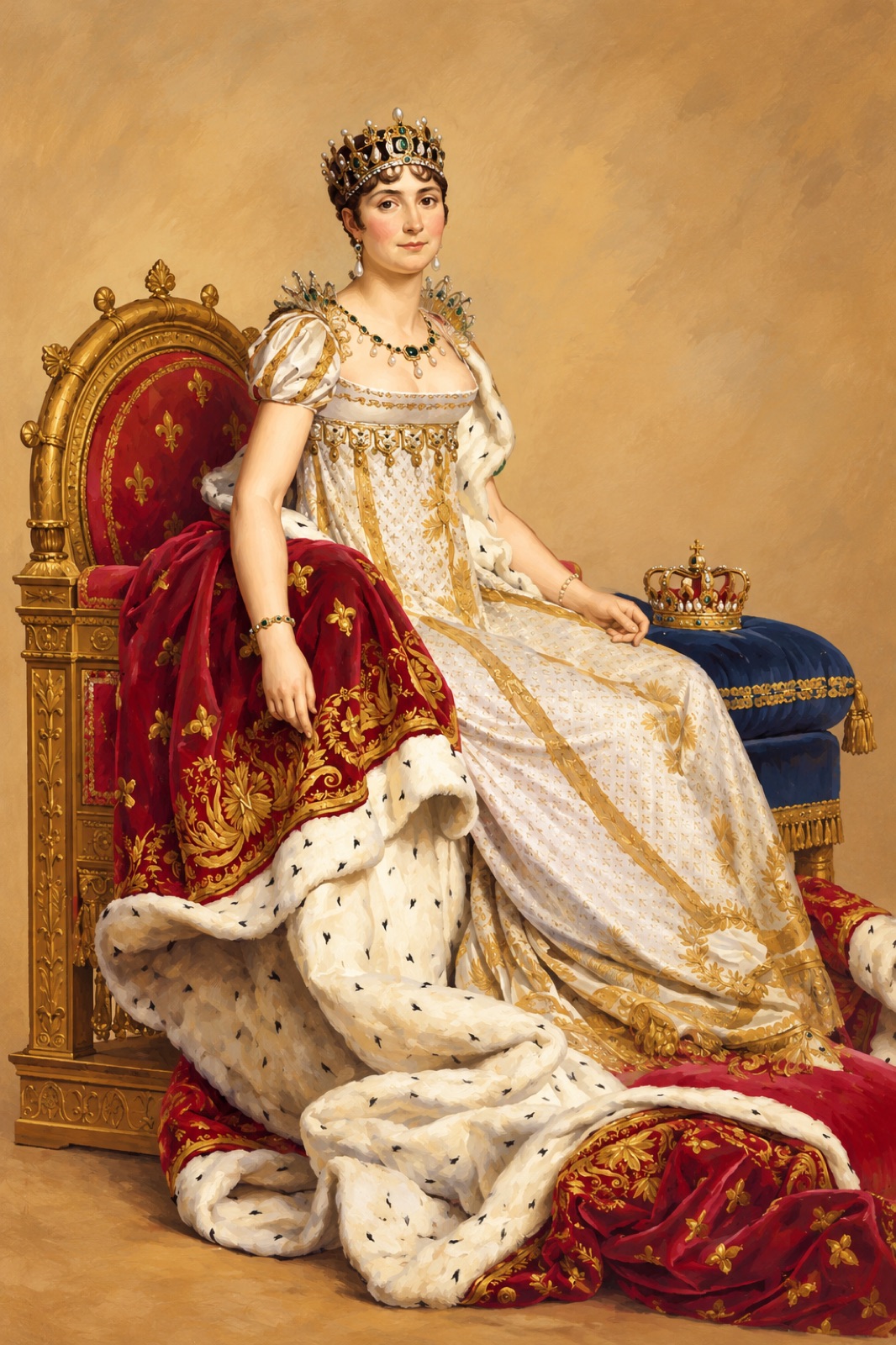
  • Portrait of Empress Joséphine in her coronation costume (illustration) Person Illustration

    France

    Joséphine in coronation costume (Gérard)

    François Gérard's portrait of Empress Joséphine in her coronation robes. She was Napoleon's first wife and was crowned empress in 1804.

    Illustration after Baron François Gérard (1770 - 1837) – Painter (French) Born in Rome. Died in Paris. Details on Google Art Project, public domain · Original

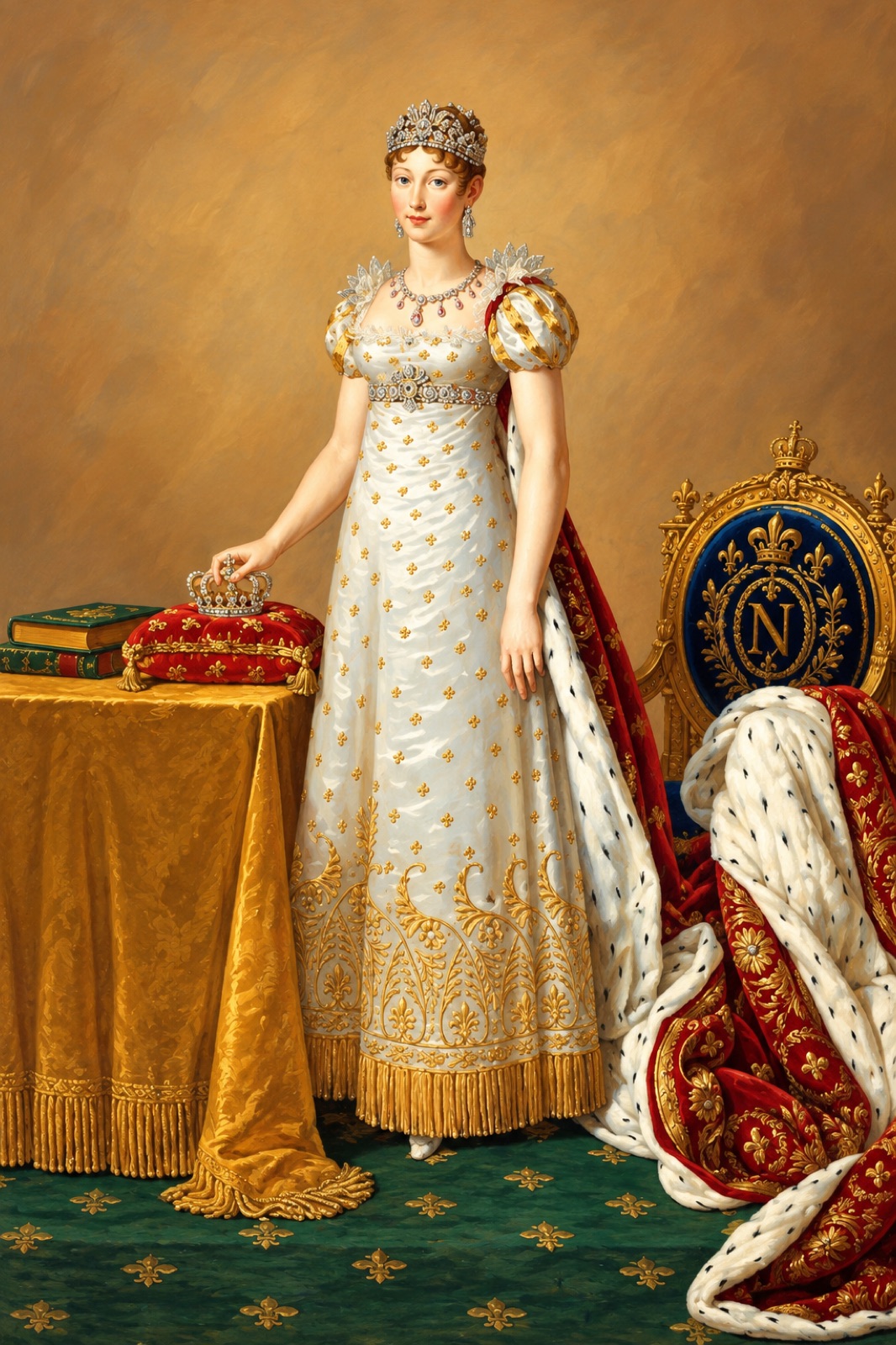
  • Portrait of Empress Marie-Louise in early nineteenth-century dress (illustration) Person Illustration

    France / Austria

    Marie-Louise of Austria

    Portrait of Marie-Louise of Austria, Napoleon's second wife from 1810 and the mother of his son, the King of Rome.

    Illustration after Robert Lefèvre, public domain · Original

  • Title page of the 1804 first edition of the Code civil des Français (illustration) Object Illustration

    France

    The Napoleonic Code (Code civil des Français, 1804)

    The title page of the first edition of the Civil Code, issued in 1804. It set out uniform civil law for France and later influenced legal systems in many countries.

    Illustration after De l'Imprimiere de la République, CC BY 2.0 · Original

  • Drawing of the first-type silver knight's cross of the Legion of Honour (illustration) Object Illustration

    France

    The Legion of Honour (first-type knight's cross)

    The first type of the knight's cross of the Legion of Honour, an order founded in 1802. Its five-armed star carries Napoleon's head.

    Illustration after 6PO 22:13, 24 March 2013 (UTC), CC BY-SA 3.0; this illustration CC BY-SA 3.0 · Original

  • Painting of Napoleon in uniform standing beside his desk in the Tuileries study Work

    France

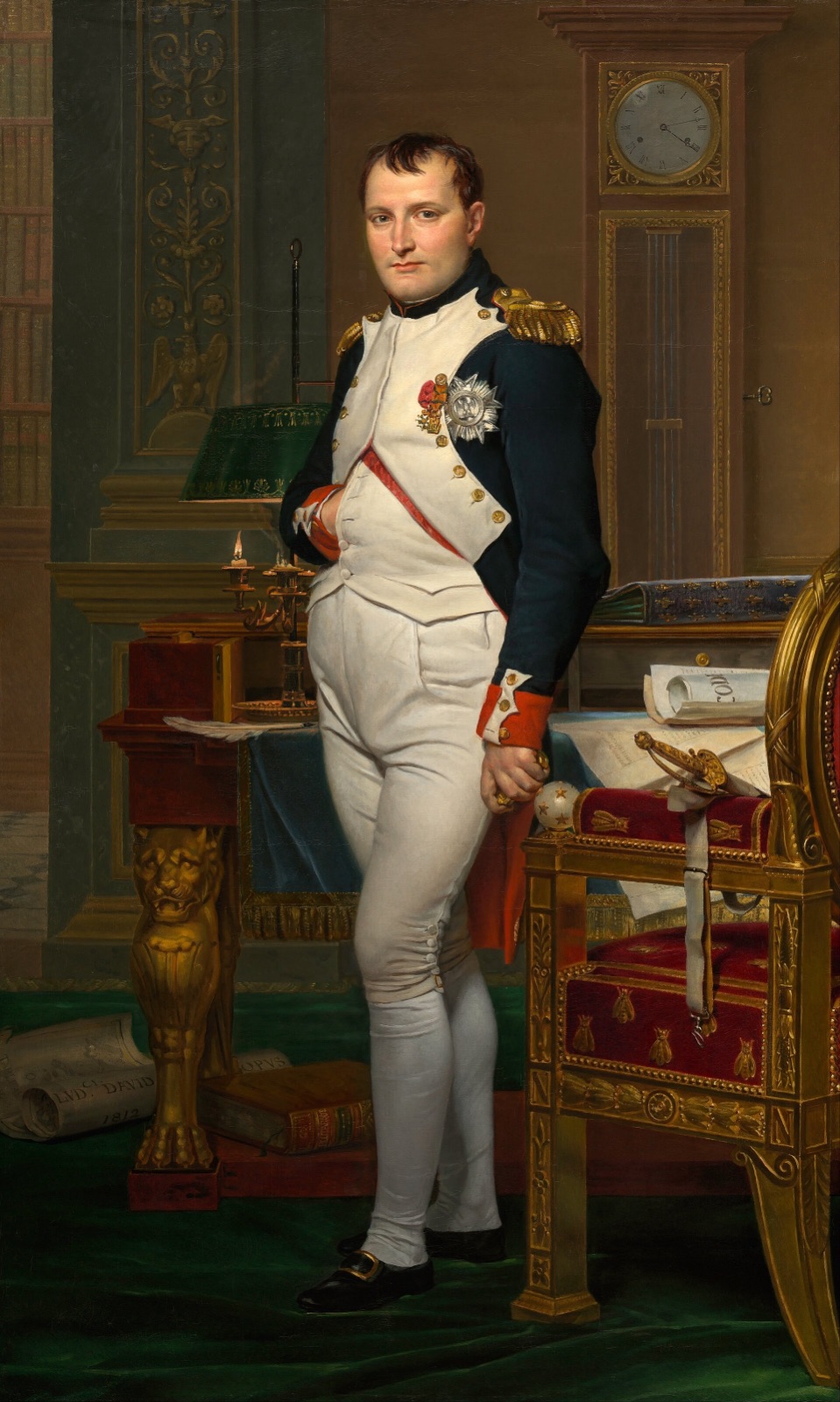
    The Emperor Napoleon in His Study at the Tuileries (David, 1812)

    David's 1812 portrait shows Napoleon in uniform at his desk, with the Civil Code beside him. It presents him as a working ruler.

    Jacques-Louis David, public domain, via Wikimedia Commons

Frequently Asked Questions

Who was Napoleon Bonaparte?

Napoleon Bonaparte was a French army officer born in Ajaccio, Corsica, in 1769. He rose during the French Revolution, became First Consul in 1799 and was crowned Emperor of the French in 1804. He is remembered for his military campaigns and for the Civil Code that bears his name.

When did Napoleon become emperor?

The Senate proclaimed him Emperor of the French on 18 May 1804. He was crowned at Notre-Dame Cathedral in Paris on 2 December 1804, placing the crown on his own head before crowning Joséphine. Before that he had already gathered great power as First Consul and then as Consul for Life from 1802.

Why did Napoleon lose power?

The 1812 invasion of Russia destroyed much of his army, and Allied armies entered Paris in 1814, forcing him to abdicate. He returned during the Hundred Days in 1815, but was defeated at Waterloo on 18 June. Years of war had also turned many governments against him.

What was the Napoleonic Code?

The Napoleonic Code is the Civil Code of 1804, promulgated on 21 March 1804. It guaranteed equality before the law, protected property and set rules for contracts, family life and inheritance. It also placed married women under their husbands’ legal authority, a limit that modern critics stress.

What did Napoleon do in Egypt?

In 1798 Napoleon led an expedition to Egypt, partly to threaten British interests on the route to India. Nelson destroyed the French fleet at the Battle of the Nile on 1 August 1798, which cut the army off. Scholars with the army recorded Egypt in great detail, and the Rosetta Stone, found in July 1799, later helped decipher hieroglyphs.

Check Your Understanding

Pick an answer for each question to see if you were right.

  1. Where was Napoleon Bonaparte born?

  2. Which coup in November 1799 overthrew the Directory?

  3. Where did Napoleon crown himself Emperor of the French?

  4. Which battle ended Napoleon’s rule during the Hundred Days?

  5. Where did Napoleon spend the last years of his life?

More in Napoleon & the Napoleonic Era

See the full topic guide →
Tags: History Napoleon Bonaparte Biography French History Military History
Share:

About the Writer

Alex Ng
Alex Ng

Software Engineer & Writer

Software engineer with a passion for distilling complex ideas into actionable insights. Writes about finance, investment, entrepreneurship, and technology.

Read more →

Keep reading

Explore the topic: Napoleon & the Napoleonic Era

Articles

Summaries