Part of: The American Revolution: Causes, War and Independence.
The XYZ Affair in five minutes
The XYZ Affair was a diplomatic scandal of 1797 and 1798. President John Adams sent three envoys to Paris to calm a quarrel with France over attacks on American ships. Instead of talks, they met secret agents of the French foreign minister, Charles-Maurice de Talleyrand, who asked for a large payment, a loan and an apology before any negotiation could begin.
When Adams made the papers public in April 1798, Americans were furious. The country built a navy and an army and began an undeclared sea conflict called the Quasi-War. At the same time, the Federalist Party, which controlled Congress, passed the Alien and Sedition Acts, laws that made it harder for immigrants to become citizens and punished criticism of the government. The backlash against those laws helped Thomas Jefferson win the election of 1800.
Why France and the United States fell out
The trouble began with the wars that followed the French Revolution. In 1778, during the American Revolutionary War, the United States and France had signed an alliance. When France and Britain went to war in 1793, many French leaders expected American support. President George Washington declared neutrality instead, because the young republic could not afford a European war.
The breaking point was the Jay Treaty with Britain, signed in 1794. It settled disputes over British forts in the west and over trade, and for Americans it was a way to avoid war. France read it as a betrayal. French warships and privateers, which were privately owned armed ships licensed by the state, began seizing American merchant vessels that traded with Britain. In December 1796 the French government, called the Directory, even refused to receive the new American minister, Charles Cotesworth Pinckney.
Politics at home made things worse. The Federalists, who favoured close ties with Britain, and the Democratic-Republicans, who admired the French Revolution, saw foreign policy as a weapon against each other. Adams, a Federalist, took office in March 1797. In May he told Congress that France's treatment of American ministers was an insult, yet he chose to try diplomacy first and announced a new mission.
The mission to Paris and the XYZ demands
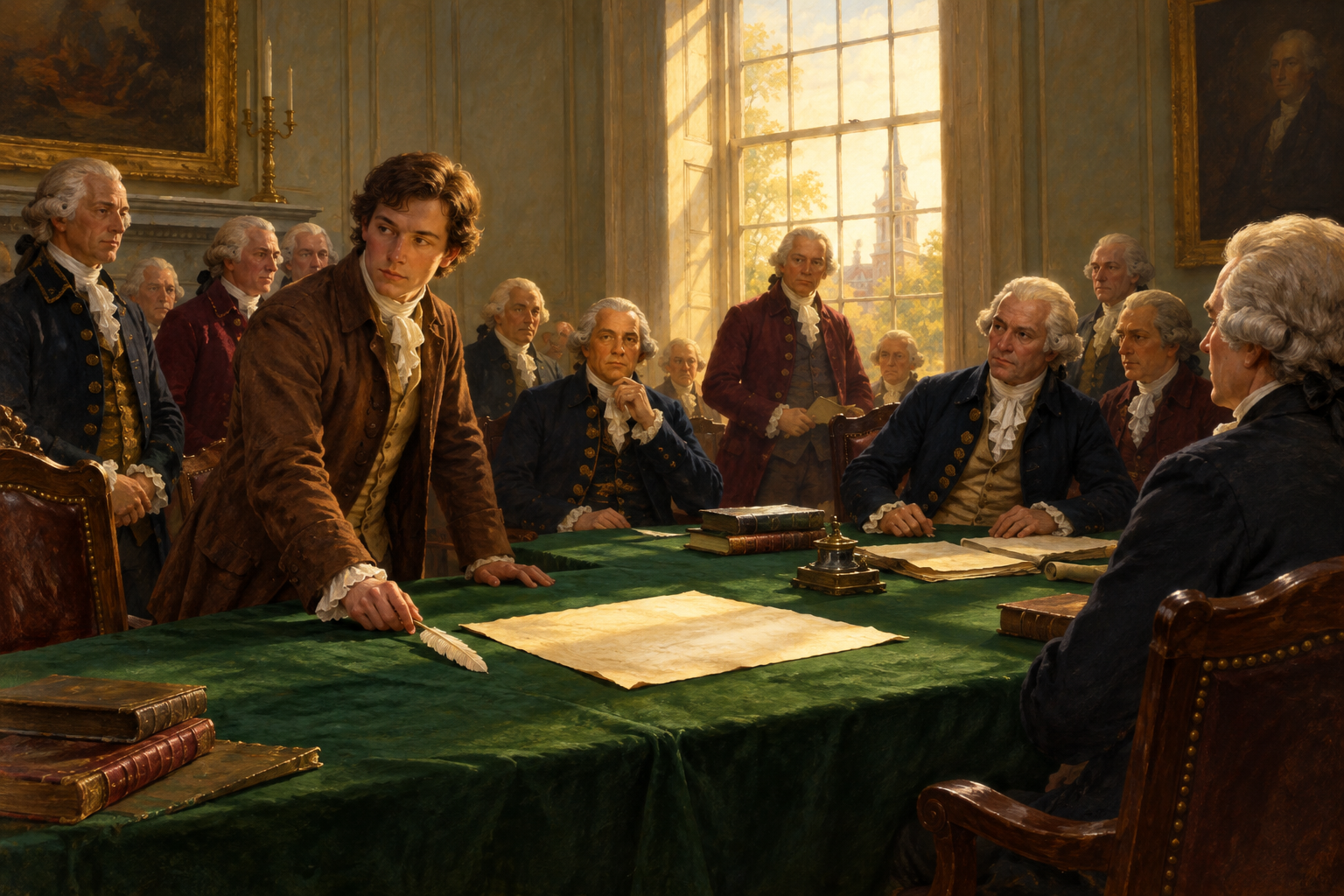
Adams named three envoys: Pinckney, John Marshall of Virginia and Elbridge Gerry of Massachusetts. They reached Paris in October 1797. Talleyrand did not receive them formally. Instead, intermediaries approached them privately and said that talks could start only on certain terms.
According to the envoys' reports, the terms were a payment of about $250,000 to French officials, including Talleyrand, a loan to the French government, and an apology for the harsh words in Adams's speech. Paying money simply to open negotiations was improper, and it would have shown that the United States could be pushed around. The envoys refused. Marshall and Pinckney left France in the spring of 1798, and Gerry stayed a little longer in the hope of keeping the peace.
In early April 1798 Adams sent the dispatches to Congress, and Congress published them. The names of Talleyrand's agents were replaced with the letters X, Y and Z, which gave the affair its name. The effect was immediate. Even Americans who had liked France now saw it as an insulting bully. Adams became popular, and the Federalists gained confidence. Marshall came home a hero. He later became Chief Justice of the United States.
The Quasi-War, 1798–1800
Congress moved quickly. It created the Department of the Navy on 30 April 1798 and paid for new frigates. In July it declared the old treaties with France, including the 1778 alliance, no longer binding. It also raised a provisional army, and Washington came out of retirement to lead it.
Congress never declared war, so the conflict is called the Quasi-War, meaning "almost a war". It was fought mostly in the Caribbean, where American warships protected merchant ships and fought French privateers. In February 1799 the frigate USS Constellation captured the French frigate L'Insurgente.
Adams did not want a full war. When France signalled in 1798 that it was ready to talk, he sent a second mission in 1799, over the objections of hard-line Federalists such as Alexander Hamilton. The result was the Convention of 1800, also called the Treaty of Mortefontaine, signed on 30 September 1800. It ended the Quasi-War and also ended the 1778 alliance.
The Alien and Sedition Acts
In June and July 1798 the Federalist Congress passed four laws, now known together as the Alien and Sedition Acts.
- Naturalization Act (18 June): raised the residence needed for citizenship from five years to fourteen. Many recent immigrants tended to vote for the Democratic-Republicans.
- Alien Friends Act (25 June): let the president order out of the country any non-citizen he judged dangerous. It was to expire after two years.
- Alien Enemies Act (6 July): allowed the arrest or removal of citizens of an enemy country in wartime.
- Sedition Act (14 July): made it a crime to publish false, scandalous and malicious writing against the government, Congress or the president. The penalty was a fine of up to $2,000 and up to two years in prison. Truth was allowed as a defence, but the law did not protect the vice president, who was Jefferson. It was set to expire on 3 March 1801.
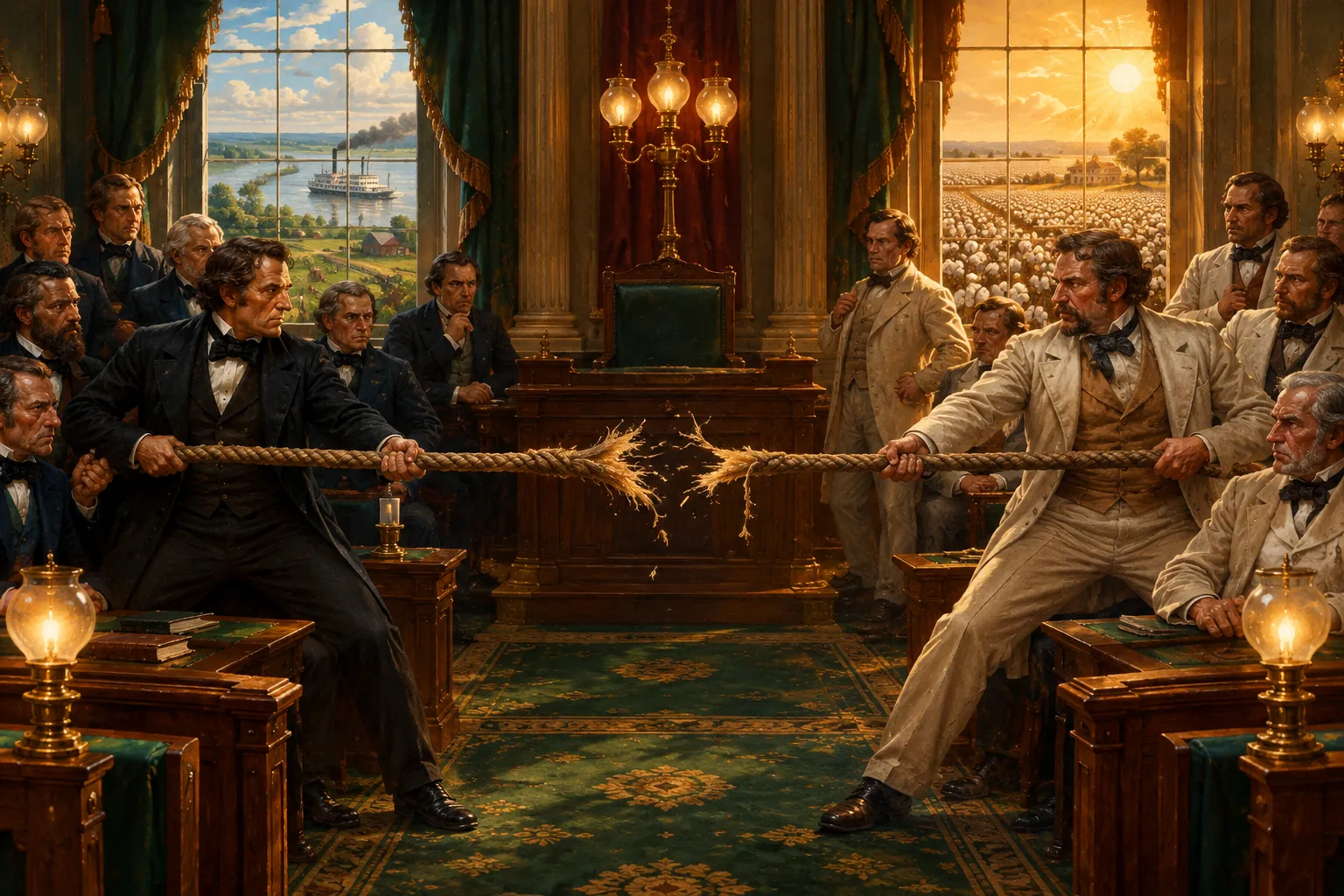
Supporters said a country facing a possible war needed to guard against spies and slander. Critics said the laws were meant to silence the opposition, and that they clashed with the First Amendment's protection of speech and the press. The record supports the critics' worry. At least ten people were convicted under the Sedition Act, and nearly all were Democratic-Republican editors or politicians. Matthew Lyon, a Vermont congressman, was jailed for four months and fined $1,000 for attacking Adams in print, and voters re-elected him while he was in prison. The editor Benjamin Franklin Bache was arrested but died of yellow fever in September 1798 before his trial. The writer James Callender was convicted in 1800 and sentenced to nine months. The Alien Friends Act was never used to deport anyone formally, though some French residents left in fear.
Resolutions, an election and what lasted
Jefferson and James Madison answered the laws in secret. Jefferson wrote the Kentucky Resolutions (November 1798) and Madison the Virginia Resolutions (December 1798). Both said the Acts were unconstitutional, and that states had a right to speak against them. Kentucky went further and used the idea of nullification, which means a state declaring a federal law void. No other state agreed with them, but the resolutions became an important text in later arguments about states' rights.
The larger answer came from voters. In the election of 1800 Jefferson defeated Adams, and the House of Representatives settled a tie between Jefferson and Aaron Burr in February 1801. Jefferson took office on 4 March 1801, a day after the Sedition Act expired, and he pardoned those who had been convicted under it. The Naturalization Act was replaced in 1802 by a law that returned the residence period to five years. Only the Alien Enemies Act survived, and it was used again in the War of 1812, the First World War and the Second World War.
What exams ask
AP US History questions usually ask about three links: the XYZ Affair led to the Quasi-War and a build-up of the military, the Federalists used the crisis to pass the Alien and Sedition Acts, and the backlash produced the Kentucky and Virginia Resolutions and the "Revolution of 1800", the first peaceful transfer of power between parties. Know the dates 1798 (XYZ papers, the four Acts) and 1800 (Convention of 1800, Jefferson's election). Be ready to explain the debate over civil liberties during a foreign threat, and the claim of state power in the resolutions. A common comparison is with Washington's 1796 warning against permanent alliances, because the Quasi-War shows how hard it was to stay out of Europe's quarrels.
Read next
- The American Revolution: Causes, War and Independence: the parent guide, which covers the war that created the alliance with France.
- The American Revolutionary War (1775–1783): how the 1778 French alliance was won, which explains why the break with France in 1798 was so sharp.
- The Declaration of Independence Explained: the ideas about liberty that critics of the Sedition Act appealed to.