In five minutes: what is the Bill of Rights?
The Bill of Rights is the name for the first ten amendments to the United States Constitution. It became part of the Constitution on December 15, 1791, when Virginia became the state that gave the amendments the three-fourths majority they needed. Together the ten amendments protect freedom of religion, speech and the press, the right to a fair trial, and protection from unreasonable searches. They also say that any power not given to the federal government stays with the states or the people.
The idea behind them is simple: a government strong enough to rule needs written limits. The Constitution of 1787 created a stronger national government than the one under the Articles of Confederation, and many Americans, fresh from a war against a distant government, did not trust it without a list of things it could not do. The story of the Bill of Rights is the story of that worry and how it was answered. It follows directly from the events in our hub article, The American Revolution: Causes, War and Independence.
Why the Constitution had no bill of rights
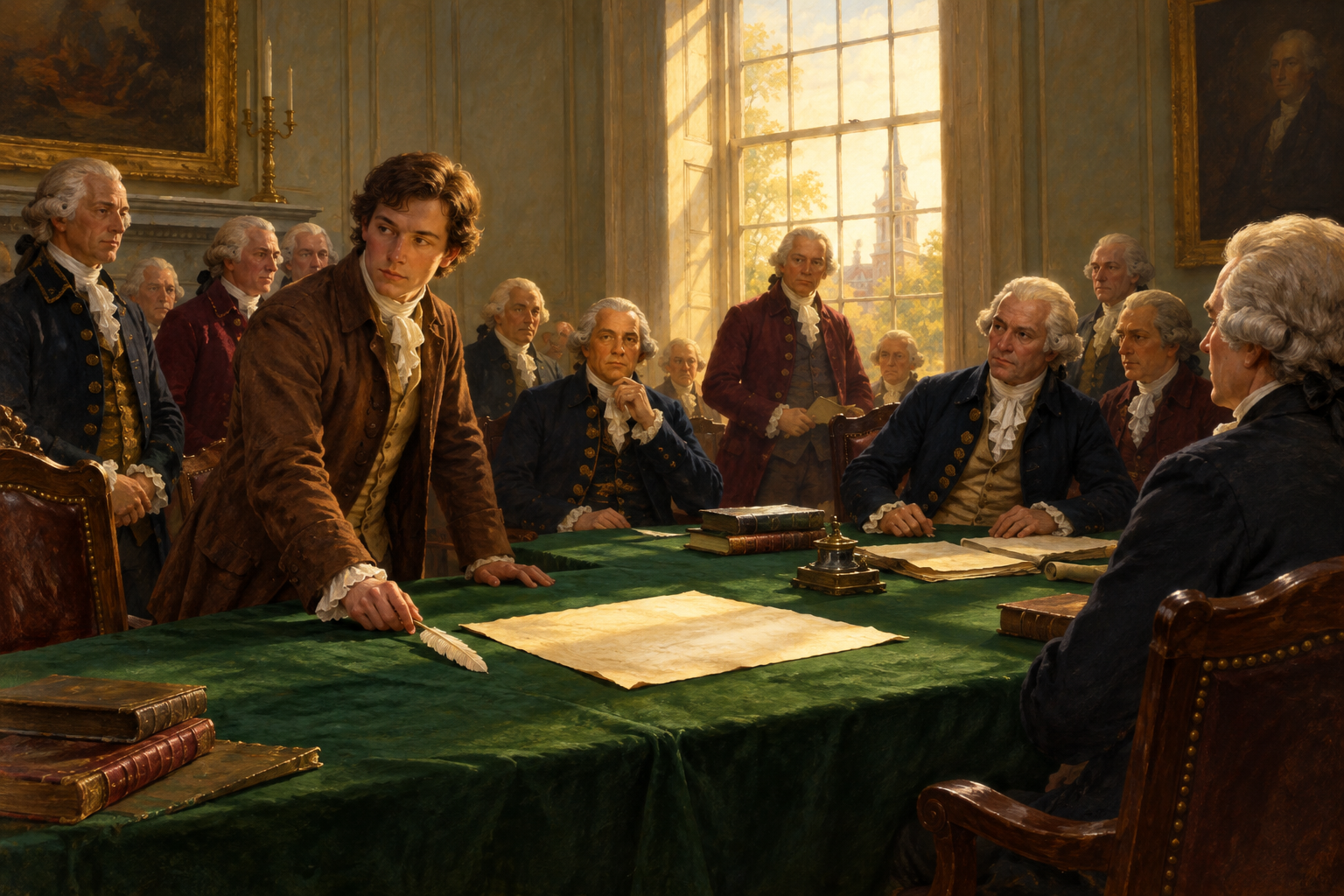
The delegates who wrote the Constitution in Philadelphia finished their work on September 17, 1787. The document set up a Congress, a president and a court system, and it listed what each could do. Near the end of the summer, George Mason of Virginia proposed adding a bill of rights. The convention voted the idea down, and Mason refused to sign.
Supporters of the Constitution, called Federalists, had a reasoned argument. The federal government, they said, had only the powers the Constitution listed, so it had no power to censor the press or to take away a religion, and listing rights might even suggest that other rights were not protected. Alexander Hamilton made this case in Federalist No. 84.
Opponents, called Anti-Federalists, were not persuaded. They pointed out that the Constitution already had a few protections, such as trial by jury in criminal cases, so why not more? They remembered how Britain had searched homes and tried colonists without their local juries. Patrick Henry, Richard Henry Lee and Mason were among the loudest voices. Mason had already written the Virginia Declaration of Rights in 1776, so he knew what such a list could look like. Thomas Jefferson, writing from Paris, also told James Madison that he wanted one.
The argument almost sank ratification. In several states the vote was close. In Massachusetts, supporters reached a compromise in early 1788: ratify the Constitution now and recommend amendments afterwards. Other states copied that approach. The Constitution took effect in 1788 when New Hampshire became the ninth state to ratify, on June 21, and the promise of amendments was part of what made that possible.
How Madison wrote it
James Madison had first thought a bill of rights was unnecessary. In a letter to Jefferson in 1788 he called such lists "parchment barriers", words on paper that a determined majority could ignore. But he changed his mind, partly because of Jefferson's arguments and partly for political reasons. In early 1789 Madison ran for the House of Representatives in Virginia against James Monroe, and voters there wanted amendments. Madison promised to work for them, and he won.
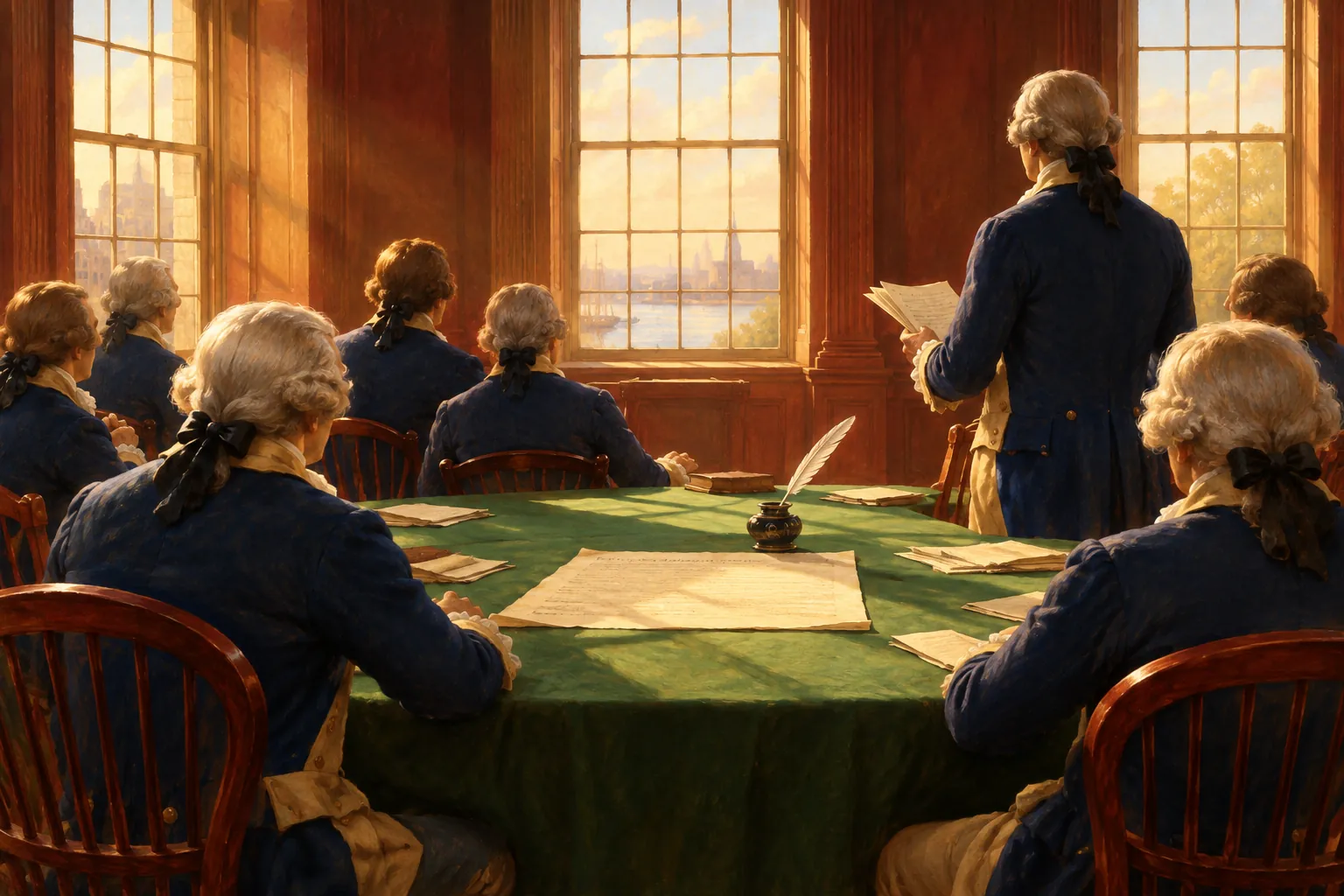
The first Congress met in New York City in 1789. On June 8, Madison stood in the House and proposed a package of amendments. He drew on the Virginia Declaration of Rights, on other state constitutions and on the amendments suggested by state ratifying conventions. He also borrowed the name from the English Bill of Rights of 1689, which limited the power of the Crown.
Congress then edited the package. The House approved seventeen amendments in August 1789. The Senate trimmed them to twelve, and on September 25, 1789 Congress sent those twelve to the states. The proposals that became the Bill of Rights were therefore not written by one man alone, but Madison's draft was the foundation.
The ten amendments in plain words
- First Amendment: freedom of religion, speech and the press, the right to assemble peacefully and the right to petition the government.
- Second Amendment: the right of the people to keep and bear arms, linked in the text to a well-regulated militia.
- Third Amendment: soldiers cannot be lodged in a private home in peacetime without the owner's consent.
- Fourth Amendment: no unreasonable searches or seizures; warrants need a good reason.
- Fifth Amendment: indictment by a grand jury for serious crimes, no being tried twice for the same crime, no forced self-incrimination, due process of law and fair payment if the government takes private property.
- Sixth Amendment: a speedy and public trial, an impartial jury, a lawyer, and the right to confront witnesses.
- Seventh Amendment: jury trials in many civil cases.
- Eighth Amendment: no excessive bail or fines, and no cruel and unusual punishment.
- Ninth Amendment: listing some rights does not mean other rights are denied to the people.
- Tenth Amendment: powers not given to the federal government, or forbidden to the states, are kept by the states or the people.
Notice how many of these respond to colonial grievances. The Third and Fourth Amendments recall the quartering of British troops and the general searches of the 1760s and 1770s. Several others, from the grand jury to the right to counsel, protect people accused of crimes. The Ninth and Tenth are different: they are not rights lists but rules about how to read the rest.
Ratification: twelve sent, ten adopted
To change the Constitution, three-fourths of the states had to approve. Vermont joined the Union in March 1791 as the fourteenth state, so eleven states were needed. New Jersey was the first to ratify, in November 1789. Vermont approved in November 1791, and Virginia ratified on December 15, 1791, making eleven.
Of the twelve proposals, two did not pass at the time. One, about the size of the House of Representatives, was never ratified. The other, which delayed pay raises for members of Congress until after the next election, sat unfinished for more than two centuries; it was finally ratified in 1992 as the Twenty-seventh Amendment. Because those two were originally numbered first and second, the amendments we call the First through Tenth were originally the third through twelfth. Massachusetts, Connecticut and Georgia, which had not formally acted in 1791, ratified the Bill of Rights symbolically in 1939.
From a limit on Congress to a living law
The Bill of Rights did not change daily life overnight. For decades it was seldom cited in court. In 1833, in Barron v. Baltimore, the Supreme Court under Chief Justice John Marshall ruled that the Bill of Rights restrained only the federal government, not the states. A city that took a man's property for public use did not have to follow the Fifth Amendment.
That changed after the Civil War. The Fourteenth Amendment of 1868 told the states they could not deprive anyone of life, liberty or property without due process of law. Beginning with Gitlow v. New York in 1925, the Supreme Court gradually applied most of the Bill of Rights to the states, a process called incorporation. This is why the Bill of Rights matters so much in modern cases about speech, police searches and trials. Franklin D. Roosevelt proclaimed December 15, 1941, the 150th anniversary, as Bill of Rights Day.
What exams ask
In AP U.S. History and similar courses, expect questions that connect the Bill of Rights to the Federalist and Anti-Federalist debate. A strong answer says that the Bill of Rights was the price of ratification, that Madison was its main drafter, and that it originally limited only the federal government.
- Date: ratified December 15, 1791; proposed by Congress September 25, 1789.
- Link: Anti-Federalist demands, state ratifying conventions and Madison's 1789 proposals.
- Significance: it protected individual liberties and strengthened trust in the new government, and in the twentieth century it was applied to state governments through the Fourteenth Amendment.
- Do not confuse it with the English Bill of Rights of 1689, or with the French Declaration of the Rights of Man and of the Citizen of 1789.
Read next
- The American Revolution: Causes, War and Independence: the full background, from the Stamp Act to the new nation.
- The Declaration of Independence Explained: the 1776 statement of rights and grievances that the Bill of Rights built on.
- The American Revolutionary War (1775–1783): the war that made many Americans wary of unchecked power.