In five minutes
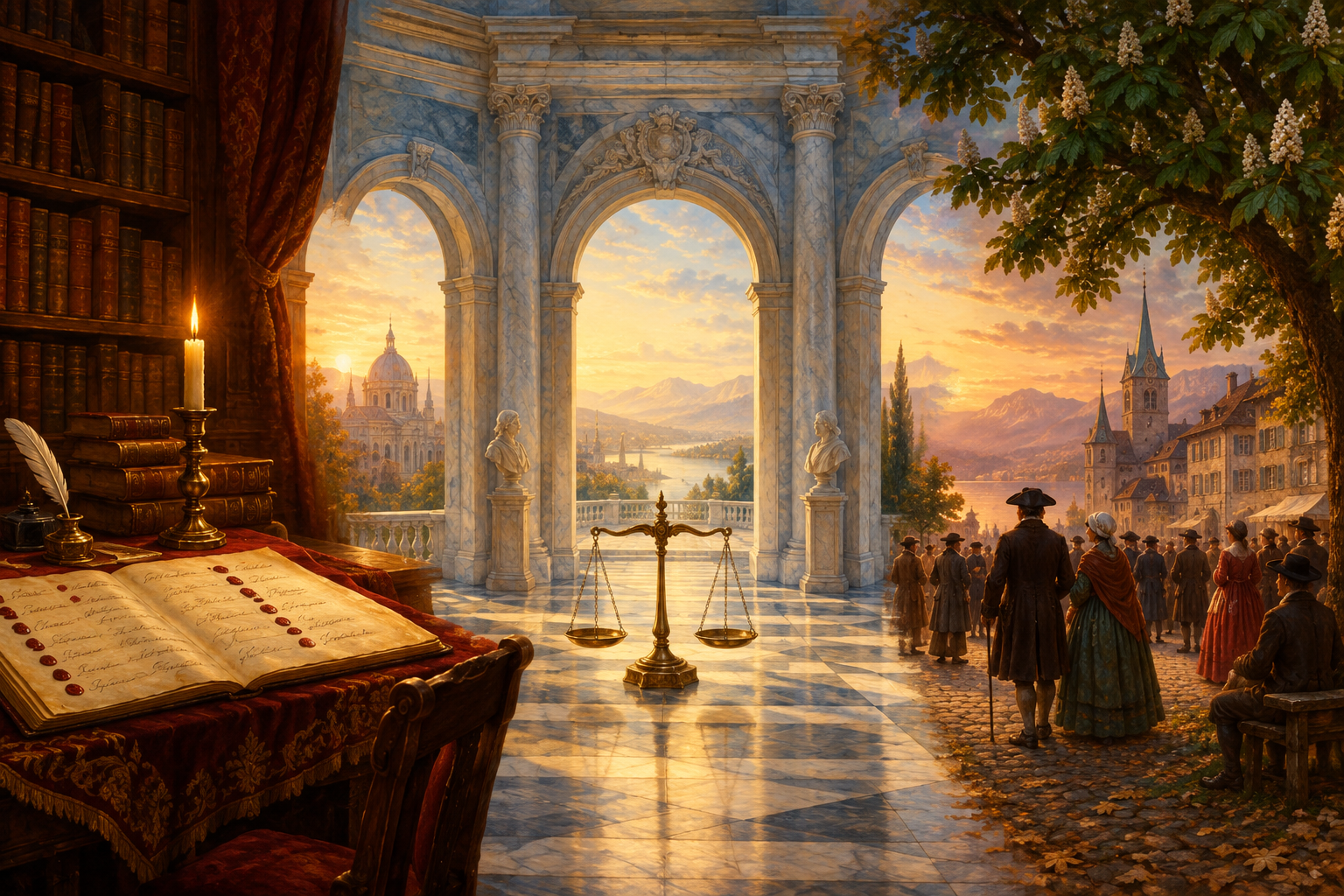
Three Enlightenment thinkers asked the same question: what makes a government legitimate, and what should it never be allowed to do? John Locke, Montesquieu and Jean-Jacques Rousseau gave different answers, and those answers still shape how modern democracies are built. Locke said people consent to government in order to protect their natural rights. Montesquieu said liberty survives only when power is divided and each part checks the others. Rousseau said real sovereignty belongs to the general will of the whole people and cannot be handed to representatives.
Read side by side, the differences become clear. Locke starts with the individual, Montesquieu starts with the limits on power, and Rousseau starts with the community as a whole. If you want the wider background first, our Enlightenment guide covers the movement as a whole.
Why Enlightenment thinkers wrote
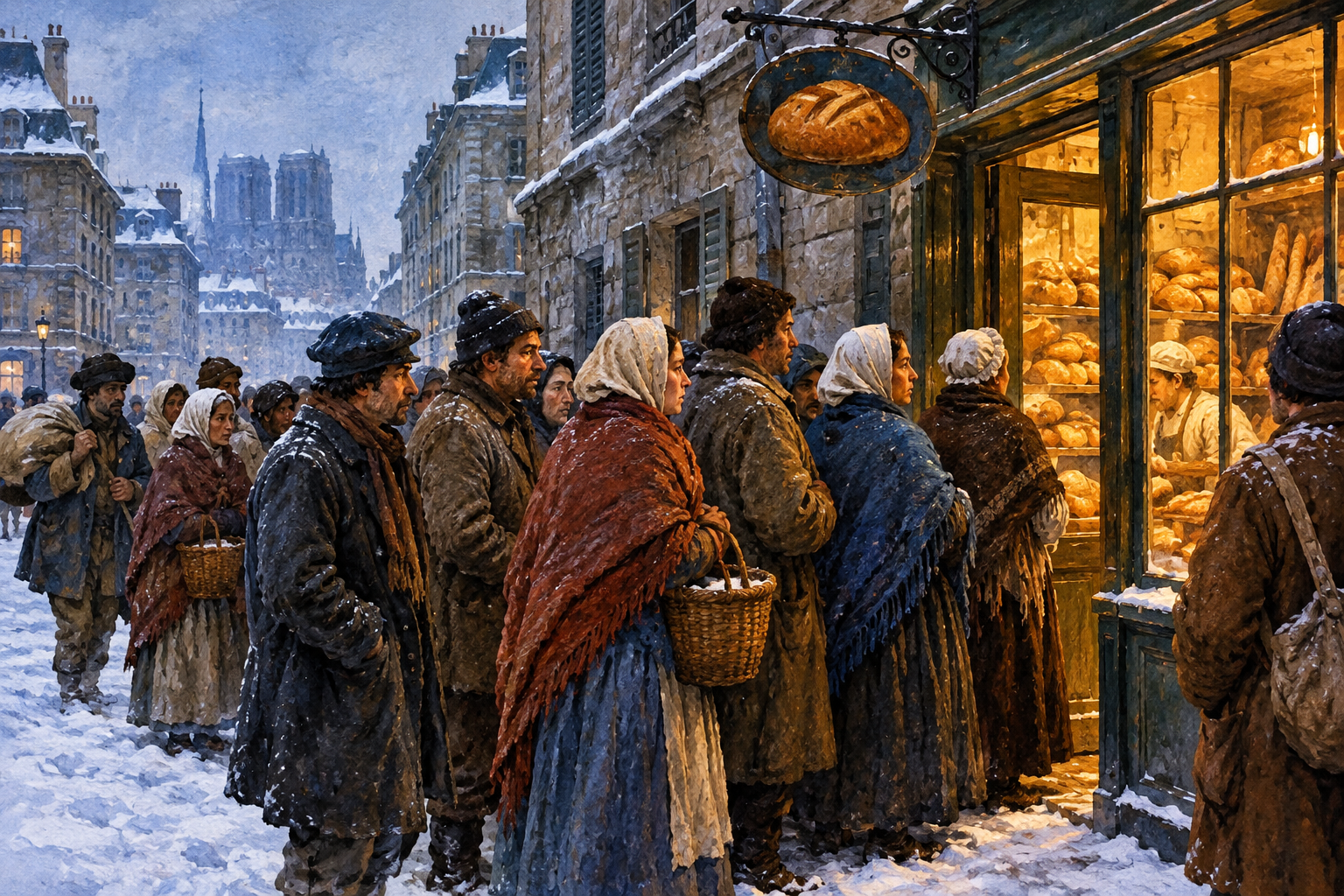
For most of early modern Europe, kings ruled by claiming authority from God or from long custom. Ordinary people had little say, and the question of why anyone should obey a ruler was openly debated. Printed books, pamphlets and conversation in salons carried these debates far beyond the universities, so thinkers could reach readers across national borders.
Thomas Hobbes had set the terms of the argument in Leviathan, published in 1651. He claimed that without a strong ruler, life would be a constant war of all against all, so people give up their freedom to a sovereign in exchange for peace. That reasoning seemed to justify absolute power. Locke and Rousseau both rejected Hobbes's conclusion, while Montesquieu took a different route altogether.
Events and travel shaped them too. The Glorious Revolution of 1688 in England led to a settlement that limited royal power, and Locke's Two Treatises of Government appeared in 1689. Montesquieu travelled in England from 1729 to 1731 and studied how Parliament and the crown limited each other. Rousseau, born in Geneva in 1712, grew up in a small republic where citizens met to decide public matters, and that experience shaped his hope for direct popular rule.
Three answers compared
John Locke: power by consent
In the Second Treatise of Government, Locke describes a state of nature in which people are free and equal and are bound by a natural law that reason can discover. In that state, people have natural rights to life, liberty and property. But nobody is a neutral judge in their own case, so people agree to form a government that protects these rights. Power is held in trust, and when a government breaks that trust, the people have the right to resist and change it.
Locke also distinguished several powers. The legislature is supreme, because it makes the laws. The executive carries those laws out, and a 'federative' power handles foreign relations and alliances. Critics later noticed that his emphasis on property seemed to favour property owners. Still, his core claim, that legitimate government rests on consent, became one of the most influential ideas in modern politics.
Montesquieu: power checks power
Montesquieu's The Spirit of the Laws, published in 1748, asks how laws should fit the society they govern. He argued that laws relate to a country's climate, religion, customs, trade and size, so no single system suits everyone. His best-known idea, though, is the separation of powers. In his account of the English constitution, which he admired, he described legislative power, executive power and judicial power. The executive handles foreign affairs and enforces the law, while the judiciary punishes crimes and judges disputes.
His warning is direct: anyone who holds power tends to abuse it, so power must be checked by power. Montesquieu did not want a perfectly rigid wall between the three branches. He wanted a balance in which each branch can stop the others from going too far. For him, that balance is what protects political liberty.
Jean-Jacques Rousseau: the general will
Rousseau's The Social Contract, published in 1762, opens with a famous line: people are born free, yet everywhere they live in chains. His aim is to find a form of association in which each person gives themselves wholly to the community and yet remains free, because each one is also a member who helps make the law. The guide to that association is the general will, which aims at the common good rather than at the sum of private wishes.
Because the general will cannot be handed to someone else, Rousseau rejected the idea that elected deputies can decide on the people's behalf. Laws must be made by the citizens themselves, and government is only an agent that carries out those laws. Critics have pointed out that a 'general will' could be used to justify forcing minorities to conform, and this is one of the sharpest debates about his work.
Put together, the three answers look like this:
- Source of power: Locke: the consent of individuals, given to protect their rights. Montesquieu: laws shaped by nature and society, kept in balance by checks. Rousseau: the general will of the whole people.
- Who holds power: Locke: a legislature at the top, with an executive beneath it. Montesquieu: three separate branches. Rousseau: the citizens themselves, acting together.
- Main worry: Locke: rulers who betray the trust placed in them. Montesquieu: power concentrated in one hand. Rousseau: private interests overriding the common good.
- Right to resist: Locke defends resistance when government abuses its trust. Montesquieu relies on structure to prevent abuse rather than on revolt. Rousseau keeps ultimate sovereignty with the people, who cannot give it away.
What it led to
Locke's ideas about consent and natural rights fed into the American colonists' case for independence. The 1776 Declaration of Independence states that governments derive their just powers from the consent of the governed, a line close to Locke's argument. Montesquieu's separation of powers shaped the 1787 United States Constitution, which divides federal power among legislative, executive and judicial branches with checks between them, and many historians see his influence there.
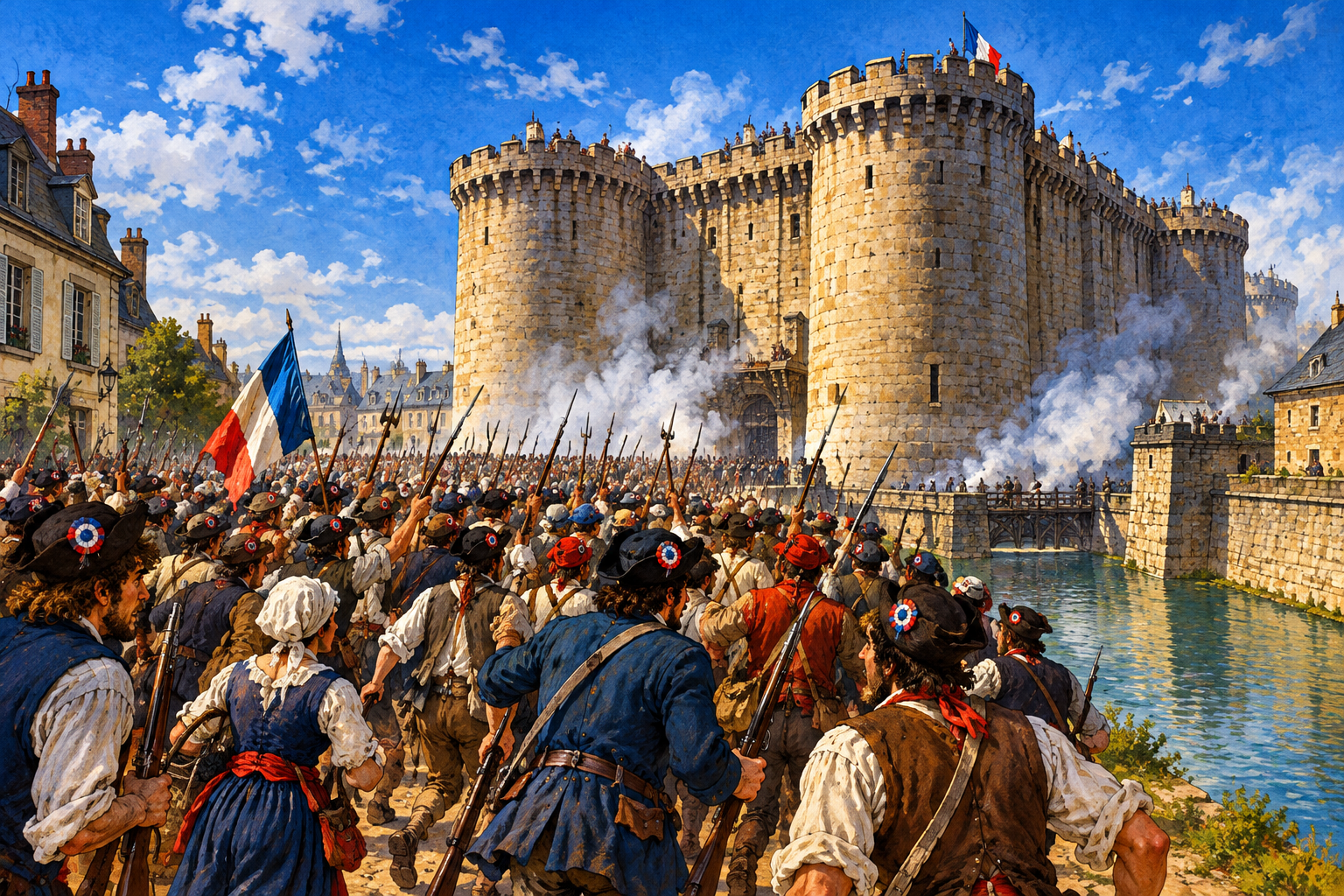
Rousseau's popular sovereignty inspired radical voices during the French Revolution. The 1789 Declaration of the Rights of Man and of the Citizen combines natural rights with the principle that the law is the expression of the general will. Many modern constitutions combine elements from all three: elected legislatures, divided powers and courts, and the principle that power comes from the people.
What exams ask
Exams in world history and civics often ask you to compare thinkers rather than describe one. A strong answer names each thinker's source of power first, then shows how that difference appears in a real institution. For example, Locke's consent theory can be linked to the American claim that people may resist a government that violates their rights. Montesquieu's separation of powers explains the three branches and their checks in the US federal system. Rousseau's general will helps explain why French revolutionaries claimed to speak for the whole nation.
Two common mistakes are worth avoiding. The first is saying that one thinker simply won and the others were wrong; their ideas were combined and argued over for decades. The second is treating Rousseau's general will as if it were the same thing as dictatorship. Critics have made that argument, but you should present it as a criticism rather than a neutral description of his theory.
A quick way to remember
- Locke: consent. Government exists because people agree to protect their rights.
- Montesquieu: divide. Split power so that each branch limits the others.
- Rousseau: the whole people. The general will belongs to everyone, not to representatives.
If you remember one key word for each thinker, you can answer most comparison questions.
Read next
Keep going with these related pages:
- Key Ideas of the Enlightenment: the wider set of ideas these three thinkers shared and argued about.
- Hobbes vs Locke vs Rousseau on the Social Contract: how the social contract idea changes from Hobbes to Locke to Rousseau.
- Who Was John Locke? Life, Ideas and Influence: a closer look at Locke's life and his wider work.