Rousseau's social contract in five minutes
Rousseau's social contract starts with a simple worry. If people are going to live under laws and a government, how do they keep the freedom they had before? In The Social Contract (1762), Jean-Jacques Rousseau answers that people are free when they obey laws they have helped to make, as members of a community that acts as one body. The book is short and dense, and it still shapes arguments about how democracies should work. It is a core text of the Enlightenment, the eighteenth-century movement that put reason and rights at the centre of politics. For the wider picture, see The Enlightenment Explained: Ideas, Thinkers and Legacy.
The problem Rousseau inherited
Rousseau did not invent the idea of a social contract, the notion that legitimate government rests on an agreement among people. Two earlier thinkers set the terms he answered. Thomas Hobbes, in Leviathan (1651), argued that without a strong authority people would live in constant fear and conflict, so they should hand their power to a sovereign who keeps the peace. John Locke, in Two Treatises of Government (1689), argued that government rests on the consent of the governed and exists to protect life, liberty and property. People may resist a government that breaks that trust.
Rousseau took the contract idea seriously but asked a sharper question. Hobbes's answer seemed to cost people most of their freedom. Locke's protected rights, but it left law-making to a representative body. Rousseau wanted a contract in which the people keep their freedom by becoming the authors of the law themselves.
Where his thinking came from
Rousseau first gained attention with a prize essay in 1750, the Discourse on the Sciences and Arts, which argued that learning and art had not made people more virtuous. His Discourse on the Origin of Inequality (1755) went further. It described how private property and social rank had made people more unequal and less free than they had been in their natural state. The Social Contract picks up that problem: if society has already become unequal, what would a just political order look like?
Rousseau's home city of Geneva shaped his thinking too. Geneva was a small city-state where citizens and the ruling council often disputed who held real power. Rousseau thought small city-states were the setting where citizens could most easily keep control of their own laws.
The core idea: the general will
Rousseau's central problem, set out in Book I, Chapter 6, is to find a form of association that protects each member and their property with the whole group's strength, while each person still answers only to himself and stays as free as before. His solution is the social contract. Everyone gives themselves and their rights to the community as a whole. In return, each person becomes an equal part of the sovereign, the body of the people that makes the laws.
The key term is the general will (volonté générale). It is not the same as the will of all, which is just the total of everyone's private wishes. The general will aims at the common good and treats citizens as equals rather than as rivals with separate interests. A law can only express the general will if it applies to everyone in the same way. For Rousseau, every real law is the public face of this shared will.
Rousseau adds a caveat. The general will is always right in its aim, he argues, but a people can still judge badly about what it requires (Book II, Chapter 3). That is why he stresses public debate and citizens who have the information they need before they decide.
Sovereignty stays with the people
In Rousseau's system, sovereignty belongs to the people and cannot be handed away or divided. Choosing representatives to make the laws means giving up the freedom to make them yourself. Rousseau mocks the English for thinking they are free: he says they are free only while they vote for members of Parliament, and not at other times (Book III, Chapter 15).
Government is a different thing. It is the body that carries out the law, and it can be changed. If it goes beyond the authority the people have given it, the sovereign people can dismiss it. This distinction between the sovereign and the government is one of the book's most discussed ideas.
Reading the book, Book by Book
The book is divided into four parts, called books. Knowing the outline helps when you read the original or a commentary.
- Book I: sets out the problem and gives the social contract as the answer (Chapter 6). It opens with the line that man is born free yet is everywhere in chains. The passage about being “forced to be free” appears here too (Chapter 7).
- Book II: argues that sovereignty cannot be handed away or divided, and asks whether the general will can err (Chapter 3).
- Book III: treats government as the body that carries out the law, separate from the sovereign people, and mocks English representative government (Chapter 15).
- Book IV: turns to assemblies and voting, and reaches civil religion (Chapter 8).
What happened in 1762
The Social Contract appeared in 1762, the same year as Émile, Rousseau's book on education. In June 1762 the Paris Parliament condemned Émile and ordered Rousseau's arrest. Copies of The Social Contract were burned in Geneva that month. Rousseau had to leave France and spent years moving between places in exile.
Much of the outrage focused on Book IV, Chapter 8, which proposes a civil religion. Rousseau wanted the state to require a few simple civic beliefs, including the existence of a good god and the sanctity of the laws. Citizens who publicly rejected those beliefs could be banished, he argued, because they could not be good citizens. Catholic and Protestant critics alike saw this as a threat to religious freedom.
What happened next: Revolution, critics and legacy
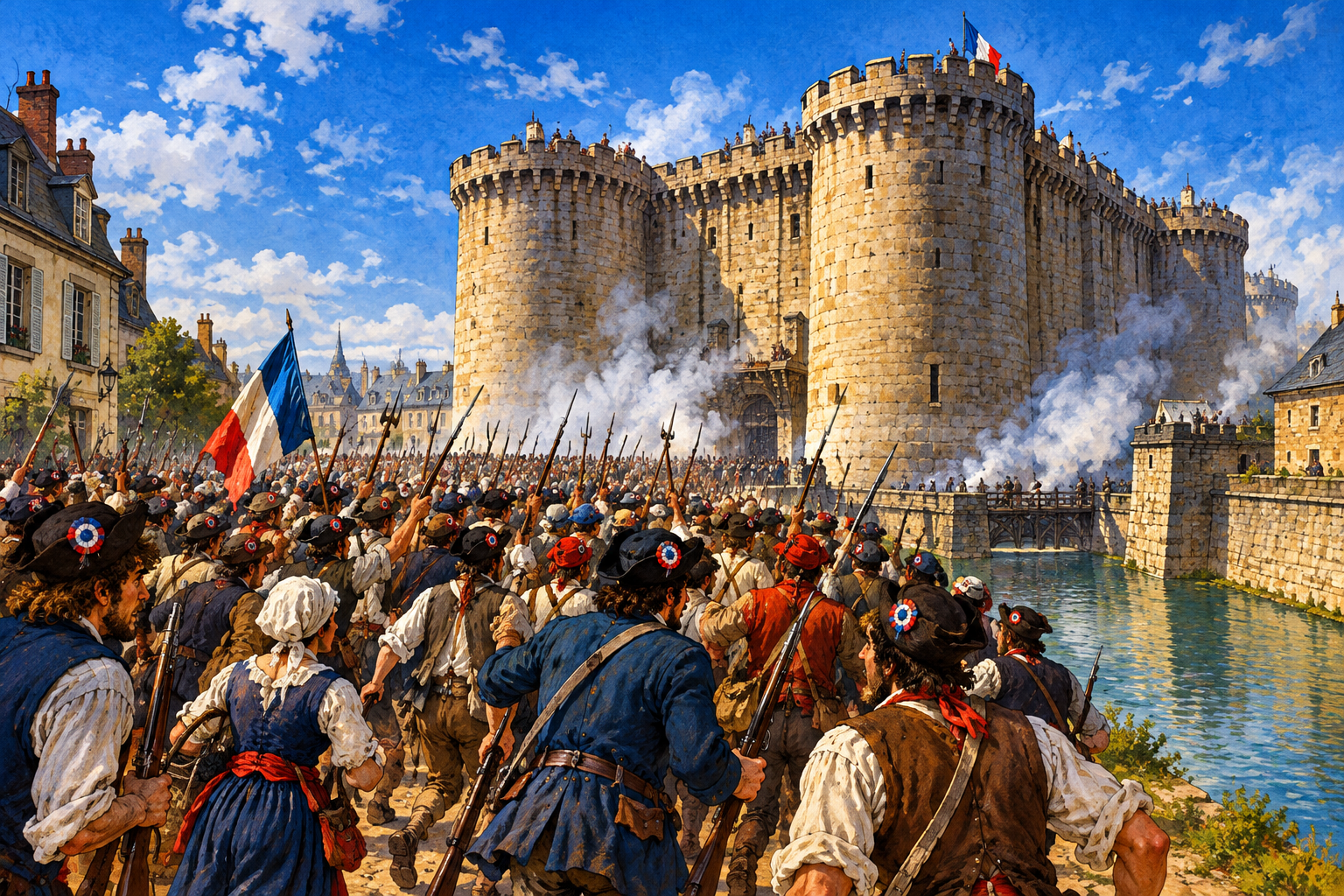
Rousseau died in 1778, eleven years before the French Revolution began. Revolutionaries borrowed his language of popular sovereignty and the general will. Robespierre, the Jacobin leader, admired Rousseau, and on 11 October 1794 Rousseau's remains were moved to the Panthéon in Paris, a national honour.
The Terror of 1793 and 1794 changed how people judged that legacy. Many people were executed in the name of public safety, and historians still debate how much responsibility Rousseau's ideas carry for that violence.
The legacy is contested. Supporters read the book as a defence of equal citizens who obey only laws they have helped to make. Critics point to a passage in Book I, Chapter 7, which says that someone who refuses to follow the general will will be “forced to be free.” They argue that a majority claiming to speak for the general will can override minorities. Both readings still feed debates about democracy.
Rousseau's political ideas also reached beyond France. Immanuel Kant said that Rousseau had shaped his own thinking.
Hobbes, Locke and Rousseau compared
- Why form a government: Hobbes says to escape fear and constant conflict. Locke says to protect rights people already hold. Rousseau says to keep freedom by making the law together.
- Who holds power: Hobbes gives it to a single sovereign. Locke places limited power in a legislature based on consent. Rousseau keeps sovereignty with the whole people.
- When people may act: Locke accepts resistance to a government that breaks trust. Rousseau's sovereign people can dismiss a government that exceeds its authority.
Why the book still gets read
The Social Contract remains in circulation because the question behind it has not gone away: why should citizens obey a government at all? Does choosing representatives really protect freedom? Whose will does a law express? Rousseau's answers are debatable, but his questions give readers a starting point for thinking about those issues.
What exams ask
In AP European History, Rousseau usually appears in the Enlightenment unit. Questions tend to ask students to compare social contract thinkers, explain how each justifies government, and link those ideas to the revolutions of the late eighteenth century. A strong answer names the state of nature, consent or the general will, and gives one concrete example of an idea being used in a real event.
Read next
Continue with these pages:
- What Is Social Contract Theory? — the wider idea behind Hobbes, Locke and Rousseau, and why it still frames debates about government.
- Who Was John Locke? Life, Ideas and Influence — the thinker whose consent-based government Rousseau pushed beyond.
- Who Was Mary Wollstonecraft? — an Enlightenment writer who turned the language of rights toward women.