In five minutes: the 19th century in brief
World history from 1700 to 1918 is the story of how the modern world was built. The 19th century sits at the centre of it, but the roots go back to the 1700s, and the period closes with the First World War. Four forces changed nearly every society they touched: political revolution, machine-based industry, empire, and war on a global scale.
As you read, ask three questions. Who held power, and how was it justified? How did people make a living? How did countries deal with each other, through trade, treaties or force?
Causes: ideas, machines and money
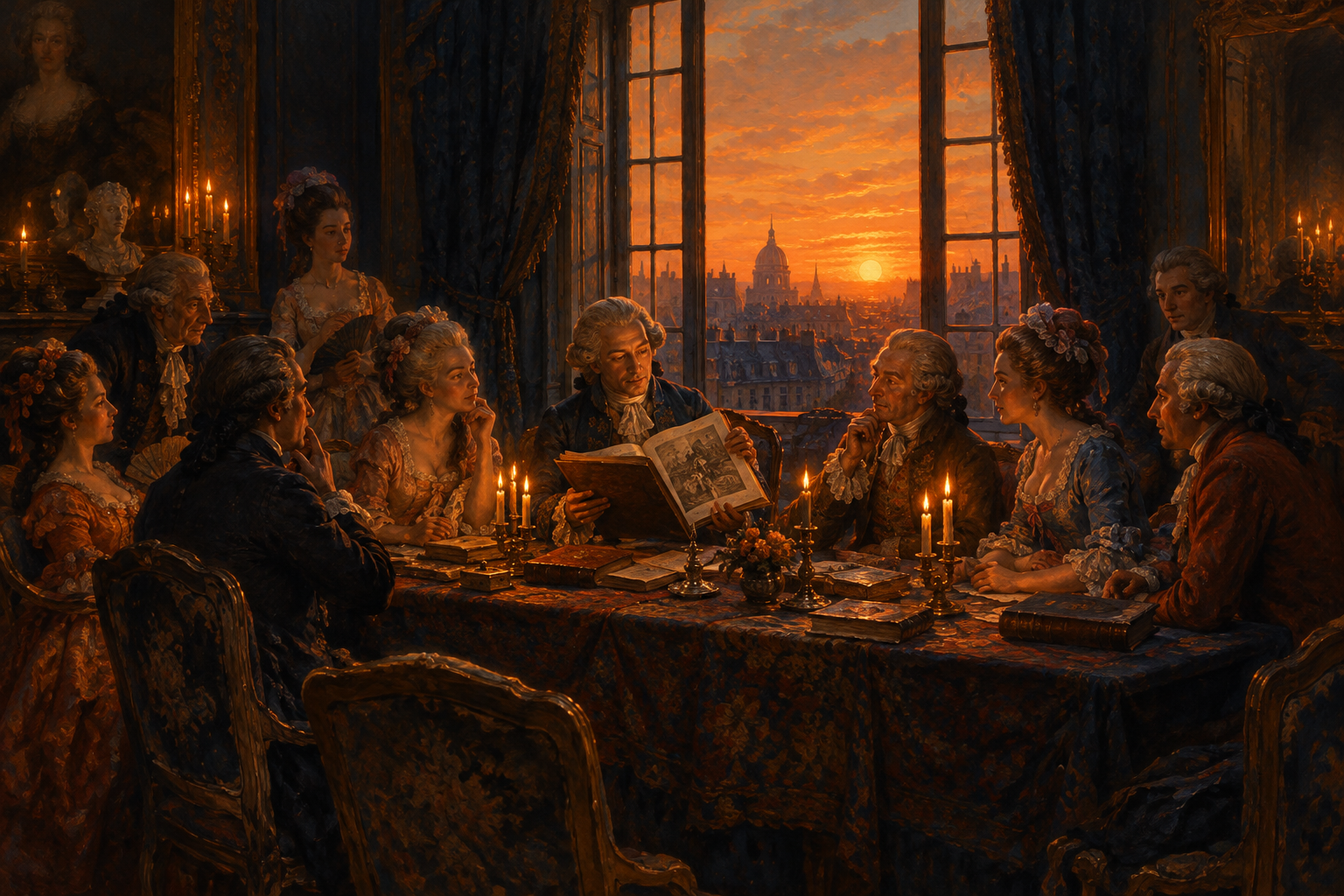
Three things began to fit together in the 1700s. Enlightenment thinkers argued that rulers should answer to reason and law, not birth alone. Britain's mills and workshops began to use new machines, and James Watt's improved steam engine, patented in 1769, freed factories from the need to sit beside rivers. Governments, meanwhile, were chronically short of money, and wars over trade and colonies were expensive.
Britain moved first because it had coal, iron, a large domestic market and strong banks. Historians still debate how much the Atlantic economy, which depended on enslaved labour in the Americas, helped fund British industry. It did create fortunes, shipping and demand for goods, and those shaped the rise of British manufacturing.
What happened: the great changes
Revolutions in America, France and Haiti
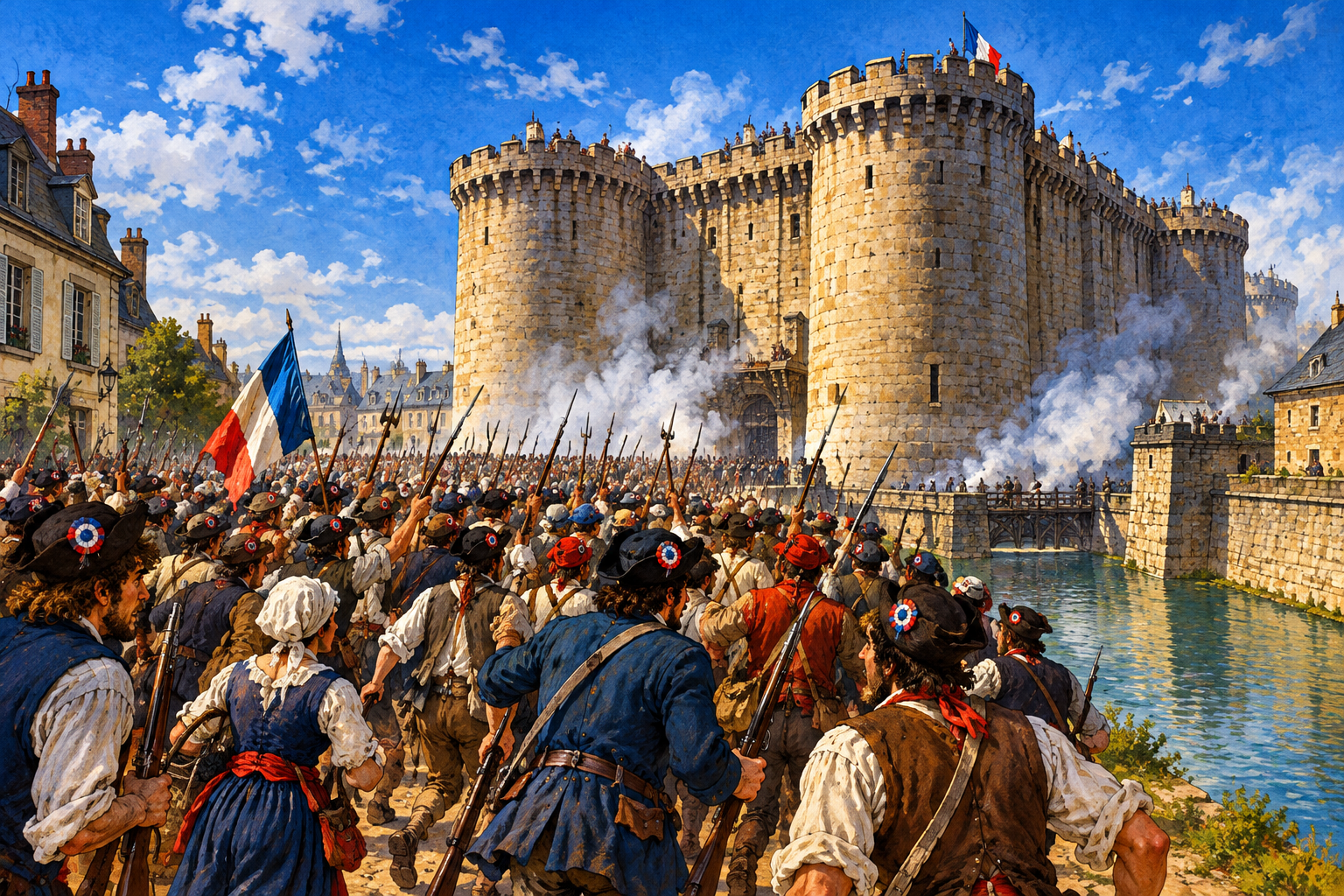
In 1776, the thirteen British colonies in North America declared independence and began a new country built on written principles of government. In 1789, a crisis over taxes and debt led France to summon the Estates-General, and the revolution that followed reshaped French politics. The storming of the Bastille on 14 July 1789 became a symbol of the moment, and the National Assembly soon issued a declaration of rights and moved to abolish feudal privileges.
The revolution then turned radical. War with Austria and Prussia from 1792 raised fears of enemies at home, and the Reign of Terror of 1793 to 1794 saw thousands executed. Robespierre himself was executed in 1794. Napoleon Bonaparte seized power in 1799 and crowned himself emperor in 1804. His Civil Code of 1804 spread legal equality and property rights into many of the lands his armies conquered, but his wars also spread French control. He was defeated at Waterloo in 1815.
In Saint-Domingue, the French colony that is now Haiti, enslaved people rose in revolt in 1791. After years of fighting against French, Spanish and British forces, the colony became the independent state of Haiti in 1804. It was the first state created by a successful revolt of enslaved people, and its existence unsettled slaveholding societies across the Americas. Independence did not bring security: the new state faced heavy debts and diplomatic isolation.
Latin America saw its own wave of independence. Between about 1810 and 1825, most of Spain's mainland colonies in the Americas won their freedom, usually led by local elites who resented control from Spain. The new states then faced civil conflict and long arguments over who should hold power.
After Napoleon, Europe's rulers tried to restore order. The Congress of Vienna (1814–1815) redrew borders and aimed to bring back older monarchies. The settlement held for decades, but it could not silence demands for constitutions and national identity. The July Revolution of 1830 in France and the revolutions of 1848 across much of Europe showed how strong those demands were.
Industry, cities and the factory
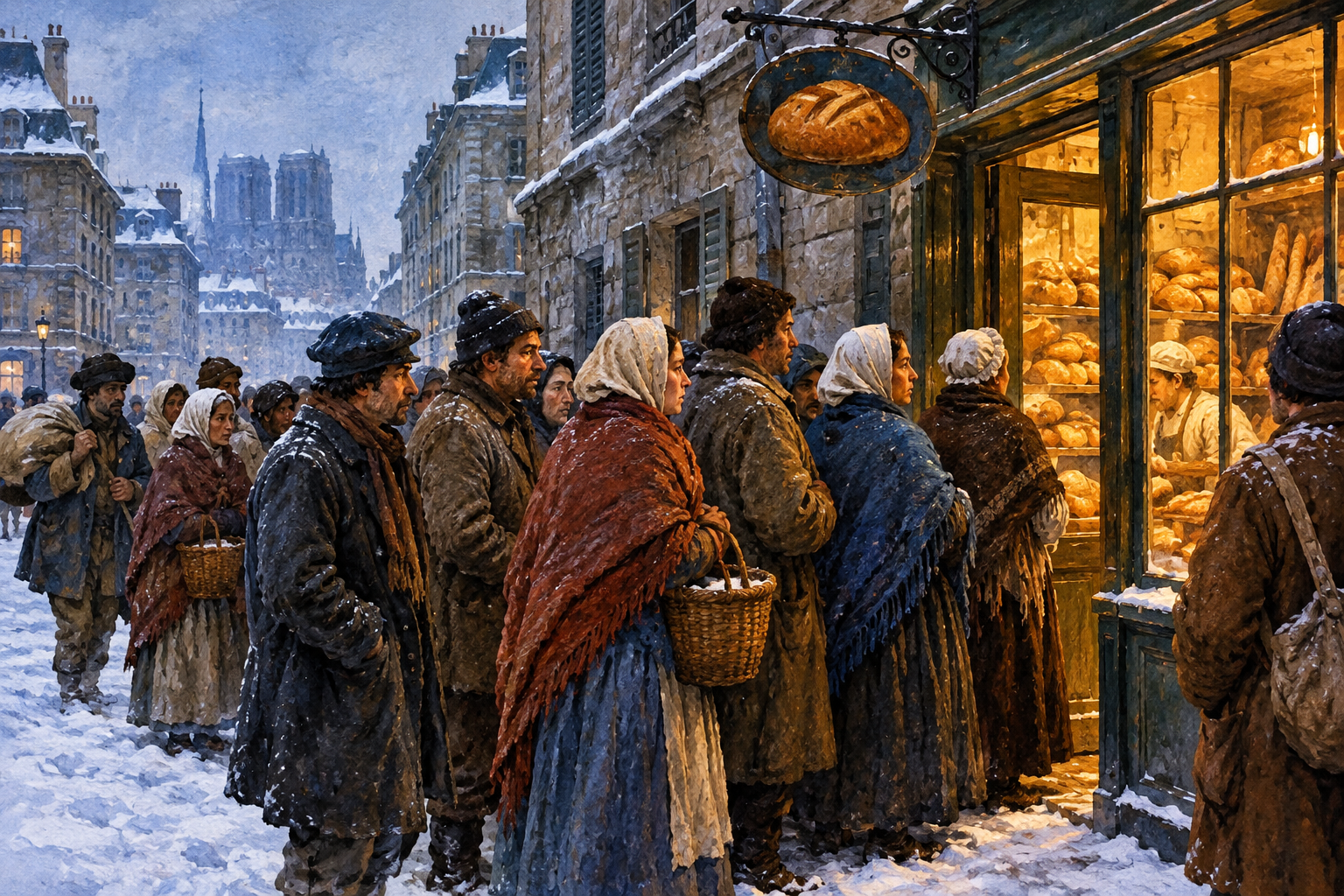
From the 1830s, steam power, coal and iron made railways and factories the core of economic life, first in Britain and then in Belgium, France, Germany and the United States. Factories pulled people from villages into crowded cities. Work followed the clock and the machine. Conditions were often harsh, especially for children and women in mills and mines. Reformers pushed for factory laws, schooling and sanitation, and by the late 1800s many governments accepted some responsibility for workers' lives.
Communication and travel changed too. The electric telegraph, working in practical form from the 1840s, let news cross long distances in minutes rather than weeks. Steamships shortened ocean crossings, and the Suez Canal, opened in 1869, cut the sea route between Europe and Asia.
Nations and the making of states
Nationalism, the belief that people who share a language and history should share one state, redrew the map of Europe. Italy was unified as a kingdom in 1861, and the German Empire was proclaimed in 1871, after victory over France. In the United States, the Civil War (1861–1865) ended slavery, and the Thirteenth Amendment, ratified in 1865, abolished it across the nation. In Russia, the tsar freed the serfs in 1861, but the terms left many peasants in long-term debt.
Empires and the scramble for control
European powers, and later the United States and Japan, extended their control across the world. Britain took direct rule of India in 1858, after the rebellion of 1857 and the end of the East India Company's rule. In 1884 and 1885, the Berlin Conference set rules for dividing Africa on paper. By 1900 almost all of the continent was under European control, with Ethiopia and Liberia the main exceptions.
Conquest was violent, and colonial rule rested on land seizure, forced labour, heavy taxation and racial hierarchy. These facts are central to understanding the period, not side notes.
China and Japan respond
China's Qing dynasty was pressed by the West from the First Opium War (1839–1842), which Britain won. The Treaty of Nanjing of 1842 ceded Hong Kong Island and opened several ports to trade. More defeats and unequal treaties followed. Internal rebellions, including the Taiping Rebellion, weakened the state further. The Xinhai Revolution of 1911 ended imperial rule, and the Qing dynasty formally fell in 1912.
Japan's response was different. After Commodore Matthew Perry's ships arrived in 1853, Japan signed treaties in 1854 that opened ports to American ships. The Tokugawa shogunate handed back power in 1867, and the Meiji Restoration of 1868 restored imperial rule. Leaders then built a modern army and navy, a school system, and a constitution in 1889. Japan defeated China in 1894–1895 and Russia in 1904–1905, and annexed Korea in 1910. Comparing these two responses is one of the most useful exercises for exams.
Total war, 1914–1918
By 1914 the great powers were locked into rival alliances, arms races and nationalist rivalries. The assassination of Archduke Franz Ferdinand in Sarajevo on 28 June 1914 set off a chain of declarations of war. A crisis in the Balkans became a global war, fought in Europe, Africa, the Middle East and at sea, with soldiers and workers drawn from across the empires. Machine guns, artillery and poison gas made trench warfare deadly, and whole economies were turned to war production.
The Russian Revolution of 1917 led to Russia leaving the war: in March 1918 the Bolshevik government signed a separate peace with Germany. On 11 November 1918 an armistice ended fighting on the Western Front, and the German and Austro-Hungarian monarchies collapsed as the fighting stopped. Formal peace treaties came in 1919, which falls outside this period.
Consequences: the world in 1918
By the end of 1918, the Russian, German, Austro-Hungarian and Ottoman empires had collapsed or were breaking apart. New states appeared in Central and Eastern Europe, and the idea that a few large empires ruled the world was badly weakened. Political participation widened too. In Britain, the Representation of the People Act of 1918 gave some women the vote, though not on the same terms as men.
The war left millions dead, damaged land and heavy debt. Death toll estimates vary widely, so any single figure should be used with care.
The period left the modern world with nation-states, mass politics, industrial economies and global trade. Understanding 1700 to 1918 explains why the twentieth century looked the way it did.
What exams ask
Exam questions rarely test a single date. They test causes, connections and significance. Expect questions such as: why did the French Revolution turn radical? How did industrialisation change social classes and cities? Why did European empires expand so quickly after about 1870? How did the First World War reshape the political map?
- Link cause and effect. Use the pattern: because of A, B happened, which led to C.
- Compare. Japan and China faced the same Western pressure but responded differently, which makes a strong comparison.
- Anchor with dates. 1789, 1815, 1848, 1914 and 1918 give your answer a clear structure.
- Judge significance. Ask why an event mattered later, not only what happened.
Read next
This hub gives you the big picture. These pages go deeper:
- The French Revolution Explained (1789–1799): how the revolution moved from reform to terror and changed ideas about rights.
- Qing China, Japan and the West (1793–1912): how two East Asian states answered Western pressure.
- Imperialism: What It Was, Why It Happened, What It Left Behind: the empire section of this guide, in more detail.
- World War I (1914–1918): Causes, Course and Consequences: how alliances and trench warfare turned a crisis into a world war.