In five minutes
The causes of the French Revolution were not one event. A government deep in debt, a tax system that let the privileged off lightly, bad harvests that pushed bread prices up, Enlightenment ideas that questioned the old order and a political deadlock over reform all came together. In 1789 the king had to call the Estates-General, and that meeting became the start of the Revolution.
Historians often sort the causes into political, economic, social and intellectual groups, but the groups overlap. A money crisis made reform urgent. Reform threatened privilege, so the privileged resisted. Resistance blocked the money fix, which made the crisis worse. Hungry people had even less patience with taxes and privilege. Following that chain is the best way to understand 1789.
This article is part of our guide to the French Revolution, which covers the whole period.
The five causes of the French Revolution
Most historians discuss five causes. Each explains part of the picture, and none explains the Revolution alone.
1. Debt from war and deficits
France fought many wars across the eighteenth century and paid for most of them by borrowing. Its support for the American colonies in their war of independence, which France joined in 1778, added a large bill. By the 1780s the Crown was spending more each year than it collected and covering the gap with loans. Interest payments took a growing share of the budget. Lenders grew cautious, so borrowing became harder, and the government fell into the trap of borrowing again just to repay old debts.
A new tax was the obvious answer, and that raised a question everyone could see: who would pay?
2. Unfair taxes and privilege
Before 1789, French society was divided into three estates. The clergy (the First Estate) and the nobility (the Second Estate) together made up only about 2 percent of the population. The Third Estate, the other 98 percent, included peasants, town workers, merchants and lawyers. The clergy were exempt from most direct taxes, and many nobles paid far less than commoners. The heaviest load fell on the Third Estate, and peasants, who made up most of the country, owned only about a third of the land.
That made reform hard. A plan that asked the privileged to pay their share challenged the basic logic of the old order, so the privileged fought it. The Third Estate paid most of the tax and had the least say in how it was raised.
3. Bad harvests and rising bread prices
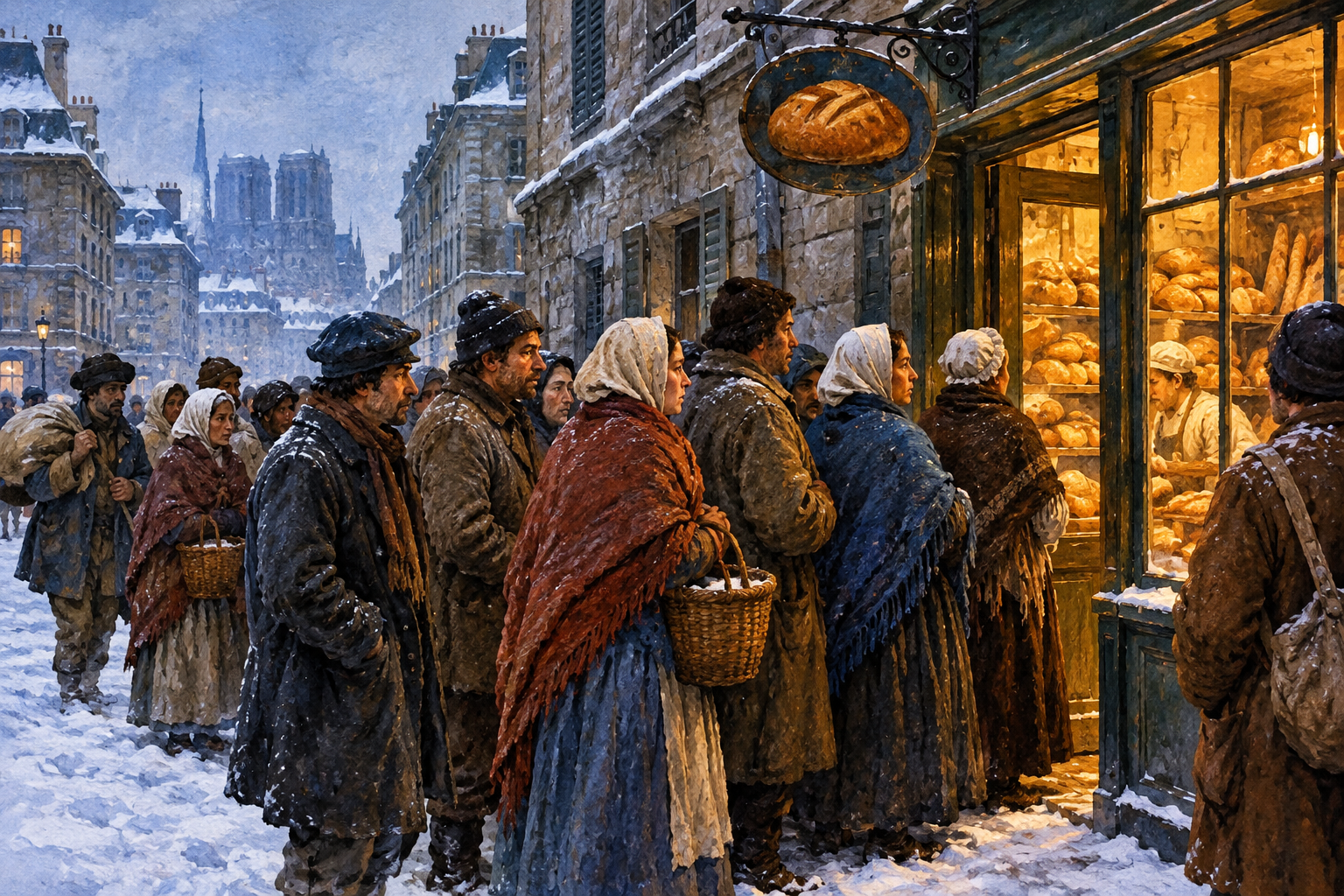
Bread was the staple food for most people in France, and its price shaped daily life. Economic trouble in the mid-1780s left many workers without steady jobs, and wages did not keep pace with prices. A 1786 trade treaty with Britain also hurt French manufacturers. Then the harvests failed. Severe hail in the summer of 1788 damaged crops, and a bitterly cold winter froze rivers and stopped the mills that ground flour. In Paris, a four-pound loaf rose from about 8 sous (a small coin of the day) to about 14 sous by early 1789. For a family already short of money, that was a crisis.
Rising prices bred suspicion. Many people believed merchants and landowners were hoarding grain to push prices higher. Whether or not that was true, anger turned toward the government and the privileged. By spring and summer 1789, fear of hunger had spread widely, and that made the political crisis feel urgent to ordinary people.
4. Ideas of the Enlightenment
Writers such as Voltaire, Montesquieu and Rousseau criticized absolute monarchy, religious privilege and inherited rank. Their books were read by educated people in Paris and in provincial towns. Rousseau's The Social Contract (1762) argued that political authority rests on the agreement of the people.
The thinkers spread ideas of rights, equality before the law, and power that should answer to the people. For reformers, these became a shared vocabulary.
Historians still debate how far these ideas caused the Revolution. Most agree they changed how people judged the old system. They did not produce the crisis by themselves, but they gave the anger of 1788 and 1789 a language and a set of demands, such as a written constitution.
5. A political deadlock
The last cause was the political system itself. New taxes needed the agreement of the nobility and of the parlements, the high courts that had to register royal edicts before they took effect. A parlement that refused to register a tax stalled the reform, and each finance minister who tried to change taxes ran into this wall.
Charles Alexandre de Calonne tried to win support for tax reform through an Assembly of Notables, a gathering of nobles, clergy and magistrates, in February 1787. It did not give him the approval he wanted, and he was dismissed in April. His successor, Étienne Charles de Loménie de Brienne, faced the same resistance. The parlements refused to register new taxes and demanded that the Estates-General be called, a body that had not met since 1614. On 7 June 1788, the government's move against the Grenoble high court led to the Day of the Tiles, when crowds clashed with royal troops. Brienne resigned in August. Jacques Necker returned as finance minister, and the Estates-General was called for May 1789.
How the causes came together in 1789
When the Estates-General opened at Versailles on 5 May 1789, the first fight was over how to vote. The custom was to vote by estate, one vote each. The Third Estate had 600 deputies, more than the other two orders combined, but under this system the clergy and nobility could outvote it two to one. Many of the Third Estate's deputies were lawyers and other professionals from the towns.
For about a month, the Third Estate pushed for votes by head and was blocked. On 17 June it declared itself the National Assembly. The idea had been spread by Abbé Sieyès, whose pamphlet What Is the Third Estate? argued that the commoners were the nation. On 20 June the king ordered the meeting hall closed. The deputies gathered at a nearby indoor tennis court and swore not to separate until France had a constitution. This is known as the Tennis Court Oath. On 11 July Louis XVI dismissed Necker, who was seen as sympathetic to the Third Estate. On 14 July a crowd in Paris stormed the Bastille, a royal fortress and prison. The day later became France's national holiday.
By then the causes had fused. Debt had pushed the king into a corner. Privilege had made reform almost impossible. Bad harvests had made ordinary people desperate. Ideas gave their anger a language, and the political deadlock forced the Estates-General open. By September 1792, the monarchy had been abolished.
Common misunderstandings
Three ideas often lead students astray. The first is that the Revolution was sudden. The crisis built for years, from the wars of the 1770s and 1780s through the failed reforms of 1787 and 1788. The second is that only the poor wanted change. Lawyers, merchants and other middle-class people were prominent among the Third Estate's deputies, and they wanted fair taxes and a real say in government. The third is that ideas alone caused it. Ideas mattered most when money, food and politics were already in crisis.
What exams ask
Exam questions often ask students to explain causes, rank them or show how one led to another. A strong answer does three things. It names a cause and gives one specific fact, such as the 1787 Assembly of Notables. It explains the link to the next cause, such as how failed reform led to the Estates-General. And it judges the cause, separating long-term structures from the immediate trigger. A clear thesis might say the fiscal crisis was the immediate cause, while privilege and the political system explain why it could not be solved quietly.
Read next
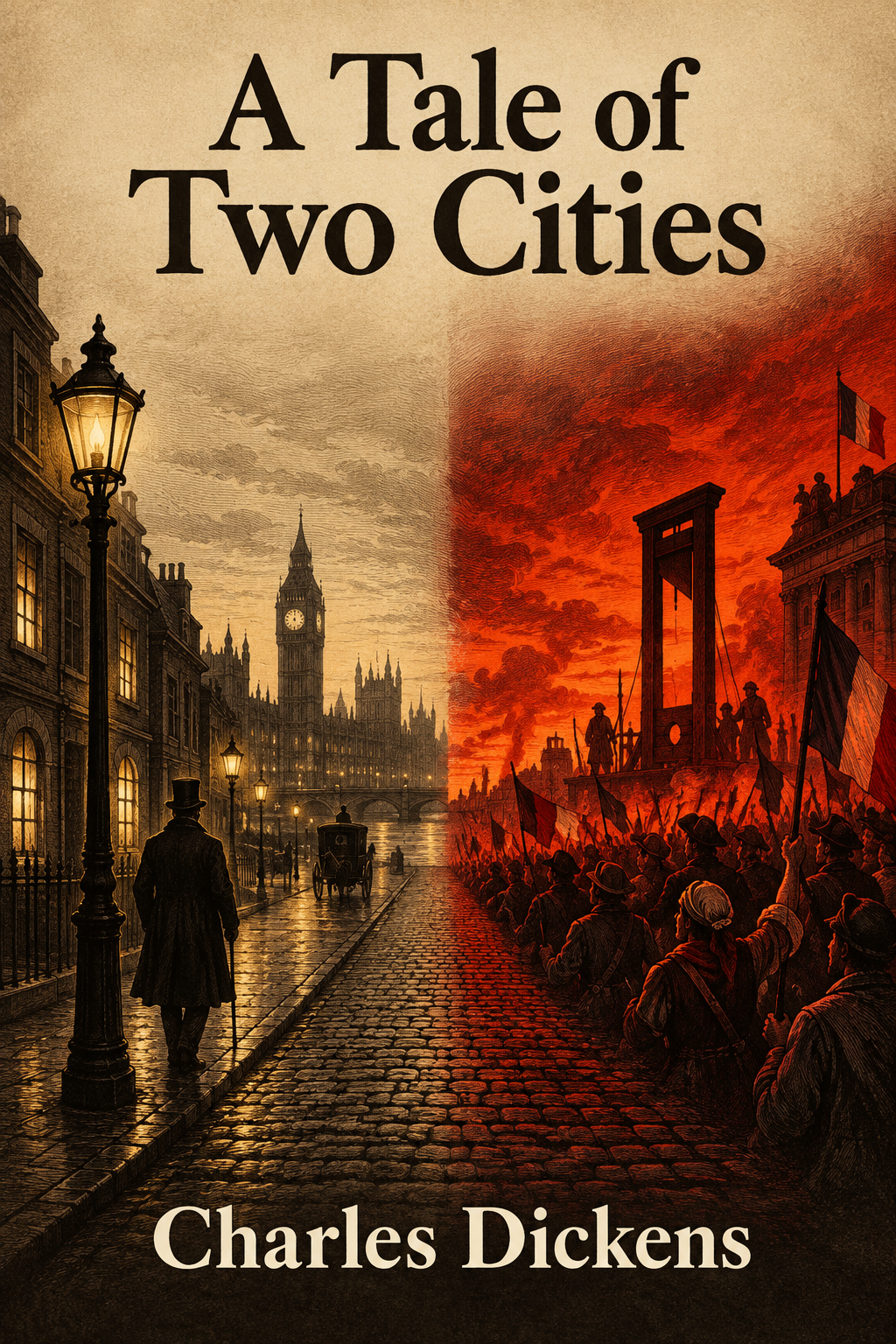
To see the events in order, read French Revolution Timeline 1789–1799. For the king at the center of the crisis, read Who Was Louis XVI?. To see how the period was dramatized, read A Tale of Two Cities: The History Behind Dickens's Novel, then the novel itself: A Tale of Two Cities, which is set in London and Paris during the Revolution.