Nicholas II in five minutes
Nicholas II (1868–1918) was the last emperor of Russia and the man who wore the crown when the Romanov dynasty, three centuries old, fell. He took the throne in 1894 believing a tsar must rule alone, as his father had. Over 22 years, a lost war with Japan, the revolution of 1905, a world war and a hungry capital showed that this belief no longer worked. He abdicated in March 1917, and Bolshevik guards shot him, his wife and their five children in July 1918. For the wider story, see The Russian Empire (1721–1917). Dates below use the modern calendar; Russia then used the Julian calendar, which ran 13 days behind in the 1900s.
Early life and the Otsu attack
Nicholas was born on 18 May 1868 at Tsarskoye Selo, near St Petersburg, the eldest son of the future Alexander III. His grandfather, Alexander II, was killed by a bomb thrown by the revolutionary group People’s Will in 1881 (see The Narodniks). Alexander III answered by ending reforms and tightening police control, and Nicholas grew up believing that a tsar’s first duty was to defend autocracy.
In 1890–91 the young heir toured Asia. On 11 May 1891, in Otsu, Japan, a policeman named Tsuda Sanzo struck him on the head with a sword while he rode in a rickshaw. Nicholas survived with a scar. Japan’s leaders feared war with Russia and apologised at once. The government pressed for a death sentence, but Japan’s Supreme Court refused to bend the law and sentenced Tsuda to life in prison, a case still taught in Japan as a landmark for judicial independence.
An autocrat by inheritance (1894–1904)
Alexander III died on 1 November 1894, and Nicholas became tsar at 26. Within four weeks he married Alix of Hesse, a granddaughter of Queen Victoria, who took the name Alexandra Fyodorovna. It was a love match. They had four daughters (Olga, Tatiana, Maria and Anastasia) and one son, Alexei.
In January 1895 Nicholas told delegates of the local councils that hopes of sharing in government were “senseless dreams”. His coronation celebrations in May 1896 ended in disaster: a crowd gathered at Khodynka field in Moscow for free gifts, and more than 1,300 people were crushed to death. Nicholas still attended a ball that evening, and critics took it as a sign of coldness.
Under finance minister Sergei Witte, Russia built the Trans-Siberian Railway, adopted the gold standard in 1897 and industrialised fast. Factory towns grew, and so did workers’ anger. Nicholas proposed the 1899 Hague peace conference, yet he also pushed Russian influence in Manchuria and Korea, which set Russia against Japan.
War with Japan and the 1905 Revolution
Japan attacked the Russian fleet at Port Arthur in February 1904, starting the Russo-Japanese War. Russia lost Port Arthur in January 1905 and the Battle of Mukden in March. In May its Baltic Fleet, after sailing halfway round the world, was destroyed at Tsushima. The Treaty of Portsmouth (5 September 1905), arranged by US president Theodore Roosevelt, gave Japan southern Sakhalin and Russia’s lease on Port Arthur, and left Korea within Japan’s sphere. Russia paid no indemnity.
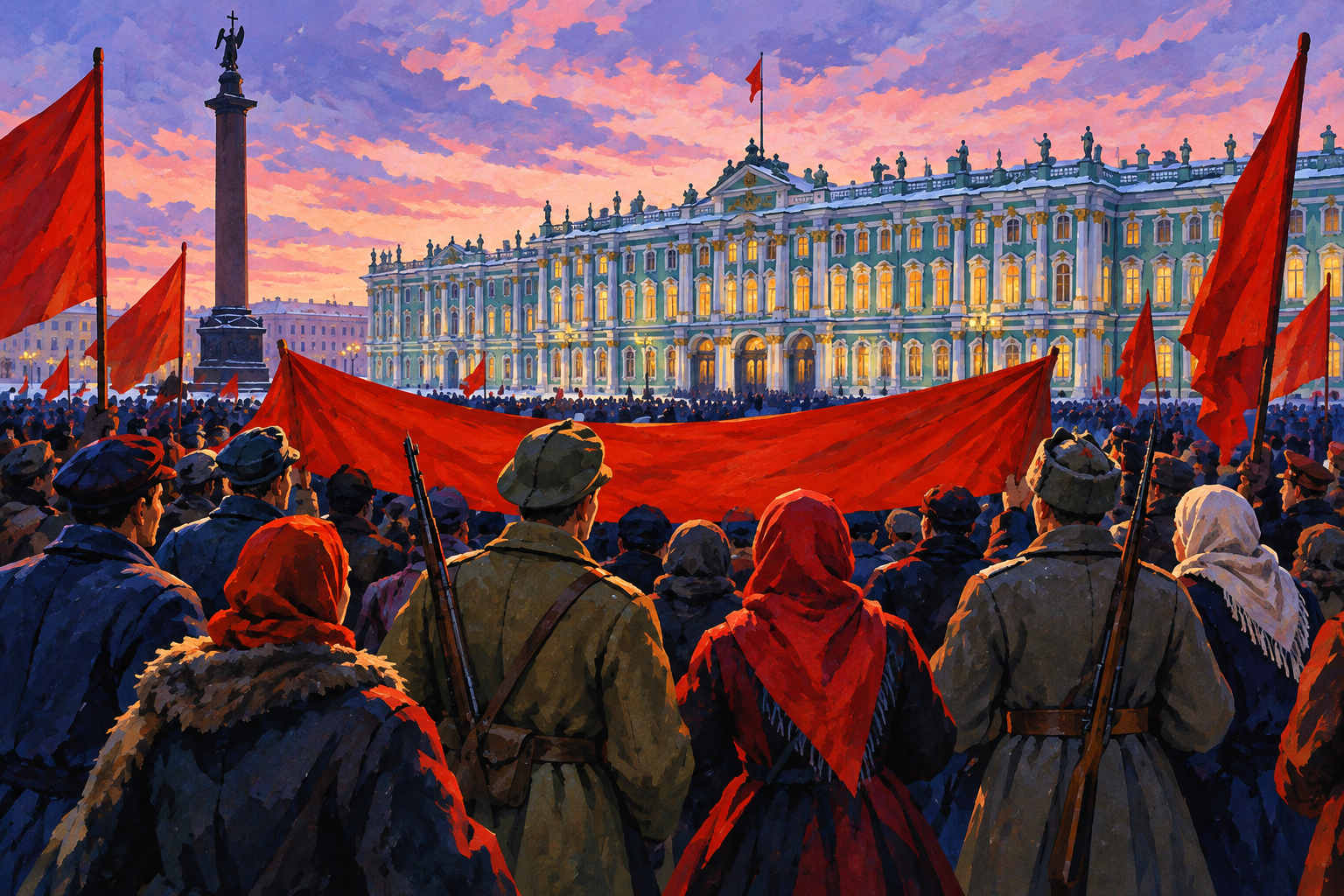
Defeat fed unrest at home. On 22 January 1905, “Bloody Sunday”, a priest named Georgy Gapon led workers and their families to the Winter Palace to petition the tsar. Troops fired on the crowd. Nicholas was not in the city. The government counted about 100 dead; other estimates are several times higher. Strikes, peasant revolts and mutinies followed.
In October 1905 a general strike forced a choice. On 30 October Nicholas signed the October Manifesto, promising civil liberties and an elected parliament, the Duma, whose approval new laws would need. Witte became head of the government. But the Fundamental Laws of May 1906 kept the tsar in charge of ministers, foreign policy and the army, and let him dissolve the Duma. He did not give up the title of autocrat.
The Duma years, the Tsarevich and Rasputin
The first Duma lasted about ten weeks in 1906 before the tsar dissolved it. The second met in 1907 and was dissolved too, after which the electoral law was changed to favour landowners. Prime minister Pyotr Stolypin crushed revolutionaries with harsh military courts and tried to create a class of independent farmers. He was shot in Kyiv in September 1911 and died days later.
Meanwhile the family guarded a secret: Alexei, born in 1904, had haemophilia, and any bruise could kill him. Alexandra turned to the wandering holy man Grigori Rasputin, whose presence seemed to calm the boy. That gave Rasputin a place at court and, later, a damaging reputation. See Who Was Rasputin? for his story. In 1913 the dynasty celebrated 300 years of rule with splendid ceremonies. Four years later it was gone.
World War I and the fall
Russia entered the First World War in August 1914 as an ally of France and Britain. Early defeats, such as Tannenberg, were followed by the long retreat of 1915. In September 1915 Nicholas took personal command of the army and moved to headquarters at Mogilev. This tied his name to the army’s failures and left Alexandra and her advisers running the capital. Ministers were replaced again and again. Rasputin was murdered by a group of nobles in December 1916.
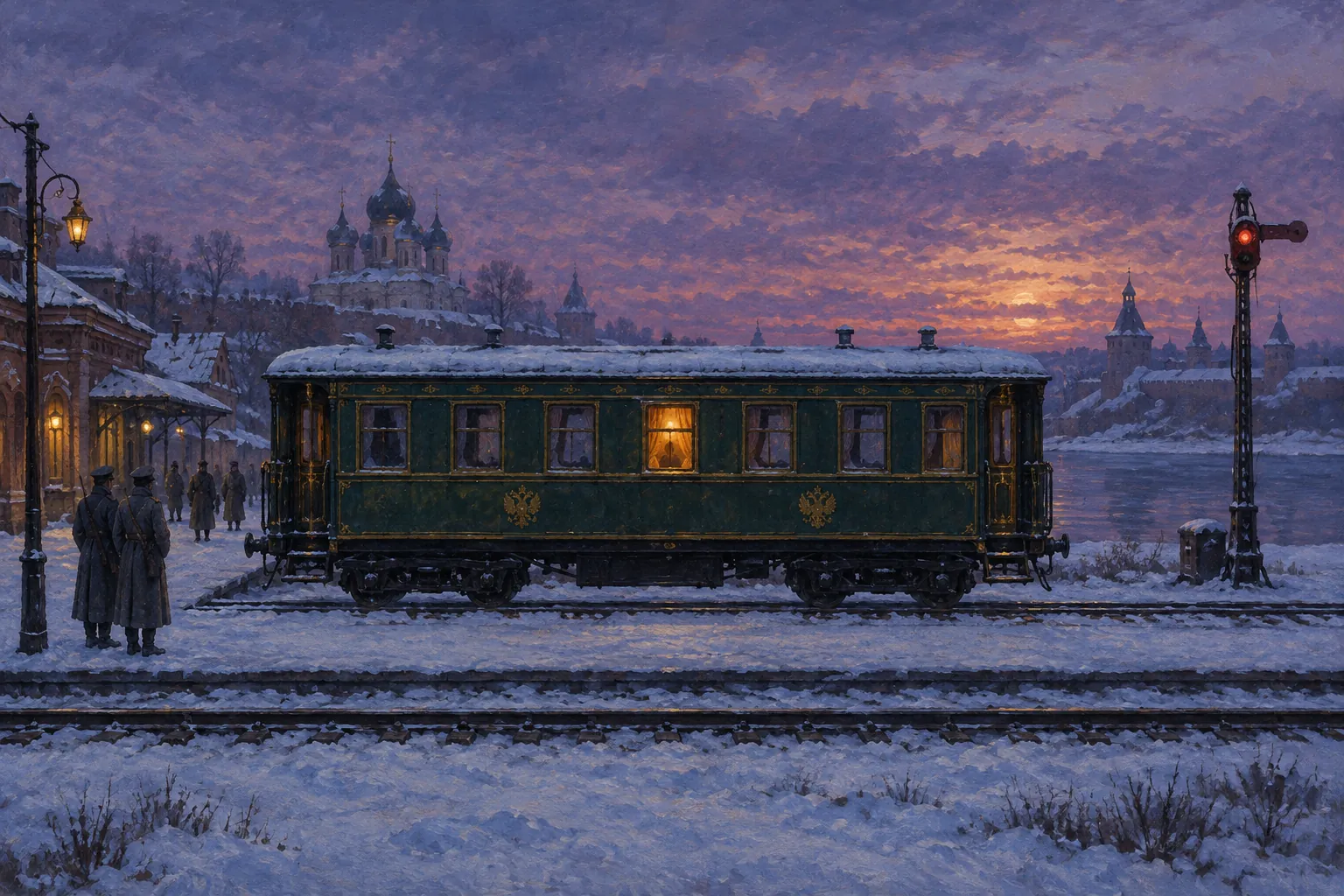
By early 1917 the war had cost Russia millions of casualties, and cities faced food shortages and rising prices. On 8 March 1917 (23 February in the Russian calendar), women textile workers marched in Petrograd on International Women’s Day demanding bread. Strikes spread, and soldiers sent to restore order joined the crowds. Army commanders and Duma leaders told Nicholas he had to go. On 15 March, at Pskov, he signed his abdication for himself and Alexei in favour of his brother, Grand Duke Michael. Michael declined the crown the next day. Romanov rule, which began in 1613, was over. See The Russian Revolution of 1917 for what followed.
Captivity, death and afterwards
The Provisional Government kept the family under guard at Tsarskoye Selo, then sent them to Tobolsk in Siberia in August 1917. After the Bolsheviks took power, the family was moved in spring 1918 to the Ipatiev House in Yekaterinburg. As civil war closed in, Bolshevik guards woke them in the early hours of 17 July 1918 and shot Nicholas, Alexandra, their five children and four attendants in the basement.
The bodies were hidden, and for decades their fate was unknown. A grave was found in 1979 and opened in 1991. DNA tests identified the remains, which were buried in the Peter and Paul Cathedral in St Petersburg in 1998. The bones of Alexei and one of his sisters were found nearby in 2007. The Russian Orthodox Church declared the family saints (passion-bearers) in 2000, and Russia’s Supreme Court ruled in 2008 that they were victims of political repression. The story of a surviving Anastasia ended when DNA showed that Anna Anderson, the best-known claimant, was not a Romanov.
Historians often describe Nicholas as a devoted husband and father and a deeply pious man. They also describe a ruler who was stubborn about autocracy and who struggled to choose and back capable ministers. A fast-changing country needed someone willing to share power. Nicholas could not accept that.
What exams ask
- Causes of the 1905 Revolution: defeat in the Russo-Japanese War, Bloody Sunday and economic hardship. Result: the October Manifesto and the Duma, but with limited power.
- Why the monarchy fell in 1917: wartime losses and shortages, the tsar’s command of the army, Rasputin’s influence and the refusal to share power.
- Compare Nicholas II with Alexander II: reform from above versus reluctant concession under pressure.
- Know the key terms: autocracy, Duma, Bloody Sunday, Provisional Government, abdication.
Read next
- The Russian Revolution of 1917 shows how the monarchy’s fall led to Bolshevik rule.
- Who Was Rasputin? explains the healer who gained so much influence at court.
- The Narodniks covers the revolutionary movement that shaped Alexander III’s hard line.