In five minutes: what happened to Anastasia Romanov?
Anastasia Nikolaevna Romanova was the youngest daughter of Nicholas II, the last tsar of the Russian Empire. She was shot, with her parents, her sisters Olga, Tatiana and Maria, her brother Alexei and four attendants, in the cellar of the Ipatiev House in Yekaterinburg on the night of 16 to 17 July 1918. She was 17.
So why did people believe she survived? The bodies were hidden, the new Soviet government gave confusing statements for years, and many people in exile wanted a happy ending. In 1920 a woman in Berlin began to say she was Anastasia, and the story grew from there. Modern DNA tests show that the woman, known as Anna Anderson, was not a Romanov, and that Anastasia's family died together in 1918.
Who was Anastasia?
Anastasia was born on 18 June 1901 (5 June in the old Russian calendar) at Peterhof, near St Petersburg. She was the fourth of four daughters. Her brother Alexei, born in 1904, was the heir, and he had haemophilia, a condition that kept the family close and anxious. People who knew her described a quick, funny, mischievous girl who liked to play pranks and climb trees. Her family nickname, shvybzik, is often translated as 'imp'.
She grew up in a life of palaces and strict routine, but also of war. When the First World War began, the sisters worked as nurses' helpers in hospitals for wounded soldiers. The monarchy was already under heavy strain, as the earlier crisis of Bloody Sunday in 1905 had shown. In March 1917 Nicholas II gave up the throne during the Russian Revolution of 1917, and the family became prisoners, first near Petrograd, then in Tobolsk in Siberia, and from spring 1918 in Yekaterinburg in the Urals.
What happened on 17 July 1918?
By July 1918 a civil war was under way, and anti-Bolshevik forces were moving towards Yekaterinburg. The local Bolshevik authorities in the Urals decided to kill the family rather than let them be rescued. The Ural Soviet later took responsibility for the order; historians still debate how far Moscow knew and approved.
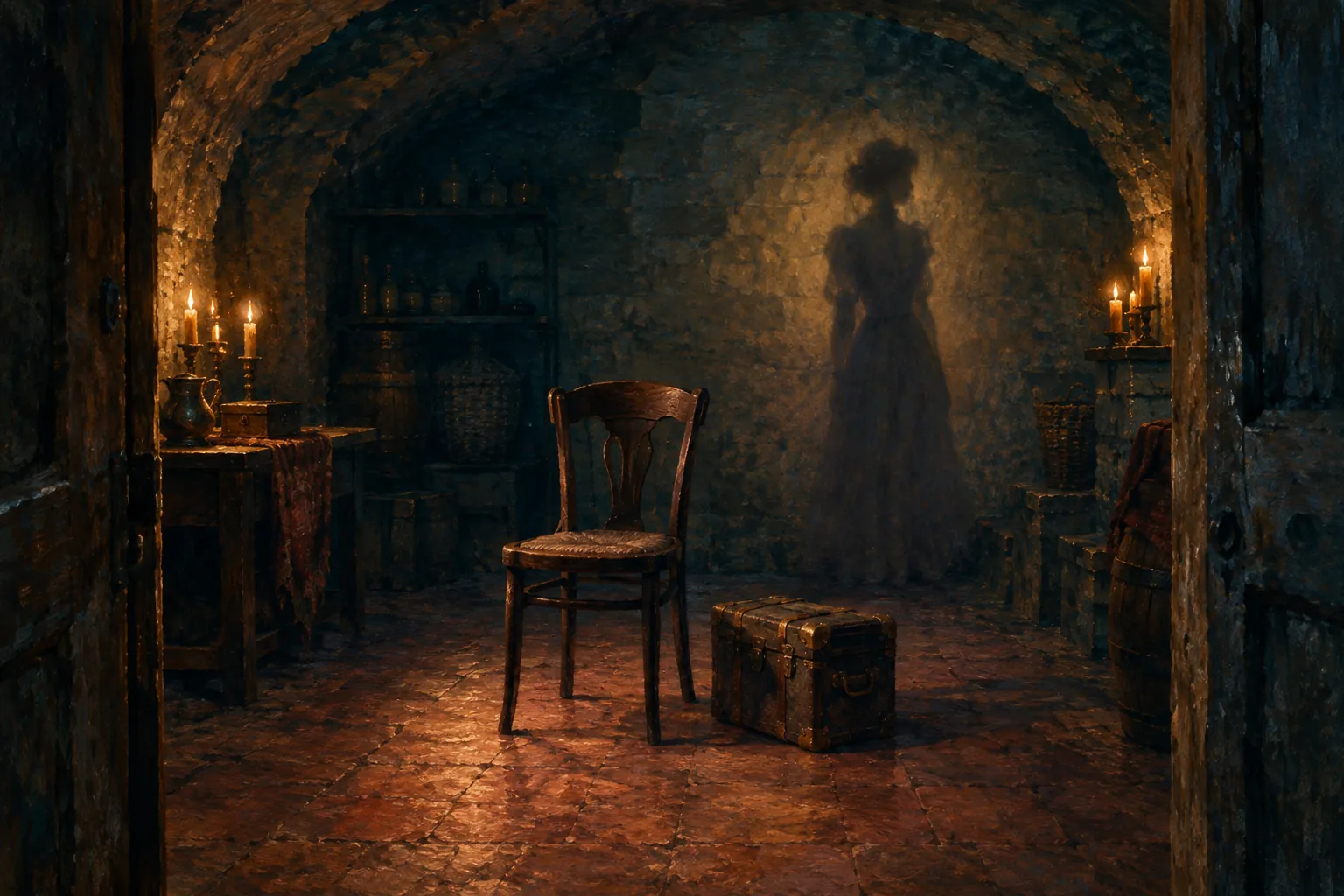
In the early hours of 17 July the family and four people who stayed with them, the doctor Yevgeny Botkin, the cook Ivan Kharitonov, the footman Alexei Trupp and the maid Anna Demidova, were woken and taken down to a small cellar room. They were told they were being moved because of unrest in the town. A squad led by Yakov Yurovsky then shot them. Accounts say the daughters were not killed at once, partly because they had sewn jewels into their clothes, and the killers had to finish the job with more shots and bayonets. The bodies were taken to the forest outside the city, hidden in a mine shaft, and then moved and buried in two places.
Because the killers kept the burials secret and the Soviet government first announced only that the former tsar had been shot, rumours flourished. For years there was no proof of what had happened to the children.
Why did the survival story spread?
Several things made the myth easy to believe. There were no graves to visit. The Soviet press said, for a time, that Nicholas alone had been executed and that the rest of the family had been moved to a safe place. White Russian investigators, led by Nikolai Sokolov, collected evidence in the Urals and concluded that the whole family had died, but émigré circles still argued. And Anastasia, the youngest and liveliest sister, was the one people most wanted to imagine as a survivor.
Many people came forward claiming to be Romanov children. Anastasia was the most popular choice, and over the years dozens of women said they were her. One of them became world famous.
Anna Anderson: the most famous claimant
In February 1920 a young woman was pulled from a canal in Berlin after a suicide attempt. She was taken to a hospital and later to a mental asylum. She gave no name at first. Some fellow patients and visitors began to suggest she was a Russian grand duchess, and she eventually said she was Anastasia. She later became known as Anna Anderson, a name she used in the United States.
Her supporters pointed to her scars, her resemblance in some photographs and her knowledge of court life. Most members of the Romanov family and people who had known the girl in the palace, however, did not accept her. Her story was also full of gaps, and her Russian was poor. A legal battle over her identity began in Germany in 1938 and ran for decades. In 1970 the West German Federal Court of Justice upheld earlier rulings that she had not proved she was Anastasia. That is not the same as proving she was not, and the question stayed open for the public until the science caught up.
Anderson moved to Virginia in 1968, married a history professor, John Manahan, and died there on 12 February 1984.
The graves and the DNA
The answer came from the ground. In 1979 amateur investigators found the main grave near Yekaterinburg, but kept quiet because of Soviet secrecy. It was opened in 1991 after the end of the USSR, and it held the bones of nine people: Nicholas, Alexandra, three of their daughters and the four attendants. Two children were missing: Alexei and one daughter.
Scientists compared the bones with living relatives of the family, including Prince Philip, Duke of Edinburgh, who shared maternal-line DNA with Alexandra. The matches identified the tsar and tsarina, and showed that the three girls were their children. In 2007 a second grave was found a short distance away, containing the remains of a boy and a young woman. Russian and international DNA tests in 2008 confirmed that they were Alexei and one of his sisters. Together the two graves account for all seven family members.
Anna Anderson's case ended with the same science. After her death, a sample of her tissue kept at a hospital in Virginia was tested in 1994, and the DNA did not match the Romanovs. It did match a relative of Franziska Schanzkowska, a Polish factory worker who had disappeared in Berlin in 1920. The Romanov family was formally buried in St Petersburg in 1998, and the Russian Orthodox Church declared them saints in 2000.
What exams ask
- Context: Know the sequence: abdication of Nicholas II (March 1917), imprisonment, the move to Yekaterinburg (spring 1918), and execution on 17 July 1918 during the Russian Civil War.
- Significance: The execution ended the Romanov dynasty, which had ruled since 1613, and showed how far the Bolsheviks were willing to go in the civil war.
- Source skills: Explain why rumour grew when the Soviet government concealed the graves, and why DNA is stronger evidence than eyewitness impressions.
- Common trap: The 1970 German ruling did not prove Anderson was a fraud. DNA from 1994 did.
Read next
- The Execution of the Romanov Family (1918): the full story of the night in the Ipatiev House.
- The Russian Revolution of 1917: how the tsar lost his throne.
- Bloody Sunday (1905): the event that shook trust in the monarchy.
- The Russian Empire (1721–1917): the hub for the whole topic.