In five minutes: World War I Germany
In 1914 Germany had the strongest army on the European continent. It fought for four years on two fronts, against France and Britain in the west and Russia in the east, and it lost. No single battle decided the war. A plan for a quick victory failed, a naval blockade cut off food and raw materials, and in 1917 the United States joined the enemy side. Together these wore Germany down.
Kaiser Wilhelm II (1859–1941) was head of state and supreme commander. Yet as the war dragged on, the big decisions moved to his generals. When the army admitted defeat in autumn 1918, a revolution at home ended the monarchy. This page belongs to our hub, World War I (1914–1918): Causes, Course and Consequences.
Wilhelm II and the road to war
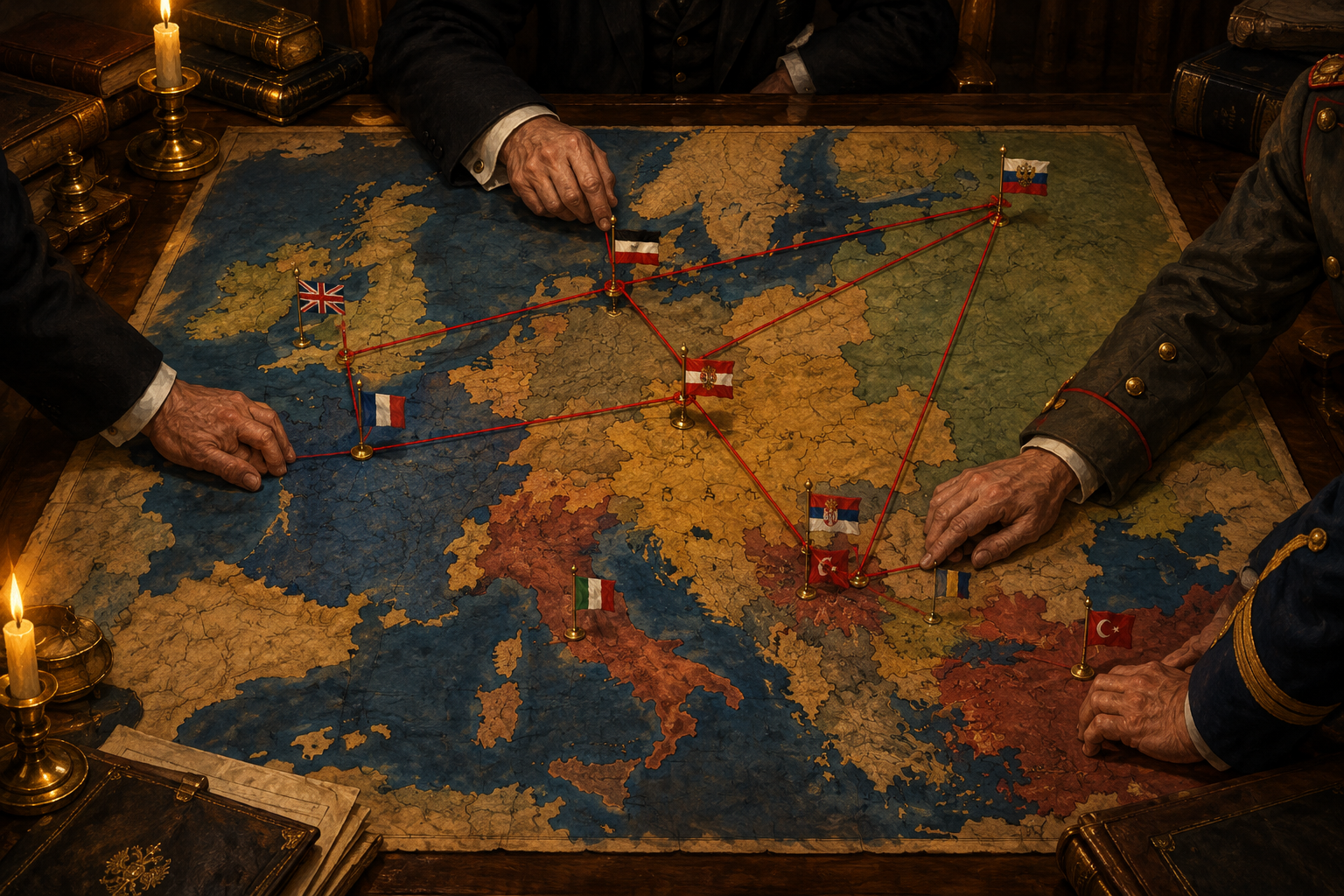
Wilhelm became Kaiser in June 1888, aged 29. Two years later he pushed out Otto von Bismarck, the chancellor who had built the German Empire, and began to steer policy himself. He wanted a larger role for Germany in the world: colonies, a policy known as Weltpolitik, and a big battle fleet. The fleet, built under Admiral Alfred von Tirpitz, alarmed Britain and nudged it toward France and Russia. By 1907 Germany faced the Triple Entente, and its leaders felt encircled.
That fear fed militarism. The army enjoyed great prestige, officers set the tone in society, and the General Staff's timetables counted for more than diplomacy. Wilhelm himself was restless and tactless, and his speeches often unsettled foreign capitals. But he was not the only author of policy. The chancellor, the army and the navy each pulled their own way, and the Kaiser often acted as the referee between them.
July 1914: the blank cheque
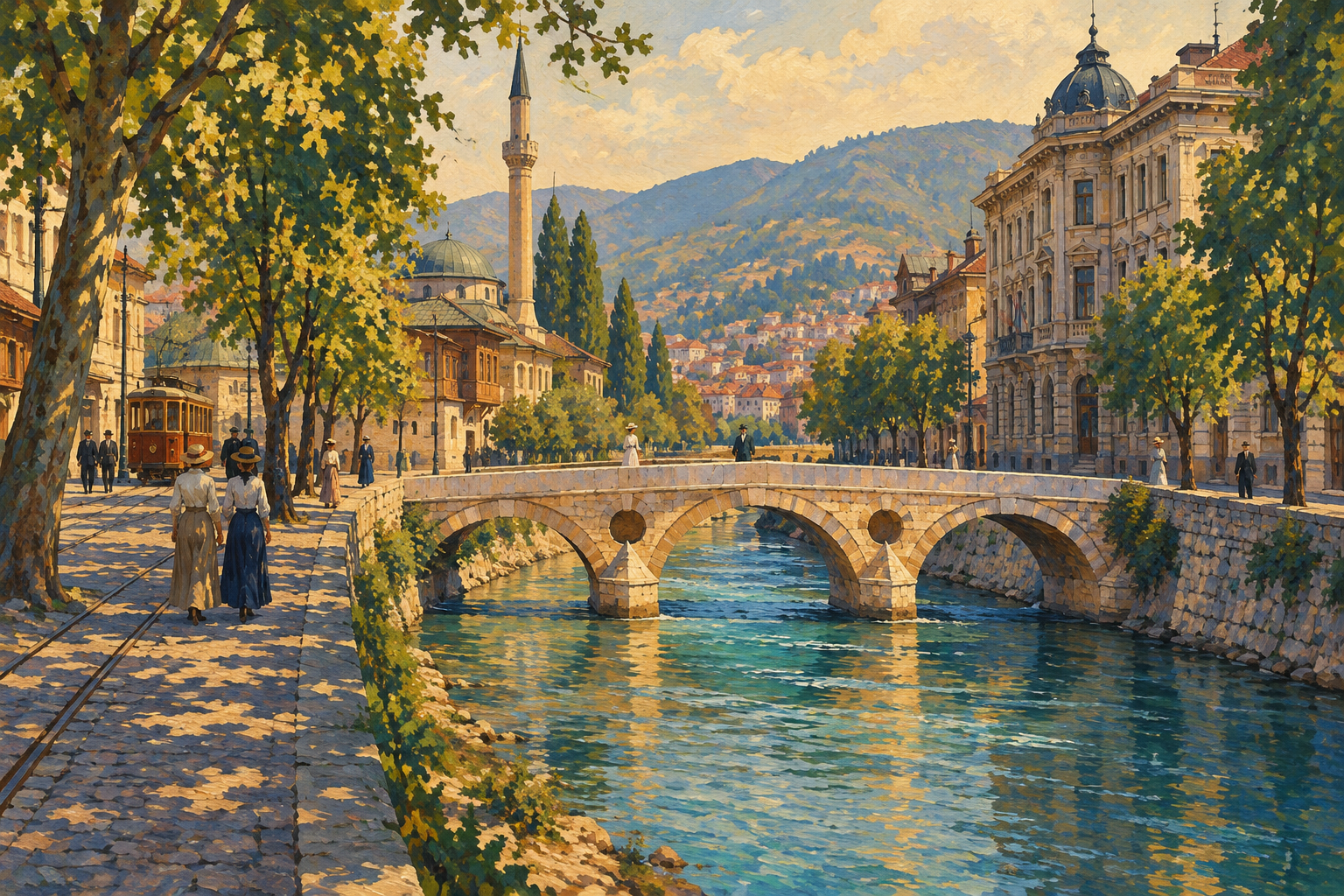
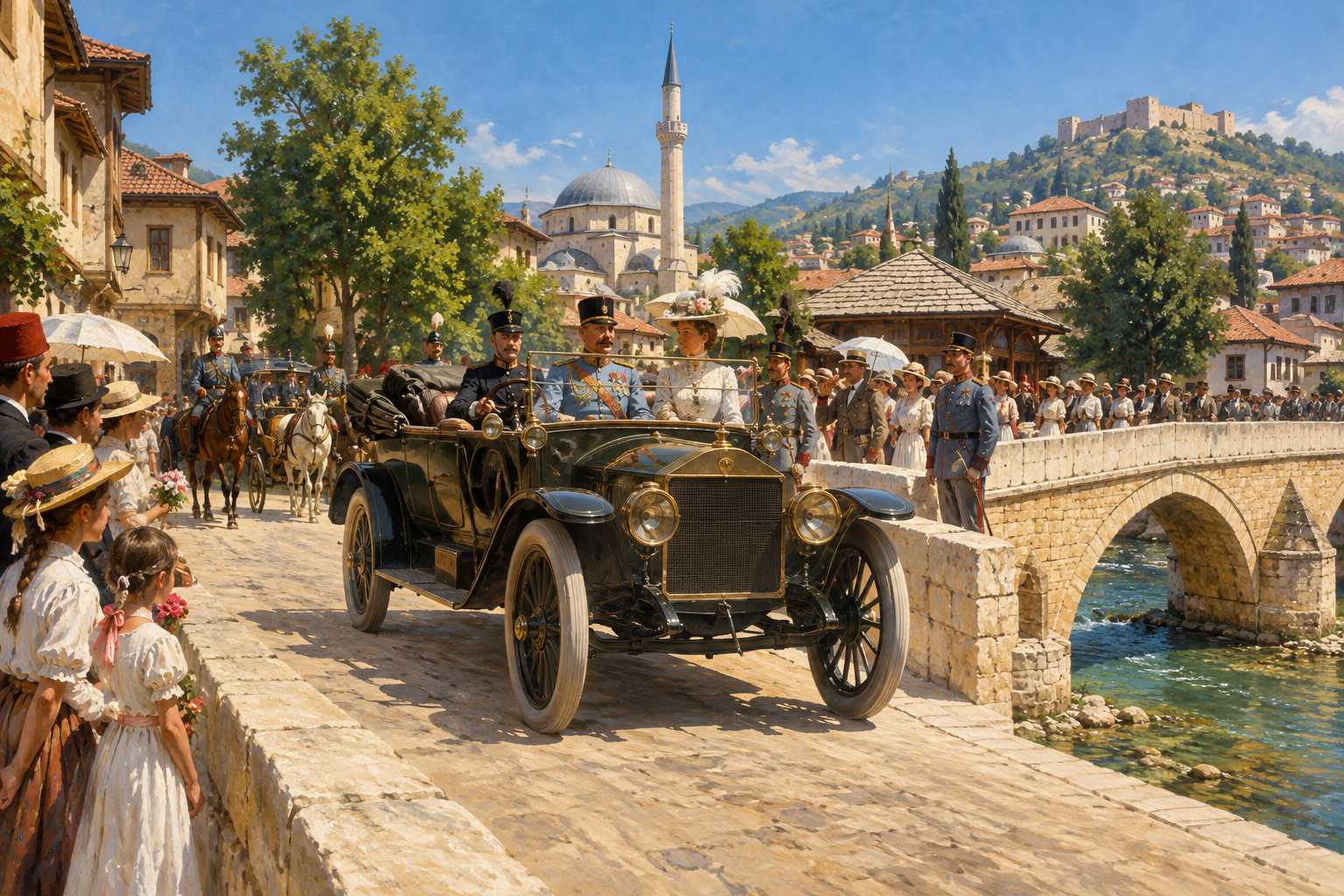
On 28 June 1914 Archduke Franz Ferdinand was assassinated in Sarajevo. Austria-Hungary asked Berlin whether it would support action against Serbia. On 5–6 July Wilhelm and Chancellor Theobald von Bethmann Hollweg promised backing. Historians call this promise the “blank cheque”. Berlin hoped for a short, local war, and it accepted the risk that Russia and France would join in.
When Wilhelm read Serbia's reply on 28 July, he felt it removed the reason for war and suggested that Austria simply occupy Belgrade and stop. It was too late. Mobilisation timetables had taken over, and military plans left little room to wait. Germany declared war on Russia on 1 August and on France on 3 August.
August 1914: the Schlieffen Plan fails
German strategy rested on the Schlieffen Plan: defeat France in about six weeks by marching through neutral Belgium, then turn east against slower Russia. German troops crossed into Belgium on 4 August, and Britain, which had guaranteed Belgian neutrality, declared war the same day. In the first weeks German forces killed thousands of Belgian and French civilians and burned the university library at Leuven. These acts turned much of world opinion against Germany.
The plan broke down at the Marne (5–12 September 1914). The German armies, stretched thin, fell back, and the western front hardened into trenches. Helmuth von Moltke the Younger lost his post as chief of the General Staff and was replaced by Erich von Falkenhayn. In the east, Paul von Hindenburg and Erich Ludendorff won the battle of Tannenberg in late August 1914, which made them national heroes. That fame mattered later.
1915–1916: a war of attrition
With no quick win, Germany had to fight a long war against opponents with more people and more resources. In 1915 it turned east and, with Austria-Hungary, pushed Russia back; see Russia in World War I. In 1916 Falkenhayn tried to break France at Verdun, which began on 21 February. He wanted to “bleed” the French army by attacking a place they would not give up. The battle lasted until December and cost both sides hundreds of thousands of casualties, without a decision. The Allied attack on the Somme from July added to the strain.
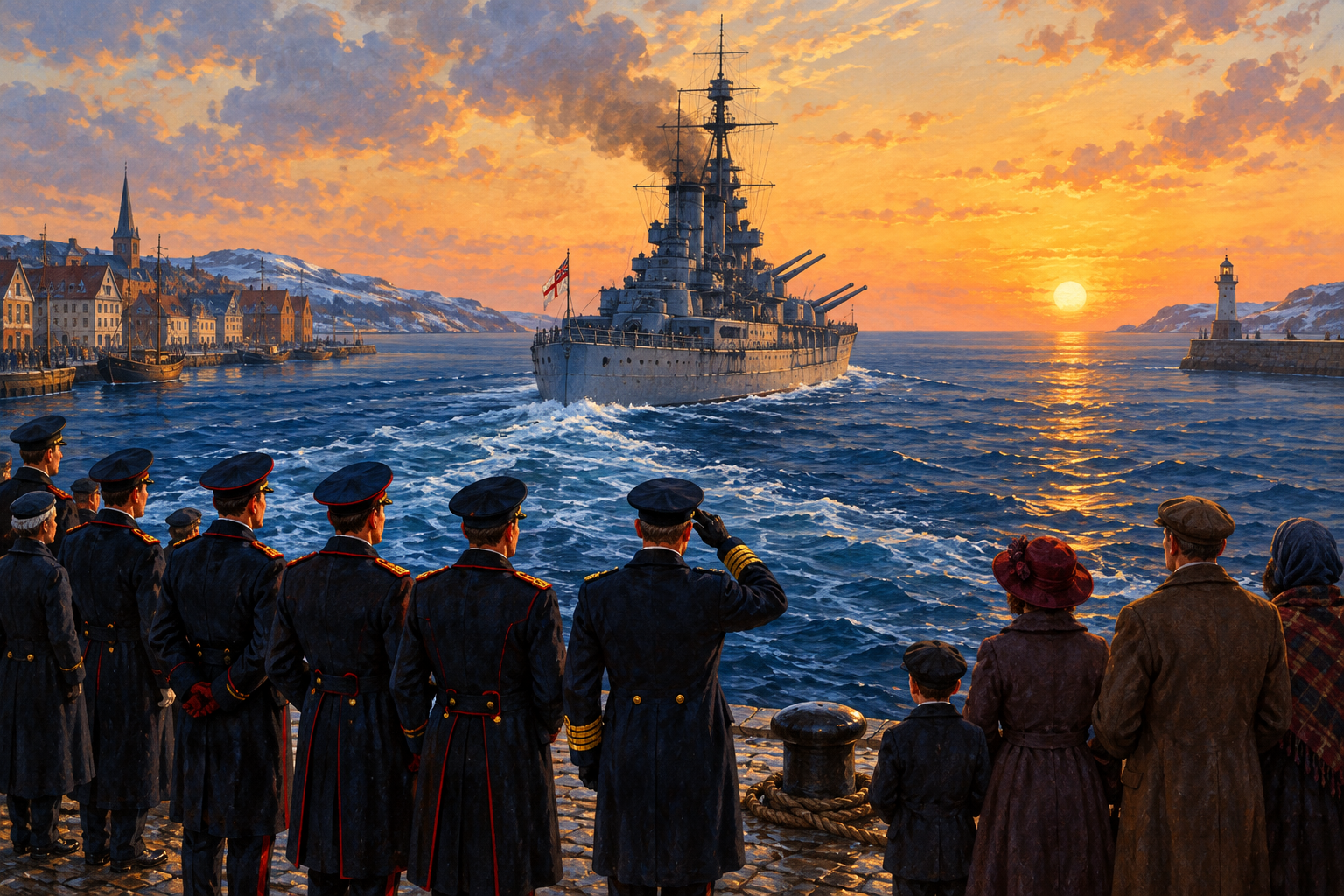
At sea, the fleet that Wilhelm loved had a mixed record. The battle of Jutland (31 May–1 June 1916) did not break the British blockade, and the High Seas Fleet spent most of the war in port. On 29 August 1916, after Romania joined the Allies and Verdun stalled, Wilhelm replaced Falkenhayn. Hindenburg became chief of the General Staff, with Ludendorff as his first quartermaster general. This pair is known as the Third Supreme Army Command.
The home front: blockade and hunger
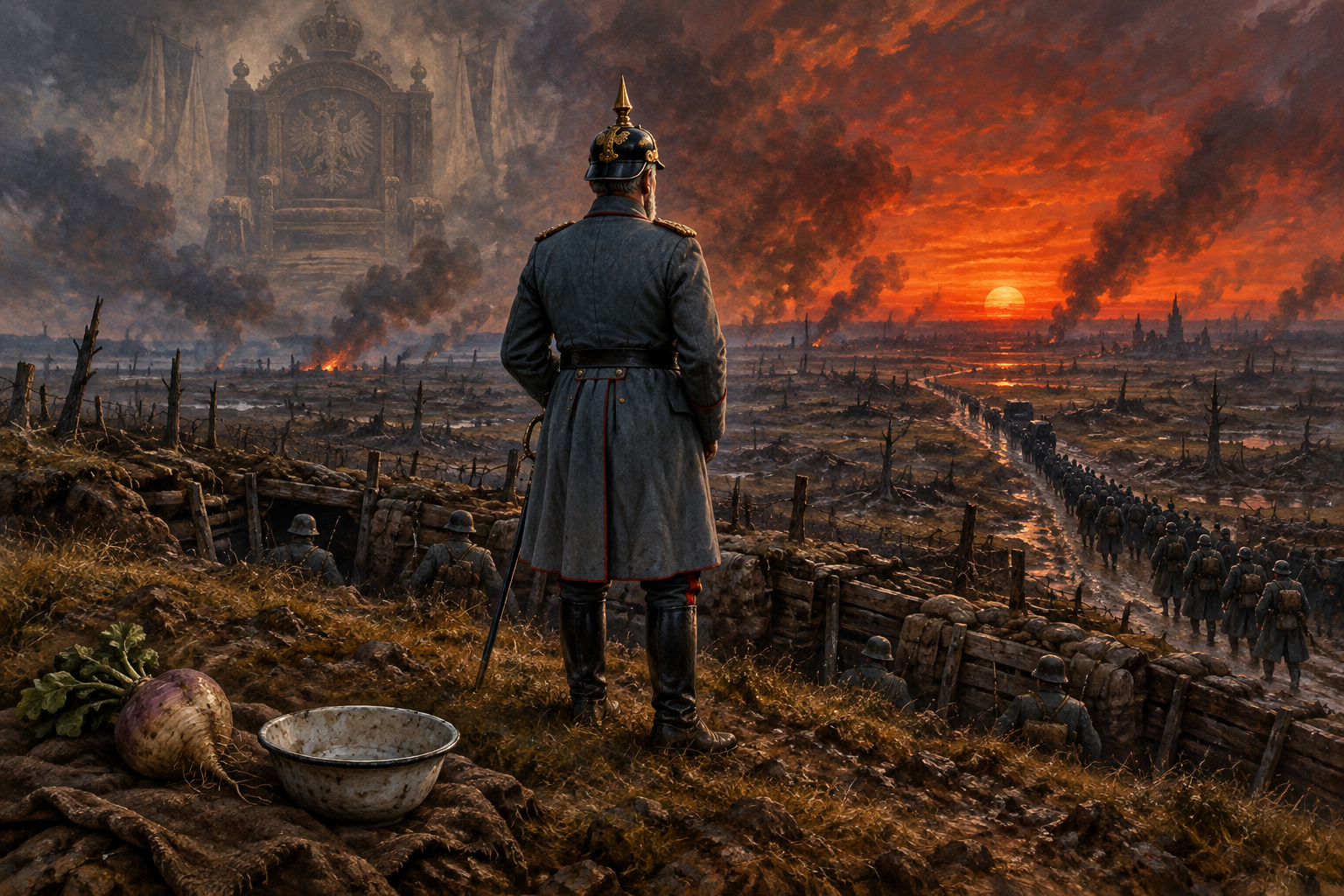
Britain's navy blockaded Germany from the start of the war, and food and raw material imports shrank. The government answered with rationing, price controls and a state-run war economy; the industrialist Walther Rathenau helped organise raw materials. A poor potato harvest in 1916 led to the “Turnip Winter” of 1916–17, when many Germans lived on turnips. The Auxiliary Service Law of December 1916 made men aged 17 to 60 liable for war work.
Hunger and long hours led to strikes in 1917 and 1918, and hundreds of thousands of civilian deaths are linked to malnutrition and related illness over the war. The political truce of August 1914, the Burgfrieden, wore thin. The Social Democrats split in 1917, and the Reichstag passed a peace resolution on 19 July 1917. Pressure from Hindenburg and Ludendorff forced Bethmann Hollweg out that same month. It showed where power now lay.
1917: submarines, America and Russia's exit
On 1 February 1917 Germany began unrestricted submarine warfare, sinking ships without warning, in the hope of starving Britain before the United States could act. In the same weeks the Zimmermann Telegram, a German proposal for an alliance with Mexico, was intercepted by British intelligence and made public. The United States declared war on Germany on 6 April 1917.
Good news came from the east. After revolution in Russia, the new Bolshevik government signed the Treaty of Brest-Litovsk on 3 March 1918. Germany gained huge territories, and it could move troops west. But the gain was smaller than it looked: many soldiers stayed behind to hold the occupied east.
1918: the last gamble and collapse
Ludendorff staked everything on the Spring Offensive, which began on 21 March 1918. It advanced farther than any attack on the western front since 1914, but it did not break the Allied line, and it cost troops that Germany could not replace. American soldiers were arriving in growing numbers. On 8 August British, French and Commonwealth troops broke through near Amiens, a day Ludendorff called the black day of the German army.
By late September, with Bulgaria collapsing, Ludendorff told the Kaiser and Hindenburg that Germany needed an armistice (29 September). Prince Max von Baden became chancellor on 3 October and asked US President Woodrow Wilson for terms. Constitutional changes in late October made the chancellor answerable to the Reichstag. Then, from 3 November, sailors at Kiel refused orders for a last sortie of the fleet, and the unrest spread across Germany.
On 9 November Prince Max announced that the Kaiser had abdicated, and Philipp Scheidemann proclaimed a republic from the Reichstag. Friedrich Ebert took over as chancellor. Wilhelm, at army headquarters in Spa, crossed into the Netherlands on 10 November. The armistice was signed in a railway carriage at Compiègne on 11 November 1918.
What was Wilhelm II's real role?
Wilhelm remained supreme war lord on paper. He toured the front, handed out medals and signed appointments. But he did not plan campaigns, and after August 1916 he rarely opposed Hindenburg and Ludendorff. Historians often describe the final two years as a military dictatorship in all but name. His reputation as the man who caused the war is also too simple. Responsibility was shared by many leaders in Berlin, Vienna, St Petersburg, Paris and London, although Germany's blank cheque of July 1914 was a major step.
The Treaty of Versailles (28 June 1919) called for Wilhelm to be tried, in Article 227. The Netherlands refused to hand him over. He lived at Doorn and died on 4 June 1941.
What exams ask
- Causes: Weltpolitik, the naval race, alliances, militarism and the July 1914 blank cheque. Be ready to weigh German responsibility against the other powers.
- Strategy: why the Schlieffen Plan failed at the Marne and why a two-front war was so costly.
- Total war: blockade, rationing, the Hindenburg Programme and the Auxiliary Service Law.
- 1917: unrestricted submarine warfare, the Zimmermann Telegram and US entry.
- End of the empire: Ludendorff's request, Kiel, the abdication on 9 November and the 1918 revolution that led to the Weimar Republic.
Read next
- World War I (1914–1918): Causes, Course and Consequences: the full hub for all fronts and countries.
- The Schlieffen Plan: shows the plan whose failure shaped Germany's war.
- Russia in World War I: explains the eastern front and the revolution that led to Brest-Litovsk.
- What Is Militarism? How It Led to WWI: describes the pre-war mood in Germany and Europe.