In five minutes
Militarism is the idea that a country should put its army and navy first, and that military values should shape its politics, its budgets and its everyday culture. Before 1914 the great powers of Europe built large armed forces and gave their officers real influence over government. That is why historians list militarism among the main causes of World War I, alongside alliances, imperialism and nationalism. For the wider picture, read our World War I hub.
In short, militarism led to the war by making armed conflict look like a normal tool of policy. When every government was building bigger fleets and armies, a diplomatic crisis was more likely to end in mobilisation, and mobilisation was very hard to stop once it had started.
What militarism meant before 1914
Militarism has three parts that often appear together. The first is a large standing military: a big army and navy kept ready in peacetime, rather than a small force that grows only in an emergency. The second is political power. Generals and admirals had a say in budgets, foreign policy and even how the state treated its own people. The third is culture: admiration for uniforms, parades and military honour, and the belief that serving the nation means serving in its forces.
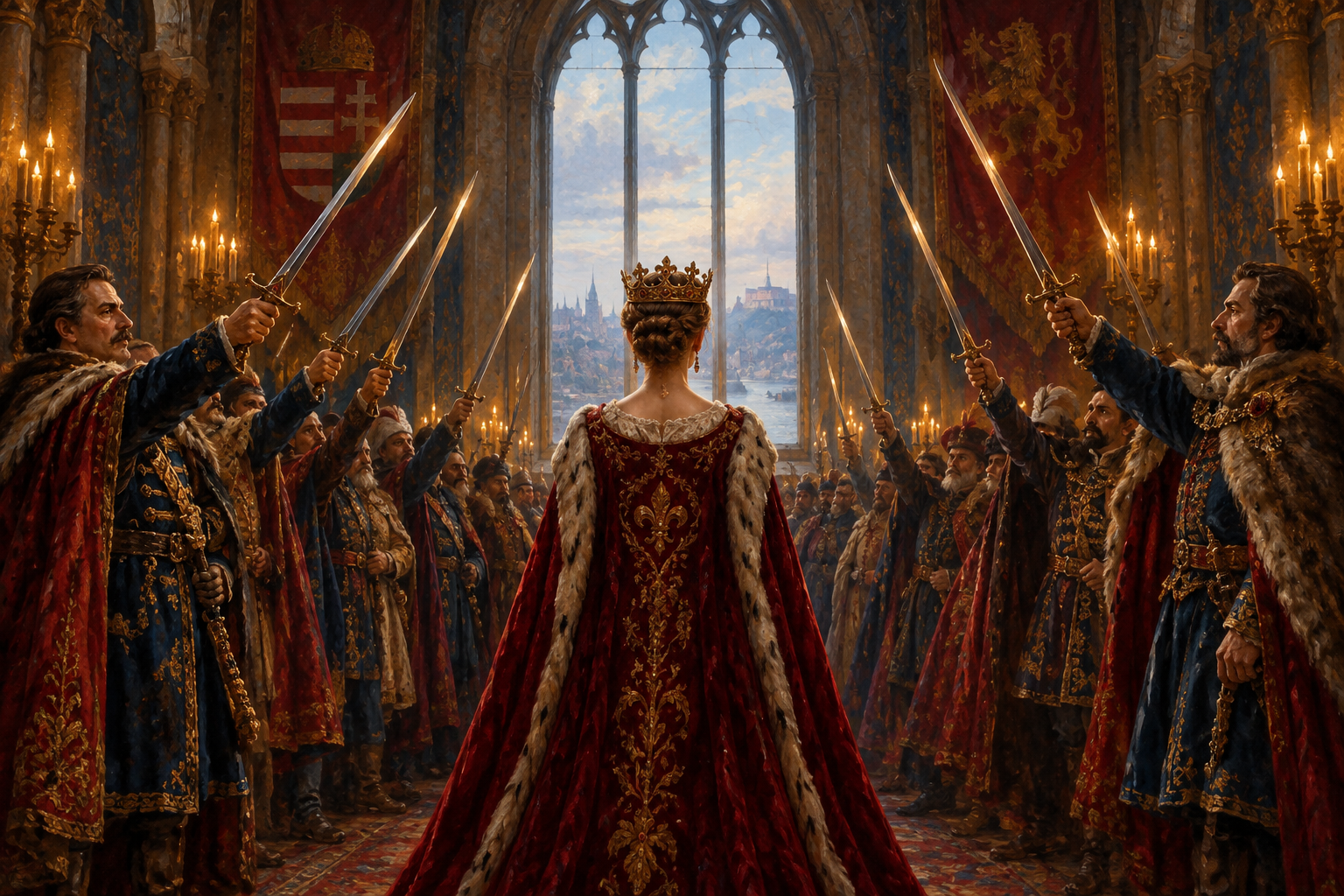
Not every country was equally militarist, and the clearest case is Germany. The German Empire was founded in 1871 after the Franco-Prussian War, and its army and navy stood close to the throne. Wilhelm II became emperor in 1888 and acted as supreme commander of the armed forces. Officers answered to the Kaiser rather than to parliament, so the military could pursue its own agenda even when civilian leaders hesitated.
Other powers felt similar pressure. Austria-Hungary and Russia had senior army leaders who pushed for larger forces, and France, worried about its border with Germany, moved in the same direction. Britain kept a small army but treated naval strength as the heart of its security. Militarism was a shared European habit, not a purely German one, and that is why the crisis of 1914 was so dangerous.
Militarism also spread into everyday life. Veterans' associations, reserve officers and public ceremonies kept the armed forces visible, and many people came to see military service as a civic duty. When a government asked for more soldiers or ships, that public support made the request look normal rather than extreme.
How militarism pushed Europe toward war
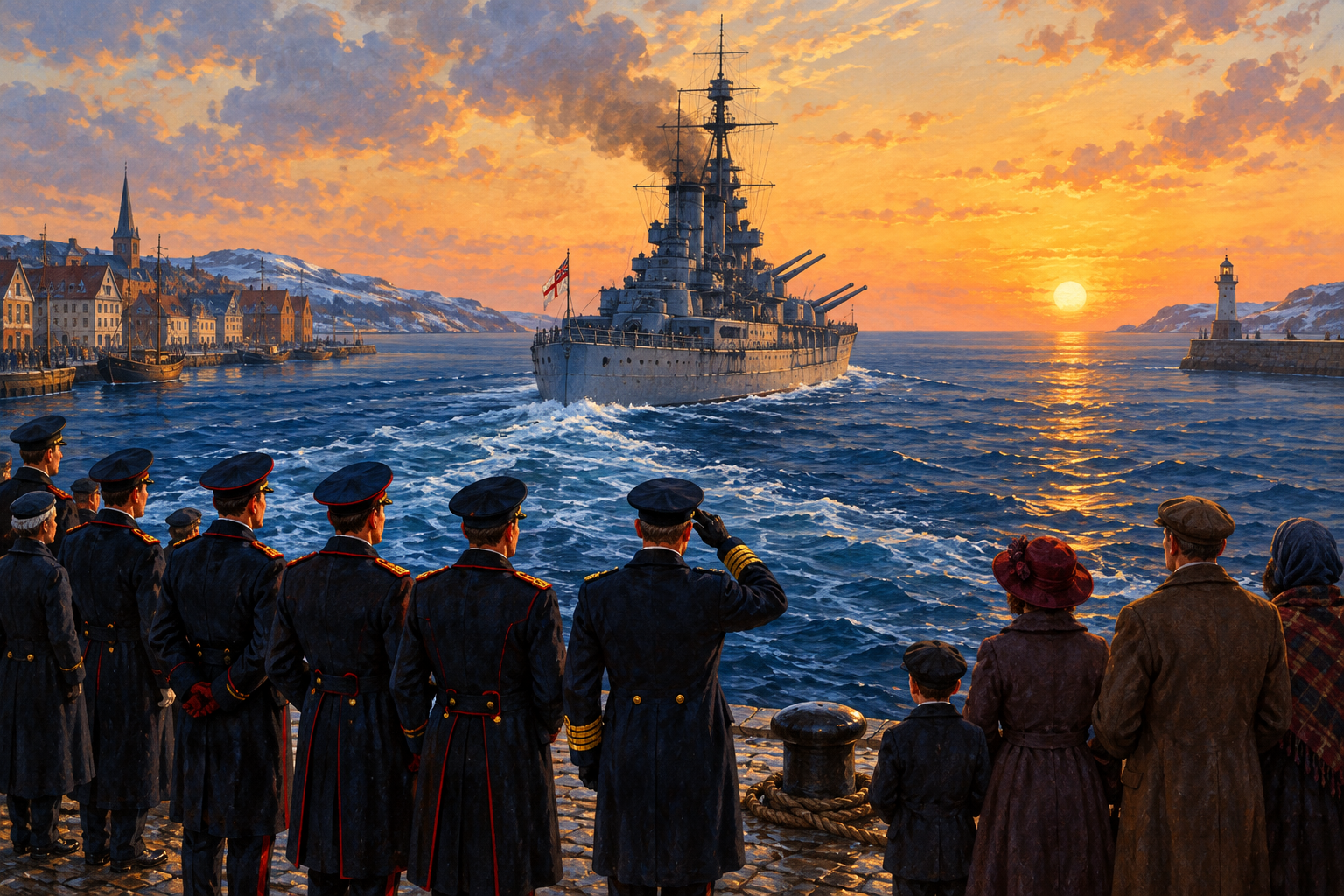
The clearest example is the naval race between Germany and Britain. In 1898 the German Reichstag passed the first Navy Law, a plan developed by Admiral Alfred von Tirpitz to build a fleet strong enough that Britain would have to take Germany seriously and offer concessions. Later navy laws expanded the programme. In 1906 Britain launched HMS Dreadnought, a battleship armed only with big guns and far more powerful than older warships, which made existing fleets look outdated almost overnight. Both countries spent heavily on new ships, and each read the other's build-up as a threat.
Land armies followed the same pattern. In 1913 Germany passed an army bill that raised peacetime strength by about 117,000 privates, bringing the total to roughly 870,000 men by most estimates. France answered the same year with the Three-Year Law, which extended compulsory service from two years to three. Russia drew up a large military programme, and the tsar approved final plans in November 1913. Each new law seemed to justify the next, and military planners increasingly argued that a war fought sooner would be easier to win.
The Balkan Wars of 1912 and 1913 added to the strain. Austria-Hungary's chief of staff, Franz Conrad von Hötzendorf, had argued for a preventive war against Serbia for years, and he kept pressing the idea as the balance of power in the Balkans shifted. Military leaders in several capitals saw war as a way to solve problems, not as a last resort.
Militarism also changed how the German state treated its own people. In late 1913, in the Alsatian town of Saverne (Zabern in German), a young Prussian second lieutenant made insulting remarks about local residents and reportedly urged his soldiers to mistreat civilians. The army's response, including the arrest of many civilians, provoked fierce anger. On 4 December 1913 the Reichstag voted 293 to 54 that the government's handling of the affair was not the view of parliament. The chancellor had defended the army instead of asserting civilian authority. The Zabern Affair suggested to many Germans that the army stood above the law, and it gave the language of military overreach a new word, Zabernism.
The July crisis: from one assassination to war
The spark was the assassination of Archduke Franz Ferdinand, heir to the Austro-Hungarian throne, in Sarajevo on 28 June 1914. The responses that followed reflected militarist habits. On 23 July Austria-Hungary sent Serbia a harsh ultimatum with a two-day deadline. Serbia accepted most demands but not all, and on 28 July Austria-Hungary declared war on Serbia. Germany backed its ally, declaring war on Russia on 1 August and on France on 3 August. German war plans depended on a fast strike through Belgium, and Russia's mobilisation added to the pressure, so the timetables were hard to pause. When German troops entered Belgium, Britain declared war on Germany on 4 August.
Many people expected a short war. Leaders who had spent years building large armies often assumed they could win quickly, and crowds in several capitals cheered the declarations. Instead the war became a long struggle in the trenches that lasted more than four years. Militarism did not produce the July crisis alone, but it made a regional conflict far more likely to become a general one.
What happened next
The war killed millions of people and ended with an armistice in November 1918. The Treaty of Versailles in 1919 tried to deal with militarism directly. It limited the German army to 100,000 personnel, abolished universal conscription and ordered the General Staff dissolved. Those terms were meant to remove the military from German politics, but many Germans saw them as humiliating. That resentment became part of the political story of the 1920s and 1930s, so the question of how to restrain militarism stayed open long after the guns fell silent.
What exams ask
Exam questions on the causes of World War I often ask you to weigh several causes against each other. A strong answer does four things. It defines militarism in one sentence. It gives one or two concrete examples, such as the Anglo-German naval race or the 1913 army laws. It explains how those examples raised tension or made war seem winnable. Then it shows how the July crisis turned that tension into war. Don't stop at a definition, and don't claim militarism was the only cause.
Read next
Start with World War I (1914–1918): Causes, Course and Consequences for the full timeline. Then read The MAIN Causes of WWI: Militarism, Alliances, Imperialism, Nationalism to see how militarism sits beside the other causes. How Alliances Led to WWI explains how treaty commitments turned a regional war into a continental one, and Triple Alliance vs Triple Entente compares the two blocs side by side.