The Scramble for Africa was the fast takeover of almost the whole continent by European powers between about 1880 and 1914. This event sits inside our guide to imperialism, and this page answers the basic questions: what happened, when, and why it still matters.
In five minutes
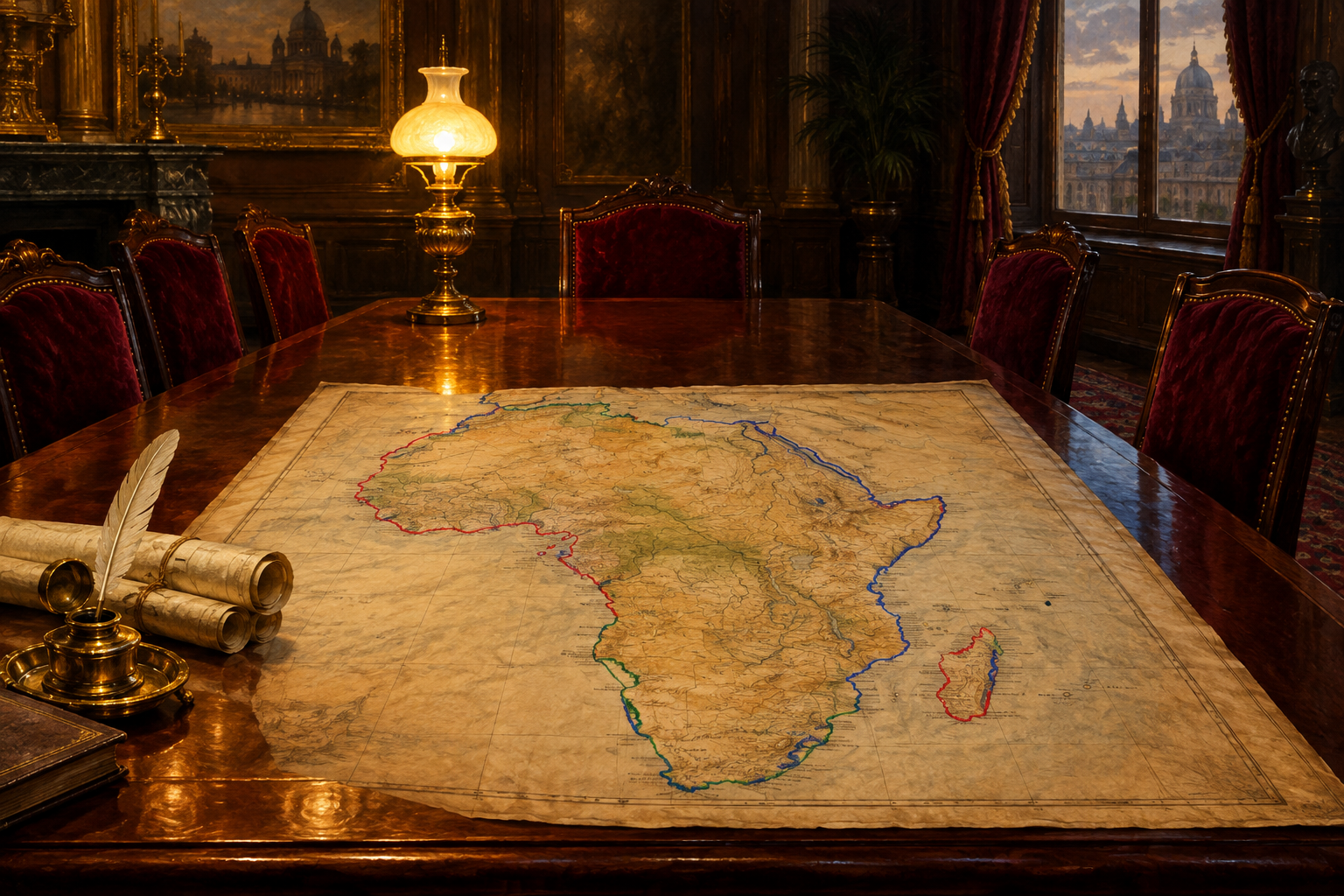
Before 1880, European control in Africa was limited. It was mostly coastal trading posts, a few settler colonies in the south, and the French hold on Algeria in the north. Roughly 10 percent of Africa was under formal European control in 1870. By 1914, that figure had risen to nearly 90 percent. Only Ethiopia and Liberia stayed fully independent.
The word “scramble” describes the speed. Powers raced to claim land, sign treaties with local leaders and draw borders, sometimes with little knowledge of the terrain. Many of those borders were drawn in European capitals, and many still shape the map today.
Why it started
Several forces pushed European governments toward Africa. Industrial economies needed raw materials such as rubber, palm oil, copper and gold, and they wanted markets for the goods their factories produced. Rivals watched each other closely, so when one country claimed land, others feared being left behind. Empire was also a sign of national prestige, and many governments believed that colonies made them stronger at home.
Explorers, missionaries and traders had reported on the African interior for decades, which increased public interest. Strategic routes mattered too. The Suez Canal opened in 1869 and made Egypt important for Britain’s route to India. Britain occupied Egypt in 1882, and France took control of Tunisia in 1881. Each move created new rivalries.
King Leopold II of Belgium was a different case. Belgium had no colony of its own, so he worked through private organisations, presented his project as scientific and humanitarian, and secured land in the Congo Basin for himself.
The Berlin Conference, 1884–1885
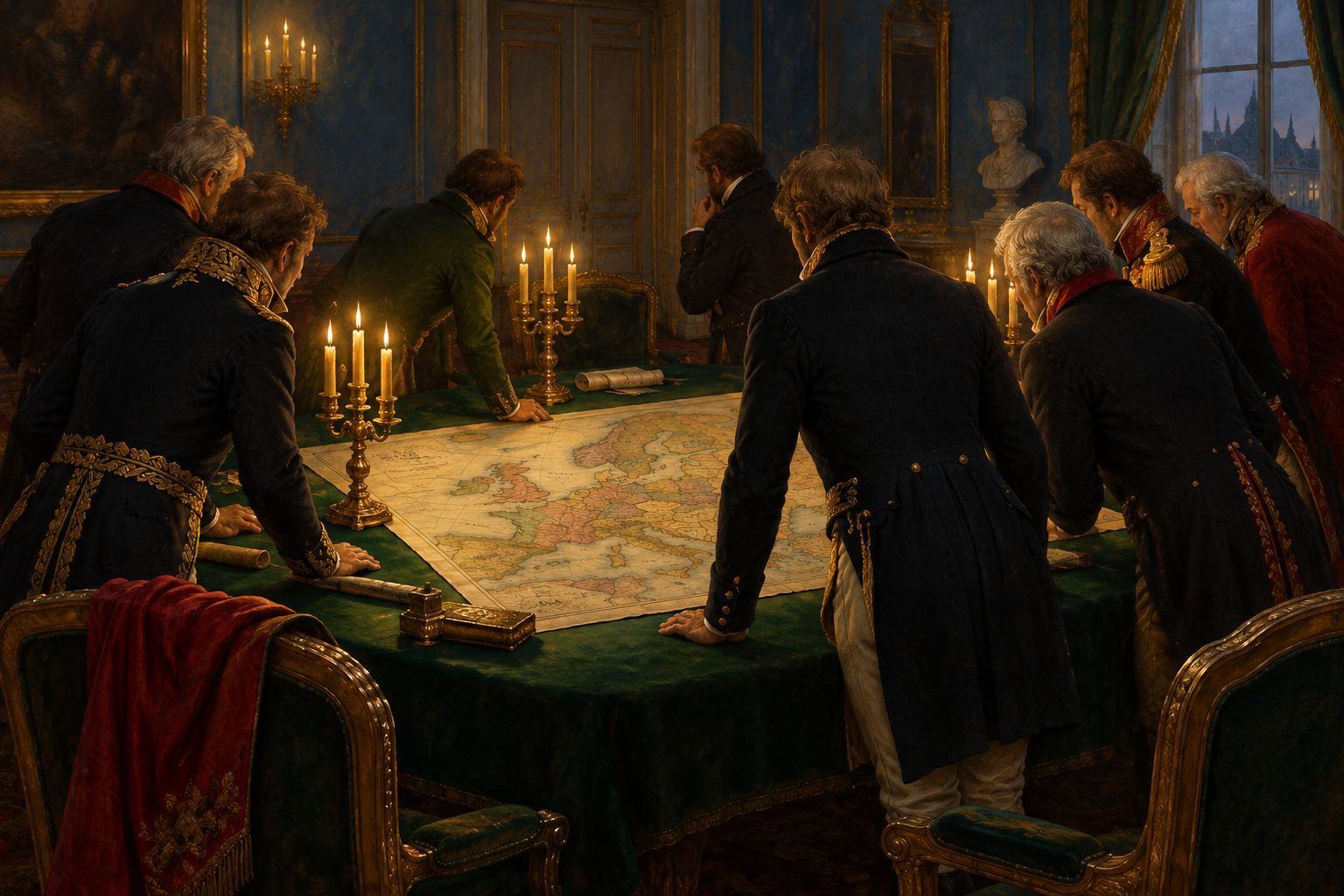
Germany had been unified as an empire in 1871 and joined the race late. Its chancellor, Otto von Bismarck, hosted a meeting in Berlin, and the Congo claims of Leopold II were one of its main issues. Fourteen countries sent delegates, most of them European, and no African rulers were invited. The conference ran from 15 November 1884 to 26 February 1885, and it ended with a document known as the General Act.
The General Act did not split Africa line by line. It set rules for how the powers would behave. It allowed free trade in the Congo Basin, and it introduced the principle of “effective occupation”. Under this rule, a power claiming a coastal area had to show a real administrative presence there, through administration and treaties with local leaders. In practice the rule was vague and disputed, especially between France and Germany. The Act also recognised the Congo Free State, which was in effect Leopold II’s personal possession.
The conference did not end the race. Afterwards, powers kept claiming interior territory through bilateral deals and military campaigns. Some historians therefore argue that the meeting is often overstated as the moment that divided Africa. What it did do was set the rules of competition and speed up a process that was already under way.
How the continent was divided
Partition happened region by region, and each region followed its own path.
- North Africa: France had taken Algeria in 1830 and took Tunisia in 1881. Britain occupied Egypt in 1882 and kept control for decades, even though Egypt remained nominally part of the Ottoman Empire.
- West Africa: France, Britain and Germany competed for coastal areas and trade routes. Germany claimed Togoland and Kamerun in 1884.
- The Congo: Leopold II’s Congo Free State was built first around ivory and later around wild rubber, collected through forced labour.
- East Africa: Germany took German East Africa, while Britain gained what became Kenya and Uganda.
- Southern Africa: Germany claimed South West Africa (now Namibia) in 1884. Britain expanded north from the Cape Colony, and Cecil Rhodes’s company took much of what became Rhodesia.
Tensions sometimes came close to war. In 1898, a French force reached Fashoda in what is now South Sudan, and a British-led army under Kitchener arrived in September. Both sides refused to back down until France withdrew. The crisis showed how far rivalry between the powers could go, and it strained Anglo-French relations for some time.
Resistance and the exceptions
African peoples did not simply accept colonial rule. Many states and communities resisted, sometimes for years. In German East Africa, the Maji Maji uprising of 1905 to 1907 was crushed with great violence.
The best-known exception is Ethiopia. In March 1896, Ethiopian forces under Emperor Menelik II defeated an Italian army at Adwa. Italy had advanced from its colony in Eritrea. The defeat is remembered as a major loss for a European colonial power at the hands of an African army. Ethiopia kept its independence until a brief Italian occupation from 1936 to 1941.
Liberia was the other exception. It had been founded in the nineteenth century by settlers linked to the United States, including freed African Americans, and it kept its sovereignty. It nonetheless relied heavily on American influence.
The human cost
Colonial rule brought land seizures, taxes that had to be paid in cash, forced labour and violent campaigns. Some cases are among the darkest parts of this history, and the figures are hard to pin down.
In the Congo Free State, wild rubber was collected through forced labour enforced by the Force Publique and company militias. Workers who refused could be killed, and some villages were destroyed. Historians still debate the scale of population loss. Estimates range from around one million to more than ten million, depending on the sources and methods used.
In German South West Africa, the Herero and Nama peoples rose against colonial rule in 1904. The German military response involved mass killings and deaths in camps. Germany formally recognised these events as genocide in 2021. Estimates of the total deaths vary, but they run into the tens of thousands.
What it left behind
Most African countries gained independence in the 1950s and 1960s. The borders drawn by outside powers often ignored existing kingdoms, languages and communities, and some groups were split between two or more colonies. Many of those borders still exist today, and they remain part of the background to politics and conflict on the continent.
Colonial economies also left a lasting legacy. Many territories had been organised around exporting a few raw materials or cash crops, and that pattern continued long after the flags changed.
What exams ask
Exam questions usually test significance, not only dates. Be ready for the following:
- Dates: the Berlin Conference (1884–1885), the Battle of Adwa (1896) and the Fashoda crisis (1898).
- Causes: industrial demand for raw materials, markets, national prestige and rivalry between powers.
- Exceptions: why Ethiopia and Liberia stayed independent, and what Adwa showed.
- Consequences: forced labour in the Congo, the Herero and Nama genocide, and the borders that shaped independence.
Read next
If you want more context, these pages pair well with this one:
- The Berlin Conference (1884–1885) looks more closely at the meeting and the General Act.
- Imperialism Political Cartoons Explained shows how the public was invited to see empire.
- The Abolition of the Slave Trade and Slavery offers useful background on the Atlantic world and the end of slavery.