In five minutes
Maria Theresa was born in Vienna in 1717. When her father, Emperor Charles VI, died in October 1740, she inherited the Habsburg lands at the age of 23. Few women of her time held such power in their own right. Her reign lasted until her death in 1780, and it was shaped by three things: a war to defend her inheritance, the loss of the rich province of Silesia to Prussia, and a long effort to rebuild the state afterwards.
She is also remembered as the mother of Marie Antoinette, who became queen of France. This page is part of our Enlightenment guide, which looks at how rulers of the period tried to reshape their states.
Background: a father's safeguard
Charles VI had no surviving son. In 1713 he issued the Pragmatic Sanction, a decree that kept the Habsburg lands together and allowed a daughter to inherit them. He then spent years seeking promises from other European powers to respect it. Maria Theresa married Francis Stephen of Lorraine in 1736. He later became Holy Roman Emperor, but she ran the Habsburg lands herself.
The Habsburg inheritance was a patchwork rather than a single country. It included the Archduchy of Austria, the crown lands of Bohemia and Hungary, and territories in Italy and the Southern Netherlands. Each area had its own laws, estates and nobility, so a ruler had to win the cooperation of local elites rather than simply give orders.
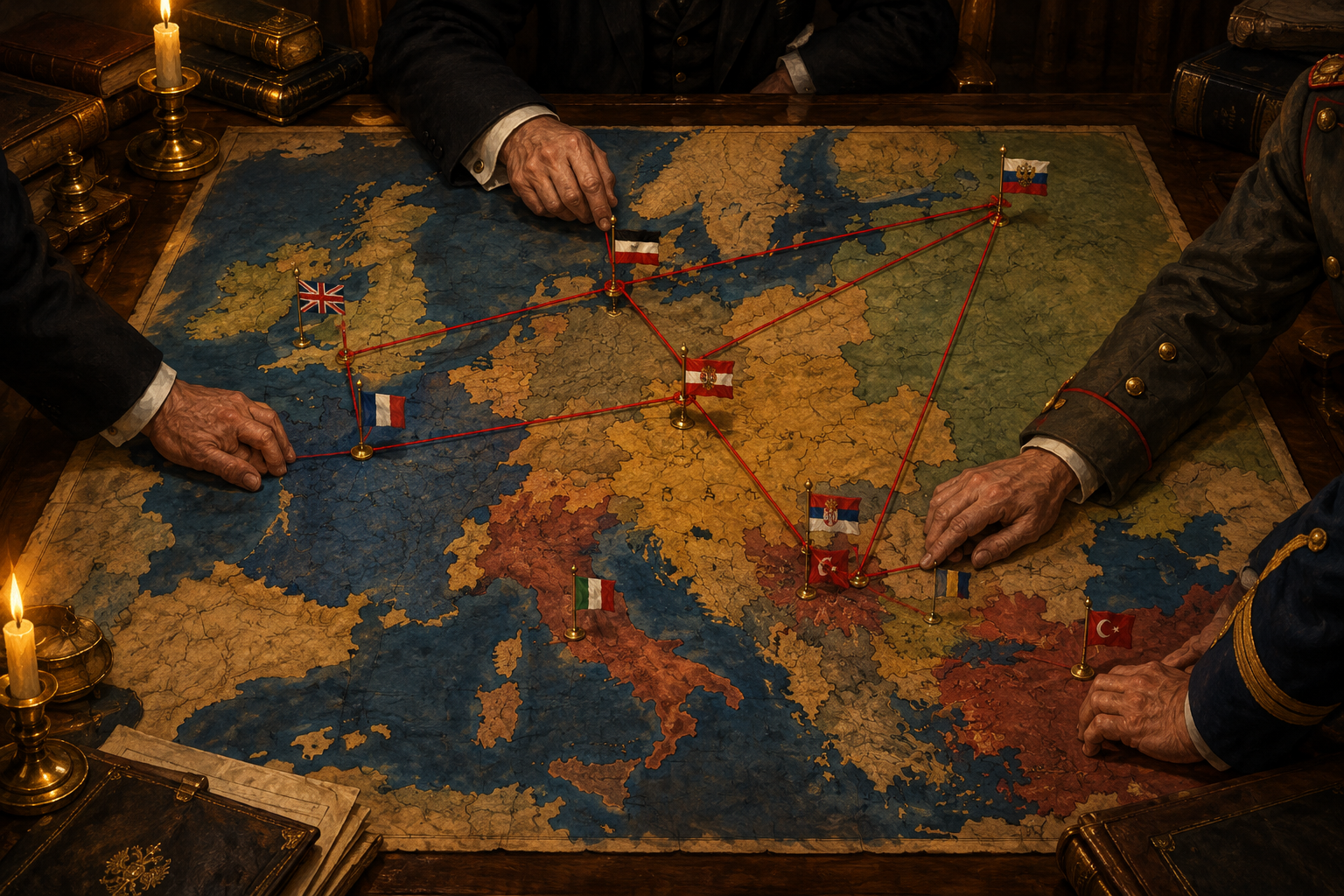
The promises did not hold. When Charles died, several rulers saw an opening. In December 1740, Frederick II of Prussia marched into Silesia, a wealthy province with a large population and a busy textile trade. Bavaria and France also challenged her claim. A young ruler facing many enemies at once, she had to fight for her inheritance almost immediately.
War and loss: 1740 to 1763
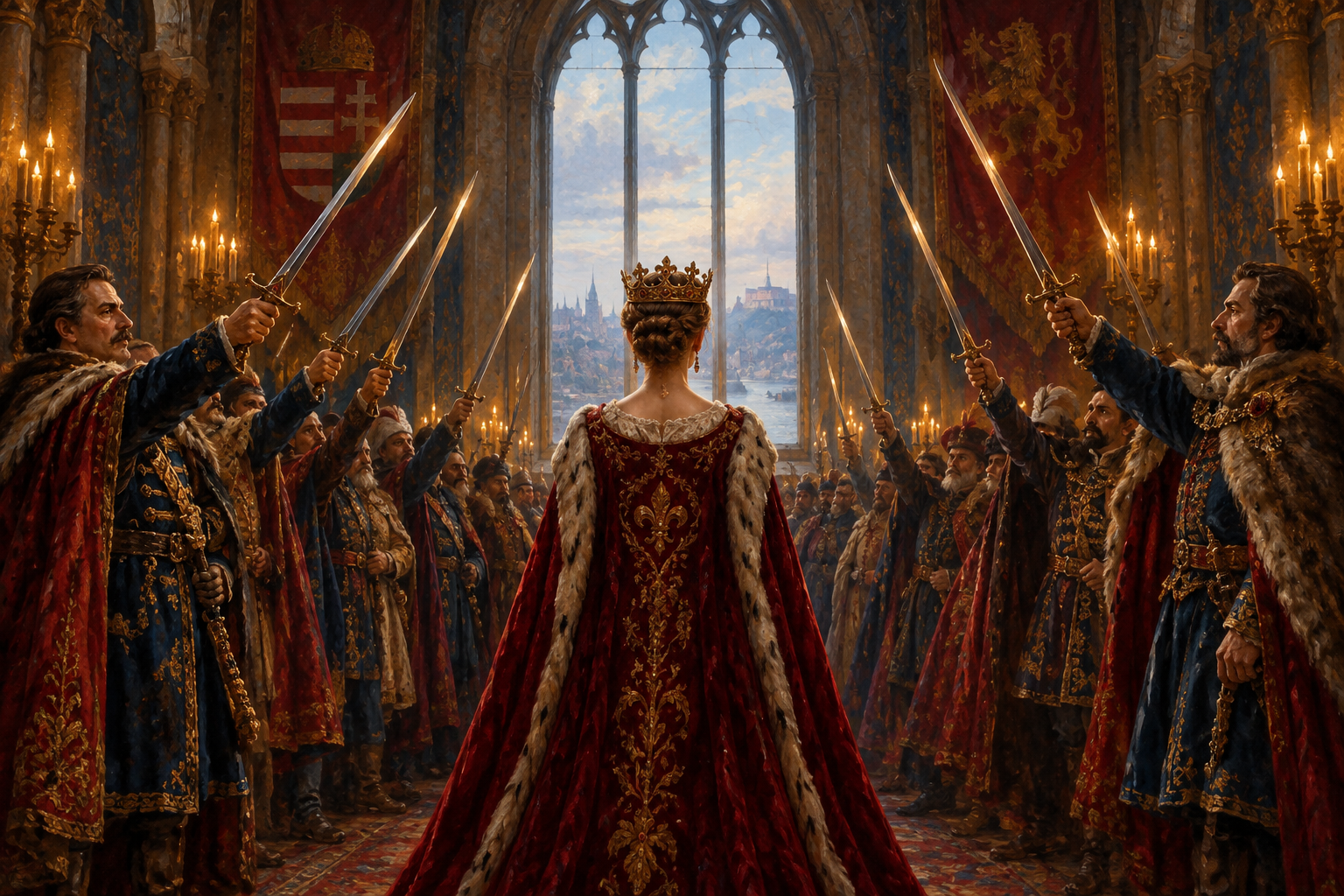
In June 1741 she was crowned Queen of Hungary at Pressburg, today's Bratislava. The Hungarian title was the masculine rex (king), but English usage is queen.
In September 1741 she addressed the Diet in person, at Pressburg, and asked for money and soldiers against Prussia. That appeal brought Hungarian support, and Hungarian regiments became an important part of her army. She was 24 years old at the time, and her personal appearance before the nobles was a deliberate step in winning them over.
Austria fought on several fronts. In 1742 Charles Albert of Bavaria was elected Holy Roman Emperor as Charles VII, which took the imperial title away from the Habsburgs for a time. She was crowned Queen of Bohemia at Prague in 1743.
Silesia was the real turning point. The Treaty of Breslau in 1742 gave Prussia most of the province, and the Treaty of Dresden in 1745 confirmed it. The wider war ended with the Treaty of Aix-la-Chapelle in 1748, which recognised her inheritance but left Prussia in Silesia. In 1745 her husband was elected emperor, and she became empress by marriage.
Silesia mattered for money as well as territory. It was one of the wealthiest provinces in the Habsburg realm, with a large population and a strong textile economy, so its loss cut into revenue at the very moment the state needed money for war. Prussia, now holding the province, became a rival that Vienna could not ignore.
Her chancellor, Wenzel Anton von Kaunitz, pushed for a new course. In 1756 Austria made a deal with France, its old rival. Historians call this the Diplomatic Revolution. That same year, Prussia invaded Saxony and the Seven Years' War began. Maria Theresa wanted Silesia back and failed to win it. The war ended with the Treaty of Hubertusburg in 1763, which confirmed Prussian control.
Rebuilding the state
The wars exposed how fragile the government was, so reform began soon after the War of the Austrian Succession and continued after the peace of 1763. In 1749 a central body called the Directorium was created in Vienna to handle internal and financial affairs. Friedrich Wilhelm von Haugwitz led much of the early work. The State Council, the empire's highest advisory body, came in the early 1760s under Wenzel Anton von Kaunitz. Three areas stand out.
- Administration: She built central offices in Vienna and tried to manage taxes and policy across the lands in a more unified way. Many local customs stayed in place, so the process was slow and uneven.
- The army: In 1751 she founded the Theresian Military Academy at Wiener Neustadt to train officers more systematically.
- Schools: The General School Regulation of 1774 made elementary schooling compulsory for children aged six to twelve in the German-speaking lands. The Silesian abbot Johann Ignaz Felbiger drafted much of it.
The school rules had limited effect in her own lifetime. Still, they marked an important step, a sign that the state had begun to claim responsibility for teaching children. In 1776 she ordered torture abolished in the Habsburg lands, on the advice of reformers such as Joseph von Sonnenfels.
Tax reform was harder still. Privileges and local exemptions were deeply rooted, and officials who tried to measure property and income more evenly worked slowly against them. Many old arrangements survived her reign.
A family and a court
Maria Theresa had 16 children. Two of her sons later became Holy Roman Emperors, and her daughters married into royal families across Europe, including Naples and France. Marriage alliances were one of her main diplomatic tools.
Her marriage to Francis Stephen was a close partnership. He handled much of the family's private wealth and business interests, while she ran the government. The court in Vienna was large and formal, and she used portraits and public ceremony to present herself as a devoted mother and a ruler who cared for her people.
Her youngest daughter, Marie Antoinette, married the French heir to the throne in 1770. He later became Louis XVI. Maria Theresa wrote to her often, giving advice on court manners, politics and the need to have children. Those letters survive, and they show a mother who kept a close eye on a daughter far away. Her marriage was also part of the alliance with France, the old rival that had become a partner in 1756. Her early years at Versailles were difficult, and her mother's letters often returned to the need for an heir, which was a real concern at the French court for several years.
Joseph and the shared throne
When Francis Stephen died in 1765, Joseph became Holy Roman Emperor and co-ruler of the Habsburg lands with his mother. He wanted faster change, while she was more cautious and often slowed him down. The two disagreed often, but she kept a strong hand on policy for the rest of her life.
Joseph's title as emperor did not give him control of the Habsburg lands on his own. His mother kept the final say in most matters, and he often had to work within limits she set. He was impatient with what he saw as slow progress and wanted to clear away old privileges more quickly. Their disagreements were real, but both shared the conviction that the state had to be stronger and better run.
Her later foreign policy included the First Partition of Poland in 1772, which gave Austria Galicia, a large region in what is now southern Poland and western Ukraine.
Maria Theresa was a devout Catholic, and her faith was part of her public life. She also had a strong sense of duty and took a direct part in government business. She questioned advisers closely and did not leave major decisions to them alone.
Death and legacy
Maria Theresa died in Vienna on 29 November 1780. Joseph then ruled the Habsburg lands alone. Silesia never came back, but the administration, army and schools she had shaped became the foundation for what followed.
She was buried in the Capuchin Crypt in Vienna beside her husband. Her building work is still visible at Schönbrunn Palace, on the edge of Vienna, which was remodelled and enlarged during her reign.
Historians still disagree about her. Some see a practical modernizer who prepared the state for the modern age. Others argue that her reforms strengthened central control over the lands.
What exams ask
In AP-style essays, Maria Theresa works best as a case study in eighteenth-century state power. Strong answers connect the pieces:
- Why the Pragmatic Sanction created a succession crisis when Charles VI died.
- How losing Silesia shaped Austrian foreign policy and the rivalry with Prussia.
- Why the Diplomatic Revolution of 1756 changed the old alliances.
- What enlightened absolutism means, and how well the label fits her.
Short answers need dates and names. Longer essays should explain causes and results, and judge whether the label 'enlightened' fits her reforms.
Read next
For the Prussian side of this story, read Frederick the Great of Prussia. To see the two conflicts side by side, try War of the Austrian Succession vs the Seven Years' War. For the ideas that shaped political debate in the period, Who Was John Locke? is a good starting point.