In five minutes: what was the Sino-French War?
The Sino-French War was a conflict between France and Qing China, fought from 1883 into 1885 over Vietnam and the balance of power in mainland Southeast Asia. The fighting began in Tonkin, in northern Vietnam, where French forces clashed with Qing troops and Liu Yongfu’s Black Flag Army. It later spread to China’s coast and Taiwan. The Treaty of Tianjin, signed on 9 June 1885, ended the conflict between France and China and recognized the French protectorate over Annam and Tonkin. For Vietnam, however, this was not a settlement between equal parties: French expansion had sharply reduced the Nguyễn court’s control over its own foreign relations and territory.
This conflict is part of the longer story told in Vietnam’s Dynasties and French Rule. It is also called the Sino-French War, the Franco-Chinese War, or the Sino-French conflict. “Tianjin” and “Tientsin” are different spellings of the same city name; Japanese sources often call the 1885 treaty 天津条約.
Key facts
- When: 1883–1885, with the interstate war usually dated from late August 1884.
- Where: Tonkin, China’s southeast coast, Taiwan, and the Penghu Islands.
- Main opponents: France against Qing China; Vietnamese forces and the Black Flag Army also fought in Tonkin.
- Central issue: France’s effort to establish control over Vietnam and Qing China’s attempt to preserve its influence there.
- Outcome: The Treaty of Tianjin ended hostilities and Qing China accepted the French protectorate over Annam and Tonkin.
- Exam connection: The war linked French colonial expansion in Vietnam with Qing China’s weakening regional influence.
Why did France and Qing China fight?
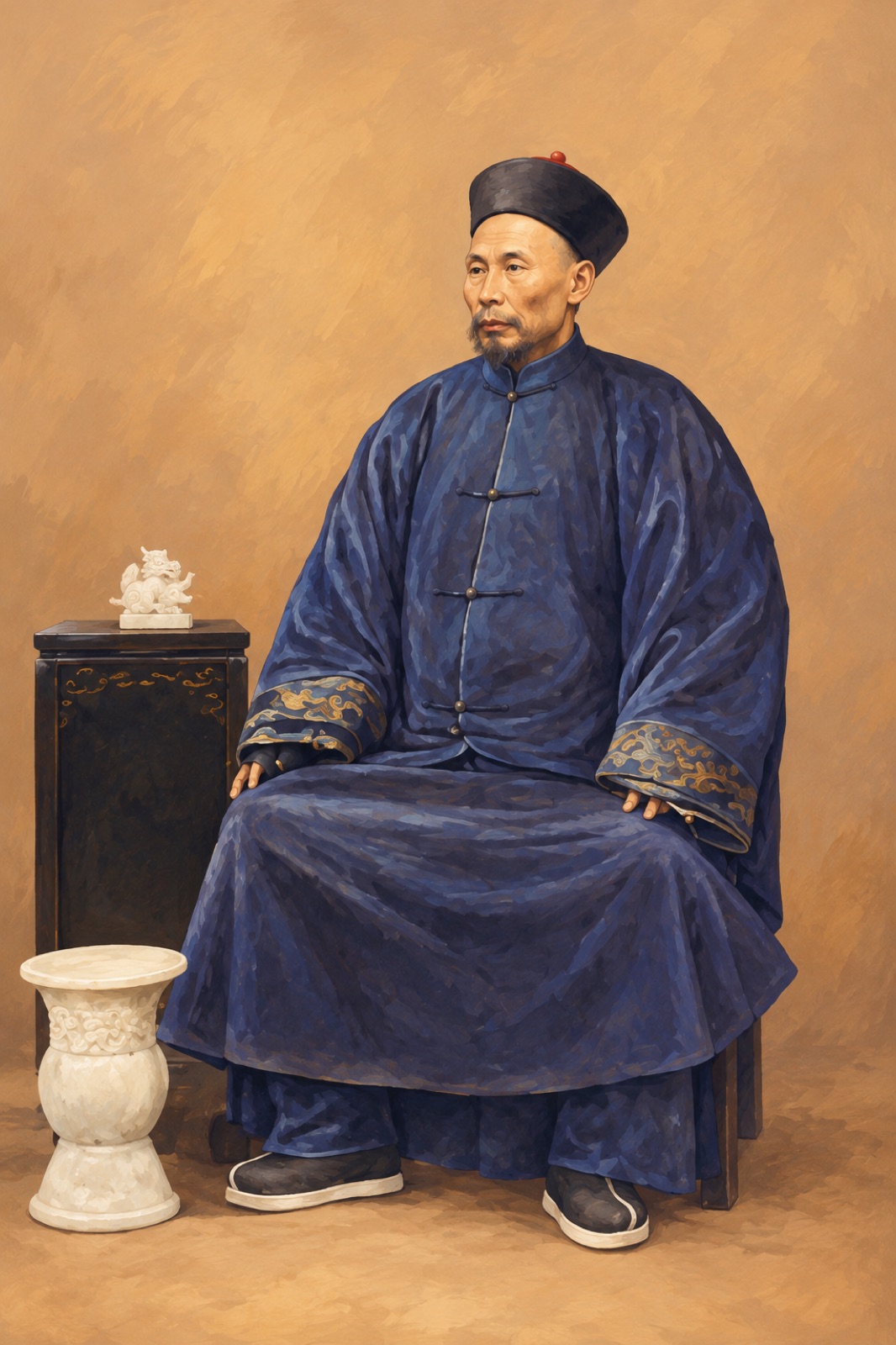
France had been expanding its influence in Vietnam for decades. It had taken control of Cochinchina in the south and sought to extend its power north along the Red River. The waterway offered a route toward trade with southern China, but the dispute was not simply about commerce. Vietnam’s Nguyễn court had long maintained a tributary relationship with the Qing empire, and Qing officials viewed French expansion as a threat to their standing on China’s southern border.
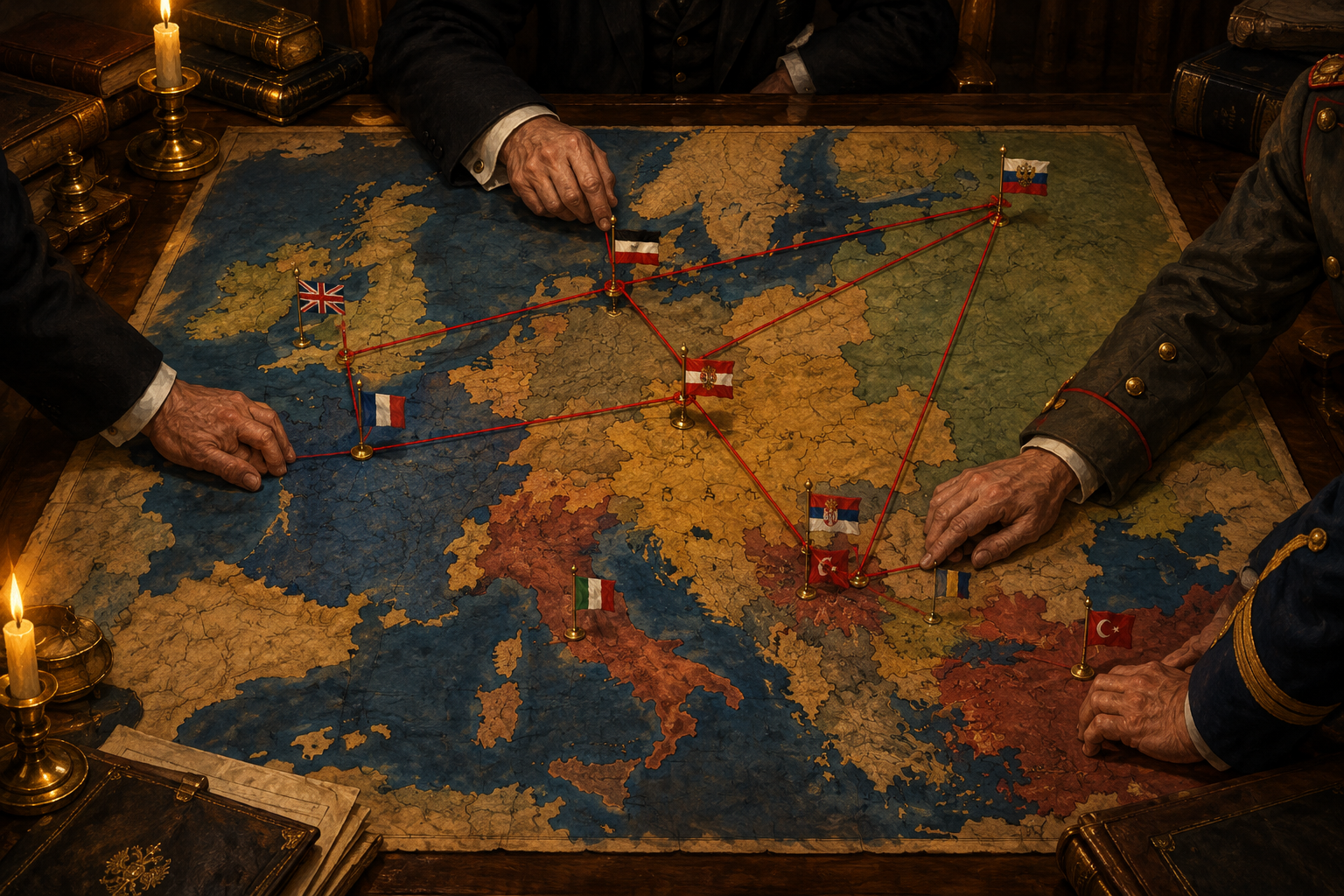
France’s position was also shaped by rivalry among European powers and its desire to build a colonial empire. In Paris, Prime Minister Jules Ferry’s expansionist policy faced sharp criticism in parliament, which made the colonial venture politically risky. In 1883, French forces increased pressure on the Nguyễn court. The Treaty of Huế of 1883 established a protectorate in principle, and a revised treaty signed on 6 June 1884 placed Annam and Tonkin under French protection. These arrangements constrained Vietnam’s ability to conduct foreign relations independently. They also made the question of Qing troops in Tonkin urgent: the French expected China to withdraw, while Qing commanders and officials did not all interpret the agreements in the same way.
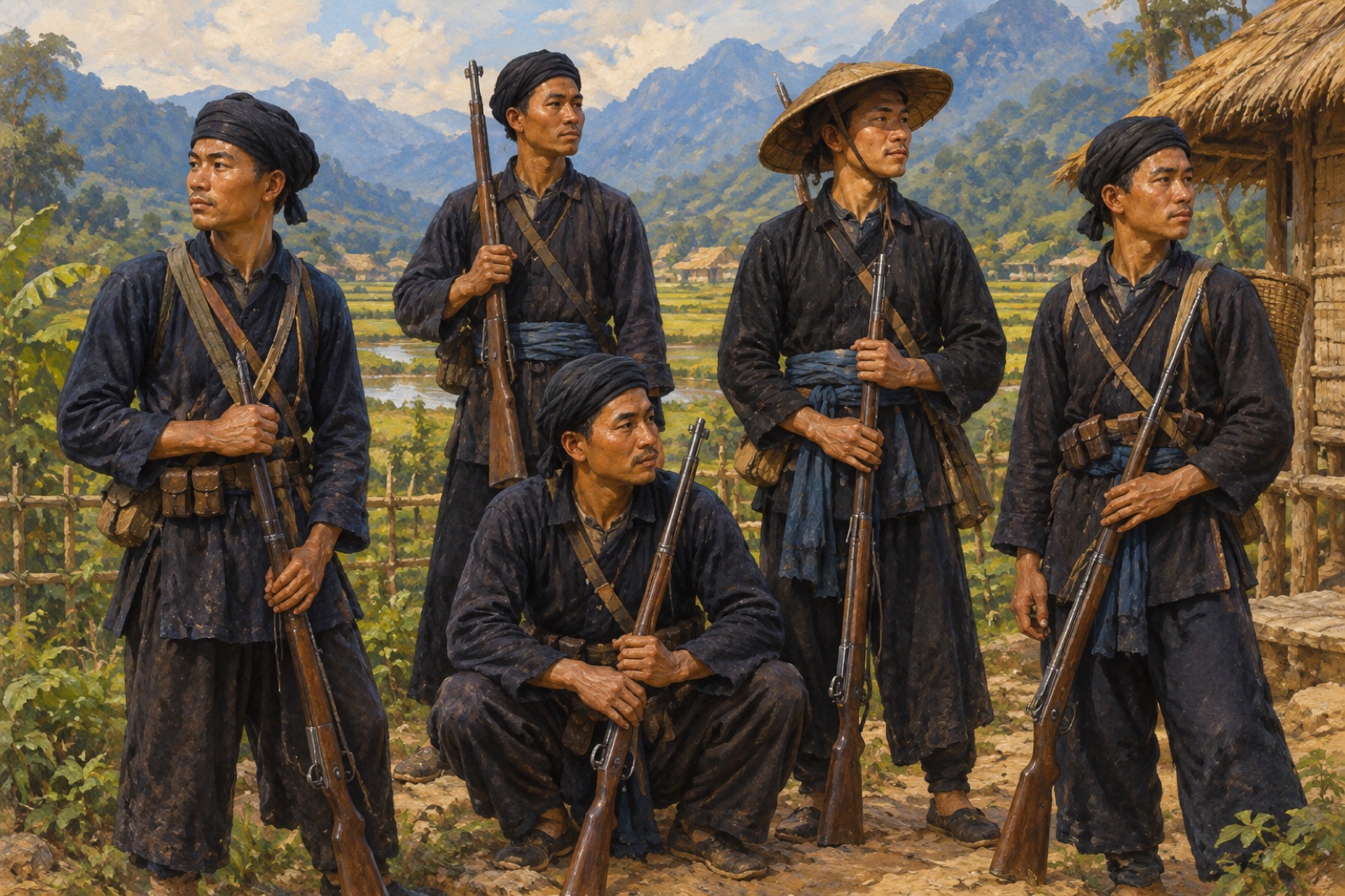
The Black Flag Army complicated the situation. Led by Liu Yongfu, it had grown from a regional armed force and fought French expansion in Tonkin. French accounts often described its members as bandits, but that label obscures their role as an organized military force and their shifting relations with Vietnamese and Qing authorities. Their presence, alongside Qing regular troops, meant that French operations in northern Vietnam were not simply a bilateral contest between Paris and Beijing.
Vietnam’s rulers faced pressure from both sides while trying to preserve room to govern. The Nguyễn court had to negotiate with France as French troops expanded their reach, while Qing officials also treated Vietnam as part of their regional order. Neither outside power’s claims erased Vietnamese political choices: local officials, soldiers and resistance groups responded to events in different ways. Keeping these perspectives in view helps explain why a treaty between France and Qing China could settle their dispute without ending conflict inside Vietnam.
From Tonkin campaign to open war
French operations against the Black Flag Army and Qing forces preceded the formal phase of the war. French forces captured Sơn Tây on 16 December 1883 and took Bắc Ninh on 12 March 1884. These victories strengthened French negotiating leverage, but they did not settle the political dispute. On 11 May 1884, Li Hongzhang and French representative François Ernest Fournier signed the Tientsin Accord. It called for Qing troops to withdraw from Tonkin and for China to respect France’s agreements with the court at Huế.
The agreement was followed by disagreement over its implementation and the timetable for troop withdrawal. Within the Qing court, hardliners who wanted to resist France were at odds with officials such as Li Hongzhang, who preferred negotiation. On 23 June, French forces moving toward Lạng Sơn encountered Qing troops near Bắc Lệ. The clash, remembered in France as the Bắc Lệ ambush, intensified the dispute. French officials demanded compensation; Qing officials disputed the French account and resisted the demand. Negotiations failed to prevent the crisis from widening.
The crucial lesson is that no single incident explains the war by itself. The clash at Bắc Lệ became a trigger because the two governments had already reached an unstable compromise over sovereignty, troop movements, and the status of Vietnam. When the agreement could not manage those competing claims, local military encounters became an international war.
The names of the two Tientsin agreements can cause confusion. The May 1884 accord was an attempt to manage the Tonkin crisis before the fighting between France and Qing China widened. The June 1885 treaty was a later settlement, signed after battles had spread to the coast and Taiwan. Their different purposes matter: the first set terms that the sides could not implement smoothly, while the second formalized a new diplomatic arrangement.
Fuzhou, Taiwan and the war at sea
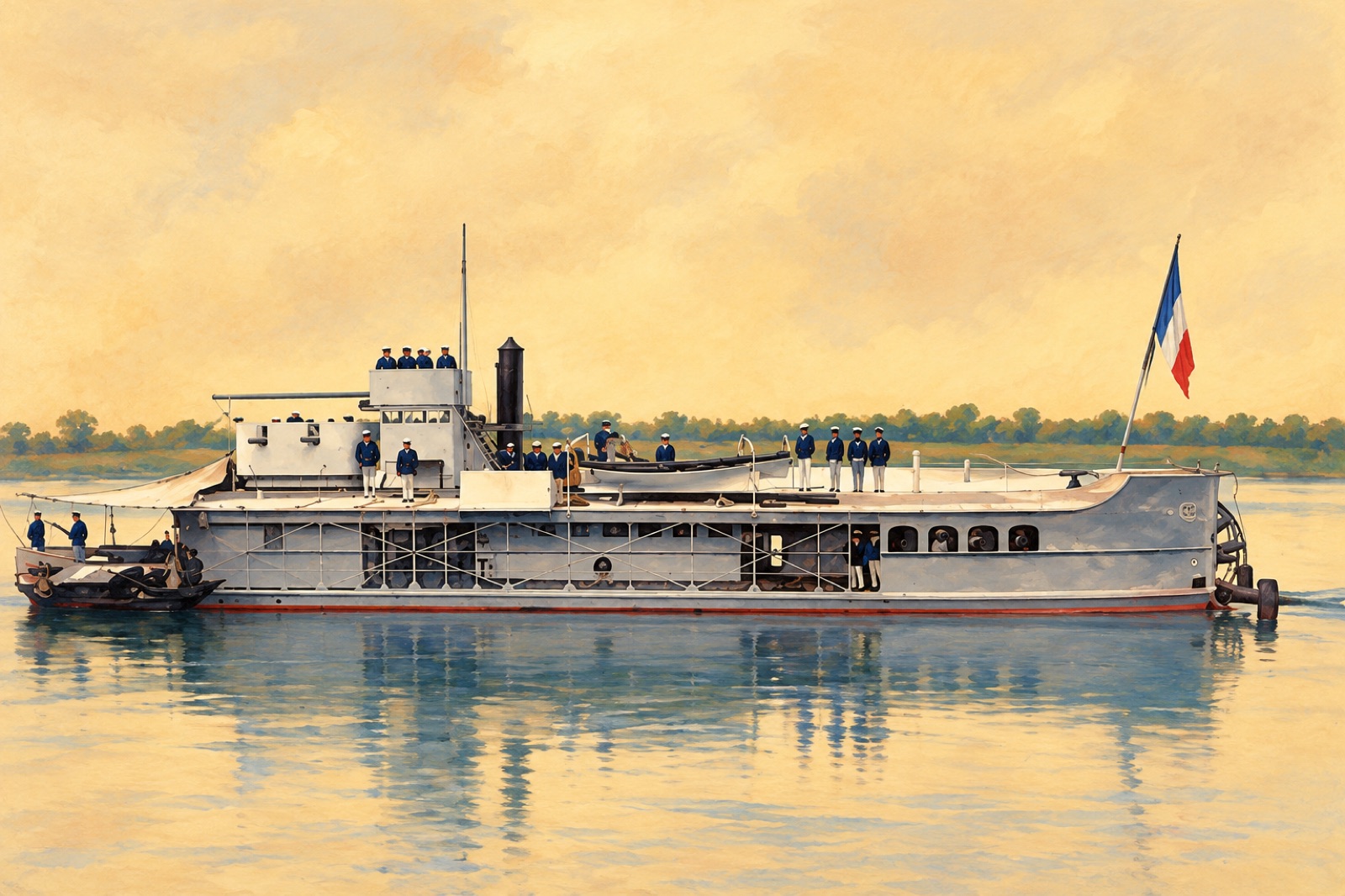
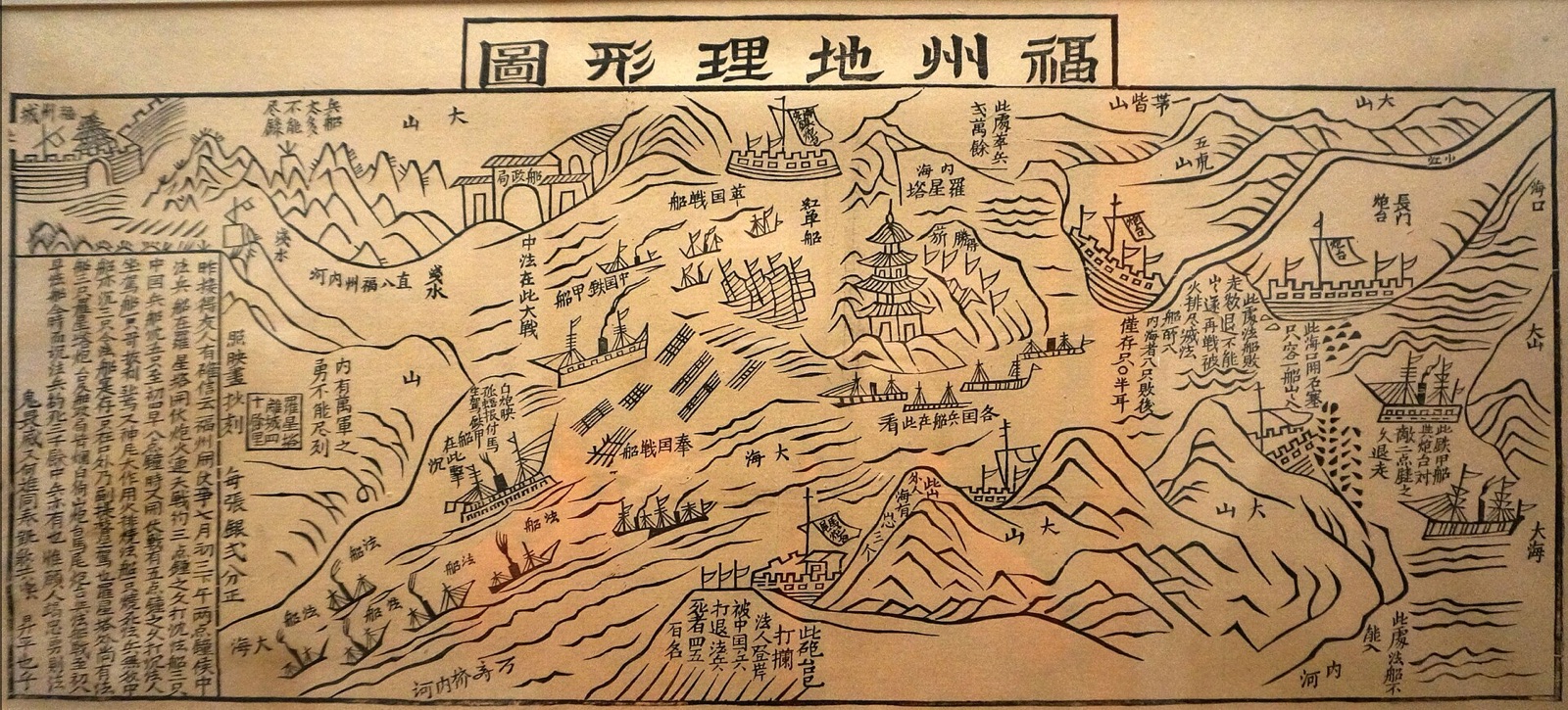
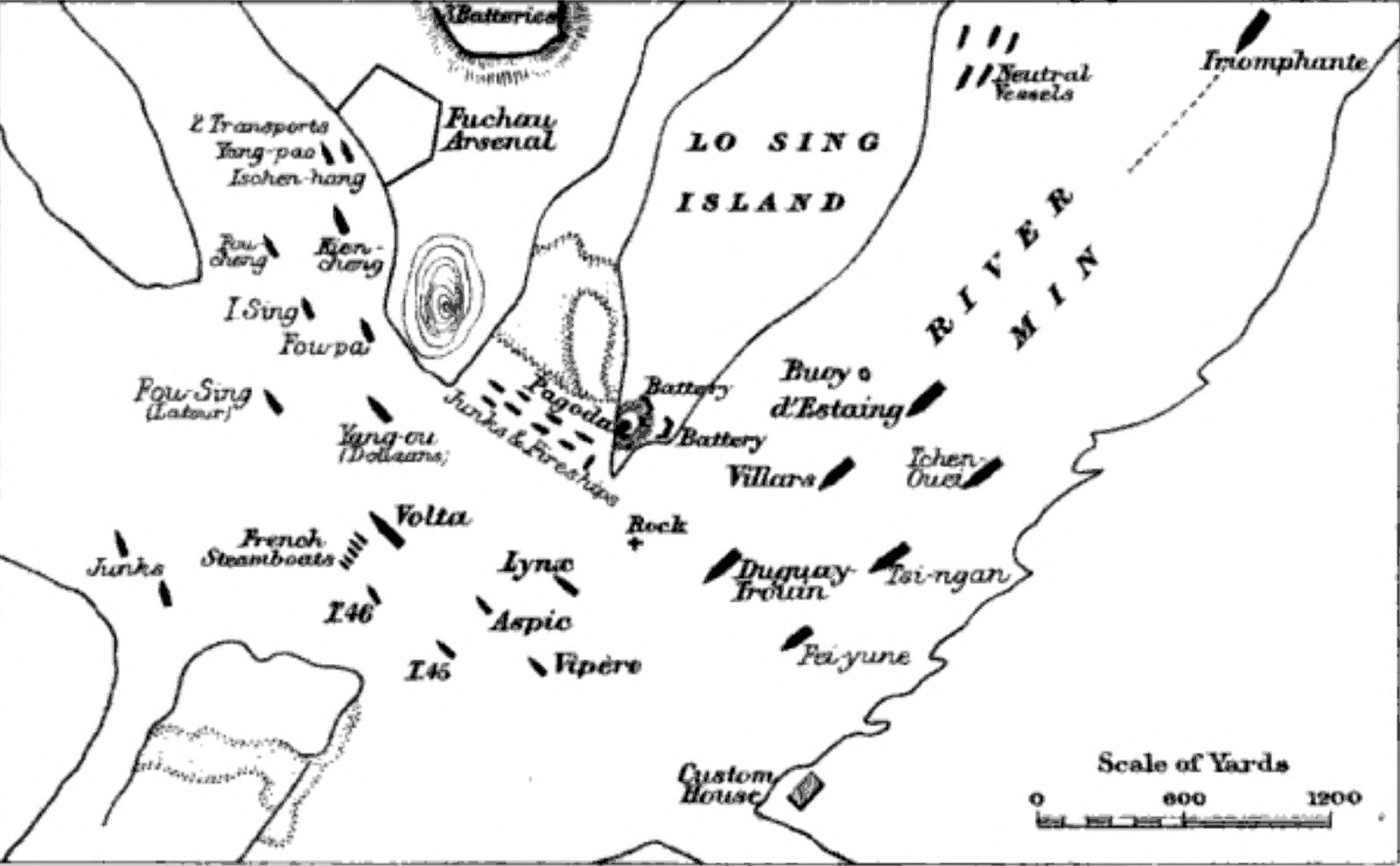
On 23 August 1884, Admiral Amédée Courbet’s French fleet attacked the Qing Fujian Fleet at Fuzhou, also known as Foochow. The ships were caught in harbor, and the fleet and nearby Mawei shipyard suffered devastating damage. The battle demonstrated the advantage of a concentrated modern fleet against a force that was not prepared to meet it at that moment. It also exposed a major weakness in Qing defense: regional fleets were organized and commanded separately, making a coordinated response difficult.
France also attacked Taiwan, then widely known in Europe as Formosa, to put pressure on Qing China. French forces seized Keelung on 1 October 1884, but an attack on Tamsui failed a week later, on 8 October. The campaign developed into a blockade and a difficult land-and-sea struggle rather than a quick conquest. For Qing China, Taiwan was strategically important, and officials worked to reinforce and supply the island despite the French naval pressure.
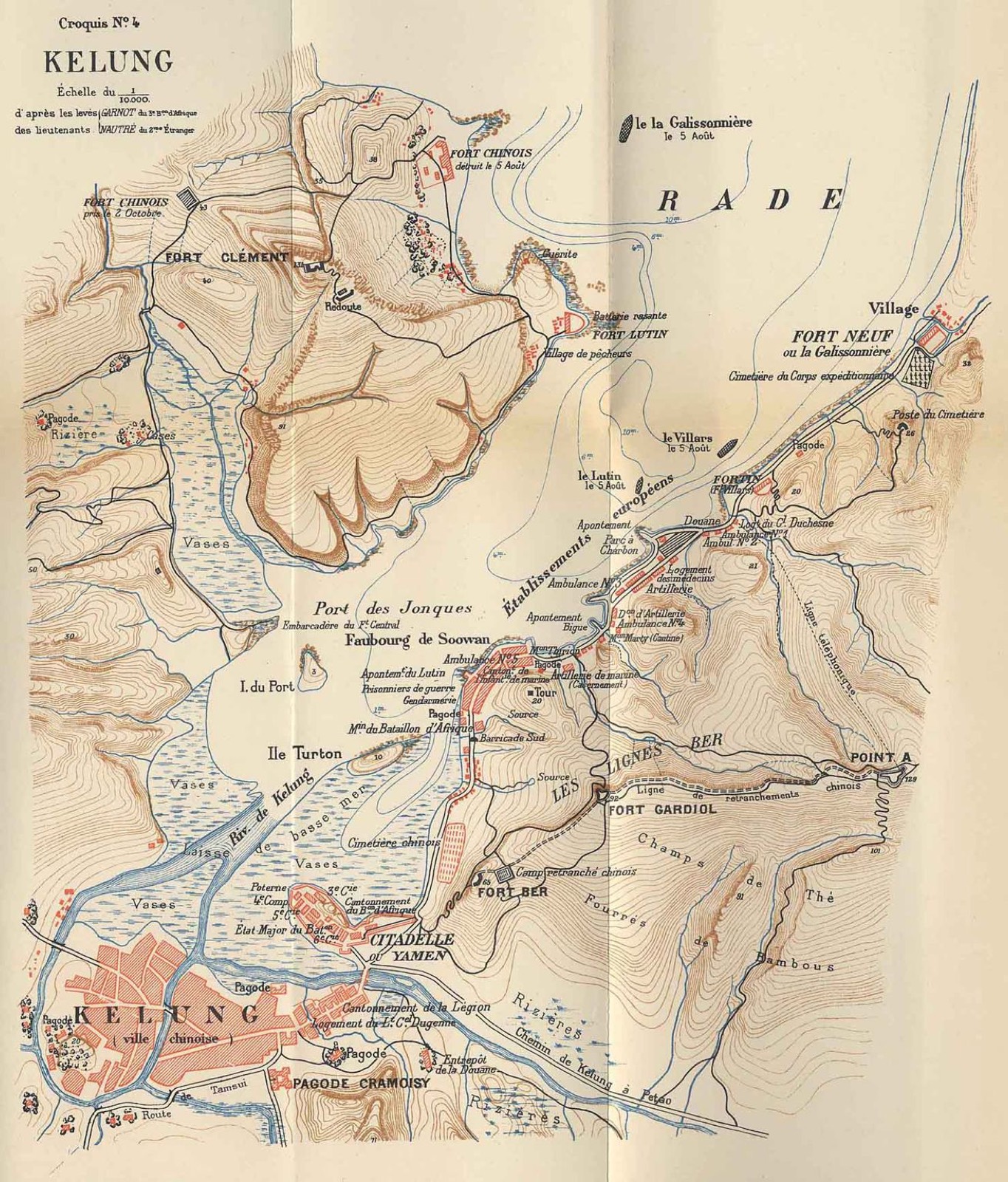
The island campaign shows how naval strength could create pressure without producing a quick political decision. Holding a port did not mean France controlled Taiwan, and a blockade required ships to remain in place while supplies and reinforcements became crucial. The treaty later paired France’s recognition of its gains in Vietnam with a commitment to withdraw from occupied territory outside Vietnam. That distinction helps explain why the war’s outcome cannot be reduced to a simple list of victories and defeats.
At the same time, fighting continued in Tonkin. Chinese and Black Flag forces besieged the French garrison at Tuyên Quang, which held out until relief arrived. A French relief column advancing on the town fought at Hòa Mộc on 2 March 1885 and reached the garrison the next day. On 23 and 24 March, Qing forces defeated the French at Bang Bo near the border. French troops, who had taken Lạng Sơn in February, abandoned the town on 28 March, and the news contributed to the fall of Jules Ferry’s government in Paris two days later. These events show why a straightforward story of French technological superiority is inadequate: French naval power brought striking victories, but land campaigns remained costly, uncertain, and contested.
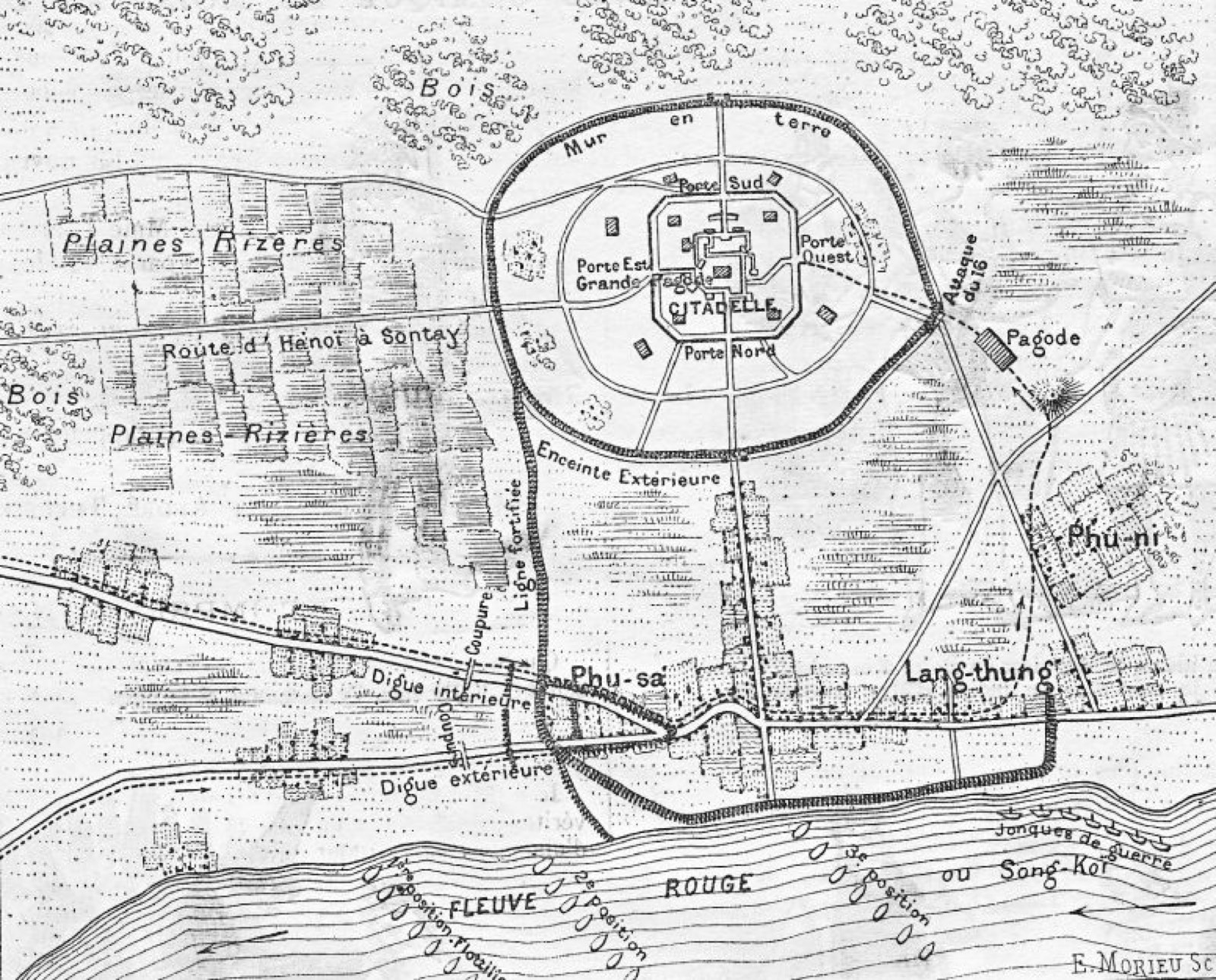
The land and sea theaters also placed different demands on each side. Ships could move quickly along the coast and strike ports, while armies in Tonkin had to cross difficult terrain and keep routes open for food, ammunition and communication. Qing and Black Flag forces could make those overland operations expensive even when French forces held important towns. This contrast between mobility at sea and contested control on land is one reason the war’s course changed from theater to theater.
What did the Treaty of Tianjin change?
France and Qing China signed the Treaty of Tianjin on 9 June 1885. Li Hongzhang and Jules Patenôtre signed for their governments. A preliminary protocol of 4 April 1885 had already halted the fighting, so the June treaty gave the settlement its formal shape. It gave diplomatic form to a result already visible on the ground: China agreed to respect the French treaties with the court at Huế and to withdraw its remaining forces from Tonkin. The treaty also addressed trade and border arrangements. France, for its part, agreed to evacuate Keelung and the Pescadores after the agreement was signed and implemented. The terms therefore combined recognition of French influence in Vietnam with the return of occupied territory outside Vietnam.
The treaty’s language dealt with relations between France and China, including their commercial ties and the frontier near Tonkin. Its effect on Vietnam was consequential because Qing China agreed to respect agreements made between France and the Nguyễn court. Yet the Vietnamese court was not a signatory to this France–Qing settlement. The formal peace between the two empires therefore cannot be read as a Vietnamese decision to accept French rule. For Qing China, the settlement meant giving up its long-standing influence over Vietnam in practice.
The treaty did not make Vietnam a French colony in the same legal form as Cochinchina. Annam and Tonkin were protectorates, with the Nguyễn court retained but subordinated to French power. That distinction matters: colonial rule took different forms across the region, and “protectorate” should not be mistaken for meaningful independence. The court’s freedom to deal with other states had been curtailed, and French officials increasingly shaped administration and policy.
Nor did the treaty end Vietnamese opposition to French rule. The Cần Vương movement, often translated as “Aid the King,” emerged in 1885 around the Nguyễn court and called for resistance. The war between France and China had settled the interstate question of Qing claims and French protection; it had not secured Vietnamese consent. The longer story of French rule is covered in French Indochina, while the earlier French conquest of Cochinchina explains how expansion began in the south.
What exams ask about the Sino-French War
For world history and the Japanese 共通テスト, connect three levels of the story. First, France wanted to extend colonial control from Cochinchina into northern Vietnam. Second, Qing China opposed losing influence over a neighboring tributary, but its forces and regional fleets did not act as one unified system. Third, the 1885 treaty confirmed the French protectorate over Annam and Tonkin, helping prepare the way for French Indochina.
Keep the 1884 Tientsin Accord separate from the 1885 Treaty of Tianjin. The former was a preliminary agreement intended to avert conflict; the latter ended the war and established the settlement. Also distinguish the 1885 France–Qing treaty from the other agreements called Treaties of Tianjin. The comparison is explained in Three Treaties of Tianjin. For the larger diplomatic setting, read Qing China, Japan and the West.
Three common misreadings are worth avoiding. The Black Flag Army was not the Qing regular army. The 1884 accord and the 1885 treaty were different documents. And the war had no single winner on every front: France won most of the naval actions, but its land campaigns in Tonkin were costly and uncertain.
A strong exam answer should avoid saying simply that “China lost Vietnam” as though Vietnam were an object transferred by treaty. Explain that France and Qing China negotiated the settlement, while the Nguyễn court and Vietnamese opponents of French rule faced the consequences. That phrasing keeps the diplomatic outcome clear without erasing Vietnamese political agency. For dating questions, line up the late-August 1884 start, the 1 October 1884 Keelung landing, the March 1885 relief of Tuyên Quang and the 9 June 1885 treaty in order.
Read next
For the earlier stages of French expansion, read The French Conquest of Cochinchina and the Treaty of Saigon. To separate similarly named agreements, continue with Three Treaties of Tianjin. The next stage of colonial administration is covered in French Indochina. For the wider regional context, read Qing China, Japan and the West.