In five minutes
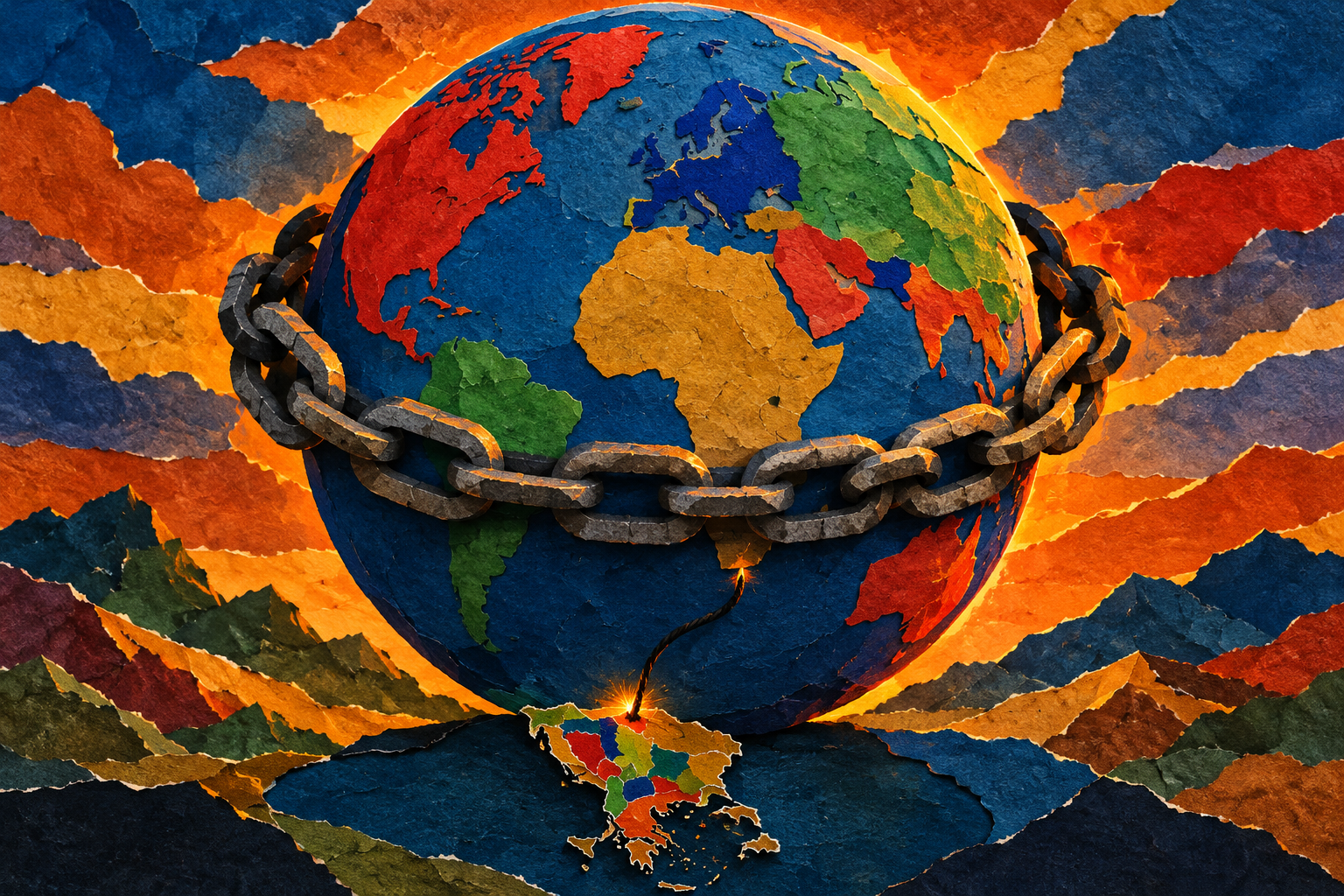
Imperialism did not cause World War I on its own, but it built the rivalries that made the 1914 crisis so dangerous. From about 1880 to 1914, the great powers of Europe competed for colonies, markets, raw materials and prestige in Africa, Asia and the Pacific. That competition fed the alliances, arms races and suspicion that turned the assassination of Archduke Franz Ferdinand at Sarajevo on 28 June 1914 into a war across the continent. If you are new to the topic, start with the World War I hub for the full sequence of events.
How did imperialism cause WWI?
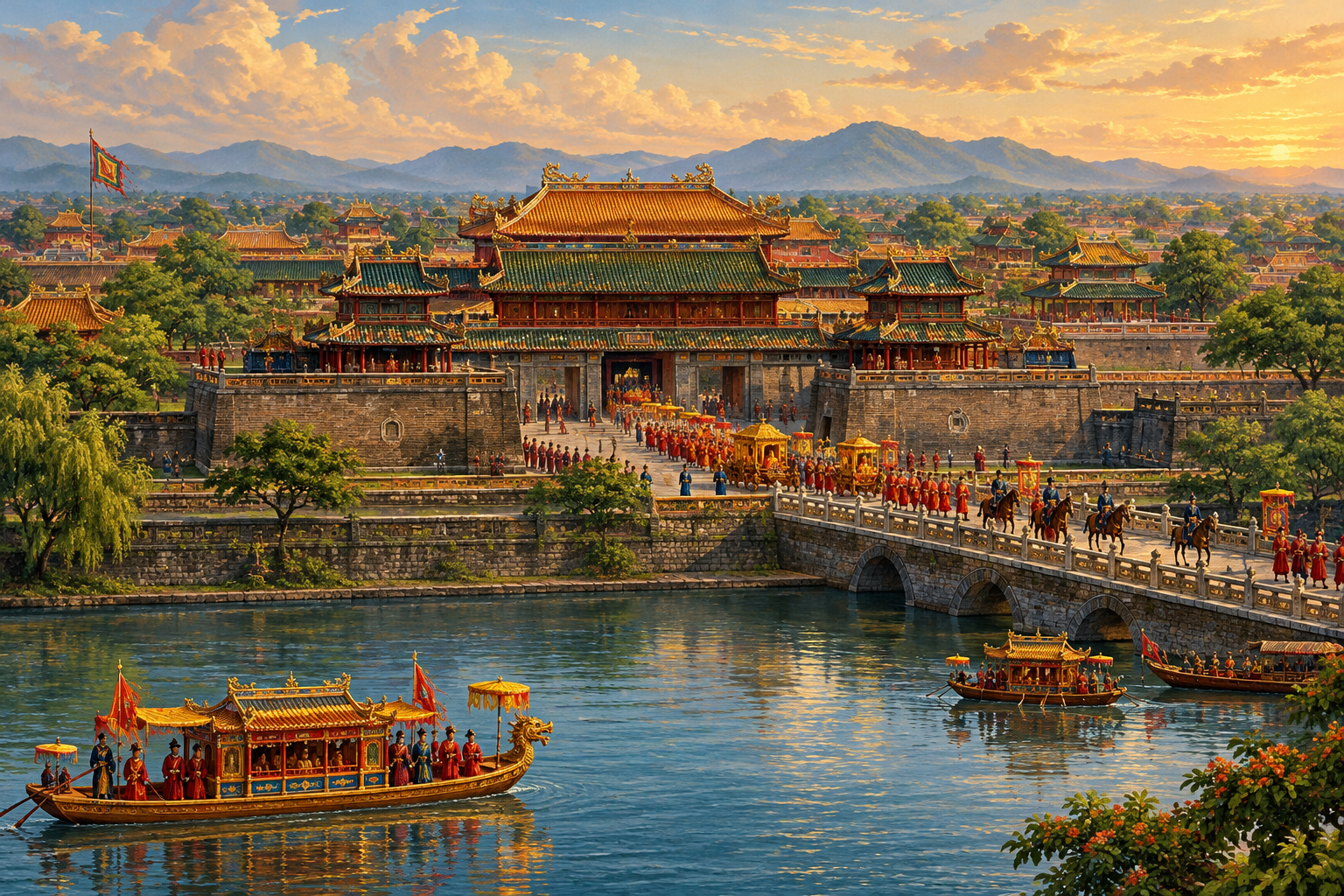
Here, imperialism means a state taking control of foreign territory to gain raw materials, markets, profit and national prestige. Industrial economies needed all of these, and colonies seemed to offer them. Governments treated overseas land as a measure of national power, so every new colony could shift the balance between rivals. Britain already had the largest empire. France, Germany and Italy wanted more, while Russia pushed into Asia and Austria-Hungary pushed into the Balkans.
The race for Africa began with the Berlin Conference of 1884 to 1885, where European powers agreed on rules for claiming land on the continent. By 1900, almost all of Africa was under European control, apart from Ethiopia and Liberia. Asia, the Middle East and the Pacific saw similar competition. Imperial rivalry was not only about maps; it also meant trade routes, investment and the prestige of having a navy strong enough to protect them.
Newspapers and schools presented overseas possessions as proof of national strength. That made empire a matter of pride as well as profit, and it made it harder for leaders to back down in a dispute.
Germany arrived late. It had unified in 1871, became one of the world’s leading industrial economies within a few decades, and still had only a small overseas empire. In 1897, Bernhard von Bülow, then in charge of German foreign policy, called for a “place in the sun” for Germany. The phrase became a symbol of German ambition.
The navy became the next flashpoint. Germany passed its First Navy Law in March 1898 and began building a battle fleet. Britain, the world’s leading naval power, saw this as a challenge to its command of the seas. The race sharpened after HMS Dreadnought was launched in February 1906. Armed with a uniform set of heavy guns, she made older battleships obsolete, and both countries rushed to build more big ships.
Colonial rivalry also fueled distrust. Each clash over territory made leaders more worried about what a rival might do next. Still, colonial disputes were not automatically a cause of war, and many were settled by negotiation.
Crises that hardened the rivalries
Several clashes over colonies showed how quickly disputes could escalate. Some were settled by diplomacy, while others left deeper distrust behind.
- 1898, Fashoda: British and French forces faced each other in Sudan. France withdrew, and the standoff was resolved without war.
- 1904, Entente Cordiale: Britain and France settled long-running colonial quarrels. France accepted British influence in Egypt, and Britain accepted French influence in Morocco. It was a friendship agreement rather than a military alliance, but it brought the two countries much closer.
- 1905–1906, First Moroccan Crisis: In March 1905, Kaiser Wilhelm II visited Tangier to challenge French influence in Morocco. At the Algeciras Conference in 1906, most powers backed France, and only Austria-Hungary supported Germany. Germany had gained little and was left isolated.
- 1907, Anglo-Russian Convention: Britain and Russia settled disputes over Persia, Afghanistan and Tibet. Together with the Entente Cordiale, it linked Britain, France and Russia in what historians call the Triple Entente.
- 1908–1909, Bosnian crisis: In October 1908, Austria-Hungary annexed Bosnia and Herzegovina, which it had administered since 1878. Serbia and its Russian backers protested. In March 1909, Russia accepted the annexation under strong German pressure, and Serbia was left bitter.
- 1911, Agadir (Second Moroccan Crisis): In July 1911, Germany sent the gunboat Panther to the Moroccan port of Agadir, testing French and British resolve. Britain signaled support for France. Germany backed down and received part of French Equatorial Africa in return for recognizing French control of Morocco.
- 1912–1913, Balkan Wars: Balkan states drove the Ottoman Empire out of most of its European territory, then fought each other over the spoils. Serbia gained a large amount of land and grew in confidence, while Austria-Hungary saw Serbian ambition as a serious threat.
Together these crises pulled the great powers into two rival camps: the Triple Alliance of Germany, Austria-Hungary and Italy, and the Triple Entente of Britain, France and Russia.
From rivalry to war in July 1914
The rivalries set the stage, but the spark came in the Balkans. On 28 June 1914, Gavrilo Princip, a young Bosnian Serb nationalist, shot Archduke Franz Ferdinand and his wife, Sophie, in Sarajevo. Both died. Austria-Hungary’s government believed Serbian officials were involved. In early July, Germany assured Vienna of its full support, a pledge often called the “blank check.”
Austria-Hungary sent Serbia an ultimatum on 23 July. Serbia accepted most of the demands but not all of them, and on 28 July Austria-Hungary declared war on Serbia. Russia, Serbia’s protector, began mobilizing.
The war spread within days. Germany declared war on Russia on 1 August and on France on 3 August, then invaded Belgium on 4 August. Britain declared war on Germany the same day, because it had guaranteed Belgian neutrality. On 6 August, Austria-Hungary declared war on Russia, and most of the great powers were now fighting.
Mobilization plans made the spread faster. Once one power began moving troops, others felt they had to follow, because waiting could mean losing the race to the front. Imperial rivalry had not created the Balkan crisis, but it had left every power more suspicious and less willing to back down.
How much weight does imperialism deserve?
Historians still disagree about how much weight to give imperialism. In 1916, the Russian revolutionary Vladimir Lenin argued that rivalry among imperial powers was the root cause of the war. Later historians, including Fritz Fischer, focused on German war aims and the decisions taken in Berlin in July 1914, which placed much of the responsibility on Germany.
Many historians today treat colonial disputes as one strand among several. They raised tension and shaped alliances, but they were usually managed by diplomacy until the Balkan crisis of 1914. A strong reading treats imperialism as a background force that made a local crisis dangerous, not as the single cause.
What exams ask
Exam questions, including AP-style essays, often ask you to evaluate causes rather than simply list them. A useful outline runs in this order: imperial rivalry, specific crises such as Morocco and Bosnia, alliances, the July crisis, and then the mobilization chain that spread the war. Avoid claiming that imperialism alone caused the war; explain how it interacted with alliances, militarism and nationalism.
Read next
- How Alliances Led to WWI: how the treaty network turned colonial rivalry into two opposing blocs.
- How Nationalism Caused WWI: why Balkan nationalism gave the great-power rivalries their flashpoint.
- What Is Militarism? How It Led to WWI: why armies, navies and war plans mattered once the crisis began.