The American Revolutionary War was the armed conflict between the Thirteen British colonies on North America's Atlantic coast and Great Britain. It began with the fighting at Lexington and Concord in April 1775 and ended, on paper, with the Treaty of Paris in September 1783. This article covers the war itself. For the political road to independence, read our hub, The American Revolution: Causes, War and Independence.
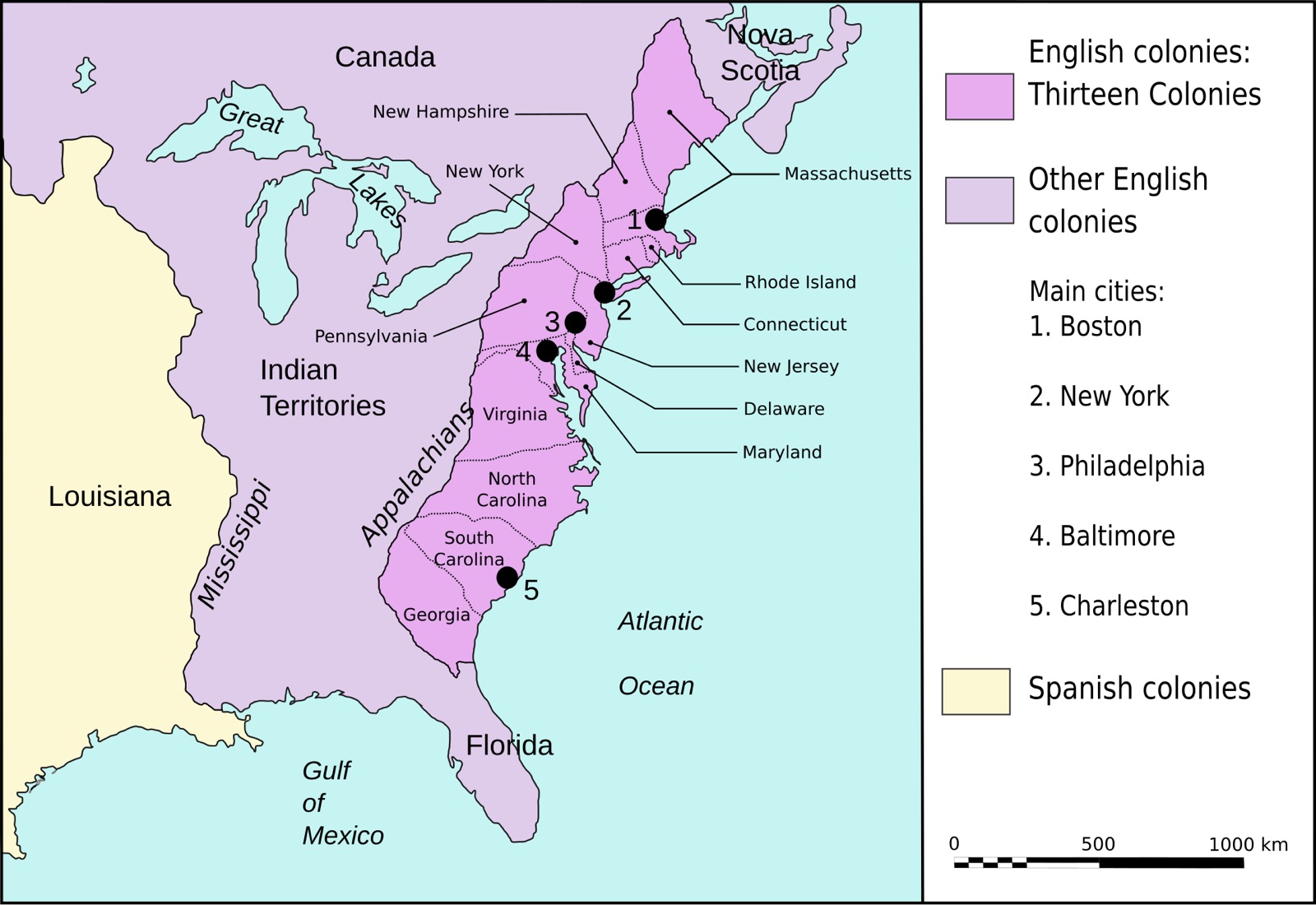
In five minutes: when the Revolutionary War started, ended and why America won
The war started on 19 April 1775 and formally ended on 3 September 1783. The colonists did not win most of the big battles; Britain won more of them. The Americans won the war by keeping their army in being and by gaining a powerful ally at the right moment. Four factors stand out. First, the surrender of a British army at Saratoga in October 1777 persuaded France to sign an alliance in 1778. Second, Britain had to ship men and supplies across the Atlantic, which was slow and expensive. Third, George Washington avoided risking his army in one all-or-nothing fight. Fourth, a French fleet controlled the sea off Virginia in September 1781, which left Lord Cornwallis trapped at Yorktown.
How the fighting began: Lexington and Concord, 1775
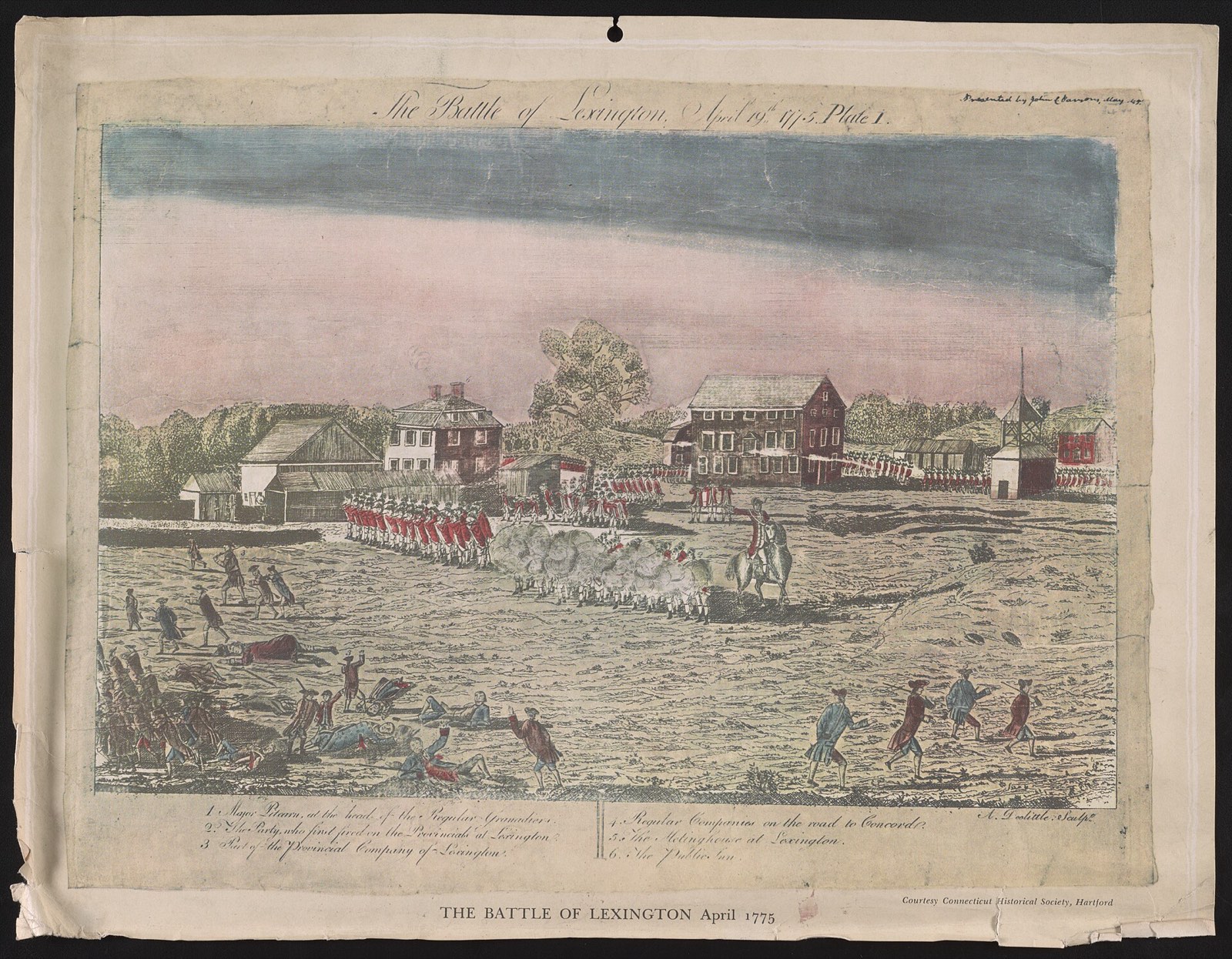
Years of quarrels over taxes, trade and British troops in Boston had left the colonies tense. In April 1775, about 700 British regulars marched out of Boston toward Concord, where colonial forces had stored weapons and supplies. At dawn on 19 April, at Lexington, they found roughly 70 to 80 militiamen on the village green. Nobody knows who fired first, but shots were exchanged and about eight militiamen were killed. At Concord, around 400 militiamen pushed back at the North Bridge, and the British began a long march back to Boston while colonial fire came at them from houses, walls and woods. Historians give different casualty figures. British losses were roughly 250 to 300, and colonial losses about 90.
Within weeks, militia from across New England had surrounded British-held Boston. In June 1775 the Continental Congress chose George Washington as commander-in-chief, and he took command of the troops at Cambridge on 3 July. The conflict was no longer a quarrel within one colony; it had become a continental war.
1775 to 1776: the British leave Boston, and New York falls
The British could not hold Boston. On 17 March 1776 they sailed away to Halifax in Nova Scotia. Washington then marched his army south, expecting the next British blow to fall on New York. On 4 July 1776 Congress adopted the Declaration of Independence. From that point the struggle was openly a fight for independence, not only a dispute about rights within the empire.
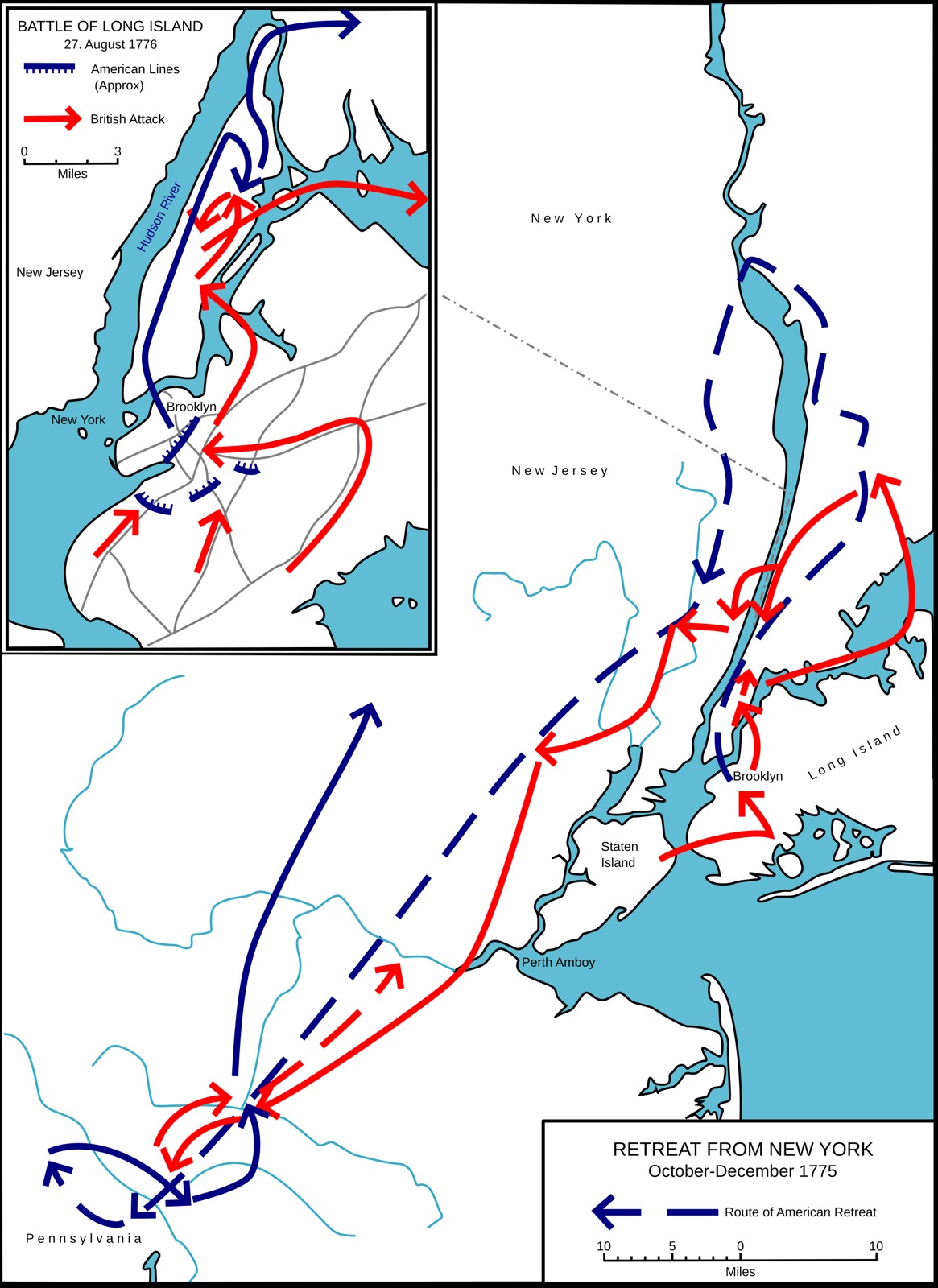
The British attack on New York came in August. On 27 August 1776 British forces won the Battle of Long Island and drove the Americans out of Brooklyn, and Washington's army was in danger of being trapped. On the night of 29 and 30 August, in a heavy fog, the Americans slipped across the East River to Manhattan. Historians often treat that retreat as a salvage operation within a defeat. That autumn the British took much of New York and pushed Washington's army back across New Jersey, as the map below shows.
Trenton, December 1776: a surprise that revived the army
By the end of 1776 the Continental Army was small, exhausted and losing men. On the night of 25 December, Washington led his troops across the icy Delaware River. The next morning, 26 December, they attacked the Hessian garrison at Trenton, New Jersey. The garrison numbered roughly 1,200 to 1,400 men, and most of them were caught off guard. Most counts put the number captured at about 870 to 900, though some sources give higher figures. Their commander, Colonel Johann Rall, was mortally wounded and died later that day. Trenton did not end the war, but it gave Congress and the army a much-needed boost.
Saratoga, 1777: the turning point
In 1777 General John Burgoyne led a British army south from Canada toward Albany, hoping to cut New England off from the other colonies. He was stopped near Saratoga, New York, in two battles: Freeman's Farm on 19 September and Bemis Heights on 7 October. With his supplies short and no relief arriving, Burgoyne surrendered to the American general Horatio Gates on 17 October 1777. Estimates of the number of men who laid down their arms range from about 5,700 to 6,200.
Saratoga mattered because it showed France that Americans could defeat a British army in the field. On 6 February 1778 American and French delegates signed a treaty of alliance in Paris, along with a treaty of amity and commerce. Congress ratified both on 4 May 1778. France then brought ships, money and troops into the war. The conflict became a global struggle, and Britain now had to defend trade and colonies in several places at once.
1778 to 1780: the war moves south
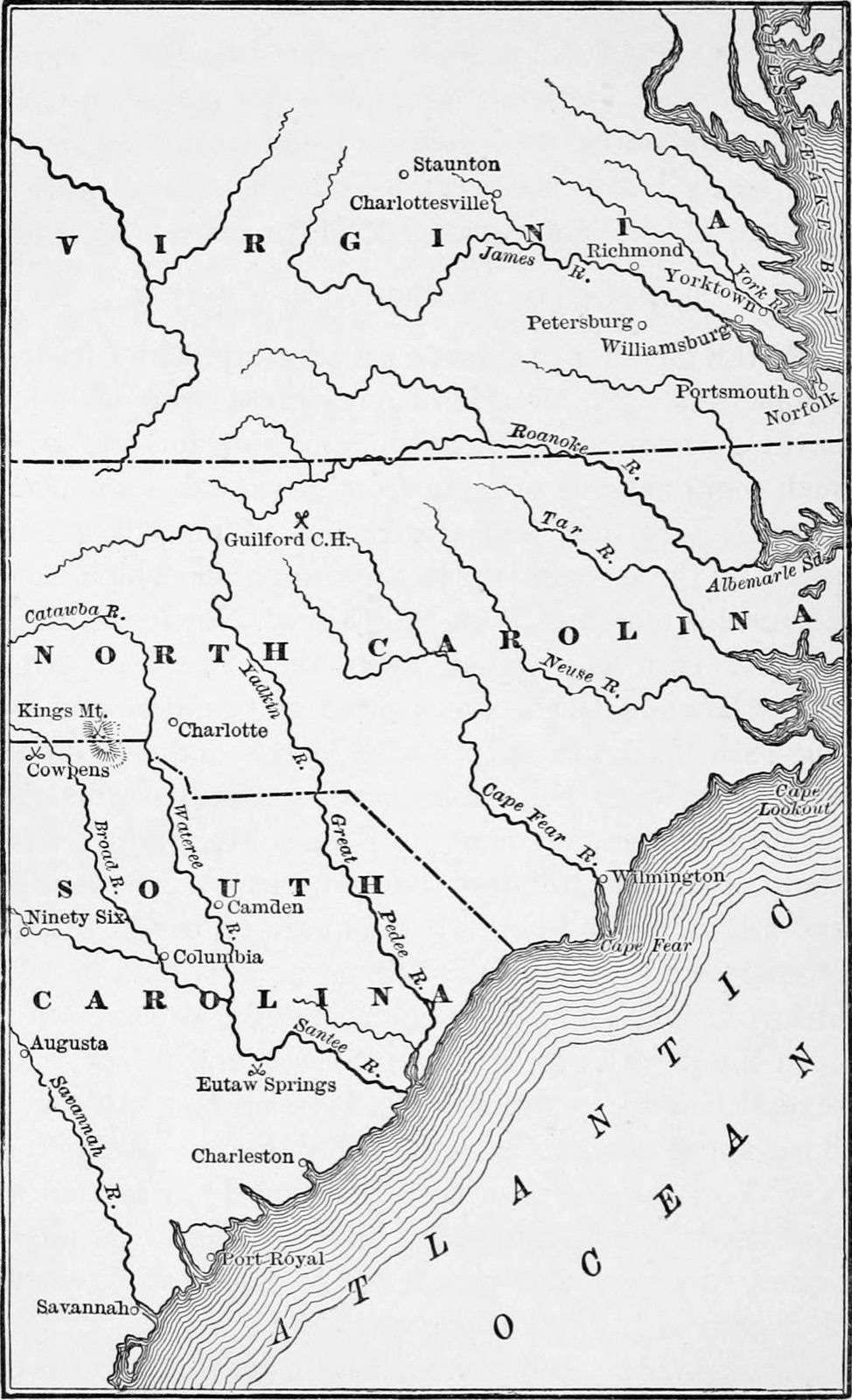
After France entered the war, Britain could no longer count on an easy victory in the north, so it turned to the south. British planners believed many Loyalists there would rally to the Crown. The southern campaign gained ground at Charleston. A British siege began in late March 1780, and on 12 May General Benjamin Lincoln surrendered the city and an army of more than 5,000 troops. It was the largest single American surrender of the war. Lord Cornwallis then led the southern campaign deeper into the Carolinas and Virginia. The map below marks the battle sites of his campaigns.
Why Britain struggled to win
Britain had a professional army, a powerful navy and a record of winning big battles. Yet it could not turn those wins into lasting control. Distance was the main problem. Men, food and ammunition had to cross the Atlantic, and holding a conquered area took troops that Britain could not easily spare. British planners also expected Loyalists to rise in large numbers, and that support proved weaker than hoped. In London, politicians grew tired of an expensive war with no clear end.
Yorktown, 1781: how the war was decided
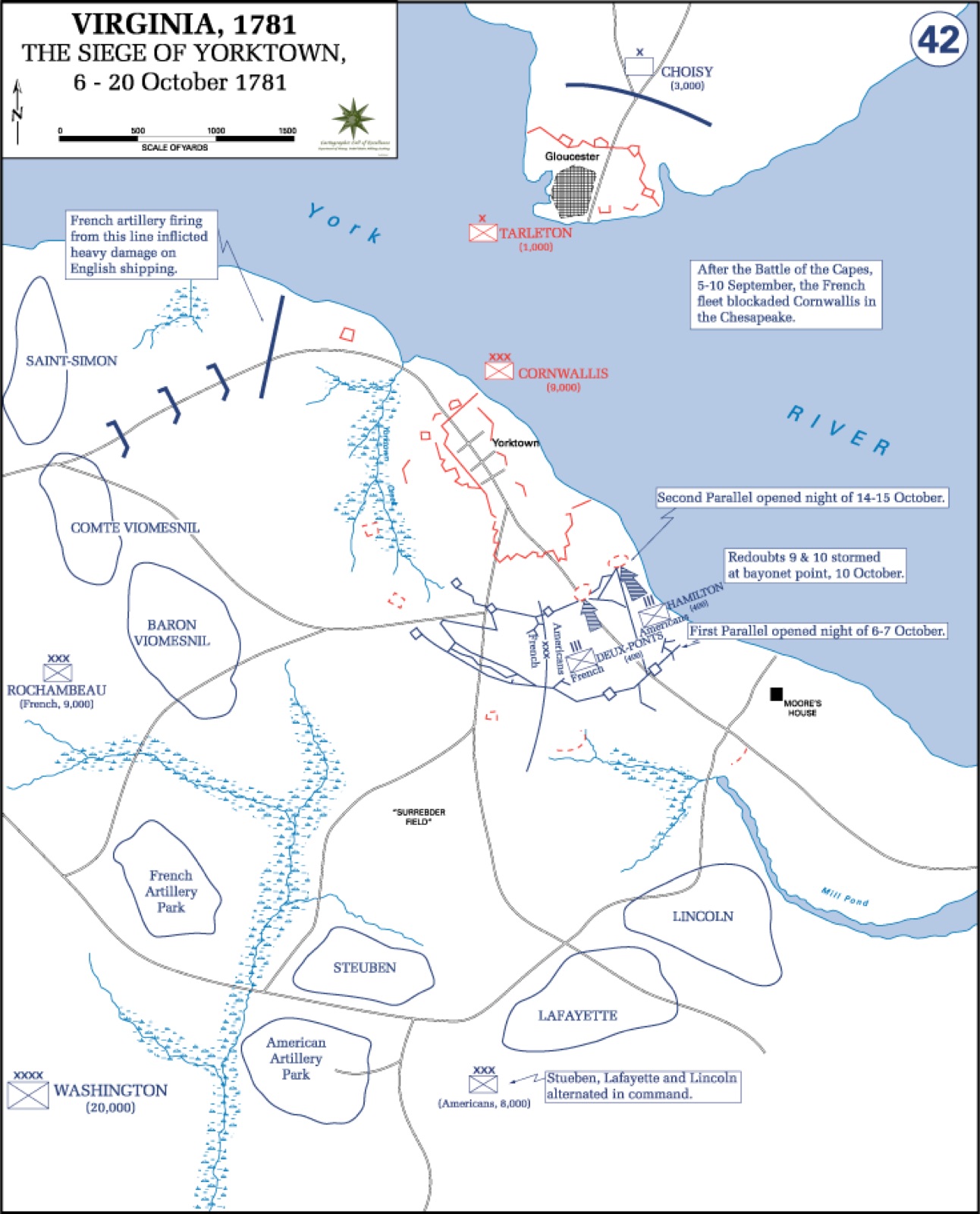
By mid-1781 Cornwallis had moved his army to Yorktown in Virginia to wait for British ships and reinforcements. Washington had been preparing an attack on New York. Instead, he and the French commander, the Comte de Rochambeau, marched their combined army south toward Virginia. The decisive step happened at sea. On 5 September 1781 a French fleet under Admiral the Comte de Grasse met a British fleet at the Battle of the Virginia Capes. One account gives about 24 French ships of the line against about 19 British. The fight was tactically inconclusive, but it kept the French in control of Chesapeake Bay, and the Royal Navy could not land the men and supplies Cornwallis needed.
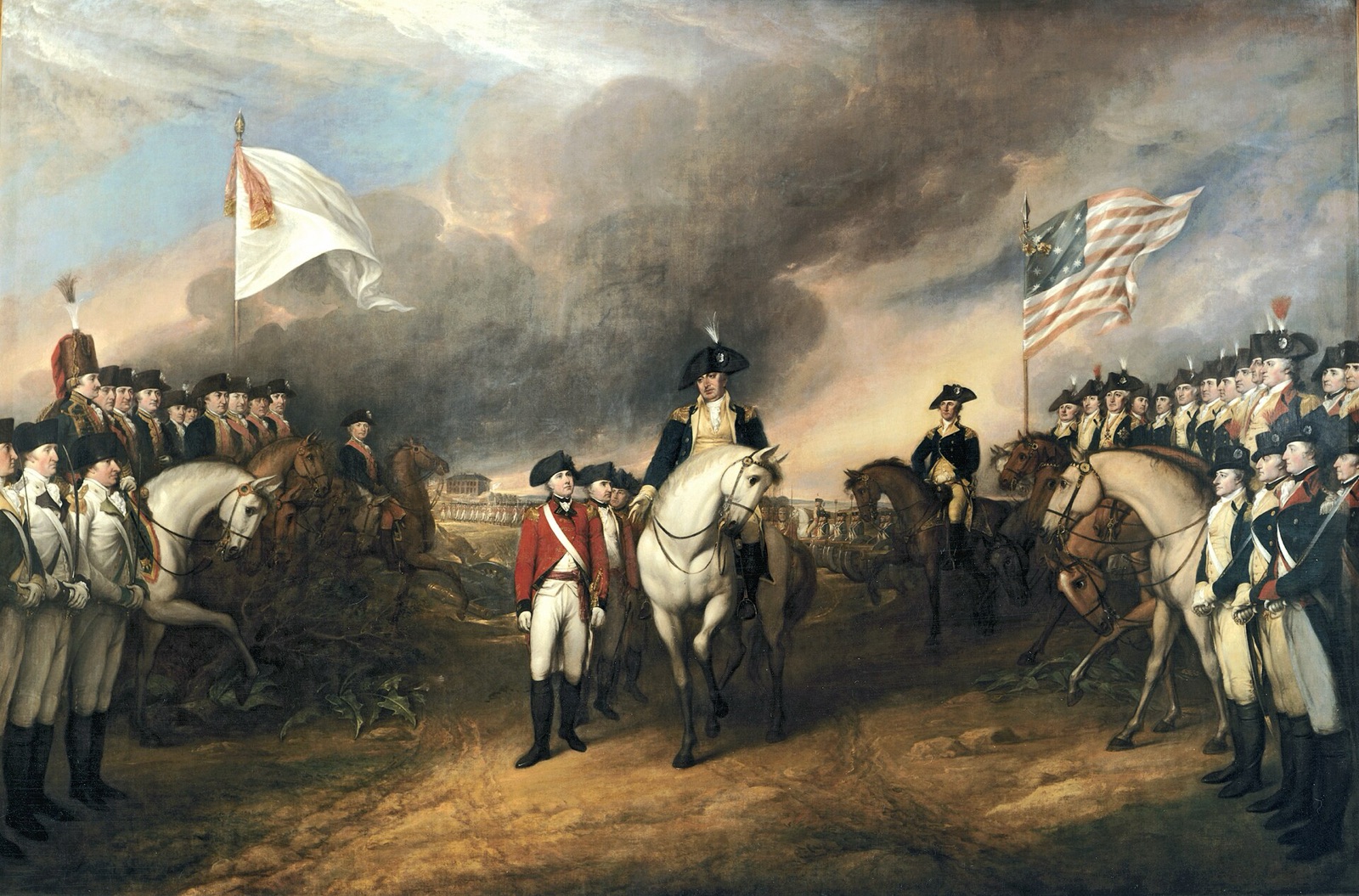
The siege ran from 28 September to 19 October 1781. Allied guns moved closer to the British lines. On 14 October, French and American troops stormed two British outer redoubts, Redoubts 9 and 10. French troops under the Baron de Viomenil took Redoubt 9, and American troops, with Alexander Hamilton leading the assault, took Redoubt 10. That opened the way for allied artillery to bear on Yorktown itself. In the last days, Cornwallis tried, without success, to slip troops across the York River at night. On 19 October he surrendered. Claiming illness, Cornwallis sent Brigadier General Charles O'Hara to hand over his sword. Historians estimate the British garrison at roughly 7,000 to 9,000 soldiers, plus several hundred sailors, and the Franco-American land force at roughly 15,000 to 17,600.
The peace: the Treaty of Paris, 1783
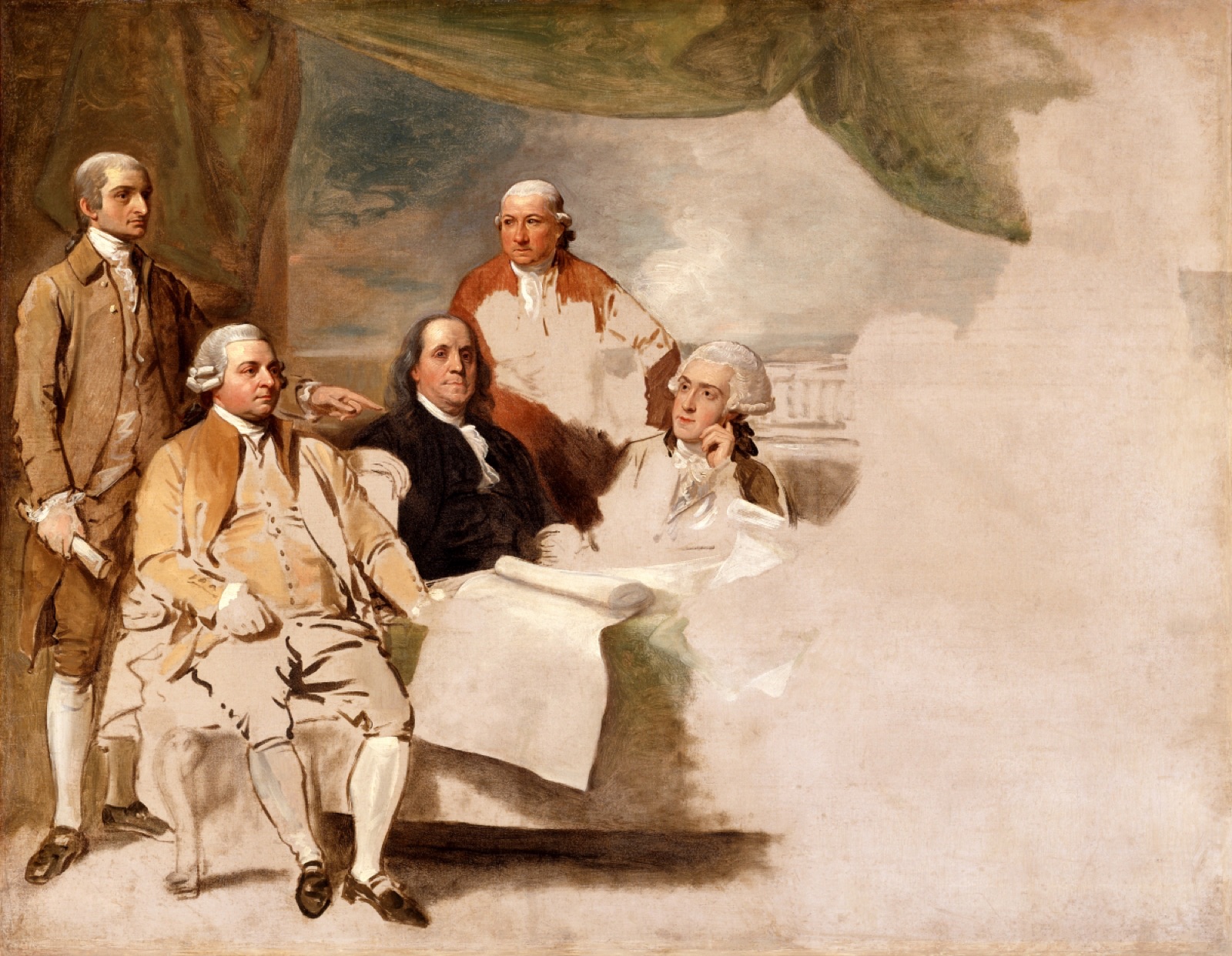
Peace talks had run on for months by the time the fighting died down. Benjamin Franklin, John Adams, John Jay and Henry Laurens represented the Americans, and Richard Oswald and Henry Strachey represented Britain. Preliminary articles were agreed in Paris on 30 November 1782. The final Treaty of Paris was signed on 3 September 1783. Britain recognised American independence and accepted the new country's borders. Congress ratified the treaty on 14 January 1784.
Peace brought new problems. The United States now had to build a government that worked. Many Loyalists, colonists who had stayed loyal to the Crown, left for Canada or Britain. The war had also shown how hard it was for a loose union of states to raise money and troops.
Who fought: armies, militias and foreign troops
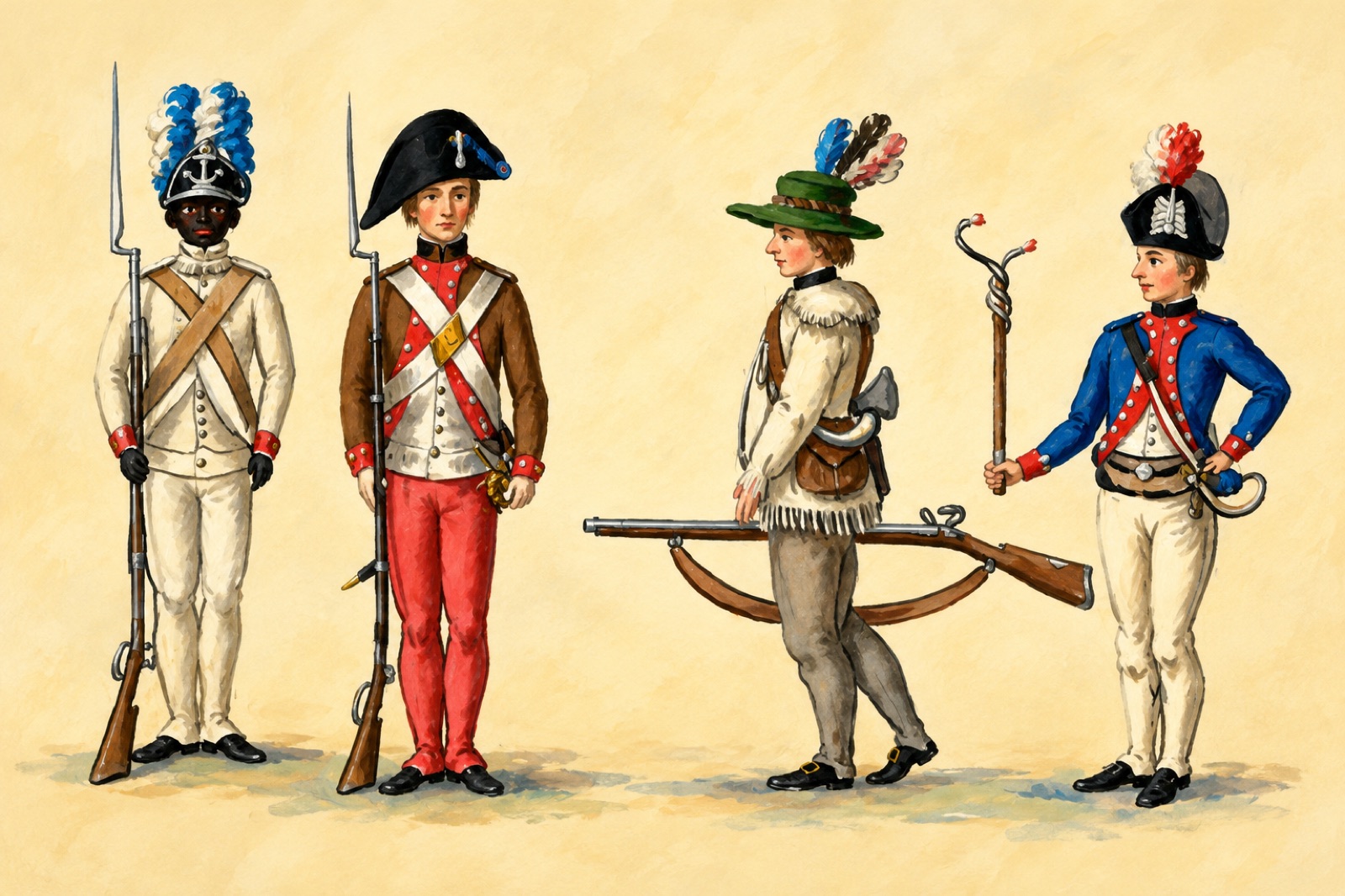
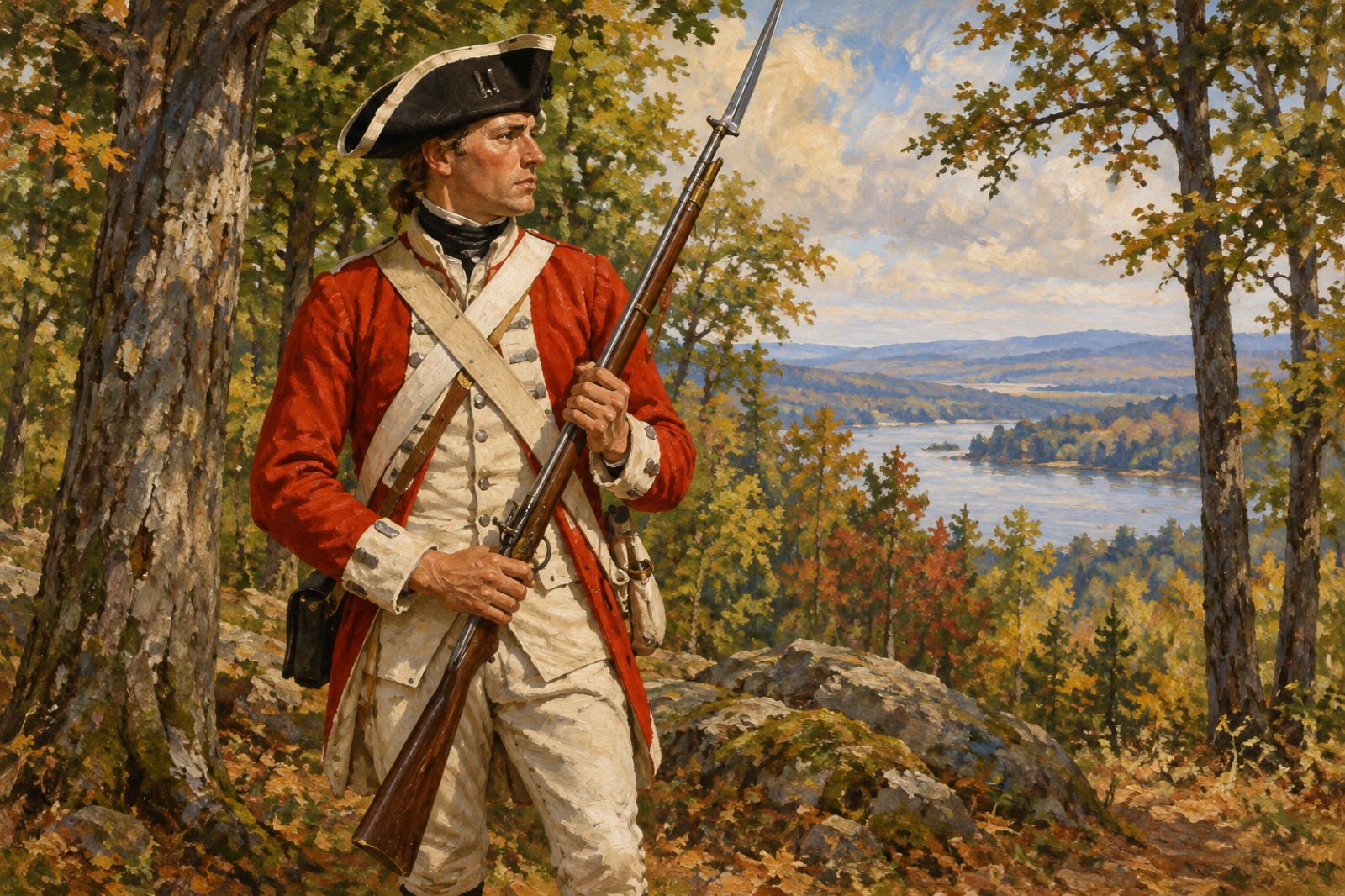
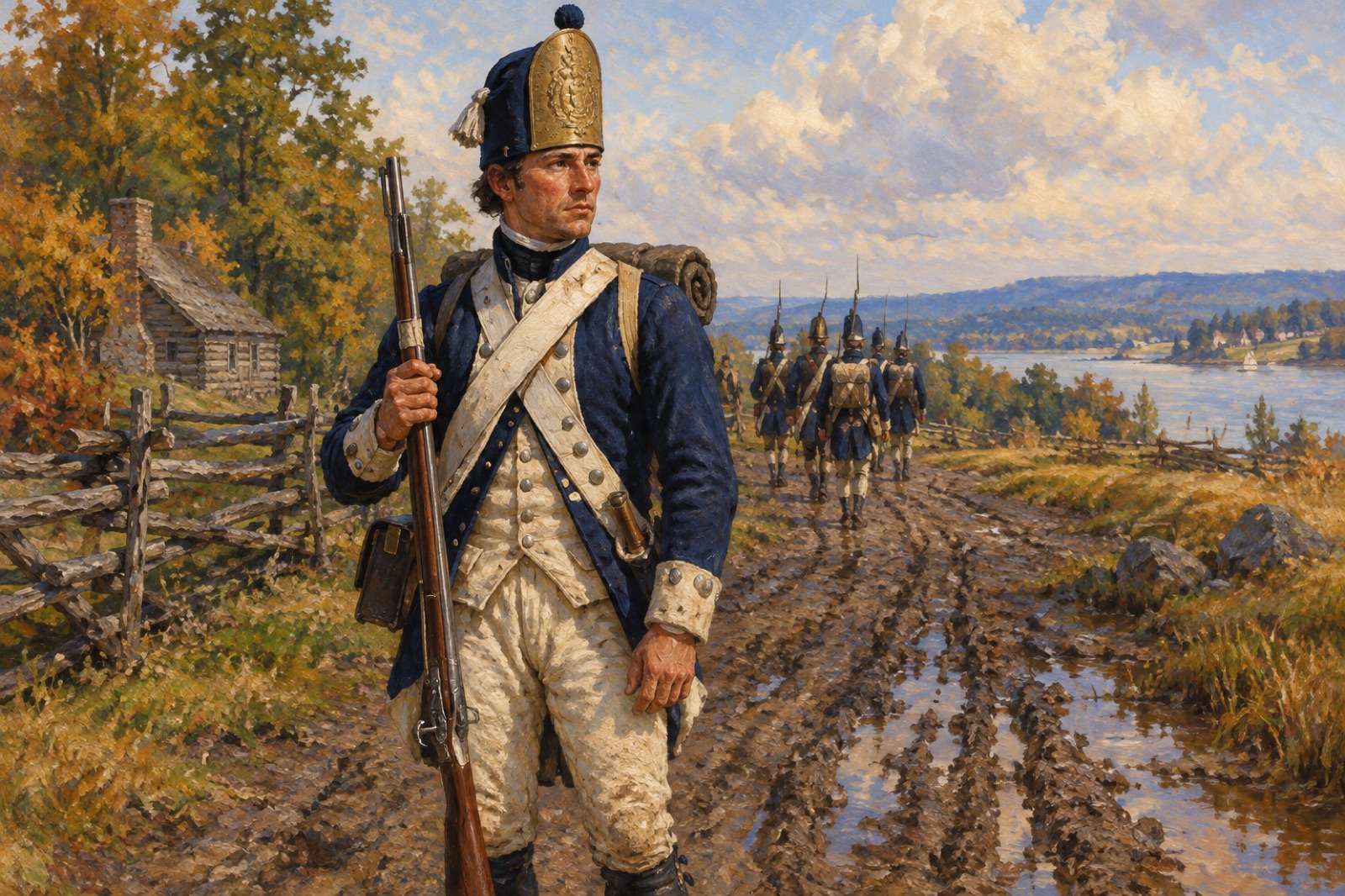
The Continental Army was Washington's regular force. Alongside it, state militias and minutemen, companies pledged to turn out at short notice, fought in many campaigns. The British army was built around professional redcoat regulars, trained for disciplined volley fire and the bayonet. Britain also relied on German auxiliaries, mostly from Hesse-Kassel, whom their princes hired out to Britain. Counts vary, but roughly 30,000 German soldiers served in North America, and the name “Hessians” came to cover them all. Loyalists fought on the British side too. After 1778 French land forces and the French navy fought on the American side.
Why the Americans won: the main arguments
Historians weigh these factors differently, but most point to the same handful. In diplomacy, Saratoga brought France into the war. In geography, Britain had to ship men and supplies across the Atlantic, while the Americans fought on home ground, where they could recover from defeats. In strategy, Washington put keeping an army in the field ahead of winning every battle, so he avoided the all-or-nothing fights that Britain could win. At sea, the French navy gave the Americans control of the water when it counted most. In Britain, political support for the war weakened after Yorktown. No single factor explains the outcome on its own.
What exams ask
AP-style questions usually ask about cause and effect and about the role of foreign help. A strong answer links the steps: the American win at Saratoga led to the French alliance, French naval power made Yorktown possible, and the combined result produced the Treaty of Paris. Good answers also recognise that Britain won many battles, so the outcome depended on strategy and alliances rather than on battlefield dominance alone.
Read next
These pages fill in the story before and after the war:
- Causes of the American Revolution: why the colonies and Britain fell out in the first place.
- The Declaration of Independence Explained: what the 1776 document said and why it changed the war.
- The Boston Tea Party (1773): the protest that deepened the dispute with London before the fighting began.