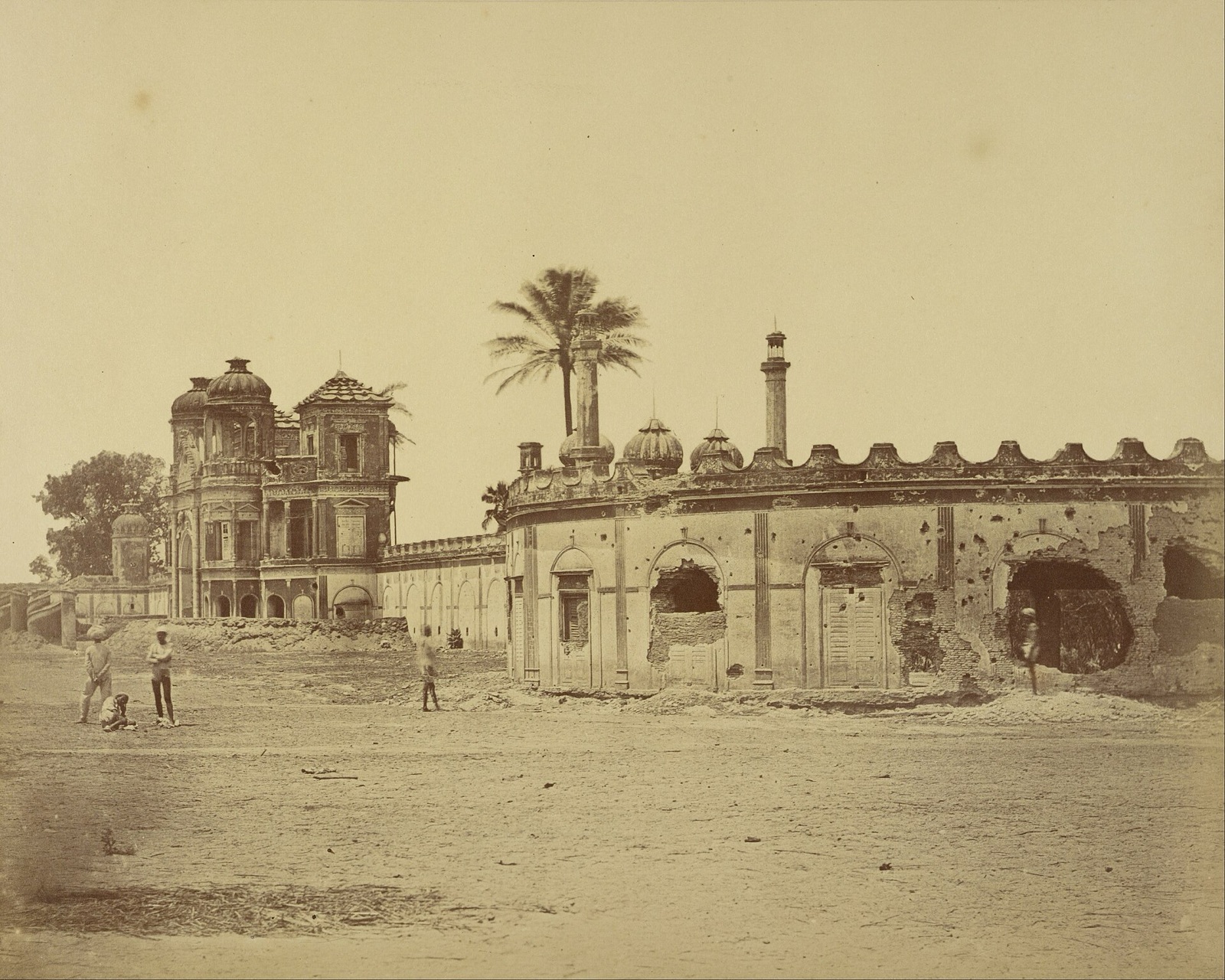
In five minutes
The Indian Rebellion of 1857, often called the Sepoy Mutiny, was a revolt against East India Company rule in northern and central India. It began with Indian soldiers in the Company's Bengal Army and grew into a wider uprising that drew in rebel leaders in Delhi, Cawnpore, Lucknow and Jhansi. Formal hostilities did not end until 1859, and the Company's rule did not survive the revolt. From 1858, the British government ruled India directly.
The short answer: sepoys were angry about pay and allowances, the loss of status in their home regions and a rumour about their cartridges. In several cities, the rising found leaders who wanted to restore old powers. British forces crushed it with reinforcements, but the revolt changed the way Britain governed India. This article is part of our imperialism guide, which explains how empires ran colonies and why colonised peoples resisted.
Causes: the cartridge and the anger behind it
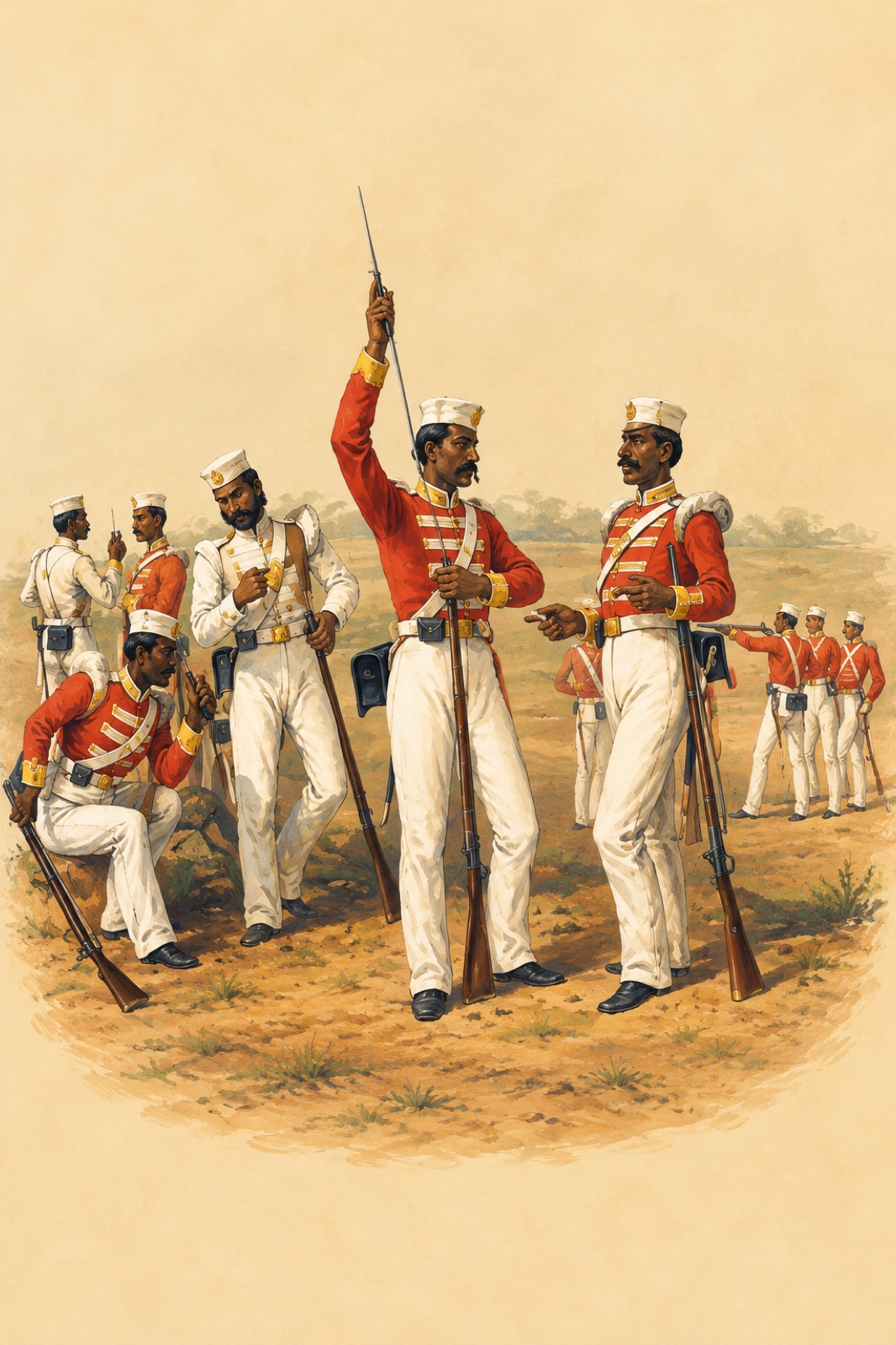
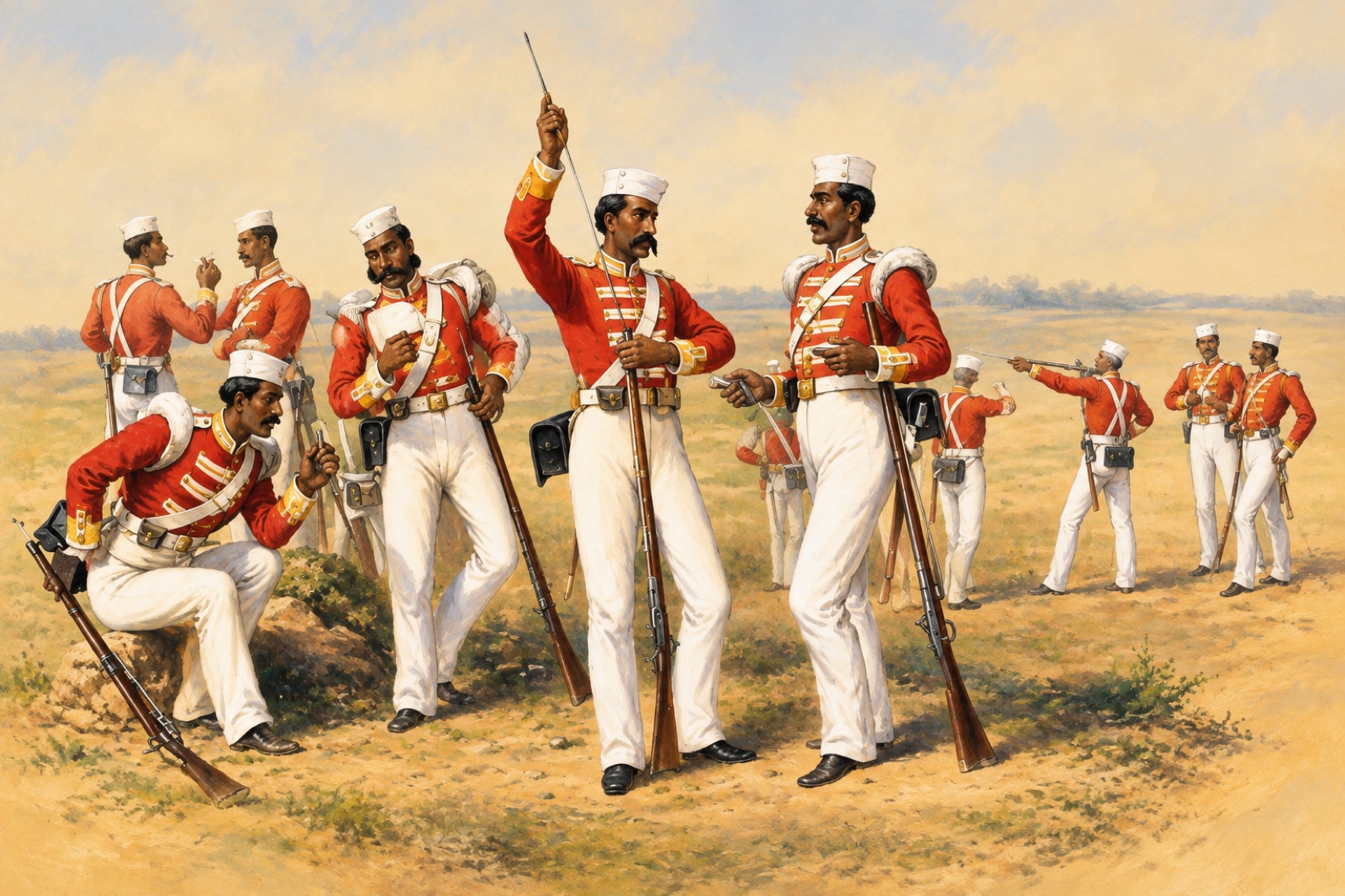
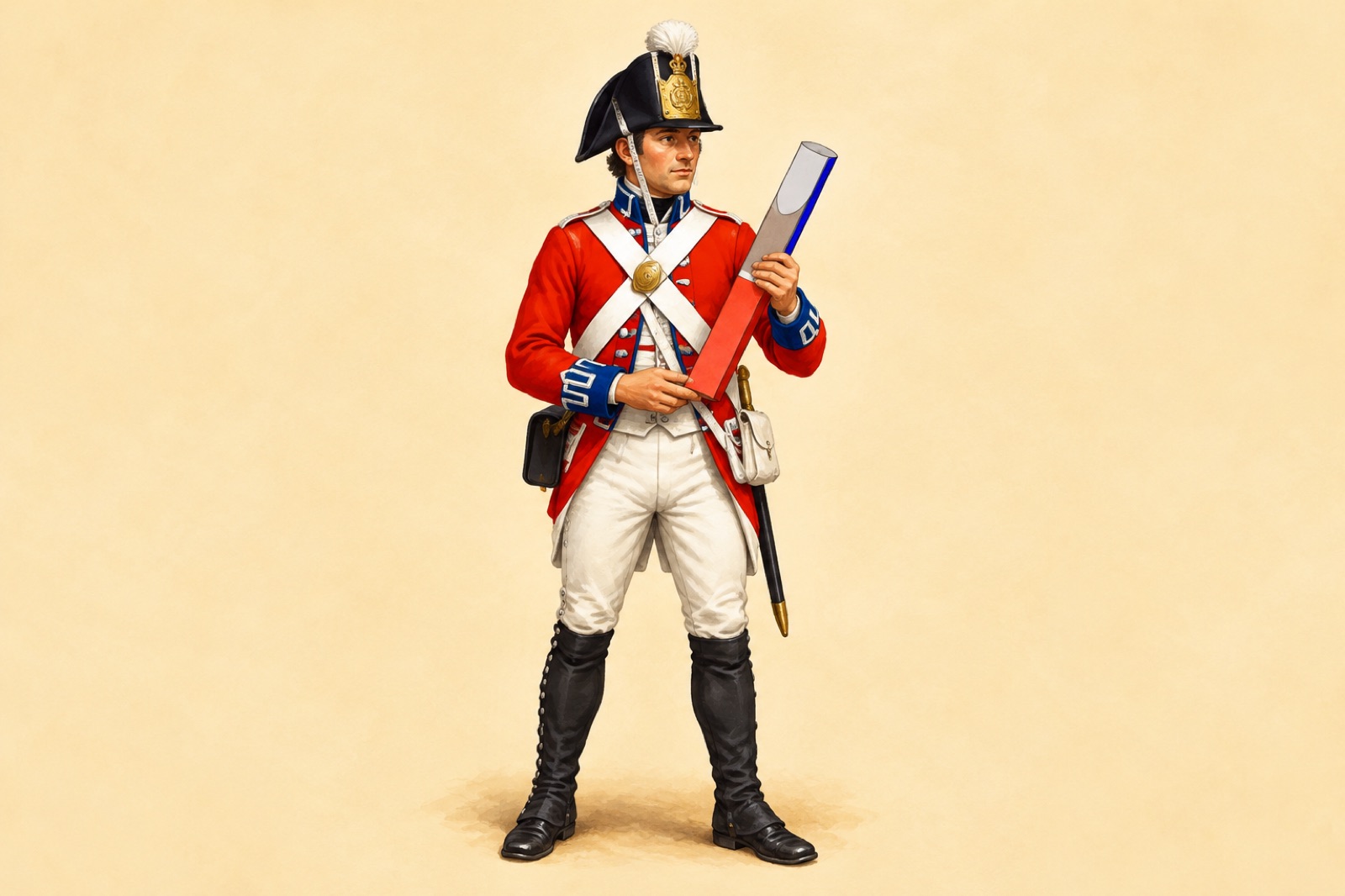
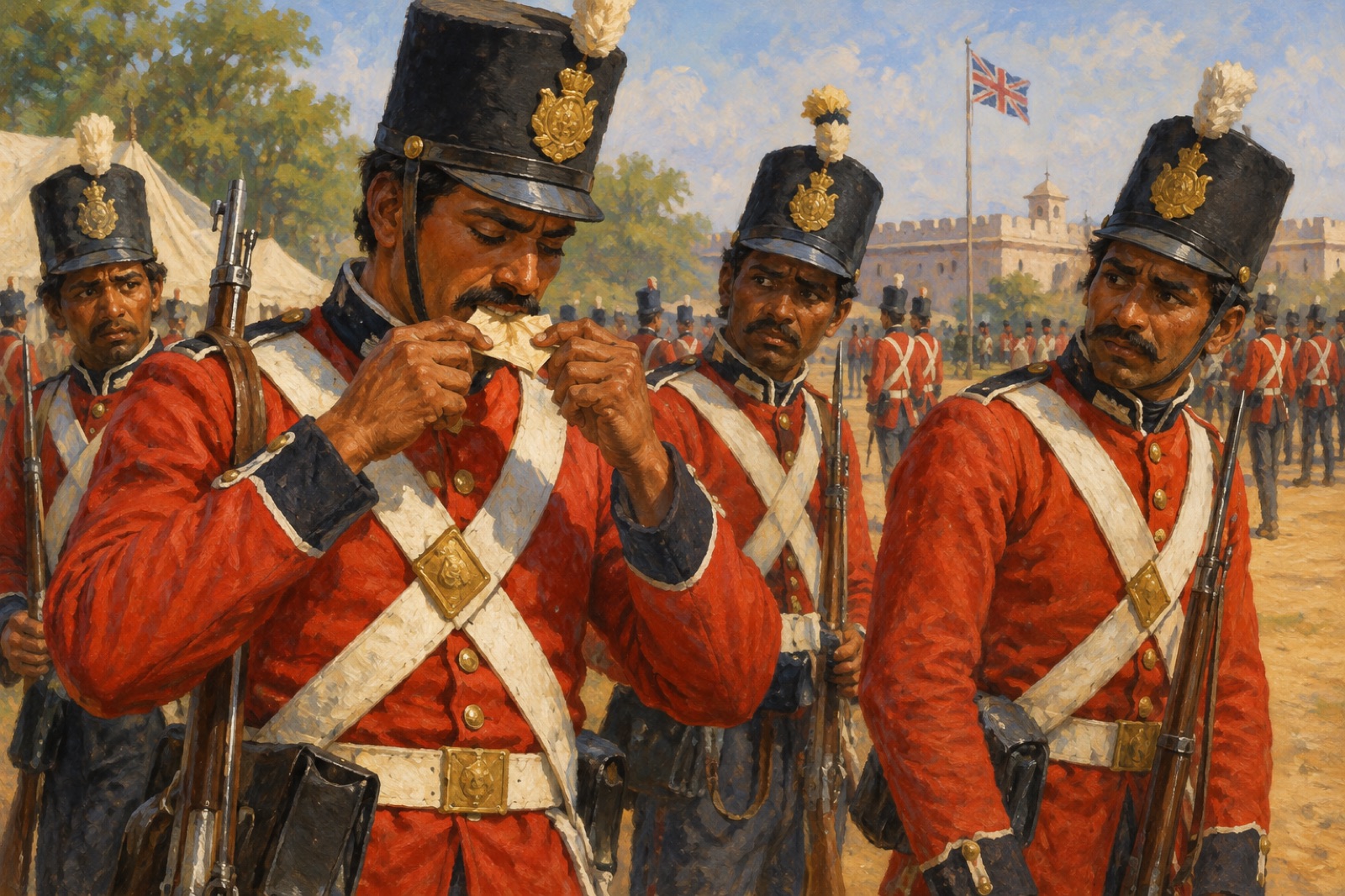
The spark was a new rifle. The Pattern 1853 Enfield rifle-musket was issued to the Bengal Army, and its paper cartridges had to be bitten open before loading. In early 1857, rumours spread that the grease on the cartridges contained cow and pig fat. Cow fat offended Hindu soldiers and pig fat offended Muslim soldiers, so the rumour touched both communities at once.
Most historians treat the cartridges as the immediate trigger, not the whole story. Three deeper grievances had built up through the 1850s.
- Annexation of states. Under the doctrine of lapse, the Company took over a state when its ruler died without a natural heir, and it did not accept adopted sons as successors. Jhansi was taken this way after its ruler died in 1853. Awadh was annexed in 1856 on grounds of bad government, which displaced many officials and retainers.
- Loss of status and income. Many sepoys came from Awadh and the surrounding regions, where the royal court had been a source of prestige and patronage. Annexation weakened that link and left many families with less standing and income.
- Fear for religion and custom. Some sepoys and civilians feared that British policy threatened their religion and way of life. Historians still debate how strongly this fear drove the revolt.
These grievances did not work separately. Annexation cut off the court's support, which hit soldiers' families and home villages, and the cartridge rumour then gave people a direct reason to believe the British meant them harm. That combination made the revolt far more widespread than any single grievance would have.
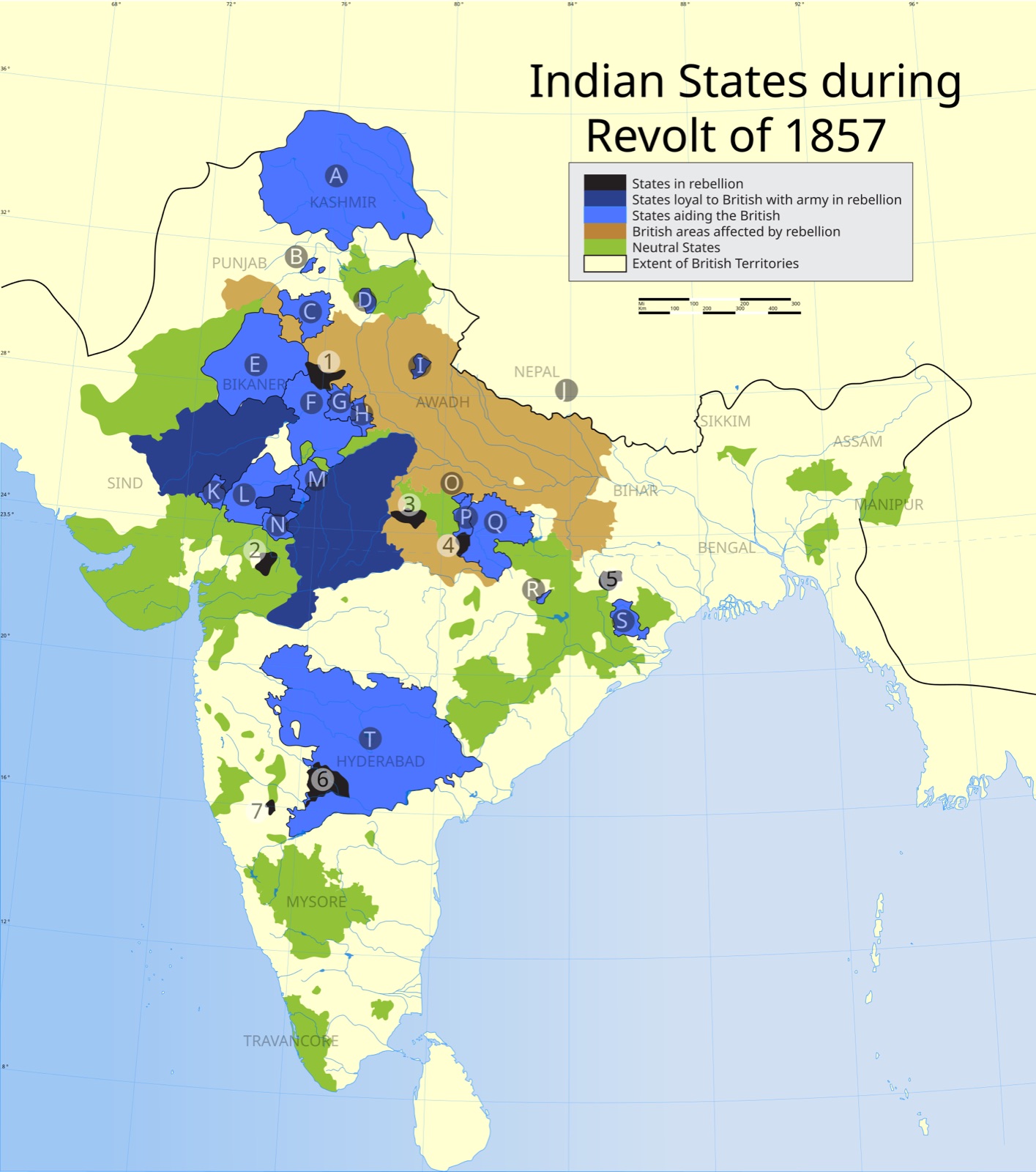
The map shows how uneven the revolt was. Some princely states joined the rising, while others helped the British. That split shaped where the fighting was fiercest and where British troops could find support.
What happened
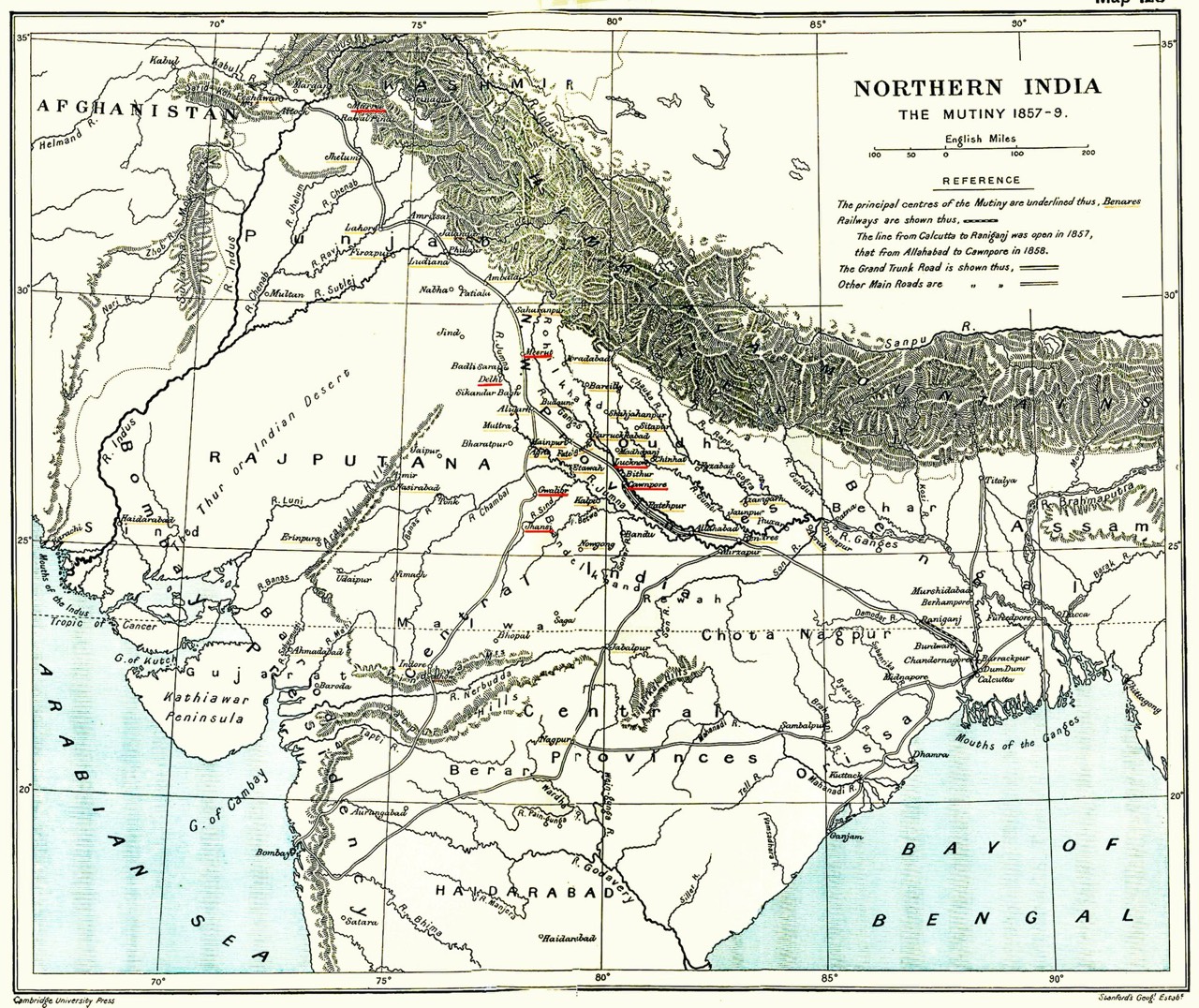
The fighting took place mostly in the Ganges valley and central India. The rising spread quickly because the Bengal Army was large and stationed across the north, so one mutiny could trigger another. In towns where British authority collapsed, local leaders took charge.
Barrackpore and Meerut: the first mutinies
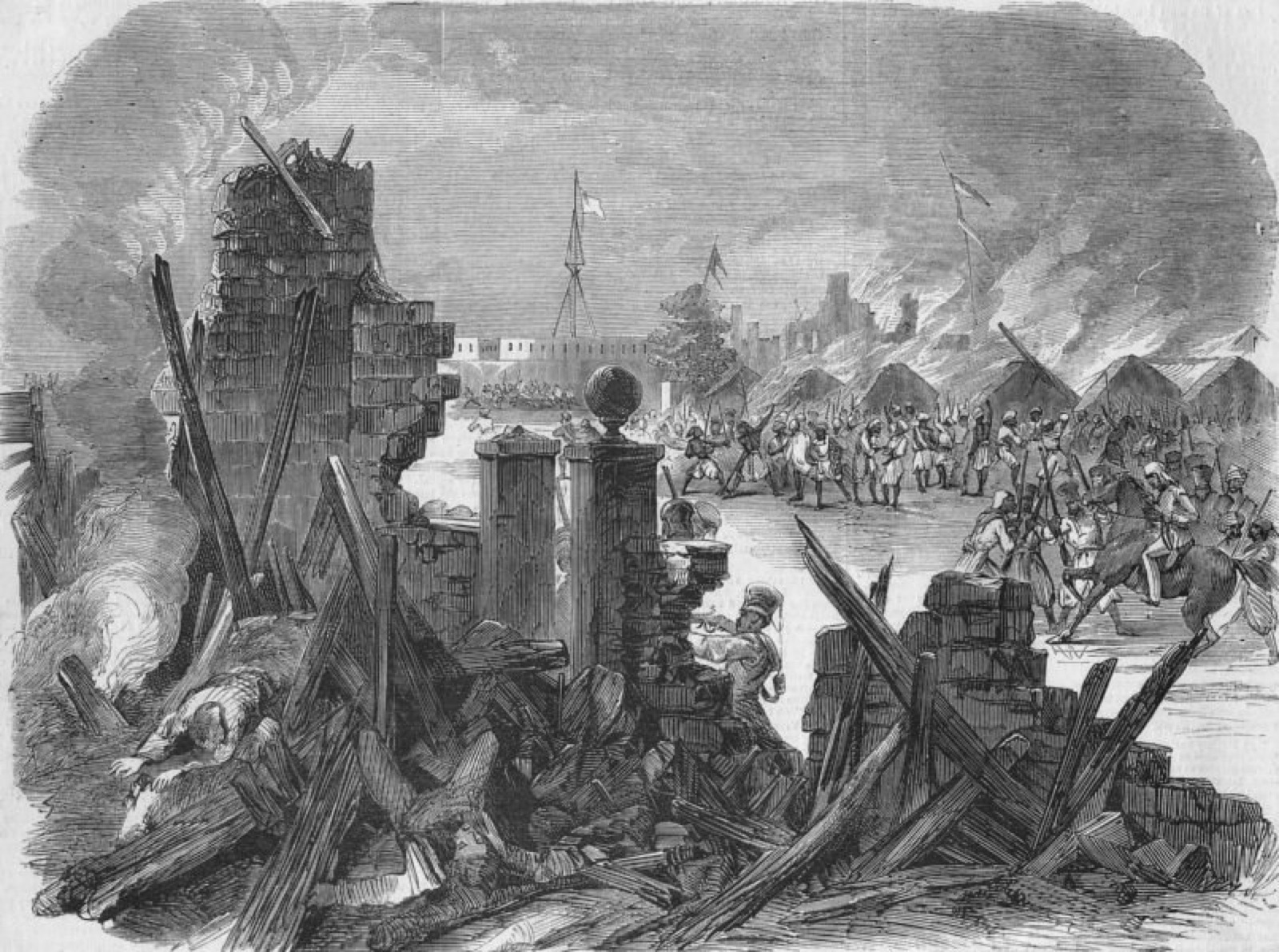
The trouble began in March. On 29 March 1857, Mangal Pandey of the 34th Bengal Native Infantry fired on British officers on the parade ground at Barrackpore, near Calcutta. He was court-martialled and hanged in early April. At Meerut, 85 of the 90 men of the 3rd Bengal Light Cavalry refused to use the new cartridges. They were court-martialled on 9 May and sentenced to long terms of imprisonment. On 10 May, soldiers at Meerut freed their jailed comrades and attacked the British in the town.
Delhi: the old Mughal capital
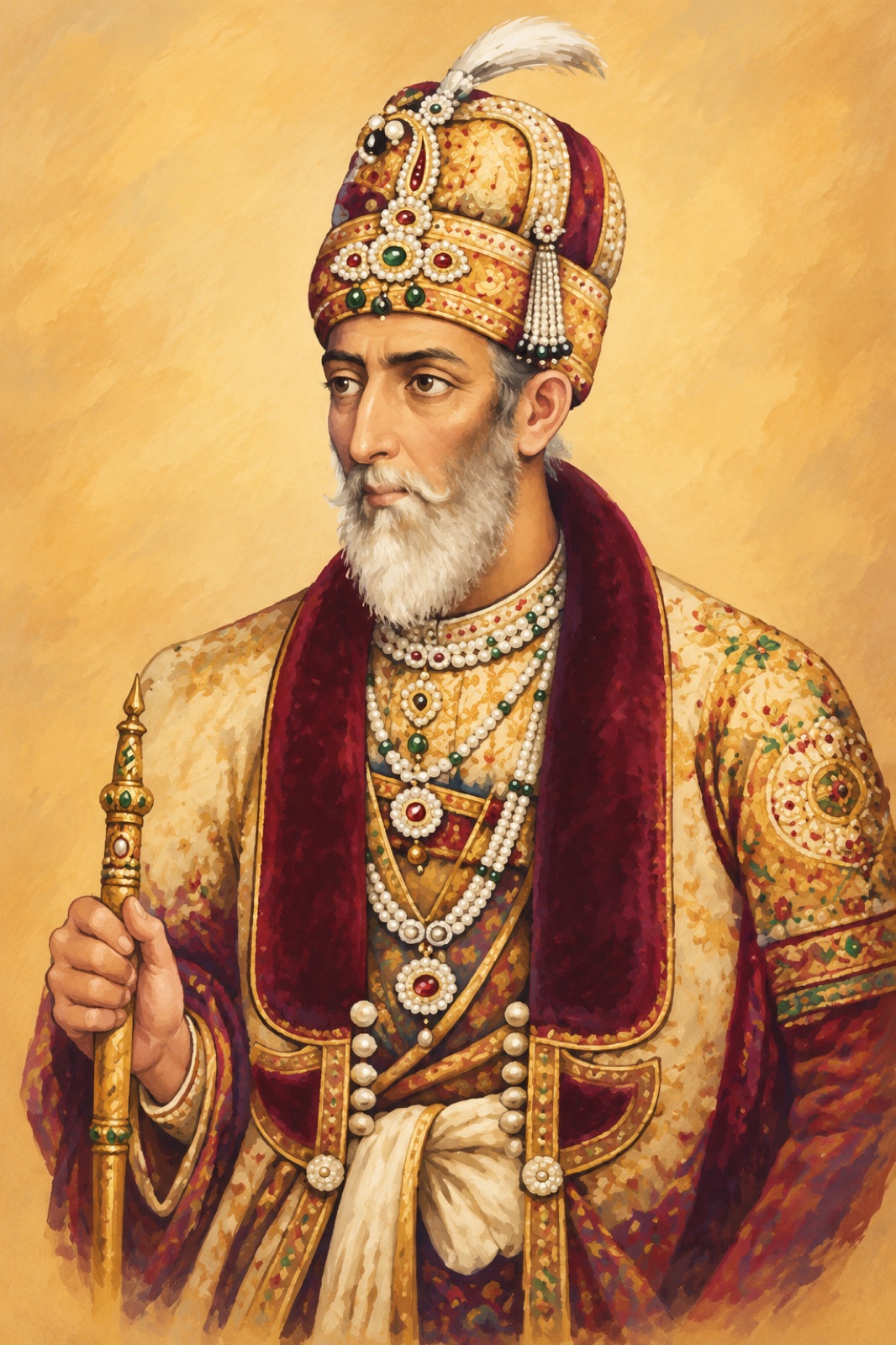
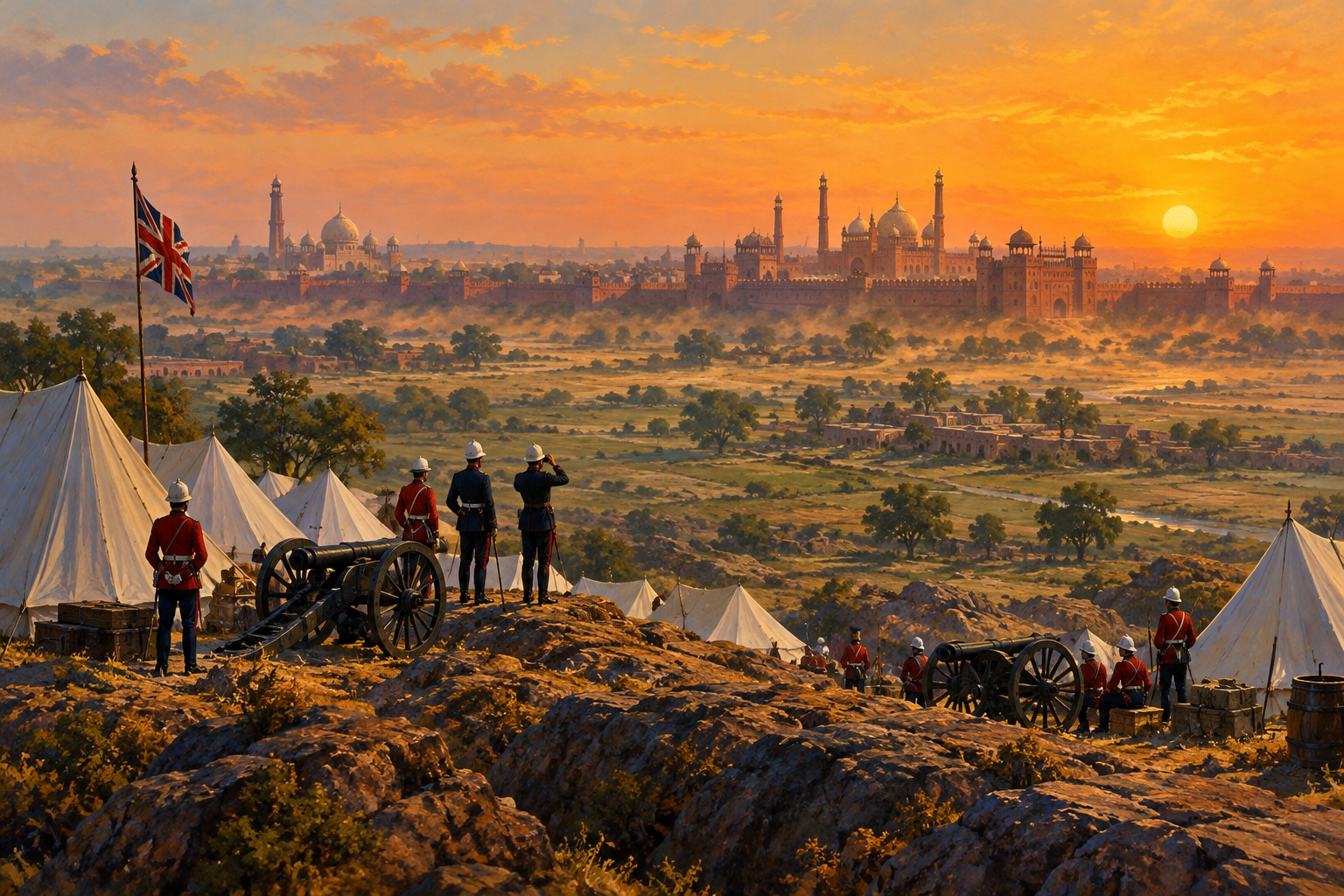
On 11 May, the first rebel troops reached Delhi, the old Mughal capital, and took control of the city. The rebels proclaimed the ageing Mughal emperor Bahadur Shah II as their leader. The British gathered on the Delhi Ridge, a rocky height just north of the walled city, and their siege began on 8 June 1857. For more than three months, British forces held the Ridge while the rebels held the city.
The city mattered beyond its size. By choosing the emperor, the rebels presented their cause as a return to the old order. For the British, retaking Delhi was the decisive step in ending the revolt and in restoring their prestige.
Reinforcements arrived, including Sikh, Punjabi and Gurkha troops. The assault on the city began on 14 September. Within about a week, British forces had taken the city. Bahadur Shah surrendered around 20 September 1857 and was taken at Humayun's Tomb on the edge of the city. Sources differ by a day or two on the exact date.
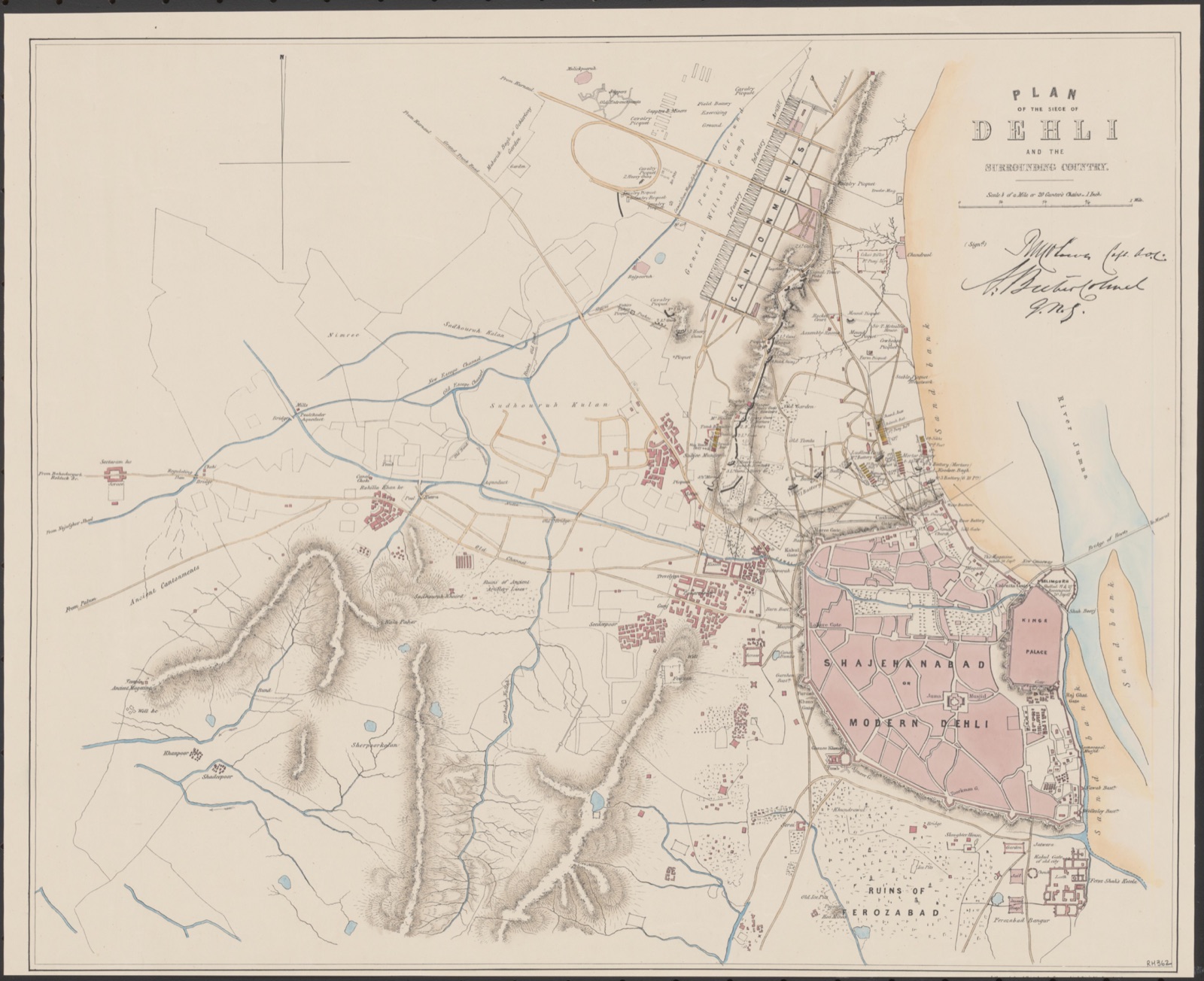
The numbers vary by source. By early September, the British side had about 9,000 men, of whom about 3,000 were European troops and 6,000 were Sikh, Punjabi and Gurkha soldiers, according to one count. The rebels are reported to have had about 12,000 sepoys plus about 30,000 irregulars, but these estimates are less reliable.
Cawnpore: the surrender and the ghat
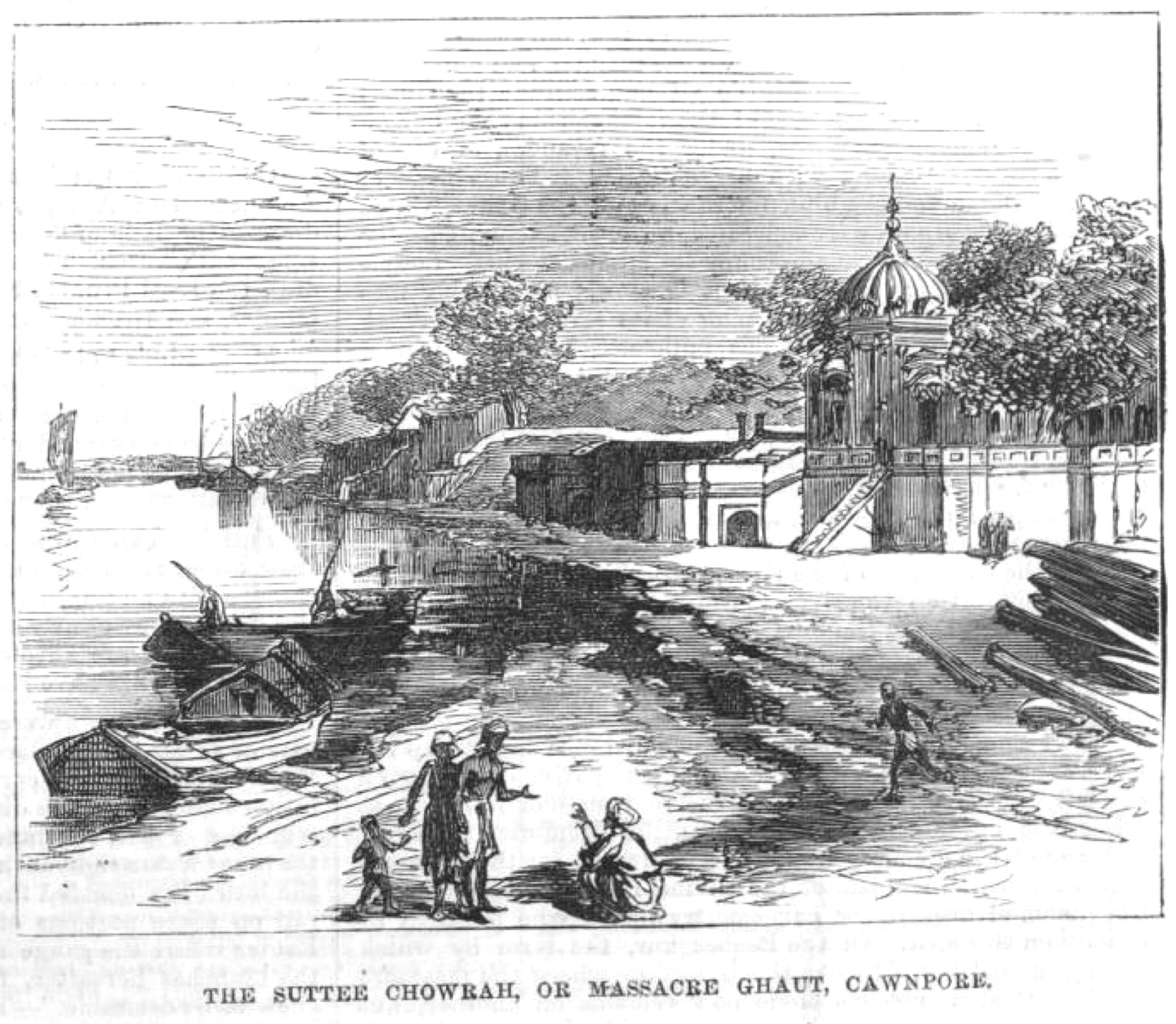
At Cawnpore (Kanpur), rebel forces under Nana Sahib, the adopted heir of the last Peshwa, besieged British troops and civilians in an entrenchment from 5 June 1857. The defenders surrendered around 25 June, and the surviving men, women and children agreed to leave by boat for Allahabad. On 27 June, as they boarded boats at Satichaura Ghat, they came under attack. Most of the men were killed, and about 120 women and children were taken prisoner. Some accounts say a rebel leader gave the signal for the attack, and historians still disagree about how much Nana Sahib knew or ordered. The women and children held prisoner were killed on 15 July, and British troops reoccupied Cawnpore on 16 July.
The events at Cawnpore shocked opinion in Britain. Newspapers reported the killings widely, which fuelled anger against the rebels. Records from the rebel side are much thinner, so the two accounts remain far apart, and how to read them is still a research question.
Lucknow: the Residency under siege
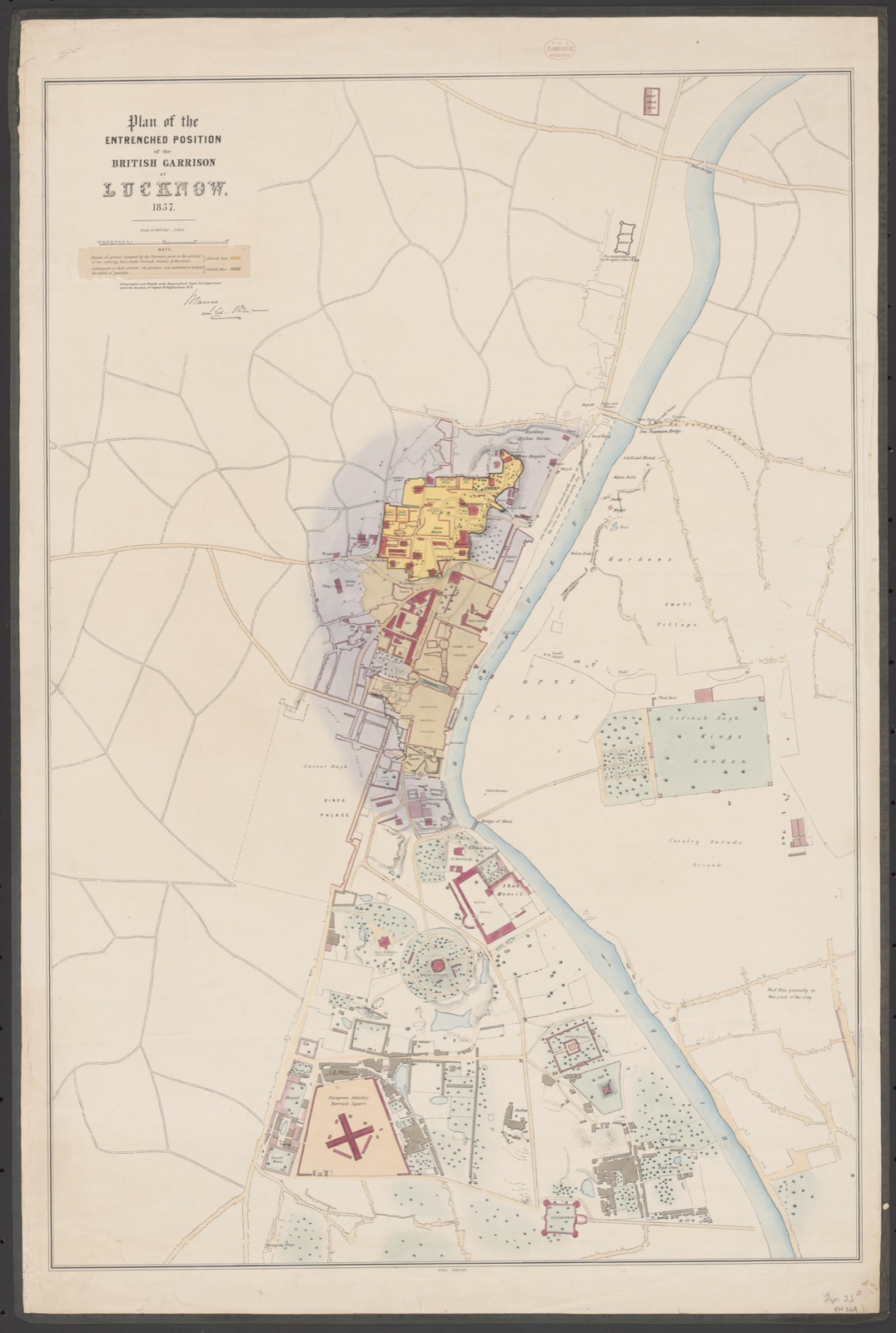
Lucknow, the capital of Awadh, saw one of the longest sieges of the rising. From late May 1857, the British fortified the Residency, a compound of official buildings. The siege began on 30 June, and Sir Henry Lawrence was mortally wounded by a shell on 2 July and died on 4 July. The defenders had about 1,700 fighting men when the siege began, and about 3,000 people in all, by one count.
The garrison endured hunger, thirst and disease during the long siege, and it held out until help arrived. For the British, the Residency became a symbol of endurance. For the rebels, it was a place where they were forced into a long contest.
Henry Havelock's relief force reached the Residency on 25 September. It joined the defenders and waited for a larger relief force. Colin Campbell's column reached the Residency around 16 to 17 November, after it fought through Secundra Bagh, a walled garden where British counts put the rebel dead at nearly 2,000. Campbell's force had 600 cavalry, 3,500 infantry and 42 guns. The garrison began to leave the Residency on 19 November. On 27 November, Campbell left for Cawnpore with about 3,000 men and most of the civilians, leaving James Outram with about 4,000 men at the Alambagh. British forces retook Lucknow in March 1858, beginning on 6 March. Fighting in the city had ceased by 21 March.
Jhansi and Rani Lakshmibai
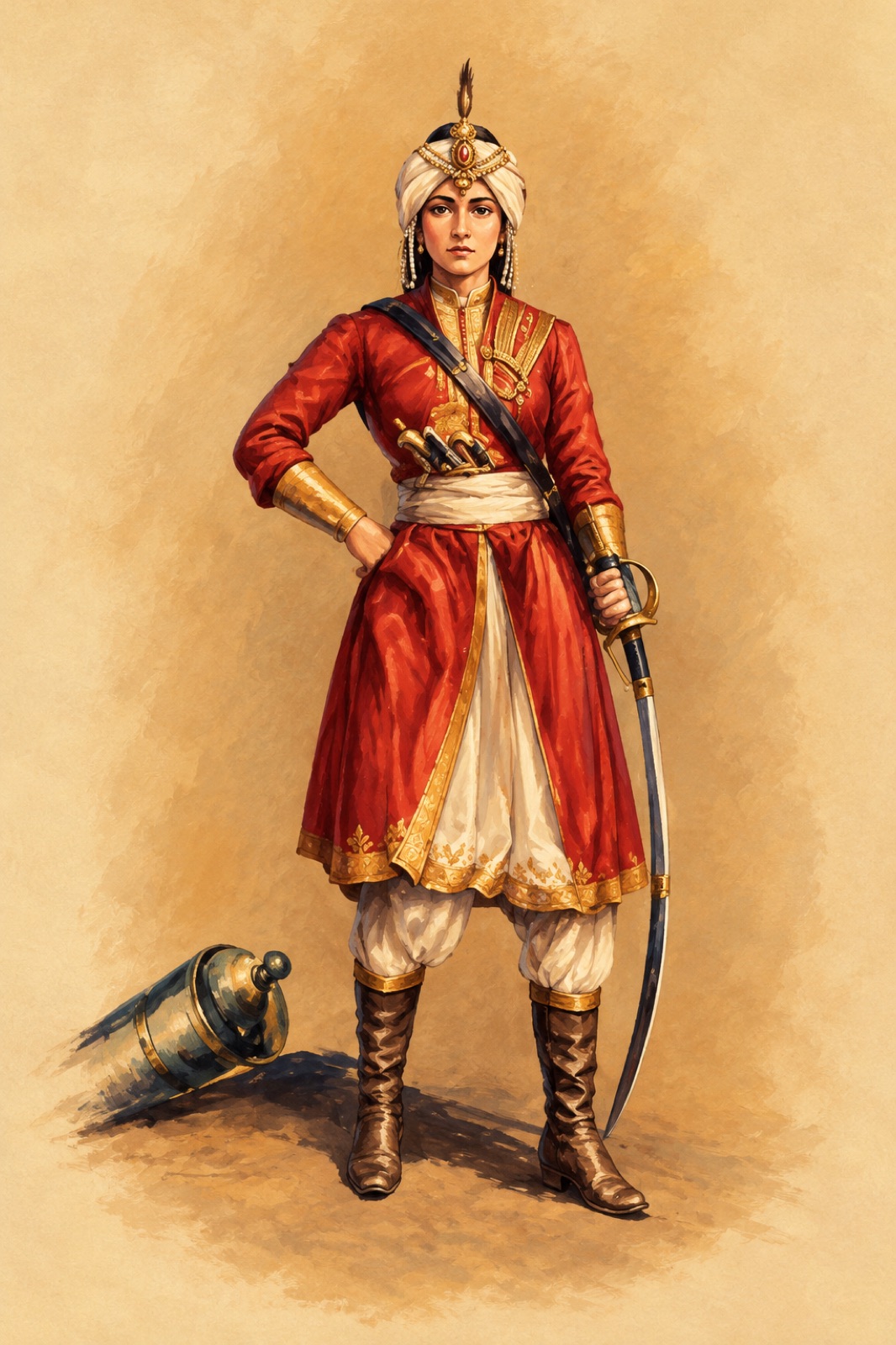
Jhansi was annexed in 1853, after the British refused to recognise the adopted son of its ruler. Its widowed queen, Rani Lakshmibai, opposed the annexation and became one of the rising's best-known leaders. She took charge of the town's defence. In early April 1858, a British force under Hugh Rose broke into the town on 3 April and took the fort within days. The Rani escaped from the fort and joined Tatya Tope at Kalpi. She was wounded in fighting near Kotah-ki-Serai, close to Gwalior, and died on 17 or 18 June 1858. The popular story of her leaping from the fort on horseback is disputed by historians.
Key numbers and casualties
Numbers from 1857 are patchy and sources disagree, so treat the figures below as estimates and ranges. Ask which area a number covers, whether it includes civilians, and whether it counts deaths from famine and disease separately from battle deaths.
- Forces: roughly 300,000 Indian soldiers in the Company's army, against about 40,000 to 50,000 British troops across India at the time.
- Delhi: by early September 1857, the British side had about 9,000 men. Rebel numbers are reported as about 12,000 sepoys plus about 30,000 irregulars, but these are less reliable.
- Lucknow: Campbell's relief column had 600 cavalry, 3,500 infantry and 42 guns.
- British deaths: about 6,000, including civilians, is a commonly cited figure.
- Indian deaths: very uncertain. One estimate, including deaths from famine and disease, comes to about 800,000, and the source itself suggests it is probably too low. Other estimates differ widely, so treat any single number with care.
Consequences
The rising changed British rule in India. In 1858, the British Parliament passed the Government of India Act, which moved the Company's power to the British Crown. On 1 November 1858, Queen Victoria's proclamation made the change formal and offered an amnesty to rebels who had not been involved in murder.
The last Mughal emperor was tried in 1858 and exiled to Rangoon (now Yangon) in Burma. He died there in 1862. Delhi's emperor had no political role after the rising, which ended Mughal rule in practice.
Some Indian historians call the rising the First War of Independence, while older British accounts called it the Mutiny. Both names show how differently the events were seen. Historians still argue about whether it was a national movement or a set of local revolts, and the answer shapes how the event is taught.
Historians point to three reasons the rebels lost. The rebels had no single command, the British kept loyal Sikh, Punjabi and Gurkha troops, which gave them manpower the rebels could not match, and the rebels could not hold the large cities against sustained attacks for long.
What exams ask
Exam questions usually focus on three things: the cause (the cartridges, plus annexation and lost status), the key places in their order, and the result (the end of Company rule and direct British rule from 1858). Some questions ask why the rising spread quickly. A strong answer links the spread to shared grievances across the Bengal Army and to local leaders who gave each city a focus.
For essays on imperialism, the rebellion is a standard case of resistance to British rule. Strong answers avoid simple claims. They explain the rebels' goals and the British response, including the harsh reprisals after the fighting, and they note that the event is remembered differently in Britain and in India.
A common mistake is to think the revolt began in Delhi. It began at Meerut on 10 May 1857. Delhi was where the rebels proclaimed their emperor.
Read next
Read The Decline of the Mughal Empire to see how the dynasty whose emperor the rebels proclaimed had weakened before 1857.
Read The British Raj (1858–1947) to see how direct British rule developed after the rebellion.
Read The Abolition of the Slave Trade and Slavery for another example of how British reform and empire developed in the same century.