In five minutes
Marie Antoinette was executed by guillotine in Paris at about 12:15 p.m. on 16 October 1793. The short answer to why Marie Antoinette was killed is that the revolutionary government saw her as a symbol of the monarchy and as a figure tied to Austria, France's enemy in the war. The trial opened on 14 October and ended with a death sentence two days later, and it was used to send a political message.
Three threads explain the outcome. She was born in Austria and married into the French royal family, which made her a target once France went to war with Austria. The revolution also moved from limiting the king's power to abolishing the monarchy altogether. And the Terror, the period of mass arrests and executions in 1793 and 1794, relied on show trials to frighten opponents. The French Revolution overview sets out the wider sequence of events.
Why Marie Antoinette was killed
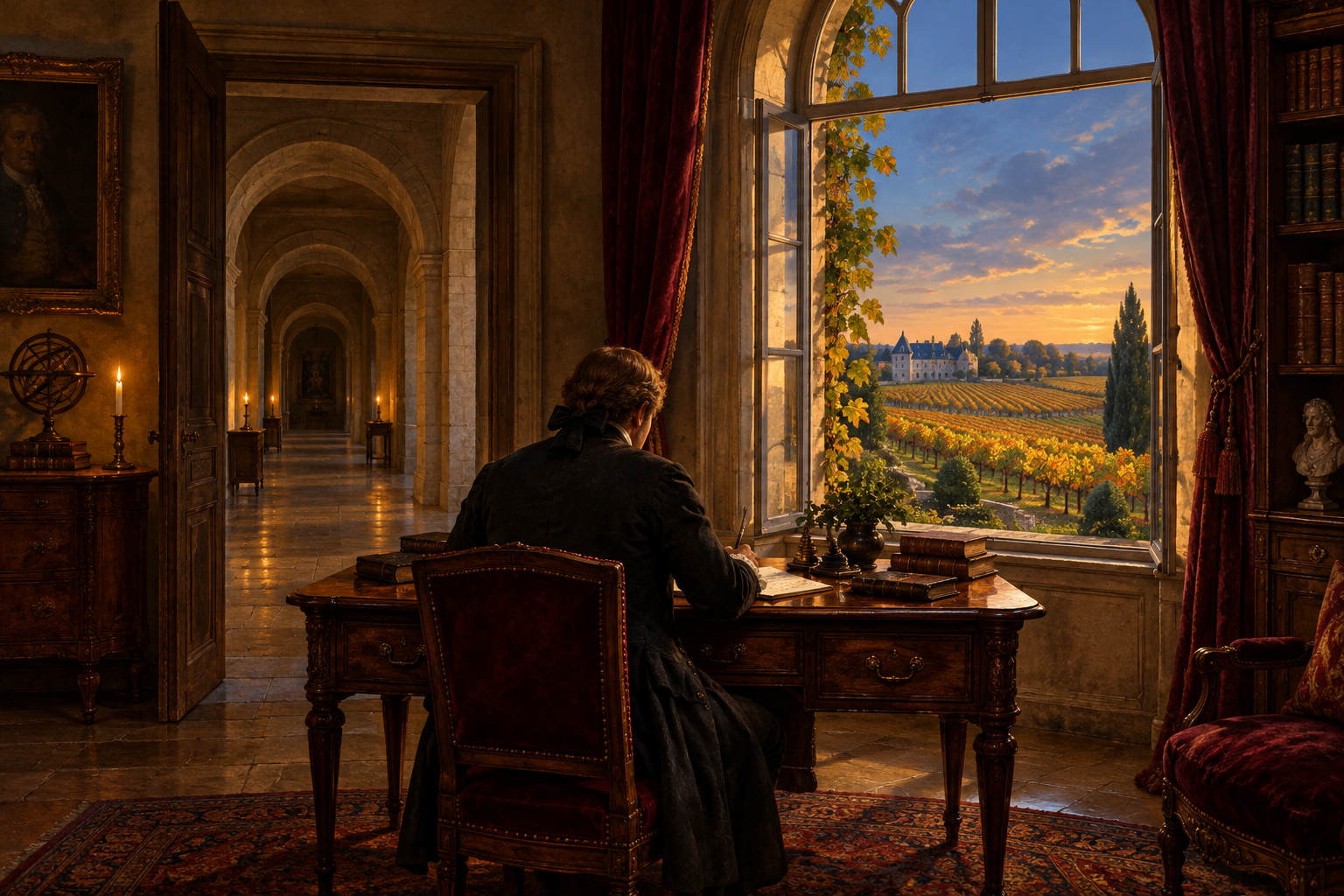
Born in Vienna on 2 November 1755, she was an archduchess of the Habsburg family. In 1770 she married Louis-Auguste, the heir to the French throne, and in 1774 she became queen when he took the crown as Louis XVI. Her foreign birth marked her as an outsider at court from the start.
As the revolution gathered pace, the court became a target. Caricatures and pamphlets portrayed her as extravagant and blamed her for the state's money troubles. Historians still disagree about how much she shaped policy. What mattered in the 1790s was the public image: a queen who seemed to favour foreign courts over the nation.
In June 1791 the royal family tried to flee the country and was stopped at Varennes, near the border. The failed escape destroyed much of the monarchy's remaining trust. Later that year a new constitution made France a constitutional monarchy, but the trust did not return. In April 1792 France declared war on Austria, and rumours about the queen's contacts with her brother's court grew louder.
On 10 August 1792, crowds and volunteers stormed the Tuileries Palace, and the royal family was taken prisoner and held in the Temple tower. The monarchy was abolished in September. On 21 January 1793 Louis XVI was executed in the same square, then called the Place de la Révolution, where his wife would die nine months later. After the king's death she was known as the 'widow Capet' and kept in prison.
Revolutionary leaders feared she could rally royalists and foreign armies around the royal family's cause. In the spring of 1793 France struggled in its war, and a revolt spread in the west. In July her son was taken from her, and in August she was moved to the Conciergerie, the Paris prison where prisoners waited for trial.
The state also built the machinery to act quickly. The Revolutionary Tribunal had been set up in March 1793 to try counter-revolutionary crimes. In September the Law of Suspects widened the category of people who could be arrested, and the tribunal moved quickly once it had a case.
The trial and its charges
The trial opened on 14 October 1793 before the Revolutionary Tribunal. The public prosecutor, Antoine Quentin Fouquier-Tinville, led the case against her.
The verdict named three charges:
- Conspiring with foreign powers against the French state.
- Depleting the state treasury.
- High treason, by acting against the security of the French state.
The proceedings also included a grotesque accusation about her relationship with her son. She did not answer it directly. Accounts record that she appealed to the mothers in the room instead. Historians generally see the accusation as an attempt to damage her reputation rather than a serious charge.
Most historians regard the trial as a political show trial. The defence had little time to prepare, and the outcome was widely seen as a foregone conclusion. Her husband's trial had given him more time to respond, which makes the contrast with her case stark.
The verdict was guilty and the sentence was death. It was announced in the early hours of 16 October, at about 4 a.m.
How Marie Antoinette died
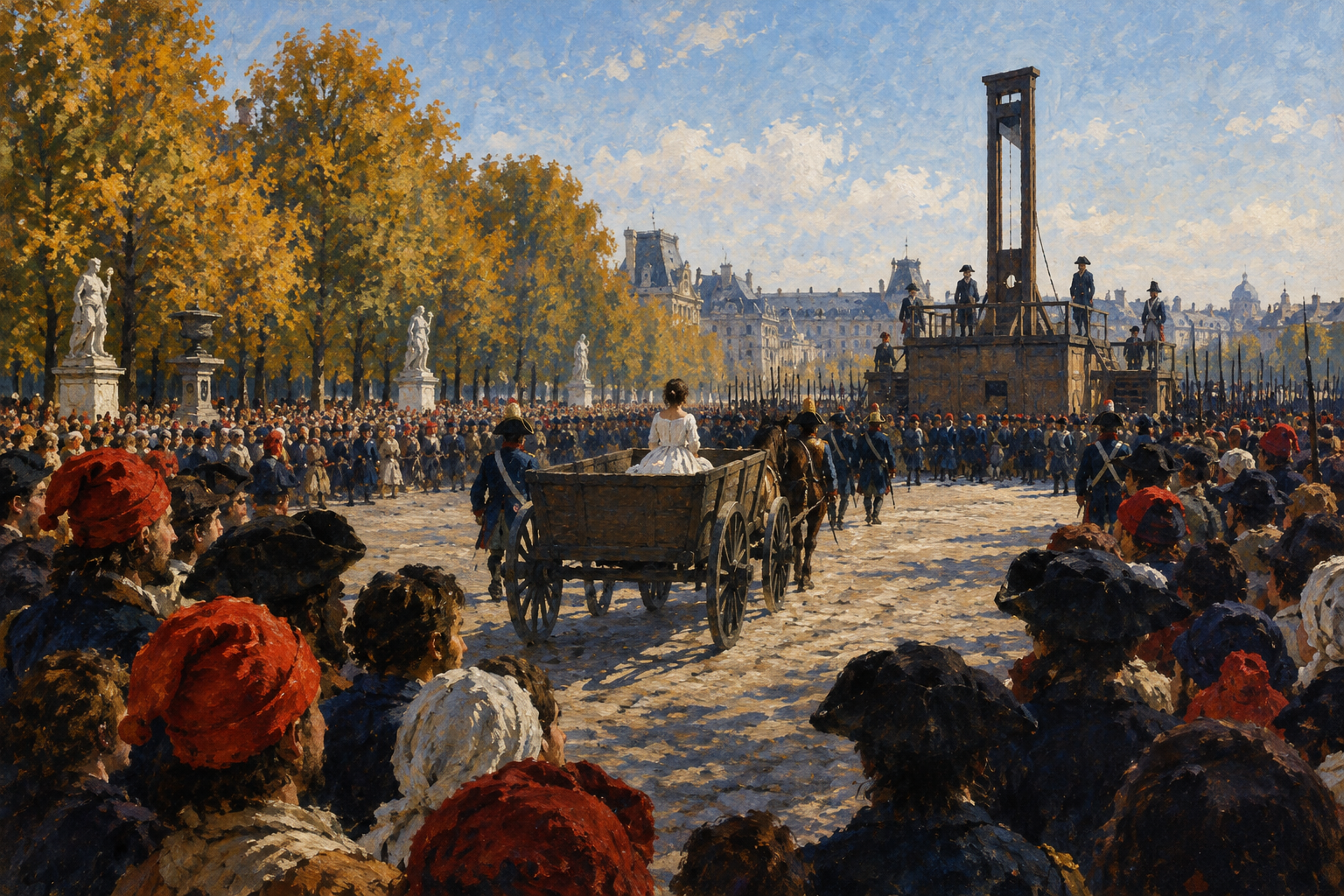
After the verdict she was returned to her cell, and the final preparations were made. In the late morning she was placed in an open cart and taken to the Place de la Révolution, where the guillotine stood. Crowds lined the route, and many were waiting in the square itself.
Accounts describe a plain white dress, her hair cut short and her hands bound behind her back. At her trial she had worn black, the dress of a widow, so the change of clothing is a detail writers often mention.
The execution took place at about 12:15 p.m. The executioner was Charles-Henri Sanson, from a family that had carried out executions in Paris for generations. She was 37 years old.
A widely repeated story says she apologised to the executioner for accidentally stepping on his foot as she climbed the scaffold. Its wording differs between sources, so treat it as a reported anecdote rather than a documented quotation.
Her body was buried in an unmarked grave in the Madeleine cemetery in Paris. The square was later renamed the Place de la Concorde, which is how most visitors know it today.
What her execution meant
Her death showed that the monarchy had no place in revolutionary France. With the king and queen both gone, the government turned more fully to the Terror, the wave of arrests and executions that continued through 1794.
The execution also shows how the revolution turned on its own. In July 1794 Robespierre was arrested and executed, and the Terror began to end. Many historians read the period as the revolution consuming its own leaders, not only its royalist enemies.
Her story has been retold in novels, plays and films for more than two centuries. The dramatic images can blur the political reasons for her death. Studying the trial and its context gives a clearer picture of what happened and why.
What exams ask
Exam questions usually focus on sequence and cause rather than the exact hour. Useful points to know:
- The order of events: Louis XVI was executed in January 1793, and his wife nine months later in October 1793.
- The role of the Revolutionary Tribunal in targeting political enemies quickly.
- How the Terror ended with Robespierre's fall in July 1794.
For AP-style 'why' questions, a strong answer links three factors: the war with Austria, the rejection of monarchy, and the use of public trials as a warning. That chain of reasoning is more useful than memorising the exact time of death.
Read next
Three related pages fill in the background and aftermath:
- Who Was Marie Antoinette? — her upbringing and her position at court before the revolution.
- Who Was Louis XVI? — the king whose execution came nine months earlier.
- What Happened to Marie Antoinette's Head? — what followed the execution itself.