In five minutes: who was Cecil Rhodes?
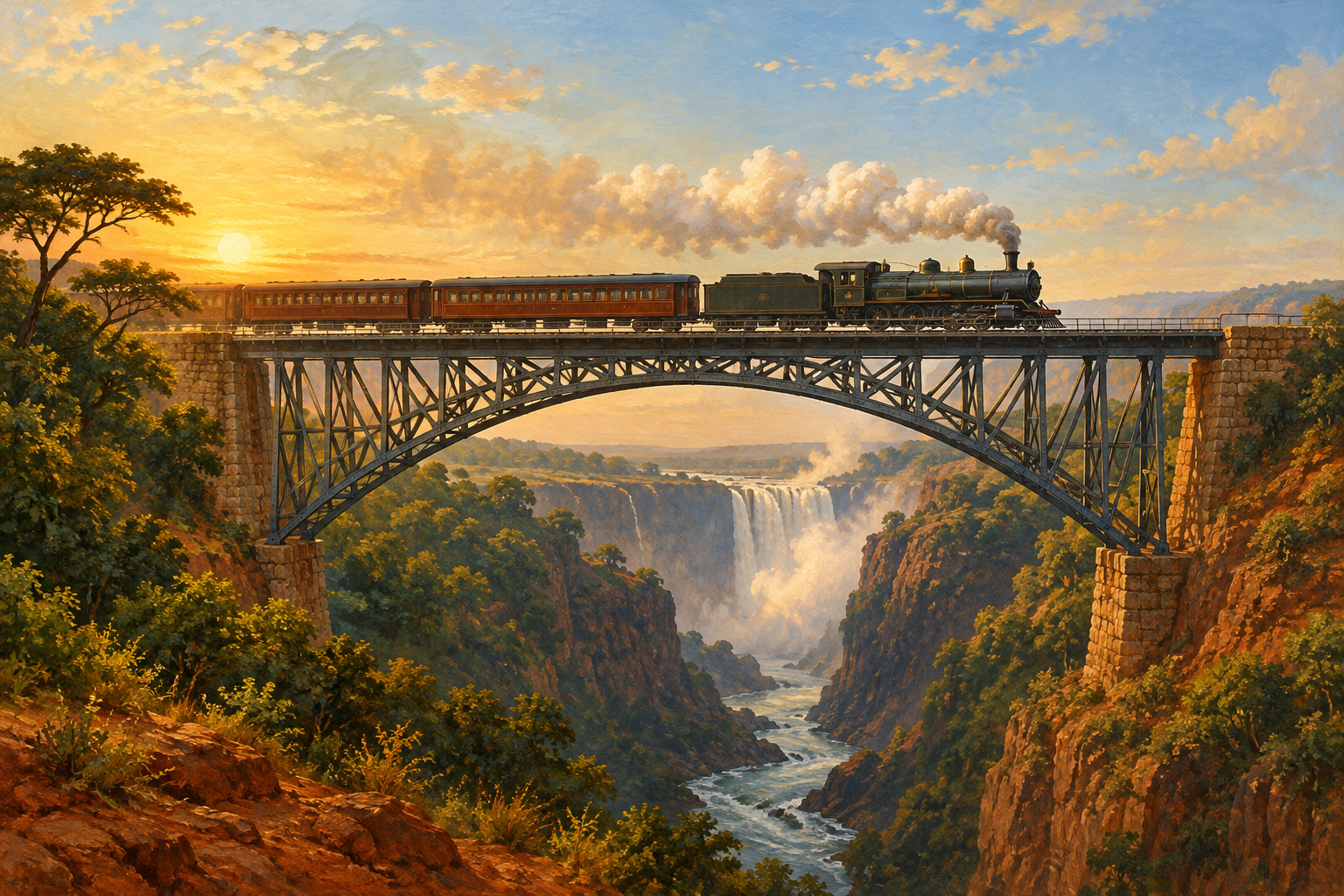
Cecil Rhodes was an English vicar's son who went to southern Africa at 17, got rich on diamonds, and turned that money into political power. By 1890 he was prime minister of the Cape Colony and the head of the British South Africa Company, which claimed the land that became Southern and Northern Rhodesia. He wanted Britain to rule a continuous strip of Africa from Cape Town to Cairo, linked by railway and telegraph.
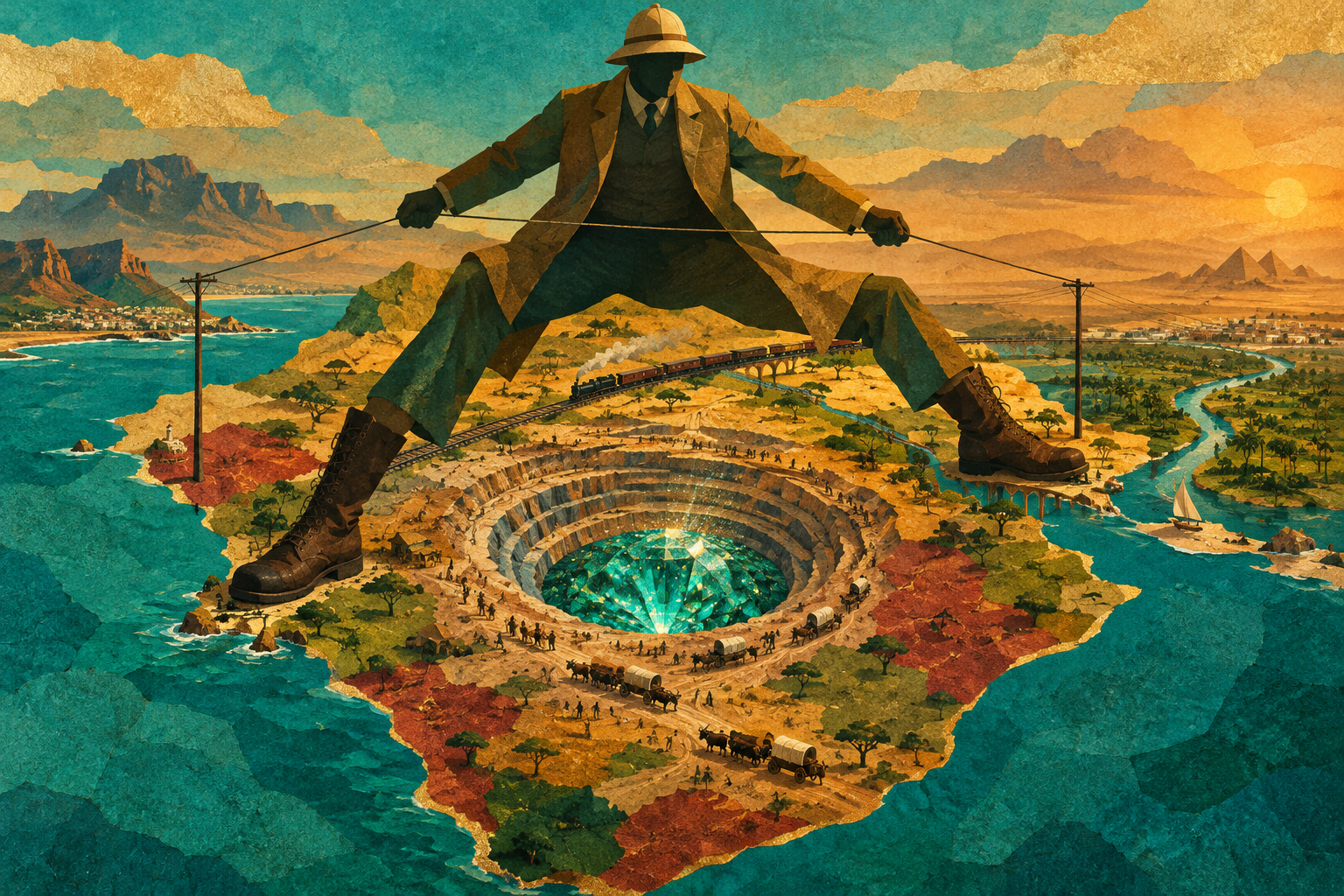
That dream is the subject of the famous Punch cartoon of 10 December 1892, drawn by Edward Linley Sambourne. It shows Rhodes as a giant, one foot at the Cape and the other in Egypt, holding a telegraph wire. The caption plays on his name and on the ancient Colossus of Rhodes. If you want the wider picture first, start with the hub article Imperialism: What It Was, Why It Happened, What It Left Behind.
Causes: why a young Englishman could build an empire
Rhodes was born on 5 July 1853 in Bishop's Stortford, England, one of several sons of a clergyman. His health was poor, so in 1870 his family sent him to Natal, where his brother Herbert farmed cotton. In 1871 he moved to Kimberley, where a diamond rush had begun. Thousands of diggers worked the huge open pit that became known as the Big Hole.
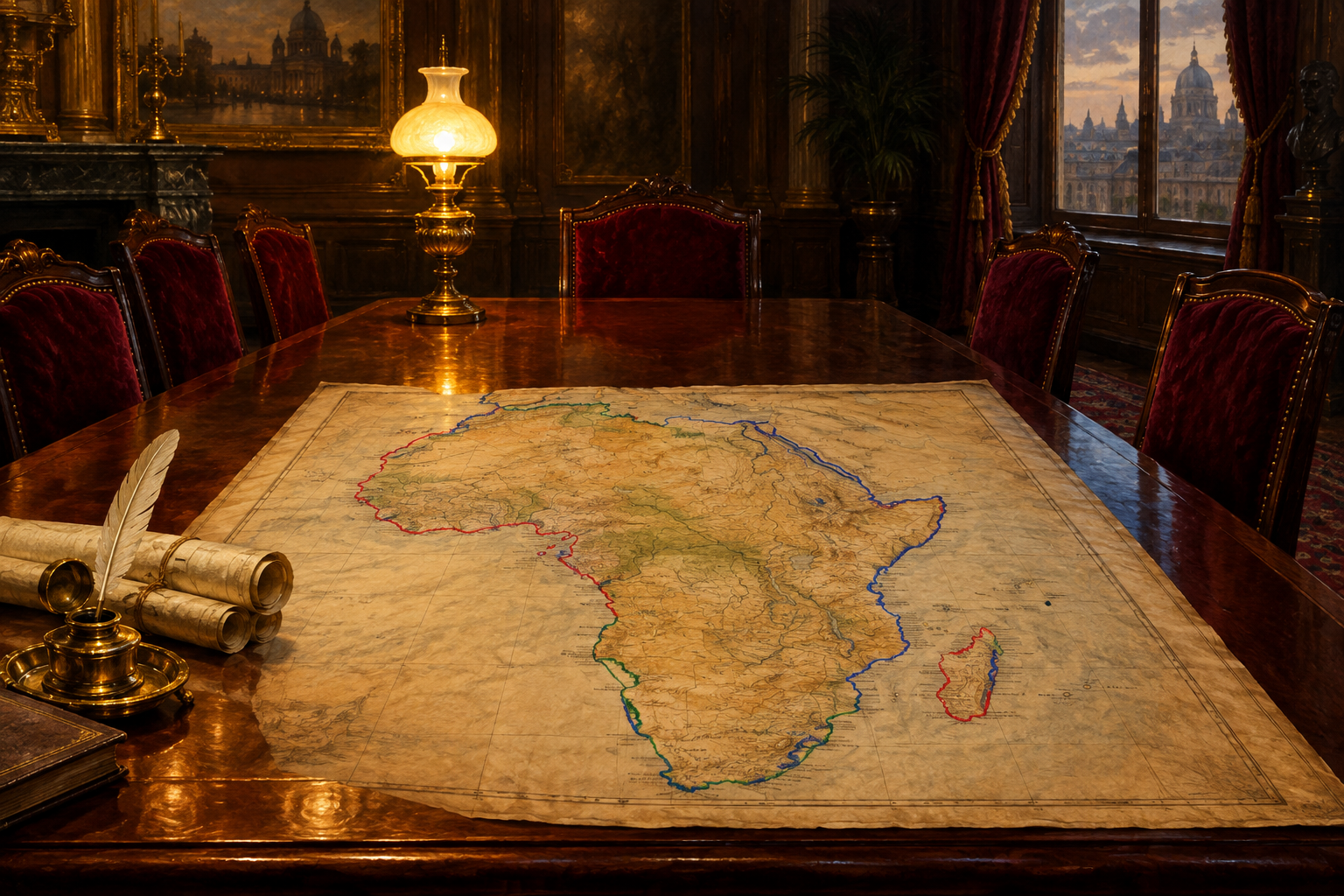
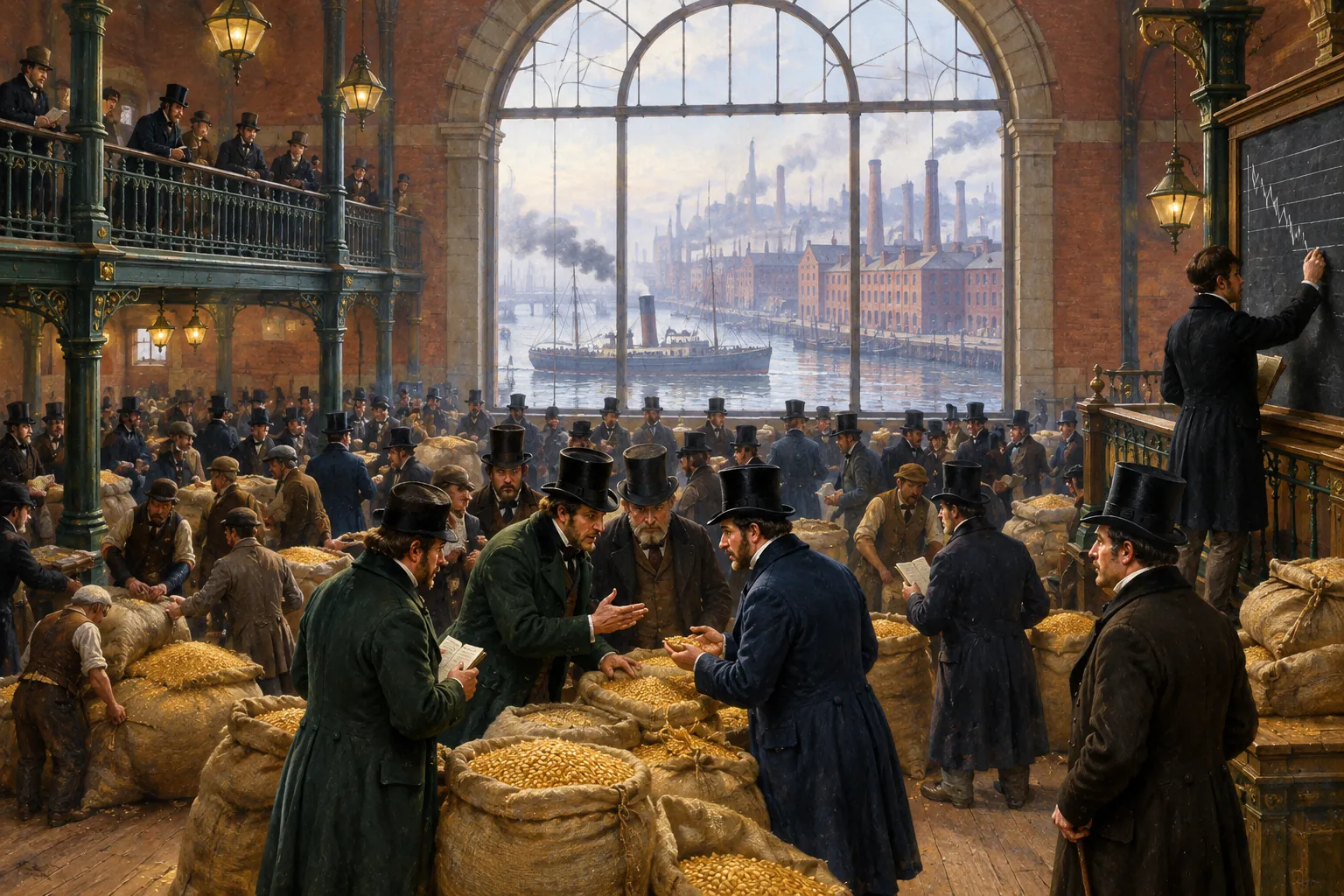
Three conditions made his rise possible. First, southern Africa held two huge mineral discoveries: diamonds at Kimberley and, from 1886, gold on the Witwatersrand. Second, Britain was competing with other European powers for territory, the process described in The Scramble for Africa Cartoon Explained. Third, the British state was willing to hand large powers to chartered companies, which saved the government money and trouble.
Rhodes also held a worldview that was common among imperialists but unusually blunt in his case. As a young man he wrote that the British were the finest race and that more British territory meant a better world. That belief in racial hierarchy shaped how he treated African peoples throughout his career.
What happened: from diamonds to Rhodesia
The diamond king
Rhodes and his partner Charles Rudd bought claims and pumped water out of flooded diggings. In 1880 they founded the De Beers Mining Company. By 1888 Rhodes had bought out rivals, including Barney Barnato, and created De Beers Consolidated Mines, which controlled the great majority of the world's diamond output. He later added a gold company on the Witwatersrand. He studied at Oxford in between business trips and took his degree in 1881.
The Rudd Concession and the Chartered Company
In 1888 Rudd's team obtained a document from Lobengula, king of the Ndebele, in what is now Zimbabwe. The British text gave Rhodes's group exclusive mining rights. Lobengula later said he had been misled about what he had signed. In 1889 Queen Victoria's government granted a royal charter to the British South Africa Company, giving it the right to govern, police and settle the region.
In 1890 the Pioneer Column of settlers and company police marched into Mashonaland and raised the flag at Fort Salisbury, today's Harare. The gold they hoped for was largely missing, so the company looked to Ndebele land and cattle instead.
Prime minister of the Cape
In 1890 Rhodes also became prime minister of the Cape Colony. His government raised the property qualifications for voting in 1892, which reduced the number of Black voters. The Glen Grey Act of 1894 introduced a labour tax and limited land rights in some African reserves, pushing men towards paid work on farms and in mines.
War in Matabeleland
In 1893 company forces, armed with Maxim machine guns, invaded Matabeleland and defeated Ndebele armies. Lobengula fled and died in 1894. Settlers then took land and cattle, and the territory was called Rhodesia from 1895. In 1896 the Ndebele and then the Shona rose against the company in the risings known in Zimbabwe as the First Chimurenga. The fighting was hard and cruel, and Rhodes himself helped to negotiate the end of the Ndebele rising in the Matopos Hills.
The Jameson Raid
Rhodes wanted to bring the Boer republic of the Transvaal, rich in gold, under British influence. On 29 December 1895 his friend Leander Starr Jameson led about 500 company police into the Transvaal, hoping to support an uprising by foreign miners in Johannesburg. The uprising never came. Jameson surrendered on 2 January 1896. The scandal forced Rhodes to resign as Cape prime minister in January 1896. It also deepened the mistrust that led to the South African War (the Second Boer War) of 1899–1902.
Consequences: death, Rhodesia and the Rhodes Scholarships
Rhodes never married. He was ill with a weak heart for years and died at Muizenberg, near Cape Town, on 26 March 1902, aged 48, a few weeks before the war ended. He was buried at World's View in the Matopos Hills.
His will left most of his fortune to found the Rhodes Scholarships at Oxford University. The first scholars arrived in 1903. Students came from British colonies, the United States and later Germany, and the scheme was later opened to women and many more countries.
The land he claimed had a long afterlife. Northern Rhodesia became Zambia in 1964. Southern Rhodesia became a self-governing colony in 1923, declared independence under a white minority government in 1965, and became Zimbabwe in 1980.
His rail and telegraph dream was never completed as a continuous British line. Britain's wider aims in Africa are compared in Britain's 3C Policy (Cairo, Cape Town, Calcutta), which explains why Egypt and the Cape mattered so much.
Why Rhodes is still argued about
Supporters point to his scholarships, his business skill and his belief in large projects. Critics point to the conquest of Matabeleland, the pressure on African labour and land, and his racial views. In 2015 students at the University of Cape Town launched the Rhodes Must Fall campaign, and the university's statue of Rhodes was removed on 9 April 2015. The campaign spread to Oxford, where Oriel College kept its statue after an independent commission in 2021. Historians generally agree that you cannot understand the Rhodes of 1890 without the violence that built his companies and territories.
Britain had abolished slavery across most of its empire in 1833, a story told in The Abolition of the Slave Trade and Slavery. Rhodes belongs to the next phase, when empire expanded through trade, companies and force instead of plantations.
What exams ask
For AP World History and similar courses, Rhodes is usually a case study for these points:
- Economic motives: diamonds and gold funded his political ambitions.
- Chartered companies: the British South Africa Company shows how private firms acted as imperial governments.
- Ideology: social Darwinist ideas about race were used to justify conquest.
- African resistance: Lobengula, the Ndebele and the Shona risings of 1896–97.
- Source analysis: the Colossus cartoon, which can be read as either praise or satire of his ambition.
A typical short answer asks you to explain how economic interests shaped British expansion in southern Africa in the late nineteenth century. Use Rhodes, De Beers, the charter and the Jameson Raid as evidence.
Read next
- The Scramble for Africa Cartoon Explained: the wider race for territory in which Rhodes was a leading player.
- Britain's 3C Policy (Cairo, Cape Town, Calcutta): the strategic idea behind the Cape-to-Cairo vision.
- The Abolition of the Slave Trade and Slavery: the earlier chapter of British imperial history.