In five minutes: what was the British Raj?
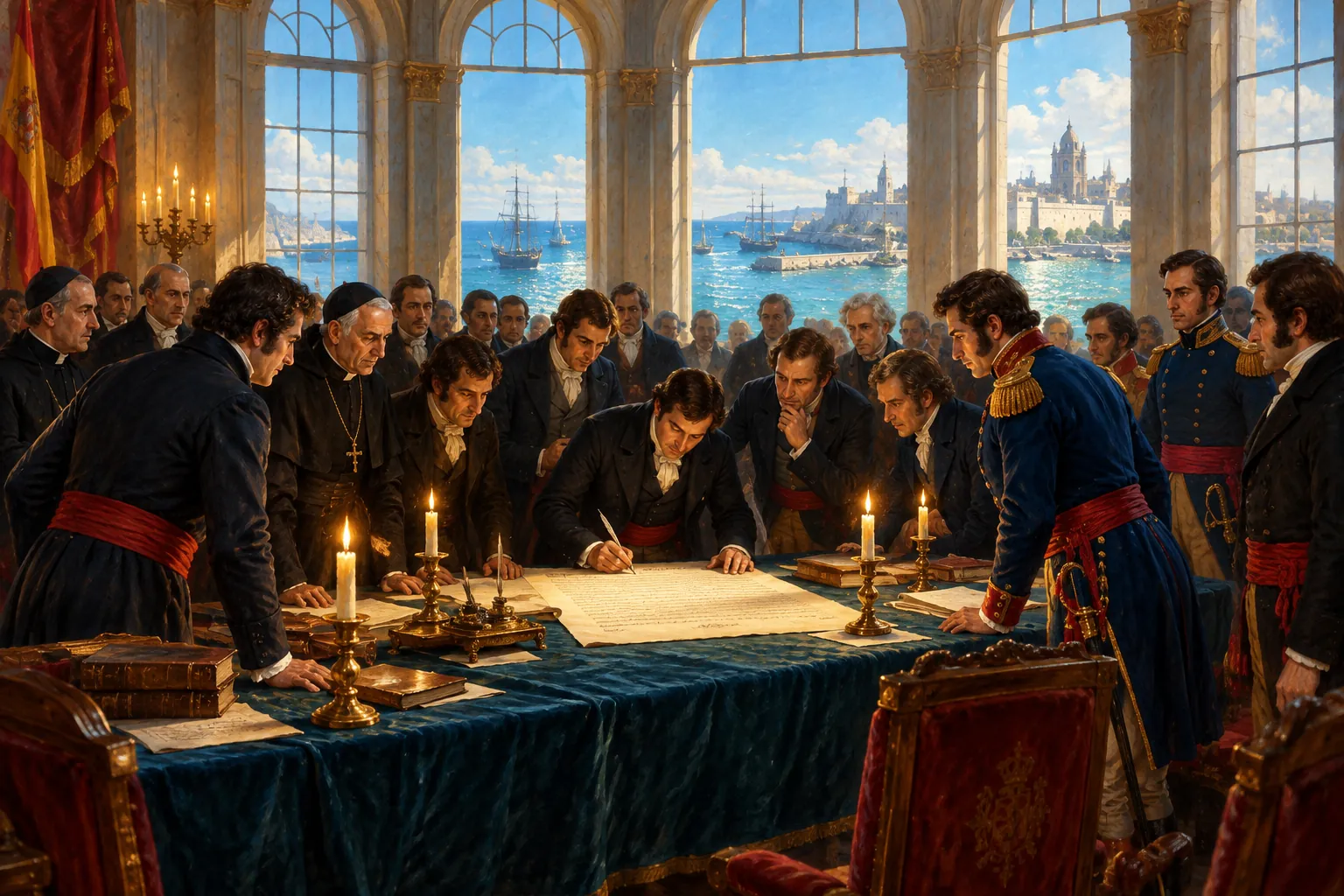
The British Raj (“raj” is the Hindi word for “rule”) is the name for British government in South Asia between 1858 and 1947. Before 1858, a private business, the East India Company, had ruled large parts of India on Britain's behalf. After the Rebellion of 1857, Parliament took that power away, and the Crown governed India directly until independence. The territory covered today's India, Pakistan and Bangladesh, plus Burma until 1937.
It was the biggest part of the British Empire in people and wealth, and one of the clearest cases in the wider story of imperialism. In short: a few thousand British officials, backed by an army made up mostly of Indian soldiers and by deals with local princes, ruled hundreds of millions of people. The Raj built railways, schools and a modern state. It also drained wealth, failed to stop terrible famines, and hardened the lines between religious communities. It ended when a Britain exhausted by the Second World War left in August 1947 and the land was divided into India and Pakistan.
Why the Raj began: from trading company to Crown rule
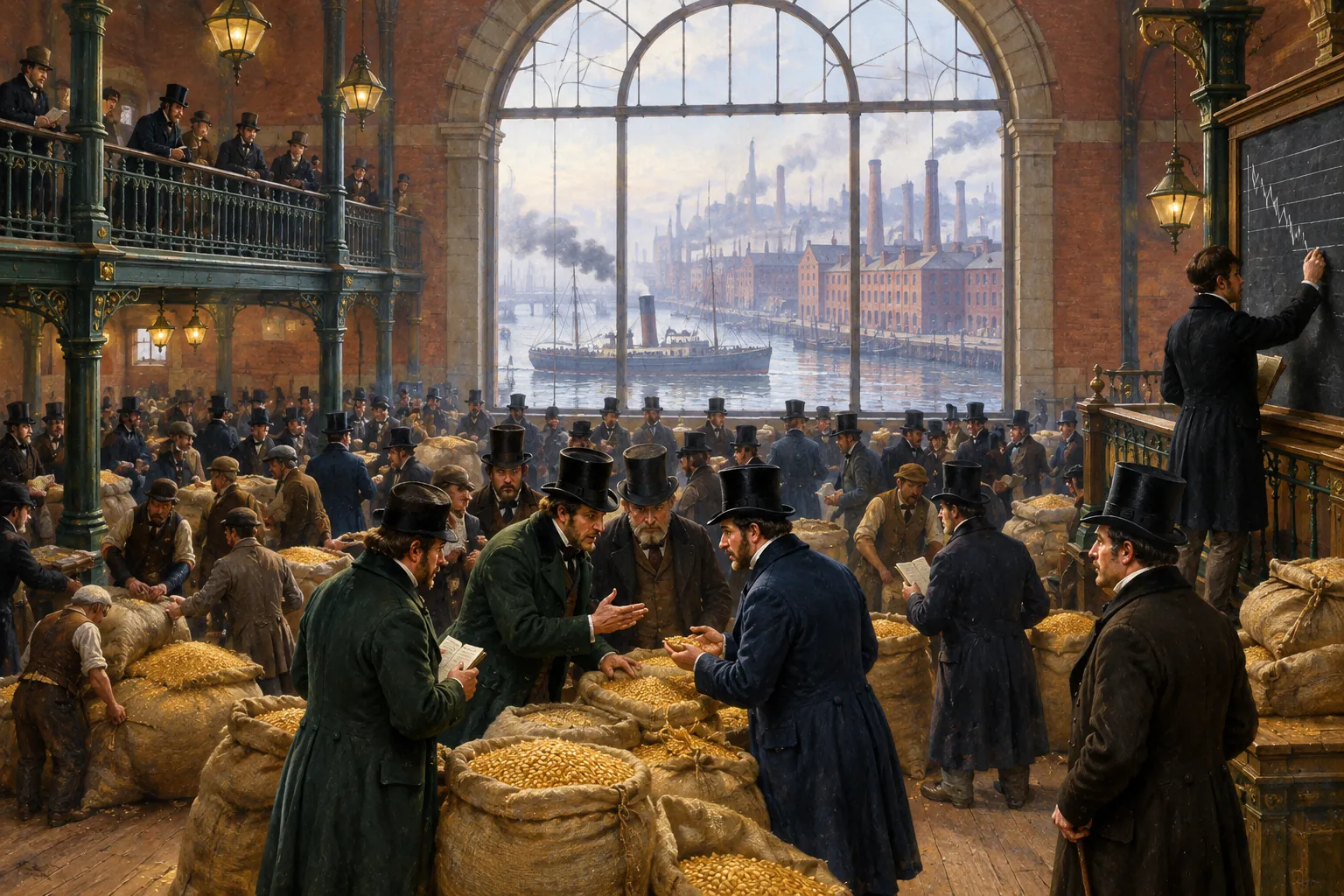
Britain came to India as a trader. From the early 1600s the East India Company bought cotton cloth, spices and later tea. After its victory at Plassey in 1757 and the battle of Buxar in 1764, it also became a ruler, collecting taxes in Bengal and raising its own army. By the 1850s it controlled most of the subcontinent, either directly or through allied rulers.
In May 1857, Indian soldiers (sepoys) in the Company's army rose at Meerut. Rumours that new rifle cartridges were greased with cow and pig fat were the spark. The deeper causes were heavy land taxes, the takeover of states such as Awadh, and fear that foreign rulers would interfere with religion and custom. The rising spread across northern and central India and took more than a year to crush. The full story is in our article on the Indian Rebellion of 1857.
London concluded that Company rule had caused the crisis. The Government of India Act of 1858 ended the Company's power, and Queen Victoria's proclamation of November 1858 promised religious freedom and equal treatment for Indian subjects. Those promises were only partly kept. The last Mughal emperor, Bahadur Shah Zafar, was exiled to Burma, and the Mughal line came to an end.
How the Raj was governed
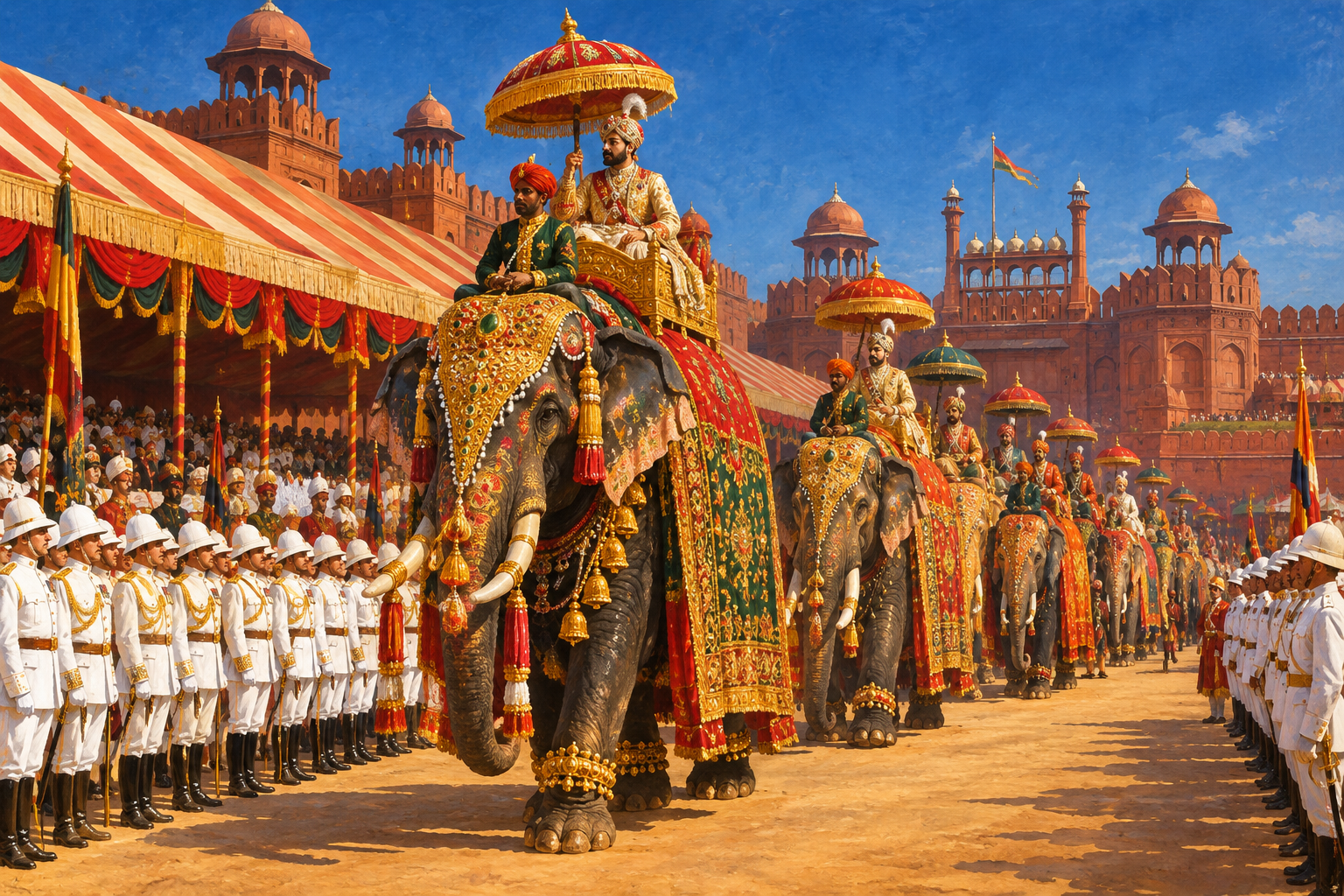
Policy was set in London by the Secretary of State for India, advised by a council. In India the Crown was represented by the Viceroy, the first being Lord Canning. The capital was Calcutta until 1911, when it moved to Delhi. In 1877 a grand durbar (court assembly) at Delhi proclaimed Queen Victoria Empress of India. This is the date many textbooks give for the “Indian Empire”, although Crown rule itself dates from 1858.
Day-to-day government rested on the Indian Civil Service, a small, elite corps of officials chosen by examination, who ran the districts. Order was kept by the Indian Army, whose soldiers were mostly Indian and whose officers were British. The system also relied on about 560 princely states. Their rulers kept control of internal affairs in return for obeying Britain on defence and foreign policy, and a British Resident watched over each court. These states covered roughly two-fifths of the land, but the rest, called British India, was ruled directly. Historians call this mix indirect rule. By counting people by religion and caste, and by creating separate electorates, the Raj also made communal divisions a fixed part of politics.
Economy, railways and famine
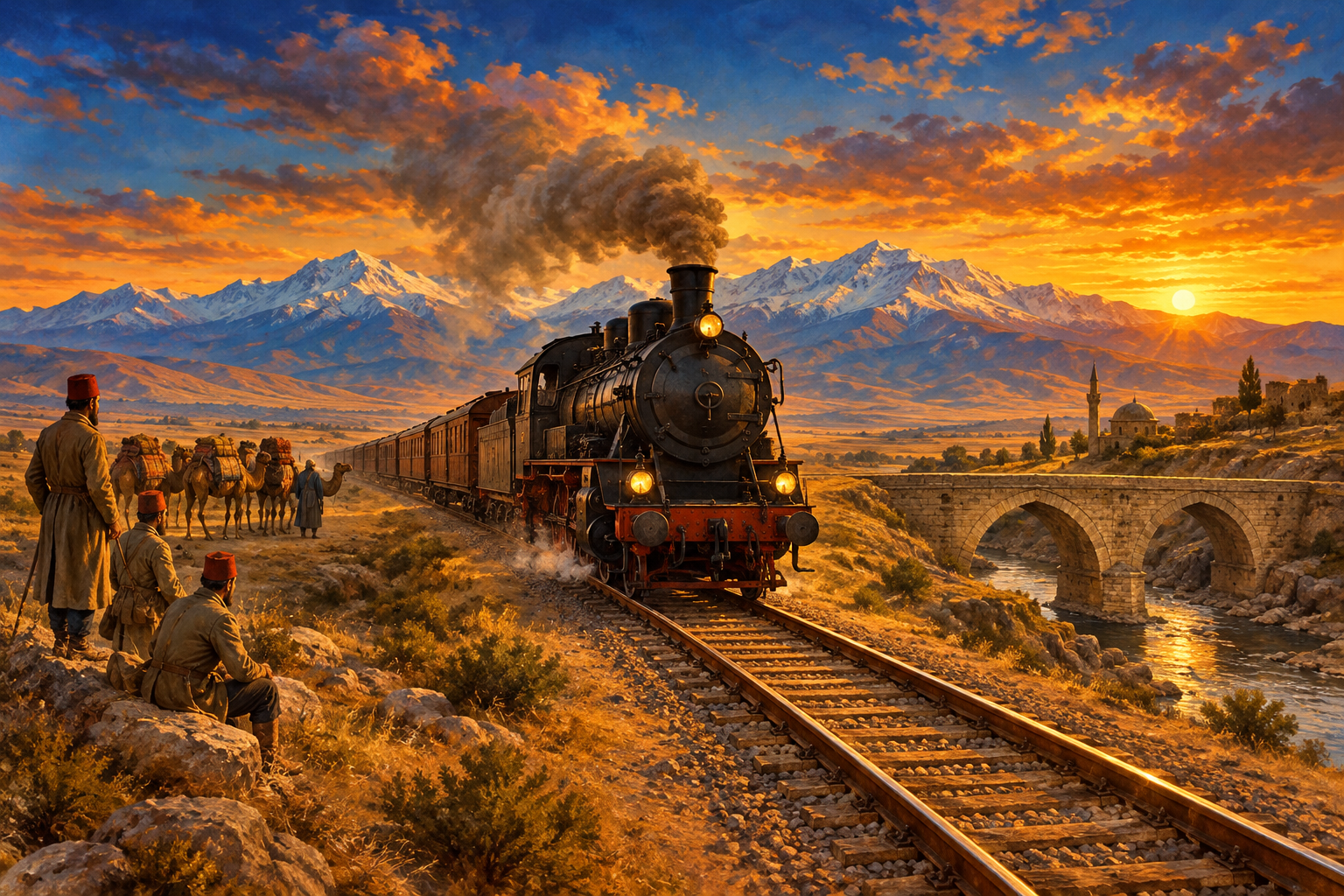
India's first passenger railway opened in 1853, between Bombay and Thane, and by the early twentieth century the country had one of the largest networks in the world. The lines were laid mainly to move troops and to carry cotton, jute and tea to the ports. Big irrigation canals in Punjab opened new farmland, and universities were founded at Calcutta, Bombay and Madras in 1857. They trained an English-speaking class that would later lead the independence movement.
The economic balance, however, favoured Britain. Cheap machine-made cloth from Lancashire flooded India and damaged its hand-weaving industry, while India became a supplier of raw cotton, jute, tea and opium. The Indian thinker Dadabhai Naoroji argued that money paid to Britain for administration and debt was a “drain of wealth” out of the country. Many modern historians still debate how large the effect was, but the argument shaped Indian nationalism.
Famine was the darkest side of the record. Severe famines struck in 1876–78 and 1896–1902, killing millions. In 1943, during the Second World War, the Bengal famine killed an estimated two to three million people. Bad harvests played a part, but so did wartime requisitioning, disrupted transport and a slow official response. India also supplied soldiers: over a million served in the First World War and more than two and a half million in the Second.
Resistance and reform
The Indian National Congress was founded in 1885, with help from a retired British official, Allan Octavian Hume. At first it politely asked for a bigger Indian voice in government. The mood changed in 1905, when the Viceroy, Lord Curzon, split Bengal into two provinces. Many Indians saw it as an attempt to divide Hindus and Muslims. Protesters boycotted British goods and promoted Indian-made ones (the swadeshi movement), and the partition was cancelled in 1911. In 1906 Muslim leaders formed the All-India Muslim League, and in 1909 the Morley–Minto reforms gave Muslims separate electorates.
After the First World War, the 1919 reforms handed some provincial powers to Indian ministers. In the same year the Rowlatt Act allowed arrest without trial, which set off protests. On 13 April 1919, at Amritsar, troops under General Reginald Dyer fired on a crowd gathered at Jallianwala Bagh. The official British count was 379 dead, while Indian estimates run to more than 1,000. The massacre turned many moderates against the Raj.
Mohandas Gandhi then became the movement's leading figure. He promoted non-violent non-cooperation from 1920, and in 1930 he led the Salt March, walking about 390 kilometres (240 miles) to the sea to protest the salt tax. The Government of India Act of 1935 widened self-government in the provinces, and Congress won most of them in the 1937 elections.
The road to 1947
In 1939 Britain declared India at war without asking Indian leaders. Congress objected, and in August 1942 Gandhi and others launched the Quit India movement. The government jailed the leadership and put down the protests. Meanwhile, under Muhammad Ali Jinnah, the Muslim League's Lahore Resolution of 1940 called for states in the Muslim-majority areas.
After the war, Britain's Labour government accepted that it must leave. Talks in 1946 failed, and communal riots, such as those in Calcutta in August 1946, spread. Lord Mountbatten, the last Viceroy, arrived in March 1947 and moved the handover date forward to August of that year. A British lawyer, Cyril Radcliffe, drew the new borders through Punjab and Bengal in a matter of weeks. Pakistan became independent on 14 August 1947 and India on 15 August.
Partition forced roughly 10 to 20 million people to move, and estimates of those killed range from about 200,000 to 2 million. The princely states were pressed to join one of the two new countries. The Raj left behind railways, a civil service, courts and an English-language elite, and also poverty, famine memories and a divided subcontinent. Historians still weigh these two sides differently.
What exams ask
- Dates: know the chain 1857 rebellion → 1858 Crown takes over → 1877 Victoria becomes Empress, and do not mix up the end of Company rule with the start of the “Indian Empire”.
- Indirect rule: be ready to explain the role of the princely states and why Britain relied on Indian soldiers and officials.
- Economic impact: link cheap British cloth to the decline of hand-weaving, and mention railways, raw-material exports and famine.
- Nationalism: compare Congress and the Muslim League, the Partition of Bengal (1905), Amritsar (1919) and the Salt March (1930).
- Significance (AP-style): the Raj shows how a trading company became a state, how empires used local elites, and how nationalism and religion interacted before decolonisation.
Read next
- The Indian Rebellion of 1857 (Sepoy Mutiny): the uprising that ended Company rule and made the Raj possible.
- The Triangular Trades: Atlantic and Asian: shows where Indian cotton and opium fitted into the world economy that the Raj served.
- The Abolition of the Slave Trade and Slavery: explains the labour systems that followed abolition, including Indian indentured workers sent across the empire.