In five minutes: what laissez-faire economics means
Laissez-faire economics is the belief that the government should leave economic life mostly to free markets and private choice. Prices, wages and production, in this view, work best when buyers and sellers decide for themselves. The state's job is narrow: keep order, enforce contracts and protect property. The French phrase means roughly "let do" or "let it be".
The idea grew in 18th-century France, received its most famous argument from Adam Smith in 1776, and reached its peak in the free-trade era of the mid-1800s. It is the economic side of liberalism and one of the big currents in Ideas That Shaped the 19th Century.
Three points to hold on to:
- It is an argument, not a description. No country ever ran on pure laissez-faire. Even its strongest supporters accepted courts, police, armies and some public works.
- It was a reaction to the old system. The targets were guild monopolies, internal tolls, price controls and the trade rules of mercantilism.
- It was challenged by the results. Factory towns, famine and depressions pushed governments to regulate, tax and provide welfare.
Where the phrase came from
The slogan "laissez faire, laissez passer" is linked to Vincent de Gournay, a French merchant and official who served as an intendant of commerce in the 1750s. "Laissez faire" meant let people make and sell what they like without guild rules. "Laissez passer" meant let goods pass without the tolls that France still charged between its own regions.
Around him gathered the Physiocrats, a circle of French thinkers led by François Quesnay, the physician of Louis XV. Quesnay's Tableau économique (1758) pictured the economy as a flow of money and goods and argued that farming was the true source of new wealth. The Physiocrats concluded that the state should remove obstacles and let natural economic order work, especially in the grain trade.
The test came under Anne-Robert-Jacques Turgot, Louis XVI's finance minister. In 1774 he freed the grain trade, and in early 1776 he issued edicts abolishing the guilds. Bad harvests and angry privileged groups turned opinion against him. He was dismissed in May 1776, and the guilds were restored that August. The reform failed, but the ideas travelled across the Channel.
Adam Smith and the classical economists
In March 1776 the Scottish thinker Adam Smith published The Wealth of Nations. Smith attacked mercantilism, the belief that a nation grows rich by hoarding gold and silver and by selling more abroad than it buys. Wealth, he said, comes from work and from the division of labour: in his famous pin factory, ten workers each doing one small task could make thousands of pins a day, far more than ten people working alone.
Smith argued that people who pursue their own interest, under competition, often serve the public without meaning to. He used the image of an "invisible hand" once in the book. He never used the term laissez-faire there, and he was no friend of big business: he warned that merchants meeting together tend to plot against the public. He gave the state real jobs, namely defence, justice and certain public works and institutions, including education. His earlier book, The Theory of Moral Sentiments (1759), shows that he saw markets as sitting inside a moral society.
After Smith, the "classical economists" built the system. Jean-Baptiste Say argued that production creates its own demand. David Ricardo, in 1817, set out comparative advantage: even a country that is worse at making everything gains by trading for what it makes relatively best. This gave free trade a strong logic. Thomas Malthus added a gloomier view of population and food.
Laissez-faire in practice in the 19th century
Britain was the main testing ground. Richard Cobden and John Bright's Anti-Corn Law League, founded in 1839, argued that tariffs on imported grain kept bread dear and protected landlords. After the Irish potato famine began in 1845, Prime Minister Robert Peel repealed the Corn Laws in 1846. The Navigation Acts, which had reserved much shipping for British vessels, were repealed in 1849. In 1860 the Cobden-Chevalier treaty cut tariffs between Britain and France and set off a wave of trade treaties.
Market thinking also shaped social policy. The Poor Law Amendment Act of 1834 aimed to make relief less attractive than wage work, so that paupers who could work went to workhouses. During the Irish famine of 1845-52, in which about one million people died, many historians argue that a reluctance to interfere with markets limited the relief that London provided. The philosopher Herbert Spencer, in Social Statics (1851), carried the idea furthest, arguing that the state should do little beyond protecting individual freedom.
Yet even in this era the state kept growing. Parliament passed Factory Acts in 1833 and 1847 limiting the hours of women and children, and a Public Health Act in 1848 after cholera outbreaks. Historians often say the 19th century was never a pure age of laissez-faire. It was an age in which people argued about where the line should be.
Why it was challenged
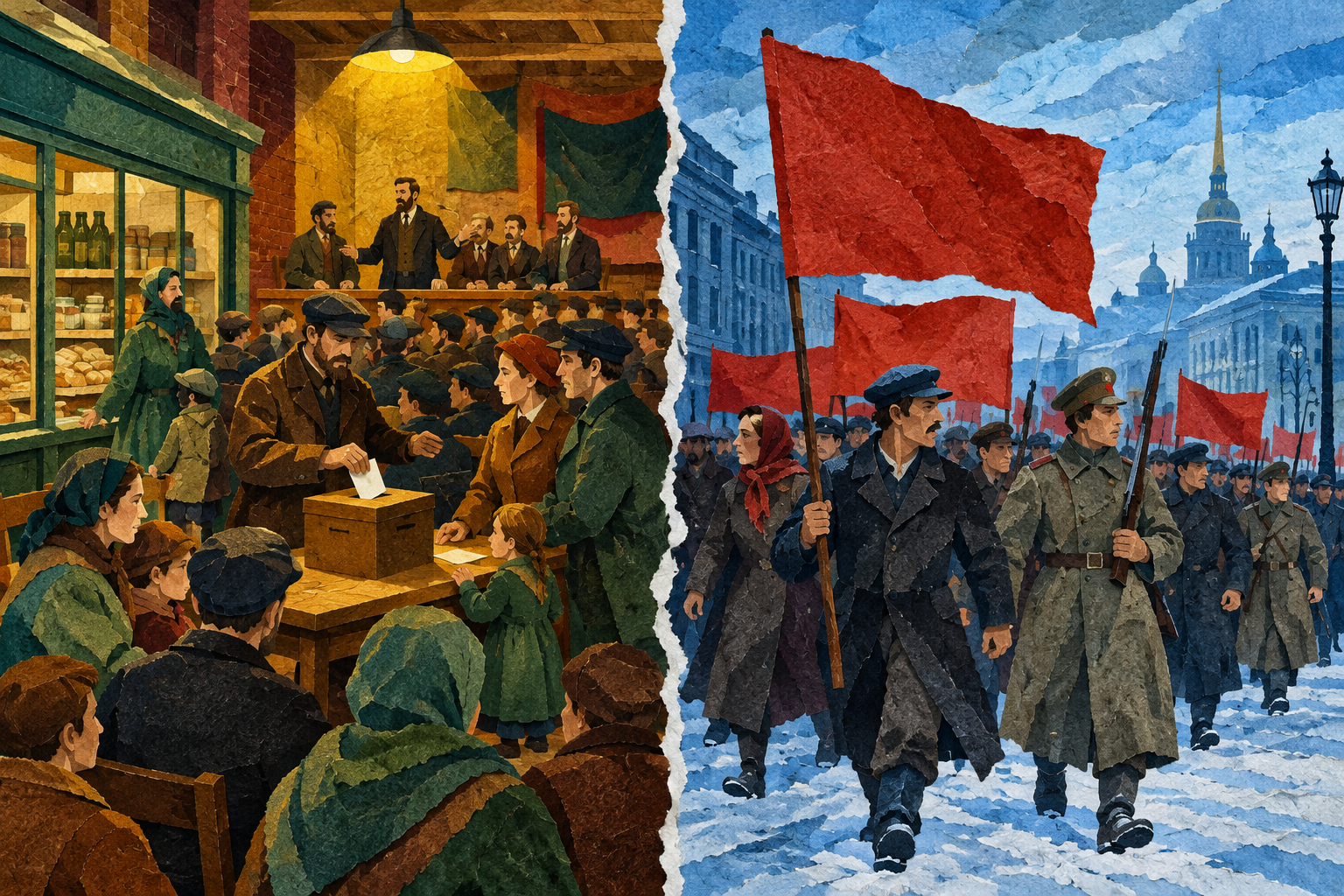
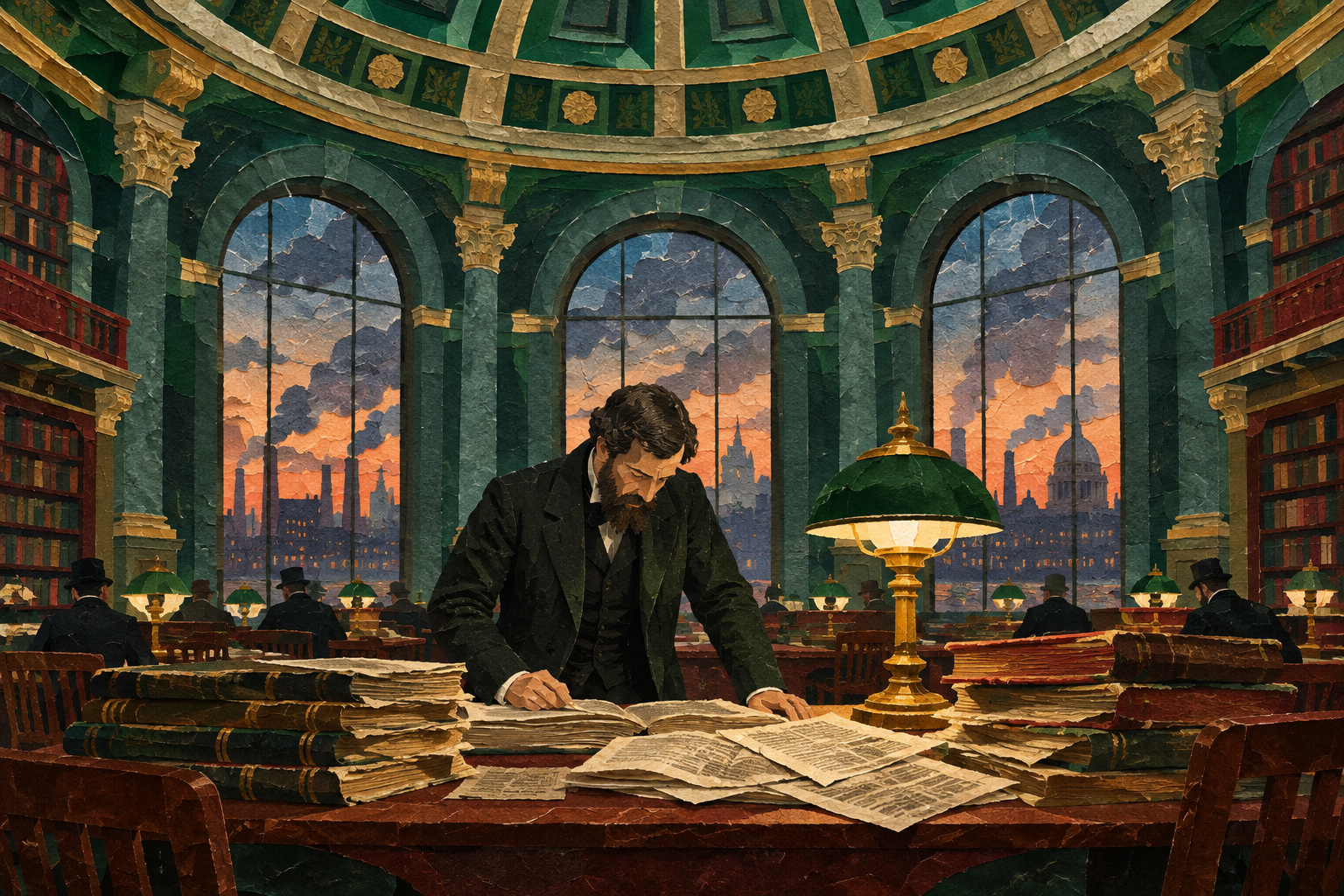
Cities and factories grew faster than housing, sanitation and safety rules. Writers and reformers described child labour, long hours and slum life. The Chartists demanded political rights for workers, and in 1848 Karl Marx and Friedrich Engels published The Communist Manifesto, which argued that unregulated capitalism would produce a deep conflict between owners and workers. See also nationalism, another force that pulled states toward a bigger role, from protecting home industry to building armies.
Economic crises added to the pressure. After the panic of 1873, a long slump in prices and profits led many governments back to tariffs. In Germany, Chancellor Otto von Bismarck introduced health insurance in 1883, accident insurance in 1884 and old-age pensions in 1889, partly to win workers away from socialism. In the United States, the Sherman Antitrust Act of 1890 aimed to break up business combinations.
The largest blow came with the Great Depression of the 1930s. John Maynard Keynes had already written The End of Laissez-Faire in 1926, and his General Theory (1936) argued that governments should spend to support demand when private spending collapses. Postwar states built welfare systems and managed their economies. From the 1970s, economists such as Friedrich Hayek and Milton Friedman revived market arguments, and today's debates on regulation, taxes and trade still use the same two sets of ideas.
What exams ask
- Define it: a policy of minimal state interference in the economy, supported by free markets and free trade.
- Contrast it with mercantilism: mercantilism wanted state control of trade to build national wealth; Smith argued for competition and open markets.
- Know the key links: Physiocrats (France, 1750s), Smith (1776), Ricardo (1817), Corn Laws repealed (1846).
- Explain the limits: Factory Acts, public health laws, Bismarck's social insurance and later Keynesian policy show states expanding their role.
- Common traps: Smith did not argue for no government, and "invisible hand" is not the same phrase as laissez-faire.
Read next
- What Is Liberalism? Its 19th-Century Origins: the political ideas of liberty and limited government that sit beside free-market thinking.
- The Theory of Moral Sentiments: Adam Smith's earlier book on sympathy and morals, which gives context to his economics.
- What Is Nationalism?: another 19th-century idea that pushed states to take a bigger economic role.
- Ideas That Shaped the 19th Century: the hub that places laissez-faire among liberalism, socialism, nationalism and Darwin.