In five minutes: what Russian serfdom was
Serfs in Russia were peasants who could not legally leave the land they worked. They belonged to a noble landowner, the state or the church, and they owed that master labour or money for life. Their children inherited the same status. The system took shape slowly from the 1490s, was locked in by the Council Code of 1649, and lasted until Tsar Alexander II's emancipation of 1861. This page is part of The Russian Empire (1721–1917).
Serfdom was not slavery in law. A serf had a family, a plot of land and a place in the village community. In practice, though, the owner set the serf's duties, punished him, arranged marriages and could sell him. By the 1850s about 23 million private serfs lived in the empire, a little over a third of its people.
Key terms
- Serf (krepostnoi): a peasant bound to land and to an owner.
- Barshchina: labour dues, working on the lord's fields, often around three days a week.
- Obrok: a payment in money or goods, often used by serfs who worked in towns.
- Soul (dusha): a male serf counted in the census for tax. Owners spoke of owning "souls".
- Mir: the village commune that shared out land and tax duties among households.
How serfdom grew, 1497–1649
In the 1400s Russian peasants could still move between estates. The Law Code (Sudebnik) of 1497 under Ivan III began to change that: a peasant could leave only in the two weeks around St George's Day, 26 November, and only after paying a fee. The reason was money and war. The Muscovite state paid its cavalrymen with grants of land, and land without workers was worthless. Nobles wanted peasants to stay, and the tsars needed the nobles' loyalty.
In the later 1500s war, famine and heavy taxes drove peasants to flee south and east. The government answered by suspending the St George's Day exit in the 1580s, and a decree of 1597 allowed owners to chase runaways for five years. Over the next decades that period was stretched again and again. The Council Code (Ulozhenie) of 1649, issued under Tsar Alexei, removed the time limit altogether and punished anyone who sheltered a runaway. From then on, a peasant's bondage passed from parent to child.
Peak under Peter the Great and Catherine the Great
Peter the Great replaced the old household tax with a poll tax from 1718, paid for every male "soul". Landowners had to collect it, which made them agents of the state and tightened their grip on their villages. In 1721 Peter let factory owners buy whole villages to supply workers, creating the "possessional" serfs of the mines and ironworks.
Then came a strange turn. Peter had forced nobles into lifelong state service, and serfdom was partly the price the state paid for it. In 1762 Peter III freed the nobility from compulsory service, and Catherine II confirmed their privileges in the Charter to the Nobility of 1785. The nobles lost their duty but kept their serfs. Catherine also banned serfs from petitioning her against their owners in 1767, and in 1783 serfdom was extended to Left-Bank Ukraine. Many serfs were handed to her favourites together with state land.
The danger of this system showed in the Pugachev revolt of 1773–1775. A Cossack, Emelyan Pugachev, claimed to be the dead Peter III, promised freedom from the nobles and gathered a huge following among serfs, Cossacks and factory workers before he was captured and executed. Nobles never forgot it.
What life as a serf was like
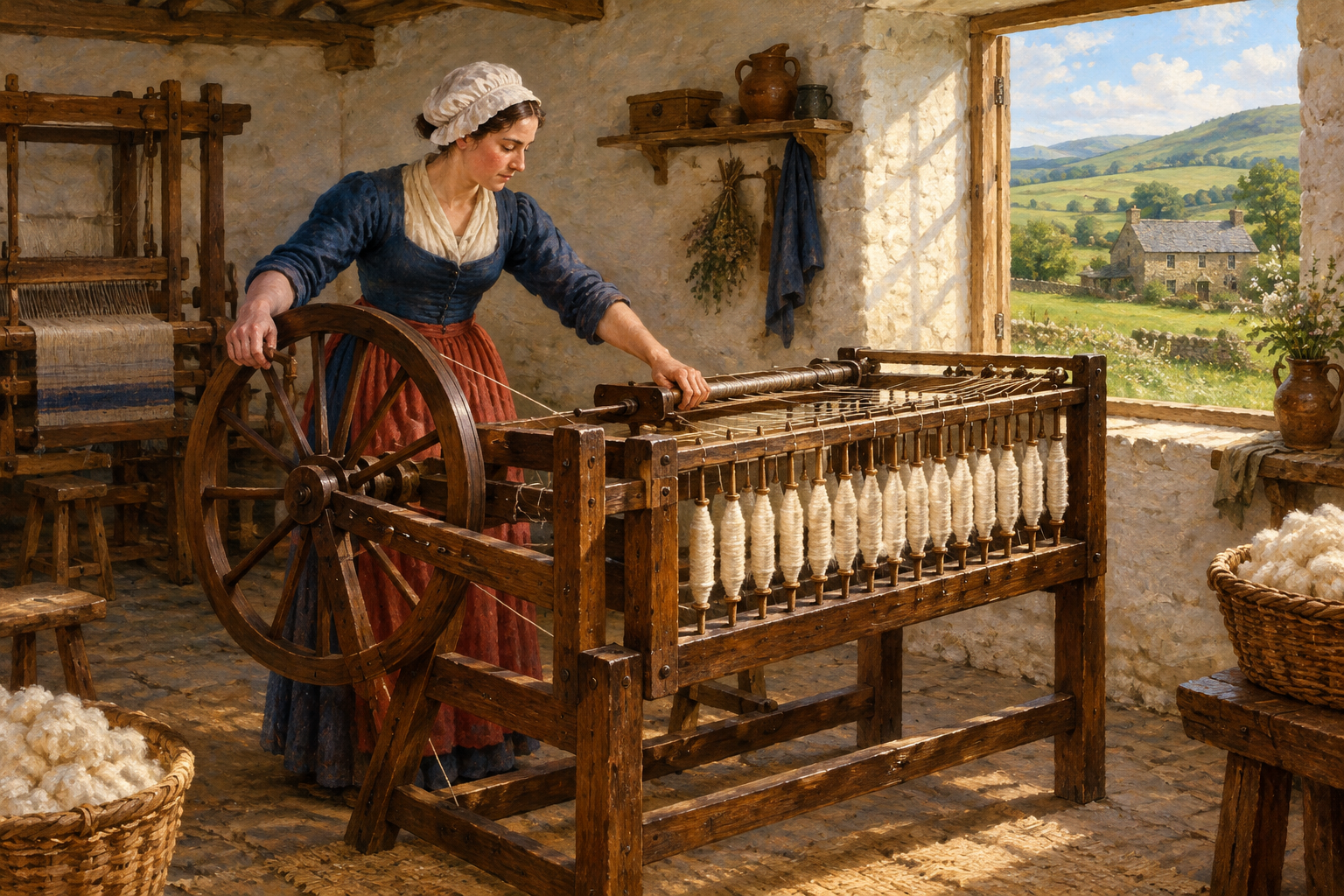
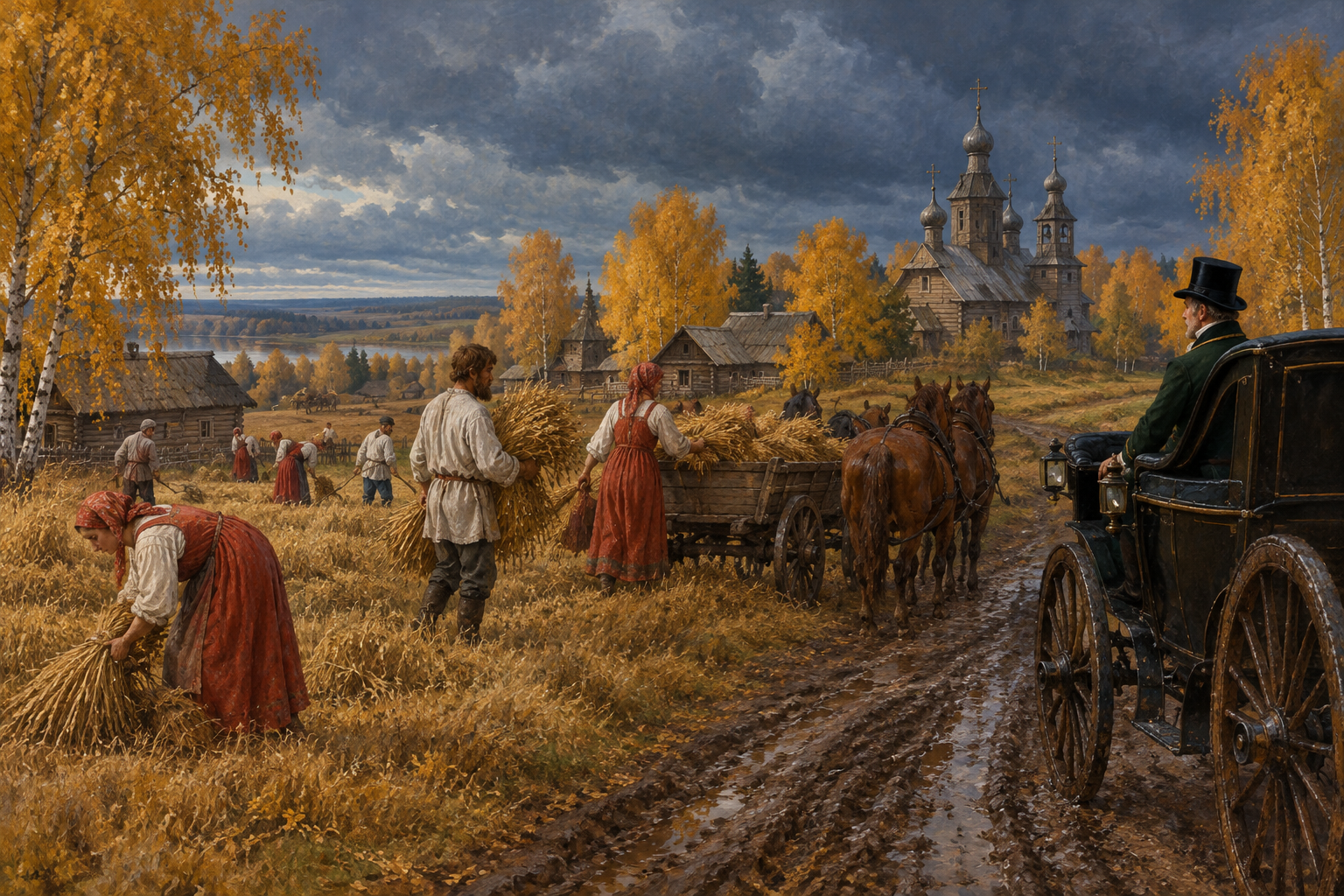
Most serfs lived in villages, farming their own strips and giving the owner either labour (barshchina) or payment (obrok). Under barshchina, the owner's fields came first, so peasants often worked their own plots at night or on feast days. Under obrok, some serfs went to St Petersburg or to textile towns such as Ivanovo, earned wages and sent money home, and a few became wealthy while still legally owned.
The owner's power was wide. He could punish, order marriages and, from 1760, send serfs to Siberia. Domestic serfs served in the big house, and a few were trained as actors, musicians or painters on private estates. Peasants had few legal ways to complain. They petitioned, ran away or sometimes burned manor houses and attacked stewards.
Writers made the system visible to the reading public. Alexander Radishchev's Journey from St Petersburg to Moscow (1790) attacked serfdom and led to his exile. Nikolai Gogol's Dead Souls (1842) follows a swindler buying the names of dead serfs still counted on the tax lists. Ivan Turgenev's A Sportsman's Sketches (1852) showed peasants as people with inner lives.
Reforms that went nowhere
Tsars before Alexander II saw the problem but rarely acted. Paul I's decree of 1797 told owners not to demand more than three days' labour a week, but it was only advice. Alexander I's Free Cultivators law of 1803 let owners free serfs with land by agreement, and very few did. In 1816–1819 the Baltic provinces freed their serfs, but without land, so the peasants stayed dependent on the landowners. Nicholas I set up secret committees on the question, reformed the state peasants' administration in the late 1830s and passed the 1842 law on "obligated peasants", which also barely changed things.
Why so little? Nobles feared losing income and status, officials feared unrest, and the tsars depended on the nobility to run the countryside.
Why it ended in 1861
The turning point was defeat in the Crimean War (1853–1856). Britain and France had railways, steam ships and modern rifles, while Russia relied on a peasant army and poor roads. Many officials concluded that serfdom held the empire back. Alexander II is reported to have told Moscow nobles in 1856 that it was better to abolish serfdom from above than to wait until it began to abolish itself from below.
Editorial commissions drafted the reform, and the Emancipation Manifesto was signed on 19 February 1861 (3 March in the modern calendar). Serfs gained personal freedom: they could marry, own property, go to court and start a business without the owner's consent. Land was the hard part. Peasants received allotments, but they had to buy them. The state paid landowners at once with bonds, and the peasants repaid the state over 49 years with interest. Land was usually held by the village commune, not by individuals, and many peasants received less than they had farmed before.
The result was disappointment and debts. After the 1905 revolution the government cut the payments and cancelled them from 1907. Many historians see the unsolved land hunger as one background cause of the upheaval of 1917.
What exams ask
AP-style questions usually ask you to explain why Russia kept serfdom long after serfdom faded in western Europe, why Alexander II emancipated the serfs, and how far the 1861 reform really changed peasants' lives. A good answer names causes (the Crimean defeat, economic backwardness, fear of revolt, moral criticism), then limits (redemption payments, the commune, smaller plots). Compare it with other emancipations of the same decade, such as the United States in 1863, but keep the contrast clear: Russian serfs were freed by a decree from above, with payments, not by civil war.
Read next
- Catherine the Great: the ruler who confirmed noble privileges and widened serfdom while talking about Enlightenment ideas.
- The Emancipation of the Serfs (1861): a closer look at the manifesto, the commissions and the terms of redemption.
- The Russian Revolution of 1917: how peasant grievances and war pressure ended the monarchy.