Part of: 19th-Century Art and Culture: From Romanticism to the Belle Époque
In five minutes: what is Romanticism?
Romanticism was an artistic and intellectual movement that ran from about the 1770s to the middle of the 1800s. It began in Germany, Britain and France, then spread to Russia, the United States and eventually Japan. Its central claim is simple: feeling, imagination and personal experience reveal truths that cold reason cannot.
The word has little to do with romantic love. It comes from "romance", the medieval tales of adventure and wonder that writers of the time admired. A Romantic poet was more likely to write about a storm, a ruin or a lonely walk than about a candlelit dinner.
Romanticism touched nearly every art form. It gave us Wordsworth's poems about nature, Mary Shelley's Frankenstein, Caspar David Friedrich's solitary figures in misty landscapes, Beethoven's stormy symphonies and Chopin's piano pieces. It also fed into politics, because it taught people to treasure their own language, folk stories and history.
Why Romanticism appeared
Three forces explain the timing.
A reaction to the Enlightenment. The thinkers of the 1700s trusted reason, science and universal rules. Many people felt that this left out something important: passion, wonder and the inner life. Jean-Jacques Rousseau, who argued that natural feeling and conscience matter as much as logic, became an early inspiration.
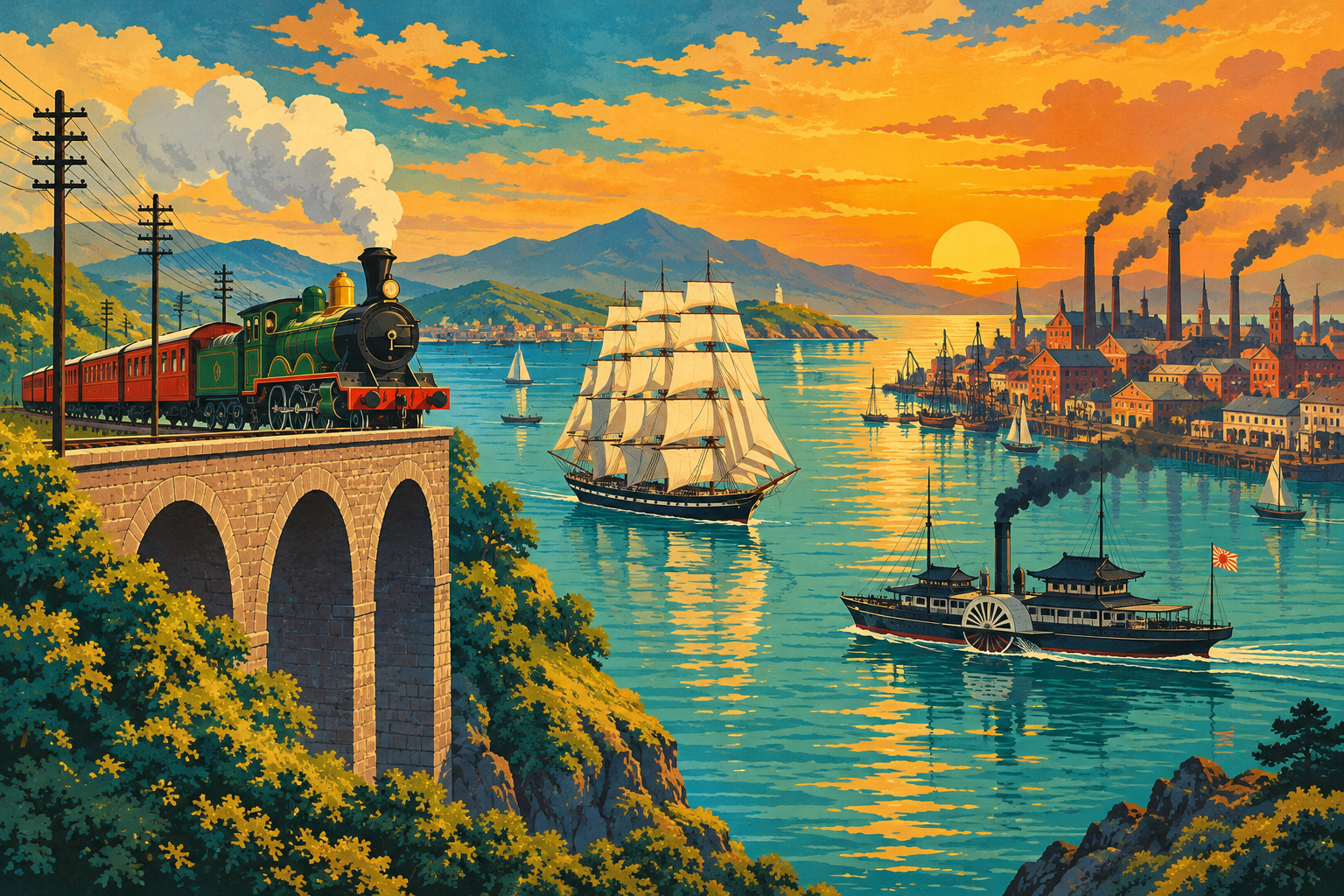
The Industrial Revolution. Factories, coal smoke and crowded cities changed daily life in Britain first, then across Europe. Writers and painters responded by praising untouched countryside, village life and the medieval past, which seemed to belong to a gentler world.
The French Revolution and Napoleon. After 1789 the old order was shaken, and many young people believed that individuals and nations could remake the world. When the Revolution turned violent and Napoleon's armies swept across Europe, hope mixed with disillusion. That mixture of excitement and disappointment runs through Romantic art.
In the German-speaking lands, a literary wave called Sturm und Drang ("storm and stress") came first. Goethe's novel The Sorrows of Young Werther, published in 1774, made a sensitive, passionate young hero famous across Europe.
The core ideas of Romanticism
- Emotion comes first. Art should express strong feeling, not only follow elegant rules. Wordsworth, in the preface to the 1800 edition of Lyrical Ballads, said poetry should come from powerful feeling, written in the plain language of ordinary people.
- Nature is alive and powerful. Romantics did not see nature as a neat garden. They loved mountains, seas and storms, and used the idea of the sublime for scenes so vast that they inspire both awe and fear.
- The individual and the genius. The artist became a special, original figure who follows inner vision instead of copying approved models.
- Imagination over imitation. Dreams, visions, the supernatural and the strange were welcomed as sources of truth.
- The past and the folk. Medieval castles, old ballads and village legends were treated as the true voice of a people.
- Distant places. The East, the wilderness and remote history offered escape from the present.
Romanticism in literature, painting and music
Literature
In Britain, Wordsworth and Coleridge published Lyrical Ballads in 1798, often treated as the starting point of English Romantic poetry. Byron, Shelley and Keats followed, and all three died young: Keats in 1821, Shelley in 1822 and Byron in 1824. Walter Scott's historical novels, beginning with Waverley in 1814, made the past popular, and Mary Shelley's Frankenstein appeared in 1818.
In Germany, the Jena circle around Friedrich Schlegel and Novalis developed Romantic theory in the 1790s, while Goethe and Schiller bridged the older and newer styles. In France, Victor Hugo declared a new freedom for drama in the preface to his play Cromwell in 1827, and the noisy premiere of his play Hernani in February 1830 became a famous clash between old and new taste. In the United States, Emerson, Poe, Hawthorne and Melville carried Romantic ideas into American writing.
Painting
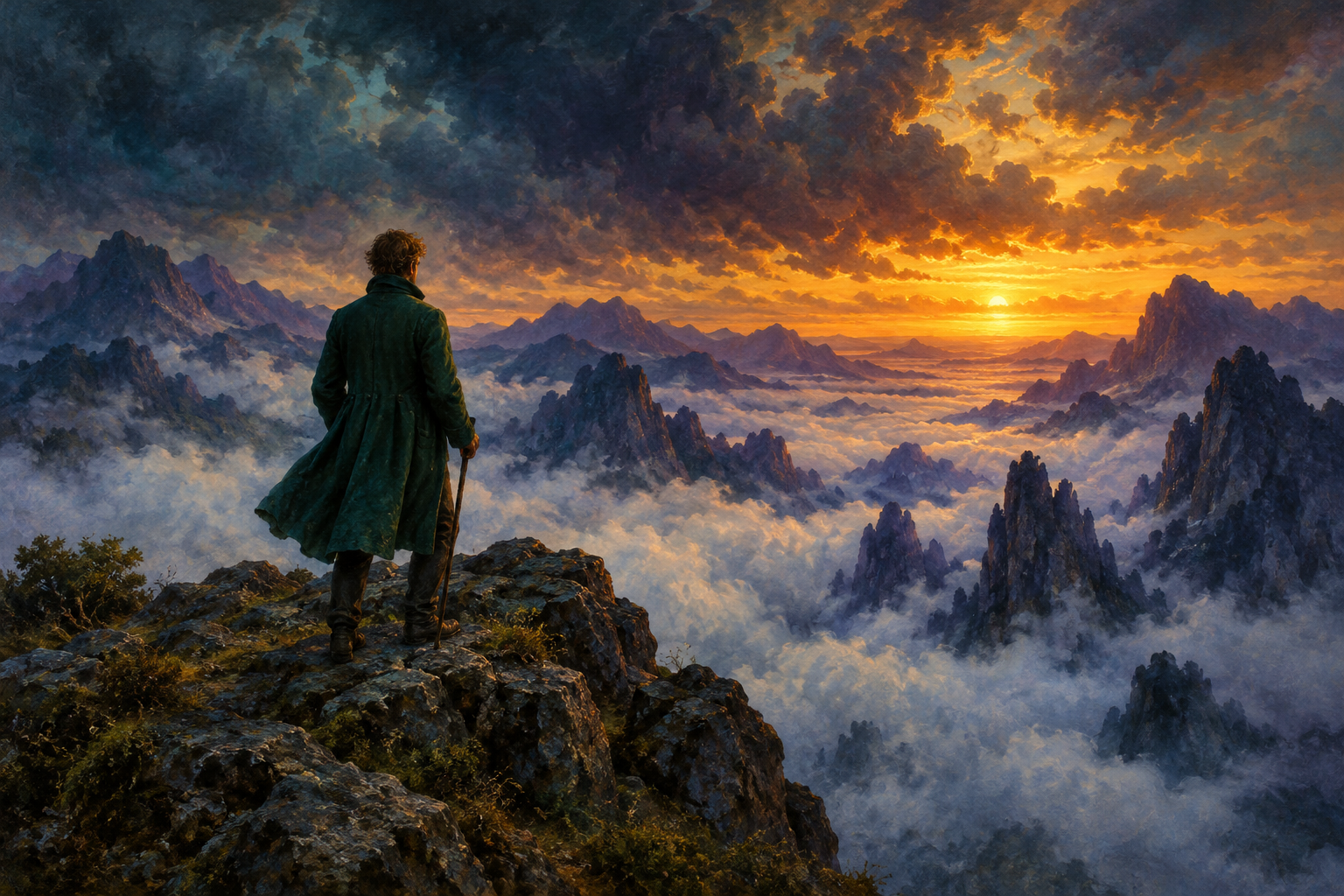
Painters turned from calm, orderly scenes to drama and mood. Théodore Géricault's The Raft of the Medusa (1818–19) showed survivors of a real shipwreck. Eugène Delacroix's Liberty Leading the People (1830) celebrated the July Revolution in Paris with bright colour and energy. Caspar David Friedrich's Wanderer above the Sea of Fog (about 1818) shows a lone figure facing a vast landscape. J. M. W. Turner dissolved a scene into light and weather, as in Rain, Steam and Speed (1844), where a train races across a bridge in the mist.
Music
Beethoven is often seen as the bridge between the Classical and Romantic eras. His Ninth Symphony, first performed in 1824, adds a chorus and a message of human brotherhood. Schubert turned poems into songs, Chopin gave the piano a voice of longing, and Berlioz wrote his Symphonie fantastique (1830) as a musical story of an artist's obsessive love and dreams. Programme music, nationalist music and virtuoso performers all grew from this soil.
Romanticism versus neoclassicism
Neoclassicism, dominant in the late 1700s, admired ancient Greece and Rome. It valued balance, clear lines, restraint and moral lessons. Jacques-Louis David's severe, noble paintings are the standard example. Romanticism answered with movement, colour, emotion and personal vision.
- Neoclassicism: reason, order, ancient models, calm and clarity.
- Romanticism: feeling, imagination, nature, drama and originality.
The contrast is useful but not absolute. Many artists, Delacroix among them, admired classical masters, and the two styles overlapped for decades.
Nationalism, politics and the end of the movement
Romantics who loved folk culture helped shape modern nationalism. The brothers Jacob and Wilhelm Grimm collected German folk tales, published from 1812, partly to record a shared German heritage while German lands were divided and under French pressure. Composers drew on dances and songs from their homelands. Byron joined the Greek struggle for independence and died at Missolonghi in 1824, which made him a hero of liberal causes.
After the revolutions of 1848, many writers and painters turned toward realism, which wanted to show ordinary life and social problems as they were. Yet Romanticism never simply vanished. Its belief in personal expression passed into Impressionism and later modern art, and its love of nature still shapes how people talk about wilderness, creativity and the self.
What exams ask
- Definition: be ready to explain Romanticism as a reaction to Enlightenment reason and neoclassical rules, stressing emotion, imagination and nature.
- Context: link it to the Industrial Revolution and to the French Revolution and Napoleonic Wars.
- Examples: match Wordsworth and Byron to Britain, Goethe and the Grimm brothers to Germany, Hugo to France, Delacroix and Friedrich to painting, and Beethoven, Schubert and Chopin to music.
- Politics: in an AP-style essay, explain how interest in folk culture and national history supported nationalist movements.
- Contrast: compare David's neoclassical work with Delacroix's Romantic painting.
Read next
- 19th-Century Art and Culture: the full map of the era, from Romanticism to the Belle Époque.
- Romantic Painting: Delacroix, Turner, Friedrich: a closer look at the paintings named above.
- Romantic Literature: the poets and novelists in more detail.
- What Is Impressionism?: how the next great movement inherited Romantic freedom.