In five minutes
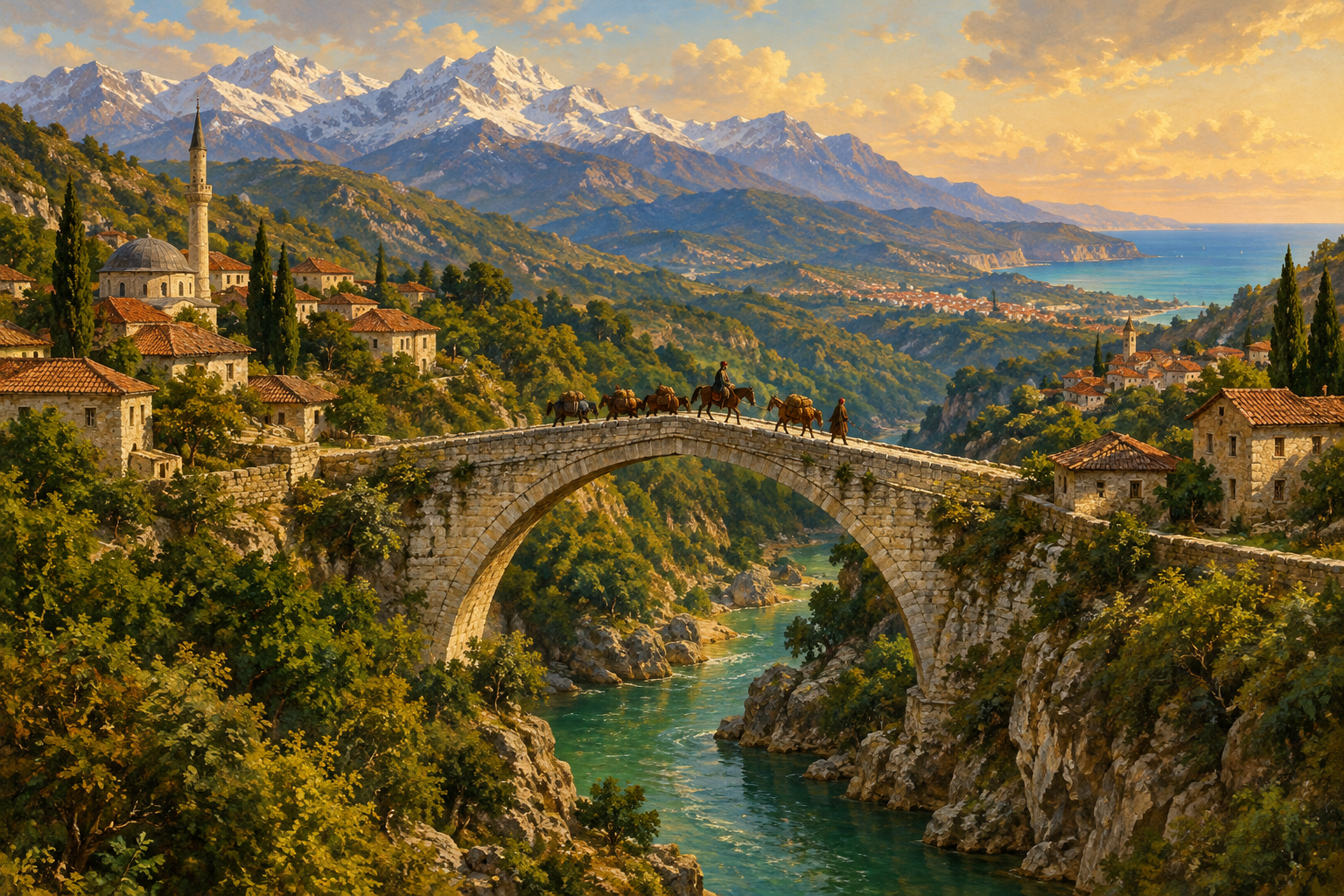
Simón Bolívar (1783–1830) was a Venezuelan-born general and statesman who led the struggle to free northern South America from Spanish rule. Born into a wealthy creole family in Caracas, he spent most of his adult life at war, crossed the Andes with an army, and helped free the lands that are now Venezuela, Colombia, Ecuador, Peru and Bolivia. People called him El Libertador, “the Liberator”.
His great dream was a union of the new republics. He built one, Gran Colombia, but it broke apart in 1830, the year he died of tuberculosis at the age of 47. This article is part of our hub on Latin American Independence (1791–1826).
Where was Simón Bolívar born, and who was his family?
Bolívar was born on 24 July 1783 in Caracas, then part of the Captaincy General of Venezuela in the Spanish empire. His family were creoles, people of Spanish descent born in the Americas, and they were among the richest in the colony, with plantations, mines and town houses. Even so, Spain kept the highest posts in government, the courts and the church for people born in Spain. That quiet insult shaped the politics of families like his.
His father died when he was a small child and his mother when he was eight, so relatives and tutors raised him. The most important was Simón Rodríguez, a free-thinking teacher who introduced him to Enlightenment writers such as Rousseau. In 1802, in Madrid, he married María Teresa Rodríguez del Toro. She died of yellow fever in Caracas less than a year later, and Bolívar never remarried. He travelled widely in Europe, and in 1805, by his own later account, he vowed on a hill in Rome to free his homeland.
Why was Spain's empire ready to crack?
Several forces came together. Enlightenment ideas and the American and French revolutions gave creoles a language of liberty. The Haitian Revolution, which ended in independence in 1804 (see Jean-Jacques Dessalines), showed that a colonial order could be overthrown, and it frightened plantation owners who depended on enslaved labour. Trade restrictions and the privileges of Spanish-born officials added to the anger.
The trigger came in 1808, when Napoleon invaded Spain and forced its king from the throne. With no clear ruler, towns across Spanish America formed juntas to govern in the king's name, and many soon wanted more. In Caracas, a junta removed the Spanish governor on 19 April 1810. Bolívar backed it and was sent to London to seek British support. On 5 July 1811 Venezuela declared independence, starting what is called the First Republic.
What did Simón Bolívar do?
Early defeats (1812–1814)
The First Republic did not last. A violent earthquake in March 1812 hit patriot towns hard, and royalist preachers called it a judgement on the rebels. The republic's commander, Francisco de Miranda, surrendered in July. Bolívar escaped to Cartagena, where in December 1812 he wrote the Cartagena Manifesto, arguing that the republic had fallen because its government was too weak and divided to defend itself.
In 1813 he led what became known as the Admirable Campaign, marching from New Granada into Venezuela and reaching Caracas on 6 August. The city hailed him as Libertador. It was also a brutal war: in June he had issued the “War to the Death” decree, which promised execution to Spaniards who did not actively support independence. The Second Republic fell in 1814, crushed by royalist llanero horsemen under José Tomás Boves, and Bolívar fled abroad again.
Exile, Jamaica and Haiti (1815–1816)
In Jamaica in September 1815, Bolívar wrote his most famous document, Bolívar's Letter from Jamaica (1815). In it he described the grievances of Spanish America and imagined its future. In 1816 Haiti's president, Alexandre Pétion, gave him ships, weapons and shelter. In return Pétion asked him to free the enslaved people in the lands he liberated, and Bolívar issued decrees offering freedom to enslaved men who joined the war.
The march that changed the war (1819)
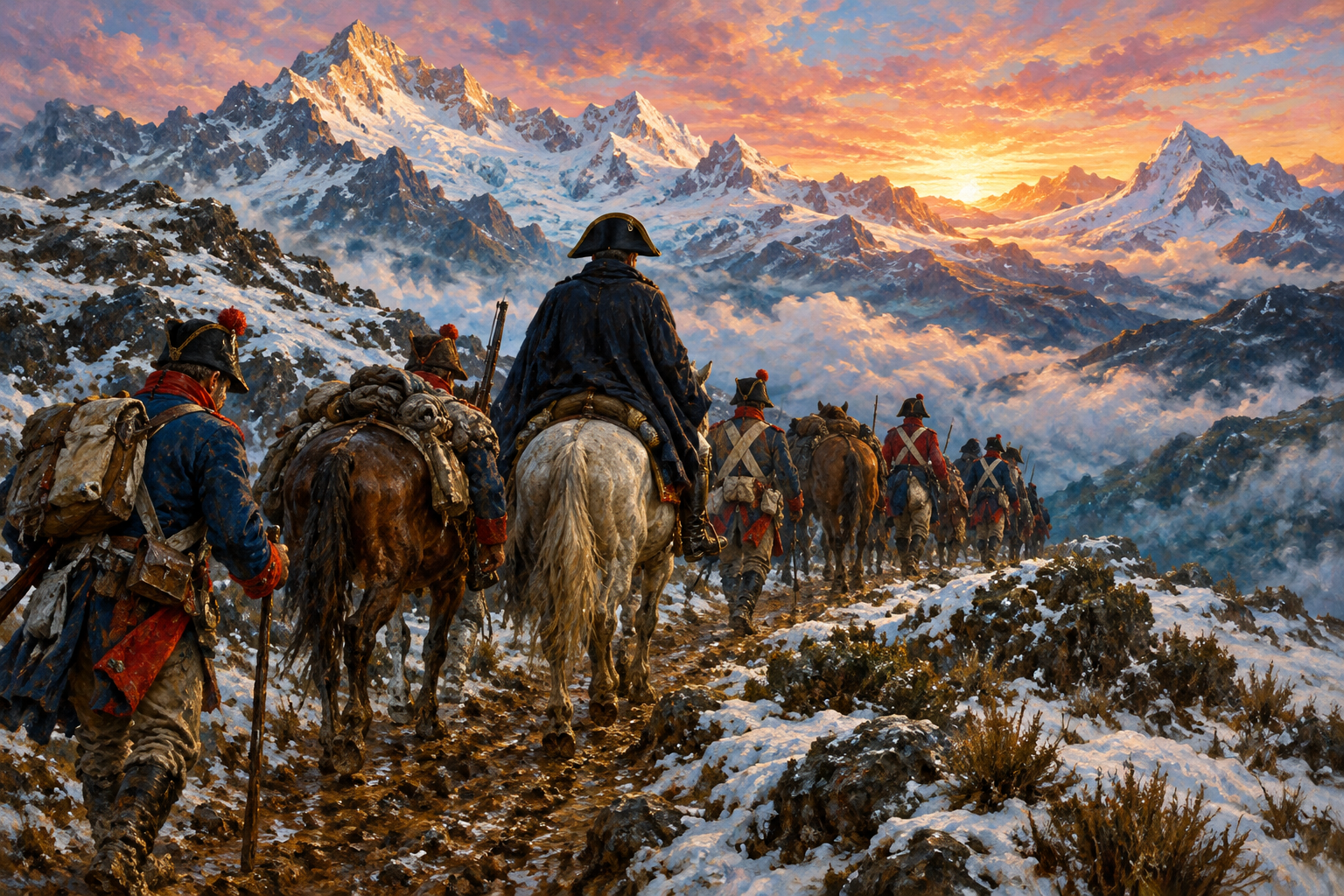
In February 1819 Bolívar addressed a congress at Angostura (today Ciudad Bolívar) and set out his plan for a new state. In the middle of the year he led a few thousand soldiers across flooded plains and then over the freezing Páramo de Pisba high in the Andes, surprising the royalists in New Granada. On 7 August 1819 they won the Battle of Boyacá, and Bogotá was freed. In December the Congress of Angostura created the Republic of Colombia, which historians call Gran Colombia to tell it apart from today's Colombia. It began with Venezuela and New Granada, and Quito and Panama joined later.
Finishing the job (1821–1825)
On 24 June 1821 patriots won the Battle of Carabobo, which secured Venezuela. In 1822 Bolívar's most trusted general, Antonio José de Sucre, won at Pichincha and freed Quito. In July 1822 Bolívar met José de San Martín at Guayaquil. San Martín had freed Argentina and Chile and declared Peru independent. The talks were private, but soon afterwards San Martín stepped aside and Bolívar took over the war in Peru. In 1824 his army won at Junín (6 August) and Sucre won the decisive Battle of Ayacucho (9 December), ending Spain's main power on the continent. In 1825 Upper Peru became a new country and took the name Bolivia in his honour.
What ideas did he have, and where did they fail?
Bolívar believed that newly freed countries needed strong, stable government. He feared that weak federal systems would end in chaos, as he had seen in 1812. The constitution he drafted for Bolivia included a president for life, which critics saw as monarchy in disguise. In 1826 he invited American republics to the Congress of Panama to discuss a defensive union, but few delegates came and little was agreed.
On slavery, he freed the enslaved people on his own estates and supported abolition, but Gran Colombia adopted only a gradual “free womb” law in 1821, and slavery ended in Colombia and Venezuela in the 1850s. The union itself was torn by rivalries. Vice-President Francisco de Paula Santander wanted rule by law, José Antonio Páez ran Venezuela almost on his own, and regional elites resented the government in Bogotá. After a convention at Ocaña failed in 1828, Bolívar took dictatorial powers. On 25 September 1828 conspirators tried to kill him in Bogotá, and he escaped.
How did he die, and what is his legacy?
By 1830 Venezuela and Ecuador were leaving the union, and Bolívar resigned the presidency in April. Sick and short of money, he planned to go abroad, but he died on 17 December 1830 near Santa Marta, on the Colombian coast. He was 47. His remains were moved to Caracas in 1842.
Today Bolívar is honoured across Latin America. Bolivia carries his name, Venezuela's currency is the bolívar, and since 1999 the country's official name has been the Bolivarian Republic of Venezuela. Squares and statues bear his name in nearly every city. Historians still debate him: admirers see a visionary who spent his fortune on freedom, while critics point to his harshness in war and his distrust of democracy. Both views rest on the record.
What exams ask
For AP World History and similar courses, remember these points:
- Creoles led most Spanish American independence movements. Independence changed who ruled, but it did not quickly end inequality or slavery.
- Napoleon's invasion of Spain in 1808 was the trigger, and Haiti in 1804 was the earlier example.
- Bolívar is tied to the north (Venezuela, Colombia, Ecuador, Bolivia) and San Martín to the south (Argentina, Chile, Peru). Their meeting at Guayaquil in 1822 is a classic comparison.
- Gran Colombia's collapse in 1830 shows how regional rivalries and powerful strongmen (caudillos) blocked unity.
- Two key sources are the Letter from Jamaica (1815) and the Congress of Panama (1826).
Read next
- Bolívar's Letter from Jamaica (1815): the text in which he explained why Spanish America should be free and what might come next.
- Jean-Jacques Dessalines: the leader who declared Haiti independent in 1804, both a model and a warning for creole leaders.
- Mexican Independence Day (16 September): how a very different road to independence began in Mexico in 1810.
- Latin American Independence (1791–1826): the full hub for the era, with every country and turning point.