0% • 9 min left

The Russian Revolution of 1917

November 08, 2026
The Russian Revolution of 1917 was two revolutions in one year. In February (March in the Western calendar) strikes and mutinies ended the rule of Tsar Nicholas II; in October (November) the Bolsheviks under Lenin seized power from the Provisional Government and began the world's first Marxist state.

Part of: The Russian Empire (1721–1917)

The Russian Revolution of 1917

Key facts

When
March and November 1917 (February and October Old Style)
Where
Petrograd (Saint Petersburg), then all of Russia
Who
Nicholas II, Alexander Kerensky, Vladimir Lenin, Leon Trotsky, the Petrograd Soviet
Cause
War losses, food shortages, autocracy, land hunger
Outcome
Fall of the monarchy, Bolshevik rule, civil war
Long-term result
The USSR was formed in December 1922

Timeline

Tap a step for details. Arrow keys move between steps.

  1. 8 March 1917 (23 February Old Style)

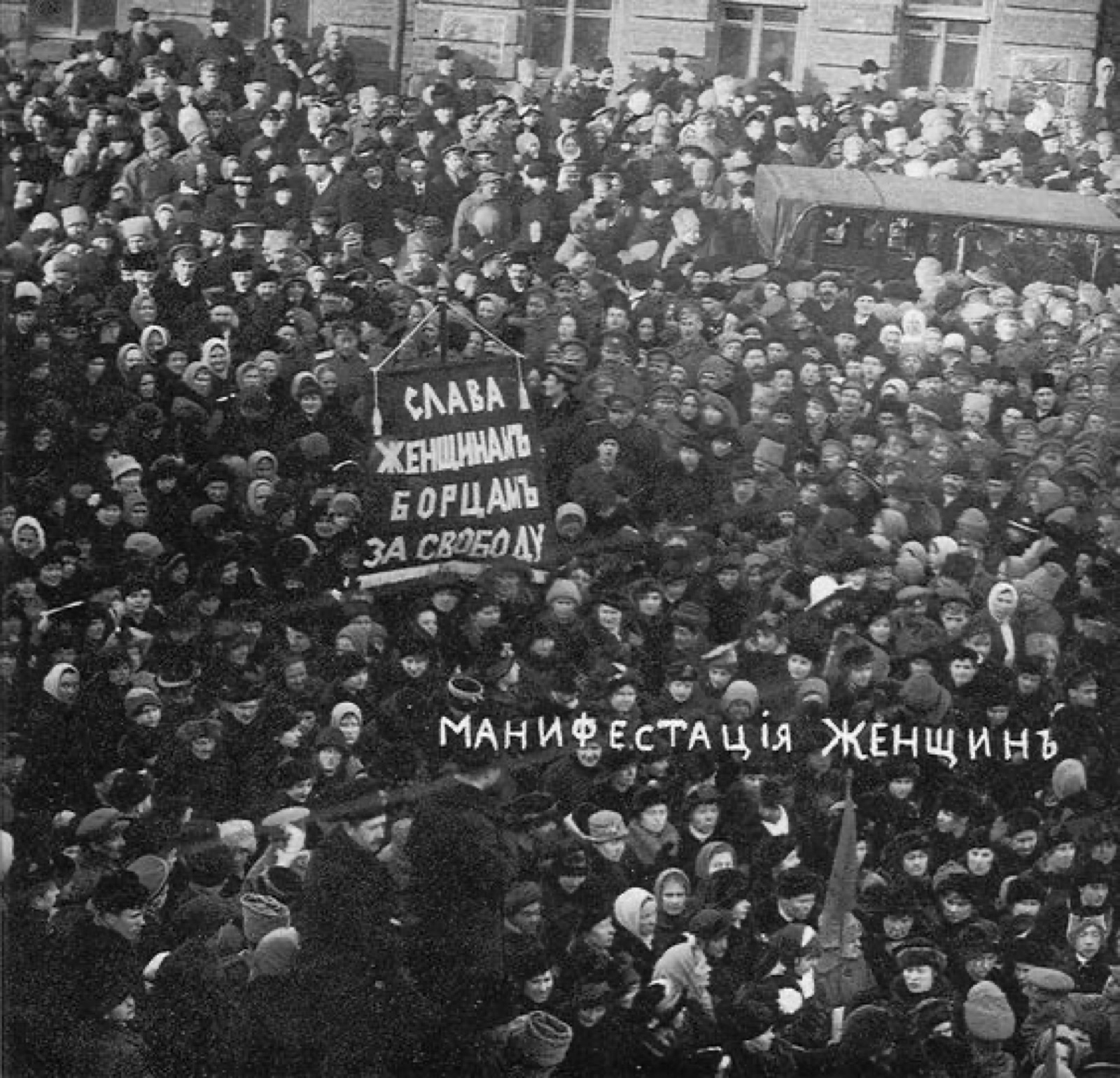
    Women's Day marches begin in Petrograd

    Women demonstrating in Petrograd on International Women's Day, 1917
    Unknown author, public domain, via Wikimedia Commons

    On International Women's Day, women workers left their factories to demand bread. Other workers joined over the following days, and the strike grew into a general protest against the war and the tsar.

    Also in 1917:More from 1917

  2. 12 March 1917 (27 February Old Style)

    The garrison mutinies

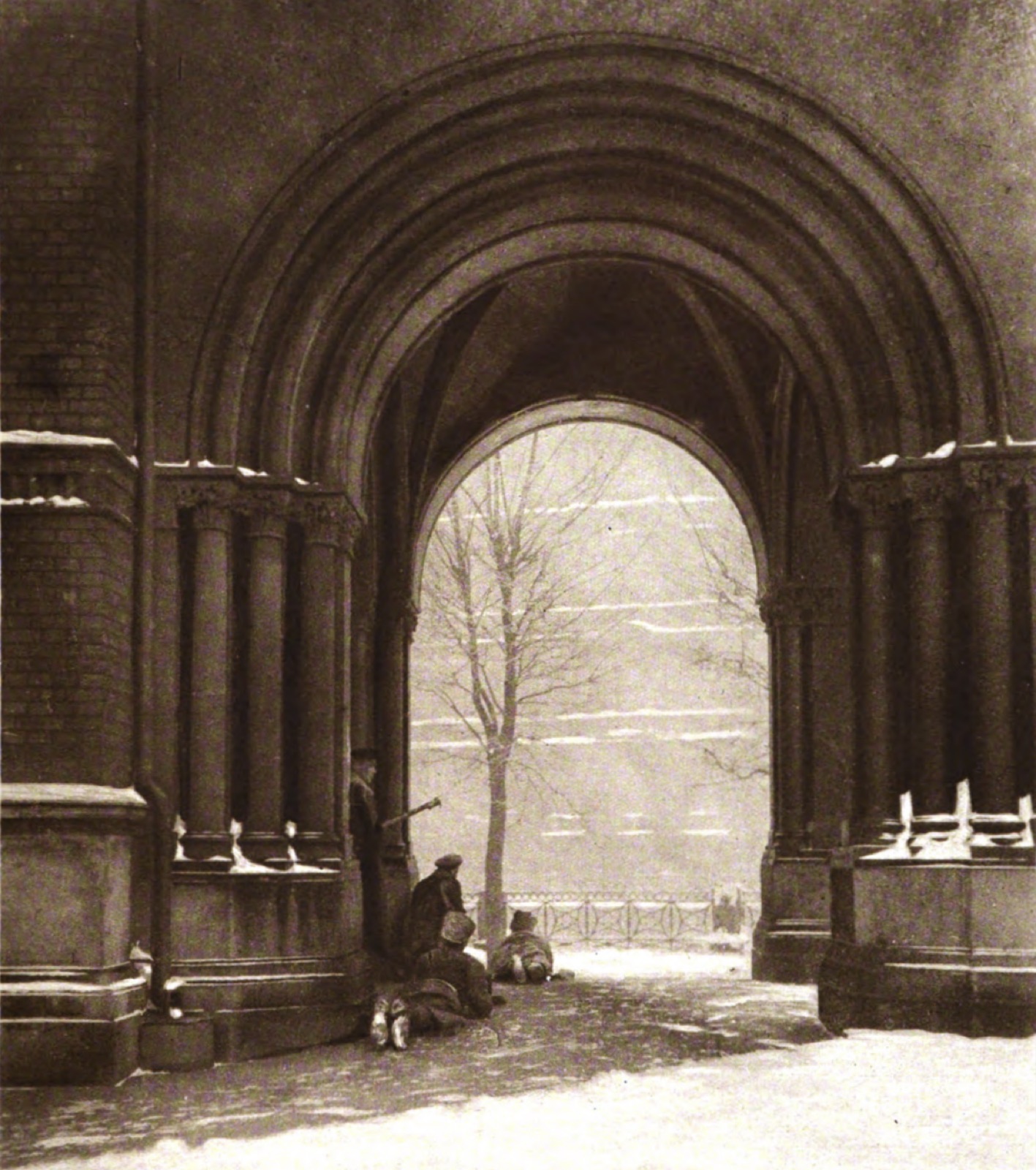
    Illustration of students and soldiers firing at police across the Moika Canal in Petrograd, February 1917
    Ivan Vladimirov, public domain, via Wikimedia Commons

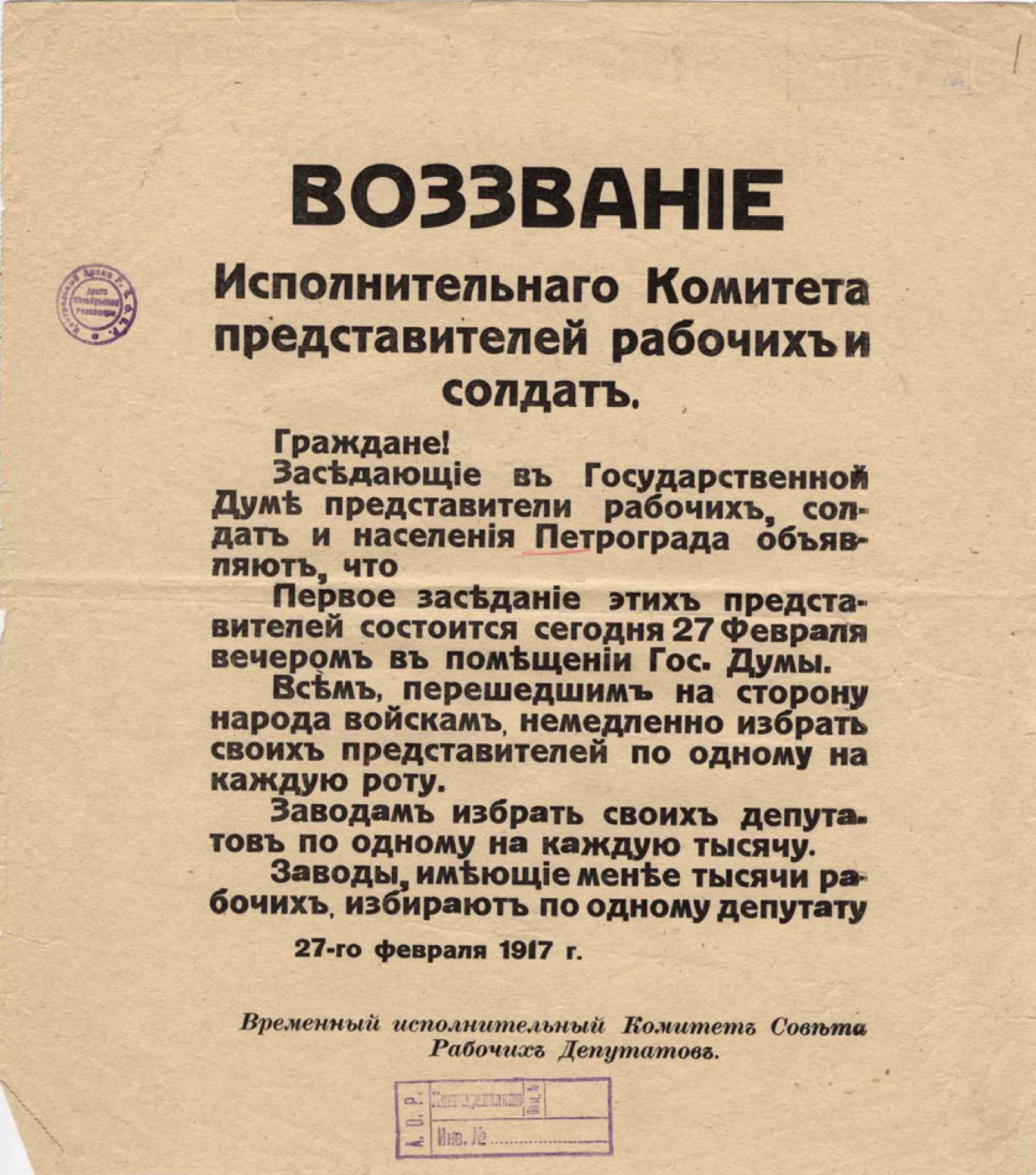
    After troops fired on demonstrators the day before, soldiers of the Volynsky Regiment refused to obey and other units joined them. That same day, the Duma formed a Provisional Committee and workers and soldiers set up the Petrograd Soviet.

  3. 15 March 1917 (2 March Old Style)

    Nicholas II abdicates

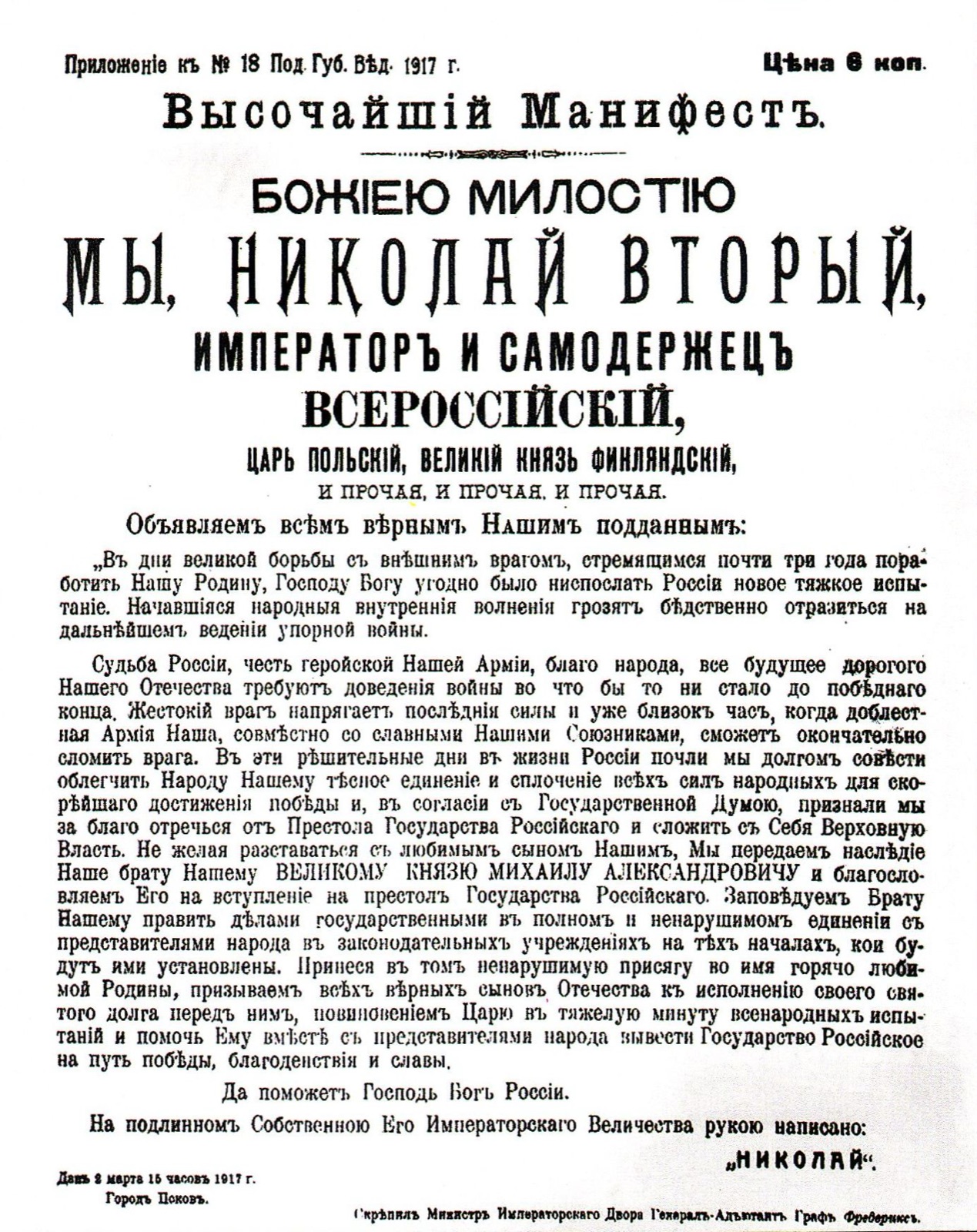
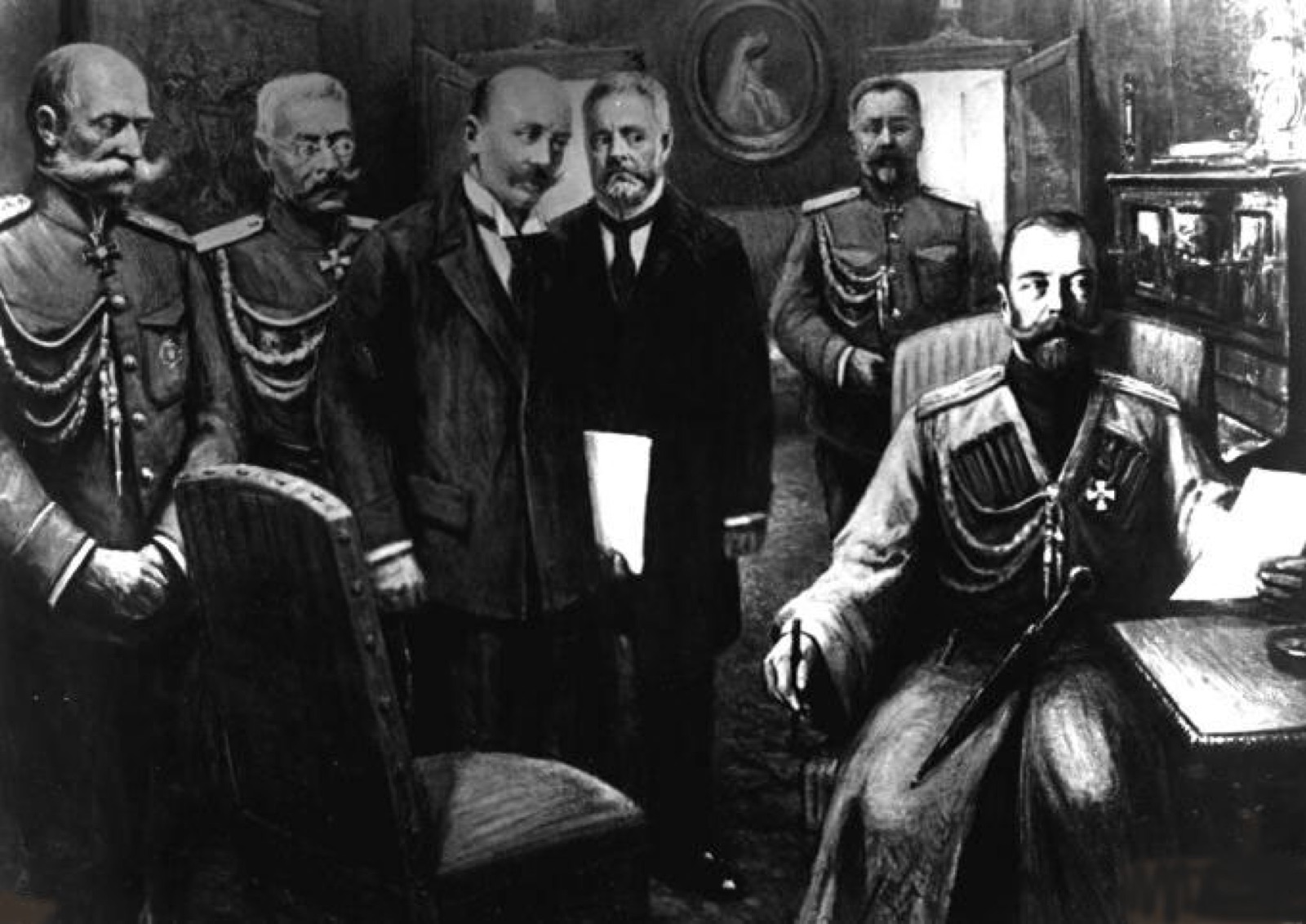
    Under pressure from his generals, the tsar signed an abdication in his train near Pskov. He named his brother Grand Duke Michael as his successor.

  4. 16 March 1917 (3 March Old Style)

    Michael declines the throne

    Grand Duke Michael refused to take the crown unless a future assembly offered it. The Romanov dynasty ended, and the Provisional Government under Prince Lvov became the official authority.

  5. 16 April 1917 (3 April Old Style)

    Lenin arrives at Finland Station

    Lenin returned from exile through Germany in a sealed train. He soon set out his April Theses, which rejected support for the Provisional Government and called for peace and all power to the Soviets.

  6. 16–20 July 1917 (3–7 July Old Style)

    The July Days

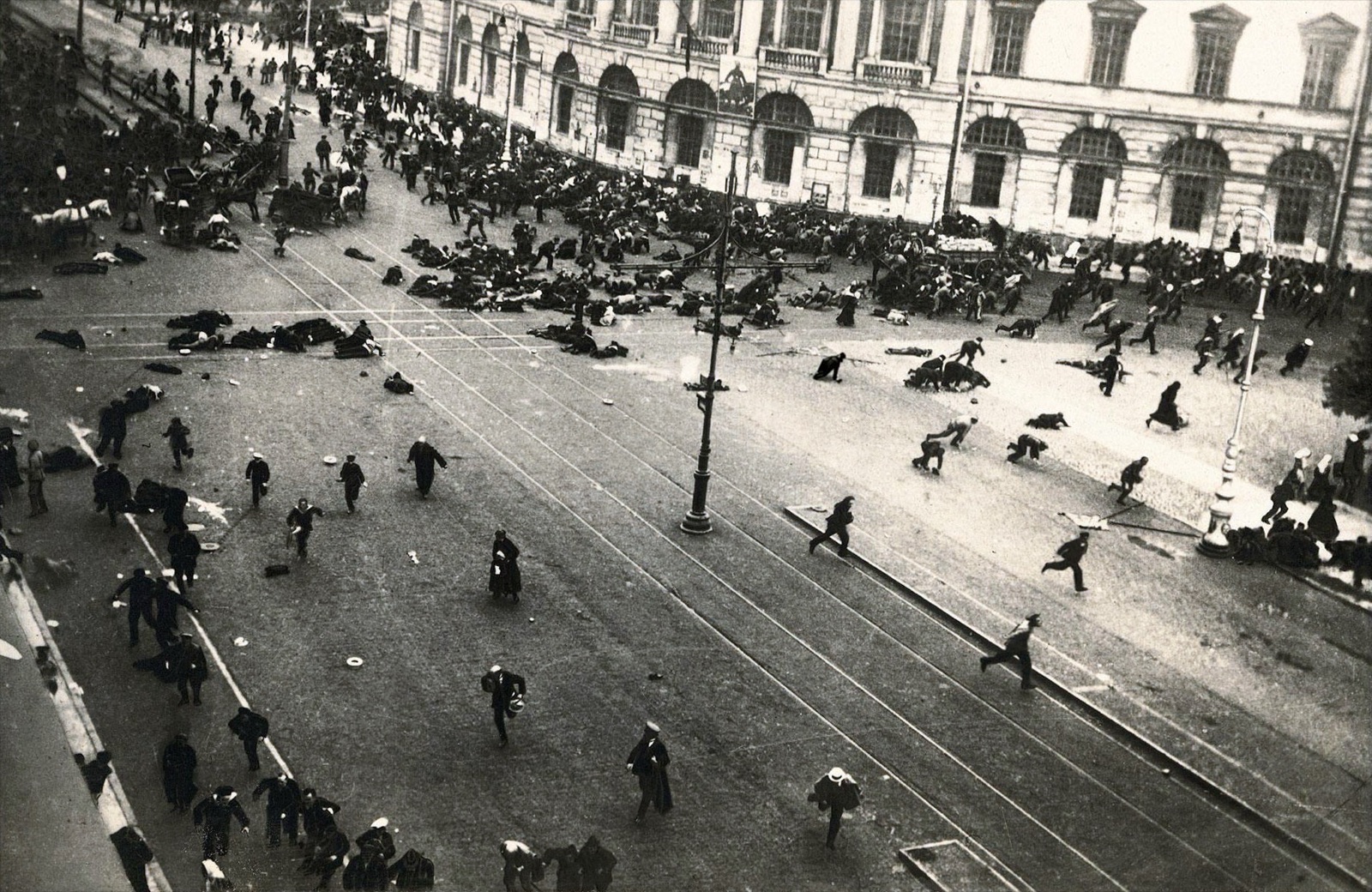
    Crowd scattering on Nevsky Prospekt, Petrograd, after Provisional Government troops opened fire, July 1917
    Viktor Bulla, public domain, via Wikimedia Commons

    Armed workers and soldiers demonstrated against the government, and troops fired on crowds. The Bolsheviks were blamed, Lenin went into hiding, and Kerensky became head of the government.

  7. September 1917

    The Kornilov affair

    General Kornilov sent troops toward Petrograd, which Kerensky and the Soviets saw as a threat of military rule. Bolshevik Red Guards helped defend the capital, and the episode raised the party's standing.

  8. 23 October 1917 (10 October Old Style)

    Bolsheviks vote for an uprising

    The Central Committee voted ten to two for armed action. Kamenev and Zinoviev opposed it, arguing that the party should wait.

  9. 7 November 1917 (25 October Old Style)

    The seizure of power in Petrograd

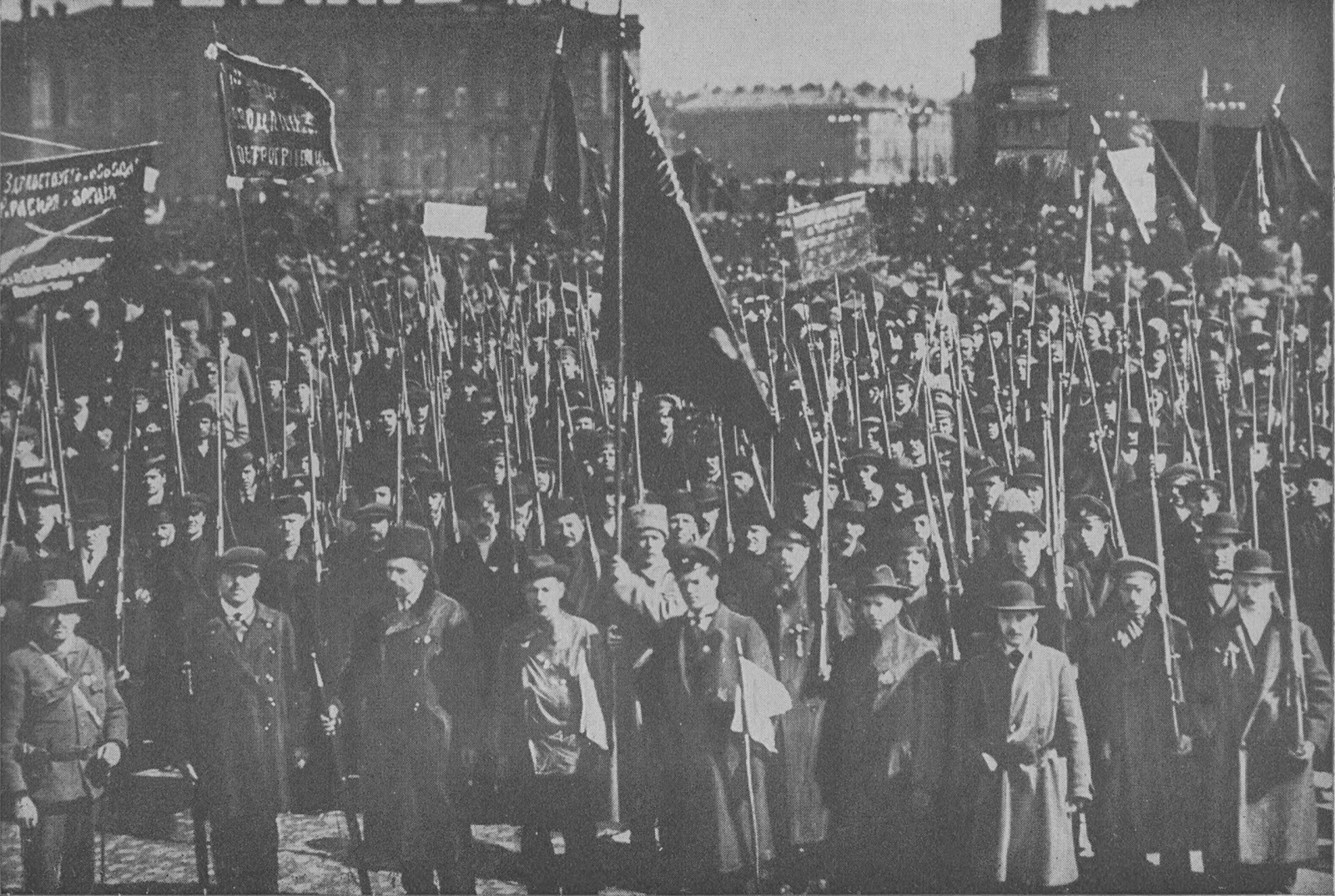
    Red Guards beside the Winter Palace in Petrograd, autumn 1917
    Williams, Albert Rhys, 1883-1962, public domain, via Wikimedia Commons

    Red Guards and soldiers occupied bridges, stations and the telephone exchange with little resistance. The Second Congress of Soviets opened that evening at the Smolny Institute.

  10. 8 November 1917 (26 October Old Style)

    Winter Palace taken; decrees on peace and land

    The Provisional Government's ministers were arrested in the Winter Palace in the early hours. The Congress then passed the Decree on Peace and the Decree on Land and created a Council of People's Commissars headed by Lenin.

  11. 19 January 1918 (6 January Old Style)

    Constituent Assembly closed

    The Assembly, elected in November 1917, met on 18 January and refused to accept Soviet authority. The Bolsheviks dissolved it the next day.

    Also in 1918:More from 1918

  12. 3 March 1918

    Treaty of Brest-Litovsk

    Soviet Russia made peace with Germany and its allies and gave up Poland, the Baltic lands and large parts of Ukraine and Belarus. The treaty was cancelled after Germany's defeat in November 1918.

  13. 1918–1922

    Civil war and the birth of the USSR

    The Red Army fought the Whites and faced foreign intervention. The fighting in the west ended in 1920, and the Union of Soviet Socialist Republics was formally created in December 1922.

Maps

Tap a map to zoom

  • Map of the territory of the Russian Republic in 1917, with areas under temporary wartime occupation marked

    The Russian state in 1917, shortly before the October Revolution, with the areas then occupied in the First World War.

    HistoricusNoctis, CC BY 4.0, via Wikimedia Commons

  • Map of the territory Soviet Russia lost to the Central Powers under the armistice and Treaty of Brest-Litovsk, 1917–1918

    The result of the armistice and the Treaty of Brest-Litovsk (March 1918): the western lands Soviet Russia gave up.

    Department of History, United States Military Academy, public domain, via Wikimedia Commons

  • Map of the Russian Civil War in the west, 1918–1920, showing Bolshevik-held territory and the maximum advance of anti-Bolshevik forces

    The Russian Civil War in the west, 1918–1920: the struggle that followed the October Revolution.

    Hoodinski, CC BY-SA 3.0, via Wikimedia Commons

In five minutes: what was the Russian Revolution of 1917?

The Russian Revolution of 1917 was a chain of events in which a 300-year-old monarchy collapsed and, eight months later, a small, disciplined party took over the state. The first stage, the February Revolution, was largely unplanned: hungry workers, women in bread queues and mutinous soldiers in Petrograd (today's Saint Petersburg) forced Tsar Nicholas II to give up the throne. The second stage, the October Revolution, was a much more organised seizure of power by the Bolsheviks, led by Vladimir Lenin and Leon Trotsky. It created Soviet Russia and, after a long civil war, the Soviet Union in 1922.

This page belongs to our topic on The Russian Empire (1721–1917). If you want the long background, read Causes of the Russian Revolution alongside it.

A note on dates. Until February 1918 Russia used the Julian calendar, which ran 13 days behind the Gregorian calendar used in Western Europe. That is why the "February" revolution happened in March by Western reckoning, and the "October" revolution in November. Historians give both: this page uses Gregorian dates first, with the old-style date in brackets. Soviet Russia switched to the Gregorian calendar in 1918, when 1 February (Old Style) became 14 February.
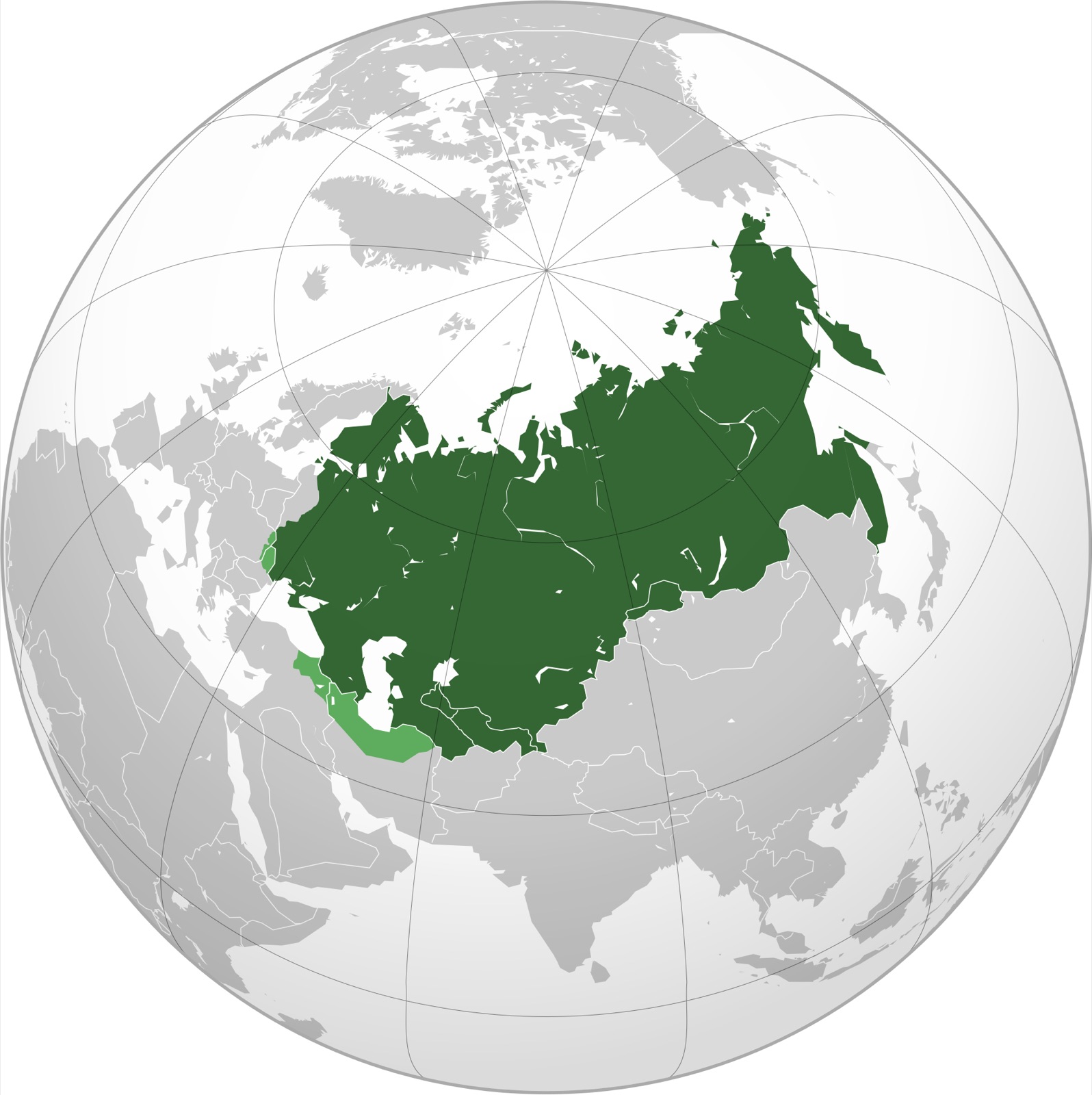
Map of the territory of the Russian Republic in 1917, with areas under temporary wartime occupation marked
The Russian state in 1917, shortly before the October Revolution, with the areas then occupied in the First World War. HistoricusNoctis, CC BY 4.0, via Wikimedia Commons

Why the monarchy was in trouble

Several pressures had been building for decades. Russia was a vast, mostly peasant empire in which serfdom had ended only in 1861 and many farmers still felt short of land (see Serfdom in Russia). Industrial cities such as Petrograd and Moscow had grown fast, with crowded housing, long hours and few legal ways to protest. The tsar still held autocratic power, even after the Russian Revolution of 1905 forced him to accept an elected Duma. The Duma had limited powers, and Nicholas often ignored or dissolved it.

The First World War turned these weaknesses into a crisis. Millions of men were drafted, the army suffered heavy defeats, and railways and farms struggled to feed both the front and the cities. Prices rose faster than wages, and by the winter of 1916–17 bread and fuel were scarce in the capital. Nicholas had taken personal command of the army in 1915 and was away at headquarters in Mogilev, so the failures of the war were increasingly blamed on him and on the court, where the influence of Grigori Rasputin was widely resented. By early 1917 even conservative politicians and generals doubted that the monarchy could win the war.

February Revolution: the tsar falls

On 8 March 1917 (23 February Old Style), International Women's Day, women textile workers in Petrograd left their factories and marched to demand bread. Other workers joined them over the next days, and the strike spread across the city. On 11 March (26 February), troops fired on demonstrators, and many people were killed. The decisive moment came the next day, 12 March (27 February): soldiers of the Volynsky Regiment refused to shoot, and other regiments mutinied. The army garrison, which was meant to keep order, joined the crowd.

Two new centres of authority appeared at once. Members of the Duma formed a Provisional Committee, which soon became the Provisional Government, first headed by Prince Georgy Lvov. At the same time, workers and soldiers elected the Petrograd Soviet, a council of delegates that issued its own orders. Generals told the tsar that he had lost the army's support. On 15 March (2 March) Nicholas II signed an abdication in his train near Pskov. He named his brother Grand Duke Michael as successor, but Michael declined the crown the next day, and the Romanov dynasty ended.

The Russian people welcomed the change, and the new government quickly promised civil liberties, an amnesty for political prisoners and a future Constituent Assembly. Its great weakness was that it chose to stay in the war.

Dual power: two governments, one capital

From March to October, Russia had what historians call "dual power". The Provisional Government held official authority but had few means to enforce it. The Petrograd Soviet, dominated at first by Mensheviks and Socialist Revolutionaries (SRs), controlled the soldiers and the railways and telegraph. Its Order No. 1 (14 March, or 1 March Old Style) told soldiers to obey the Provisional Government only when its orders did not conflict with the Soviet's. Discipline in the army weakened quickly.

The government's problems piled up. Peasants wanted land and began to take it from landowners, while ministers said that land reform should wait for the Constituent Assembly. Workers wanted better pay and control over factories. Non-Russian regions such as Ukraine and Finland pressed for autonomy. Above all, people were tired of a war that continued to take lives and wreck the economy. A summer offensive launched in July (June Old Style) under War Minister Alexander Kerensky ended in failure and further damaged both the army and the government.

Lenin returns and the Bolsheviks grow

The Bolsheviks were a radical Marxist party, small in early 1917. Lenin, their leader, had been in exile in Switzerland. The German government, hoping to weaken Russia, allowed him to travel through Germany in a sealed train, and he reached Petrograd's Finland Station on 16 April (3 April). The next day he presented his April Theses: no support for the Provisional Government, an end to the war, and "all power to the Soviets." Even many of his own colleagues were startled, but his slogans of peace, land and bread matched what many workers, soldiers and peasants wanted.

The first big test came in the July Days, 16–20 July (3–7 July Old Style), when armed workers and soldiers demonstrated in Petrograd and the government's troops fired on crowds. The Bolsheviks were blamed, some leaders were arrested, and Lenin went into hiding in Finland. Prince Lvov resigned and Kerensky became head of the government.
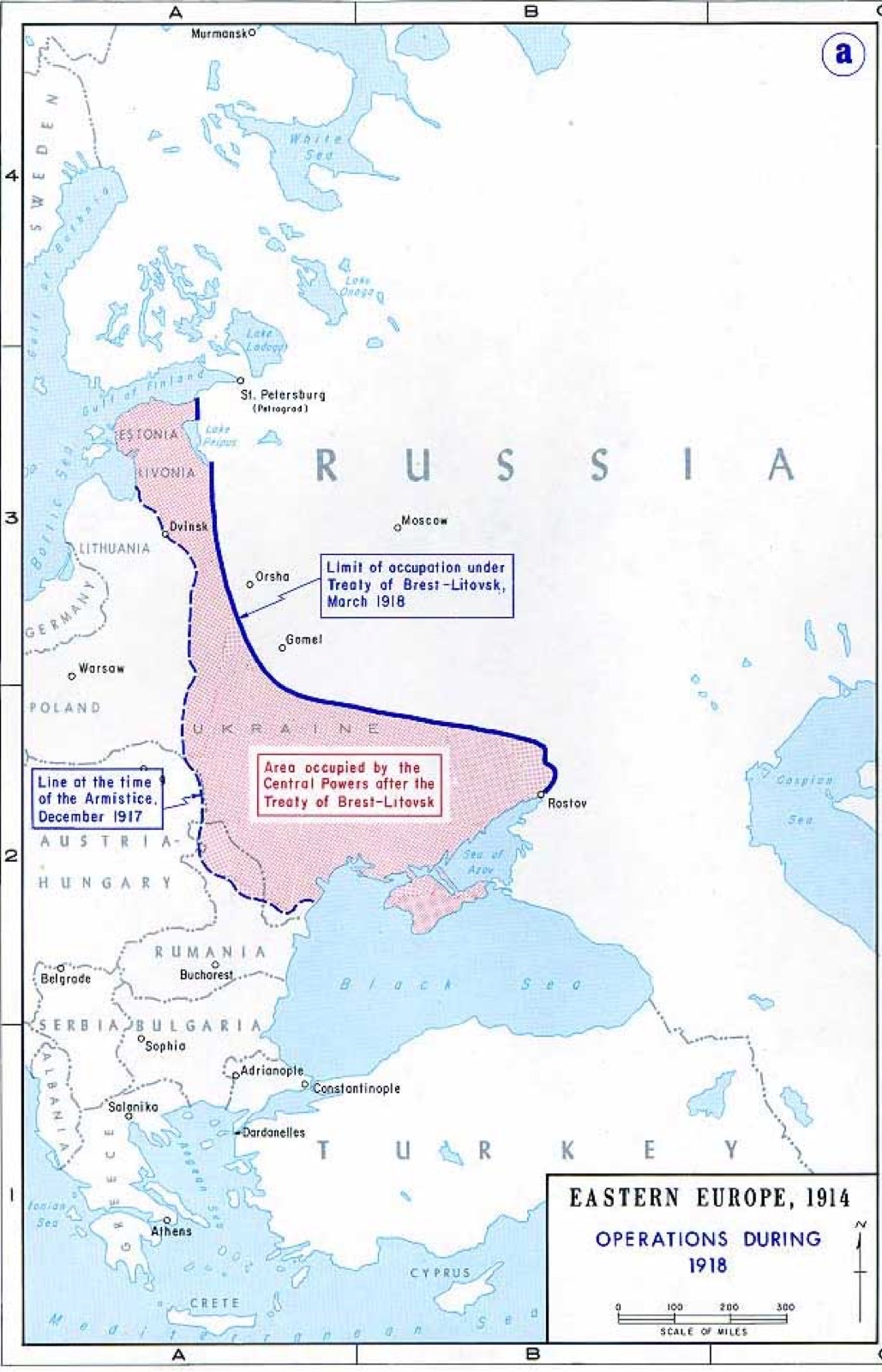
Map of the territory Soviet Russia lost to the Central Powers under the armistice and Treaty of Brest-Litovsk, 1917–1918
The result of the armistice and the Treaty of Brest-Litovsk (March 1918): the western lands Soviet Russia gave up. Department of History, United States Military Academy, public domain, via Wikimedia Commons

The Bolsheviks recovered in September. General Lavr Kornilov, the army commander, ordered troops toward Petrograd in what Kerensky and others saw as an attempt to impose military rule. Kerensky asked for help from the Soviets, and the Bolsheviks, including their Red Guards, took part in defending the city. The attempt collapsed within days, but it discredited both Kornilov and Kerensky, and it made the Bolsheviks look like defenders of the revolution. Soon they won majorities in the Petrograd and Moscow Soviets, and Trotsky became chairman of the Petrograd Soviet in early October.

October Revolution: the seizure of power

Lenin returned secretly to Petrograd and persuaded the Bolshevik Central Committee, on 23 October (10 October), to vote for an armed uprising by ten votes to two. Lev Kamenev and Grigory Zinoviev opposed it, arguing that the party should wait for the Constituent Assembly. The plan was timed for the Second All-Russian Congress of Soviets, due to meet on 7 November (25 October). The Soviet's Military Revolutionary Committee, under Trotsky's guidance, took over the garrison's loyalty.

The uprising itself was swift. On the night of 6–7 November (24–25 October), Red Guards and soldiers took bridges, railway stations, the telephone exchange and other key points with little resistance. Kerensky left the city to look for loyal troops. The cruiser Aurora, whose crew supported the Bolsheviks, is remembered for its part, and its shot is often treated as the signal for the final move. The Provisional Government's ministers were meeting in the Winter Palace. They were arrested in the early hours of 8 November (26 October). The popular picture of a massive, bloody storming of the palace comes largely from later Soviet films; the real event was far less violent, and few people died.

That evening the Congress of Soviets met at the Smolny Institute. Moderate socialists walked out in protest, leaving the Bolsheviks and their allies, the Left SRs, in control. On 8 November the Congress passed the Decree on Peace, which called for a negotiated end to the war, and the Decree on Land, which abolished private landownership. It also set up a new government, the Council of People's Commissars, with Lenin as chairman.
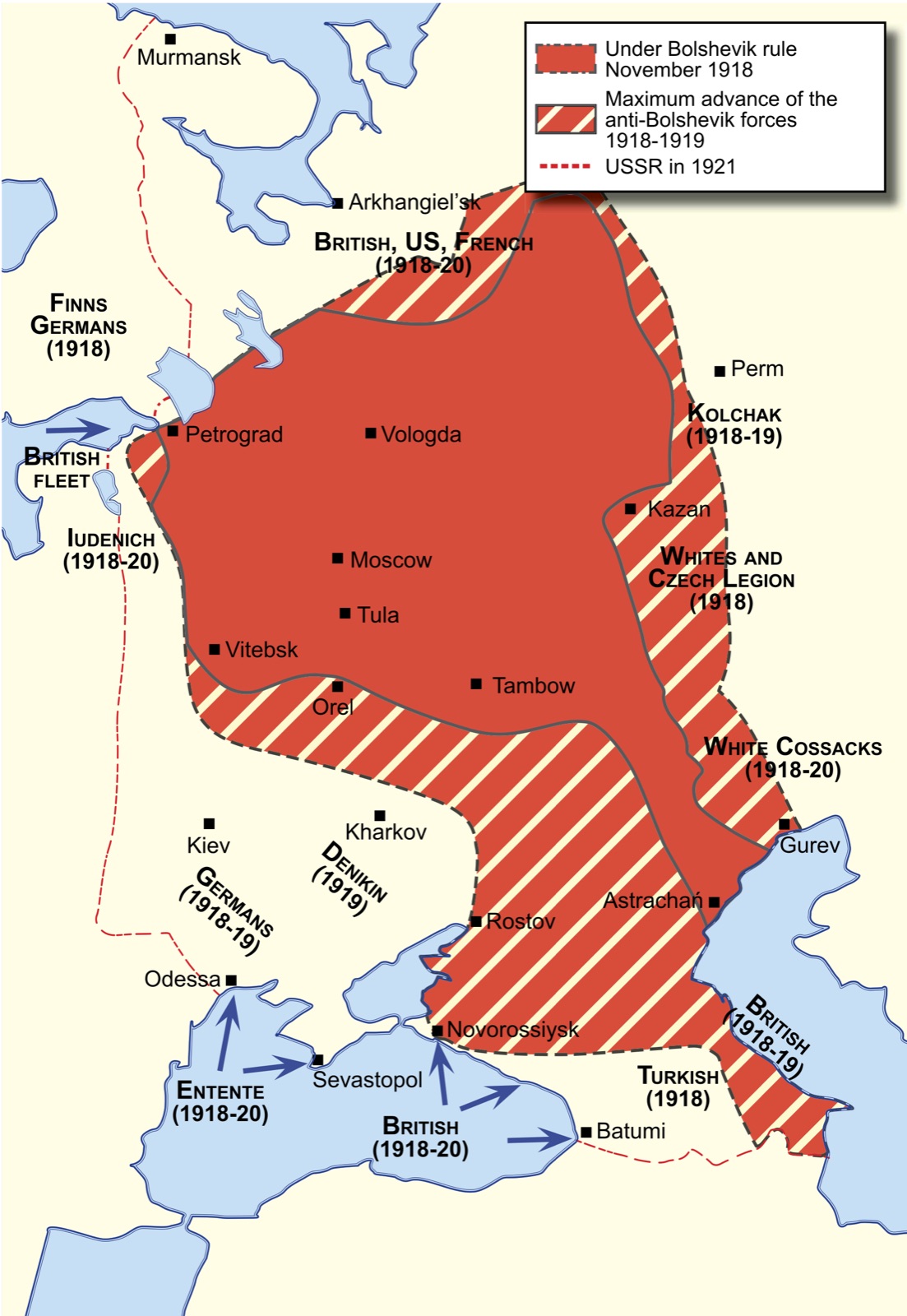
Map of the Russian Civil War in the west, 1918–1920, showing Bolshevik-held territory and the maximum advance of anti-Bolshevik forces
The Russian Civil War in the west, 1918–1920: the struggle that followed the October Revolution. Hoodinski, CC BY-SA 3.0, via Wikimedia Commons

Consequences: peace, civil war and a new state

The Bolsheviks moved fast to consolidate power. They set up the Cheka, a security police, in December 1917 (7 December Old Style). Elections to the Constituent Assembly in November gave the SRs the largest share of the vote, with the Bolsheviks in second place at about a quarter. When the Assembly met on 18 January 1918 (5 January Old Style) it refused to accept Soviet authority, and the Bolsheviks closed it the next day. Their regime was now openly one-party rule in practice.

Lenin had promised peace, and it came at a price. An armistice with Germany was signed in December 1917, and the Treaty of Brest-Litovsk followed on 3 March 1918. Soviet Russia gave up Poland, the Baltic lands and large areas of Ukraine and Belarus. The treaty was cancelled after Germany's defeat in November 1918, but by then Russia was in a civil war.

The Civil War pitted the Red Army, built by Trotsky from early 1918, against the "Whites", a loose set of anti-Bolshevik forces including former tsarist officers, liberals and moderate socialists. Foreign powers intervened, among them Britain, France, the United States and Japan, which sent troops to Siberia from 1918 until 1922. Fighting in the west largely ended in 1920, and in the far east in 1922. Millions died in the fighting, in famine and in disease, and the Bolsheviks used terror and harsh "war communism" requisitioning to win. Nicholas II and his family were shot at Yekaterinburg in July 1918. In 1921 Lenin replaced war communism with the New Economic Policy, which allowed limited private trade, and in December 1922 the Union of Soviet Socialist Republics was formally created.

What exams ask

  • Two revolutions: know the February (March) and October (November) revolutions, and say which was spontaneous and which was planned.
  • Causes: war losses, food shortages, the autocracy's loss of support, and the failure of the 1905 reforms.
  • Dual power: the Provisional Government versus the Petrograd Soviet, and why the Provisional Government's decision to stay in the war was fatal.
  • Key people: Nicholas II, Lvov, Kerensky, Kornilov, Lenin, Trotsky.
  • Key documents: Order No. 1, the April Theses, the Decrees on Peace and Land, and the Treaty of Brest-Litovsk.
  • Outcomes: civil war, war communism, the NEP and the creation of the USSR in 1922.

A common essay prompt asks why the Bolsheviks won. Good answers combine the weakness of the Provisional Government, Lenin's simple slogans, control of the Soviets and Red Guards, and the disunity of the Bolsheviks' enemies.

Read next

  • The Russian Revolution of 1905: the earlier uprising that gave Russia its first Duma and shows how the monarchy survived one crisis.
  • Causes of the Russian Revolution: a deeper look at the social, political and economic pressures behind 1917.
  • Serfdom in Russia: how the peasant question shaped the demand for land.
  • The Russian Empire (1721–1917): the hub for the whole topic.
Armies and units

  • Nicholas II with officials and deputies in the imperial train at the abdication, March 1917 Work

    Romanov monarchy / Provisional Committee

    Nicholas II abdicates in the imperial train, 2 March 1917

    A photograph in the State Historical Museum of the abdication scene in the imperial train, showing Baron Fredericks, General Ruzsky, Shulgin, Guchkov and Nicholas II.

    Vladimir Nikolaevich Pchelin, public domain, via Wikimedia Commons

  • Printed supplement carrying the text of Tsar Nicholas II's abdication manifesto, March 1917 Work

    Romanov monarchy

    Printed manifesto of Nicholas II's abdication

    A printed copy of the abdication manifesto of March 1917, issued as a supplement to a provincial gazette. It ended three centuries of Romanov rule.

    This work was published on territory of the Russian Empire ( Russian Republic ) except for territories of the Grand Duchy of Finland and Congress Poland before, public domain, via Wikimedia Commons

  • Printed proclamation issued by the Petrograd Soviet of Workers' and Soldiers' Deputies, 1917 Work

    Petrograd Soviet

    First proclamation of the Petrograd Soviet

    A printed proclamation of the Petrograd Soviet of Workers' and Soldiers' Deputies from 1917. It shows the second centre of power that formed beside the Provisional Government.

    Petrograd Soviet of Workers' and Soldiers' Deputies, public domain, via Wikimedia Commons

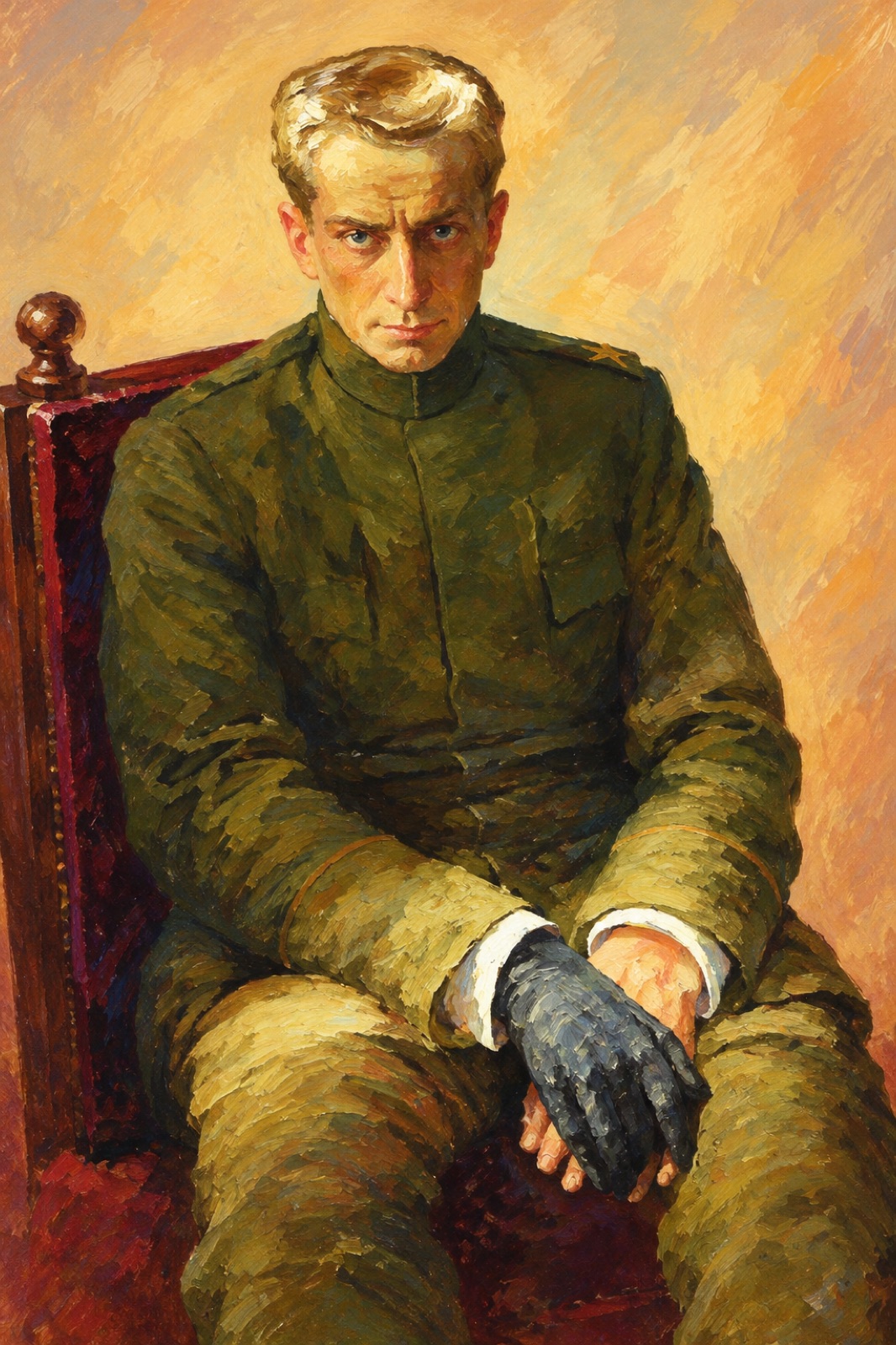
  • Portrait of Alexander Kerensky painted by Ilya Repin in 1917 (illustration) Commander Illustration

    Provisional Government

    Alexander Kerensky

    Kerensky, shown in Ilya Repin's 1917 portrait, headed the Provisional Government from July until the Bolsheviks took power in November (October Old Style).

    Illustration after Ilya Repin, public domain · Original

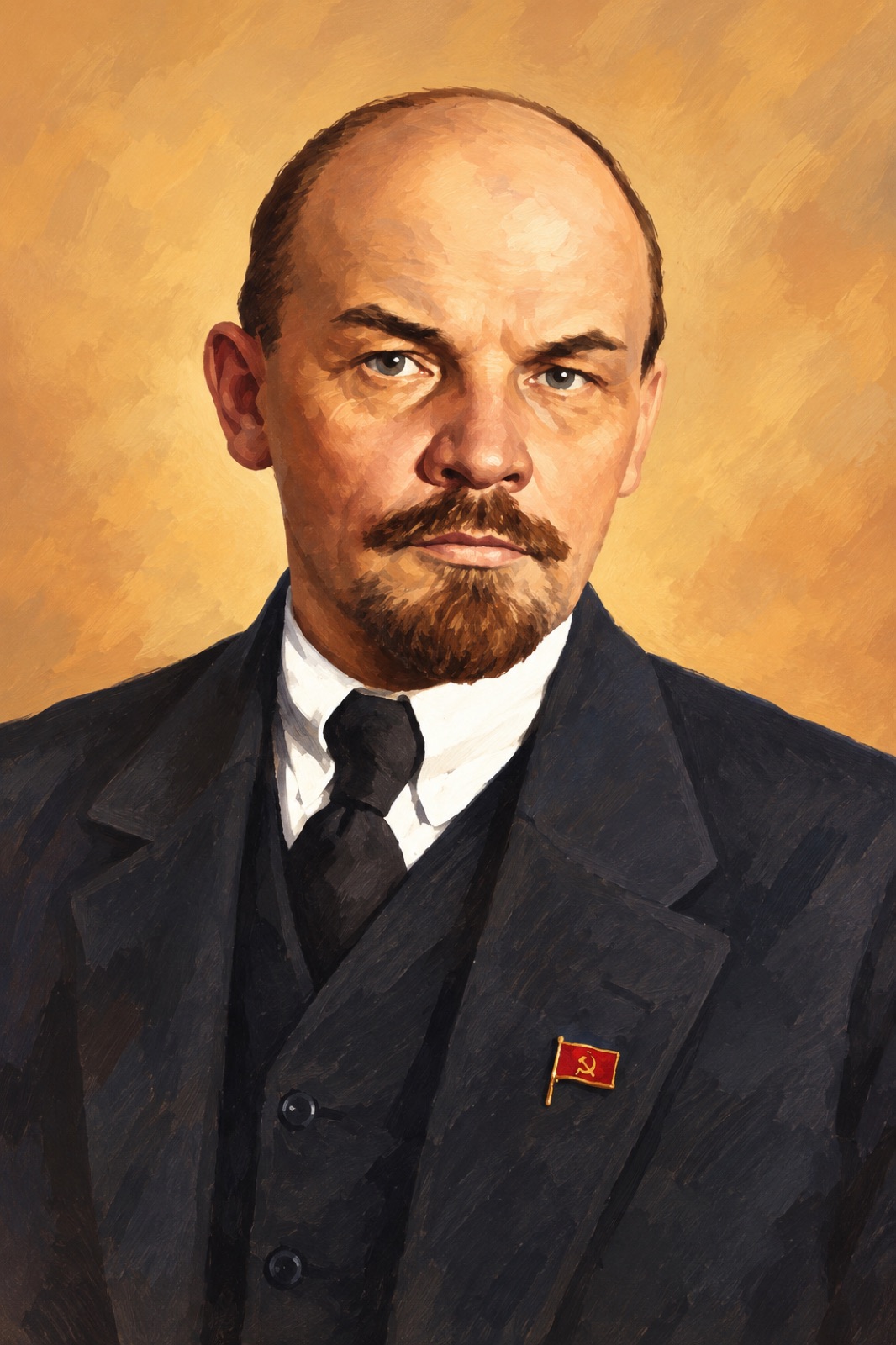
  • Standing portrait of Vladimir Lenin in 1920 (illustration) Person Illustration

    Bolsheviks

    Vladimir Lenin

    Leader of the Bolsheviks and head of the Soviet government from November 1917. This portrait dates from 1920, not 1917.

    Illustration after Unknown, presumably official, public domain · Original

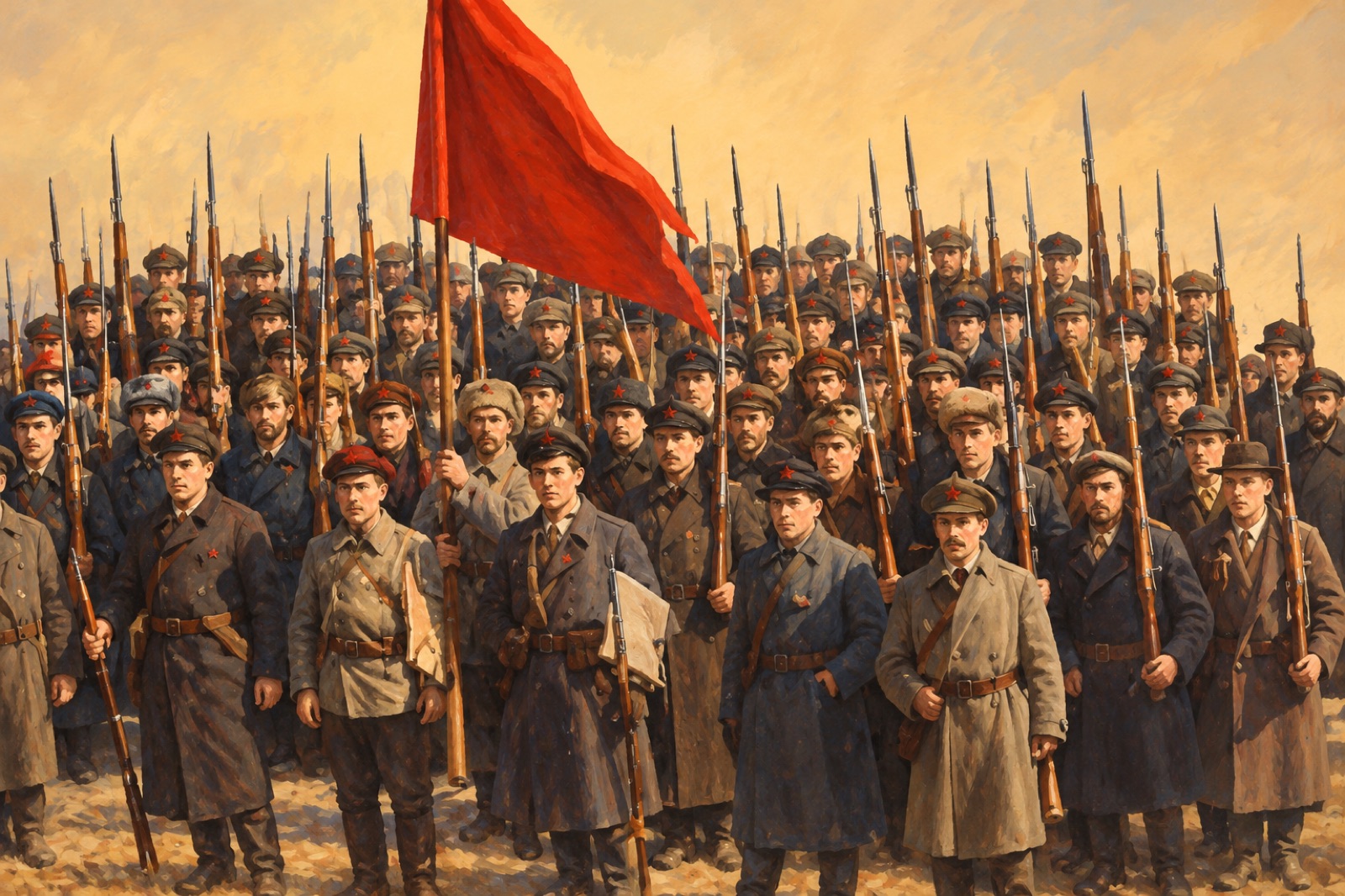
  • Armed workers of a Red Guard unit posing in Petrograd in autumn 1917 (illustration) Infantry Illustration

    Bolsheviks

    Red Guards of Petrograd

    Members of an early Red Guard unit in Petrograd, autumn 1917. These armed workers' militias backed the Bolshevik seizure of power.

    Illustration after Unknown author, public domain · Original

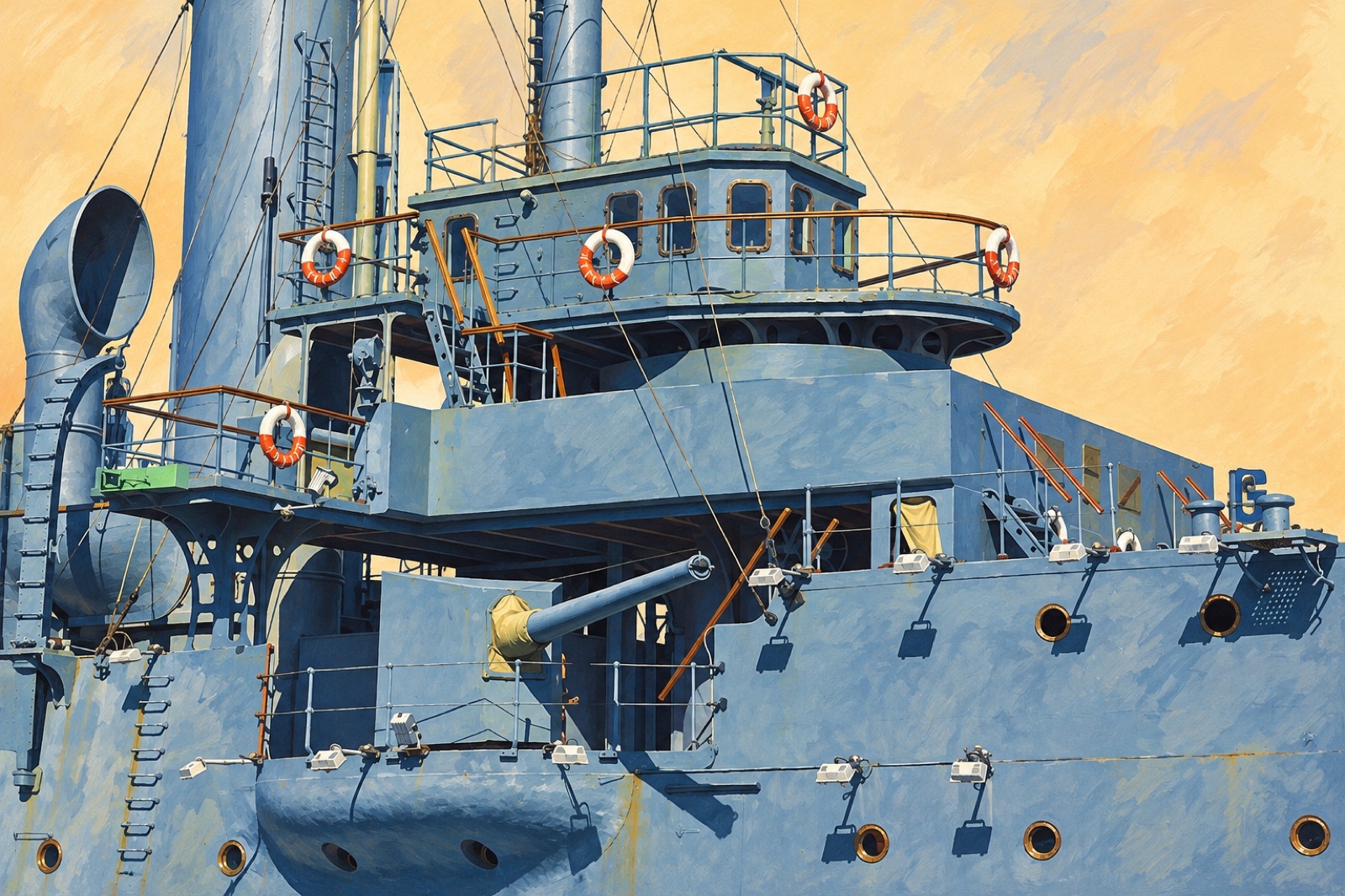
  • The museum cruiser Aurora moored in Saint Petersburg in 2013 (illustration) Ship Illustration

    Bolsheviks / Baltic Fleet

    Cruiser Aurora

    The cruiser Aurora, remembered for the part its Bolshevik-minded sailors played in the November 1917 seizure of power. It is now a museum ship; the picture dates from 2013.

    Illustration after Perituss, CC0 · Original

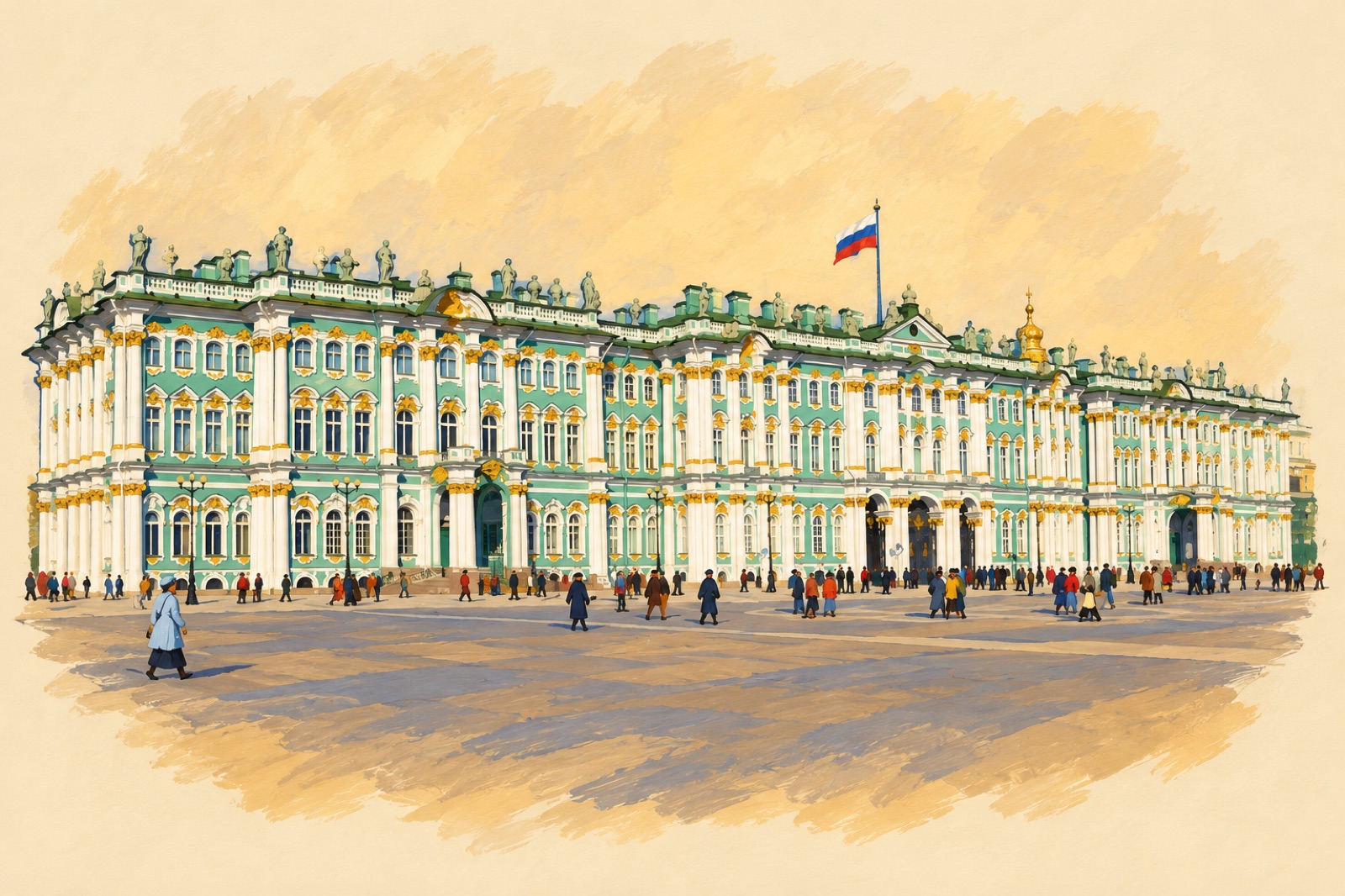
  • The Winter Palace in Saint Petersburg seen from Palace Square (illustration) Building Illustration

    Provisional Government (seat)

    Winter Palace, Petrograd

    The former imperial residence on Palace Square. The Provisional Government's ministers were arrested there in the early hours of 8 November 1917 (26 October Old Style).

    Illustration after Jorge Láscar from Melbourne, Australia, CC BY 2.0 · Original

Frequently Asked Questions

When was the Russian Revolution?

The Russian Revolution took place in 1917 in two stages: the February Revolution on 8–15 March by Western dates (23 February–2 March Old Style) and the October Revolution on 7–8 November (25–26 October Old Style). The civil war that followed lasted until about 1920–22.

Why was the October Revolution in November?

Russia used the Julian calendar, which in 1917 was 13 days behind the Gregorian calendar used in Western Europe. The Bolsheviks' seizure of power was on 25 October by the Russian calendar, which is 7 November in the Western one. Russia changed calendars in 1918.

What was the difference between the February and October revolutions?

The February Revolution was a largely spontaneous uprising of workers and soldiers that ended the monarchy and created the Provisional Government. The October Revolution was an organised Bolshevik takeover that overthrew that government and set up Soviet rule.

Why did the Bolsheviks win power?

The Provisional Government stayed in the war, failed to deal with land and food, and lost support. The Bolsheviks offered simple slogans of peace, land and bread, won majorities in the major city Soviets and had armed Red Guards ready.

Who was Alexander Kerensky?

Kerensky was a lawyer and socialist politician who served as a minister in the Provisional Government and became its head in July 1917. He left Petrograd as the Bolsheviks took power and later lived in exile.

What happened to Nicholas II?

After he abdicated in March 1917, Nicholas II was held under guard with his family. The Bolsheviks had them shot at Yekaterinburg in July 1918, during the civil war.

Check Your Understanding

Pick an answer for each question to see if you were right.

  1. Which event began the February Revolution of 1917?

  2. What was 'dual power' in 1917?

  3. What did Lenin's April Theses call for?

  4. Which documents did the Congress of Soviets pass on 8 November 1917?

  5. Which treaty took Soviet Russia out of the First World War in March 1918?

More in The Russian Empire

See the full topic guide →
Share:

About the Writer

Alex Ng
Alex Ng

Software Engineer & Writer

Software engineer with a passion for distilling complex ideas into actionable insights. Writes about finance, investment, entrepreneurship, and technology.

Read more →

Keep reading

Explore the topic: The Russian Empire

Articles

Summaries