0% • 10 min left

The Crimean War (1853–1856)

October 30, 2026
The Crimean War (1853–1856) was fought mainly between Russia and the Ottoman Empire, with Britain, France and Sardinia joining the Ottoman side. It grew out of Russia's move into the Danubian Principalities and a dispute over Christian holy places. Most of the fighting took place in Crimea, and the Treaty of Paris ended the war on 30 March 1856.
The Crimean War (1853–1856)

Key facts

When
October 1853 to 30 March 1856 (Russian occupation of the Danubian Principalities began in July 1853)
Where
The Black Sea, the Crimean peninsula and the Danube region
Who
Russia against the Ottoman Empire; Britain, France and Sardinia joined the Ottoman side
Key battles
Sinop (1853); Alma, Balaclava and Inkerman (1854); siege of Sevastopol (1854–1855); Chernaya (1855)
Outcome
Treaty of Paris, 30 March 1856: the Black Sea was neutralised and Russian warships were barred
Deaths (estimates)
Allied dead about 165,000; Russian estimates about 450,000 to 630,000, sources differ
Nursing
Florence Nightingale and 38 women volunteer nurses at Scutari from November 1854

Timeline

Tap a step for details. Arrow keys move between steps.

  1. 1853, July

    Russian troops occupy the Danubian Principalities

    Russian forces moved into Moldavia and Wallachia, provinces under nominal Ottoman rule. For the Ottomans these were territory they would not give up, so the move raised the stakes sharply. It is usually seen as the first decisive step toward war.

  2. 1853, October

    The Ottoman Empire declares war on Russia

    The Ottomans refused to accept the Russian occupation and declared war. Sources give 4 October 1853 as the declaration date, while some accounts treat 16 October 1853 as the start of the war.

  3. 1853, 30 November

    Battle of Sinop

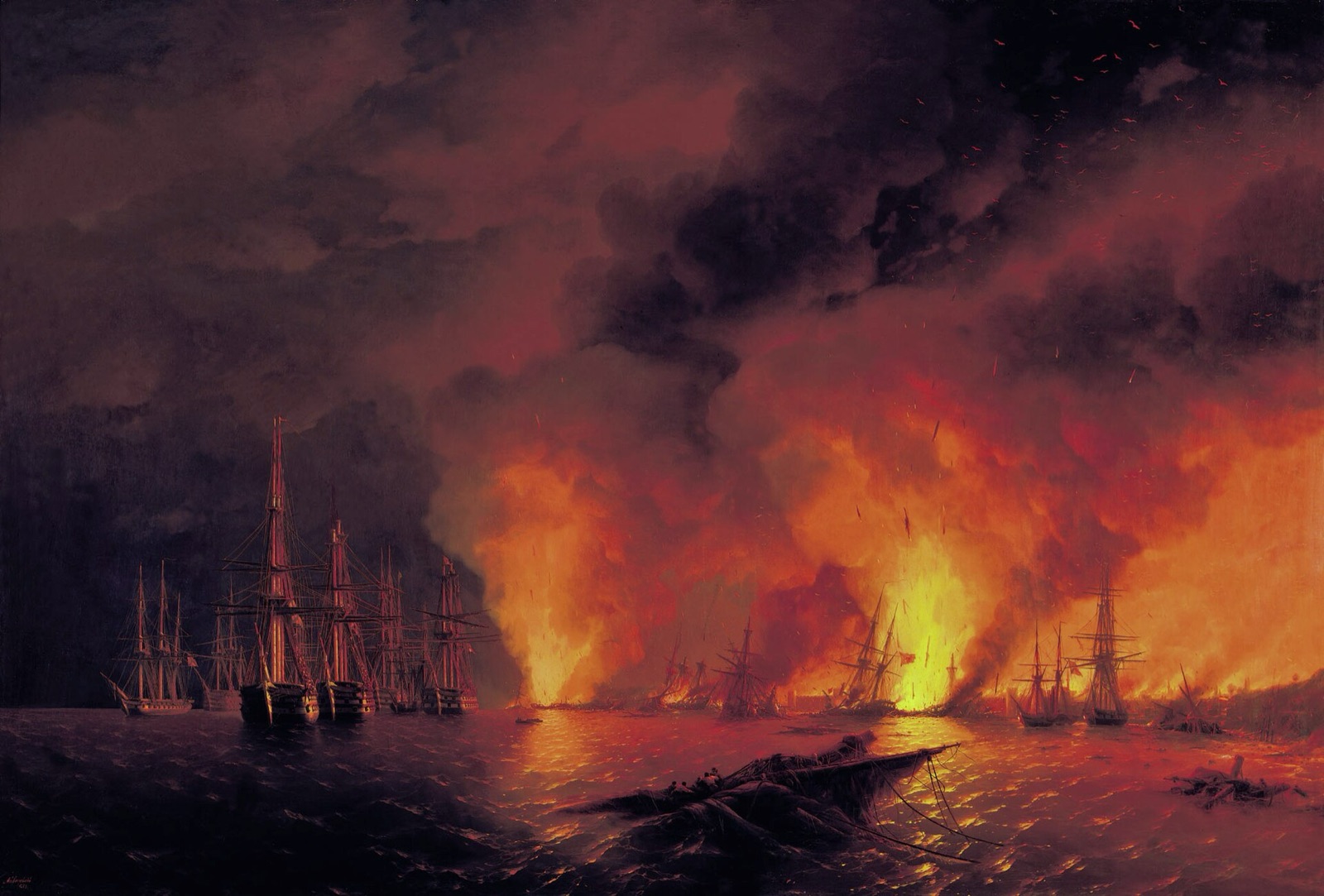
    Aivazovsky's painting of the Russian and Ottoman fleets at the Battle of Sinop.
    Ivan Aivazovsky, public domain, via Wikimedia Commons

    A Russian fleet under Admiral Pavel Nakhimov destroyed the Ottoman squadron anchored in Sinop harbour. Ottoman deaths are estimated at about 2,700 to 5,000, and Russia lost 37 killed and 229 wounded.

  4. 1854, March

    France and Britain declare war on Russia

    France declared war on 27 March 1854 and Britain on 28 March. Both wanted to stop Russia gaining power at Ottoman expense. Their declarations turned a regional war into a European one.

  5. 1854, 14 September

    The allied army lands at Kalamita Bay

    British, French and Ottoman forces began landing on Crimea's western coast from 14 September 1854. Their goal was Sevastopol, the base of the Russian Black Sea Fleet.

  6. 1854, 20 September

    Battle of the Alma

    The allies defeated the Russian army on the River Alma. Allied losses were about 4,100 killed and wounded, and Russian losses about 5,000 to 5,700. The victory did not lead to a quick capture of Sevastopol.

  7. 1854, 17 October

    The siege of Sevastopol begins

    Allied guns opened fire on Sevastopol on 17 October 1854, or 5 October in the Russian calendar. The siege lasted until September 1855, about eleven months.

  8. 1854, 25 October

    Battle of Balaclava and the Charge of the Light Brigade

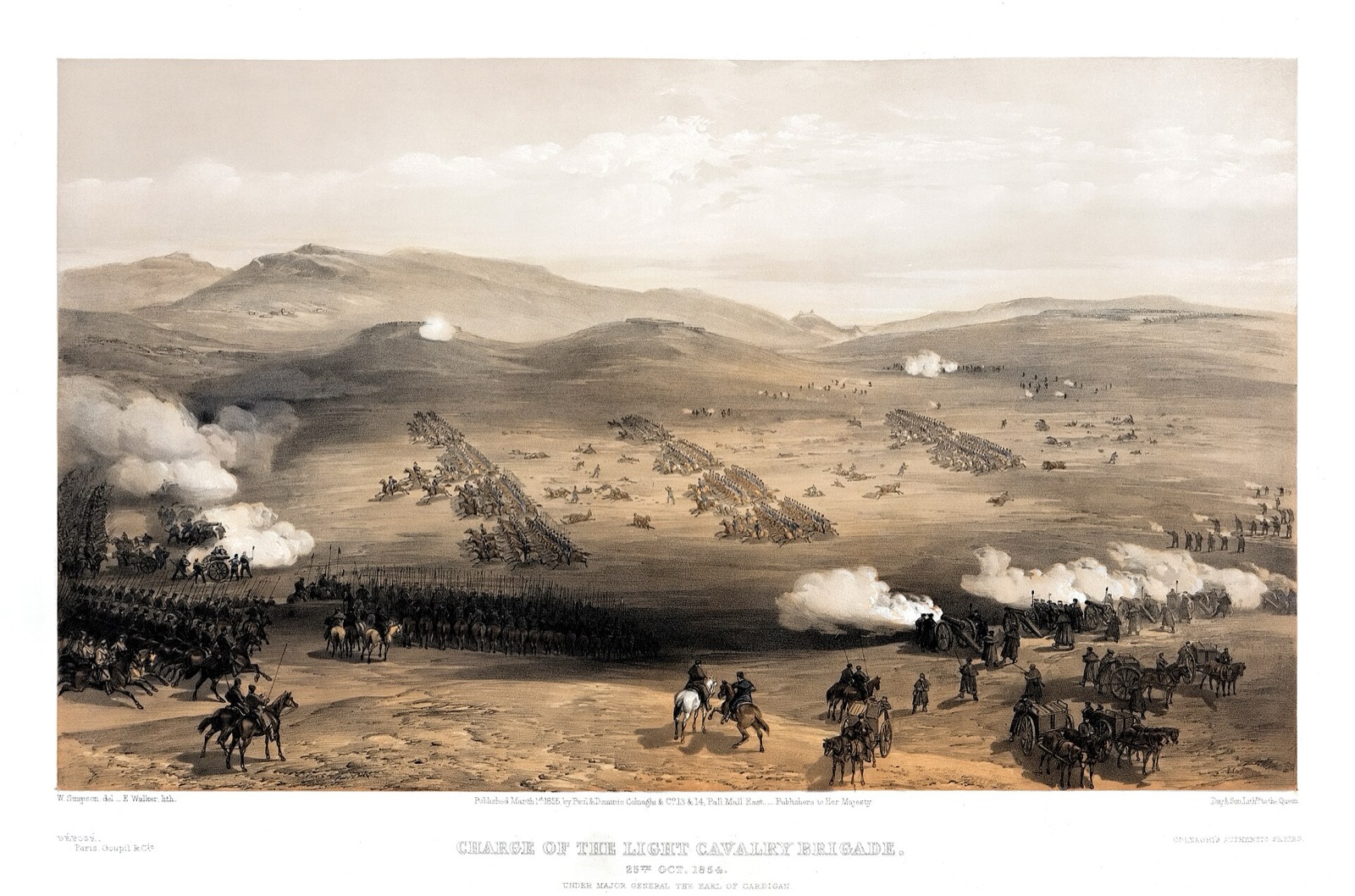
    William Simpson's 1855 lithograph of the Charge of the Light Brigade at Balaclava.
    William Simpson (painter, 1823-1899) E. Walker (lithographer, unknown) Published by Goupil & Cie , Paris, and Day & Son, London, public domain, via Wikimedia Commons

    Russian forces attacked British positions near Balaclava. About 670 light cavalrymen charged Russian guns in the North Valley, with about 110 to 120 killed and 130 to 160 wounded.

  9. 1854, 5 November

    Battle of Inkerman

    The Russians attacked the allied positions near Inkerman and were beaten back. About 16,000 allied troops faced an estimated 35,000 to 40,500 Russians. Allied losses were about 4,400 killed and wounded.

  10. 1854, early November

    Florence Nightingale arrives at Scutari

    Nightingale and 38 women volunteer nurses reached the Selimiye Barracks hospital at Scutari. The hospital was overcrowded and short of supplies. Her team worked on cleaning, care and record keeping.

  11. 1855, May

    Sardinian troops land at Balaclava

    The Sardinian force that had embarked at Genoa in April landed at Balaclava between 9 and 14 May. It served under General Alfonso La Marmora. The Sardinians joined the allied campaign in the Crimea.

    Also in 1855:More from 1855

  12. 1855, 16 August

    Battle of the Chernaya

    Russian forces attacked the allied line across the Chernaya river and were repulsed. About 36,000 French and Sardinian troops held the line, and the Sardinians lost about 200 men.

  13. 1855, 8 September

    French troops seize the Malakoff

    French forces took the Malakoff, the strongpoint that dominated Sevastopol's defences, on 8 September 1855 (27 August in the Russian calendar). The Russians abandoned the southern side of the city the next day.

  14. 1856, 30 March

    The Treaty of Paris is signed

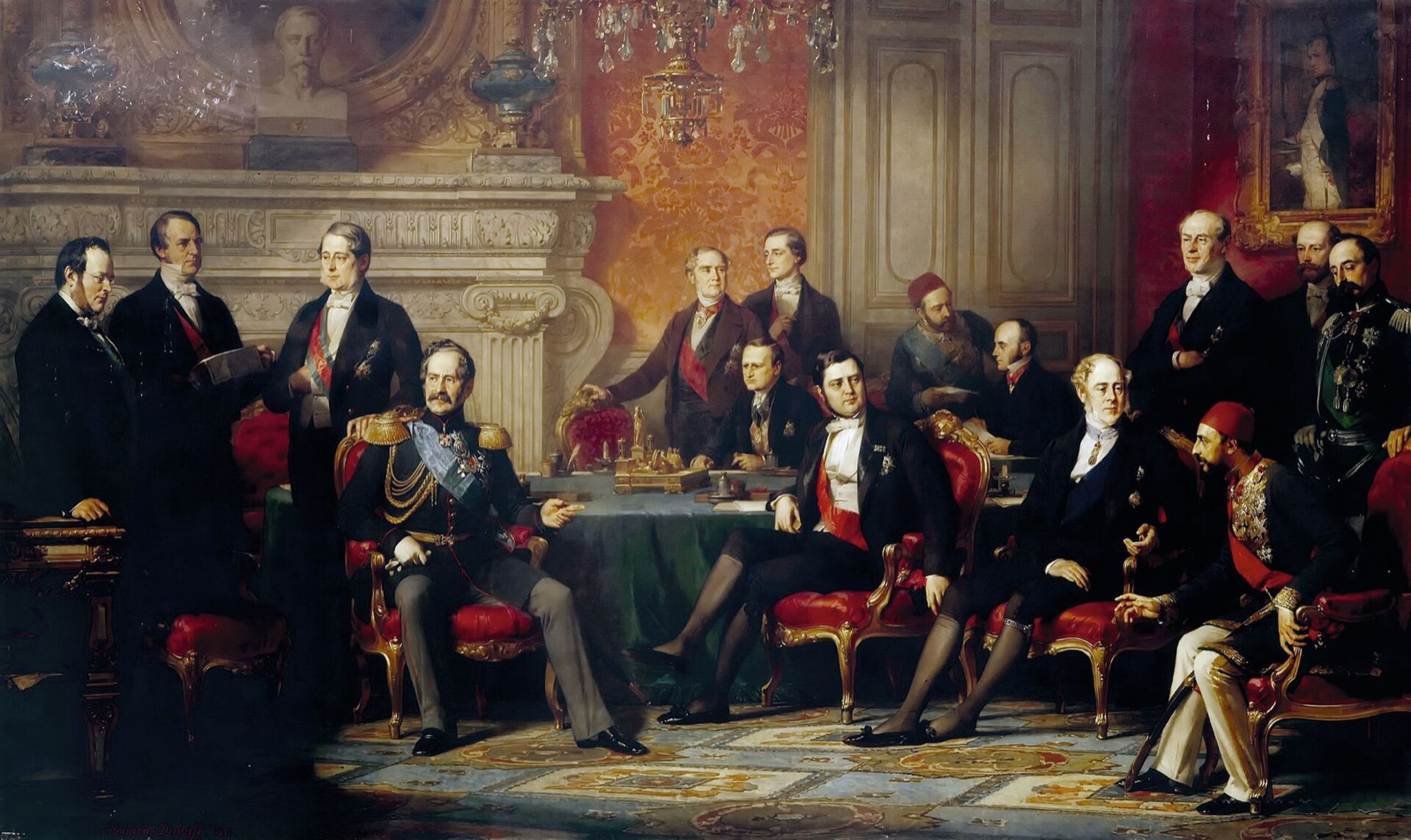
    Edouard Dubufe's painting of the Congress of Paris, 1856.
    Edouard Louis Dubufe, public domain, via Wikimedia Commons

    Seven powers signed the treaty in Paris, bringing the war to an end. It neutralised the Black Sea and set up a European commission for the Danube. The Congress of Paris met from late February 1856.

    Also in 1856:More from 1856

Maps

Tap a map to zoom

  • Map of the Black Sea theatre of the Crimean War, with the Crimea, the Danube principalities, the Caucasus and the Ottoman coast.

    The Black Sea theatre of the Crimean War, 1853–1856. Labels are in French.

    Les3corbiers, CC BY-SA 4.0, via Wikimedia Commons

  • Military plan of the Battle of the Alma, 20 September 1854, showing the River Alma and the allied and Russian positions.

    Plan of the Battle of the Alma, 20 September 1854, the first battle of the allied landing in the Crimea.

    Great Britain. War Office. Topographical Department, public domain, via Wikimedia Commons

  • Map of the Battle of Balaclava on 25 October 1854 showing the valley of the Charge of the Light Brigade.

    The Battle of Balaclava, 25 October 1854, and the route of the Charge of the Light Brigade.

    Rebel Redcoat ( talk ), public domain, via Wikimedia Commons

  • Historical map of the ground between Balaklava and Sevastopol during the siege of 1854–1855.

    The ground between Balaklava and Sevastopol during the siege, 1854–1855 (Weller, 1895).

    Cartographer: F. S. Weller; editor: Samuel Rawson Gardiner, public domain, via Wikimedia Commons

What is the Crimean War? It was a conflict fought mainly between Russia and the Ottoman Empire from 1853 to 1856. Britain and France joined the Ottoman side in March 1854, and the Kingdom of Sardinia sent troops in 1855. Most of the major fighting took place on the Crimean peninsula and along the Black Sea coast, and the war ended with the Treaty of Paris, signed on 30 March 1856.
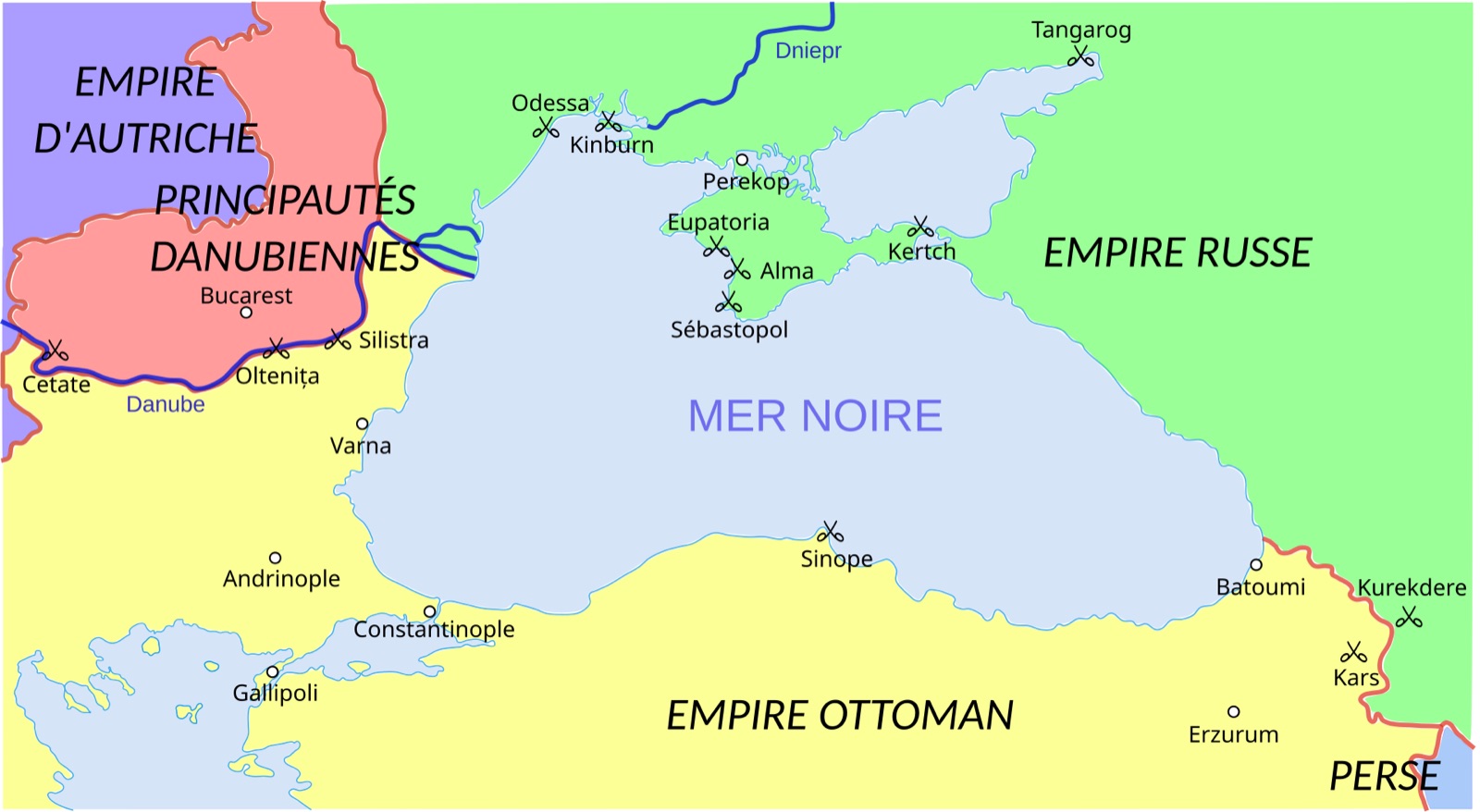
Map of the Black Sea theatre of the Crimean War, with the Crimea, the Danube principalities, the Caucasus and the Ottoman coast.
The Black Sea theatre of the Crimean War, 1853–1856. Labels are in French. Les3corbiers, CC BY-SA 4.0, via Wikimedia Commons

In five minutes: what the Crimean War was

The war grew out of the slow decline of the Ottoman Empire and the rival ambitions of its neighbours. Russia wanted more influence in the Balkans and the Black Sea, and it claimed a right to protect Orthodox Christians living under Ottoman rule. Britain and France did not want Russia to gain at Ottoman expense, because they feared the balance of power in Europe would tip. What followed was a naval battle at Sinop, a landing in Crimea, three major battles in 1854, a long siege of the Russian naval base at Sevastopol, and a peace conference in Paris.

If you remember only one thing, remember this: the war was fought over the future of Ottoman lands and the Black Sea, and it killed far more people through disease than through combat. The treaty that ended it barred Russia from basing warships in the Black Sea, a limit that stayed in force for fifteen years.

Who fought whom

  • Russia fought the Ottoman Empire from October 1853, when the Ottomans declared war. Some sources date the start to 16 October 1853.
  • France declared war on Russia on 27 March 1854, and Britain followed on 28 March. Their troops fought alongside the Ottomans in Crimea.
  • Sardinia (the Kingdom of Sardinia) sent troops in 1855 and fought in the Crimea under General Alfonso La Marmora.
  • Austria and Prussia did not fight, but they took part in the peace talks in Paris and shaped the outcome.

Causes: why the war started

Historians usually begin with the Eastern Question, the long-running problem of what would happen as the Ottoman Empire weakened. Russia wanted a stronger position on the Black Sea and in the Balkans. Britain and France wanted the Ottoman Empire to survive, partly so that no single power could dominate the region. These aims clashed, and the cooperation among the great powers that had kept the peace since 1815, known as the Concert of Europe, was under strain well before the first shots.

The immediate trigger was the Holy Places dispute. In Ottoman-ruled Jerusalem and Bethlehem, Orthodox and Catholic monks argued over rights at Christian sites. Russia used the dispute to press its claim to protect Orthodox Christians in Ottoman lands, while France backed the Catholic side. Most historians now treat the dispute as a pretext rather than the root cause, which was rivalry over Ottoman territory.

The decisive step came in July 1853, when Russian troops occupied Moldavia and Wallachia, the Danubian Principalities. They were under nominal Ottoman rule, and the Ottoman government refused to accept the occupation. The Ottoman Empire declared war on Russia in October 1853. The episode fits the longer story of Russia's push south, described in Russia's Southward Policy, and the wider context of The Russian Empire (1721–1917).

What happened

Sinop: the naval battle that changed the politics (November 1853)

On 30 November 1853 (18 November in the Julian calendar used in Russia), a Russian fleet under Admiral Pavel Nakhimov attacked the Ottoman squadron anchored in Sinop harbour on the Black Sea coast of Anatolia. The Ottoman fleet was almost destroyed, and Vice-Admiral Osman Pasha was taken prisoner. Russia lost 37 killed and 229 wounded. Ottoman deaths are estimated at about 2,700 to 5,000, and sources disagree on the figure. Many contemporaries saw Sinop as proof of Russian ambition, and it helped push Britain and France toward war.

The landing in Crimea and the Battle of the Alma (September 1854)

The allied army landed at Kalamita Bay, on Crimea's western coast, from 14 September 1854. Its aim was Sevastopol, the home port of the Russian Black Sea Fleet. On 20 September the allies met the Russian army on the River Alma. The Russian commander, Prince Alexander Menshikov, had about 35,000 to 37,500 men. The allies, a mix of British, French and Ottoman troops, numbered roughly 56,500 to 60,000.

The allies won. Their losses were about 4,100 killed and wounded, roughly 2,000 British, 1,600 French and 500 Ottoman. Russian losses were about 5,000 to 5,700. The victory cleared the road to Sevastopol, but it did not lead to a quick capture of the city, and the siege that followed became the war's longest and most costly struggle.
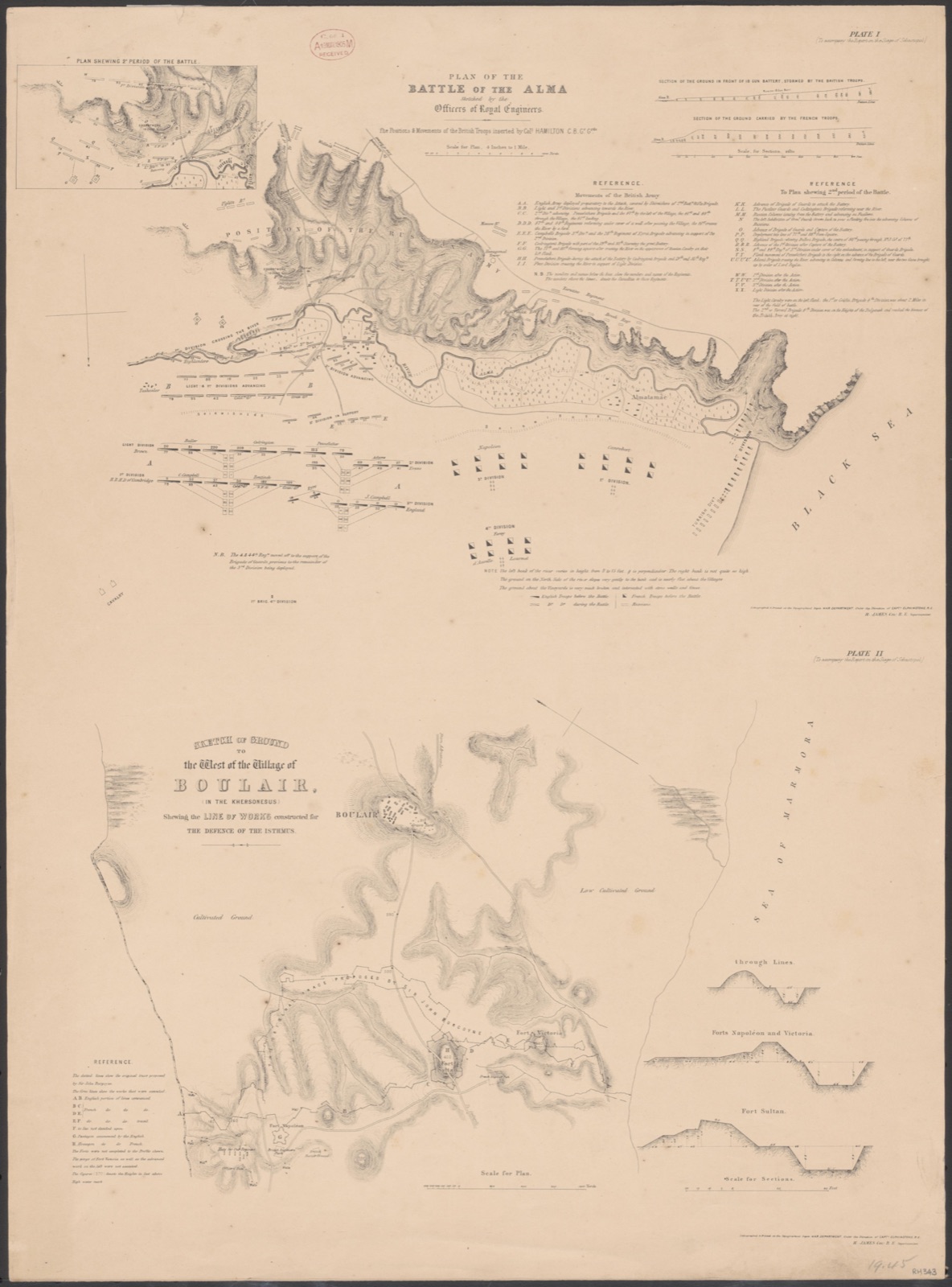
Military plan of the Battle of the Alma, 20 September 1854, showing the River Alma and the allied and Russian positions.
Plan of the Battle of the Alma, 20 September 1854, the first battle of the allied landing in the Crimea. Great Britain. War Office. Topographical Department, public domain, via Wikimedia Commons

Balaclava and the Charge of the Light Brigade (25 October 1854)

On 25 October the Russians attacked British positions around Balaclava, the port that supplied the British army. In the North Valley, British light cavalry rode straight at Russian guns at the far end of the valley, while Russian batteries on the flanks fired across their line of advance. About 670 men of the Light Brigade took part under the Earl of Cardigan. Estimates put the dead at about 110 to 120 and the wounded at about 130 to 160, and many horses were lost too.

The order that sent the brigade forward has been debated ever since. The charge became one of the most famous episodes of the war, partly because of Alfred Tennyson's poem about it.
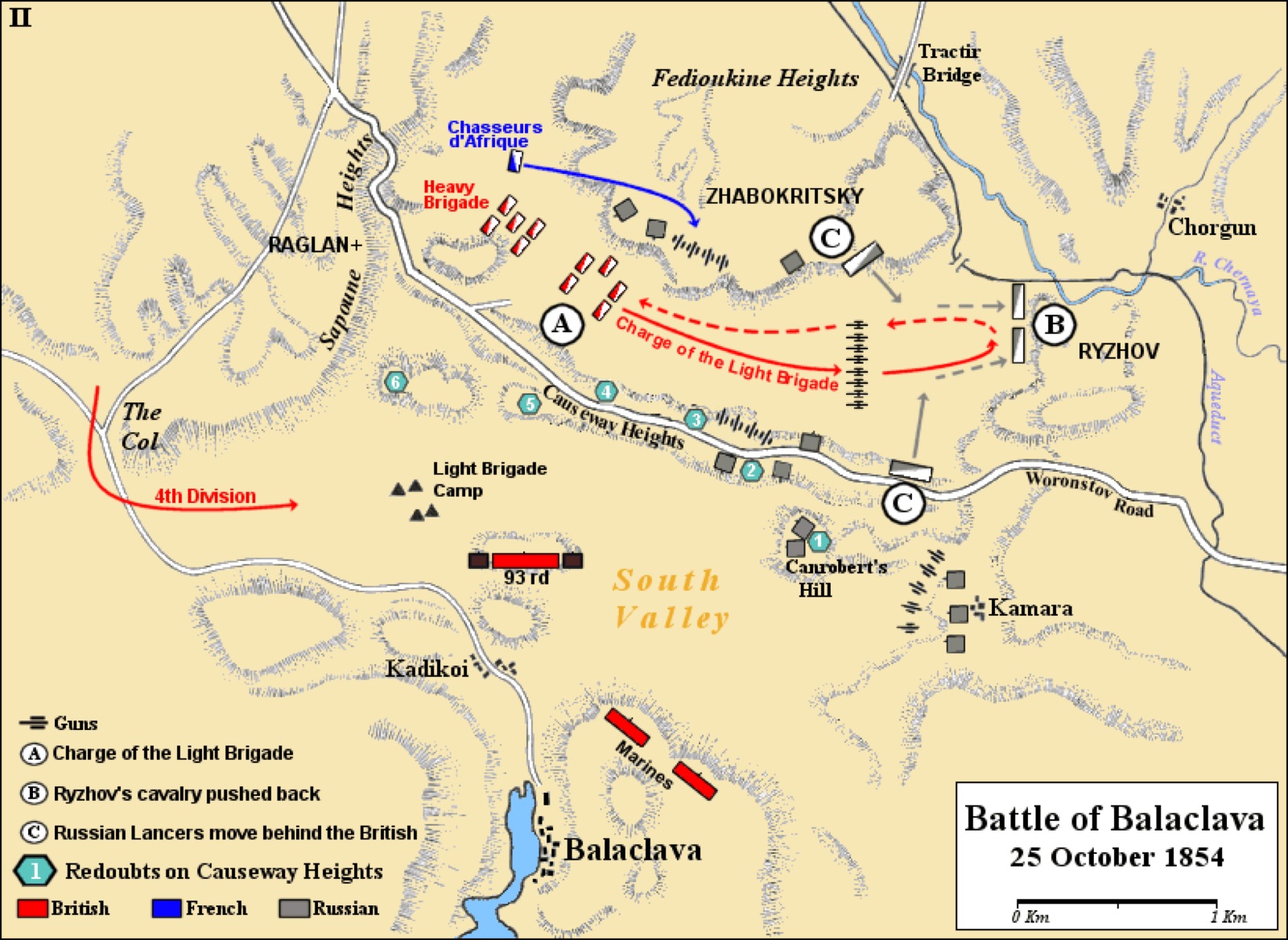
Map of the Battle of Balaclava on 25 October 1854 showing the valley of the Charge of the Light Brigade.
The Battle of Balaclava, 25 October 1854, and the route of the Charge of the Light Brigade. Rebel Redcoat ( talk ), public domain, via Wikimedia Commons

Inkerman (5 November 1854)

On 5 November the Russians attacked allied positions on the broken ground near Inkerman and were beaten back. The allies had about 16,000 men, roughly 8,500 British and 7,500 French, against an estimated 35,000 to 40,500 Russians. Allied losses were about 4,400 killed and wounded. Russian losses were about 12,000 killed and wounded, although accounts differ on the exact figure.

The siege of Sevastopol (October 1854 to September 1855)

The allies began bombarding Sevastopol on 17 October 1854 (5 October in the Russian calendar), and the siege lasted about eleven months. The Russian defence was led by Admiral Nakhimov and Vice-Admiral Vladimir Kornilov, who was killed during the first bombardment in October 1854. The engineer Eduard Totleben strengthened the defences. Nakhimov was himself mortally wounded by an allied sniper in 1855.

The siege was costly, and disease killed more men than shot and shell. According to the siege's figures, the French lost about 10,000 killed in action and about 70,000 who died of wounds or disease. The British lost about 2,800 killed in action and about 18,000 who died of wounds or disease. Russian losses are harder to pin down, and the sources checked do not give a firm total.

On 8 September 1855 French troops seized the Malakoff, the strongpoint that dominated the city's defences. The Russians abandoned the southern side of Sevastopol the next day. The fall of the south side did not end the war at once, but it strengthened the case for peace talks.
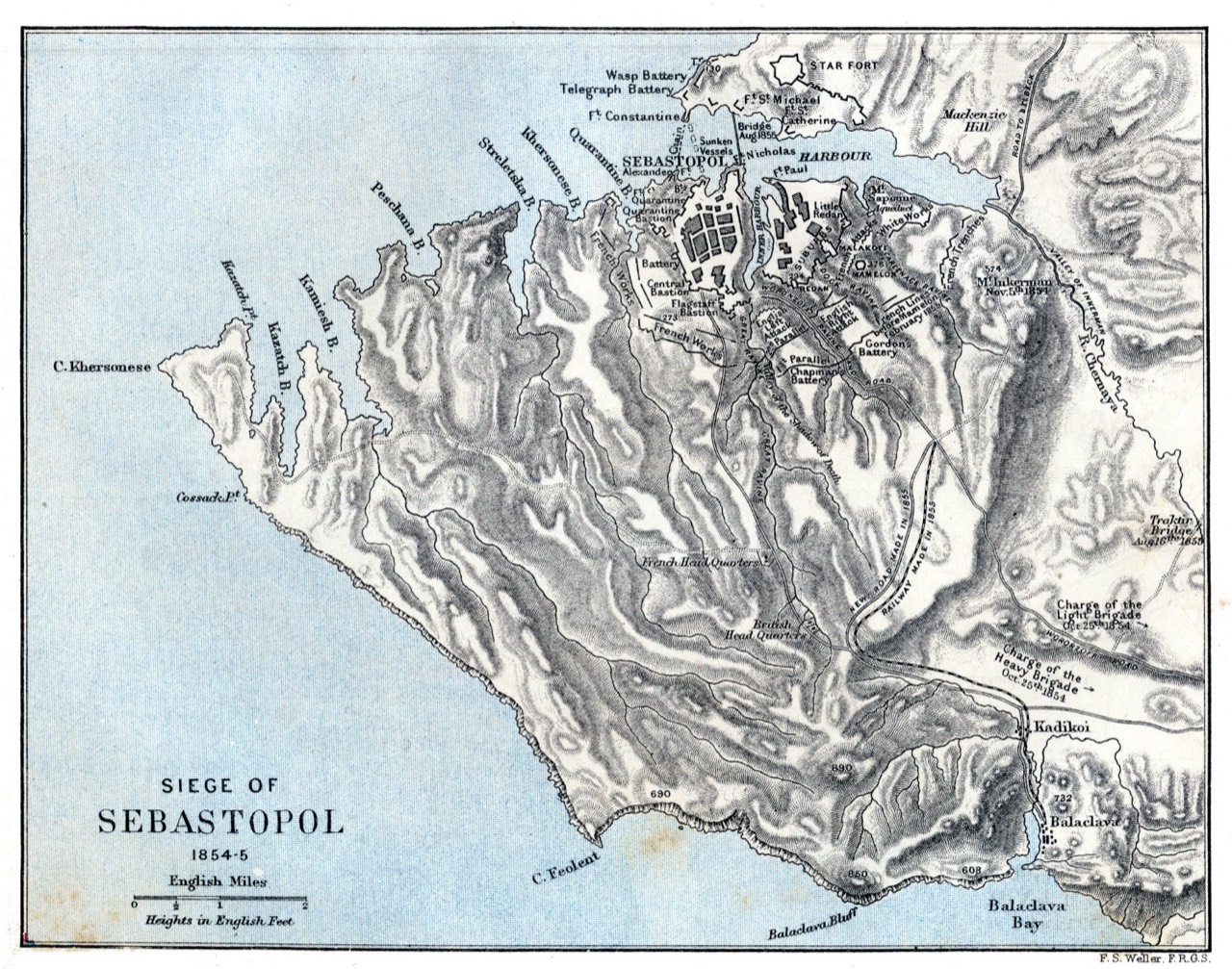
Historical map of the ground between Balaklava and Sevastopol during the siege of 1854–1855.
The ground between Balaklava and Sevastopol during the siege, 1854–1855 (Weller, 1895). Cartographer: F. S. Weller; editor: Samuel Rawson Gardiner, public domain, via Wikimedia Commons

Florence Nightingale at Scutari (from November 1854)

In early November 1854 Florence Nightingale arrived at Scutari, now Üsküdar on the Asian side of Istanbul. She brought 38 women volunteer nurses to the Selimiye Barracks hospital, which was overcrowded and short of supplies. She worked to improve cleaning, supplies and care, and she collected statistics on deaths.

A figure often quoted is that the death rate fell from 42 per cent to 2 per cent under her care. That claim comes from a later account by Stephen Paget in the Dictionary of National Biography, and the period and method behind it are not clear. Treat it as the figure commonly attributed to her, not as a measured result.

The Sardinians and the Battle of the Chernaya (1855)

The Kingdom of Sardinia embarked about 18,000 men at Genoa in April 1855; one source gives 18,061. They landed at Balaclava between 9 and 14 May under General Alfonso La Marmora. On 16 August the Russians attacked the allied line across the Chernaya river. About 36,000 French and Sardinian troops held the line. The Sardinians engaged about 9,000 men and lost about 200. The Russian attack failed, and Sardinia's part in the fighting gave it a seat at the peace talks in Paris.

Congress and the Treaty of Paris (1856)

Representatives of seven powers met in Paris from late February 1856. The Treaty of Paris, signed on 30 March 1856, set out several points:

  • The Black Sea was declared neutral and closed to warships. Russia could not build naval or military arsenals on its shores.
  • A European commission was set up to guarantee freedom of trade and navigation on the Danube.
  • Russia gave up its claim to a protectorate over Christians in Ottoman lands and lost part of southern Bessarabia, which went back to Moldavia.
  • Moldavia and Wallachia stayed under nominal Ottoman rule but gained their own constitutions and national assemblies.
  • The powers promised to respect the independence and territorial integrity of the Ottoman Empire.

Why it mattered

The Black Sea. The most direct change was in the Black Sea. Russia could no longer keep a fleet or arsenal there, and the restriction stayed in force until the 1871 Treaty of London renounced it.

The Concert of Europe. Many historians argue that the war broke the Concert of Europe. Austria stayed out of the fighting, and Russia resented its position. Britain and France came to see Russia as a long-term threat. After 1856 the great powers found it much harder to act together, a pattern many historians link to the crises that followed.

The human cost. The allied dead numbered about 165,000, roughly 95,600 French, 45,400 Ottoman, 22,200 British and 2,200 Sardinian. Most of them died of disease rather than in combat. Estimates of Russian dead vary between about 450,000 and 630,000, and sources count them differently. Nightingale's work is often cited as an early example of how better hospital care could save lives.

Photography. The war was among the first to be recorded in photographs. Roger Fenton spent from March to June 1855 in the Crimea and produced more than 350 usable large-format negatives. Long exposure times meant his pictures were mostly posed scenes, and he avoided images of killed or wounded soldiers.

What exams ask

In world history exams, the Crimean War works well as a case study in great power politics. Focus on why it began, who fought whom and what the settlement changed. Exam formats vary, so check past papers for your target course.

  • Why did the war begin? Link the Eastern Question, the Holy Places dispute and Russia's occupation of the Danubian Principalities.
  • Who fought whom? The basic pairing is Russia against the Ottoman Empire. Britain and France joined in 1854, and Sardinia in 1855.
  • What did it change? The Treaty of Paris neutralised the Black Sea. It also slowed Russia's southward expansion for a time.
  • How to write it? Split your answer into cause, event and outcome. Give casualty figures as approximations or ranges, and say why sources differ.

Read next

For the push toward the Black Sea that lies behind the war, read Russia's Southward Policy. The next clash between Russia and the Ottoman Empire is covered in The Russo-Turkish War (1877–1878), and the later crisis of the Russian state in The Russian Revolution of 1917.
Armies and units

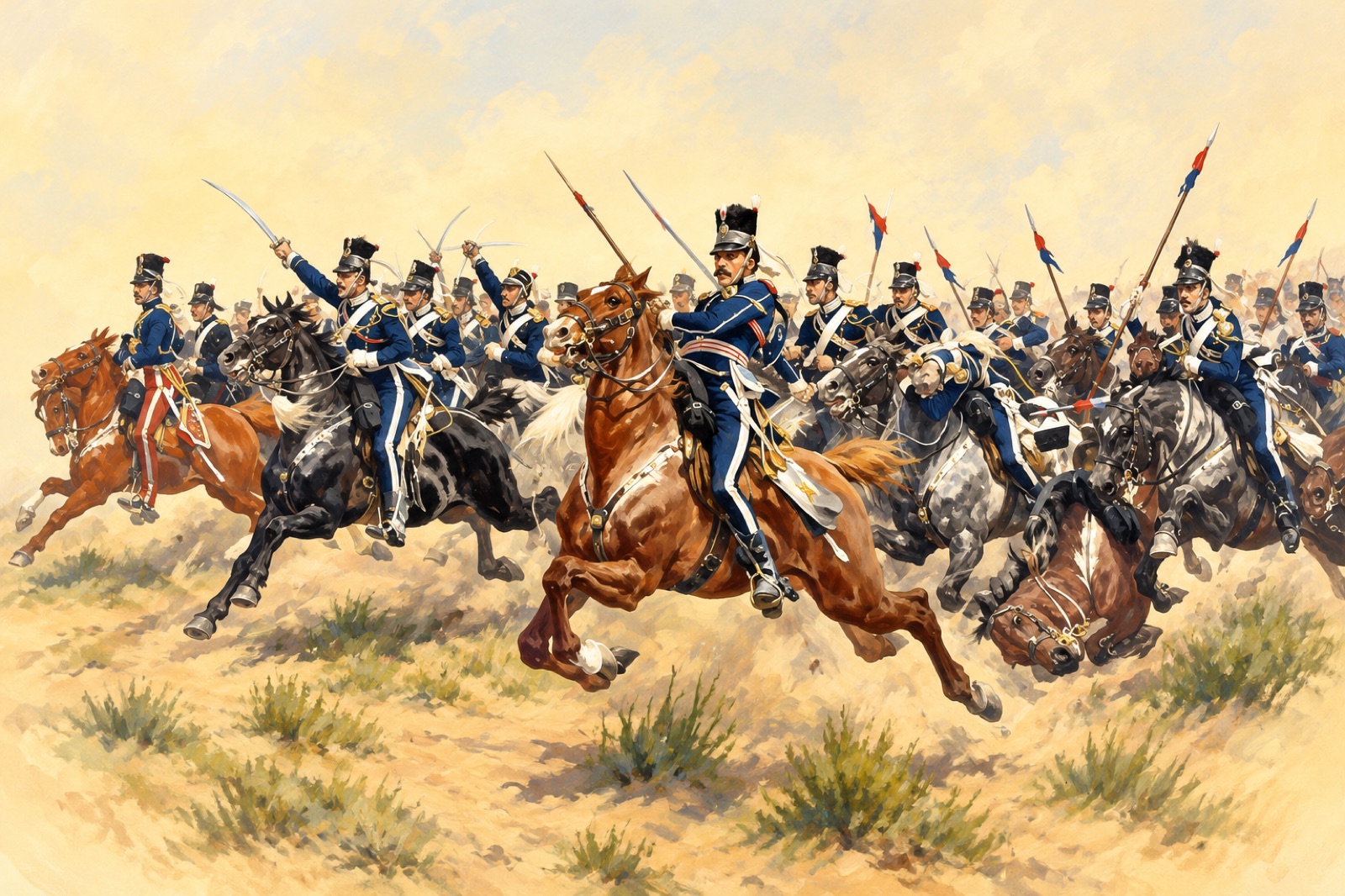
  • Painting of British light cavalry charging towards Russian guns at Balaclava, 1854. (illustration) Cavalry Illustration

    Britain

    The Light Brigade at Balaclava

    On 25 October 1854 the British Light Brigade charged Russian guns at the far end of the North Valley at Balaclava. The charge, led by the Earl of Cardigan with about 670 men, is one of the war's best-known episodes. This card is a restyled version of a well-known painting of the charge.

    Illustration after Richard Caton Woodville Jr, public domain · Original

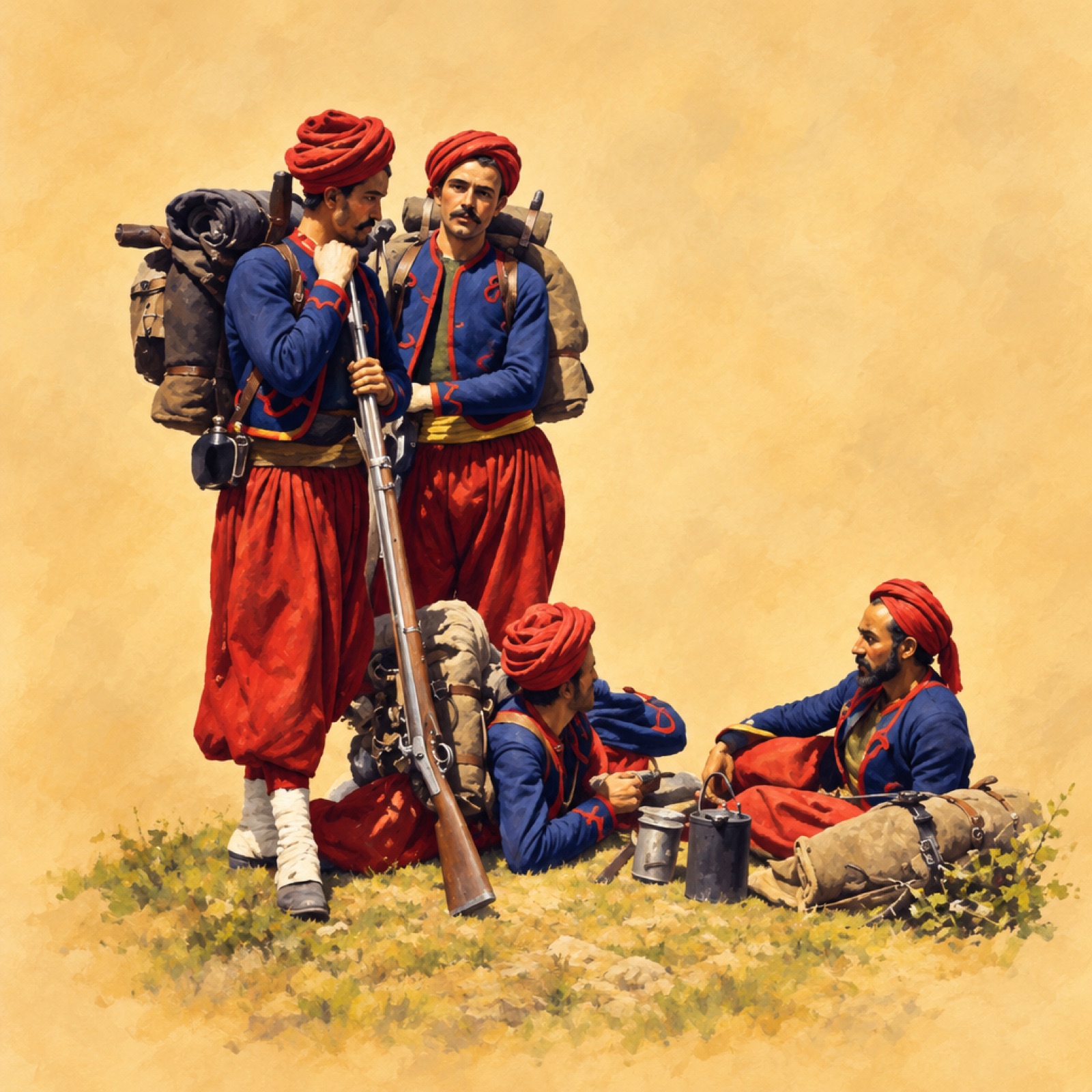
  • Four French Zouave soldiers in Crimean War uniform posing for a photograph. (illustration) Infantry Illustration

    France

    French Zouaves

    The Zouaves were French infantry in distinctive dress who fought in the Crimea. This card is based on a photograph of four Zouave soldiers taken between about 1854 and 1856.

    Illustration after Roger Fenton, public domain · Original

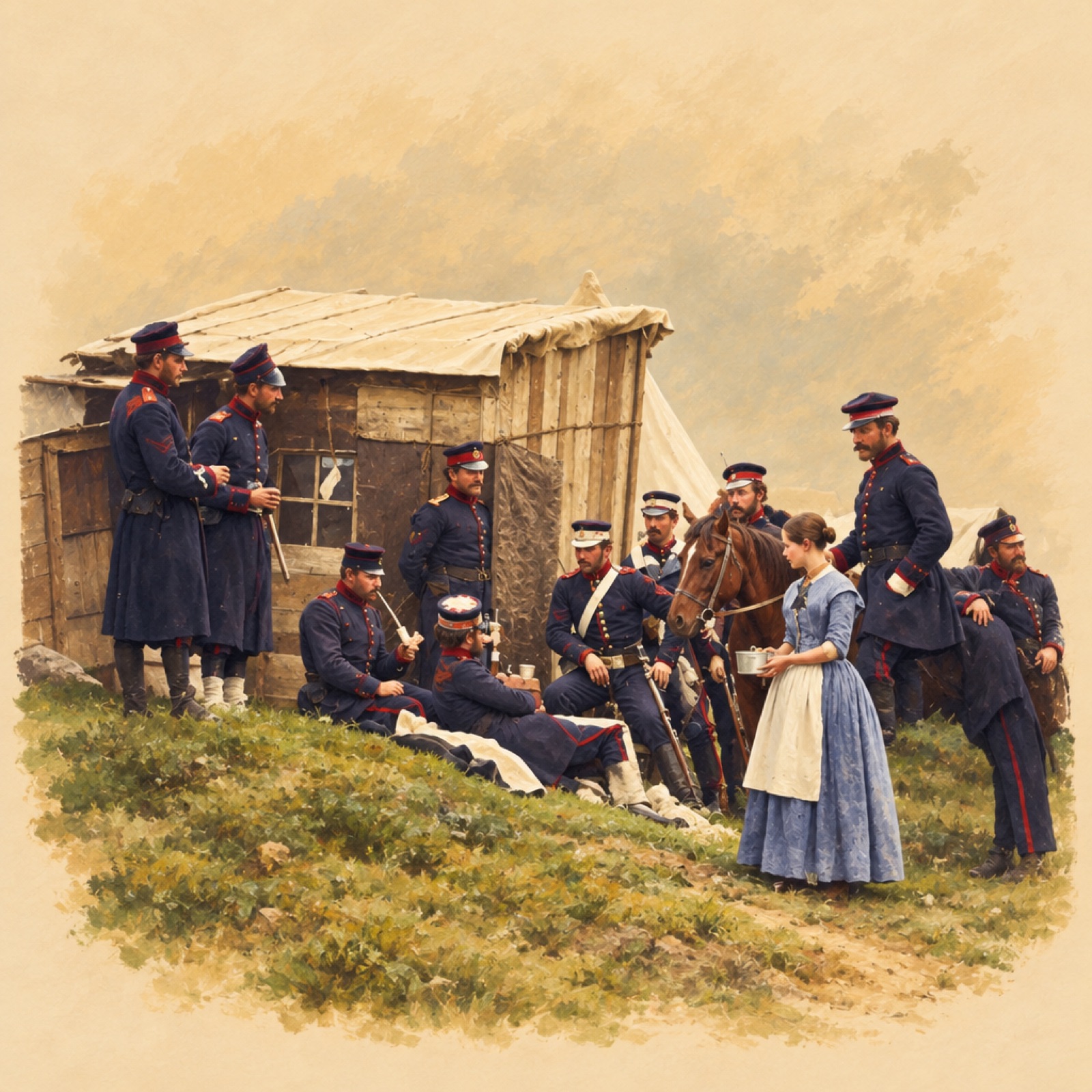
  • Fenton's 1855 photograph of French and British soldiers and a vivandière at a Crimean camp. (illustration) Infantry Illustration

    Britain and France

    Allied soldiers in camp

    Roger Fenton's 1855 photograph shows French and British soldiers together in a Crimean camp, with a vivandière, a woman who supplied the troops. It is a camp scene rather than a single regiment in action.

    Illustration after en:Roger Fenton, public domain · Original

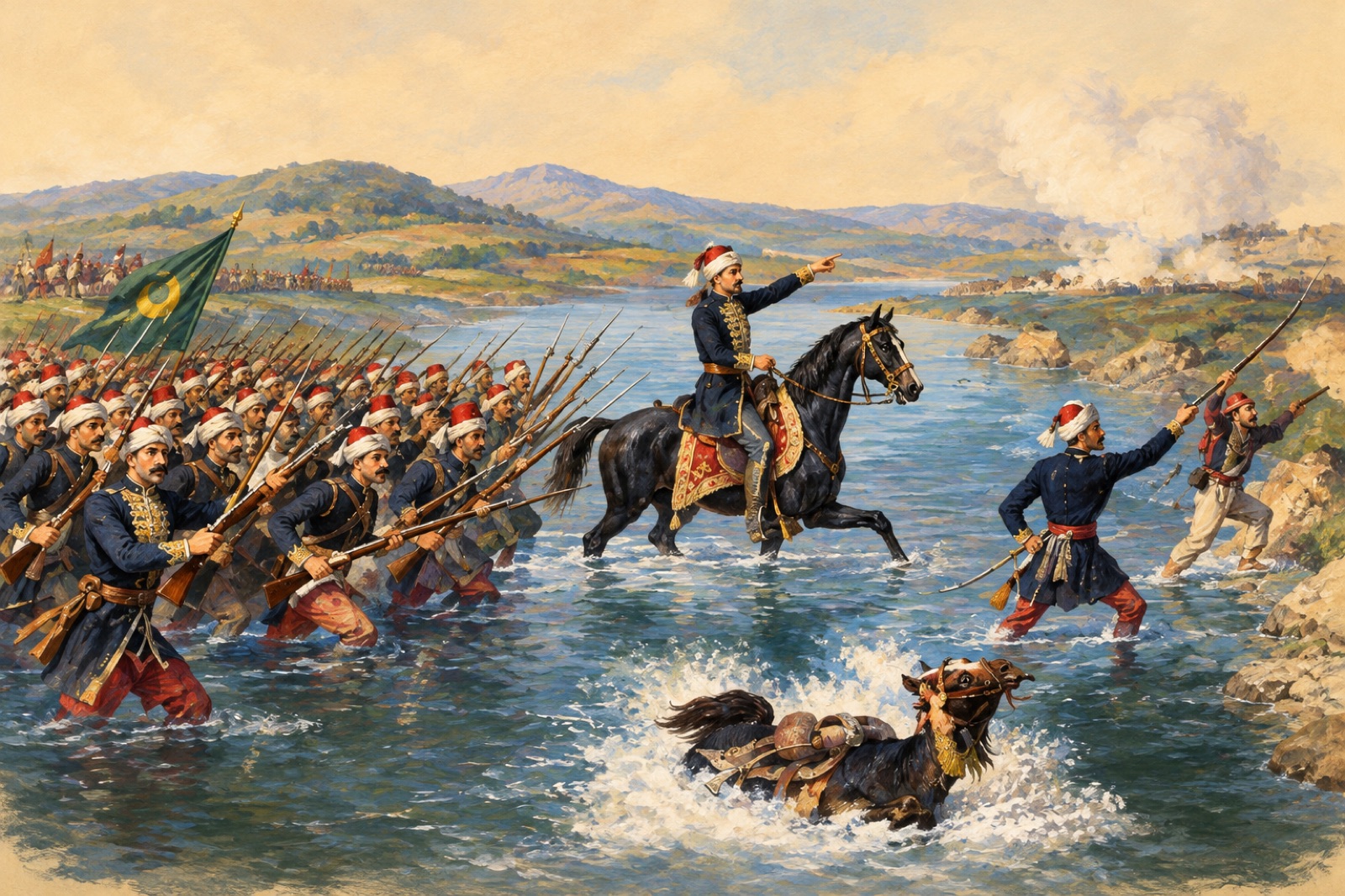
  • Nineteenth-century print of Omar Pasha and Ottoman troops at the Ingur River in 1855. (illustration) Commander Illustration

    Ottoman Empire

    Omar Pasha and the Ottoman army

    Omar Pasha commanded Ottoman forces on the Danube in 1853 and took part in the Ottoman effort in the Crimea. In February 1855 he faced Russian troops at the Battle of Eupatoria. The picture is a nineteenth-century print.

    Illustration after Unknown author, public domain · Original

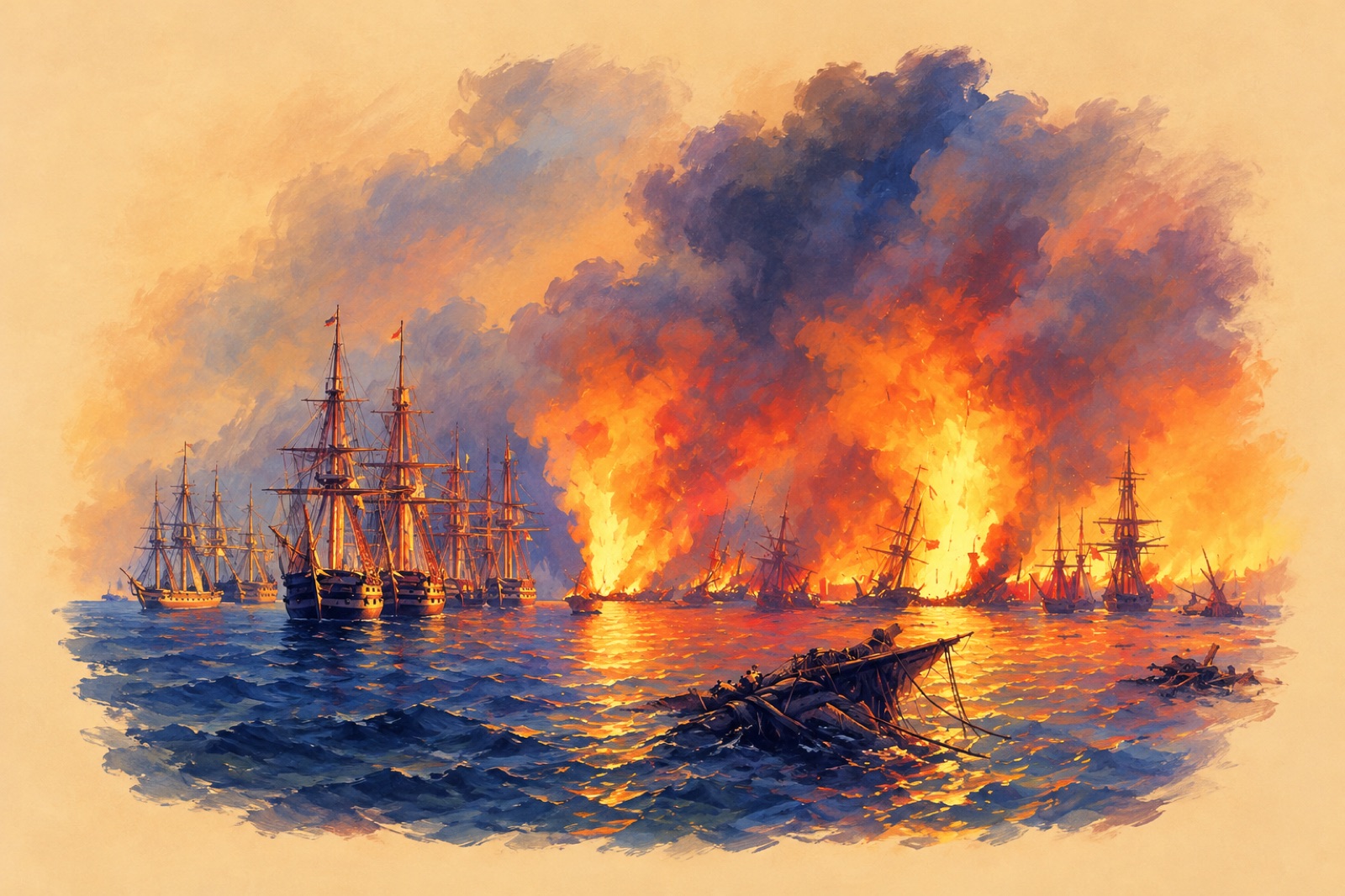
  • Aivazovsky's painting of the burning Ottoman fleet and Russian ships after the Battle of Sinop. (illustration) Navy Illustration

    Russia

    The Russian Black Sea Fleet at Sinop

    On 30 November 1853 (18 November in the Julian calendar), a Russian fleet led by Admiral Pavel Nakhimov destroyed the Ottoman squadron anchored at Sinop. Ivan Aivazovsky's painting shows the scene the night after the battle.

    Illustration after Ivan Aivazovsky, public domain · Original

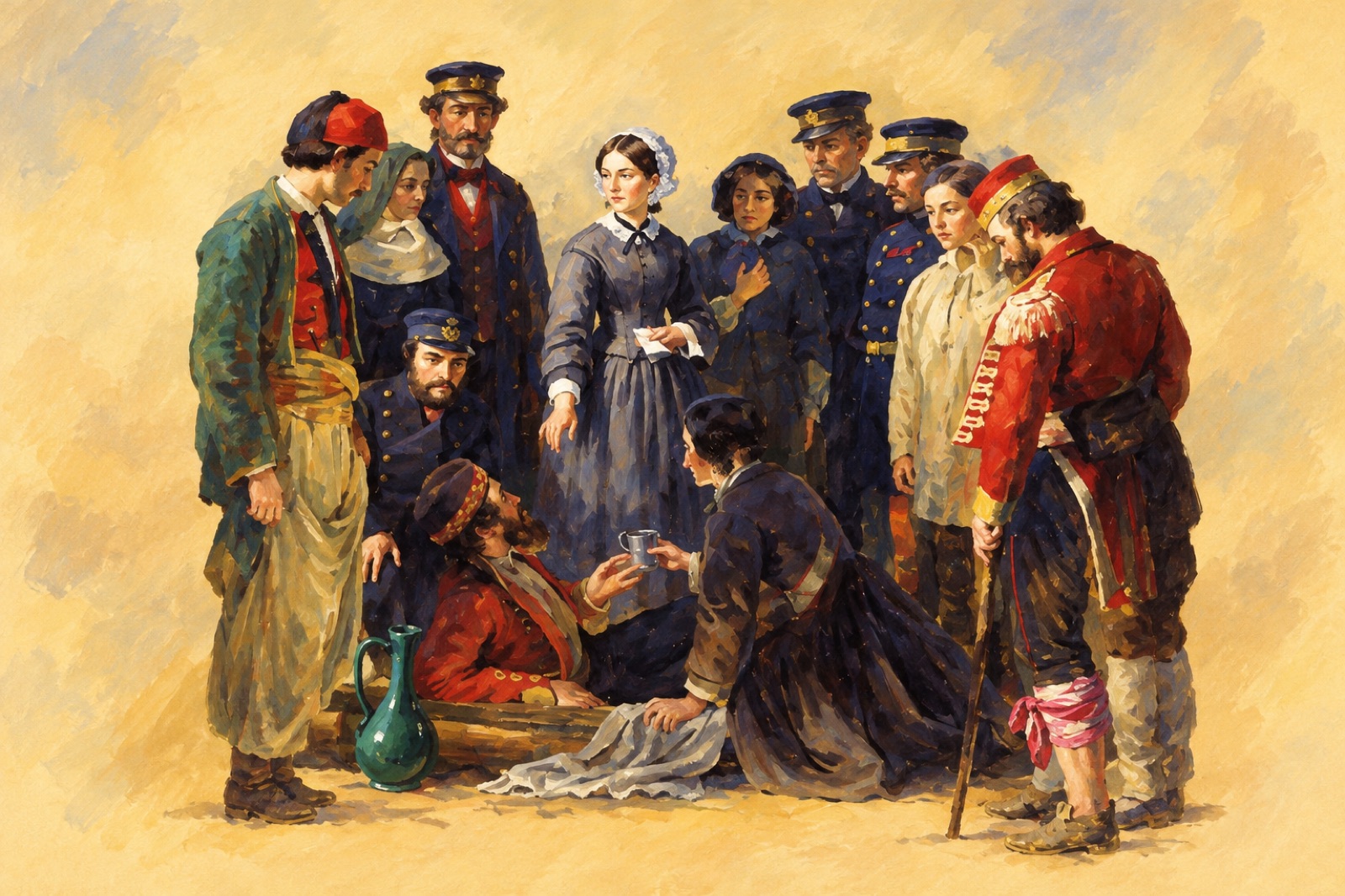
  • Painting by Jerry Barrett of Florence Nightingale receiving wounded soldiers at Scutari. (illustration) Person Illustration

    Britain

    Florence Nightingale at Scutari

    Jerry Barrett's painting shows Florence Nightingale receiving wounded soldiers at the Scutari barrack hospital. This card is a restyled version of that painting. Nightingale and her volunteer nurses worked at the Selimiye Barracks hospital from November 1854.

    Illustration after Jerry Barrett, public domain · Original

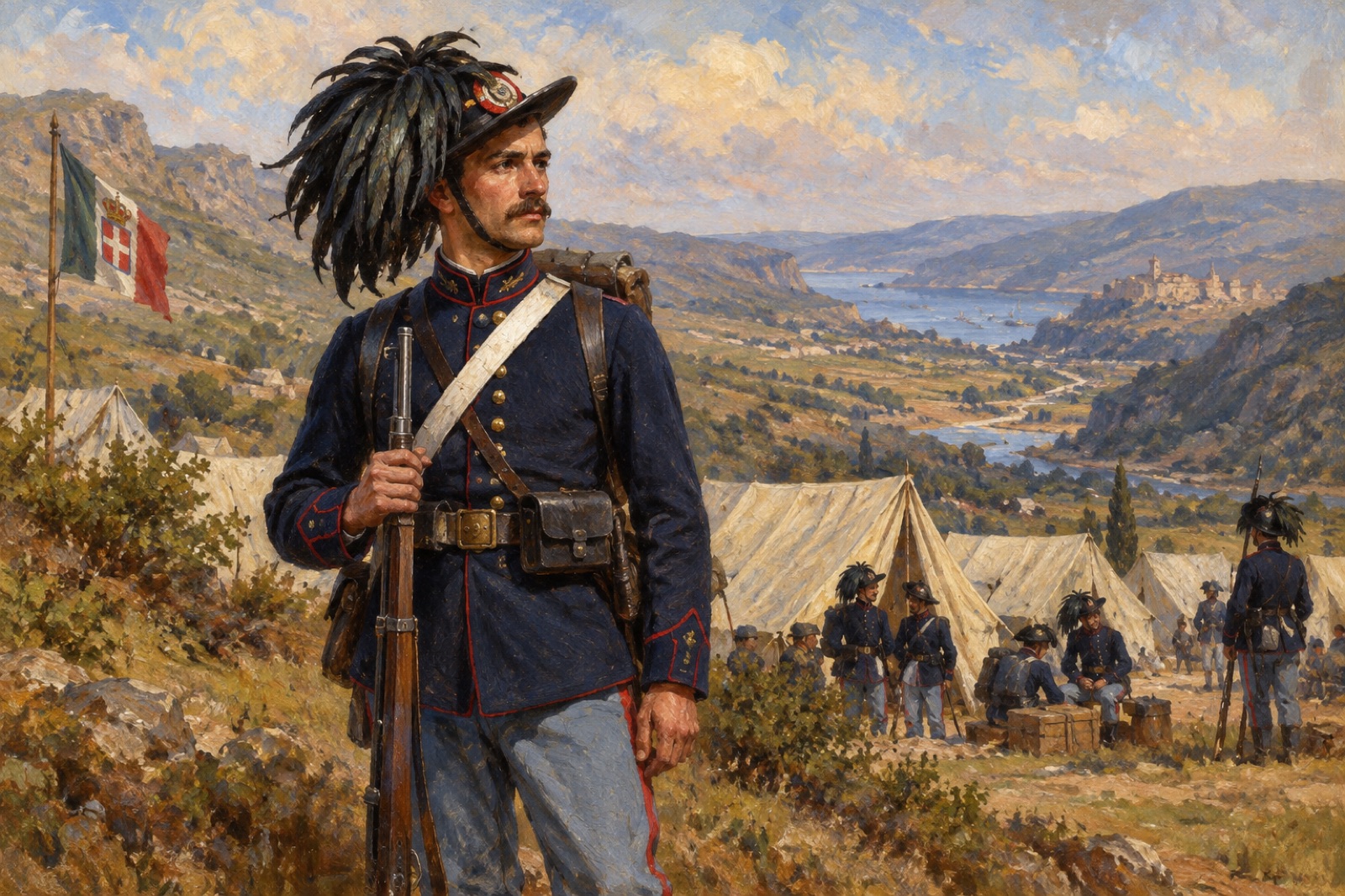
  • Illustration of a Piedmontese bersaglieri soldier in the Crimea, 1855. Infantry Illustration

    Sardinia-Piedmont

    The Sardinian contingent

    About 18,000 Sardinian troops embarked at Genoa in April 1855, under General Alfonso La Marmora. At the Chernaya in August 1855 about 9,000 of them took part, holding the allied right flank. This card is a generic illustration of a bersaglieri soldier, not a portrait.

    Illustration · FiveMinRead

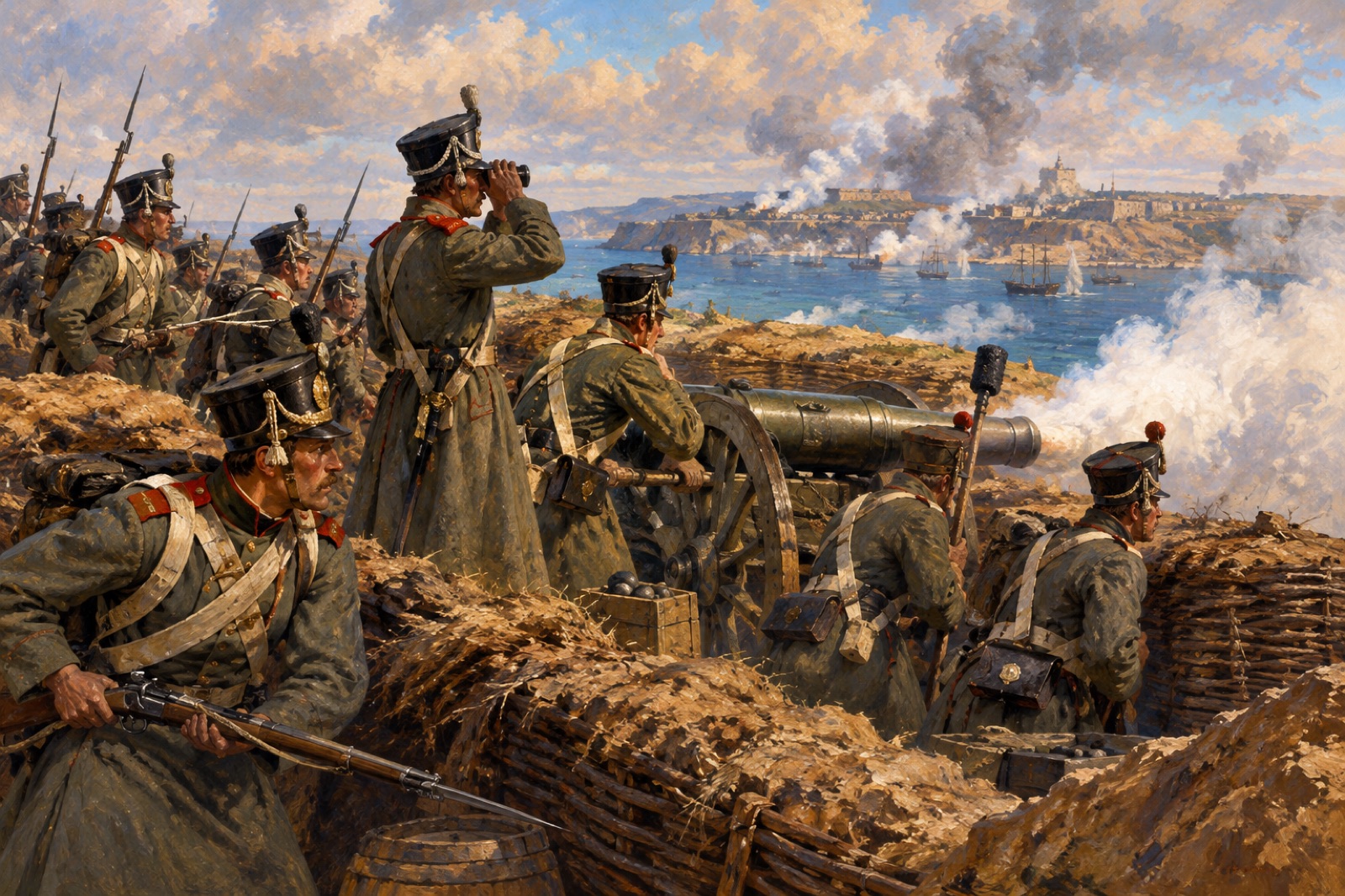
  • Illustration of Russian infantry defending an earthwork at Sevastopol. Infantry Illustration

    Russia

    Russian infantry at Sevastopol

    Russian infantry and naval crews held the bastions of Sevastopol through the siege of about eleven months. This card is a generic illustration of the defenders in the style of 1854.

    Illustration · FiveMinRead

Frequently Asked Questions

When was the Crimean War?

The war lasted from 1853 to 1856. The Ottoman Empire declared war on Russia in October 1853, Britain and France joined in March 1854, and the Treaty of Paris, signed on 30 March 1856, ended the fighting. Russian troops had entered the Danubian Principalities in July 1853, which is often seen as the first step toward war.

Why did the Crimean War start?

The main cause was the Eastern Question: the Ottoman Empire was weakening, and Russia, Britain, France and others wanted influence over its lands and the Black Sea. The Holy Places dispute and Russia's occupation of the Danubian Principalities were the immediate triggers. Most historians see the Holy Places issue as a pretext rather than the deep cause.

Who won the Crimean War?

Most accounts say the allies (Britain, France, the Ottoman Empire and Sardinia) gained the better settlement. Russia gave up its right to a Black Sea fleet and lost part of southern Bessarabia. The allies also suffered heavy losses, mostly from disease, so the war is hard to judge as a simple win or loss.

Why is the Crimean War important?

It strained the Concert of Europe, changed the status of the Black Sea and exposed how poorly armies cared for their sick and wounded. It is also one of the earliest wars to be recorded in photographs, through Roger Fenton's work in 1855.

What did Florence Nightingale do in the Crimean War?

From November 1854 she led 38 women volunteer nurses at the Selimiye Barracks hospital in Scutari. She improved cleaning, supplies and care, and she collected statistics on deaths. The often-quoted fall in the death rate from 42 per cent to 2 per cent is attributed to her, but the figures are hard to verify.

Check Your Understanding

Pick an answer for each question to see if you were right.

  1. Where did the allied army land in Crimea in September 1854?

  2. What happened at Sinop on 30 November 1853?

  3. When was the Treaty of Paris signed?

  4. What did the Treaty of Paris do to the Black Sea?

  5. Where did Florence Nightingale work during the war?

More in The Russian Empire

See the full topic guide →
Share:

About the Writer

Alex Ng
Alex Ng

Software Engineer & Writer

Software engineer with a passion for distilling complex ideas into actionable insights. Writes about finance, investment, entrepreneurship, and technology.

Read more →

Keep reading

Explore the topic: The Russian Empire

Articles

Summaries