0% • 9 min left

The First Opium War (1839–1842)

October 30, 2026
The First Opium War (1839–1842) was a conflict between Britain and the Qing Dynasty of China. It began after Qing commissioner Lin Zexu destroyed opium held by British traders at Humen in 1839. It ended with the Treaty of Nanking, which ceded Hong Kong Island to Britain and opened five Chinese ports.

Part of: Qing China, Japan and the West (1793–1912)

The First Opium War (1839–1842)

Key facts

When
1839–1842; the treaty was signed on 29 August 1842
Where
Pearl River estuary, Macau, the Zhejiang coast, the Yangtze
Who
Britain against Qing China
Trigger
Destruction of opium at Humen, June 1839
Key battles
Chuenpi (1839 and 1841), the Barrier (1840), Chinkiang (1842)
Outcome
Treaty of Nanking: Hong Kong Island ceded, five ports opened, 21 million silver dollar indemnity

Timeline

Tap a step for details. Arrow keys move between steps.

  1. 1839, March to May

    Foreign traders hand over their opium at Canton

    Qing commissioner Lin Zexu pressed British and American traders to hand over their opium. Sources give different totals, from about 20,000 chests to roughly 1,000 to 1,400 tonnes. The surrender set up the public destruction that followed in June.

    Also in 1839:More from 1839

  2. 1839, 3 June

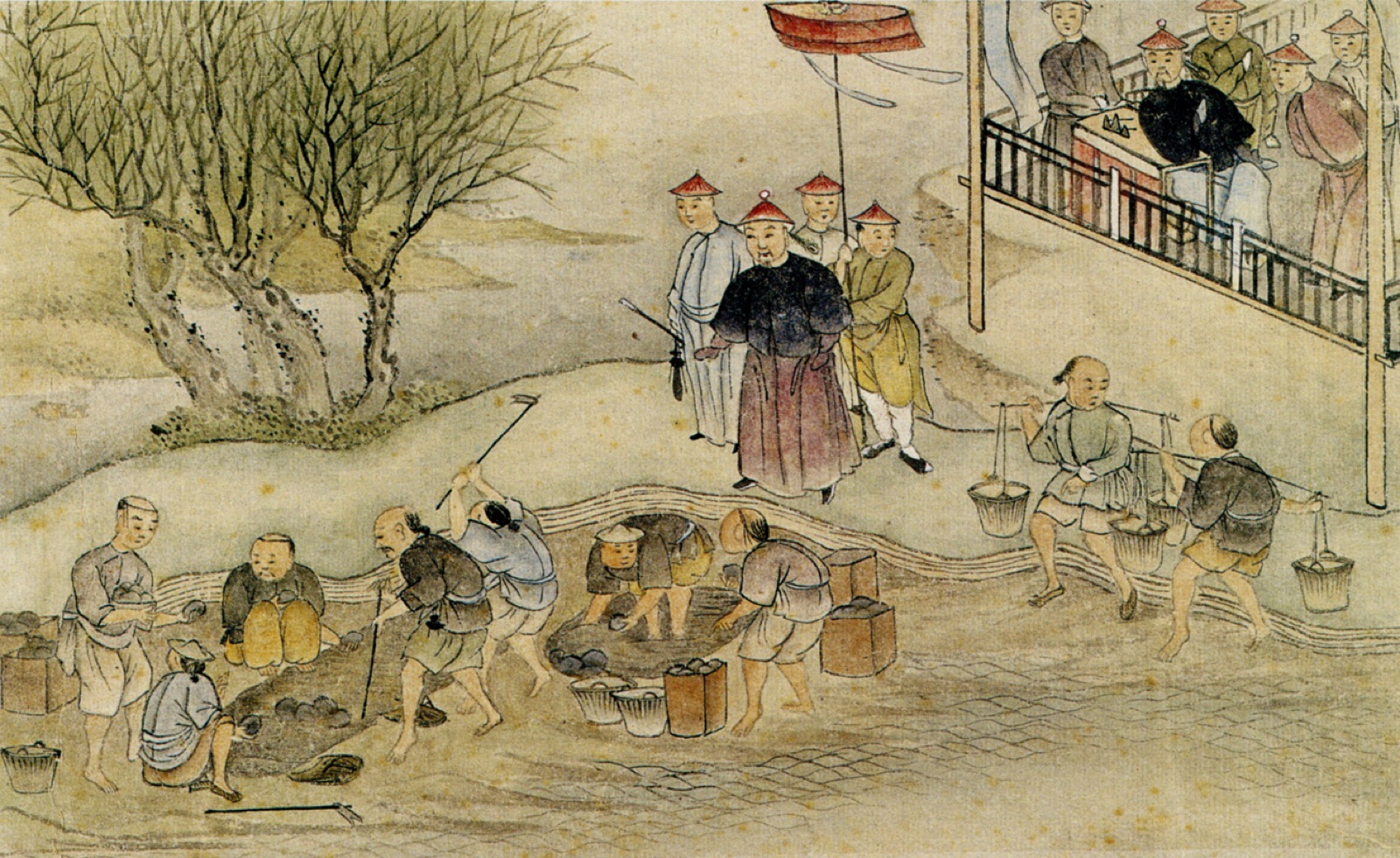
    Opium destroyed at Humen

    Chinese artist's depiction of Commissioner Lin and the destruction of opium in 1839
    Chinese artist, public domain, via Wikimedia Commons

    The work began on Humen Beach on 3 June and took about 23 days, ending around 25 June. Chinese accounts present it as a stand against a harmful drug, while British merchants lost their stock.

  3. 1839, July

    Lin Weixi killed at Kowloon

    A Chinese man, Lin Weixi, was killed at Kowloon in July, and the tension between the two sides grew. The death came just before the naval clash near Kowloon in September.

  4. 1839, 4 September

    Naval clash near Kowloon

    Some accounts list this clash near Kowloon as the start of the war, while others prefer 1840. The Qing commander claimed a victory, but the Royal Navy was considerably stronger.

  5. 1839, 3 November

    First Battle of Chuenpi

    The British ship Royal Saxon tried to push toward Canton, and fighting broke out at Chuenpi. Four Chinese war junks were destroyed, and both fleets withdrew. Qing officials reported a great victory, but modern accounts describe the Chinese ships as outclassed.

  6. 1840, 19 August

    Battle of the Barrier near Macau

    British forces attacked the Barrier, a wall across the isthmus between Macau and the mainland, and won. According to one account the attack followed the seizure of a British clergyman on 6 August. Sources give the Qing garrison as 1,500 to 2,000 men.

    Also in 1840:More from 1840

  7. 1841, 7 January

    Second Battle of Chuenpi and the Anson's Bay attack

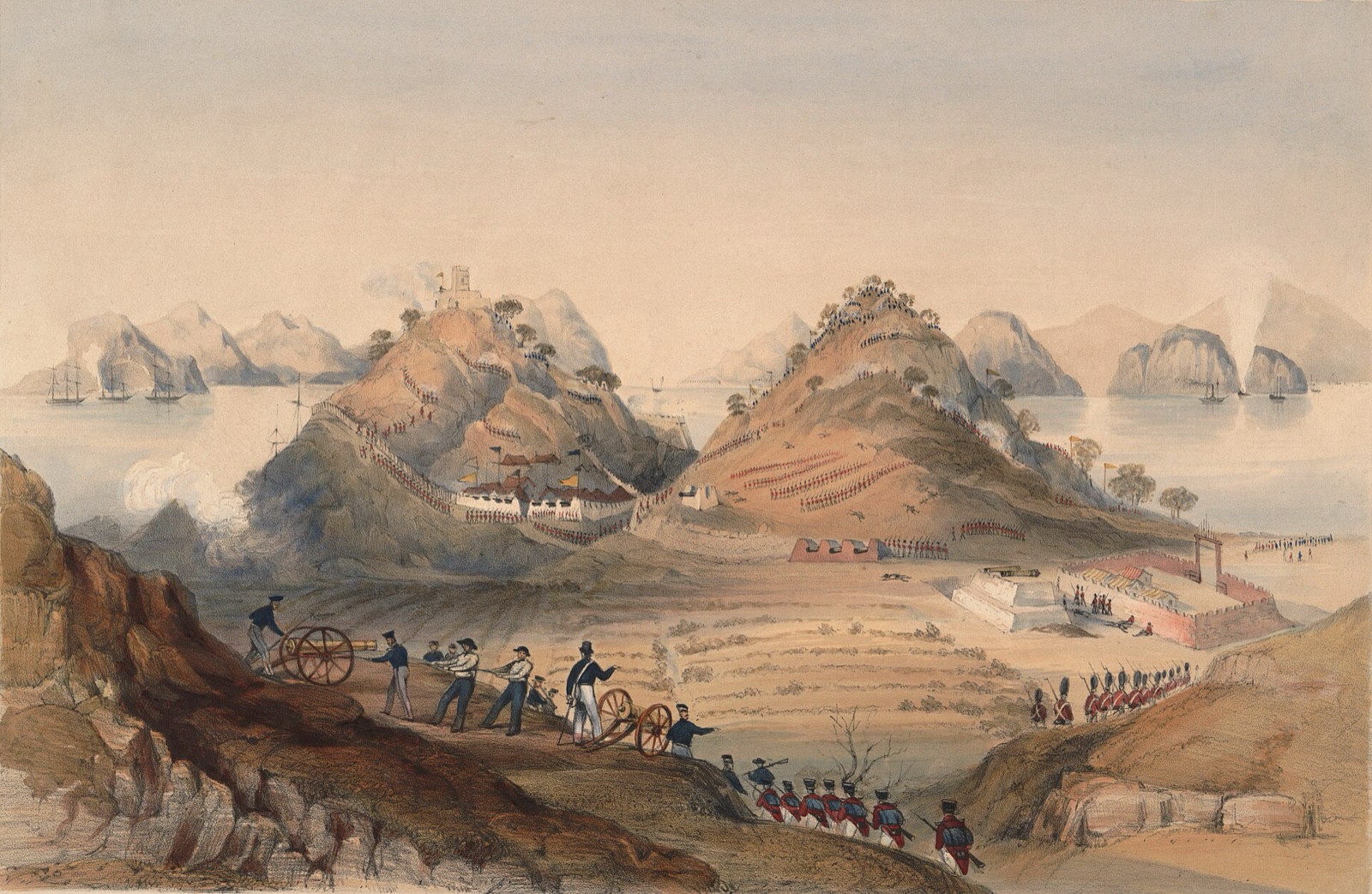
    Lithograph of the storming of the Chuenpee forts, 7 January 1841
    Drawn by Lt. Frederick J. White, Royal Marines. Lithograph by Dickinson, public domain, via Wikimedia Commons

    Steamers landed about 1,500 British troops unopposed, and the upper fort fell by about 10 a.m. On the same day Nemesis attacked a Qing junk fleet in Anson's Bay, and 11 junks were destroyed across the battle. Casualty figures conflict: Chinese records give 277 killed and 467 wounded, while the British commodore estimated 500 to 600 losses.

    Also in 1841:More from 1841

  8. 1841, 26 January

    Hong Kong Island taken into British possession

    Commodore Gordon Bremer took formal possession of Hong Kong Island and raised the Union Jack. This came six days after the Convention of Chuenpi was drafted, and neither government ratified that convention.

  9. 1841, 23–26 February

    British victory at the Bogue

    British forces took the remaining forts at the Bogue, which guarded the mouth of the Pearl River. The same year Canton agreed to pay a ransom of 6 million silver dollars.

  10. 1841, August

    Amoy (Xiamen) taken

    British forces took Amoy in August 1841, and one source dates the main fighting to 26 August. The campaign then turned north toward the Zhejiang coast.

  11. 1841, 1 October

    Chusan (Zhoushan) retaken

    British forces retook Chusan on 1 October 1841, after the Qing had strengthened its defences there. Chinhai fell later that month, and Ningbo soon followed; one account says without resistance.

  12. 1842, 15 March

    Operations at Cixi (Tsekee)

    A British plan records operations at Tsekee, near Ningbo, on 15 March 1842. One source says a Qing counterattack that month was repelled.

  13. 1842, 21 July

    Battle of Chinkiang (Zhenjiang)

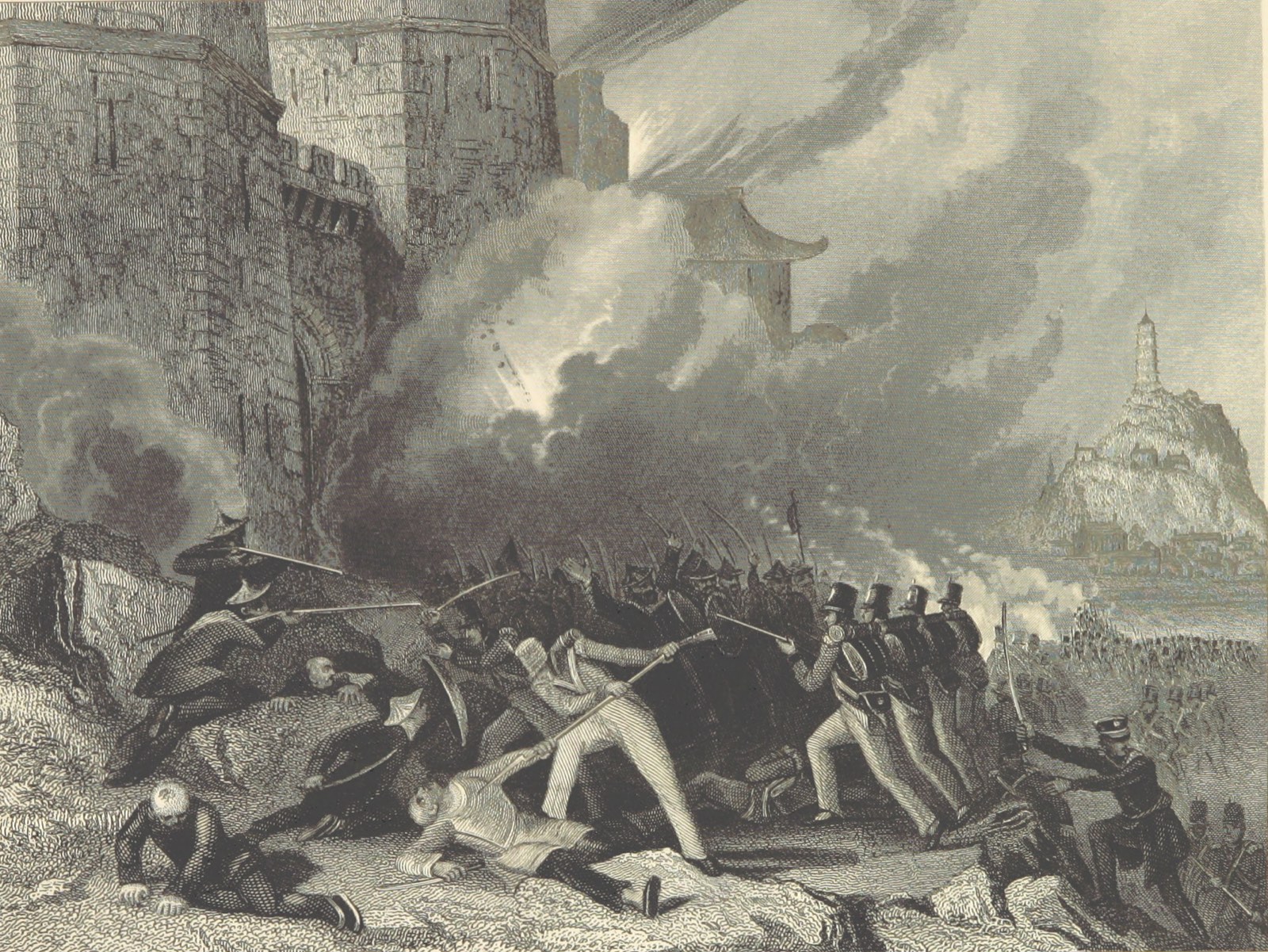
    Engraving by Thomas Allom of British troops capturing Chin-Keang-Foo (Zhenjiang)
    Thomas Allom, public domain, via Wikimedia Commons

    About 6,900 British troops under Hugh Gough attacked the city on the Yangtze. Estimates of the Qing defenders range from about 3,000 to 4,300. British losses were 37 killed and 128 wounded, and a 19th-century estimate puts Qing losses at about 1,000 killed or wounded.

  14. 1842, 29 August

    Treaty of Nanking signed

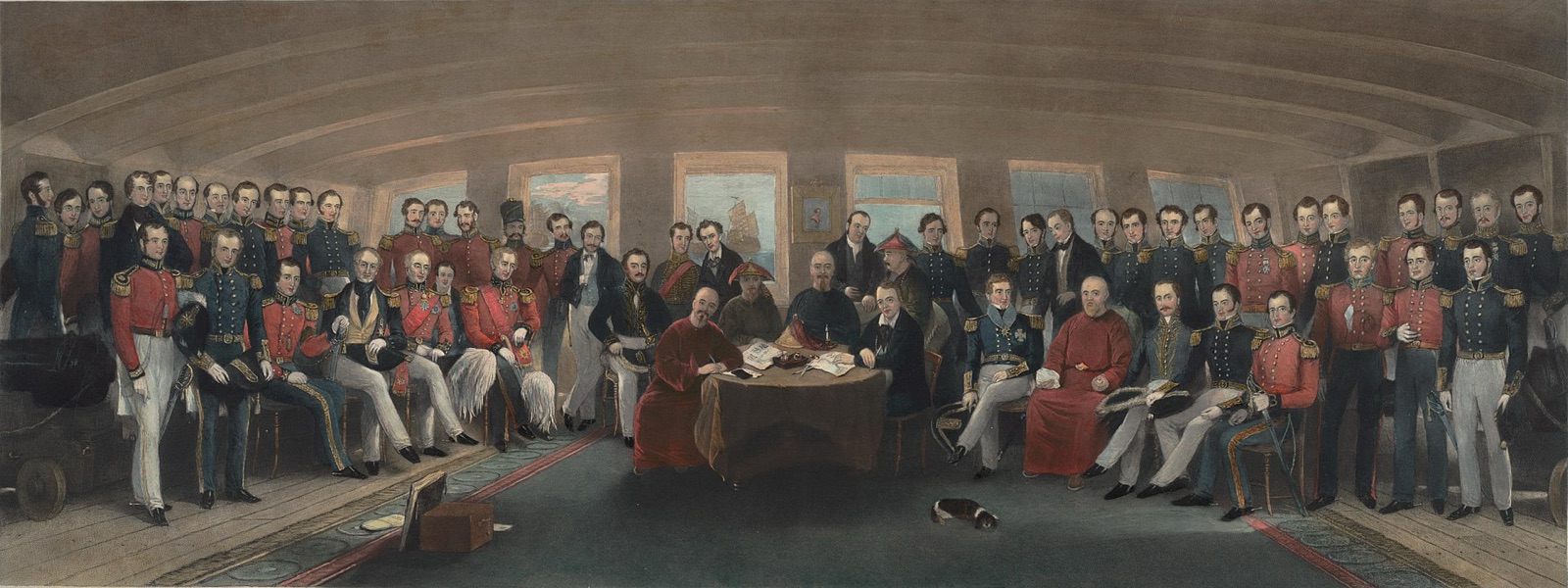
    Engraving of the signing and sealing of the Treaty of Nanking, after John Platt
    Painted by Captain John Platt, Bengal Volunteers. Engraved by John Burnet, public domain, via Wikimedia Commons

    Henry Pottinger signed for Britain, and Qing commissioners Qiying and Yilibu signed for China, aboard HMS Cornwallis at Nanjing. The treaty ceded Hong Kong Island, opened five ports and set a 21 million silver dollar indemnity.

Maps

Tap a map to zoom

  • Modern overview map of the First Opium War showing the main British operations along the Chinese coast and up the Yangtze to Nanjing, 1839–1842

    Overview of the First Opium War, 1839–1842: from the Pearl River estuary north along the coast and up the Yangtze to Nanjing.

    Philg88, CC BY 4.0, via Wikimedia Commons

  • Nineteenth-century sketch map of the theatre of war in China in 1842, from Canton and the coast up the Yangtze

    Sketch of the theatre of war in China in 1842, from a work published in 1883.

    Unknown author, public domain, via Wikimedia Commons

  • Plan of the Battle of the Barrier near Macao, 19 August 1840, from John Francis Davis, 1841

    Plan of the Battle of the Barrier, 19 August 1840 (published 1841).

    Davis, public domain, via Wikimedia Commons

  • Lithographed plan of British operations at Tsekee (Cixi) on 15 March 1842

    Plan of the operations at Tsekee (Cixi), 15 March 1842, lithographed in 1844.

    "Drawn on stone by Hullmandel", p. xx, public domain, via Wikimedia Commons

The First Opium War (1839–1842) was a conflict between Britain and the Qing Dynasty of China. It began after the Qing commissioner Lin Zexu had the opium held by British and American traders destroyed at Humen, near Canton (Guangzhou). It ended with the Treaty of Nanking, which gave Britain Hong Kong Island and opened five Chinese ports to British trade.
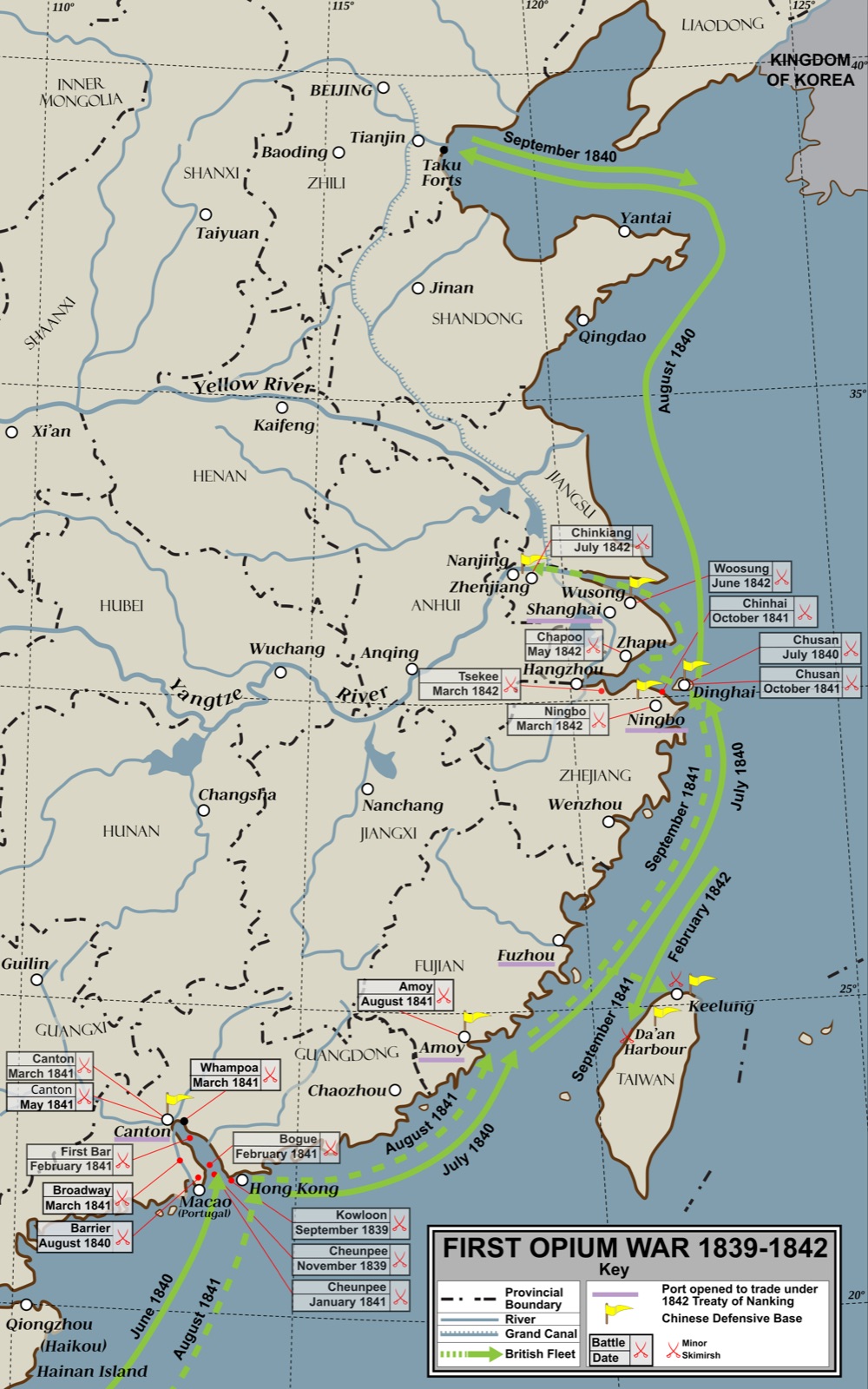
Modern overview map of the First Opium War showing the main British operations along the Chinese coast and up the Yangtze to Nanjing, 1839–1842
Overview of the First Opium War, 1839–1842: from the Pearl River estuary north along the coast and up the Yangtze to Nanjing. Philg88, CC BY 4.0, via Wikimedia Commons

In five minutes: the short answer

Britain wanted to keep its trade with China open and to protect the opium trade, which Chinese law forbade. The Qing government wanted the trade stopped. In 1839 Lin Zexu destroyed the opium stock, and Britain answered by sending warships. British forces won most of the major clashes that followed. In August 1842, Qing envoys signed a treaty aboard a British warship anchored at Nanjing.

Historians still argue about when the war began. Some date it to September 1839, when fighting broke out near Kowloon. Others start the story in 1840, when the main British expedition set out. The core of the war runs from 1839 to the treaty of 1842, and that is the period this guide covers.

Why the Opium War started

Opium sat at the centre of the quarrel. The Qing government had restricted the drug since the 1700s, and an edict of 1796 banned the trade outright. Still, the trade continued and grew. Most foreign trade was confined to the port of Canton, and many officials in Beijing worried about silver leaving the country to pay for the drug.

For the wider context, see the topic hub Qing China, Japan and the West (1793–1912). Tensions rose through the 1830s. In 1834 Lord Napier, Britain's chief superintendent of trade, died of typhus at Macau in October, weeks after a confrontation with Qing officials had led to a temporary halt in British trade. In 1836 Charles Elliot became superintendent, and he would lead the British side in the first clashes.

In 1839 the Daoguang Emperor sent Lin Zexu to Canton with orders to end the trade. Sources give different dates for his arrival in early 1839. Lin wrote to Queen Victoria asking her to stop the opium trade. The letter is generally thought never to have reached her, and one account suggests it was lost in transit. In London, Parliament debated the war, and in late January 1840 the government survived a no-confidence motion by 21 votes.

The destruction of opium at Humen, 1839

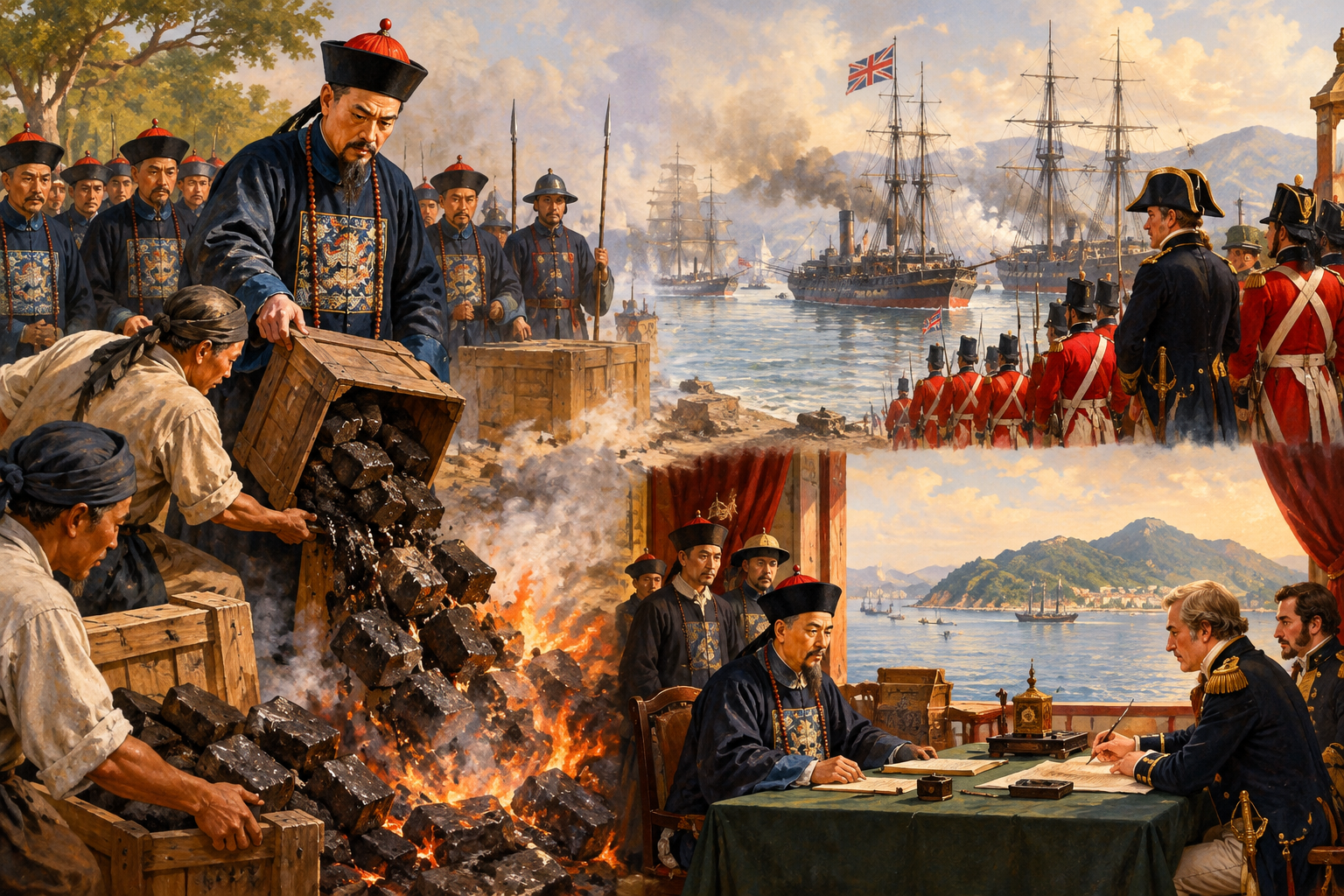
In the spring of 1839 Lin pressed foreign traders to hand over their opium. Sources disagree on the amount. Some count about 20,000 chests; others give roughly 1,000 to 1,400 tonnes. Lin then had the opium destroyed in public at Humen Beach, starting on 3 June 1839. The work took about 23 days and ended around 25 June.

The destruction became a symbol on both sides. Many Chinese accounts treat it as a stand against a harmful drug. For British merchants it meant a heavy loss, and the British government pressed for compensation. The 6 million silver dollars that the 1842 treaty set aside for the confiscated opium shows how that grievance was eventually settled.

The first clashes, 1839–1840

The first serious clashes came near Kowloon. In July 1839 a Chinese man, Lin Weixi, was killed at Kowloon, which raised the temperature further. On 4 September 1839 a naval clash near Kowloon is listed as the war's start in some accounts. The Qing commander claimed a victory, but the Royal Navy was considerably stronger. Some historians prefer 1840 as the start instead.

On 3 November 1839 fighting broke out at Chuenpi (also spelled Chuanbi) when the British ship Royal Saxon tried to push toward Canton. Four Chinese war junks were destroyed, and both fleets withdrew. Qing officials reported a great victory, but modern accounts describe the Chinese ships as outclassed, with several disabled.

In June 1840 a much larger British expedition set out for China, meant to press the Qing government to meet British demands. The fighting then reached Macau. According to one account, Chinese soldiers seized a British clergyman, the Reverend Vincent Stanton, on 6 August 1840 while he was swimming, which caused uproar in the British community.

On 19 August 1840 British forces attacked the Barrier, the wall that crossed the narrow isthmus joining Macau to the mainland. The attackers numbered about 380 men, including Royal Marines, seamen and Bengal Volunteers. Estimates of the Qing garrison range from about 1,500 to 2,000. The British won, and the Qing troops withdrew.
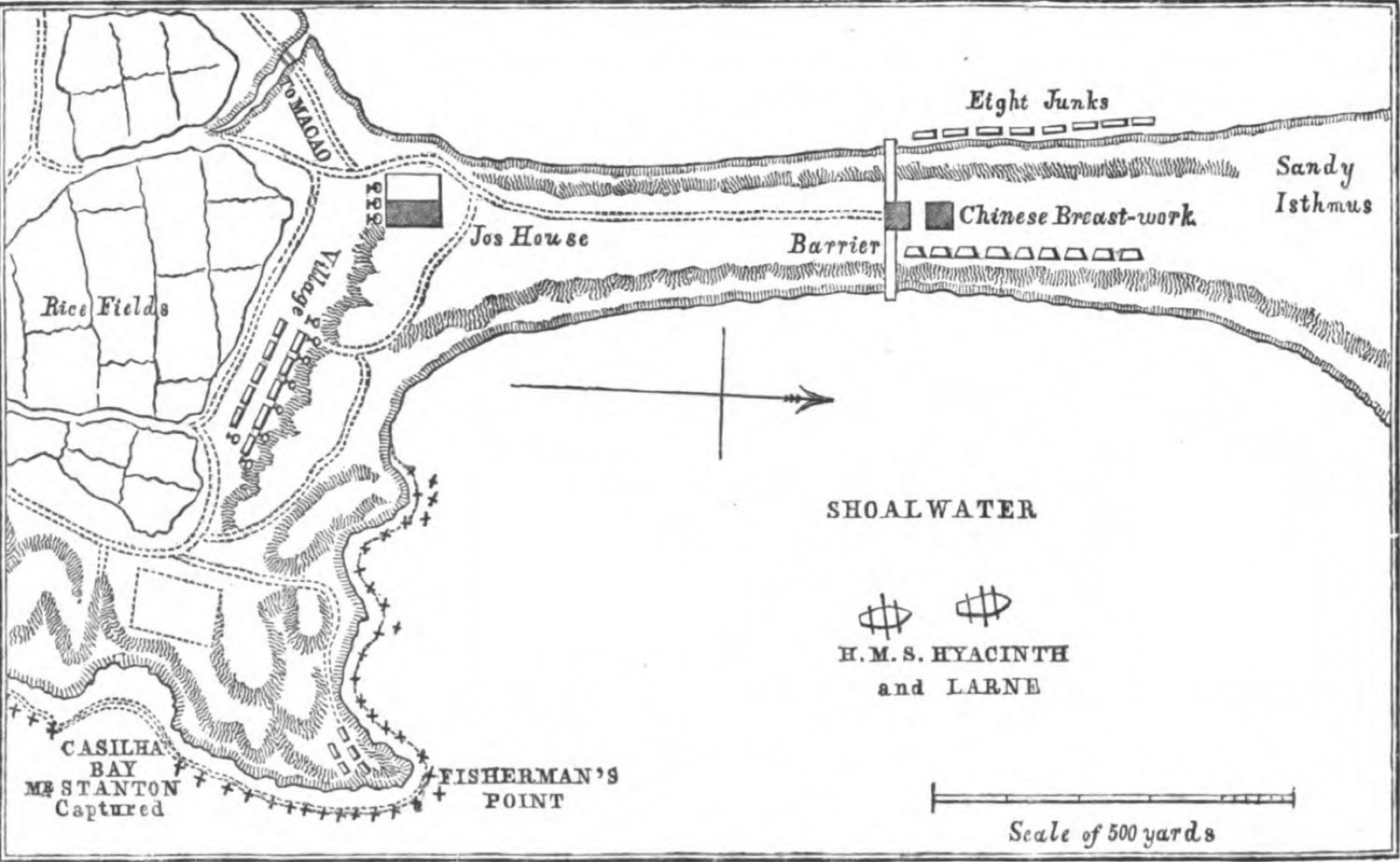
Plan of the Battle of the Barrier near Macao, 19 August 1840, from John Francis Davis, 1841
Plan of the Battle of the Barrier, 19 August 1840 (published 1841). Davis, public domain, via Wikimedia Commons

Chuenpi, Hong Kong and the Bogue, 1841

On 7 January 1841 British forces attacked the Chuenpi forts in the Second Battle of Chuenpi. Steamers carried about 1,500 troops under Major Thomas Pratt to a point about two miles below the batteries, where they went ashore unopposed. The upper fort fell by about 10 a.m., and Royal Marines stormed the lower fort.

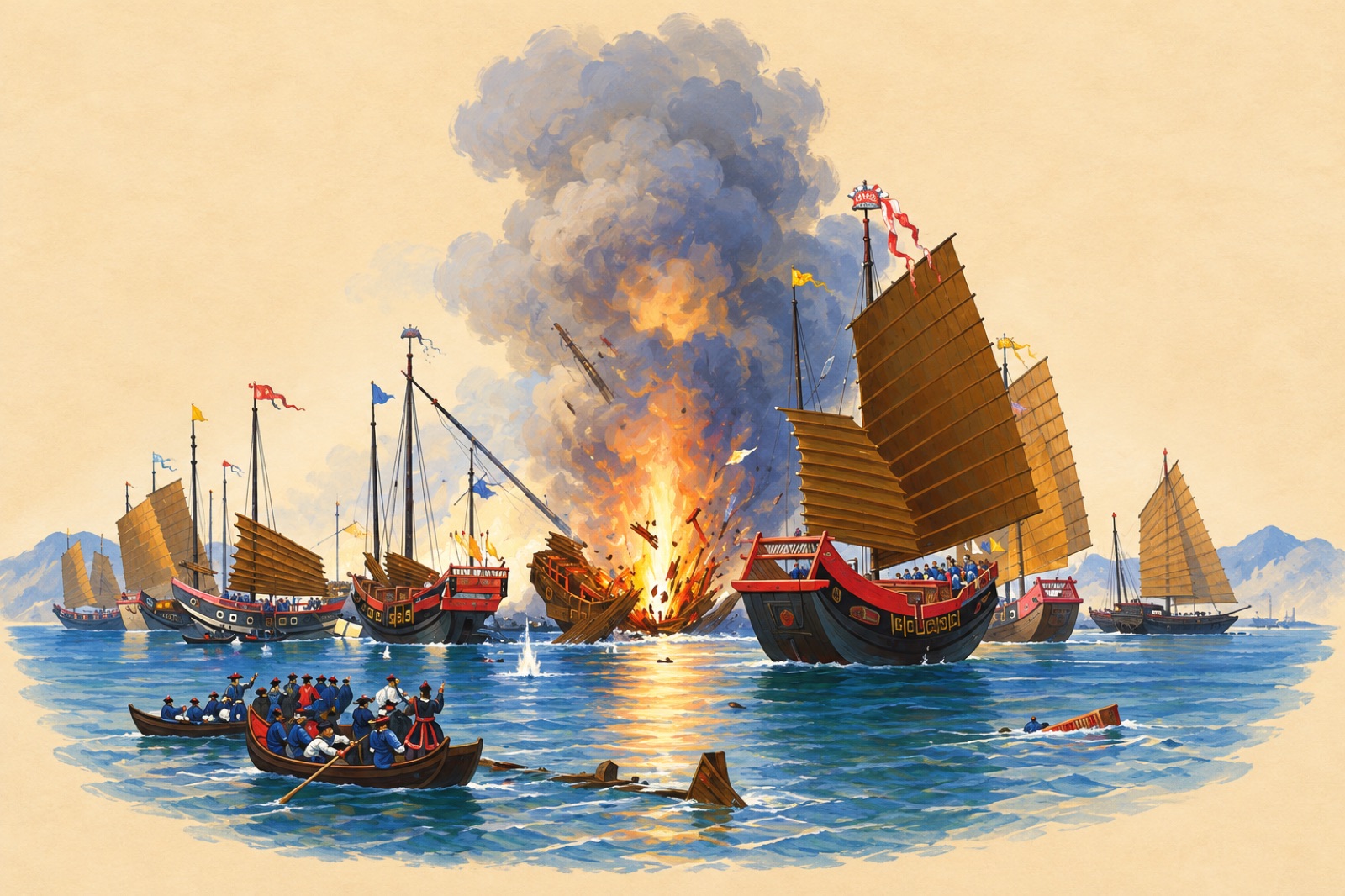
The same day the iron paddle steamer Nemesis attacked a fleet of about 15 Qing war junks under Admiral Guan Tianpei in Anson's Bay. Across the battle as a whole, 11 junks were destroyed. British losses were light: 38 wounded and no killed reported. Chinese losses are disputed. Qing records give 277 killed and 467 wounded, while the British commodore estimated 500 to 600 losses. The sources give no single agreed figure.

Diplomacy moved fast. The Convention of Chuenpi was drafted on 20 January 1841, but neither government ratified it. On 26 January Commodore Gordon Bremer took formal possession of Hong Kong Island and raised the Union Jack there. Elliot had been pressing for the island's cession at the same time, and the island was confirmed as British in the Treaty of Nanking.

Between 23 and 26 February 1841 British forces fought at the Bogue, the forts guarding the mouth of the Pearl River. They captured the remaining forts and won the battle. In the same year Canton (Guangzhou) agreed to pay a ransom of 6 million silver dollars, which some accounts later count within the treaty indemnity.

Amoy, Chusan and the road to the Yangtze, 1841–1842

After Hong Kong, British forces moved up the coast. They took Amoy (Xiamen) in August 1841; one source dates the main fighting to 26 August. On 1 October 1841 they retook Chusan (Zhoushan), where the Qing had reinforced the defences. Chinhai (Zhenhai) fell later in October, and Ningbo followed; one account says it fell without resistance.
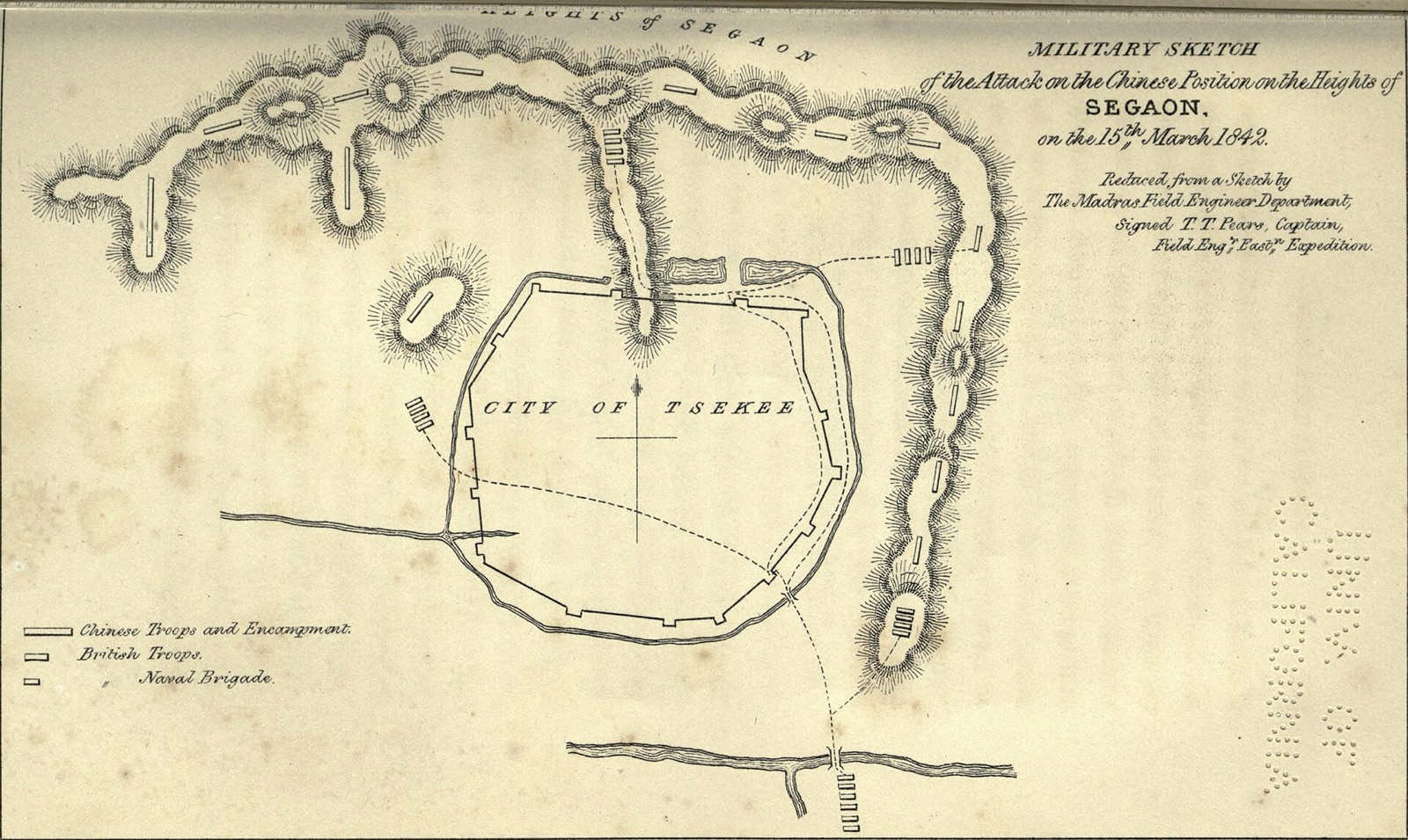
Lithographed plan of British operations at Tsekee (Cixi) on 15 March 1842
Plan of the operations at Tsekee (Cixi), 15 March 1842, lithographed in 1844. "Drawn on stone by Hullmandel", p. xx, public domain, via Wikimedia Commons

The campaign continued in 1842. A British plan records operations at Tsekee (Cixi), near Ningbo, on 15 March 1842. One source adds that a Qing counterattack that month was beaten back. The main British force then turned to the Yangtze.

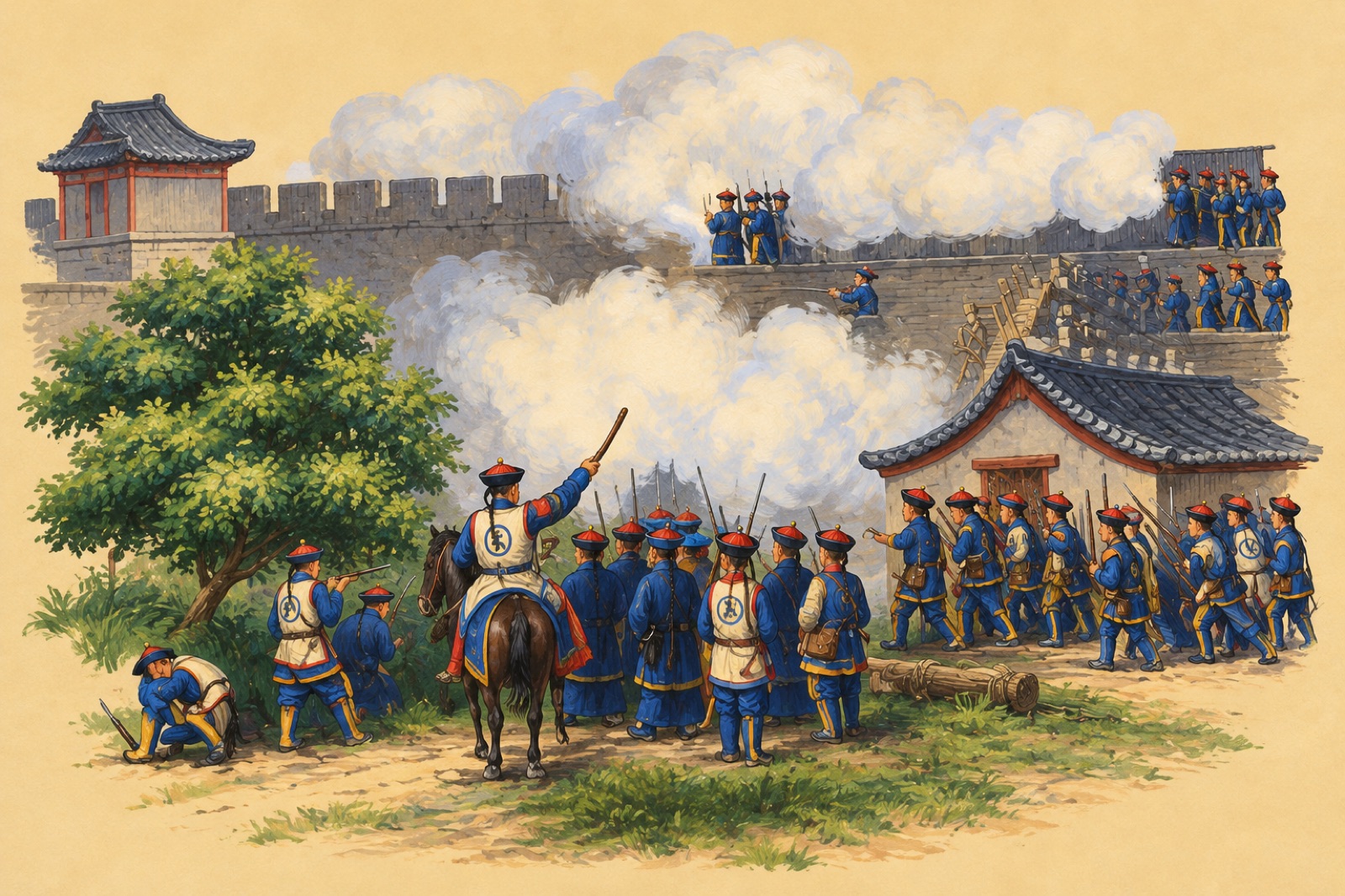
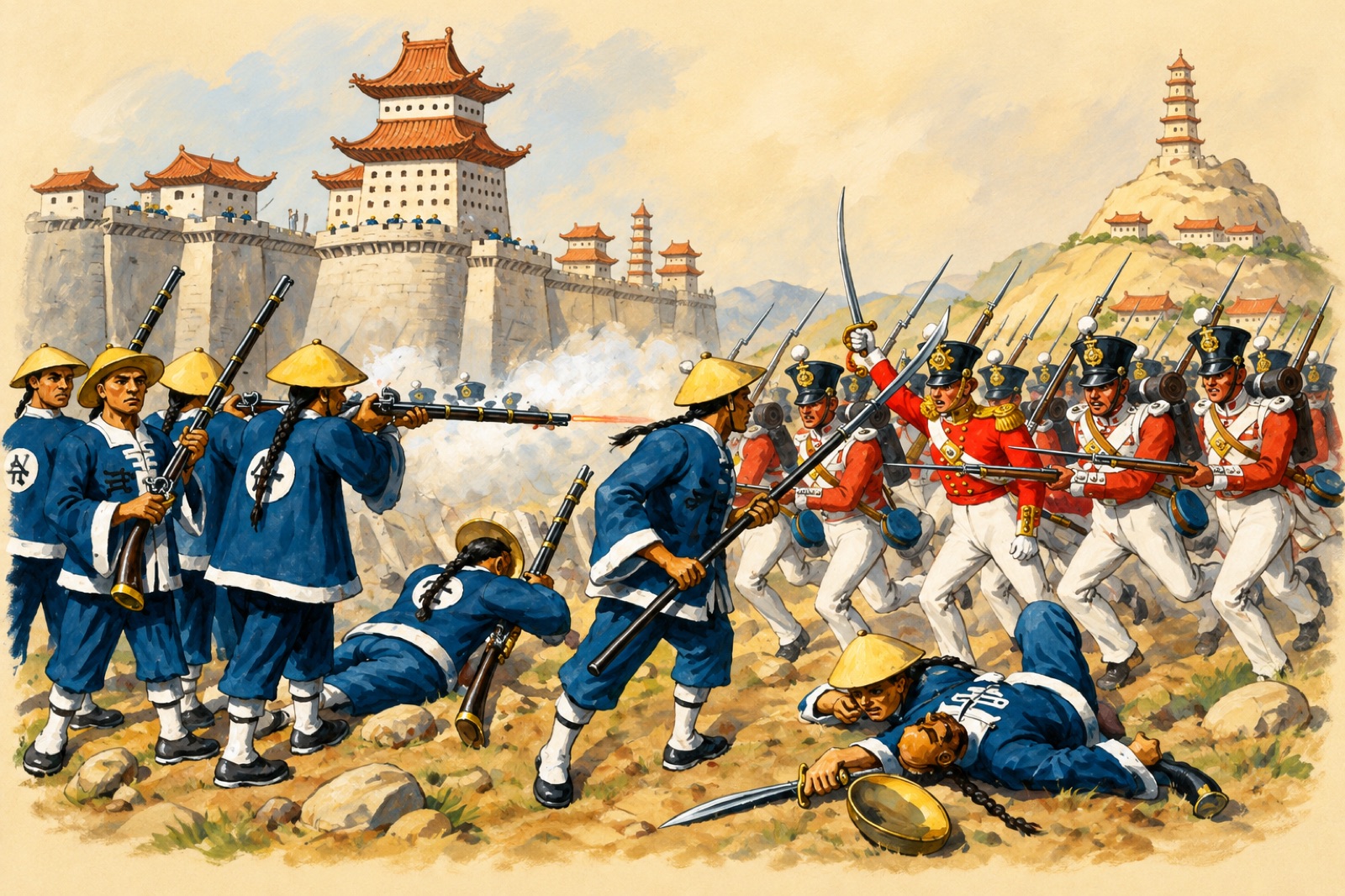
By July 1842 British forces had reached Chinkiang (Zhenjiang), where the Grand Canal meets the Yangtze, and blocked the river route. On 21 July about 6,900 British troops under Hugh Gough attacked the city. The defenders were Manchu and Mongol Bannermen and Green Standard troops; estimates put the Qing force at about 3,000 to 4,300. British losses were 37 killed and 128 wounded. A 19th-century estimate gives Qing losses of about 1,000 killed or wounded.

Accounts of the aftermath describe many Manchu defenders and their families dying by suicide as the city fell. The commander, Hai Ling, is also said to have died this way, though sources disagree on the details. The numbers are unclear, so historians treat them with caution.
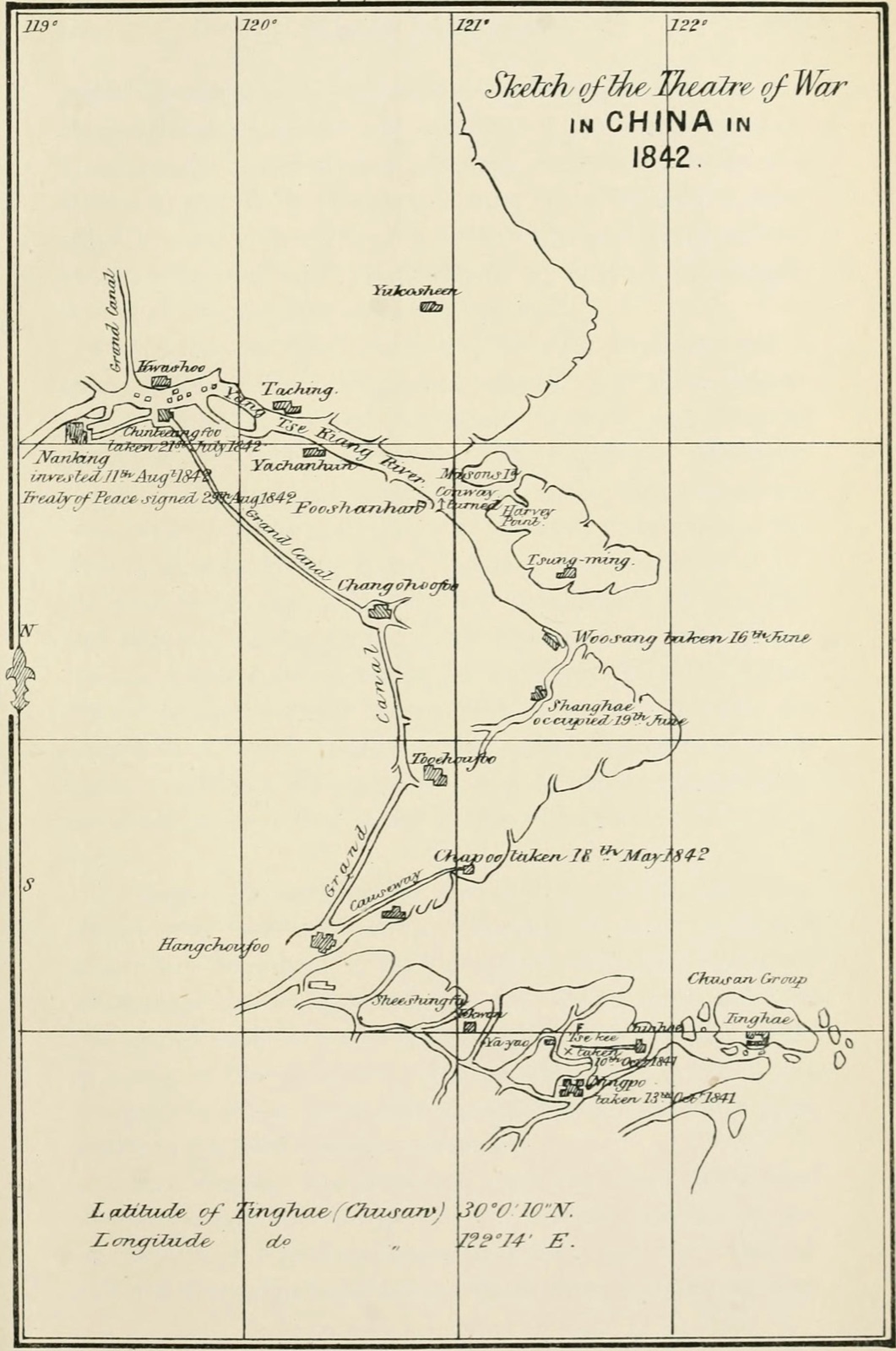
Nineteenth-century sketch map of the theatre of war in China in 1842, from Canton and the coast up the Yangtze
Sketch of the theatre of war in China in 1842, from a work published in 1883. Unknown author, public domain, via Wikimedia Commons

The Treaty of Nanking, 1842

The Treaty of Nanking was signed on 29 August 1842 aboard HMS Cornwallis, anchored in the Yangtze at Nanjing. Henry Pottinger signed for Britain. Qing commissioners Qiying and Yilibu signed for the Qing government. The main terms were:

  • Hong Kong Island was ceded to Britain in perpetuity.
  • Five ports were opened to British trade: Canton (Guangzhou), Xiamen (Amoy), Fuzhou, Ningbo and Shanghai.
  • An indemnity was set and paid in instalments over three years. The breakdown was 6 million silver dollars for the confiscated opium, 3 million for merchants' debts and 12 million for war costs, a total of 21 million. Some accounts add the 6 million Canton ransom to reach 27 million.
  • British subjects gained extraterritoriality, which meant they were tried under British rather than Chinese law.

The Daoguang Emperor ratified the treaty on 27 October 1842 and Queen Victoria on 28 December 1842. The two sides exchanged ratifications at Hong Kong on 26 June 1843. A supplementary Treaty of the Bogue followed in 1843; the main accounts give only the year.

What the war changed

The Treaty of Nanking is often described as the first of the “unequal treaties” that China signed with Western powers. Hong Kong gave Britain a permanent base on the China coast, and the new ports became places where foreign merchants and officials lived under their own law.

Historians debate the war's place in history. Many consider 1839 the start of modern Chinese history, because the war exposed the limits of Qing military power and set a pattern for the treaties that followed. The technology gap is part of that story. The iron steamer Nemesis could work in rivers where larger warships could not, which helps explain how lopsided the fighting on the water was.

What exams ask

For AP World History and similar courses, expect questions on three points. First, causes: the opium trade, the drain of silver and the dispute over trade rules. Second, the Humen destruction and the British response that followed. Third, significance: the Treaty of Nanking and the start of the unequal treaty system. Strong answers explain why the treaty's terms, such as Hong Kong, the five ports, the indemnity and extraterritoriality, mattered beyond 1842.

Read next

These related FiveMinRead pages show what came before and after the war.

  • Causes of the Opium War: how trade, trade rules and diplomacy built toward the 1839 crisis.
  • The Taiping Rebellion (1850–1864): a major rebellion that began eight years after the treaty.
  • The Boxer Rebellion (1899–1901): a later uprising against foreign influence in China.
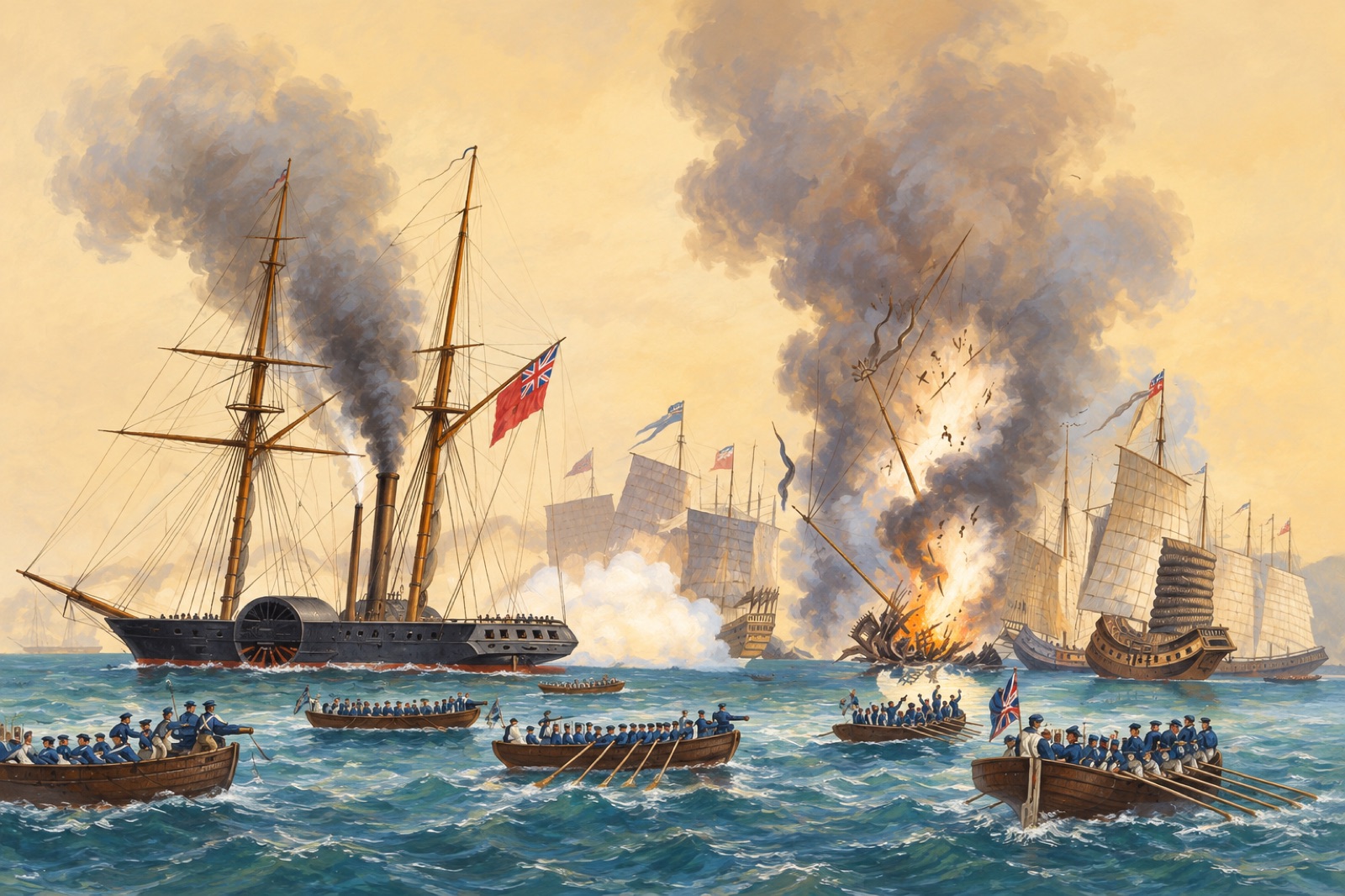
Armies and units

  • Engraving of the iron steamer Nemesis and ships' boats destroying Chinese war junks in Anson's Bay, 7 January 1841 (illustration) Ship Illustration

    Britain (East India Company)

    The iron steamer Nemesis

    The East India Company's iron paddle steamer Nemesis, under Lt. W. H. Hall, attacked a Qing war junk fleet in Anson's Bay on 7 January 1841. Her shallow draught let her work in rivers where larger warships could not.

    Illustration after Thomas Allom, public domain · Original

  • Ship

    Britain

    HMS Cornwallis, Royal Navy ship of the line

    A 74-gun ship of the line of the Royal Navy. She was anchored in the Yangtze at Nanjing when the Treaty of Nanking was signed aboard her on 29 August 1842.

  • Hand-coloured print of Chinese war junks under fire from the steamer Nemesis in Anson's Bay, January 1841 (illustration) Ship Illustration

    Qing China

    Qing war junks

    About 15 Qing war junks under Admiral Guan Tianpei were attacked in Anson's Bay on 7 January 1841. Sources agree that 11 junks were destroyed in the battle as a whole. The print shows their high sterns and sails.

    Illustration after Edward Duncan, public domain · Original

  • Wood engraving of Manchu Bannermen ('Tartars') rallying at Chin-keang-foo, 1842 (illustration) Infantry Illustration

    Qing China

    Manchu Bannermen at Zhenjiang

    The Manchu garrison of Zhenjiang (Chinkiang) fought in the British assault of 21 July 1842. This image is a British artist's view of the Bannermen, not a Qing source.

    Illustration after "Drawn on wood by E. T. Wigan", p. xviii, public domain · Original

  • Painting by Richard Simkin of the 98th Regiment of Foot attacking Chin-Kiang-Foo on 21 July 1842 (illustration) Infantry Illustration

    Britain

    98th Regiment of Foot at Chinkiang

    Richard Simkin's painting shows the 98th Foot in the attack on Chinkiang on 21 July 1842. The British force that day was about 6,900 men under Hugh Gough.

    Illustration after Richard Simkin, public domain · Original

  • Nineteenth-century portrait of the Qing commissioner Lin Zexu by Lam Qua (illustration) Commander Illustration

    Qing China

    Lin Zexu, Imperial Commissioner

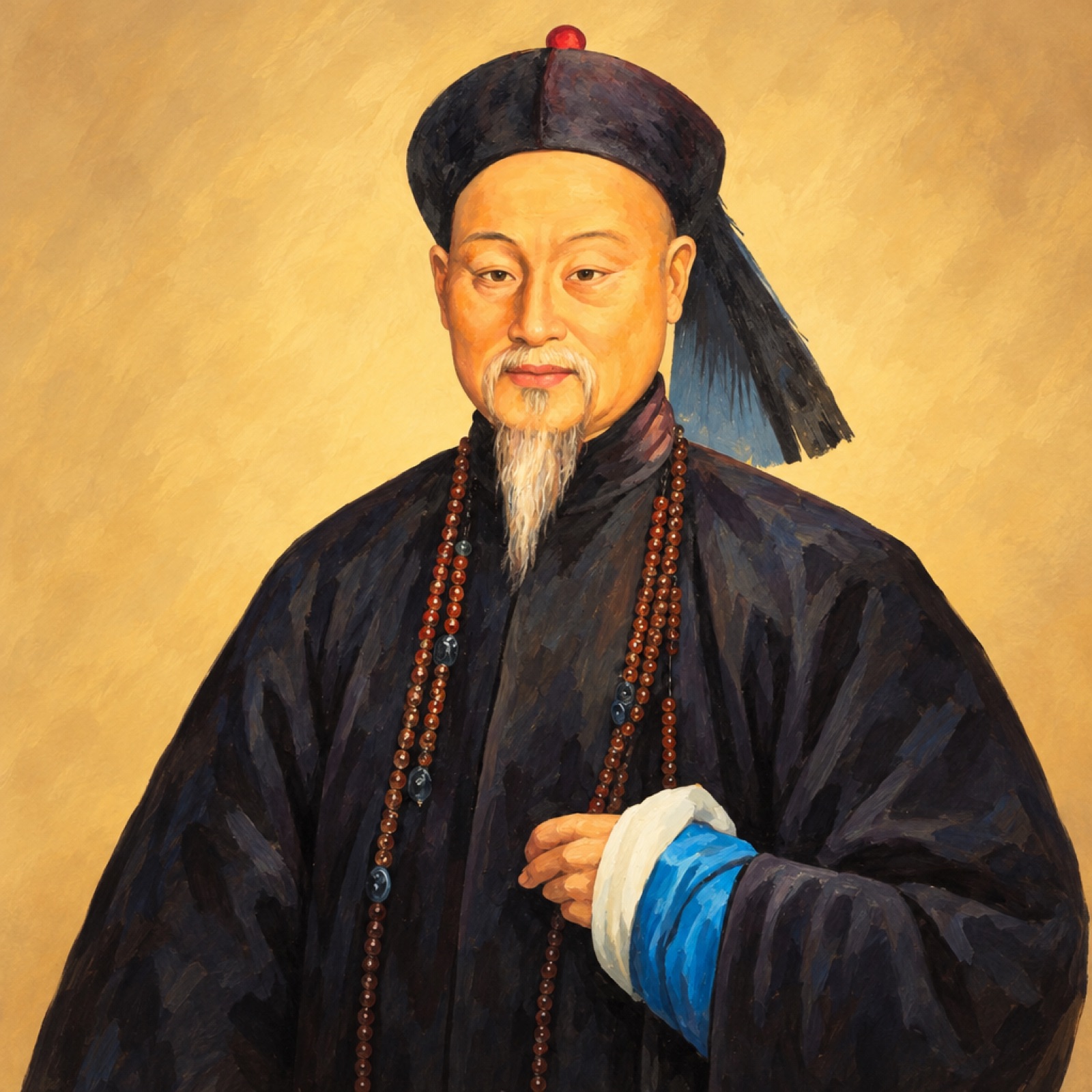
    Lin Zexu was the imperial commissioner who had the opium destroyed at Humen in June 1839. In September 1840 his post passed to Qishan.

    Illustration after Lam Qua, public domain · Original

  • Portrait of Sir Henry Pottinger, 1st Baronet, by Samuel Laurence, 1840 (illustration) Commander Illustration

    Britain

    Sir Henry Pottinger

    Pottinger was the British plenipotentiary who negotiated the Treaty of Nanking and signed it on 29 August 1842 aboard HMS Cornwallis.

    Illustration after Samuel Laurence, public domain · Original

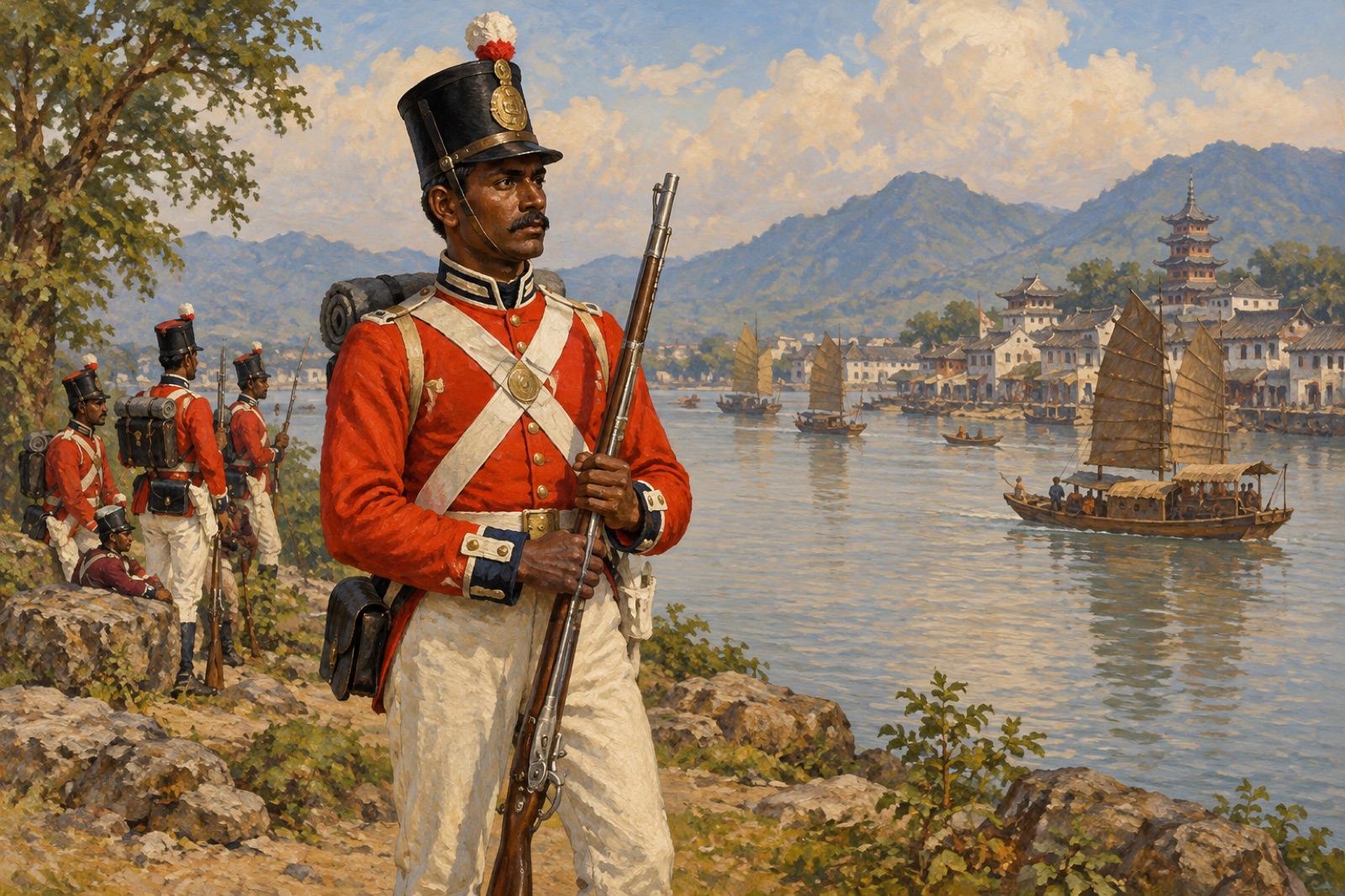
  • Painterly illustration of an 1840s sepoy of the Madras Native Infantry in uniform Infantry Illustration

    Britain (East India Company)

    Indian sepoys of the Madras and Bengal armies

    Sepoy regiments from the East India Company's Indian armies formed a large part of the British land force in China. Sources give the British force as at least 19,000 men, including nearly 7,000 from the Indian Army.

    Illustration · FiveMinRead

Frequently Asked Questions

When did the First Opium War take place?

Fighting began in 1839 and the war ended with the Treaty of Nanking, signed on 29 August 1842. Some accounts date the start to a naval clash near Kowloon in September 1839, while others begin in 1840 with the main British expedition, so you may see either year.

Who fought in the First Opium War?

Britain fought the Qing Dynasty of China. British forces included Royal Navy ships, the East India Company's steamer Nemesis, British Army units and Indian sepoys. The Qing side relied on Manchu Bannermen and Green Standard troops.

What caused the First Opium War?

The main cause was the opium trade and the Qing government's attempt to stop it. Lin Zexu had the opium destroyed at Humen in June 1839, and Britain responded by sending warships to press for compensation and wider trade rights.

What did the Treaty of Nanking do?

It ceded Hong Kong Island to Britain, opened five ports to British trade, set an indemnity of 21 million silver dollars and gave British subjects extraterritoriality. Some accounts add a 6 million dollar Canton ransom to reach 27 million.

Why does the war matter today?

It is often seen as the start of the unequal treaty system and a turning point in modern Chinese history. It showed the limits of Qing military power and shaped relations between China and foreign powers for decades.

Check Your Understanding

Pick an answer for each question to see if you were right.

  1. In which year was the opium destroyed at Humen?

  2. Where was the Treaty of Nanking signed?

  3. What happened to Hong Kong Island under the treaty?

  4. What did the Nemesis attack on 7 January 1841?

  5. How many treaty ports did the treaty open?

More in Asia & the West

See the full topic guide →
Share:

About the Writer

Alex Ng
Alex Ng

Software Engineer & Writer

Software engineer with a passion for distilling complex ideas into actionable insights. Writes about finance, investment, entrepreneurship, and technology.

Read more →

Keep reading

Explore the topic: Asia & the West

Articles

Summaries