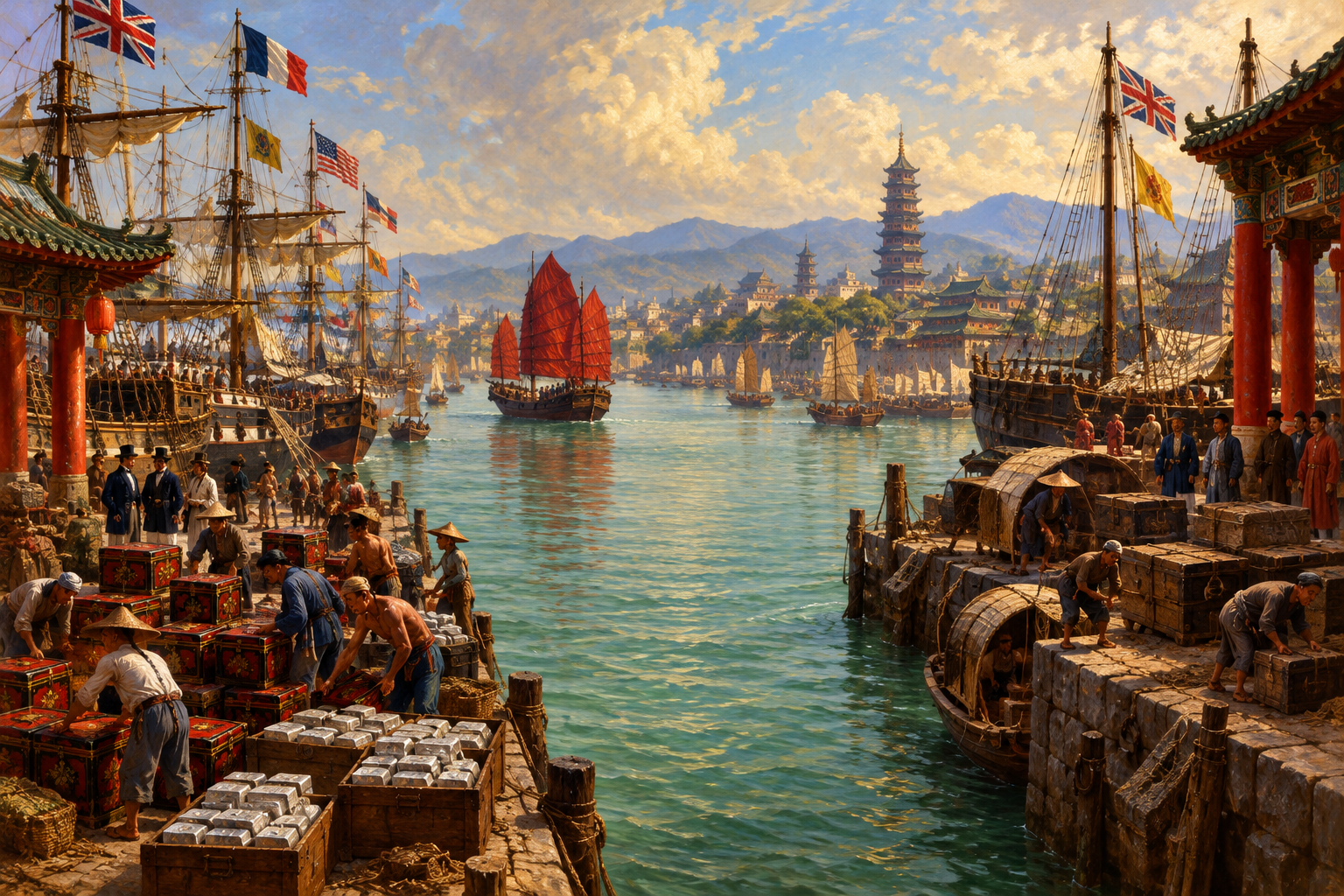
The Opium War (1839–1842) began because two very different ideas of trade collided at Canton. Britain wanted more ports, equal diplomatic relations and freer sales. The Qing court wanted to control foreign traders and stop the opium that was draining silver out of China and harming its people. The causes of the Opium War came from a restrictive trade system, a lopsided balance of trade, the opium business and a clash over diplomacy. Below, they are set out in order. This page is also part of our Qing China, Japan and the West topic.
In five minutes
Causes of the Opium War: four pressures
Historians usually point to four pressures. None of them alone explains the war. Together, they made a clash very likely.
1. A tightly limited trade system. From 1757, the Qing government confined most foreign trade to Canton (Guangzhou). Foreign merchants worked from a small district of warehouses called the Thirteen Factories, and they could deal only with a group of licensed Chinese merchants known as the Cohong. Foreign traders were barred from bringing women into the factories and could not learn Chinese, and during the off-season they had to withdraw to Macau. British traders found these rules slow, unpredictable and expensive. They also had no direct channel to senior officials.
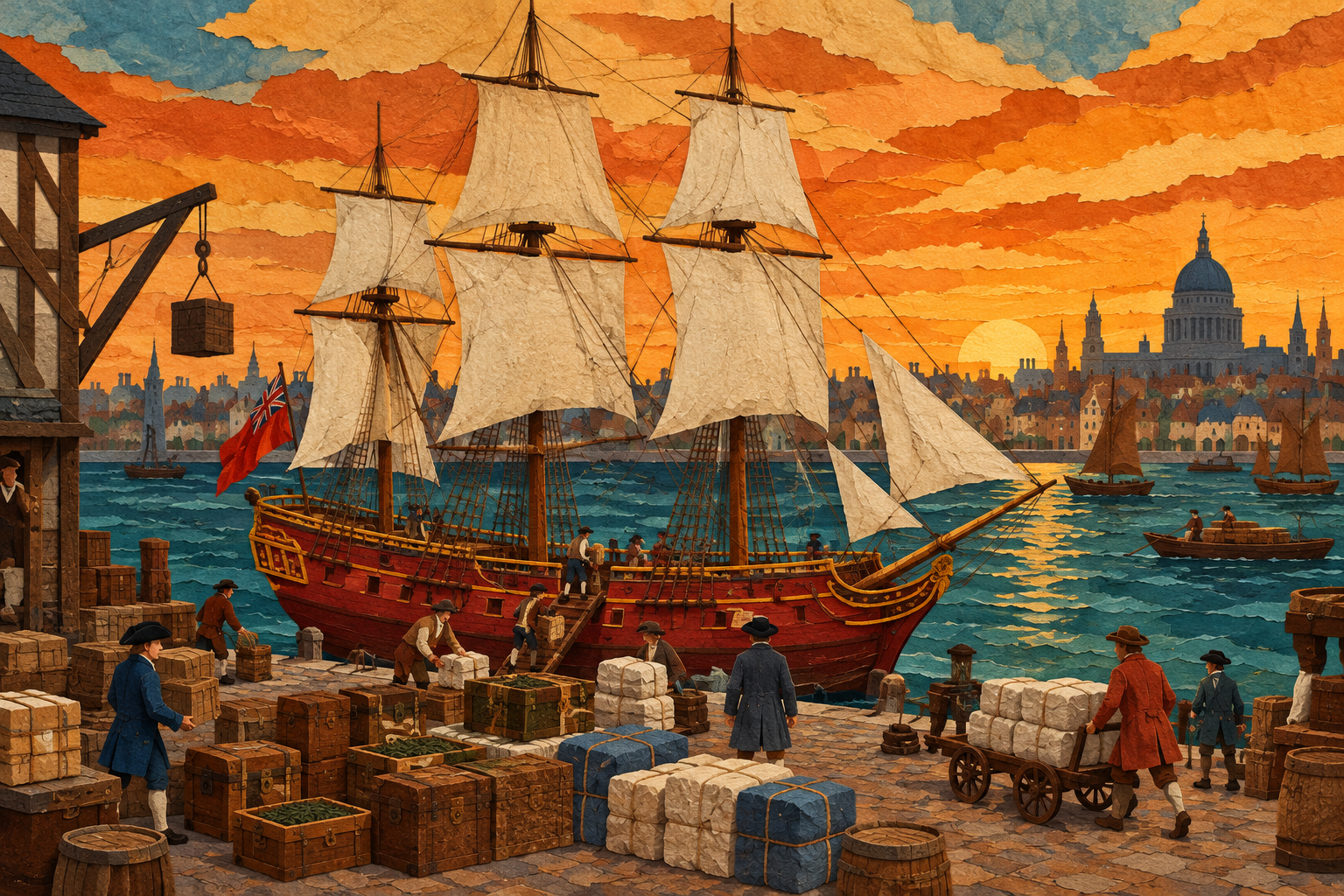
2. A lopsided balance of trade. British buyers loved Chinese tea, silk and porcelain. China, however, had little interest in British manufactured goods, so British merchants paid for most of their purchases in silver. For decades silver flowed into China, and British traders struggled to find products that Chinese buyers wanted. Tea was in such high demand in Britain that the trade grew very large, and the imbalance grew with it.
3. The opium trade. Opium grown in British-ruled India became the most profitable item foreign merchants could sell in China. Smuggling had existed for a long time, but the trade grew sharply in the 1820s and 1830s. By the early 1830s, figures often cited put imports at roughly 20,000 chests a year. In 1833 the East India Company lost its monopoly on the China trade, and private merchants pushed the opium business higher still. The Qing government had banned opium several times, including in 1796, yet enforcement was weak and bribery was common. Opium sales also produced the silver that merchants used to buy tea, so the drug kept the whole trade running.
Once opium became a major import, the flow of silver reversed. Chinese buyers paid silver for the drug, so silver began to leave China. Silver grew scarce, and people who paid taxes in silver faced a heavier burden. Addiction spread through soldiers, officials and ordinary families, so the court treated opium as a social crisis as well as a financial one.
4. Diplomacy and pride. The two sides held very different views of the world. The Qing court treated foreign envoys as people bringing tribute, as the tribute system expected, and it did not accept equal diplomatic relations. Britain wanted a permanent envoy in Beijing, more ports and fair trade rules. The Macartney mission of 1793 asked for such changes and was turned down by the Qianlong court. Four decades later, the frustration remained. In 1834 Lord Napier, Britain's chief superintendent of trade, tried to bypass the Canton officials and send a letter directly to a senior Qing official. The Chinese side refused to pass it on. Napier fell ill with typhus and died that October.
Inside China, officials disagreed too. Some proposed legalizing and taxing opium, while others, including Lin Zexu, argued for strict prohibition.
Put together, the four pressures formed a chain. Trade limits frustrated British merchants, the silver trade made opium the key to profit, the silver drain pushed the court toward harsh enforcement, and the lack of diplomatic channels meant that no dispute could be settled easily. Each problem made the others harder to solve.
How the war began
In 1839 the Daoguang Emperor sent Commissioner Lin Zexu to Canton with a clear order: end the opium trade. Lin confined foreign merchants in their trading factories until they surrendered their stocks. Charles Elliot, Britain's chief superintendent, also told British merchants to hand over their opium, and about 20,000 chests were surrendered. In June, Lin had the opium destroyed in public at Humen on the Pearl River.
The dispute then turned into a legal crisis. In July, drunk British sailors beat a Chinese villager to death near Kowloon. Elliot refused to hand the men over to Chinese courts and held a trial on board a British ship instead. To Qing officials, this proved that foreigners would not accept Chinese law. Lin halted trade with the British.
British merchants saw things differently. They regarded the trade limits as unfair and wanted freer access, and they demanded compensation for the opium that had been confiscated and destroyed. In Britain, the question of going to war was debated hotly in Parliament in 1840.
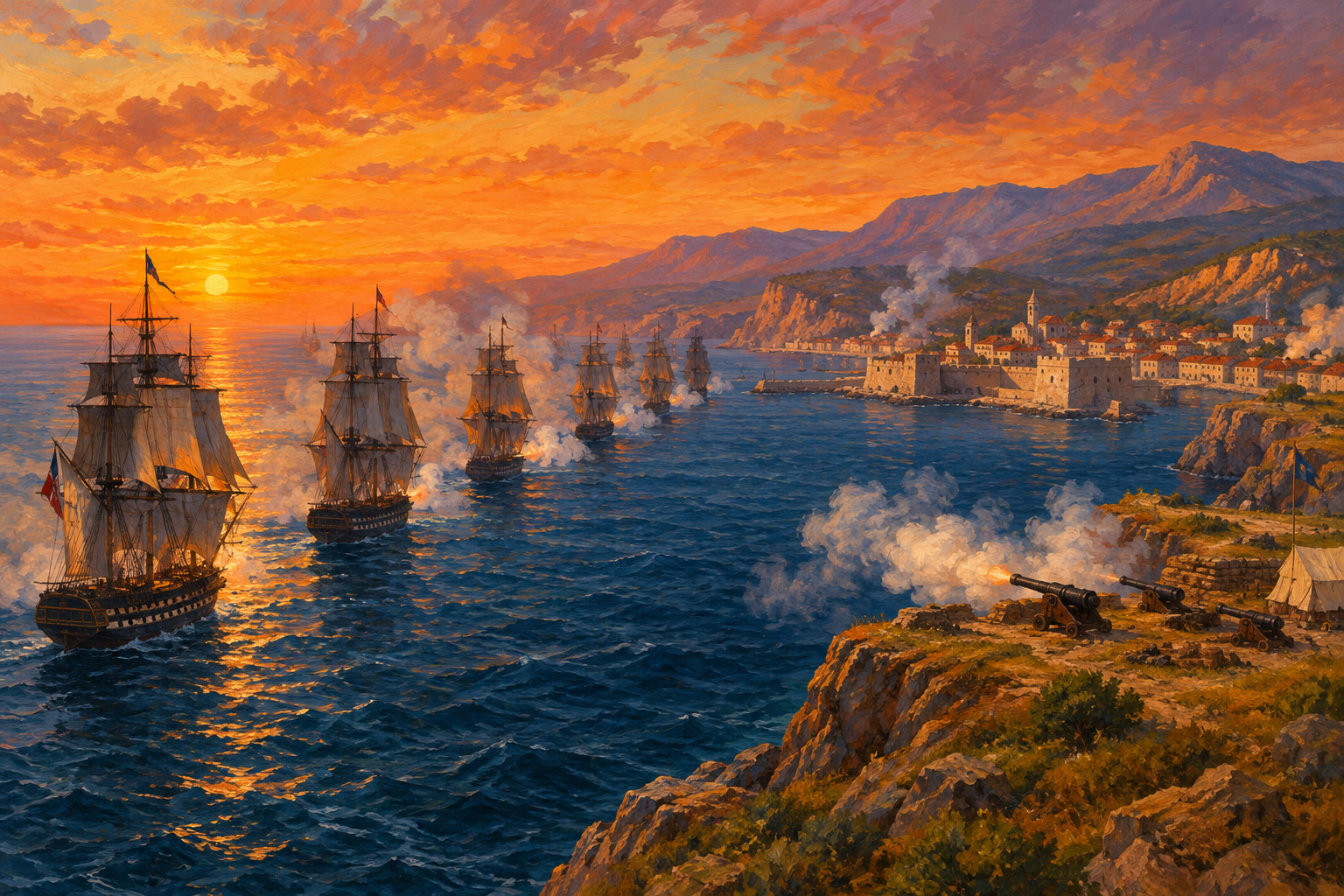
Britain then sent a larger expedition in 1840. Its steam-powered warships were far better suited to rivers and coastal waters than Qing junks and coastal forts, and the fighting largely went Britain's way.
What the war changed
The war ended with the Treaty of Nanking in August 1842. Hong Kong Island was ceded to Britain, five ports including Shanghai opened to British trade, and China agreed to pay a large indemnity. The treaty also fixed tariff rates. It became the first of a series of agreements now called the unequal treaties.
For Britain, Hong Kong became a base for trade and naval power in Asia. Historians often argue that the war exposed the weakness of Qing defences on the coast and set a pattern that other powers would follow. Shanghai, one of the new ports, grew quickly in the decades that followed.
The war did not solve the underlying problems. Trade limits, the opium trade and the gap in diplomatic ideas all remained, and they returned in the Second Opium War of 1856 to 1860.
Common misunderstandings
A common shortcut says the war was simply about drugs. Opium was central, but the war grew out of the whole system around it, not out of drugs alone.
Another shortcut calls China closed to the world. Canton stayed an active port for decades. The real dispute was over the terms of trade and who had the right to set them.
A third mistake is to treat the war as a single event. The causes built up over several decades, and the fighting, the negotiations and the treaty each came in stages.
What exams ask
In world-history exams, the question is usually not just what happened but why. A strong answer names two or three causes, explains how each one pushed toward war, and then gives the long-term significance. In AP World History style, the significance could be the unequal treaties and the weakening of Qing authority.
A clear way to plan the answer is a chain of cause and effect. For example: the trade imbalance led merchants to sell opium; opium drained silver; the silver drain pushed the court to crack down; the crackdown and the Kowloon dispute led Britain to demand compensation and better terms; and the clash led to war and then to the Treaty of Nanking.
Use exact terms: Canton system, Cohong, Thirteen Factories, Lin Zexu, Humen and the Treaty of Nanking. Precise terms signal that you know the material.
Read next
These pages continue the story from different angles:
- The First Opium War (1839–1842): the battles and diplomacy that followed the crisis at Canton.
- The Asian Triangular Trade: Tea, Opium and Silver: the trade network behind the silver and opium flows.
- The Boxer Rebellion (1899–1901): how resentment of foreign power built up in later decades.