In five minutes: the Treaty of Versailles
The Treaty of Versailles was the peace treaty that ended the First World War between Germany and the Allied powers. It was signed on 28 June 1919 in the Hall of Mirrors at the Palace of Versailles, outside Paris, and came into force on 10 January 1920. Germany lost territory, had its army cut to 100,000 men, accepted responsibility for the war and was told to pay reparations. The treaty also set up the League of Nations.
The key point is the gap between hope and result. The treaty was meant to prevent another great war, but most Germans saw it as an unfair, dictated peace. This page is part of our guide to World War I (1914–1918): Causes, Course and Consequences.
Why a peace treaty was needed
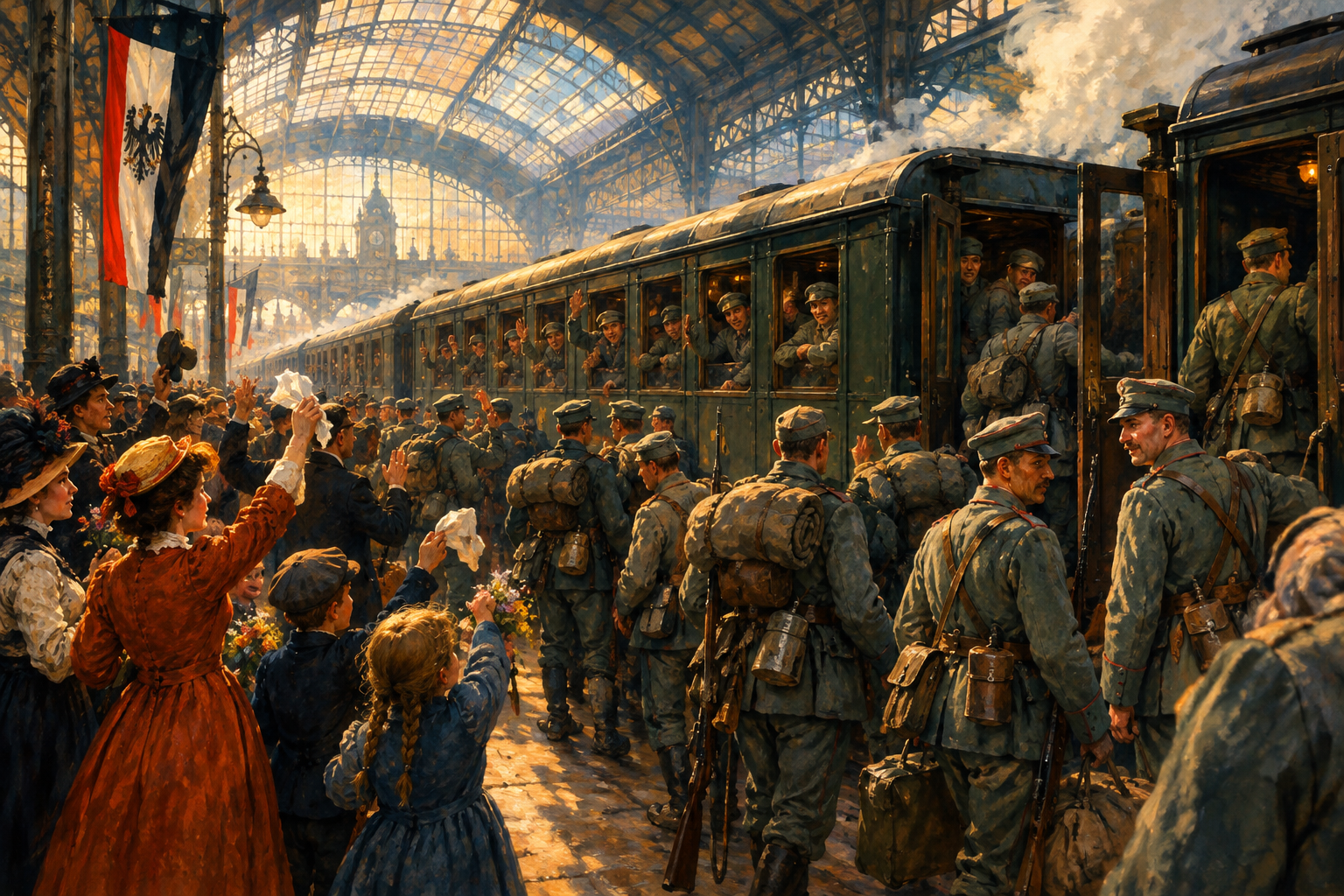
Fighting on the Western Front stopped with the armistice of 11 November 1918, but an armistice is only a pause. German troops were still on foreign soil, the Kaiser had abdicated and revolution had spread through German cities. The Allied naval blockade stayed in place until July 1919, so hunger shaped the mood in Germany while the peace was being written.
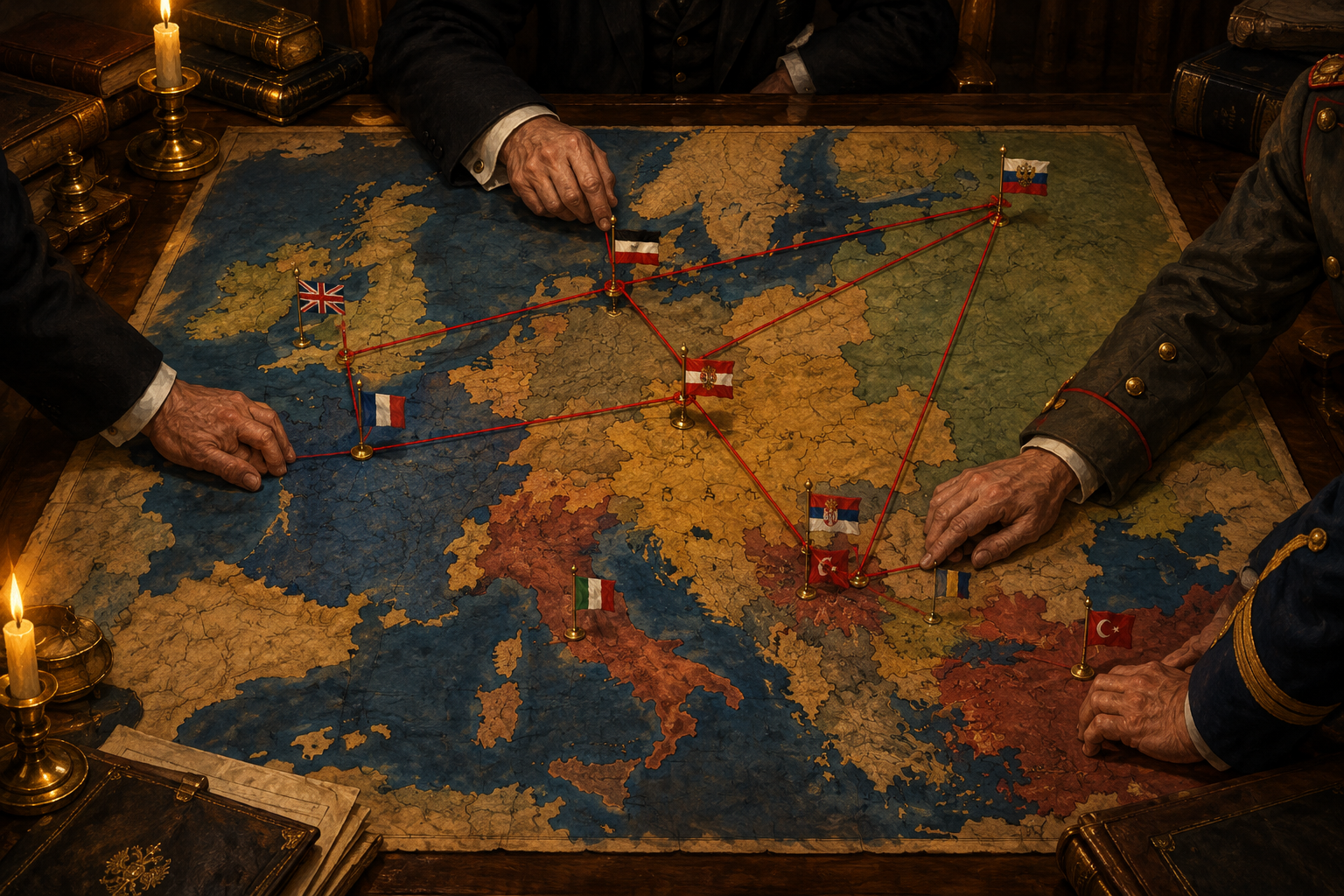
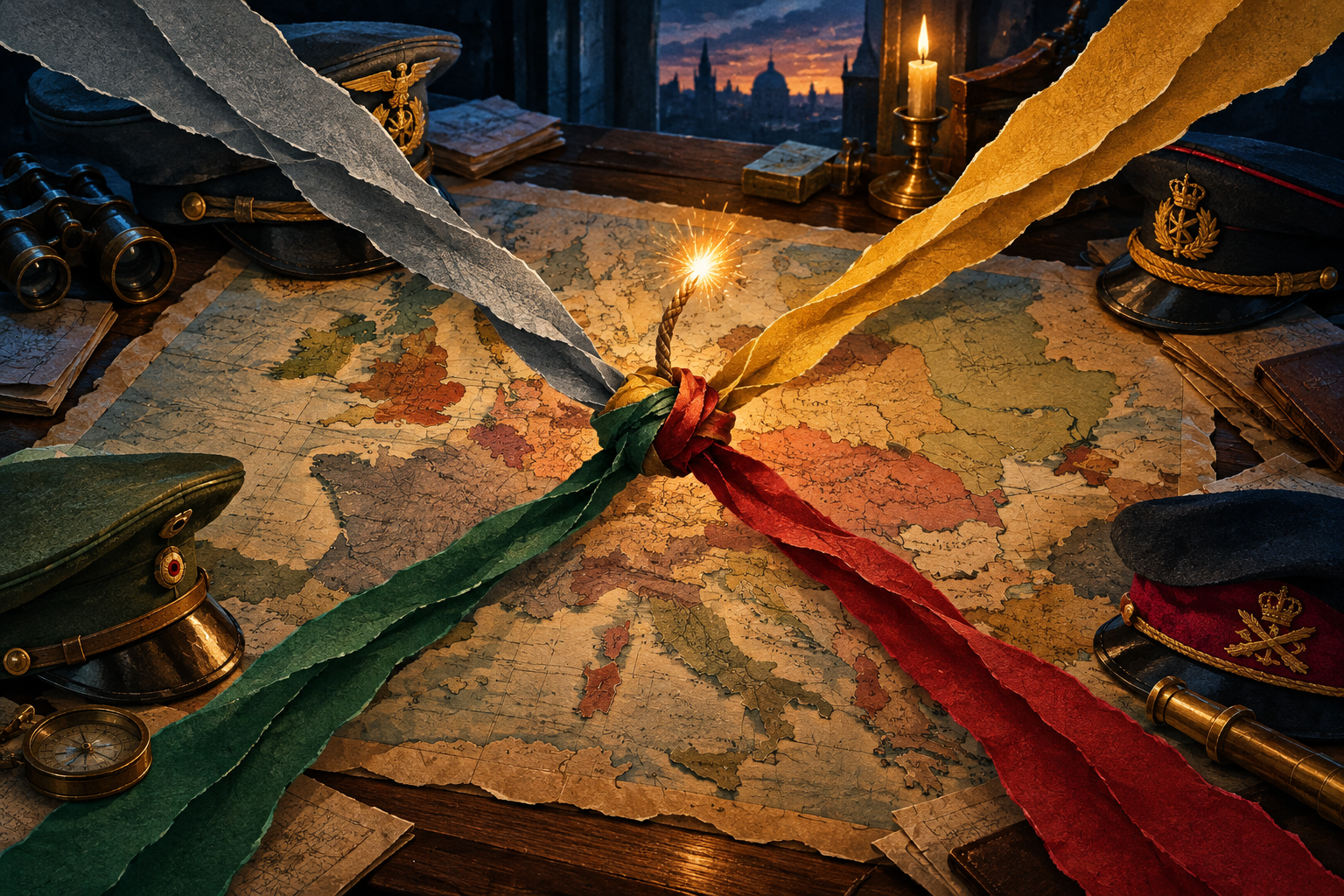
Germany had asked for an armistice hoping for a peace based on US President Woodrow Wilson's Fourteen Points of January 1918. A lasting settlement still had to decide borders, armies, money and blame. The war had grown out of a web of alliances and arms races, which we describe in What Is Militarism? How It Led to WWI, so the winners disagreed about how to stop it happening again.
Who made the treaty
The Paris Peace Conference opened on 18 January 1919, with delegates from more than twenty countries. The real decisions were made by the Big Four: Woodrow Wilson of the United States, David Lloyd George of Britain, Georges Clemenceau of France and Vittorio Orlando of Italy.
Their aims differed. Wilson wanted a new order built on self-determination and a League of Nations. Clemenceau wanted security against a neighbour that had invaded France in 1870 and again in 1914. Lloyd George wanted a settlement that protected British trade and the empire without crushing Germany for good. Orlando pressed Italy's territorial claims.
The defeated powers did not negotiate. A German delegation was called to Versailles, received the draft terms on 7 May 1919 and was allowed to comment only in writing. The Allies made a few changes, such as a vote on the future of Upper Silesia, but kept the main structure.
What the treaty said
The treaty had 440 articles. Five groups of terms mattered most.
- Territory. Alsace-Lorraine returned to France. Eupen-Malmedy went to Belgium, and northern Schleswig went to Denmark after a vote. Most of Posen and West Prussia went to Poland, which gained a route to the sea, the so-called Polish Corridor, while Danzig became a free city under the League. The coal-rich Saar was run by the League for 15 years, with its coal going to France. Germany's colonies became League mandates. Germany lost roughly 13 percent of its pre-war territory and about 10 percent of its population.
- Military limits. The army was capped at 100,000 volunteers with no conscription. Germany could not have tanks, military aircraft or submarines, and its navy was small. The Rhineland was to be demilitarised and occupied by Allied troops for up to 15 years.
- War guilt. Article 231 said Germany and its allies were responsible for the loss and damage the Allies suffered in a war forced on them by German aggression. The Allies used it as the legal basis for reparations. Germans read it as a statement of national guilt.
- Reparations. The sum was left open in 1919. In 1921 it was set at 132 billion gold marks, though the payment schedule was built to collect much less in practice.
- New order. The Covenant of the League of Nations formed the first part of the treaty. Union between Germany and Austria was banned. Article 227 called for the Kaiser to be tried, but he lived in the Netherlands and was never brought to court.
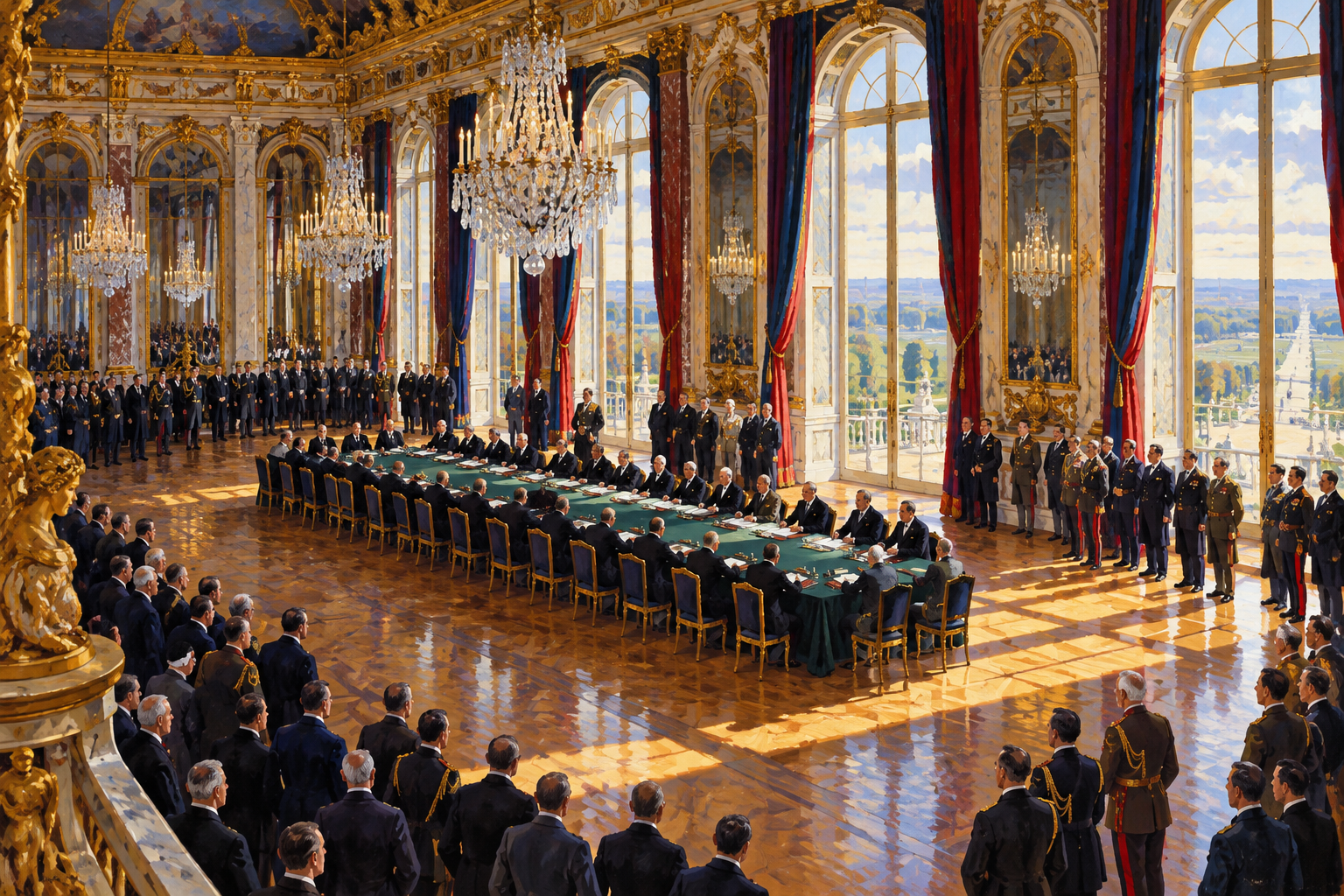
The signing in the Hall of Mirrors
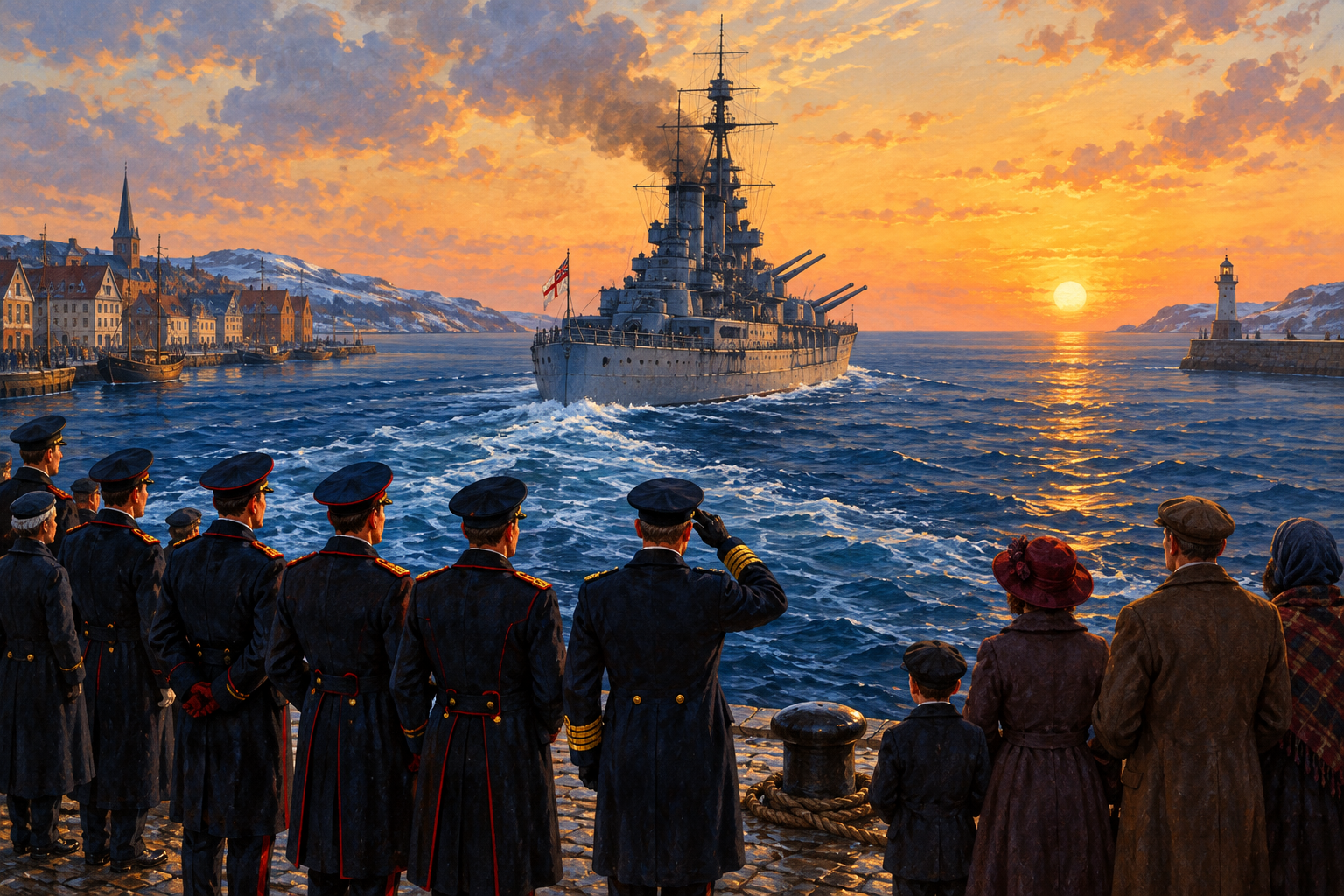
The terms caused outrage in Germany. Chancellor Philipp Scheidemann's government resigned rather than sign. When the Allies threatened to resume the war, the National Assembly voted to accept. On 21 June, German crews sank their own interned fleet at Scapa Flow rather than hand it over.
On 28 June 1919, Hermann Müller and Johannes Bell signed for Germany. The date was five years after the assassination in Sarajevo, and the hall had hosted the proclamation of the German Empire in 1871, after France's defeat. For the French, the choice of place was deliberate.
How people reacted
In Germany, almost every party called the treaty a Diktat, a dictated peace. Anger focused on the war-guilt article, the lost land and the money. Nationalists later blamed the politicians who signed, calling them the November criminals, and used the treaty to attack the Weimar Republic.
Among the winners, opinion was split. Many in France felt the terms were too soft. In Britain, the economist John Maynard Keynes, who had left the British delegation, argued in The Economic Consequences of the Peace (1919) that the reparations were unrealistic and would damage all of Europe.
The United States Senate refused to ratify the treaty, in November 1919 and again in March 1920, mainly over the League of Nations. The US never joined the League and made a separate peace with Germany in 1921.
Japan was one of the five major powers. It proposed a racial equality clause, which was not adopted, and it received former German rights in Shandong and a mandate over German islands in the North Pacific. China, also on the winning side, refused to sign after the Shandong decision, which fed the May Fourth Movement of 1919.
Consequences
Reparations caused years of dispute. When Germany fell behind on deliveries, France and Belgium occupied the Ruhr in January 1923, and the German economy slid into hyperinflation. The Dawes Plan (1924) and the Young Plan (1929) eased the schedule, and the Lausanne conference of 1932 effectively ended payments. Allied troops left the Rhineland in 1930, five years early.
Enforcement weakened over time. Germany rearmed in secret, Adolf Hitler announced open rearmament in March 1935, and on 7 March 1936 he sent troops into the demilitarised Rhineland. Britain and France did not stop him.
Historians still debate how much the treaty caused the Second World War. Some follow Keynes and stress its harshness. Others point out that Germany stayed united and potentially the strongest economy in Europe, and that the real weakness was poor enforcement, together with the Great Depression. Most agree that the treaty alone did not make another war certain. Versailles was one of several treaties, with Saint-Germain, Neuilly, Trianon and Sèvres, that redrew the map after the war. For the wider picture, see Effects and Consequences of WWI.
What exams ask
- Know the basics: signed 28 June 1919, Hall of Mirrors, in force 10 January 1920.
- Name the Big Four and what each wanted. Contrast Wilson's Fourteen Points with the final outcome.
- List the five main terms: territory, military limits, war guilt, reparations and the League.
- Explain German reaction (the Diktat) and why it weakened the Weimar Republic.
- Typical essay: "To what extent did the Treaty of Versailles cause the Second World War?" A strong answer weighs harshness, weak enforcement, the Depression and Hitler's choices.
Read next
- Effects and Consequences of WWI: the political, economic and human results of the war that this treaty tried to settle.
- World War I Timeline 1914–1918: the events from Sarajevo to the armistice, in order.
- What Is Militarism? How It Led to WWI: the arms race that the treaty tried to cap.
- World War I (1914–1918): Causes, Course and Consequences: the full overview of the war.