Chữ Nôm and Vietnam’s writing systems in five minutes
Chữ Nôm is a historical writing system that used and adapted Chinese characters to record the Vietnamese language. It flourished alongside chữ Hán, the characters used to write literary Chinese, before Latin-based quốc ngữ became the ordinary script for Vietnamese. The change was gradual: a dictionary did not replace an older culture overnight, and a change of script did not mean that Vietnamese people stopped speaking Vietnamese.
For a long time, educated people in Vietnam encountered literary Chinese in government, examinations and scholarship. Nôm offered a way to write Vietnamese words, including words for which existing Chinese characters did not provide a straightforward written form. Authors used it for poetry, religious works and other writing. The relationship between the scripts belongs to the wider history of Vietnam’s dynasties and French rule, in which political institutions, education and culture changed together.
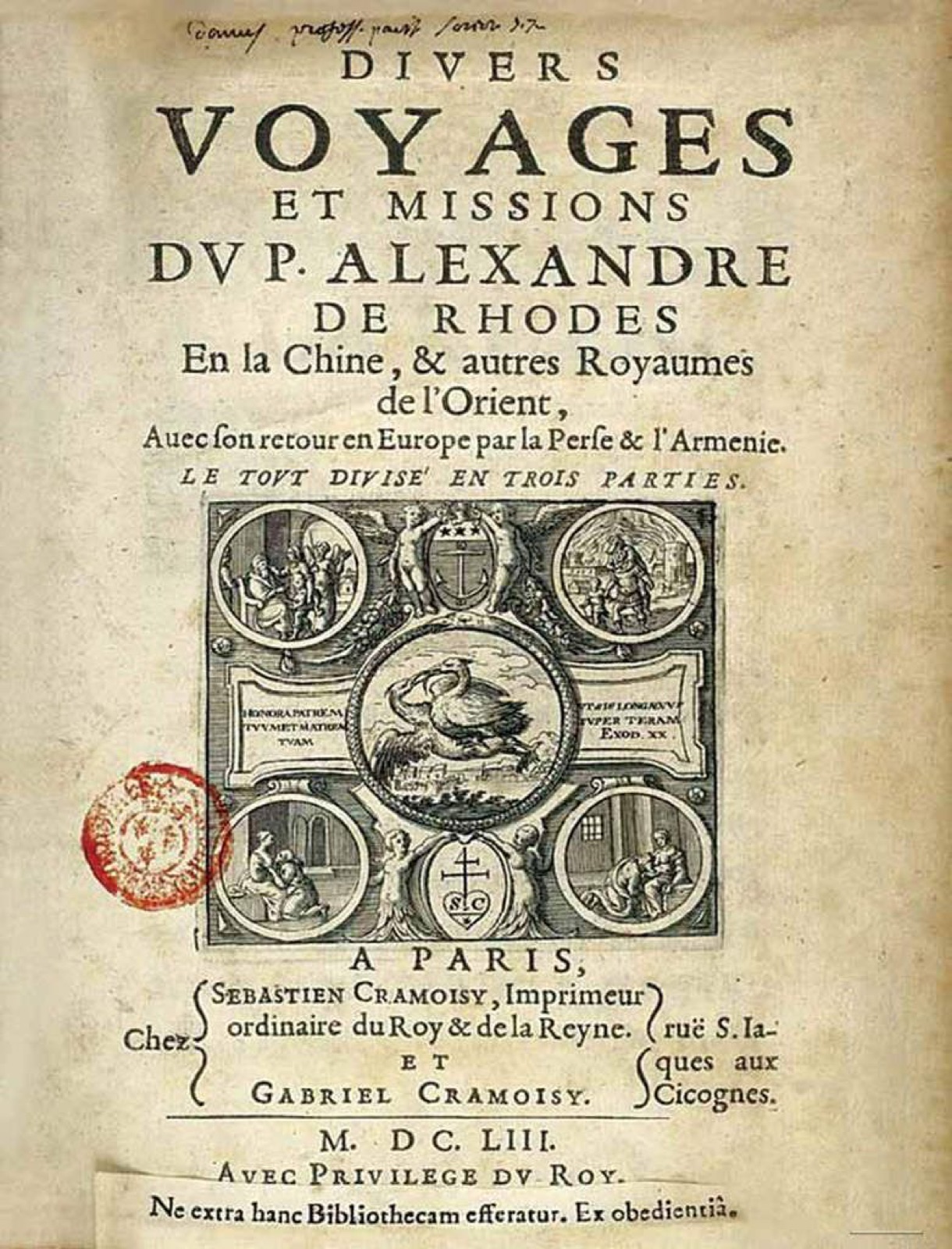
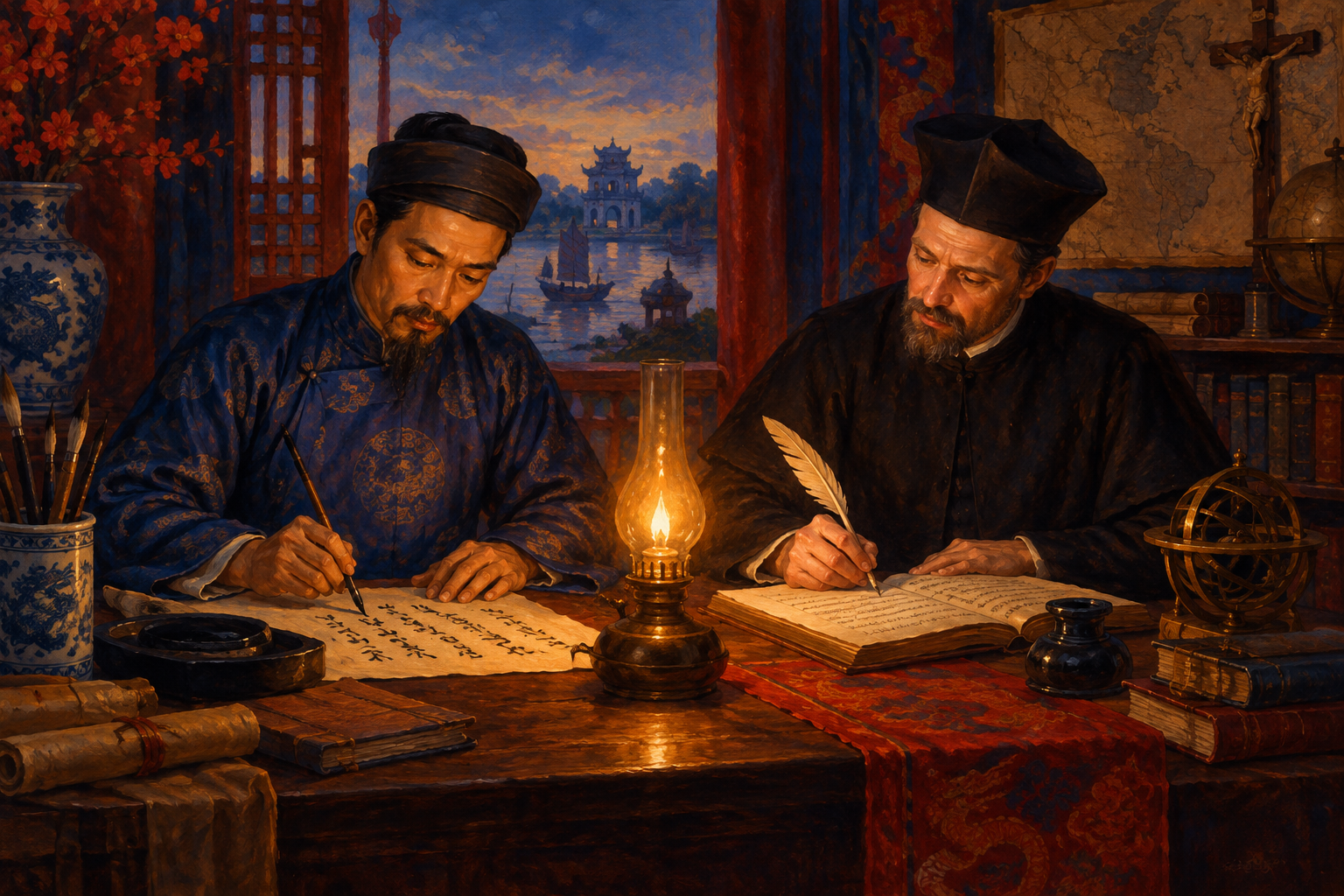
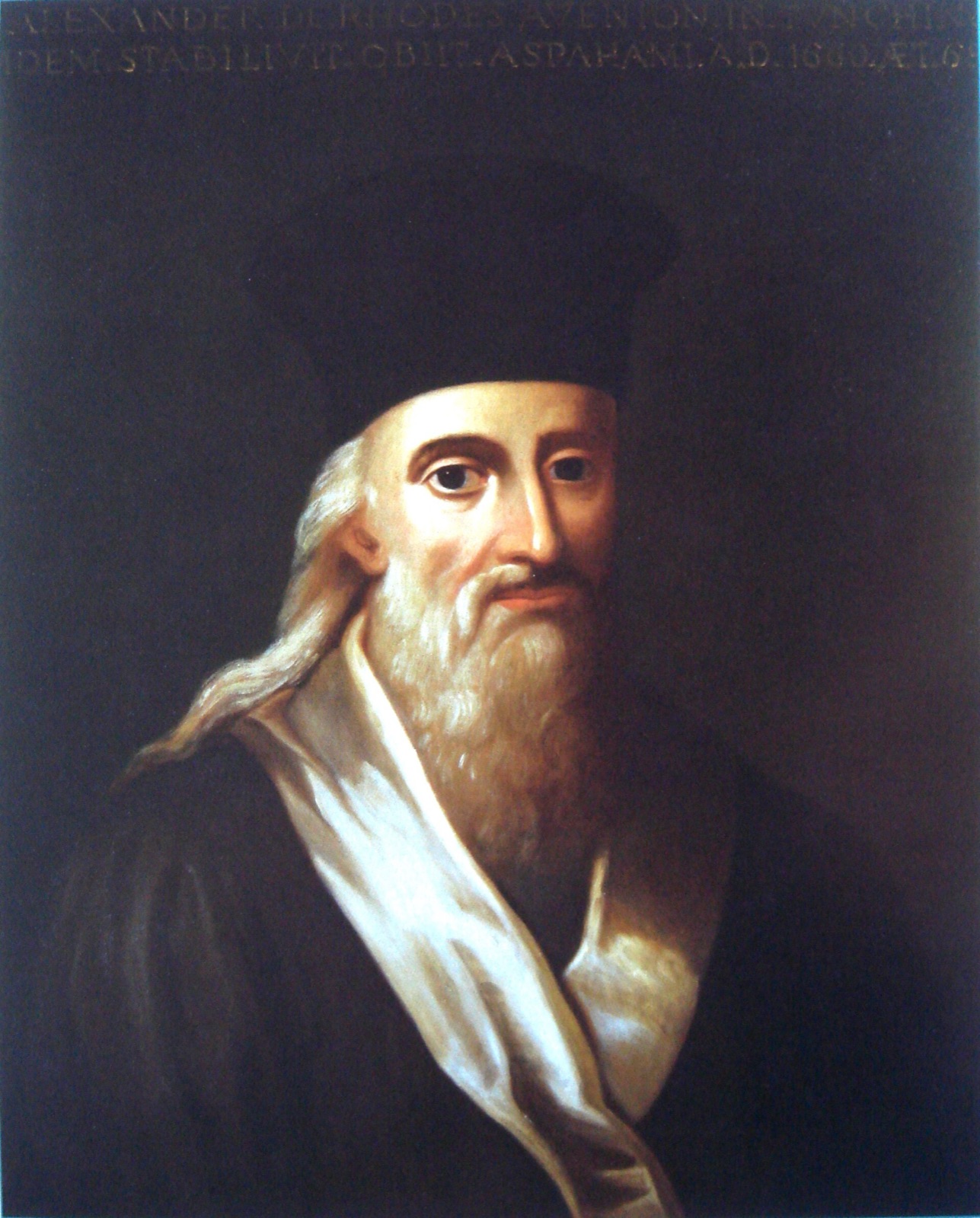
Missionaries and Vietnamese collaborators later developed ways to represent Vietnamese sounds with Latin letters. Alexandre de Rhodes published a Vietnamese–Portuguese–Latin dictionary in 1651, building on earlier work. Under French colonial rule, schools, administration and newspapers gave quốc ngữ new reach. Vietnamese reformers and later governments also promoted it for their own purposes. The end of the classical examination system in 1919 marked a major institutional break, although older writing did not simply vanish on that date.
Hán and Nôm: language and script
A useful distinction is between a language and the marks used to write it. Chữ Hán refers to Chinese characters, historically associated in Vietnam with literary Chinese. That written language gave educated officials access to a shared world of classical texts, government records and diplomacy. A Vietnamese scholar could pronounce character-based texts using Sino-Vietnamese readings, but a document composed in literary Chinese was not simply a Vietnamese sentence written in another alphabet.
Chữ Nôm, by contrast, made it possible to write Vietnamese. Its users drew on a knowledge of Chinese characters and adapted them to represent the sounds and meanings of Vietnamese words. Some characters were borrowed; others combined elements suggesting sound or meaning. Nôm was not a simple cipher in which every Chinese character stood for a fixed Vietnamese word. Reading a particular text could demand knowledge of its vocabulary, context and historical conventions.
These traditions overlapped. A person trained in Hán could use that learning to approach Nôm, and writers could work in more than one written language. The existence of Hán in administration also did not mean that ordinary people spoke Chinese at home. Vietnamese remained a spoken language while a prestigious written tradition used a different language.
By the Trần era, Nôm had become a developed means of writing Vietnamese. Its growth gives an important perspective on the Trần dynasty: the dynasty’s history includes literary culture as well as warfare. Nôm did not immediately displace literary Chinese from court life. Instead, the scripts and the languages they served occupied different, sometimes overlapping, places.
Nôm learning was demanding. Readers needed to recognise many character forms and understand conventions that could vary between texts. That difficulty helps explain why an alphabetic system could appeal to reformers, but it is not a complete explanation of historical change. Schools, political authority, access to books and the purposes for which people needed to read all mattered too.
A literary language: poetry and The Tale of Kiều
Nôm gave writers a way to put Vietnamese speech and literary expression on the page. The poet and statesman Nguyễn Trãi used it in his collection Quốc âm thi tập, showing that the vernacular could carry reflective and accomplished poetry. This was not a rejection of every Chinese influence: Vietnamese writers could draw on a shared classical education while shaping words and rhythms for their own language.
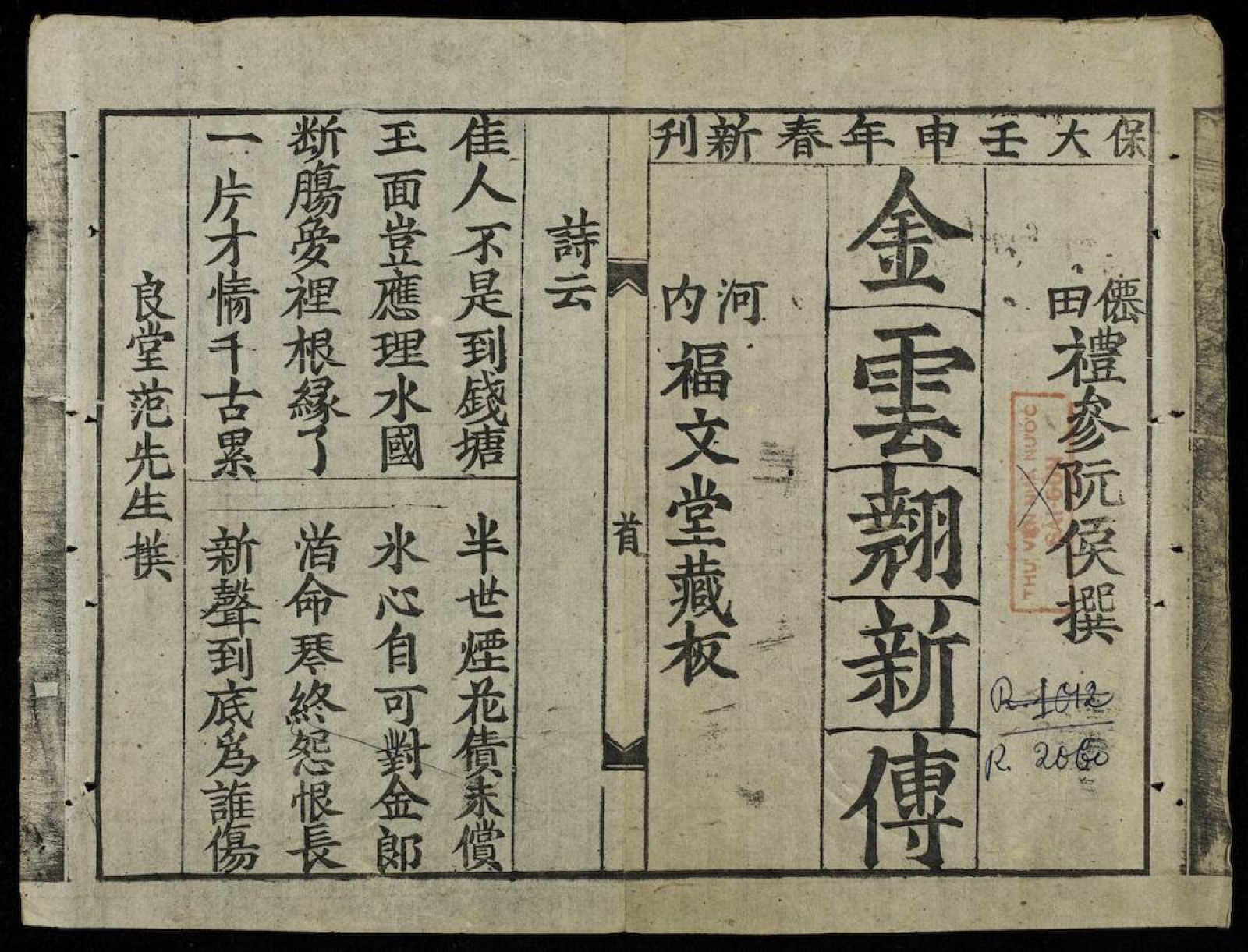
Nguyễn Du’s Truyện Kiều, or The Tale of Kiều, is an especially powerful example. Written in Nôm, the long poem follows Kiều through family duty, separation and suffering. It drew on a Chinese prose story, yet Nguyễn Du made it into Vietnamese poetry. The work shows why cultural exchange cannot be reduced to a choice between copying China and having an independent culture: a borrowed story could become something distinctive through language and form.
Modern readers commonly encounter Kiều in quốc ngữ. That makes the poem accessible without requiring them to read Nôm, but it also means that the old character text and its surviving versions remain a specialist field. Transcribing an old work requires decisions about characters, historical pronunciations and variant readings. Preserving the original witnesses helps future readers examine those decisions.
The page from an old printed edition in the study cards is therefore more than a picture of unfamiliar characters. It is evidence of how a major Vietnamese work circulated in a script that many present-day readers cannot read unaided. The words may survive in a modern transcription, while the original page also tells us about the history of printing and interpretation.
Missionaries and the making of quốc ngữ
The Latin-based writing system emerged from encounters among European missionaries and Vietnamese speakers. Missionaries needed to learn the language to communicate and teach Christianity; Vietnamese teachers and converts supplied knowledge that outsiders could not have developed alone. Portuguese missionary Francisco de Pina learned Vietnamese with local help and taught later missionaries, including Alexandre de Rhodes.
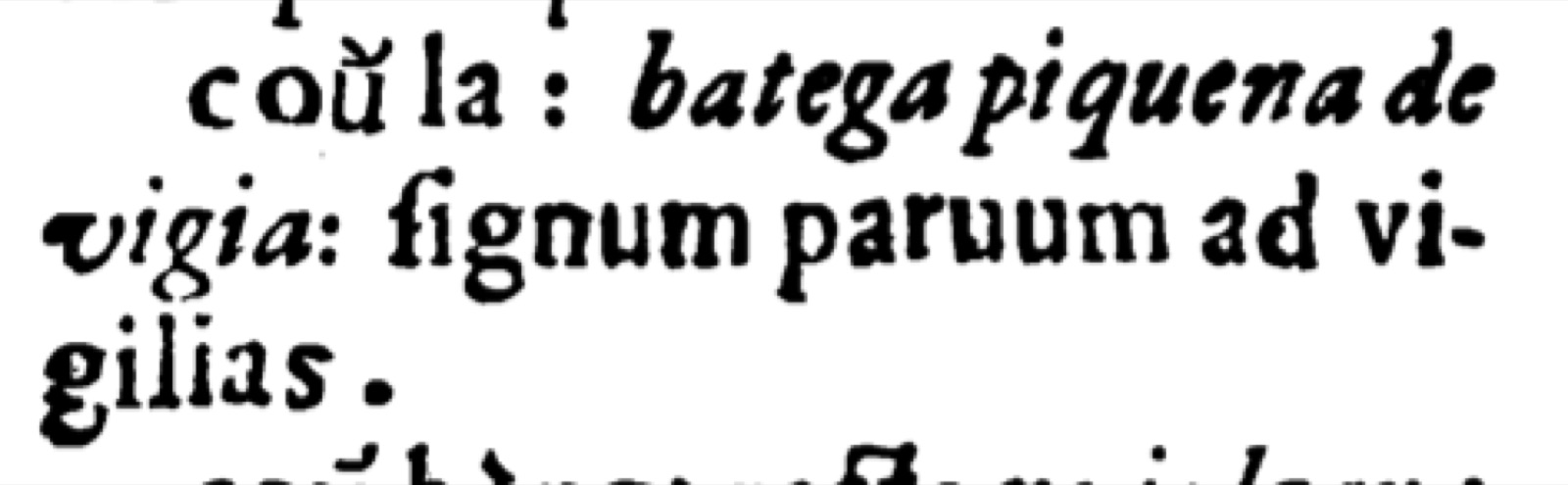
Rhodes’s dictionary appeared in Rome in 1651. Its Vietnamese entries were accompanied by Portuguese and Latin, and it included information on the language. The book is a landmark because it preserves an early printed account of a Latin-letter system for Vietnamese. It should not be mistaken for a moment when a single person invented the finished modern alphabet. Other missionaries had worked on transcription, Vietnamese collaborators were essential, and spelling continued to change.
Quốc ngữ uses Latin letters together with marks that distinguish vowels and tones. Those marks are part of the writing system, not decoration to be discarded. Vietnamese words that look similar without them can differ in pronunciation and meaning. An alphabetic script therefore did not eliminate the need to learn conventions; it organised the relationship between written signs and spoken language differently from character-based Nôm.
Missionaries did not all abandon Nôm. Some Christian works were written in it, and the presence of Romanised Vietnamese in a dictionary did not make it the usual script of the whole population. For a long time, its use was associated with particular communities and purposes. Later institutions would give it a much wider public life.
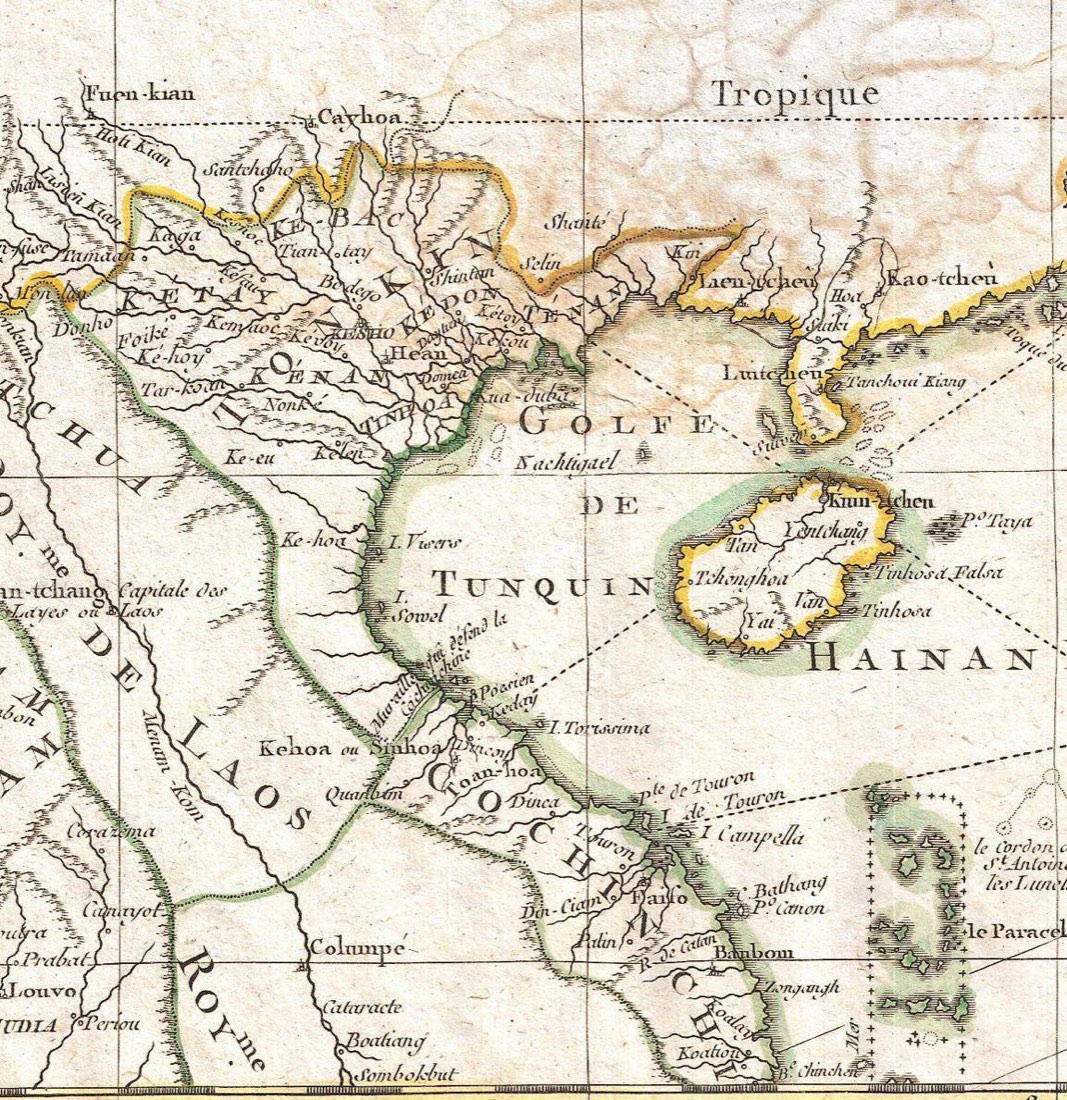
The map above is a later view of the region in which missionaries had worked, not a map of the precise political situation in 1651. Its labels remind us that European descriptions and Vietnamese political geography did not always use the same names. Place names on a historical map are themselves part of the story of contact.
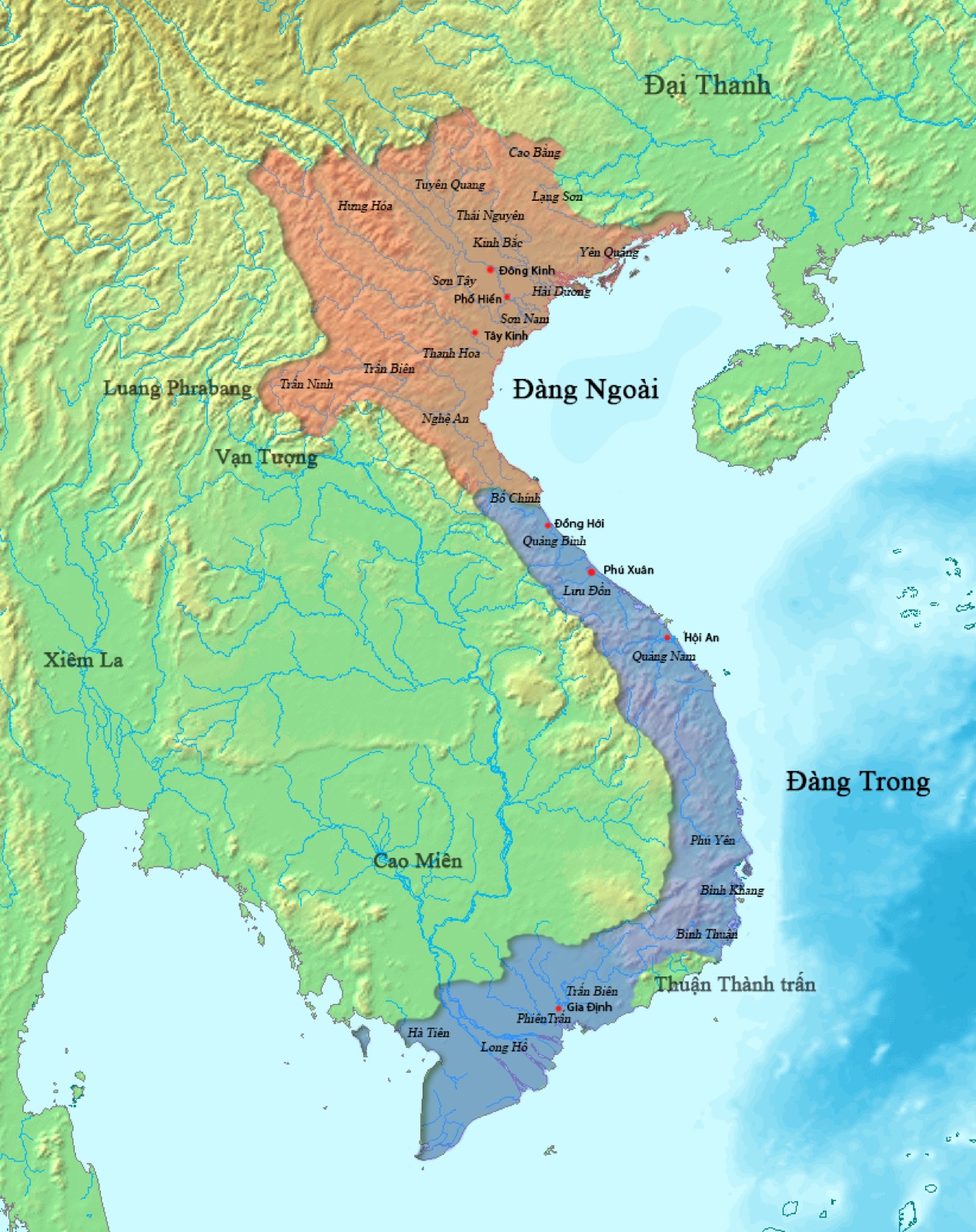
Keeping the map’s date in view prevents a misleading shortcut. The northern and southern regions help readers place the missionary world geographically, but the image is a reconstruction of a later year. Political boundaries and writing practices should not be assumed to have remained fixed across the intervening period.
Colonial rule, newspapers and the end of examinations
French conquest and colonial administration changed the institutions that supported writing. In the south, colonial authorities established new forms of schooling and administration. Quốc ngữ could serve their practical needs, while French occupied an important position in colonial education and power. The shift was not a simple replacement of Chinese by a script freely chosen under equal conditions: it unfolded under colonial rule.
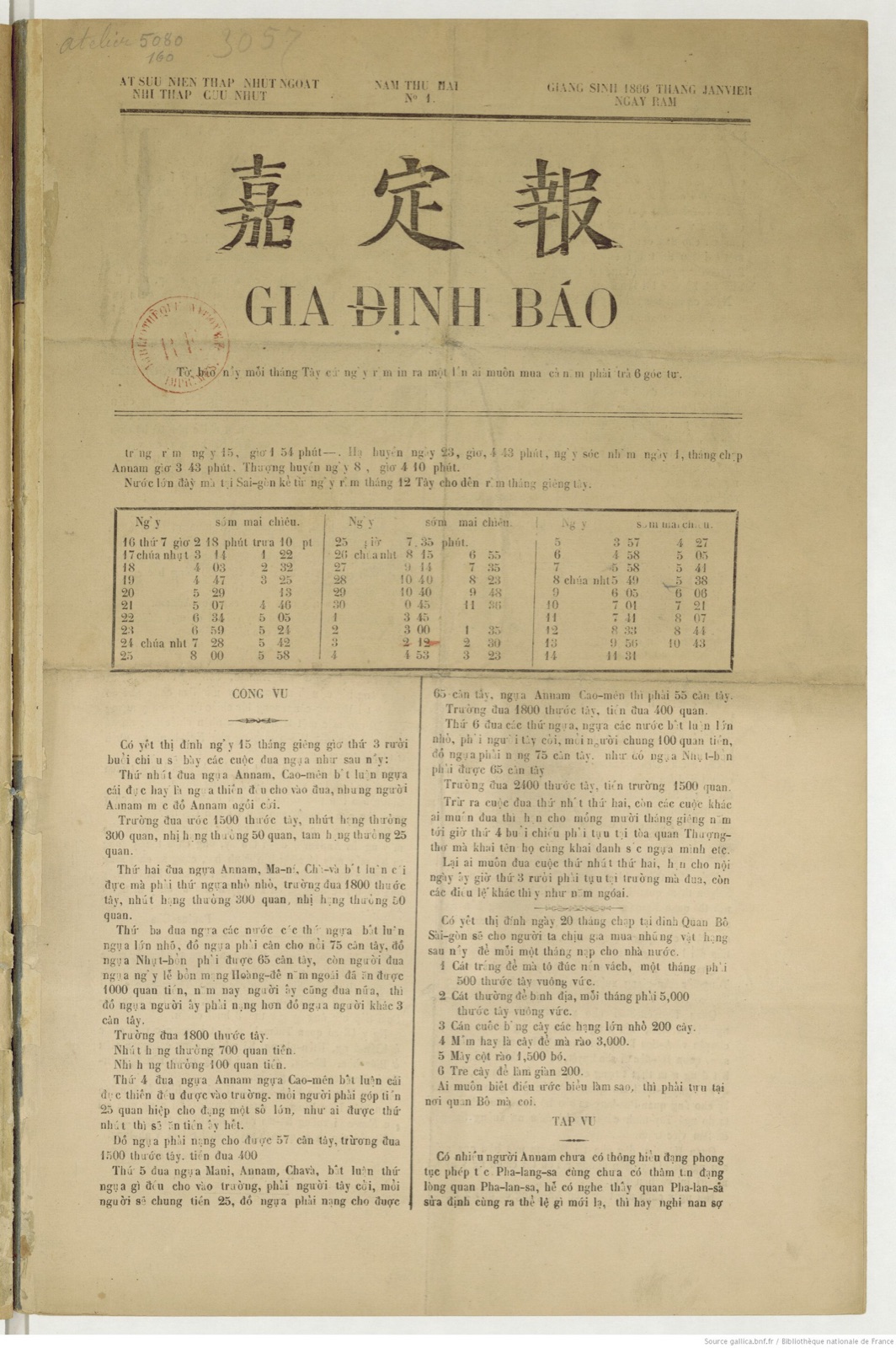
At the same time, Vietnamese people made the script their own. Printers, journalists, teachers and reformers used it to circulate news, literature and arguments to readers who might not have had a classical education. Gia Định báo, founded in 1865, is an early example of a quốc ngữ newspaper. Its existence did not mean that everyone could read it, but it shows how the script entered a public world of print beyond missionary instruction.
Colonial authorities and Vietnamese reformers did not necessarily want the same things. A writing system useful to administrators could also help Vietnamese writers debate reform, communicate political ideas and criticise foreign domination. The tools of government and the tools of resistance could overlap, even when the people using them disagreed sharply about the future.
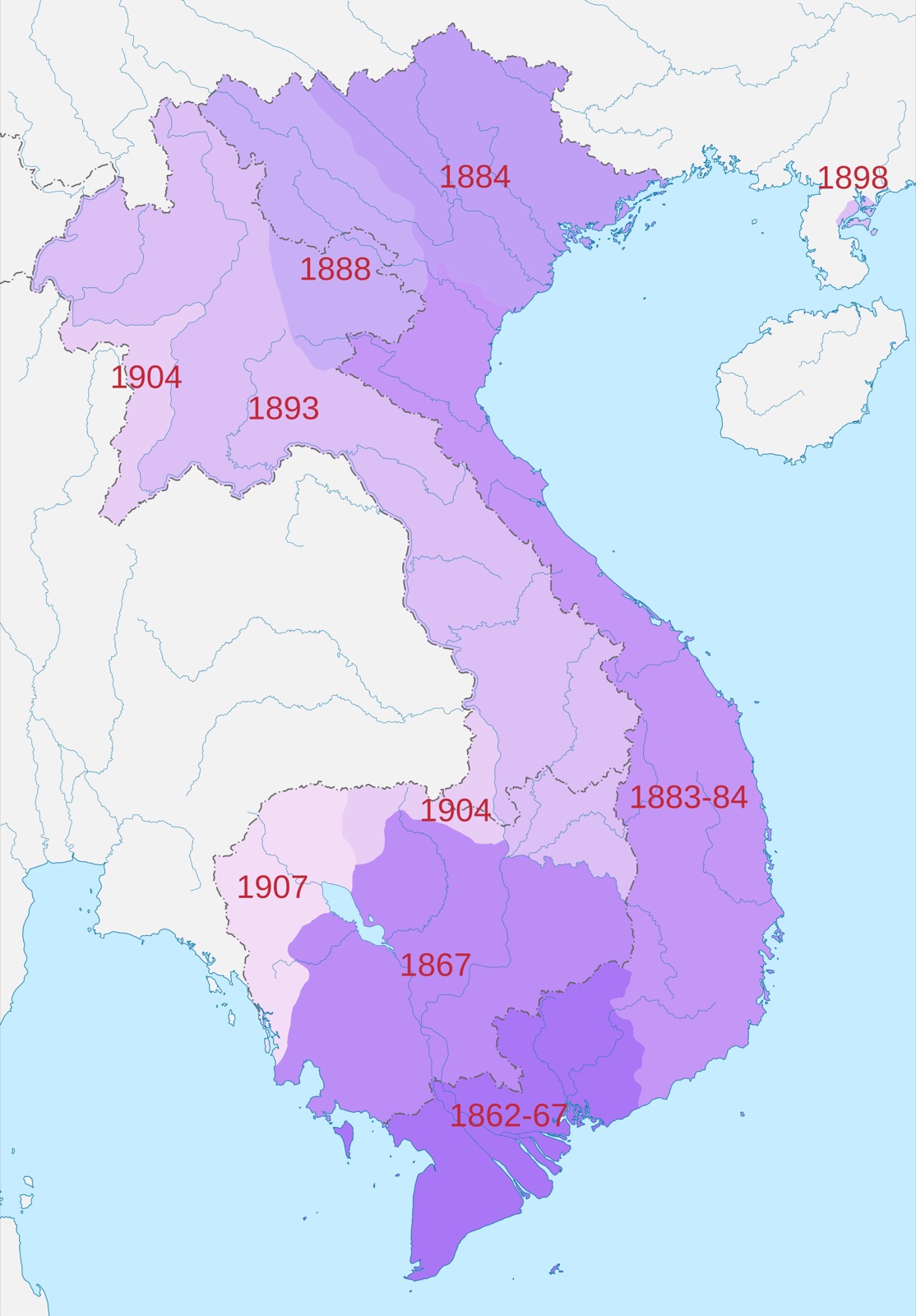
The map shows why a single nationwide date for the transition is misleading. French rule developed at different times and under different arrangements in the south, centre and north. Institutions did not change everywhere at once, and people could continue older practices after a new school or administrative system appeared.
In 1919 the last court examination in the classical tradition was held at Huế. Its end removed a major reason for years of study in literary Chinese: the path into official life through the examination system. That date is a useful landmark, not a universal ban on all Chinese characters or the day Nôm literature ceased to exist. Families, scholars, religious communities and specialists could still preserve and use older texts.
The Nguyễn dynasty thus saw both the continued prestige of classical learning and the dismantling of the institutions that had sustained it. The relationship among court, colonial state and Vietnamese readers is more revealing than a story of one script suddenly defeating another.
Independence, the name Việt Nam and the legacy
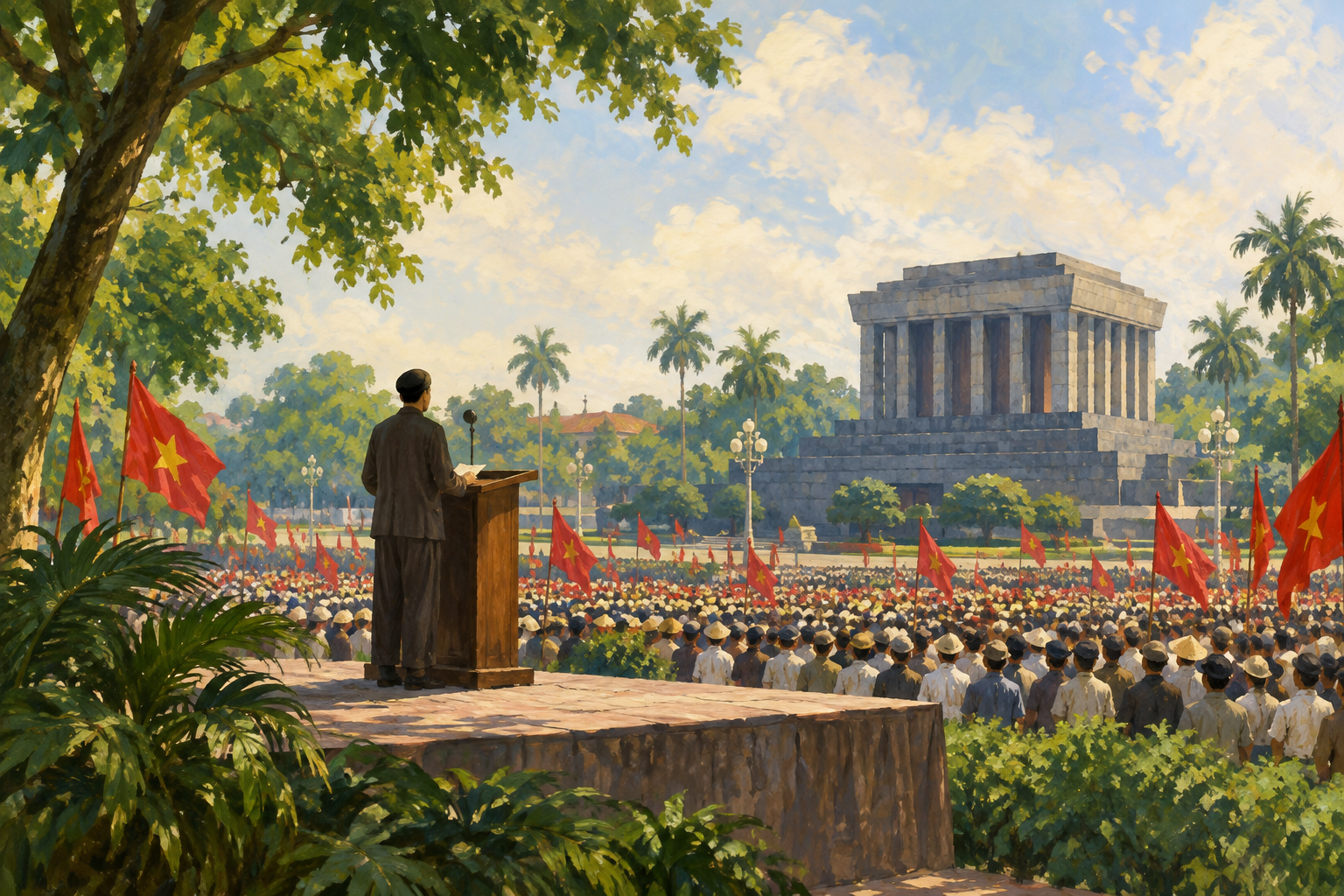
After the declaration of independence in 1945, the new government treated literacy in the national language as an urgent public task. Campaigns to teach reading and writing gave quốc ngữ another institutional role. Its expansion cannot be credited to the colonial state alone: Vietnamese teachers, learners, writers and political movements shaped what it became and what it was used to express.
The name Việt Nam also connects the country’s history to characters. It can be written 越南: Việt corresponds to 越, and Nam to 南, meaning south. In 1804 the Nguyễn dynasty adopted Việt Nam as a state name after negotiations with the Qing court. The history of the name is separate from the later spread of the Latin-based script: changing how a name is written does not by itself change the people or the language it names.
Quốc ngữ is the normal written form of Vietnamese today, but Hán and Nôm remain part of the historical record. Inscriptions, archives, religious texts and literature preserve voices that cannot all be recovered by reading modern Vietnamese alone. Specialists work with these materials, while digitisation and transcription can bring them to wider audiences.
The transition also reveals a trade-off. A script that supports broad access can help readers share new ideas, yet a change in education can make older documents harder for later generations to read directly. Treating Nôm as obsolete misses its literary achievement; treating quốc ngữ as merely foreign misses the Vietnamese work that made it a national medium.
What exams ask and where to read next
For world-history questions, distinguish the function of each term: Hán is associated with Chinese characters and literary Chinese; Nôm uses character-based forms to write Vietnamese; quốc ngữ writes Vietnamese with Latin letters and additional marks. Connect Nôm with the Trần-era development of vernacular writing, and connect the later spread of quốc ngữ with missionaries, colonial institutions and Vietnamese reformers.
Put 1651 and 1919 in their proper places. The first is the publication of Rhodes’s dictionary, not the instant invention or nationwide adoption of the modern script. The second is the end of the court examination tradition, not a date when every use of characters was prohibited. A strong answer explains institutions and human choices as well as naming scripts.
Read The History of Vietnam for the longer political setting, the Trần dynasty for the medieval context, and the Nguyễn dynasty for the court and colonial era in which the older examination system ended.