Thích Quảng Đức and the Buddhist crisis in five minutes
Thích Quảng Đức was a Buddhist monk who died in a public protest in Saigon on 11 June 1963. His action took place during a campaign for religious equality in South Vietnam. The Associated Press journalist Malcolm Browne photographed the event, and his image reached audiences around the world.
The protest did not emerge in isolation. Buddhist leaders had been challenging President Ngô Đình Diệm’s government since a confrontation in Huế in May. They sought equal treatment for Buddhists and Catholics, freedom to display the Buddhist flag, an end to harassment and justice for families of those killed in Huế. To understand the wider setting, see the history of Saigon and southern Vietnam.
A June agreement failed to settle the dispute. Raids on pagodas in August deepened the crisis, and a military coup overthrew Diệm in November. The monk’s death became a symbol of the protests, but the crisis involved many other Vietnamese who organized, negotiated and demonstrated.
Why did Buddhists protest?
South Vietnam’s government was fighting a communist insurgency and depended heavily on American support. Diệm and several members of his influential family were Catholic. Many Buddhists believed that Catholics received preferential treatment and that the government restricted Buddhist activities. Their complaint was about unequal treatment by the state, not simply a disagreement between two religions.
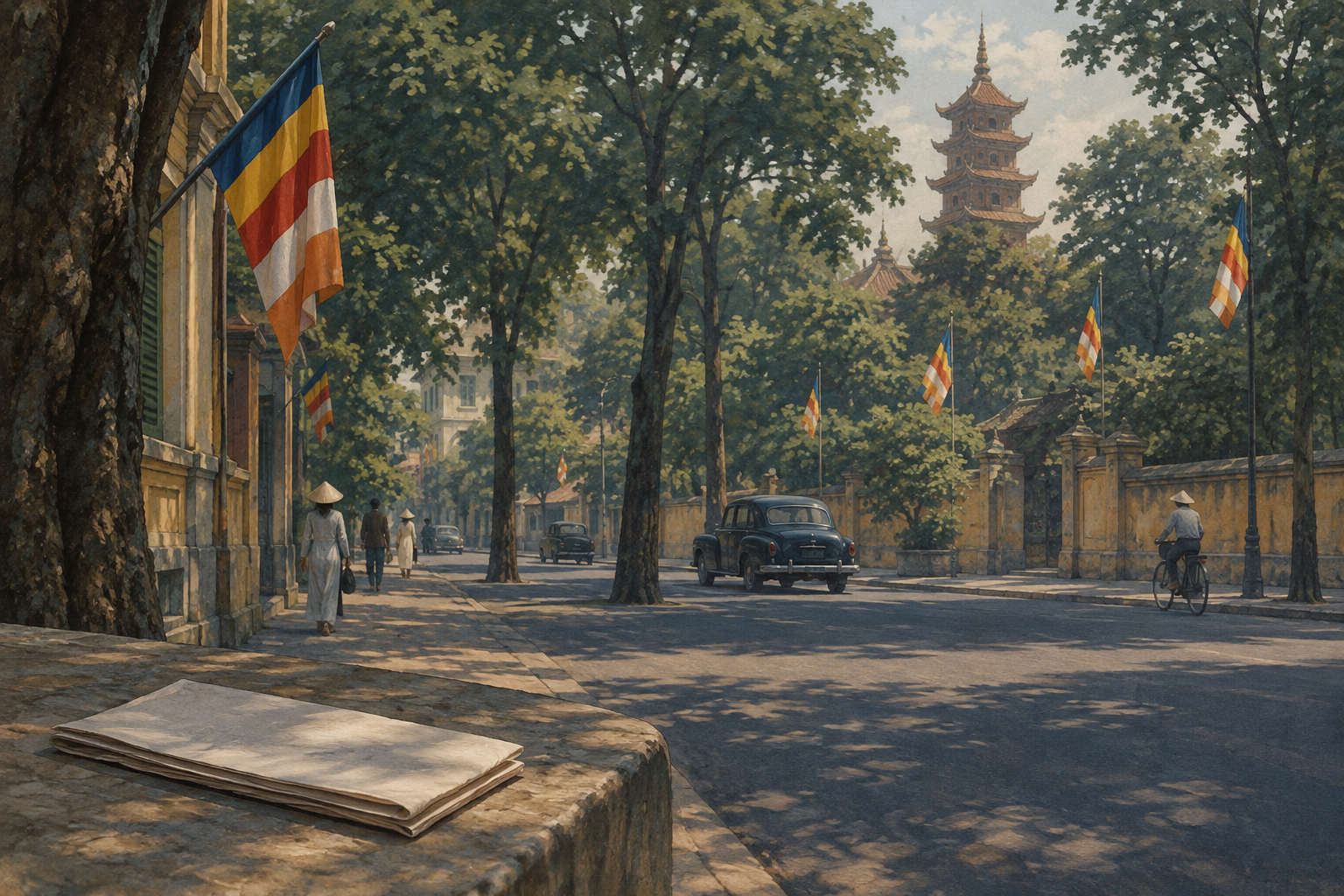
The immediate dispute concerned religious flags. In May 1963, officials enforced a restriction on displaying them as Buddhists prepared to celebrate the Buddha’s birthday in Huế. The restriction caused anger in part because Vatican flags had recently been displayed for a Catholic celebration. To Buddhist protesters, the difference in enforcement made a broader sense of inequality visible.
The flag dispute also illustrates the difference between a rule and its enforcement. A restriction stated in general terms could still appear unequal when people saw one religious celebration treated differently from another. For protesters, the visible contrast became evidence of a wider problem: they did not trust the state to deal with religious communities on equal terms.
On 8 May, a crowd gathered near Huế’s radio station after a Buddhist address was not broadcast. Violence followed. At least eight people were killed; nine is commonly cited. The government blamed communists; Buddhist leaders held the authorities responsible. The deaths brought a local dispute into a national campaign, with demonstrations and negotiations over a set of five demands.
Those demands included equal religious rights, permission to display Buddhist flags, an end to arrests and harassment, compensation for victims’ families, and accountability for those responsible for the deaths. They give the protest a concrete political context: the movement sought changes in the relationship between citizens and the South Vietnamese state.
The demands combined future protections with remedies for past harm. Freedom to display flags and equal treatment concerned how the state should act from then on. Compensation for bereaved families and accountability concerned the deaths that had already occurred. An agreement that addressed only the first issue would leave the second unresolved.
What happened on 11 June 1963?
Quảng Đức joined a Buddhist procession in Saigon. At an intersection, he died by self-immolation as a protest against the government’s treatment of Buddhists. The event was a deliberate public appeal during an organized campaign, not the beginning or the whole of that campaign.
The movement included more than the man whose death became its best-known event. Monks, nuns, Buddhist leaders and supporters helped carry demands to the government, organized demonstrations and took part in negotiations. Keeping these people in view changes the story from an isolated act into a campaign with goals and a history of its own.
Malcolm Browne, an Associated Press correspondent, attended after Buddhist contacts alerted reporters that an important event was expected. His photograph was distributed internationally. It gave people far from Vietnam a stark view of a crisis that had already occupied Vietnamese demonstrators and officials for weeks.
The image’s impact also raises a question about historical evidence. A photograph can document an event and bring attention to it, but a single frame cannot explain the policies, negotiations or people outside it. Reading reports, government documents and Buddhist demands alongside the image makes the crisis easier to understand without reducing Quảng Đức to the label “burning monk.”
A useful way to read the evidence is to ask who produced it and for what purpose. A government statement, a Buddhist petition and a reporter’s account illuminate different parts of the same conflict. Set them in chronological order, compare their claims and distinguish a demand from a promise or an action. This helps explain why the crisis continued after the image had appeared around the world.
From agreement to raids and coup
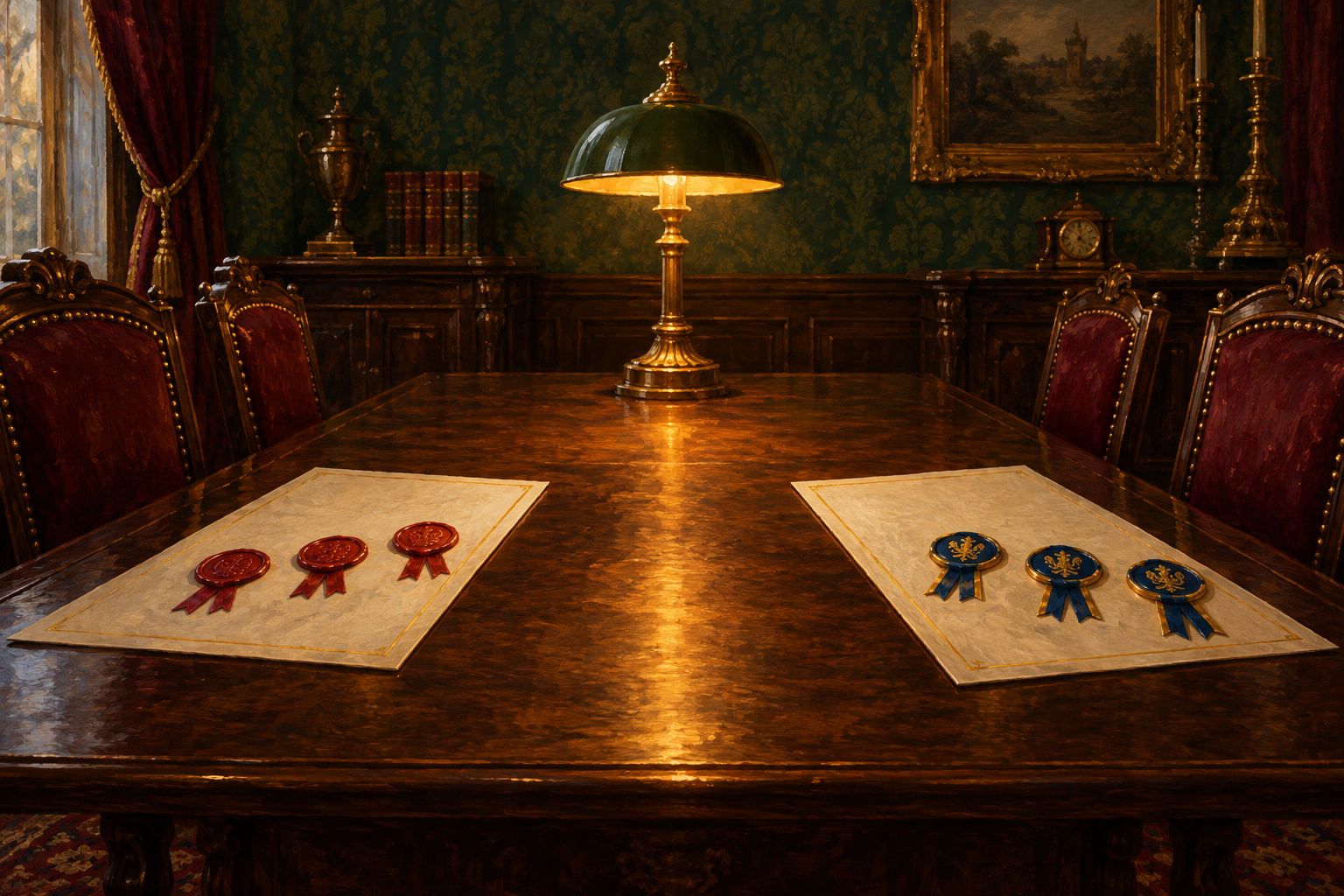
On 16 June, the government and Buddhist representatives issued a joint communiqué addressing the dispute. The agreement offered a way to ease tensions, but mistrust remained and the crisis continued. A promise on paper did not by itself settle disagreements over implementation or responsibility.
The June communiqué matters because representatives of the government and the Buddhist movement had found terms on which to make a public agreement. Its existence, however, is not proof that both sides believed every commitment had been fulfilled. Compare the agreement with the subsequent protests and raids to see the difference between announcing a settlement and restoring trust.
In August, government forces raided pagodas across South Vietnam and detained Buddhist activists. The raids damaged the government’s standing and sharpened concerns in Washington about the stability of an ally. American officials were not detached observers: their government had invested political and military support in South Vietnam and now faced choices about that relationship.
American involvement adds another layer. Washington supported the South Vietnamese government during a war against communist forces, so the crisis raised questions about the stability and conduct of an important ally. Officials had to consider both the war and the political consequences of the government’s response to its own citizens. Their decisions were part of the crisis, but they did not make Vietnamese participants passive observers.
On 1 November 1963, South Vietnamese military officers launched a coup. Diệm and his brother Ngô Đình Nhu were killed the following day. The Buddhist crisis was one important reason the regime lost support; it was not the only cause of the coup. Political conflict, the conduct of the war and decisions by South Vietnamese and American officials also mattered.
The fall of Diệm did not end the Vietnam War or settle South Vietnam’s political future. It was followed by further instability and changes of government. The crisis is therefore best understood as a turning point within a longer conflict, not as a complete explanation of everything that came after it.
What exams ask
For an AP-style question, connect an event to a larger historical process. The flag dispute and the deaths in Huế show how a government’s treatment of a religious community could undermine its legitimacy. The photograph shows how international reporting could make a domestic crisis visible abroad. The coup shows a change in leadership, while the continued war shows that removing one leader did not resolve the underlying conflict.
Keep the sequence clear: Huế in May, Quảng Đức’s protest in June, pagoda raids in August and the coup in November. Avoid claiming that one photograph alone caused the coup or that all Buddhists and Catholics held the same political views.
Read next
Ngô Đình Diệm: South Vietnam’s First President explains the president’s rule and the pressures on his government.
South Vietnam: The Republic of Vietnam (1955–1975) Explained places the crisis within the longer history of the republic and the war.
Saigon and Southern Vietnam: A History from Funan to 1975 follows the region’s history beyond the events of 1963.