Agent Orange in five minutes
Agent Orange was the most widely used of several tactical herbicides sprayed by the United States during the Vietnam War. Its purpose was to strip away foliage that could conceal opposing forces. US and South Vietnamese forces also used herbicides in operations intended to destroy crops and deny food to those forces.
The mixture contained two weed killers, commonly called 2,4-D and 2,4,5-T. A highly toxic dioxin known as TCDD was an unwanted byproduct of the manufacture of 2,4,5-T. The name Agent Orange came from the identifying stripe on its storage drums, not from the colour of the liquid.
Between 1962 and 1971, the US Air Force conducted aerial spraying under Operation Ranch Hand. The campaign damaged forests and farmland, while people could be exposed during spraying or later through contaminated environments. Decades after the war, health research, disability support and cleanup of polluted sites remain part of its legacy.
Why were herbicides used?
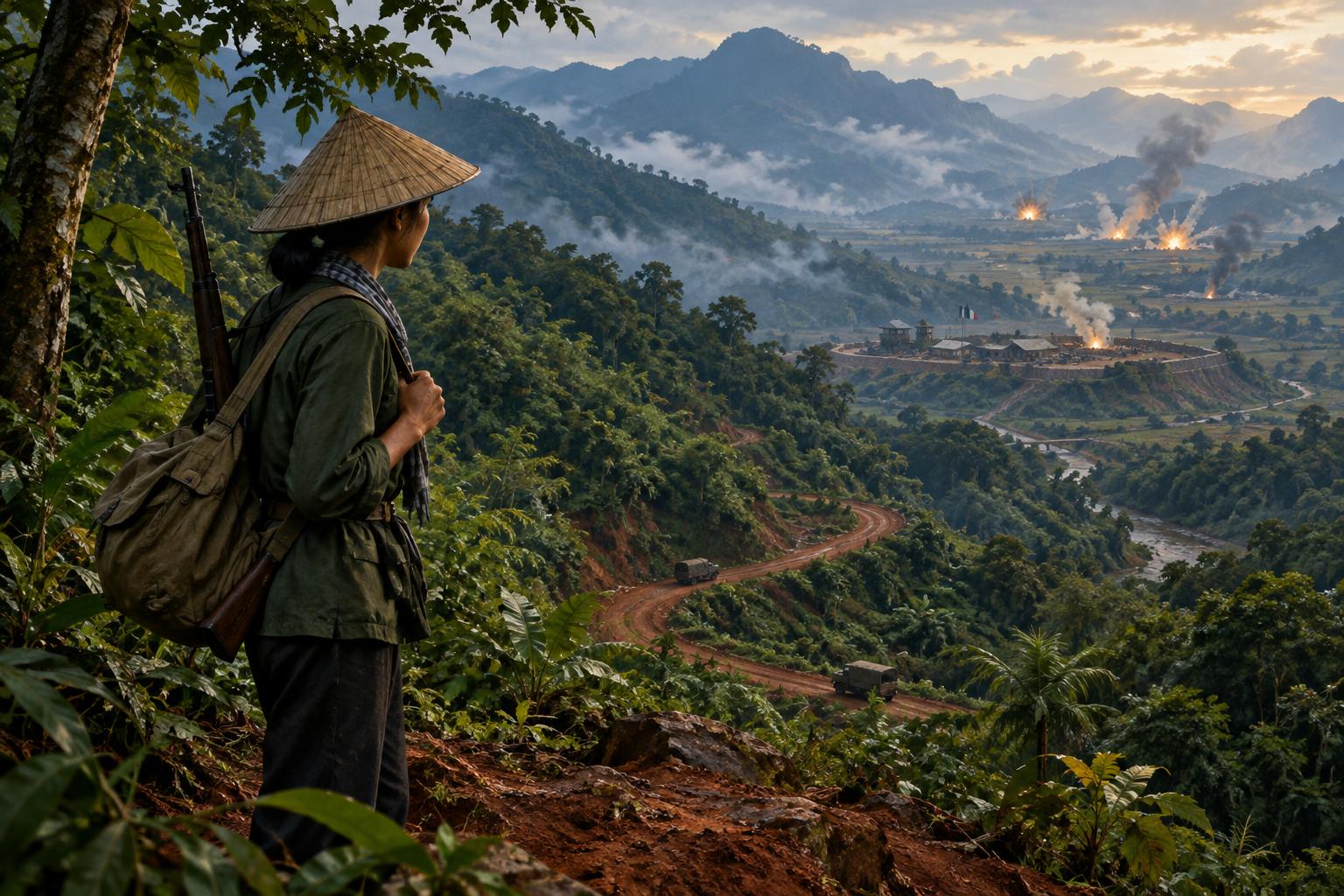
The war was fought across villages, farmland, mountains and dense forests. US planners regarded vegetation as a military problem: trees and undergrowth could conceal routes, positions and ambushes. Removing leaves was intended to improve observation and make roads, waterways and base perimeters easier to defend.
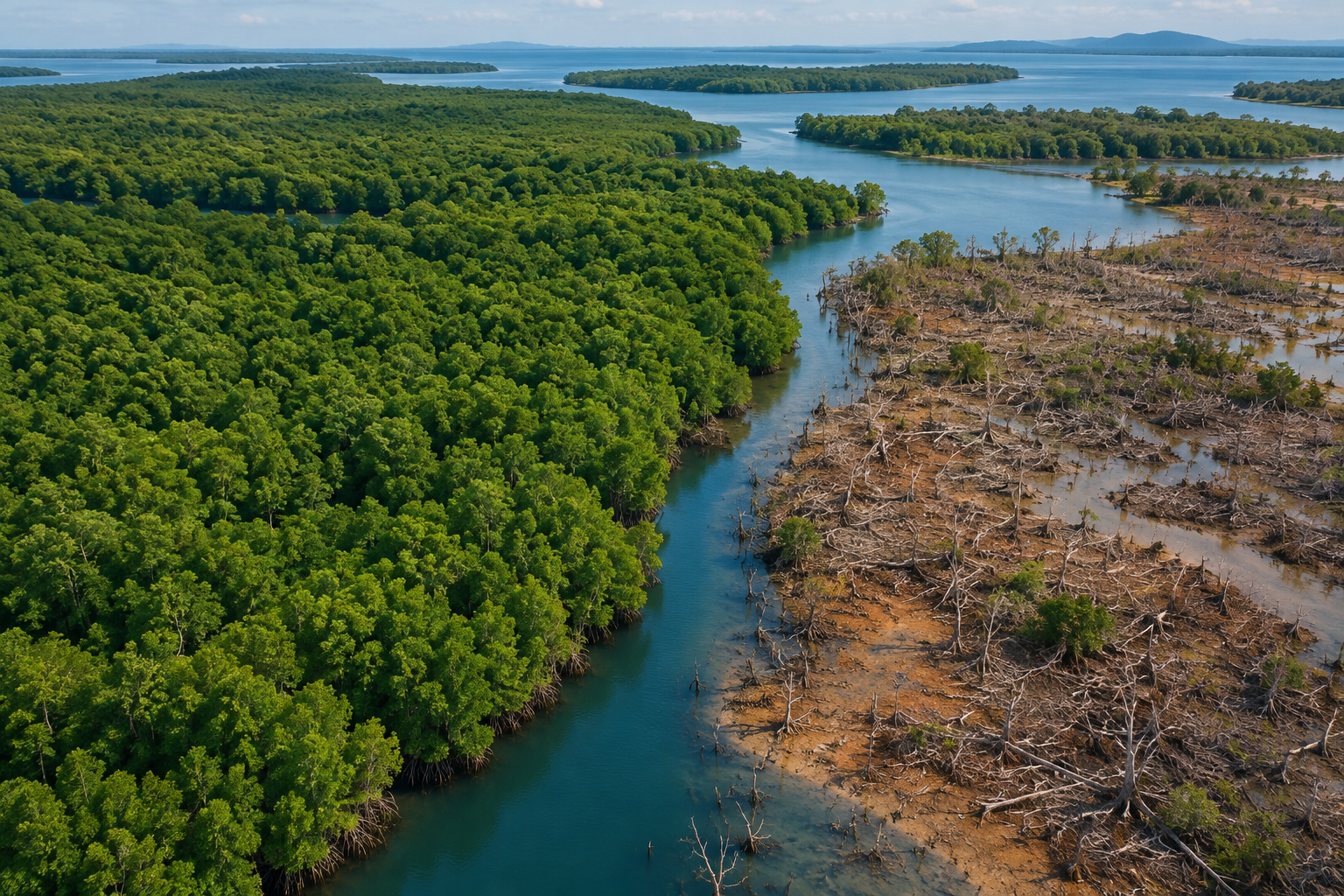
Internal US records show that officials also considered the political and practical consequences. An August 1962 memorandum recommended spraying selected mangrove areas to improve visibility, while treating crop destruction as a separate proposal. Later that year, US and South Vietnamese officials approved limited crop-destruction operations. Their stated aim was to deprive opposing forces of food.
Those decisions affected places where civilians lived and worked. A field could support a household as well as feed soldiers; destroying crops could therefore threaten local food supplies. Measuring military benefit alone cannot describe the full cost of the policy.
Operation Ranch Hand and dioxin
Operation Ranch Hand was the US Air Force's aerial herbicide programme in Vietnam from 1962 to 1971. Aircraft sprayed forests and other vegetation, while herbicides were also applied by other means in some operations. Agent Orange was one mixture in a wider group identified by coloured markings. Agent White and Agent Blue, for example, had different ingredients; the whole programme should not be treated as though it used one chemical.
According to the US Department of Veterans Affairs, more than 19 million gallons of various tactical herbicide mixtures were sprayed. That is a total for several products, not a figure for Agent Orange alone. The scale of spraying also varied by location: some areas were sprayed repeatedly, while others were not.
TCDD was not the ingredient intended to kill plants. It was a contaminant produced during manufacture of one component of Agent Orange. Dioxins can persist in soil and sediment and accumulate in the fatty tissue of animals. People can be exposed through contaminated food as well as through contact with contaminated material. The amount and route of exposure depend on where a person lived or worked and what they encountered.
Some of the most serious remaining contamination is associated with places where herbicides were stored or handled, including former air bases. A cleanup aimed at these concentrated sites is different from claiming that every part of Vietnam has the same level of contamination.
Investigators therefore look at each site separately. They examine where chemicals were stored or spilled, how contaminated soil and sediment may have moved, and whether people could come into contact with them. Tests can guide decisions about containing or treating polluted material. This work takes time: reducing exposure depends on identifying the pathways through which contamination can reach people and monitoring the site after treatment.
Agent Orange effects on health and communities
Health effects must be discussed condition by condition. The US National Academies' 2018 review found sufficient evidence of an association between exposure to at least one of the chemicals it studied and several conditions, including hypertension, non-Hodgkin lymphoma and chloracne, a severe skin condition. The review considered studies of veterans, workers and environmentally exposed populations; it did not establish that Agent Orange caused every case of those diseases.
An association means that a relationship has been observed across studies. It does not, by itself, identify the cause of one person's illness. Exposure histories are often incomplete, people encountered different mixtures, and many illnesses have more than one possible cause. Evidence is stronger for some outcomes than for others.
Families have also raised concerns about disabilities and health problems in children and later generations. These concerns deserve careful research and practical support. The National Academies' 2018 review found that evidence concerning effects in descendants of male Vietnam veterans did not support a firm association for a particular outcome. That finding does not settle every question about every population, and it does not justify assigning an individual child's condition to herbicide exposure without evidence.
Vietnamese civilians and soldiers, US veterans and others experienced the war from different positions. Estimates of how many people served or may have been exposed are not interchangeable with counts of people made ill by a particular chemical. The National Academies reported estimates of approximately 2.6 million to 4.3 million US military personnel who served in Vietnam; service in Vietnam alone does not measure an individual's dose.
Beyond medical diagnosis, lost crops, damaged forests and concern about contaminated food have shaped livelihoods. The need for rehabilitation, education and care is real regardless of whether a particular person's condition can be attributed to a wartime exposure.
Cleanup, support and remembrance
Vietnam and the United States have cooperated on remediation at former military sites. The cleanup of contaminated soil at Danang Airport was completed, and a larger project has been undertaken at Bien Hoa Air Base. Such work identifies contaminated material, contains or treats it and monitors the site. It addresses a source of continuing exposure; it cannot by itself reverse every consequence of the war.
US programmes have also supported services for people with disabilities in Vietnam. In the United States, the Department of Veterans Affairs uses presumptions of exposure and service connection for specified circumstances and conditions when assessing eligibility for benefits. A benefits presumption is a practical rule for deciding claims, not proof of the exact cause of an individual diagnosis.
Remembering Agent Orange therefore involves several connected questions: why herbicides were used, how contamination persists, what research can establish, and how communities receive support. Listening to affected families matters alongside careful distinctions about scientific evidence.
What exams ask
For an AP-style question, connect the policy to the character of the Vietnam War: US forces sought to counter opponents operating in terrain where concealment was useful. Then explain an unintended or long-term consequence, such as environmental contamination and the continuing cost of remediation.
Keep three terms distinct. Operation Ranch Hand was an aerial spraying programme; Agent Orange was one herbicide mixture used in the broader campaign; TCDD was an unwanted contaminant in one ingredient. A strong answer can also distinguish a population-level health association from proof about an individual case.
Read next
The Vietnam War explained places the herbicide campaign within the wider conflict and its outcome.
Việt and Đức explores the twins' story and its reception in Japan.
Japan and the Vietnam War examines Okinawa, economic ties and the anti-war movement.