In five minutes: what was the Tet Offensive?
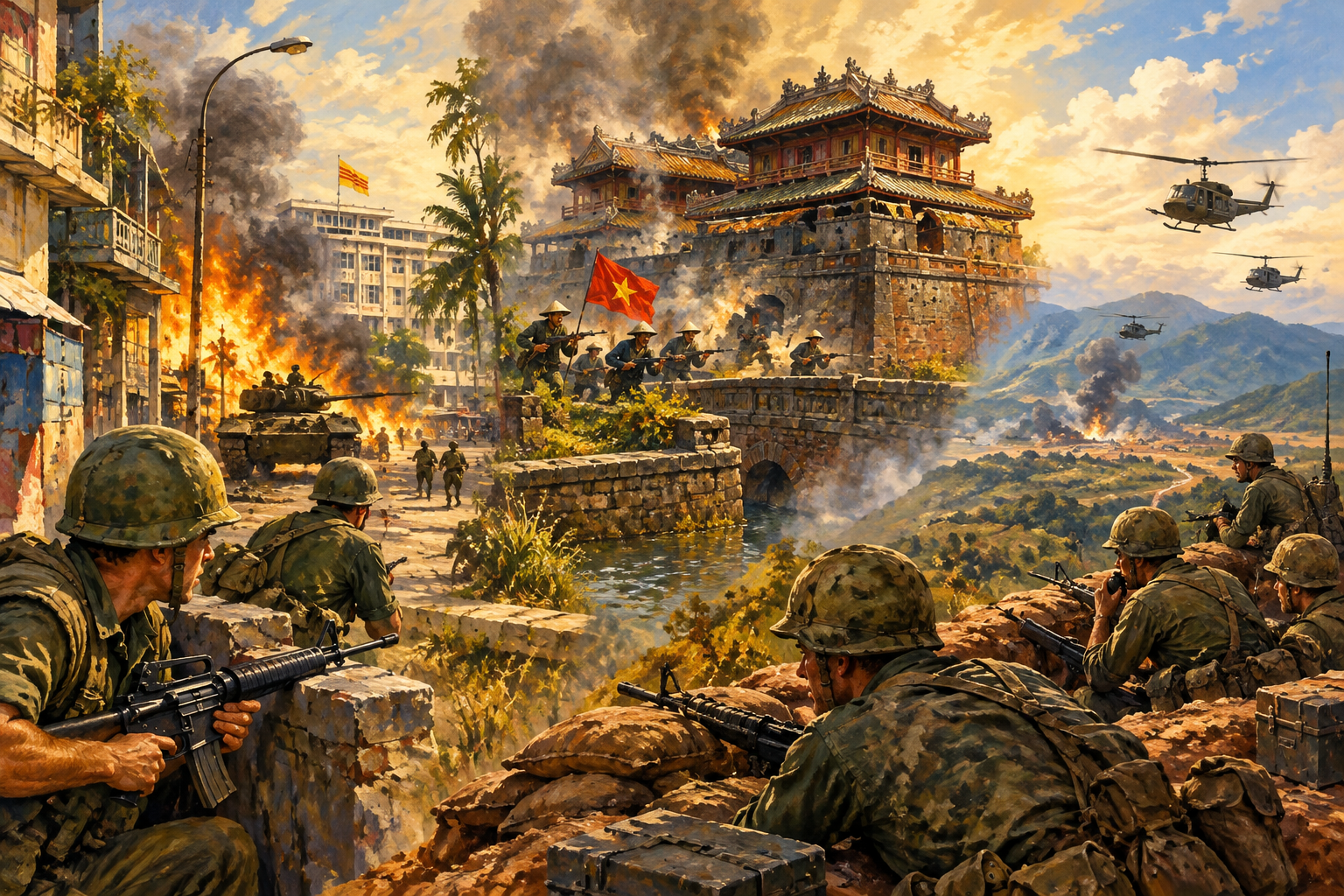
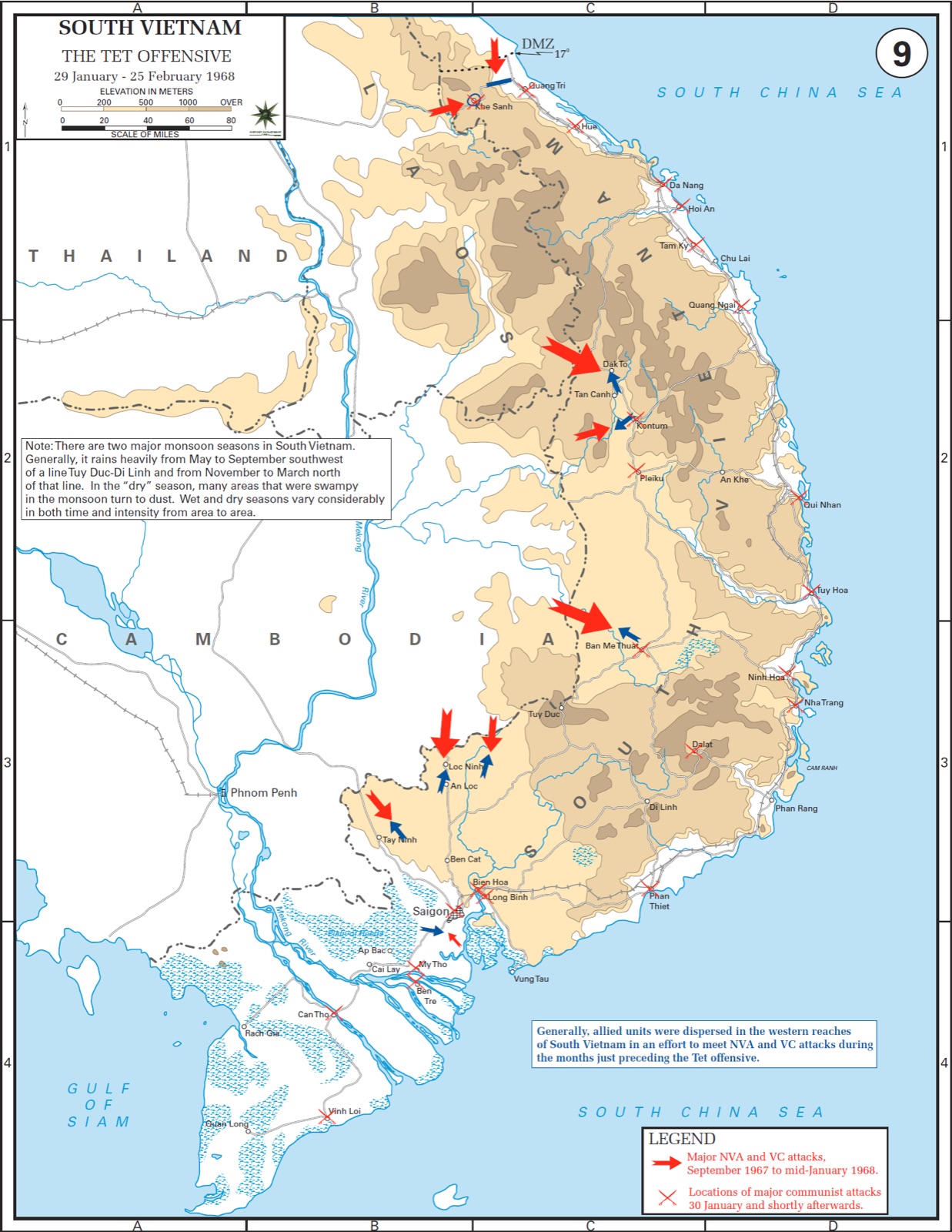
The Tet Offensive was a series of coordinated attacks by North Vietnamese and Viet Cong forces on South Vietnamese cities, towns and military bases around the Lunar New Year holiday in 1968. The first large wave began on the night of January 30–31. It reached Saigon, the historic city of Huế, the U.S. embassy compound and the remote Marine base at Khe Sanh. Some attacks were repelled quickly, while fighting in Huế continued for weeks.
U.S. Navy historical accounts estimate that about 84,000 North Vietnamese and Viet Cong troops attacked roughly 155 South Vietnamese cities, government sites and military targets. Tet was not one battle with a single front or end date. It unfolded in waves: the January–February attacks, a renewed wave in May and another in August.
Militarily, the offensive did not trigger the general uprising its planners hoped for, and allied forces recaptured the ground that had been temporarily lost. But in the United States, images and reports of fighting in places described as secure made official optimism harder to believe. Tet became a turning point in public debate and policy, even though it was not a battlefield victory for the attacking side.
The offensive belongs to the wider story of the Vietnam War: it showed that a conflict fought across villages, cities and border regions could challenge both military plans and public confidence at home.
Why launch it during Tết?
Tết marks the Vietnamese Lunar New Year, a major holiday for family visits and celebration. The holiday truce and seasonal travel offered opportunities to move people and supplies, while many expected fighting to pause. The U.S. State Department’s historical account describes Hanoi’s hope that attacks on major cities might force Washington to negotiate or withdraw. The leadership also sought to interrupt the war’s escalation and bombing campaign.
The strategy relied on more than battlefield gains. Leaders in Hanoi hoped that simultaneous attacks would encourage people in South Vietnam to rise against the government and weaken U.S. willingness to continue the war. That hoped-for uprising did not materialize at the scale planners expected. Even so, strikes across the country made the war’s reach visible in a way that isolated clashes had not.
Khe Sanh was another part of the strategic setting. U.S. commanders feared the Marine base might face an assault resembling the French defeat at Điện Biên Phủ and concentrated attention on its defense. The base’s pressure coincided with attacks on cities, forcing commanders to respond to threats at both a remote border position and urban centers.
For South Vietnamese and U.S. forces, the timing magnified the initial confusion. Some South Vietnamese troops were on holiday leave, while attacks struck population centers and military sites across the country. The fighting began nearly at once in many places, but played out differently from city to city.
Saigon: the embassy breach and fighting in Chợ Lớn
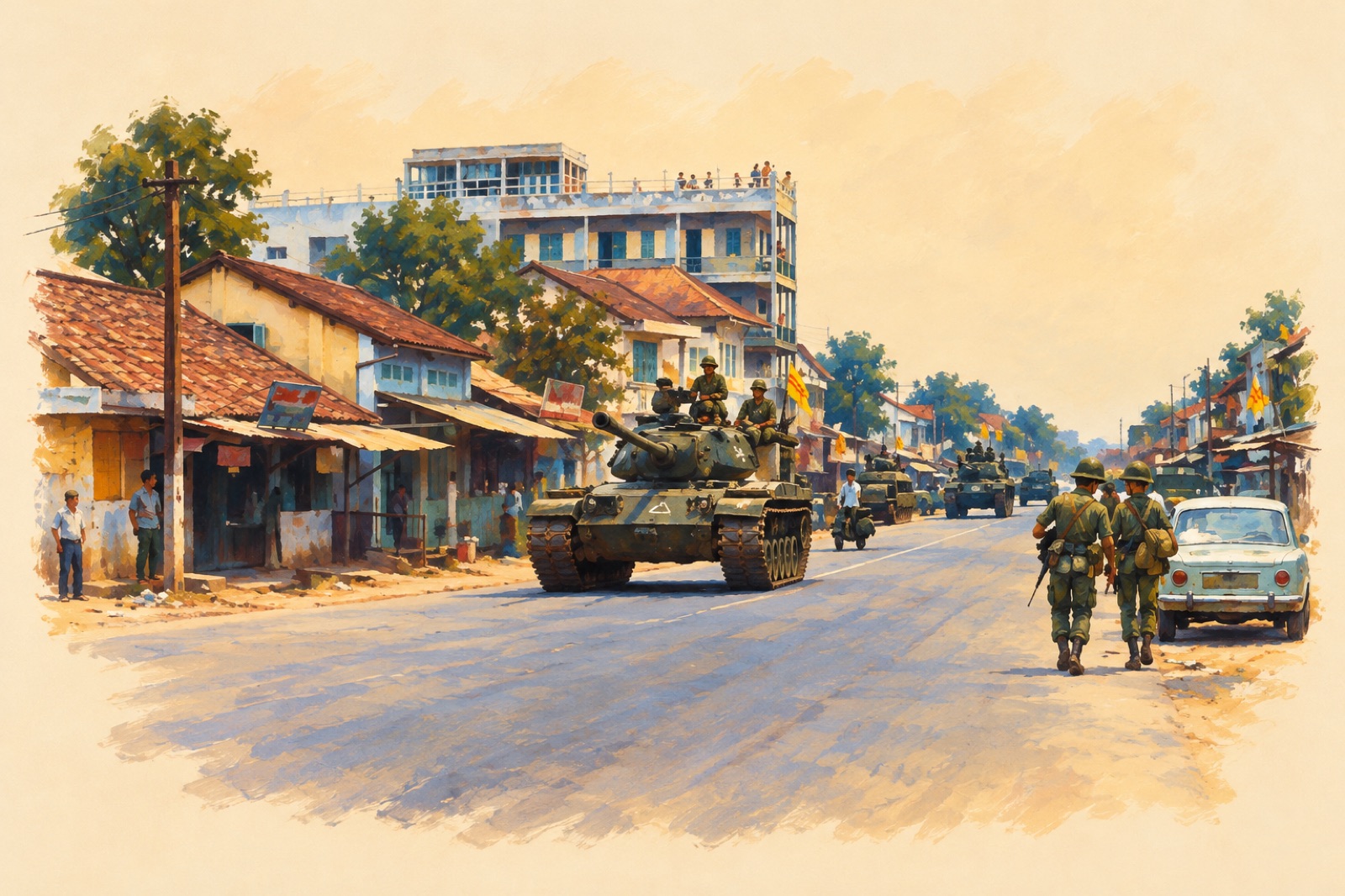
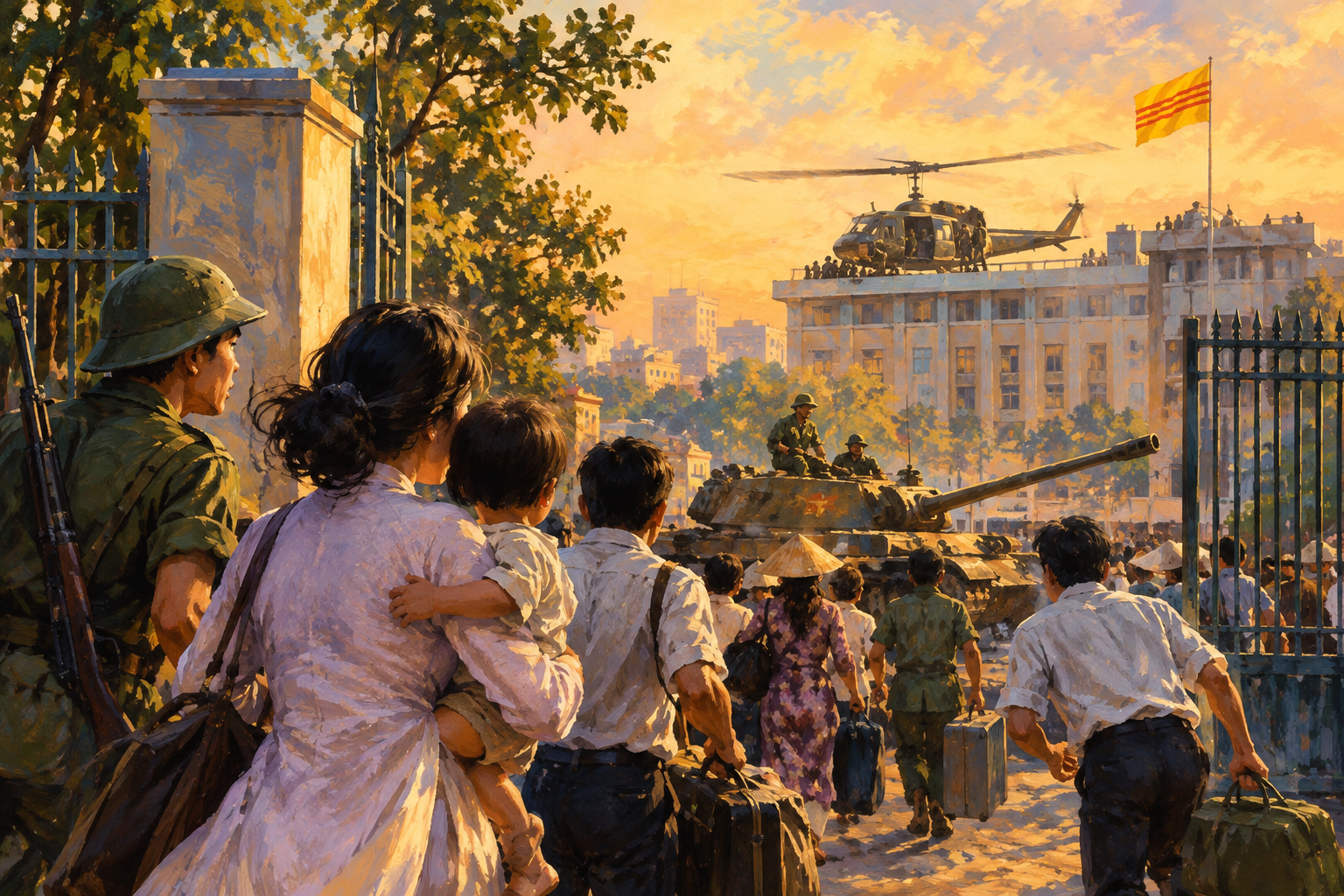
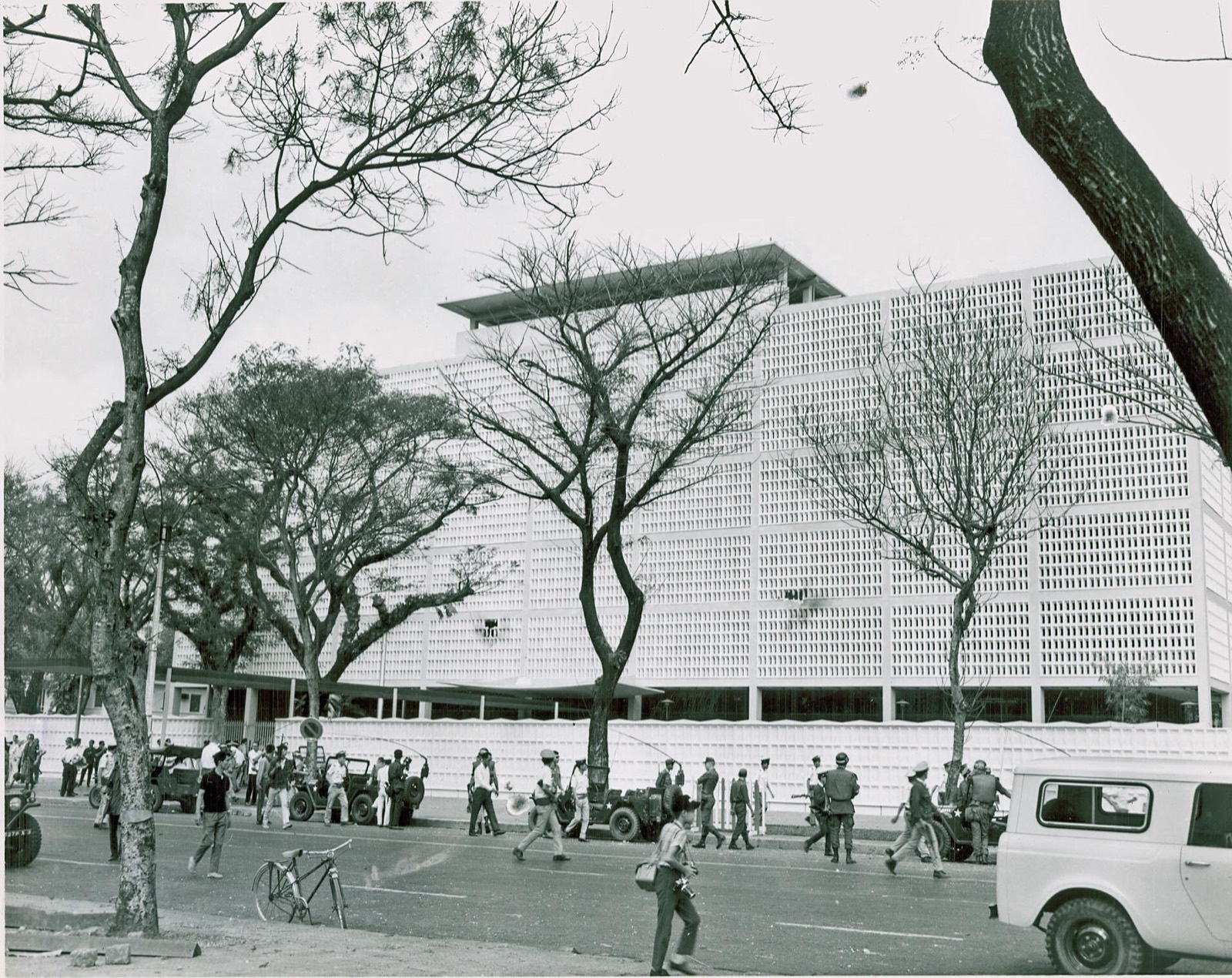
In Saigon, attackers hit government and military locations, airfields and other installations. The assault on the U.S. embassy became one of the best-known episodes, partly because the building symbolized American power and partly because journalists could report from the capital. A Viet Cong sapper team broke through the compound’s outer perimeter. The attackers did not take over the embassy building; U.S. military police and other defenders stopped the assault group after fighting on the grounds.
That distinction matters: the compound’s outer perimeter was breached, but the embassy building was not captured. The attack failed to achieve its immediate military objective, yet images of fighting inside the embassy grounds carried meaning beyond the result. If an iconic U.S. compound in the capital could be attacked, claims that the enemy was close to defeat sounded less convincing.
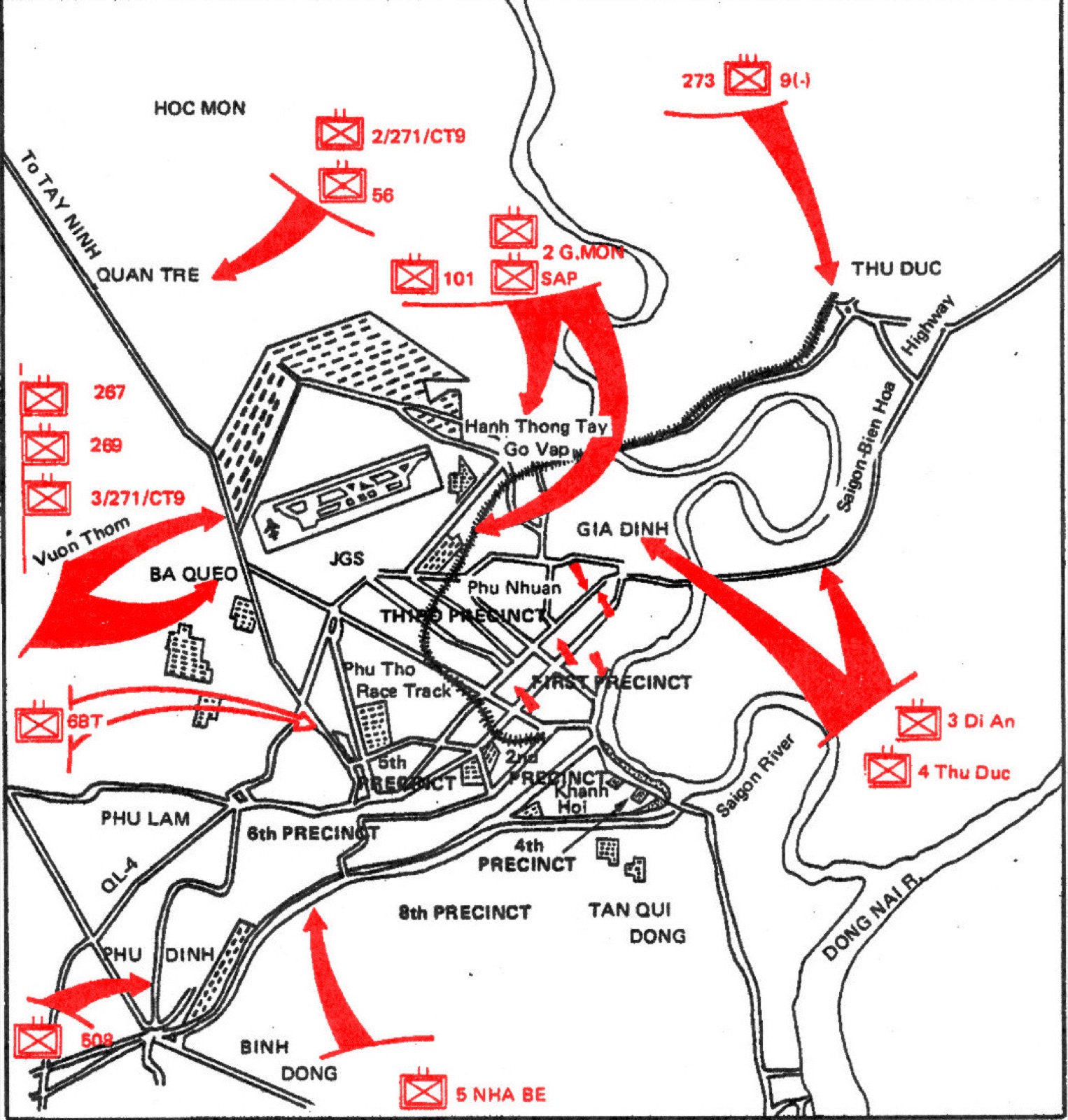
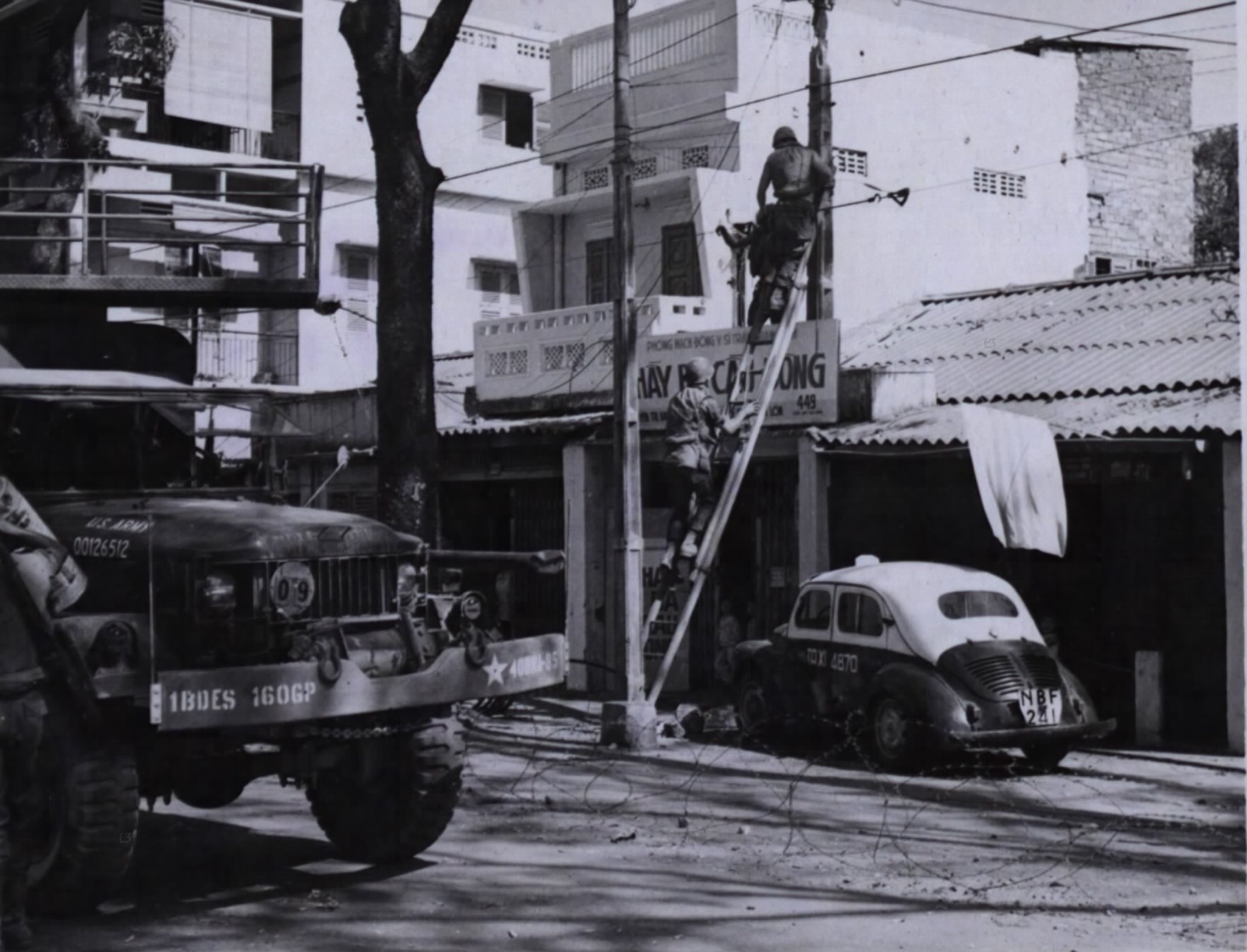
Fighting also spread into Chợ Lớn, Saigon’s large Chinese-Vietnamese district, and other neighborhoods. South Vietnamese forces fought to clear urban positions while civilians searched for safety. Combatants held strongpoints before withdrawing or being pushed out; fighting and clearance operations damaged homes and streets. The capital was not occupied as a whole in one uniform way. The assault consisted of multiple local battles, and South Vietnamese and U.S. units defended different districts.
On February 1, 1968, Associated Press photographer Eddie Adams made the photograph widely known as “Saigon Execution,” showing South Vietnamese national police chief Nguyễn Ngọc Loan shooting Nguyễn Văn Lém, a captured Viet Cong suspect. This article does not reproduce or recreate that photograph. Its circulation became a defining example of how one image could shape perceptions of the war. The photograph is one moment in the wider story of Saigon’s fighting, which also involved military positions, neighborhoods and civilians.
The immediate military contest in the capital ended with allied forces holding the city. Yet the battle exposed a gap between official claims of progress and the continuing ability of enemy forces to attack urban centers. Saigon’s symbolic importance made that gap especially visible.
Huế: a prolonged battle in a historic city
Huế, the former imperial capital, saw the most prolonged major city battle of the first wave. North Vietnamese and Viet Cong forces entered the city during the opening attacks and held much of it, including the Citadel area north of the Perfume River. South Vietnamese forces fought to retain or recover key positions. U.S. Marines and Army units joined the counterattack as the fighting continued. Historic architecture and dense neighborhoods made the combat difficult: defenders cleared streets and buildings while commanders weighed military objectives against the destruction heavy fire could cause.
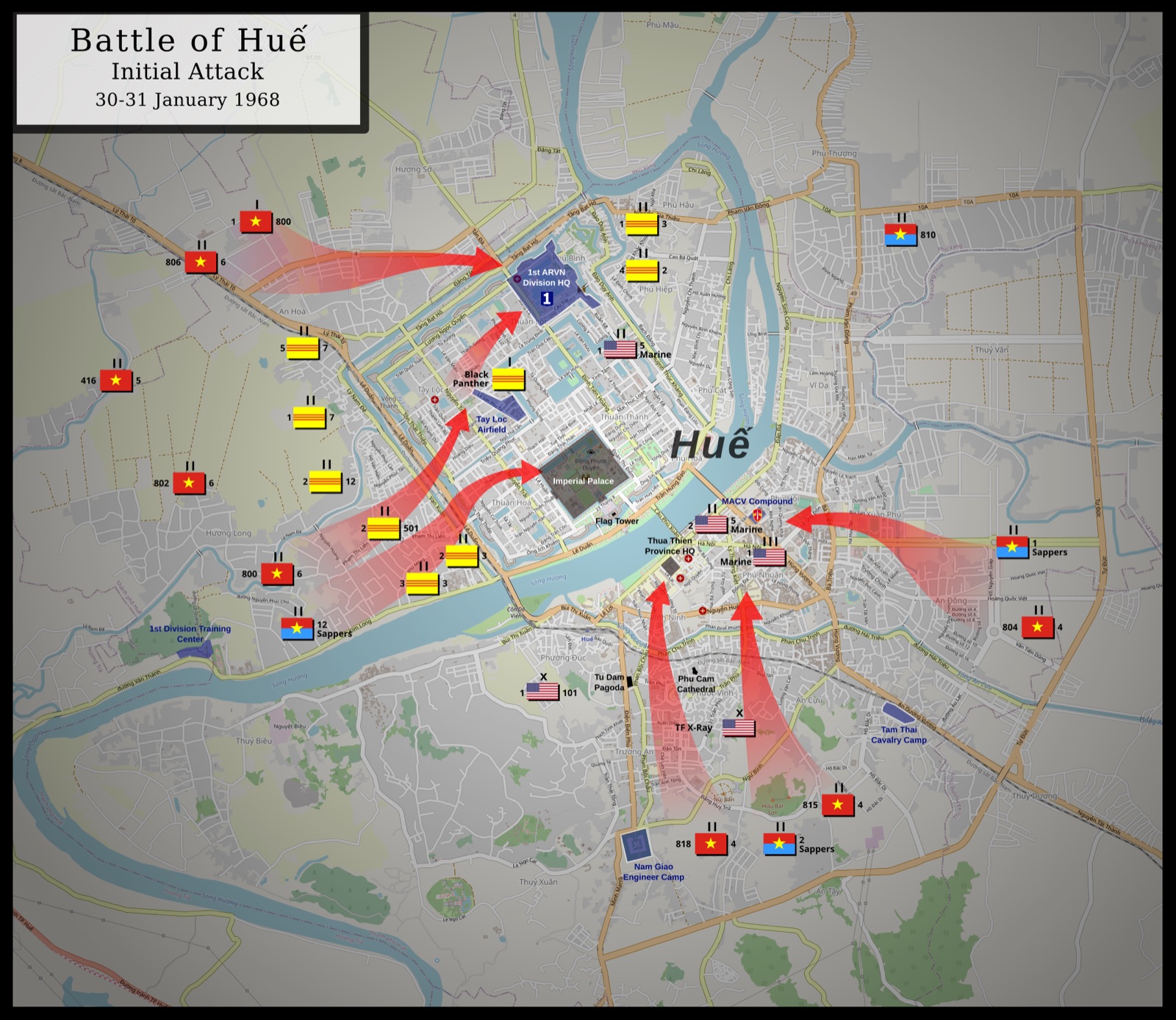
The recapture was not a single rush across the city. Troops fought block by block, often entering buildings at close range. U.S. Marine histories record Huế as secure on February 24, after roughly 25–26 days of fighting.
Civilians endured severe disruption. People were trapped by fighting, displaced from their homes and exposed to bombardment and ground combat. After allied forces retook the city, mass graves were discovered. Civilians were killed during and after the battle, and many families suffered deaths, displacement and loss of their homes. Huế’s destruction and the treatment of civilians remain essential to understanding the cost of the offensive.
Huế shows why “Tet was a defeat” and “Tet changed the war” can both be true. Attacking forces failed to hold the city and suffered heavy losses. At the same time, the battle lasted far longer than most opening attacks, consumed allied resources and brought the war into a culturally significant urban center. Its military outcome did not erase its political and human consequences.
Khe Sanh: siege, supply and the wider campaign
Khe Sanh lay near the border with Laos, far from the capital. U.S. Marines held the combat base amid a growing threat from North Vietnamese forces. The base was shelled and isolated, and its position invited comparisons with earlier French losses at Điện Biên Phủ. Khe Sanh differed in important ways: it was supplied by air, and U.S. forces had extensive artillery and air support. The garrison’s survival depended on maintaining those supply and fire-support systems.
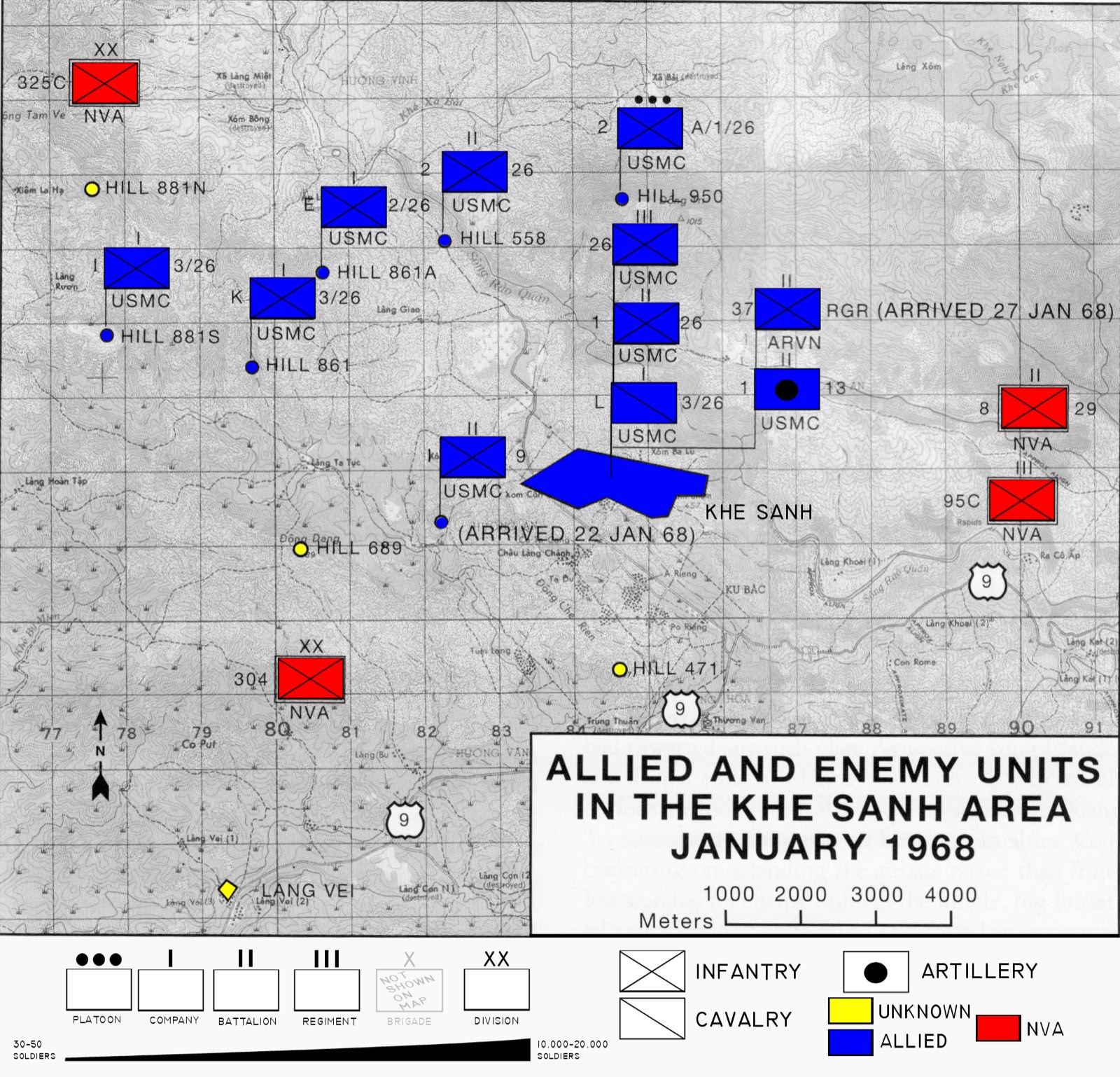
The siege and the city attacks unfolded alongside each other. Because commanders believed Khe Sanh could be a major target, it demanded aircraft, artillery and planning even as fighting erupted in Saigon, Huế and other towns. Khe Sanh was part of Tet’s strategic setting, though it was not the same kind of battle as the assaults on cities. The simultaneous threats also required U.S. commanders to divide attention and resources.
The base was eventually relieved, and U.S. forces later abandoned it. The immediate question of whether the base would be overrun was answered in favor of its defenders; the later decision to leave reflected changing military calculations. The campaign’s public meaning had already been shaped by weeks of reports about a threatened outpost and attacks across the country.
Khe Sanh connects to the broader Vietnam War, including the growth of U.S. involvement and the conflict’s domestic divisions. Tet’s simultaneous urban and border-front battles show that the war was not limited to one kind of terrain or fighting.
Military outcome and political impact
On the battlefield, the attacking forces did not retain the major cities and bases they struck in the first wave. The hoped-for uprising did not sweep away South Vietnam’s government. Allied forces, especially South Vietnamese units fighting in their own cities, recovered ground after costly combat. The attacks also inflicted severe losses on the Viet Cong, whose ability to fight as a large organized force was badly damaged. In the immediate campaign, the attackers suffered a military defeat.
Military control is only one measure of an offensive’s consequences. Before Tet, U.S. officials had repeatedly conveyed confidence that progress was being made and that the enemy was weakening. Attacks on more than a hundred towns and cities, together with scenes from Saigon and Huế, made those assurances less persuasive. News coverage showed the contrast between optimistic public statements and an enemy capable of striking major urban centers.
The domestic political effects were substantial. Tet did not single-handedly end U.S. involvement, and opinion in the United States had already been divided. It intensified public questions about the administration’s credibility, the purpose of the war and what victory would require. On March 31, 1968, President Lyndon B. Johnson announced a partial halt to U.S. bombing of North Vietnam, called for negotiations and said he would not seek another presidential term. These decisions had several causes, and Tet sharpened the debate within his administration and among the public.
The contrast between military and political outcomes is central to understanding Tet. North Vietnamese and Viet Cong forces lost territory and suffered severe casualties, while their attacks exposed the limits of U.S. claims and deepened doubts about the war. Political effects can persist after the battlefield has been cleared.
What to remember for exams
For a world-history answer, begin with the date and scale: the main attacks began on January 30–31, 1968, during Tết, and hit locations across South Vietnam. Then distinguish the three places often paired in summaries. Saigon shows the symbolic shock of attacks on the capital and the U.S. embassy perimeter. Huế shows how a surprise offensive turned into prolonged urban combat with serious civilian consequences. Khe Sanh shows the pressure on U.S. forces at a remote border base and how simultaneous threats shaped command decisions.
Next, separate tactical result from strategic impact. Allied troops retook lost positions, so the offensive did not produce a lasting territorial victory for the attacking forces. Yet it challenged official optimism, weakened confidence in the Johnson administration’s public account of progress, and contributed to a turn toward de-escalation and negotiations. A strong answer explains both outcomes.
Use the established facts precisely. U.S. Navy historical accounts estimate about 84,000 attackers and roughly 155 targets. The U.S. embassy’s outer perimeter was breached, but the building was not captured. Huế was declared secure on February 24 after roughly 25–26 days of fighting. Do not treat the Eddie Adams photograph as a substitute for the wider history of Saigon’s fighting. For related context, read about the National Liberation Front, the Battle of Huế and the Paris Peace Accords.
Read next
The Vietnam War Explained places Tet within the longer conflict and explains how U.S. involvement grew. The National Liberation Front explains the organization behind many of the southern attacks. The Battle of Huế follows the longest urban battle of the opening phase in more detail. The Paris Peace Accords traces the later negotiations that sought to end the war.