In five minutes: what was North Vietnam?
North Vietnam was the common name for the Democratic Republic of Vietnam, or DRV, a state proclaimed by Ho Chi Minh in Hanoi on 2 September 1945. Its leaders claimed authority over Vietnam as a whole, but war with France and then the 1954 Geneva settlement left the DRV governing the northern zone. Its capital was Hanoi, and the red flag with a gold star became its national symbol. The DRV fought to establish and defend its rule, supported communist forces in the South, and became the central government of a reunited Vietnam in 1976.
The name can be confusing because “North Vietnam” describes a government and political territory whose borders and status changed. The DRV began as a claim to independence for all Vietnam; it became the government of the North after the country was provisionally divided. Its history is therefore tied to both the end of French colonial rule and the later Vietnam War. For the wider conflict, see The Vietnam War Explained.
Key facts
- Official name: Democratic Republic of Vietnam (DRV)
- Proclaimed: 2 September 1945, in Hanoi
- Capital: Hanoi
- After 1954: The DRV governed the northern regrouping zone, above the provisional military demarcation line near the 17th parallel.
- Political leadership: Ho Chi Minh was its leading public figure; the Indochinese Communist Party and its successors held decisive political power.
- Military: The Vietnam People’s Army, also called the People’s Army of Vietnam, developed from revolutionary forces organized during the struggle against French rule.
- End of the separate state: North and South were formally united as the Socialist Republic of Vietnam on 2 July 1976.
From declaration to a divided country
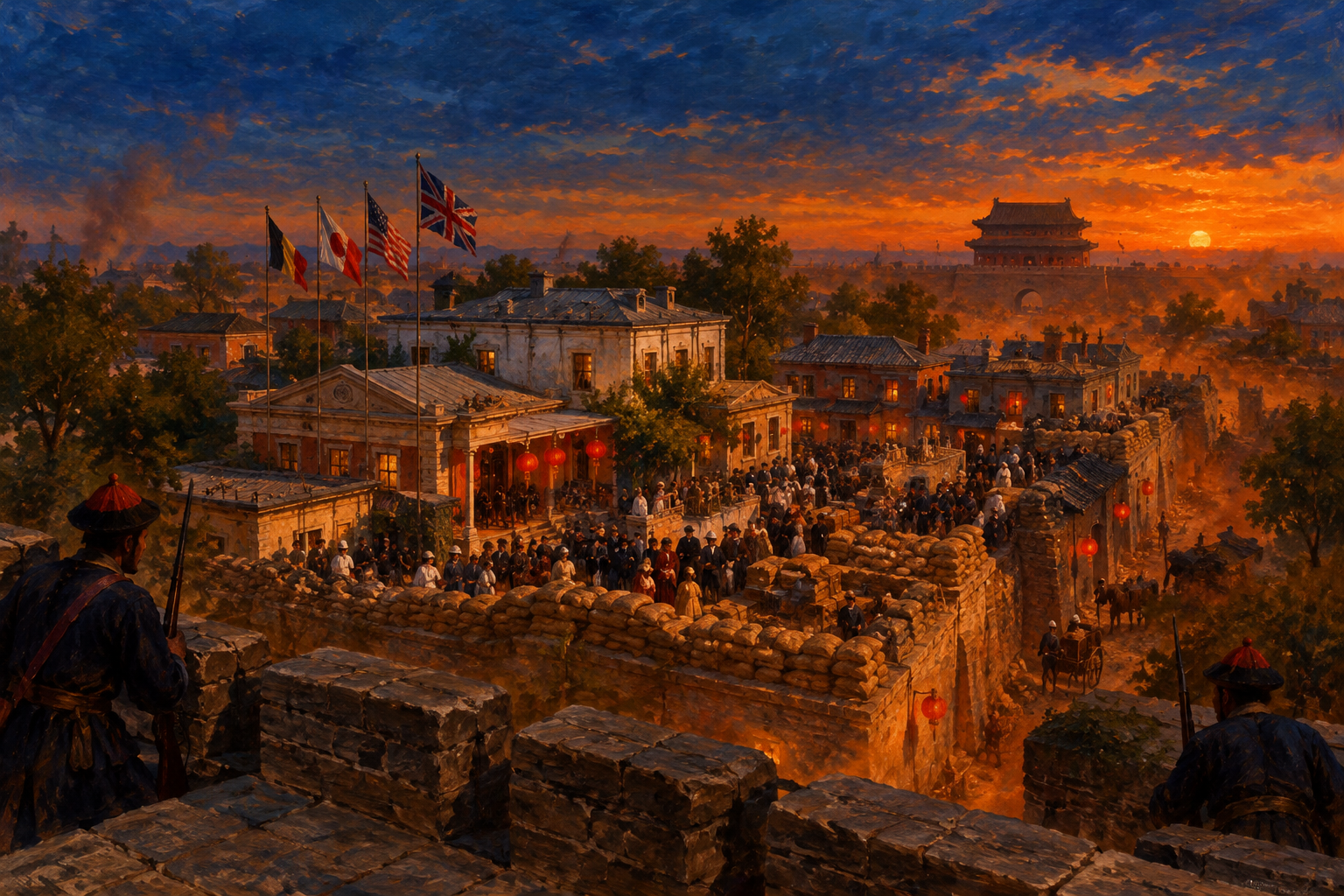
Japan’s surrender in August 1945 created a brief opening for Vietnamese nationalists. The Việt Minh, a broad independence front led by communists, took power in Hanoi during the August Revolution. On 2 September, Ho Chi Minh announced the DRV’s independence. The declaration established a new government, but it did not settle who would rule the country. France sought to restore its colonial authority, and fighting between French forces and the Việt Minh grew into the First Indochina War.
The war ended through a ceasefire settlement at Geneva in 1954, after the French defeat at Điện Biên Phủ. The agreement regrouped the opposing forces on either side of a provisional military line near the 17th parallel. The DRV’s forces regrouped to the north; French Union forces regrouped to the south. The line was meant to be temporary, not a permanent international border. The agreements anticipated elections intended to reunify Vietnam in 1956.
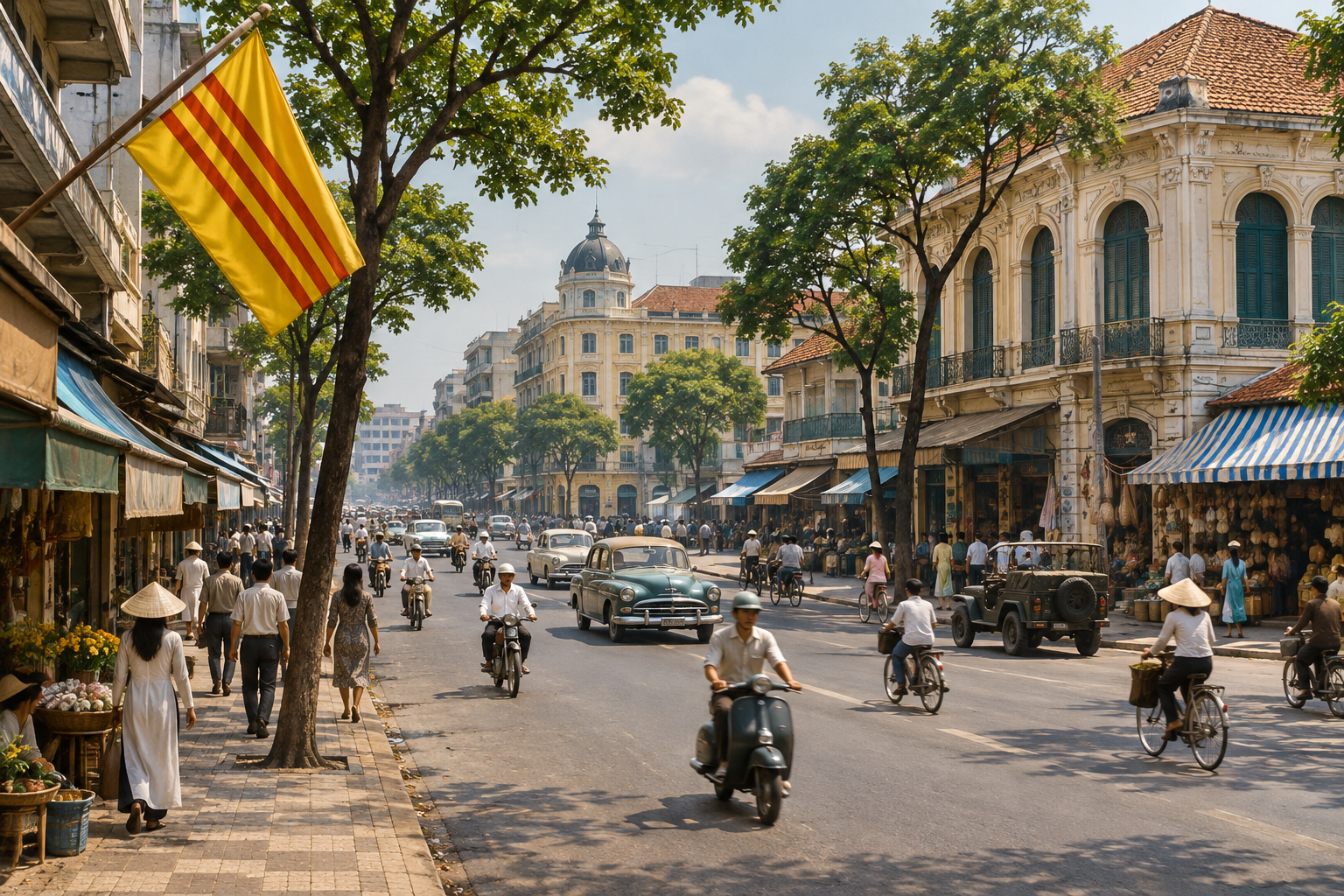
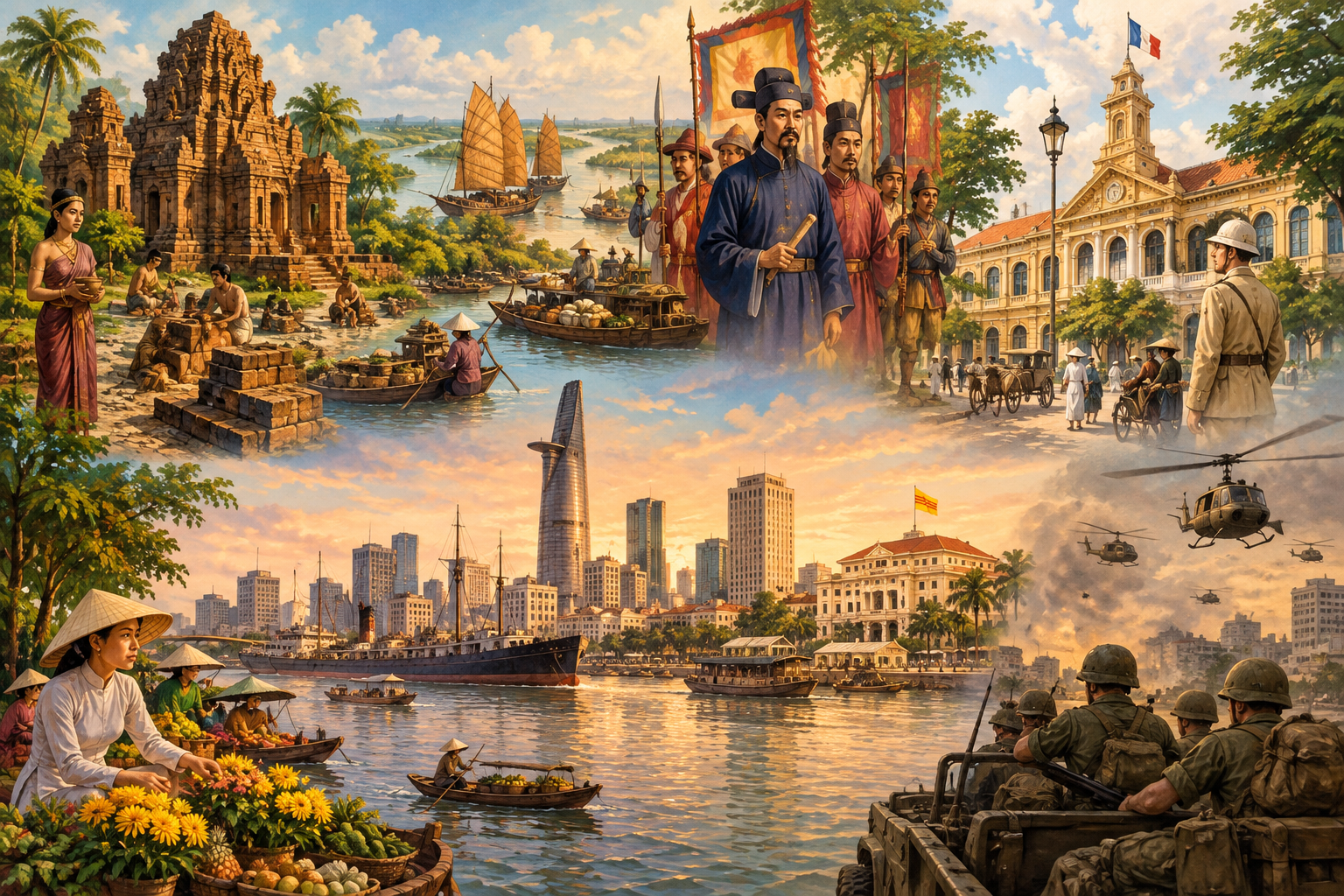
Those elections did not take place. The United States did not sign the relevant Geneva declaration and backed a separate government in the South. South Vietnam developed into the Republic of Vietnam, while the DRV consolidated control in the North. The two governments claimed to represent Vietnam, but followed opposing political systems and relied on different foreign partners. Read the Geneva Accords and the 17th Parallel for the settlement’s terms, and the history of South Vietnam for the other state created by the division.
How the DRV governed the North
The DRV was led by a communist party that sought to build a socialist state. Ho Chi Minh held a prominent role as president and symbol of independence, while party leaders shaped policy and political organization. The government expanded state authority through local committees and mass organizations, and presented national independence, social transformation, and reunification as connected goals. This political project was not separate from wartime mobilization: the state relied on organized civilian labor and resources as well as its armed forces.
Land policy was central to the government’s promise to change rural life. Land redistribution and agrarian reform aimed to weaken landlord power and win peasant support. The campaign also involved coercion and serious abuses. During the mid-1950s, officials classified people by social background, and some were punished or denounced unjustly. The government later acknowledged errors and carried out corrections, but the campaign left deep harm. A balanced account should recognize both the popular appeal of land reform and the violence through which it was implemented.
After the war with France, the North rebuilt damaged infrastructure and sought to increase agricultural output. The state promoted cooperatives and collective farming, placing more decisions about production under government direction. It also expanded schooling, health services, and industry, though shortages and the pressure of renewed war limited what these programs could achieve. Soviet and Chinese support mattered to the DRV’s diplomacy, economy, and military capacity, while relations with those allies were not always simple or uniform.
The army, the South, and the Vietnam War
The Vietnam People’s Army, abbreviated VPA or PAVN in English-language writing, grew from revolutionary armed groups. Vietnam’s Ministry of National Defence traces one important founding unit to 22 December 1944; the name Vietnam People’s Army came into use in 1950. The army fought the French and later defended the North while also taking part in the struggle for reunification. “North Vietnamese army” is a common shorthand, but it can obscure the different forces and organizations involved in the war.
The National Liberation Front, often called the Viet Cong by its opponents, was a southern-based political and military organization. It was not simply another name for the regular army of North Vietnam. The DRV supported the southern communist movement, and northern regular forces increasingly fought in the South, but local forces and southern political networks had their own histories and roles. Keeping these groups distinct helps explain why the war was at once a civil conflict within Vietnam and a Cold War confrontation involving foreign powers.
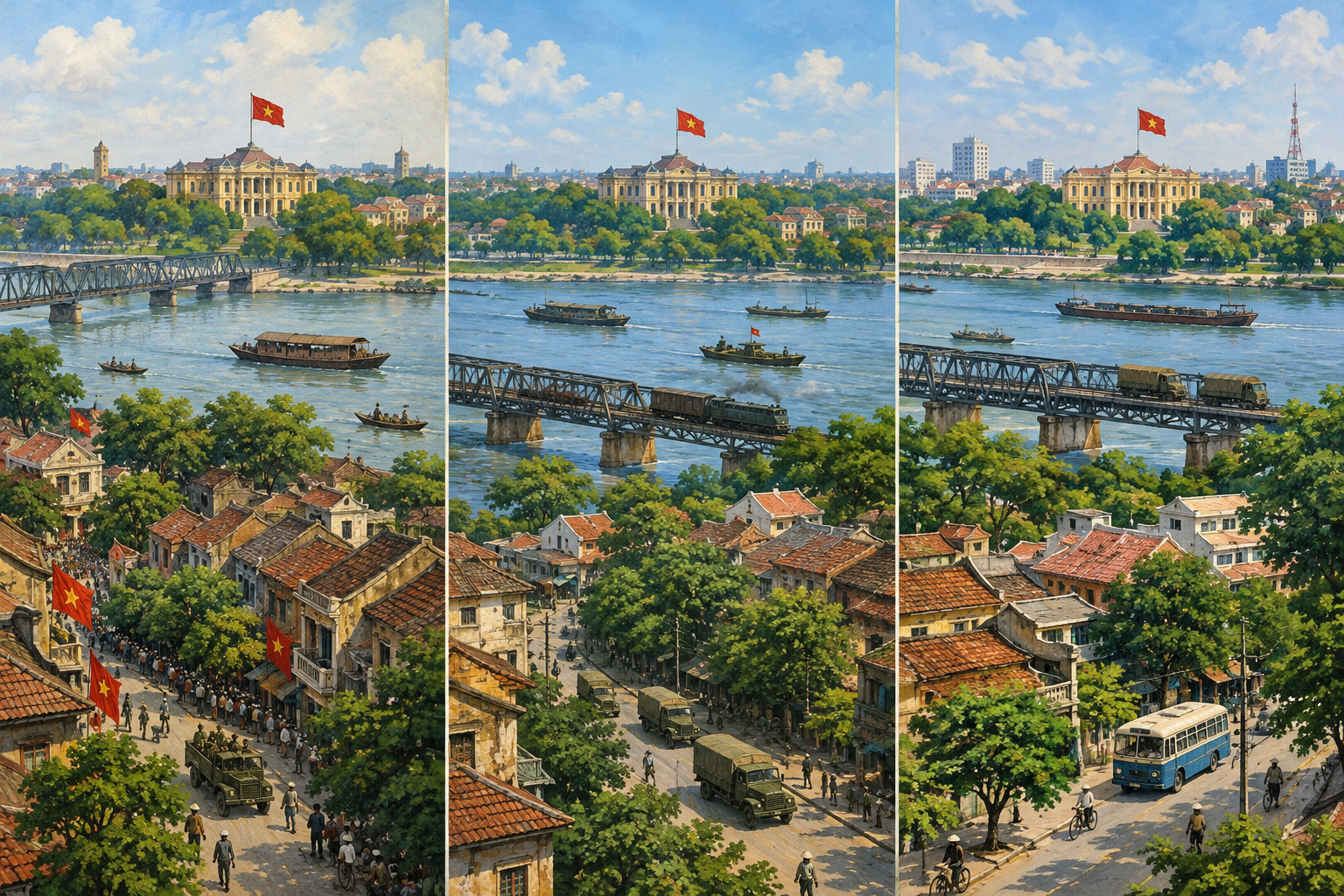
The North also faced sustained air attacks during the war. The United States began major bombing campaigns against North Vietnam in 1965; the raids continued, with pauses and changes in scope, until 1973. The government moved people, supplies, and industry where it could, repaired damaged transport links, and relied on assistance from allies. Routes through Laos and Cambodia helped move personnel and supplies toward the South. The human and material costs were severe, though estimates vary and should be presented carefully.
From the Paris agreement to reunification
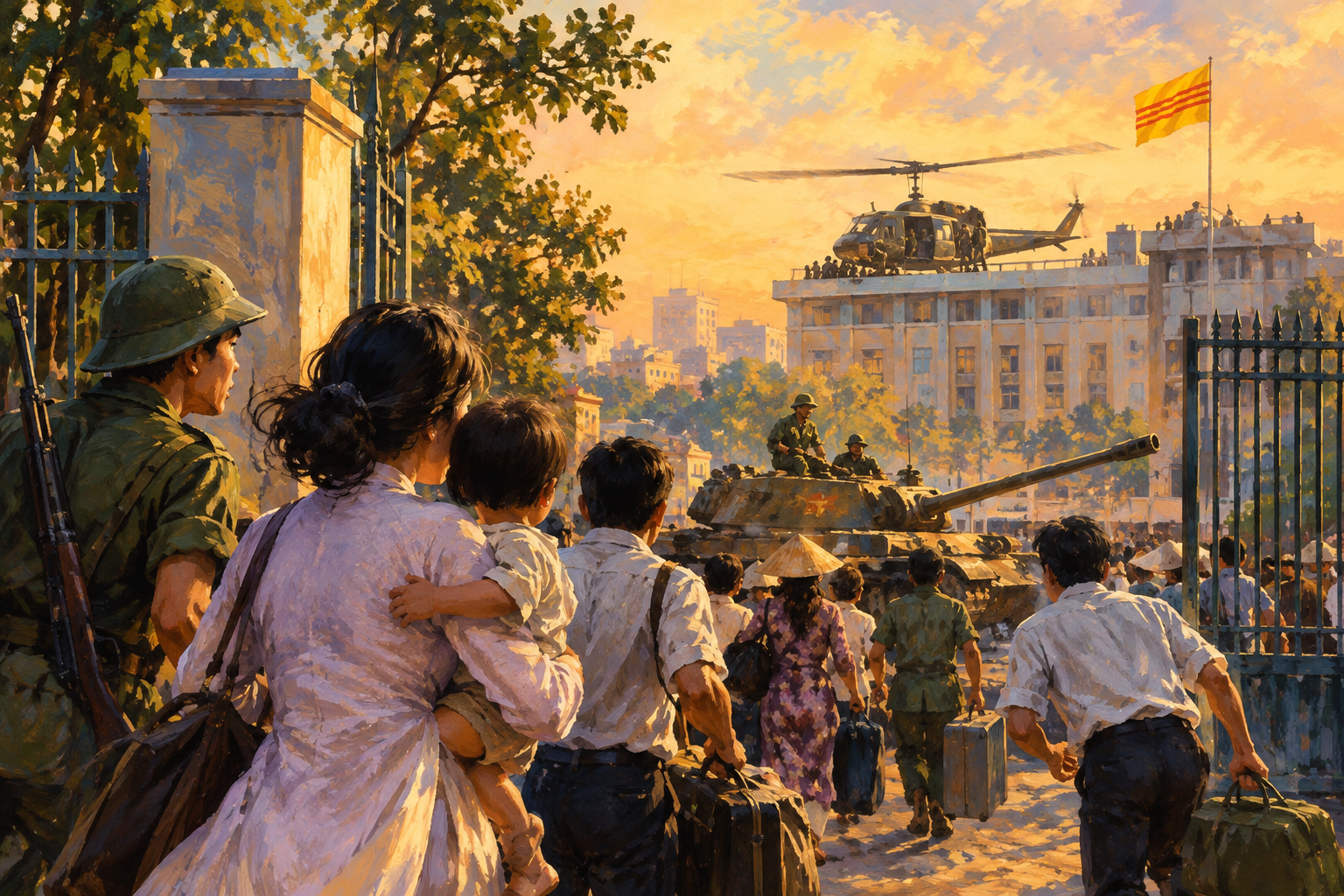
The 1973 Paris Peace Accords set out a ceasefire and the withdrawal of U.S. forces, but fighting between Vietnamese forces did not end. In the spring of 1975, the DRV and allied forces launched a major offensive. Saigon fell on 30 April, ending the Republic of Vietnam’s government. North and South were formally reunified the following year: on 2 July 1976, the National Assembly named the unified country the Socialist Republic of Vietnam.
That date marks the end of North Vietnam as a separate state. It does not mean that the years of division vanished at once. Reunification brought a new political structure, while people across the country continued to face the consequences of war, displacement, loss, and economic disruption. The DRV’s legacy is therefore two-sided: it helped bring colonial rule to an end and reunify the country, while its wars and political campaigns also involved profound suffering.
What exams ask
For a world-history answer, keep the sequence clear: the DRV was proclaimed in 1945; the First Indochina War ended with the 1954 Geneva settlement and a provisional division; the planned 1956 reunification elections did not occur; the North and South fought the Vietnam War; and formal reunification followed in 1976. Explain that the 17th-parallel line was a military demarcation line, not an agreed permanent border. Also distinguish the DRV, the Republic of Vietnam, the National Liberation Front, and the Vietnam People’s Army. That distinction makes it easier to explain why the conflict involved Vietnamese political aims as well as international Cold War interests.
Read next
The Vietnam War Explained connects North Vietnam’s choices to the course of the wider war. South Vietnam: The Republic of Vietnam explains the rival government south of the demarcation line. The Geneva Accords and the 17th Parallel shows why the division was described as provisional.
FAQ
What was North Vietnam officially called? Its government was the Democratic Republic of Vietnam, usually shortened to DRV. “North Vietnam” is the familiar name for the state and territory it governed after the 1954 regrouping.
When was North Vietnam founded? Ho Chi Minh proclaimed the DRV on 2 September 1945 in Hanoi. The DRV claimed independence for Vietnam, while its control over territory was contested and changed during the wars that followed.
What was the capital of North Vietnam? Hanoi was the DRV’s capital. It remained the political center of North Vietnam after the 1954 division and became the capital of reunified Vietnam.
What was the difference between the Vietnam People’s Army and the Viet Cong? The Vietnam People’s Army was the regular army associated with the DRV. The Viet Cong was a common name for the southern-based National Liberation Front and its armed forces. The North supported the southern movement, but the names refer to different organizations.
When did North Vietnam and South Vietnam reunite? The two were formally united as the Socialist Republic of Vietnam on 2 July 1976, after Saigon fell to DRV and allied forces in April 1975.