In five minutes: what was the bombing of North Vietnam?
The bombing of North Vietnam was a series of U.S.-led air campaigns intended to weaken the Democratic Republic of Vietnam’s ability to support the war in the South and to pressure its leaders into changing course. The first sustained campaign, Operation Rolling Thunder, ran from March 1965 to October–November 1968, with pauses and shifting limits. Four years later, the United States launched Linebacker II, the intense December 1972 campaign often called the Christmas bombing.
The two operations are linked, but they were not the same campaign. Rolling Thunder was gradual and repeatedly interrupted. Linebacker II concentrated a much larger effort against targets around Hanoi and Haiphong over a short period. Their shared problem was strategic: destroying targets from the air did not automatically make Hanoi accept Washington’s terms or end North Vietnam’s support for the war.
Here, “North Vietnam” means the Democratic Republic of Vietnam, the state led by the Vietnamese Workers’ Party from Hanoi. U.S. leaders used bombing both as a military instrument and as a signal: they hoped to impose costs while leaving room for the North Vietnamese leadership to negotiate. Those goals could conflict. A gradual campaign might communicate resolve without provoking China or the Soviet Union, but it also gave the target time to adapt and repair damage. For the war’s wider causes, course, and outcome, see The Vietnam War Explained, the hub guide to the conflict.
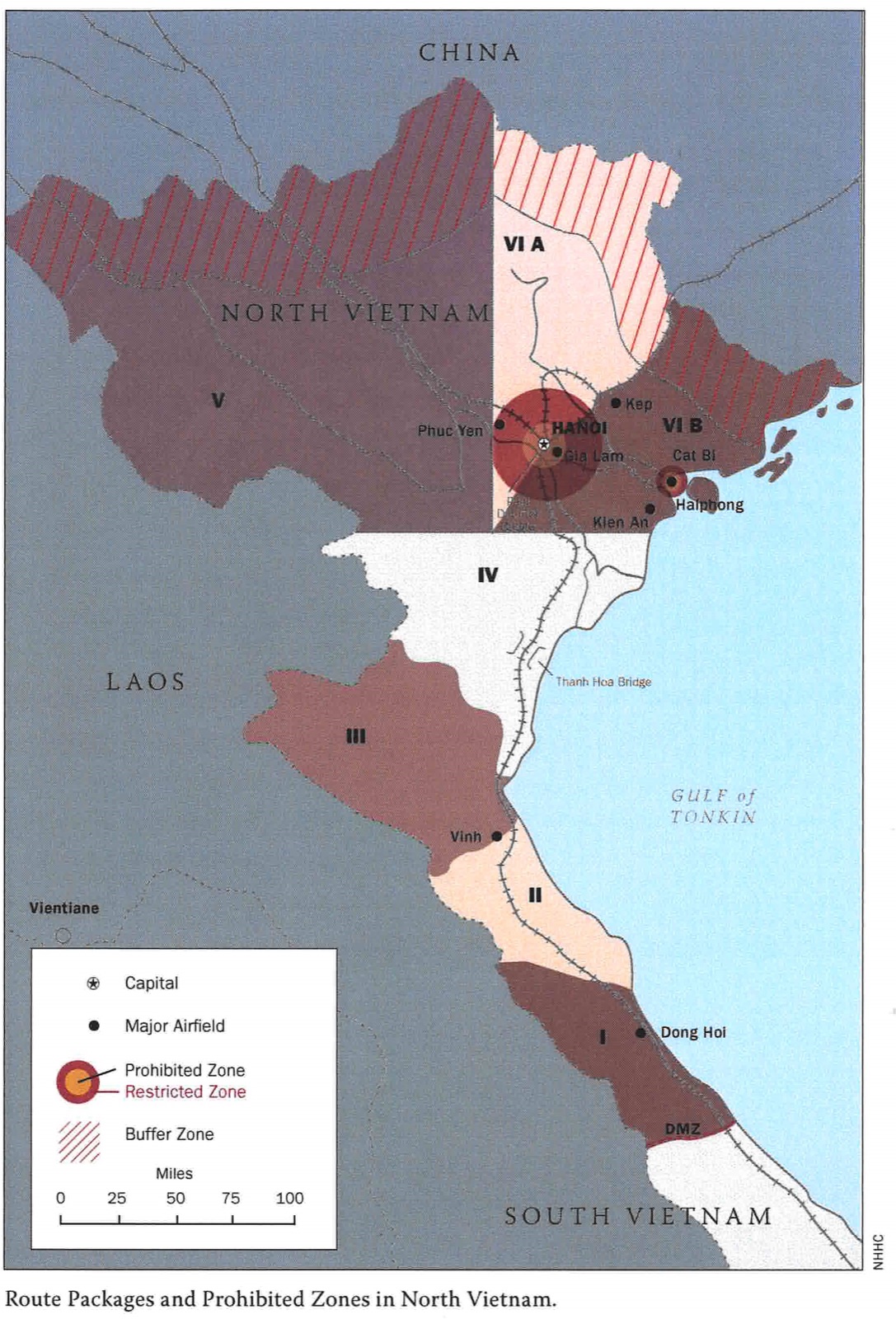
The route-package map shows how U.S. planners divided North Vietnam into geographical areas for air operations. It is a useful reminder that the campaign was organized around a target system and boundaries as well as around aircraft and bombs.
Why did the United States begin Rolling Thunder?
Rolling Thunder grew out of the widening war in South Vietnam. The United States wanted to support the South Vietnamese government, discourage Hanoi from backing the southern insurgency, and disrupt the movement of people and supplies toward the battlefield. A sustained air campaign was also meant to persuade North Vietnam that continued support for the war would bring increasing costs.
There was no single, unchanging purpose. U.S. officials argued over whether bombing should mainly reassure South Vietnam, interdict supplies, damage North Vietnamese military capacity, or create bargaining pressure. The campaign was meant to serve several of these aims at once. That made it hard to judge success: a strike might damage a facility, but still fail to change the political choices of the leaders in Hanoi.
The Gulf of Tonkin episode formed part of the political setting, but Rolling Thunder did not begin immediately after it. On 2 March 1965, the Navy records the start of the sustained campaign. The first strikes were aimed largely at targets in the southern part of North Vietnam. Over time, the air war expanded and its target priorities shifted.
Washington also feared widening the conflict. China and the Soviet Union supported North Vietnam, and U.S. leaders worried that attacks on the most sensitive targets could bring a wider confrontation. They therefore controlled what could be hit and when. Restrictions changed over time; targets could be approved, paused, and later attacked. To the pilots, this could mean flying into dangerous defenses to strike a target only after a delay, or returning to a place that had already been repaired.
This approach was a deliberate attempt to manage escalation, but it imposed costs on the campaign’s military logic. A limited strike could signal resolve while leaving much of the larger system functioning. When the United States stopped bombing for negotiations, North Vietnam could use the pause to restore transport links and defenses. The policy tried to control the risks of war; it could not guarantee that pressure from the air would produce the political response Washington wanted.
How Rolling Thunder was fought
Operation Rolling Thunder began on 2 March 1965 and continued, with interruptions and changing boundaries, until President Lyndon B. Johnson ended the bombing of North Vietnam on 31 October 1968. Naval History and Heritage Command describes the campaign as continuing at varying intensity until the complete halt took effect on 2 November. The dates differ slightly because accounts mark the presidential order and the operational end in different ways.
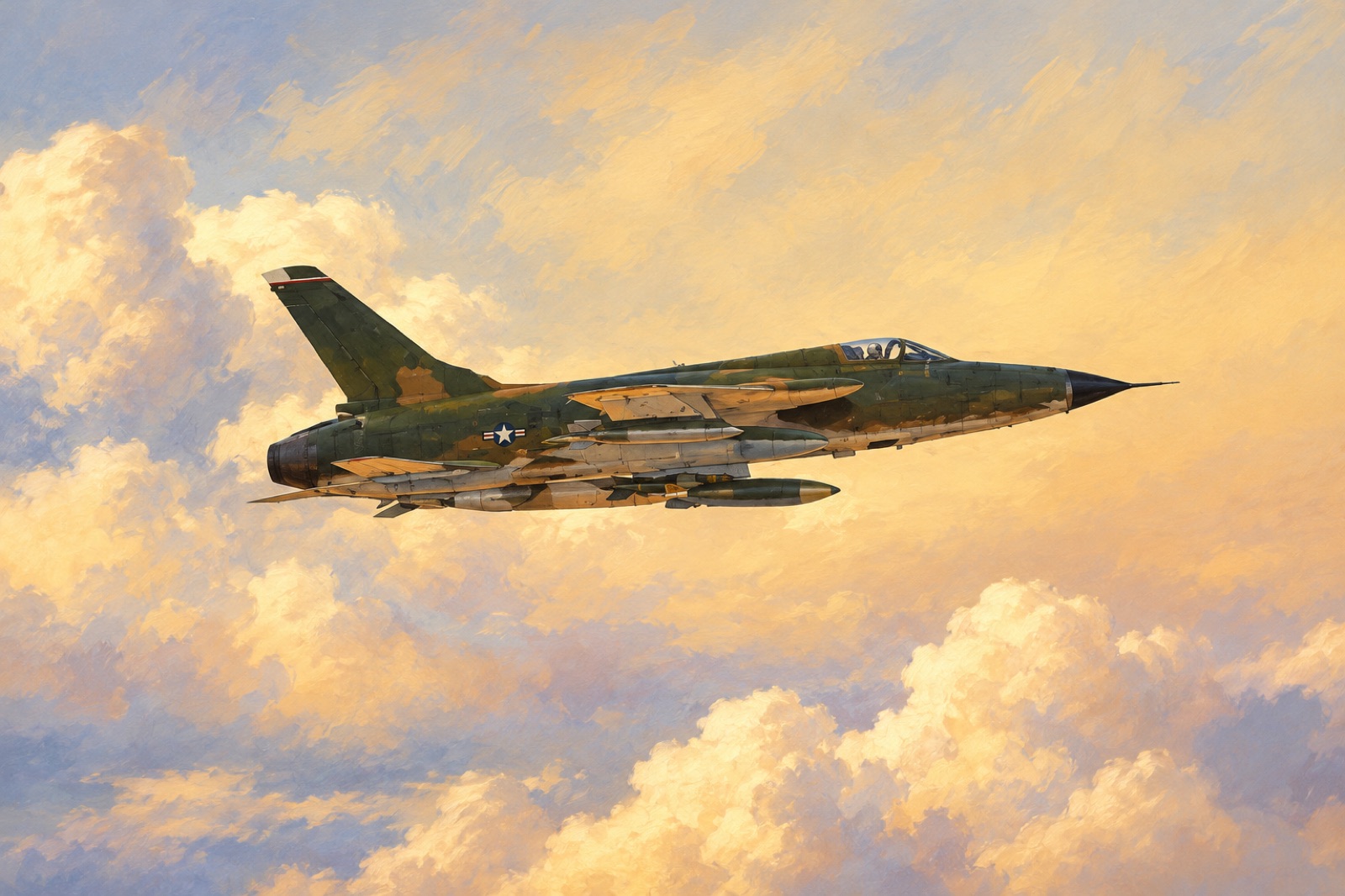
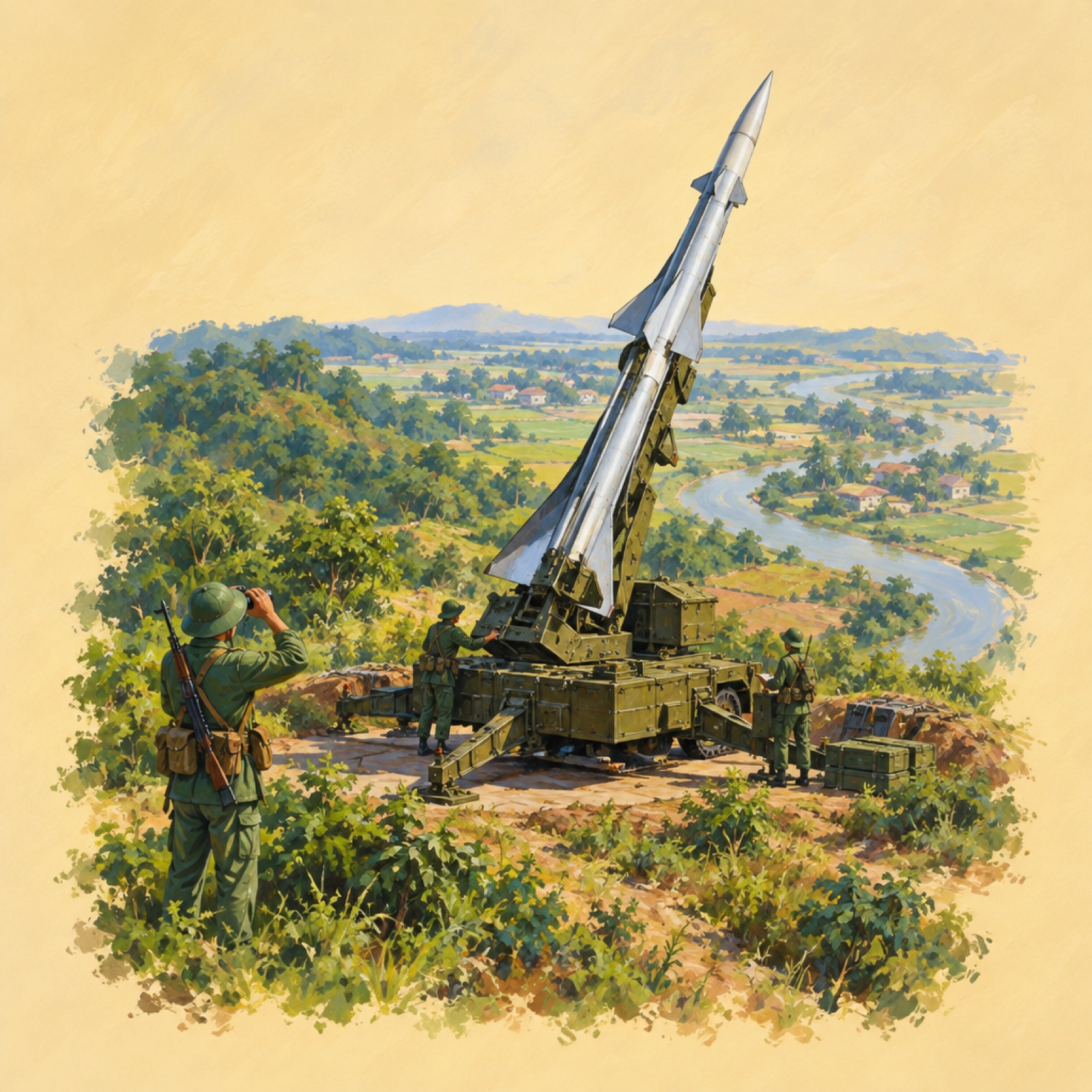
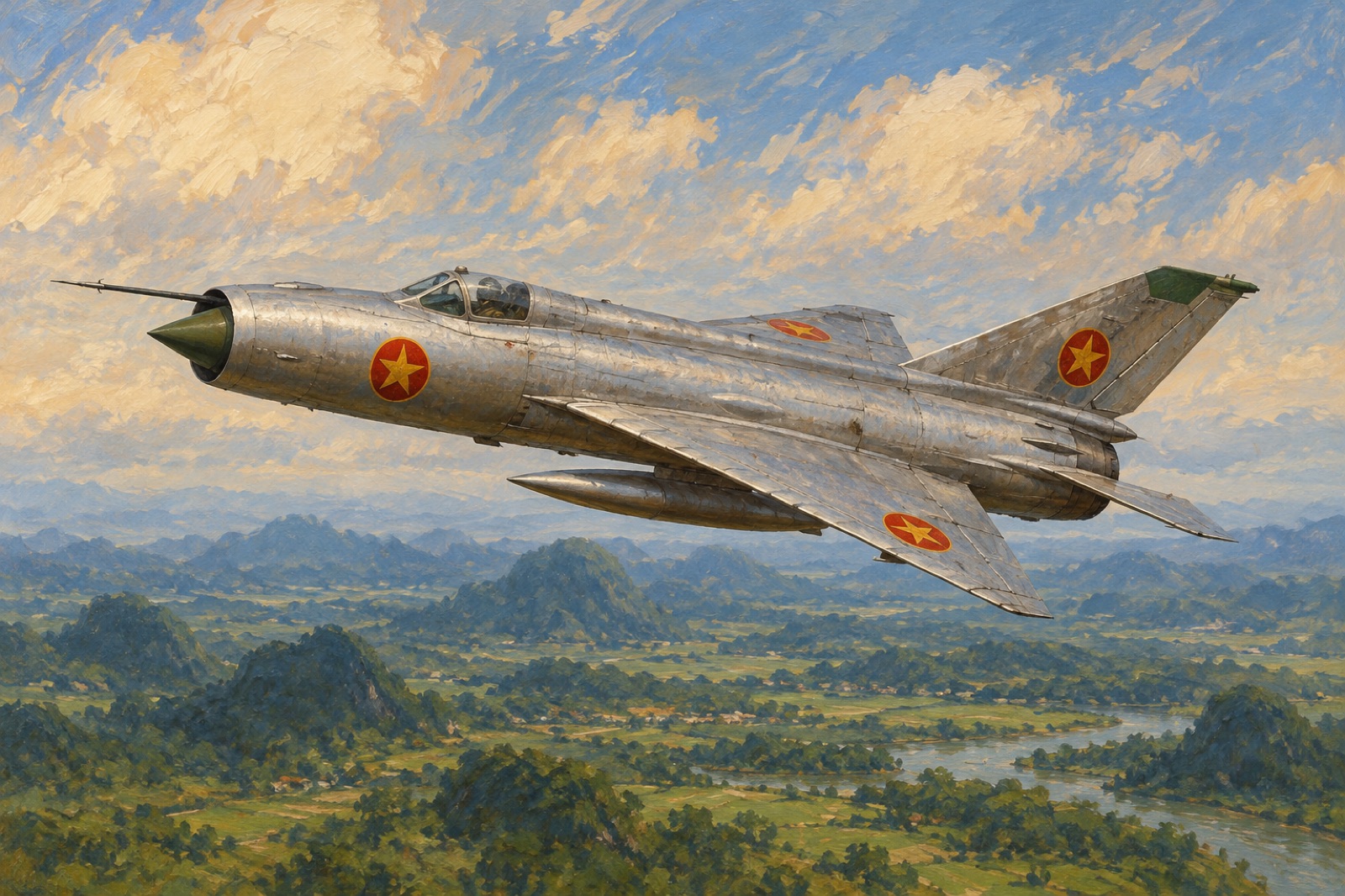
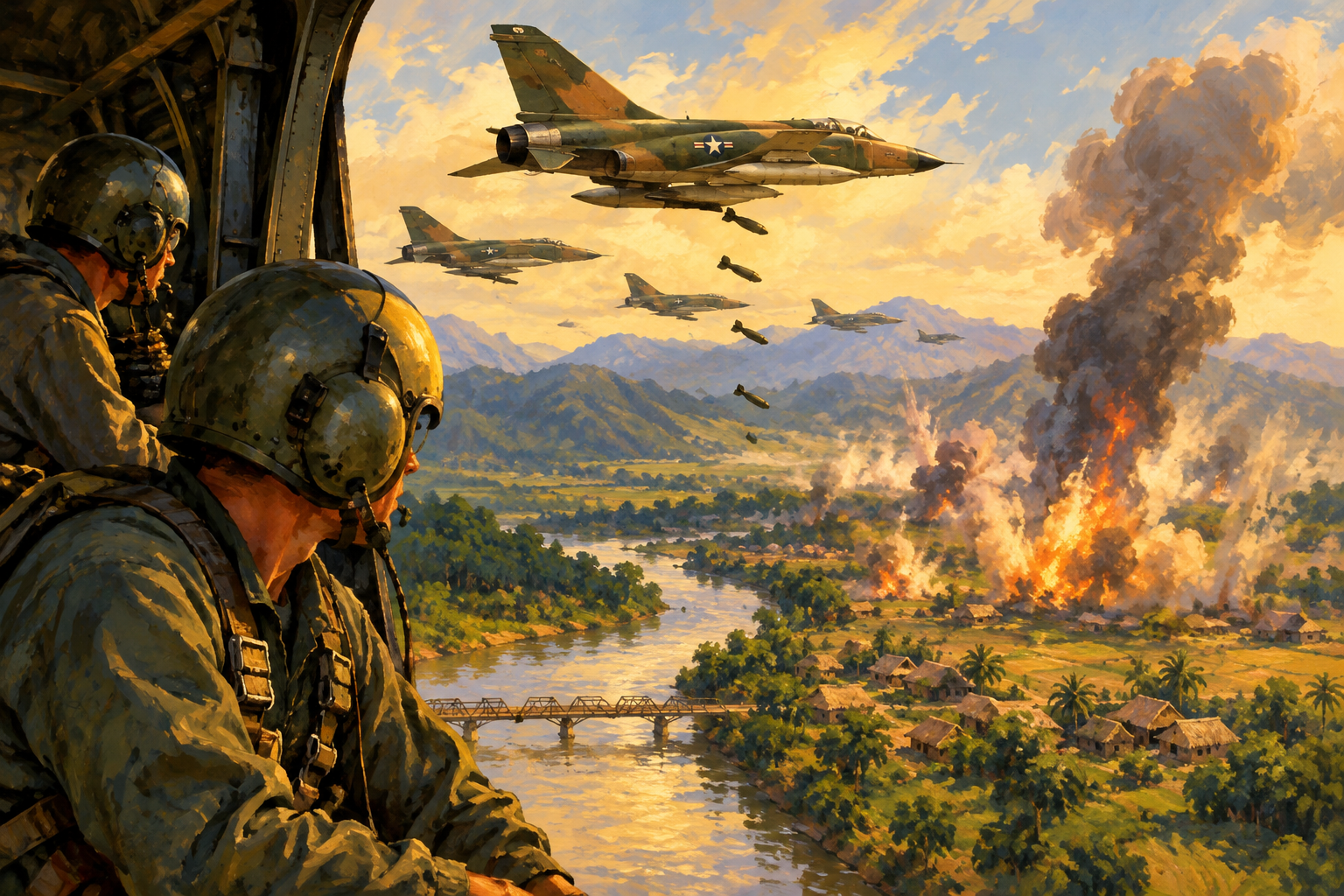
U.S. Navy aircraft flew from carriers in the Gulf of Tonkin, while Air Force aircraft operated from bases in Thailand and elsewhere in the region. The aircraft shown in the unit cards represent several parts of the contest. F-105 Thunderchiefs carried out many strike missions. MiG-21 fighters challenged U.S. formations, while S-75 surface-to-air missiles, known to U.S. forces as SA-2s, made high-altitude flight dangerous. The aircraft and air defenses were connected: attacking a target often required fighter cover, electronic countermeasures, and careful planning around radar and missile sites.
Operations were divided into route packages, geographical zones assigned to organize air missions. The divisions helped manage who flew where, but the map should not be mistaken for a simple front line. Aircraft crossed a contested airspace in which defenses, target permissions, weather, and changing instructions all mattered. The route structure also reflected the campaign’s political control: the air war was not left entirely to commanders in the field.
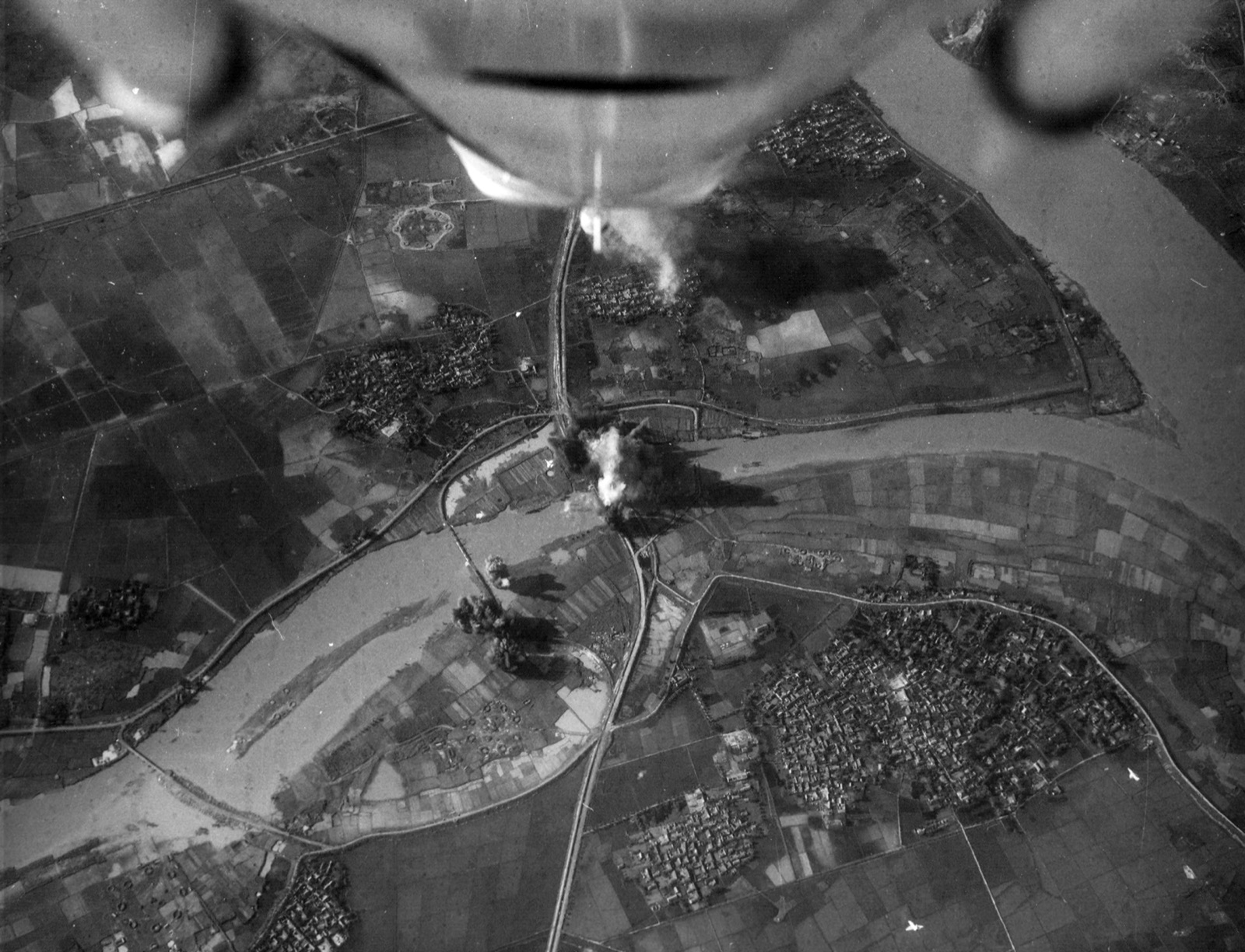
North Vietnam’s response was not limited to firing at aircraft. It dispersed supplies, repaired bridges and rail lines, used camouflage, and organized labor to restore damaged transport links. The Ho Chi Minh Trail, running through Laos and Cambodia as well as Vietnam, made interdiction still harder: a campaign over the North could damage routes without sealing the wider supply network. U.S. assessments recorded significant damage, but also the ability of North Vietnam to repair and adapt. That is why the campaign’s tonnage or list of destroyed targets cannot, by itself, explain its strategic result.
Air defenses grew more formidable as the war continued. Soviet-supplied missiles and radar-guided guns forced U.S. crews to alter tactics and accept serious risks. MiG fighters added another threat, especially when bomb-laden aircraft were approaching or leaving their targets. The danger was not abstract: the U.S. lost aircraft and crews, while the campaign also killed and injured people on the ground. Civilian harm was an enduring consequence of bombing, even when military planners selected specific targets and tried to limit it.
The pauses in bombing were part of the policy, not just interruptions caused by weather or logistics. Johnson announced halts intended to create openings for talks. Yet a pause could also give North Vietnam time to repair damage and move supplies. That tension captures the campaign’s central dilemma: the bombing had to be limited enough to avoid a wider war and to leave space for negotiation, but powerful enough to change the other side’s calculations.
From Rolling Thunder to Linebacker II
Rolling Thunder ended in 1968, but the bombing of North Vietnam did not end forever. In 1972, North Vietnam launched a major conventional offensive across the demilitarized zone and into South Vietnam. The United States responded with Operation Linebacker, beginning in the spring, and later with Linebacker II. Linebacker II was a distinct campaign, not a late phase of Rolling Thunder.
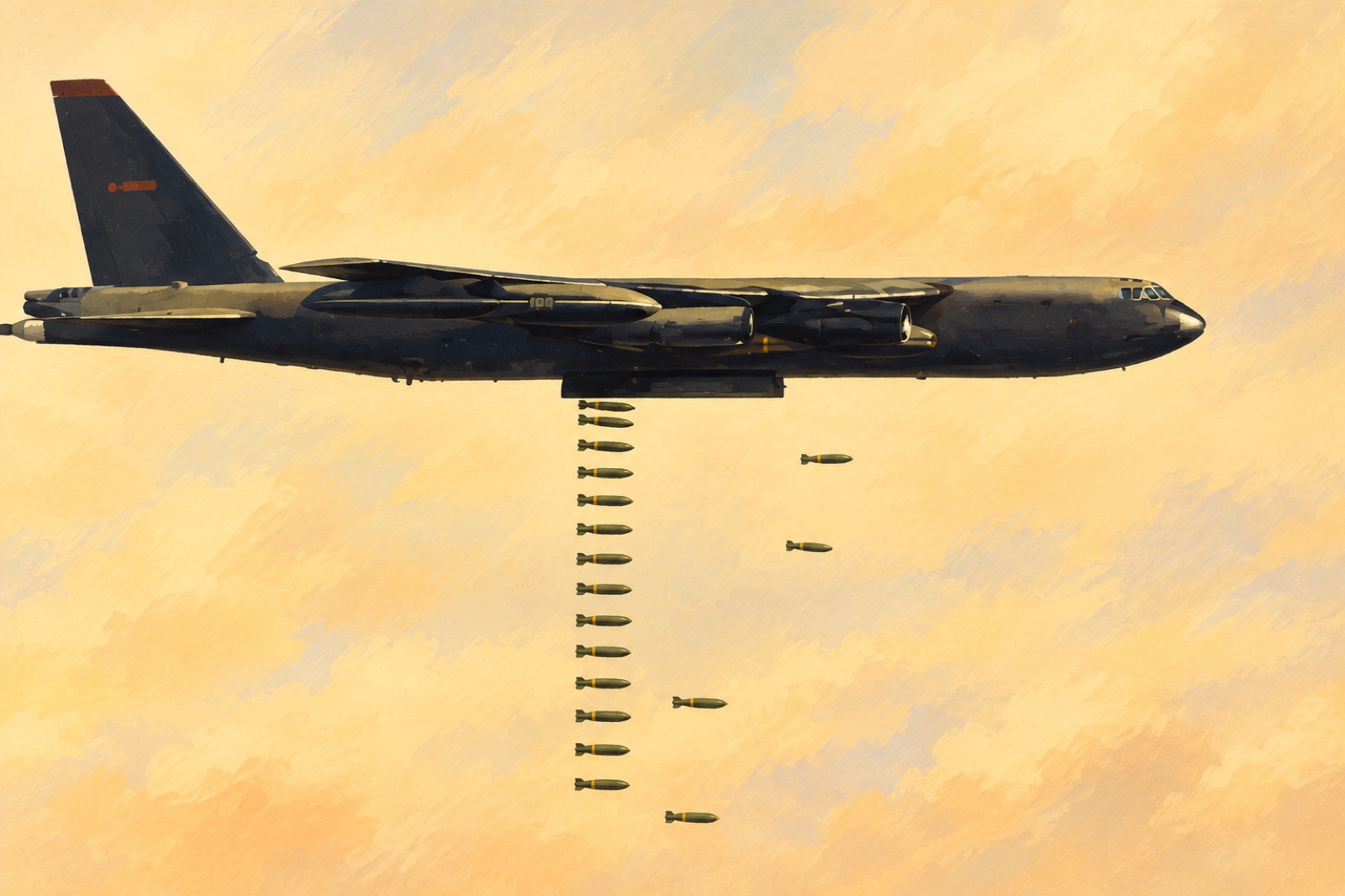
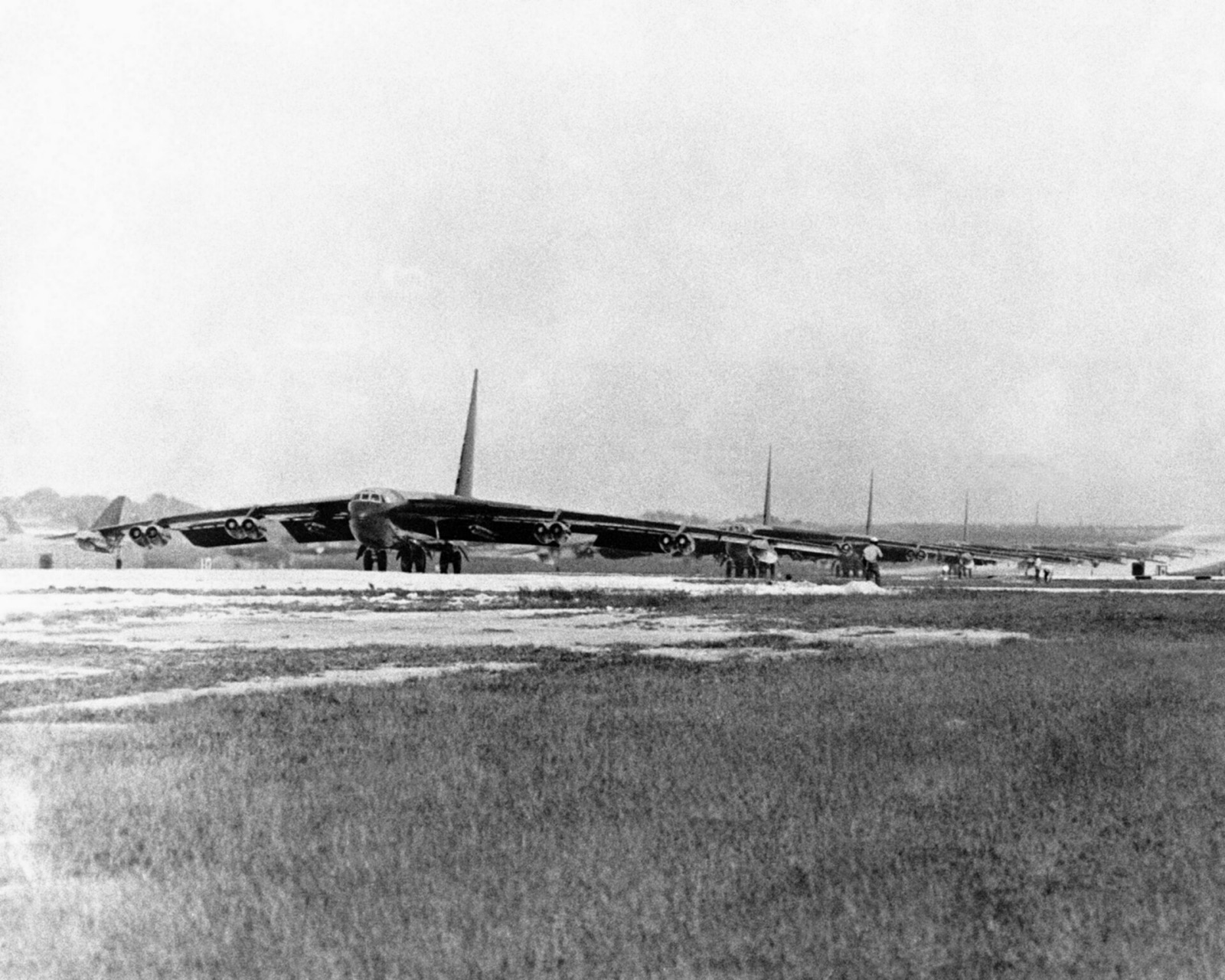
President Richard Nixon ordered Linebacker II after negotiations in Paris stalled in December 1972. U.S. objectives included putting pressure on Hanoi to return to serious negotiations and striking major military and transport complexes in the Hanoi–Haiphong area. Compared with Rolling Thunder, the 1972 operation used a concentrated air effort against a narrower set of strategic targets. B-52 bombers flew from Guam and Thailand; tactical aircraft and support planes joined the attacks. The B-52s struck at night while fighter and attack aircraft carried out other missions and helped counter air defenses.
The operation ran from 18 to 29 December 1972. It included eleven nights of B-52 attacks within that twelve-day span, with a pause over Christmas. The Air Force history records 20 Air Force aircraft lost during Linebacker II, including 15 B-52s. These are Air Force losses; the figure does not count losses from other U.S. services. North Vietnamese surface-to-air missiles caused many of the losses. These figures describe aircraft losses, not the total human cost of the operation.
The targets included rail yards, power facilities, airfields, communication sites, and other military or logistical infrastructure. Hanoi and Haiphong were also cities where civilians lived and worked. Bombing produced civilian deaths, injuries, and destruction, and the harm was not erased by the military purpose assigned to a target. The campaign should be understood both as an attempt to break a negotiating deadlock and as a large-scale air assault whose effects fell on people in the cities under attack.
Linebacker II ended on 29 December. North Vietnamese representatives returned to negotiations in Paris in January 1973, and the Paris Peace Accords were signed later that month. The sequence invites a simple claim that the bombing forced Hanoi to agree. The record supports a more careful conclusion: the bombing was followed by renewed talks, but it was only one part of a larger negotiation shaped by battlefield conditions, U.S. domestic politics, the positions of South Vietnam and North Vietnam, and the changing U.S. commitment to the war. The agreement did not settle the conflict between the Vietnamese sides.
The comparison is useful for exams because it distinguishes an extended, stop-start campaign from a short, concentrated one. Rolling Thunder aimed to build pressure gradually while keeping escalation under political control. Linebacker II used a far more concentrated assault to press negotiations at a moment of diplomatic crisis. Both campaigns show that air power can destroy infrastructure and impose costs, but political results depend on what the other side can endure, repair, and accept at the negotiating table.
Why did the bombing fail to end the war?
First, the campaign’s goals were divided. Leaders wanted to hurt North Vietnam, reassure South Vietnam, interrupt supplies, and avoid provoking China or the Soviet Union. These aims did not always point toward the same choice of target or intensity. Restricting attacks reduced some risks, but it also made the threat of unlimited destruction less credible.
Second, North Vietnam adapted. Roads, bridges, and rail lines could be repaired; supplies could be dispersed or rerouted; and people could be mobilized to keep the transport system working. Damage was real, but a damaged network was not necessarily a closed network. The campaign could increase the cost of supplying forces without cutting the supply flow to zero.
Third, the bombing did not remove the political causes of the conflict. North Vietnamese leaders were prepared to absorb severe hardship in pursuit of reunification under their government. U.S. officials often hoped that rising costs would make the North accept a settlement on American terms. But the target’s willingness to continue fighting was a political fact that bombs could not directly control.
Fourth, a bombing campaign could not substitute for a political settlement acceptable to all sides. Rolling Thunder’s bombing halts brought neither a quick agreement nor an end to fighting. Linebacker II helped bring negotiators back to Paris, but the resulting accords left core disputes unresolved. The war continued between North and South Vietnam after U.S. forces withdrew.
For readers asking “when was North Vietnam bombed?”, the shortest accurate answer is: sustained U.S. bombing began in March 1965, Rolling Thunder ended in late 1968, and a separate major campaign, Linebacker II, struck the North in December 1972. “Why was it bombed?” has no single answer; military interdiction, pressure on Hanoi, support for South Vietnam, and leverage in negotiations were overlapping aims. Keeping the campaign names and dates distinct makes the history much easier to follow.
What to remember for an exam
Use three comparisons. First, distinguish Rolling Thunder from Linebacker II: the former was a long campaign with pauses from 1965 to 1968; the latter was a concentrated operation in December 1972. Second, connect air power to policy: target limits and bombing pauses reflected concern about escalation and an effort to influence negotiations. Third, connect military effects to political limits: damage and aircraft losses mattered, but neither automatically produced an end to the war.
Okinawa’s role was important but specific. In 1965, KC-135 Stratotanker refueling tankers at Kadena supported B-52 bomber operations in Southeast Asia. The aircraft had different jobs: B-52s carried bombs, while KC-135s refueled aircraft in flight. For Linebacker II, B-52 bombers staged from Andersen Air Force Base on Guam and U-Tapao in Thailand, not Kadena. This separates the 1965 Arc Light deployments from the 1972 bombing of Hanoi and Haiphong. Japan’s connection to the war therefore includes both the military role of Okinawa and the wider political and social response in Japan.
To understand the events before the bombing, read The Gulf of Tonkin Incident, which helps explain the escalation of U.S. involvement. For the supply system that bombing tried to disrupt, see The Ho Chi Minh Trail. To explore the Japanese connection, continue with Japan and the Vietnam War. This page is part of The Vietnam War Explained, the wider guide to the war’s causes, course, and outcome.