In five minutes
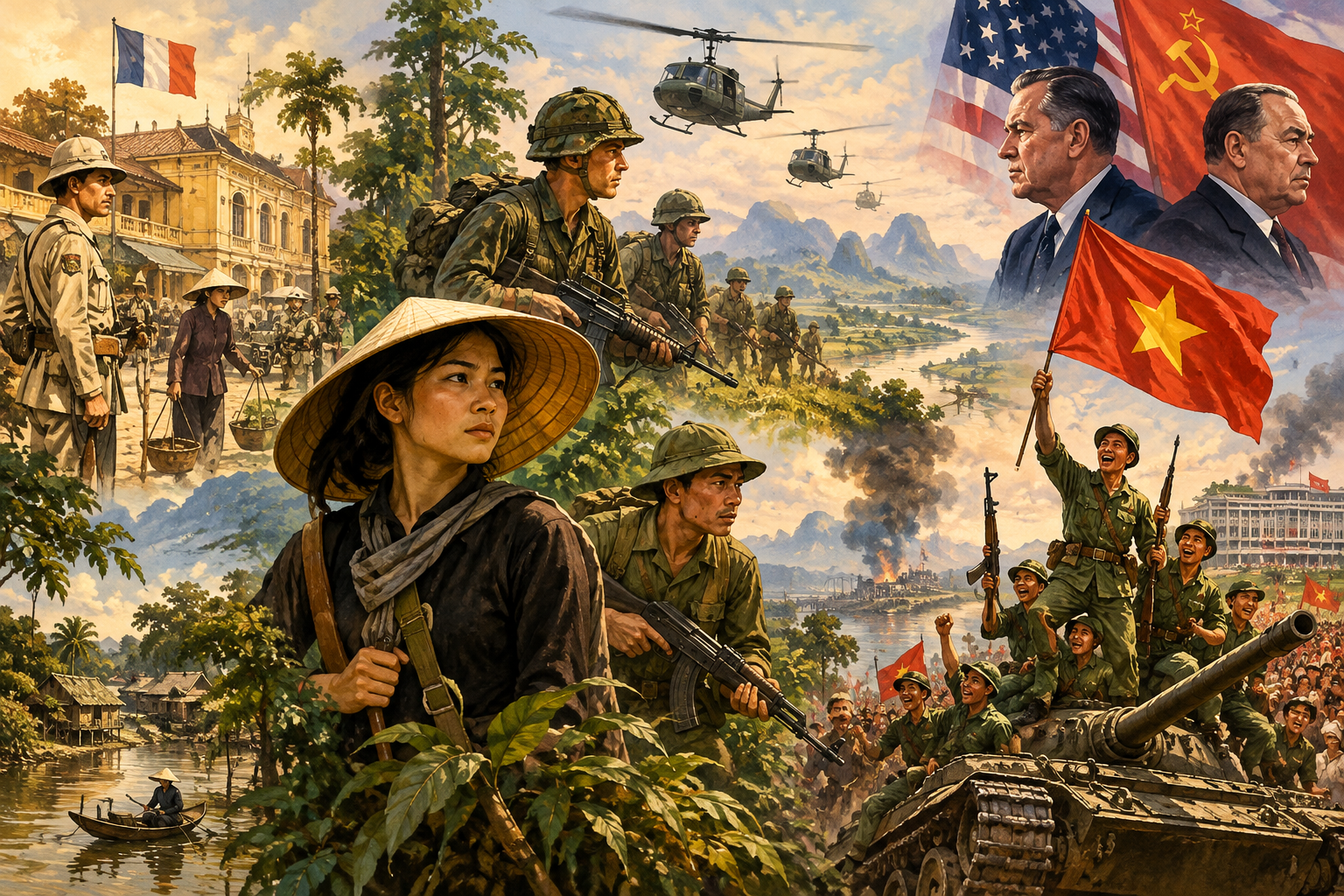
The Vietnam War was a struggle over Vietnam’s political future that became an international Cold War conflict. North Vietnam and the southern National Liberation Front fought the government of South Vietnam, which received extensive backing from the United States. South Korea, Australia, Thailand, and other partners also contributed forces or support. China and the Soviet Union aided North Vietnam, though their policies and their relationship with Hanoi were not identical. For the longer history behind the conflict, see The History of Vietnam: Dynasties, Empire and War, which places the war in the wider story of Vietnamese rule, colonialism, and independence.
The conflict is commonly dated from 1955 to 1975, but the choice of starting point depends on what a historian means by “the Vietnam War.” Vietnam’s declaration of independence in 1945 was followed by the First Indochina War against France, from 1946 to 1954. After France’s defeat, the Geneva settlement divided Vietnam temporarily near the seventeenth parallel. The 1954 Final Declaration envisaged nationwide elections in July 1956 to reunify Vietnam, but the declaration was not signed by any party. South Vietnam did not accept it, and the United States did not join it. The elections did not take place. Two rival governments consolidated power, and armed conflict in the South grew alongside outside intervention.
The United States first expanded aid and military advice, then sent combat forces on a large scale in 1965. The 1968 Tet Offensive did not end in a battlefield victory for the attackers: North Vietnamese and NLF forces were driven back from many positions and suffered heavy losses. Yet the scale of the attacks challenged official claims that victory was near and weakened public confidence in the war. Tet showed that battlefield results and political results could diverge.
After the 1973 Paris Peace Accords, the last U.S. troops left, but fighting between Vietnamese forces continued. North Vietnam captured Saigon on April 30, 1975, and the South Vietnamese government surrendered. The country was formally unified as the Socialist Republic of Vietnam in 1976. North Vietnam and its allies achieved their central political aim; the United States failed to preserve an independent South Vietnam. That answer explains who won, but it cannot capture the enormous human cost or the different experiences of Vietnamese people on both sides.
Key facts
- Common dates: 1955–1975, with origins in the 1945 independence declaration and the 1946–1954 First Indochina War.
- Main arena: Vietnam; the conflict also affected Laos and Cambodia.
- Principal sides: North Vietnam and the NLF against South Vietnam and its allies, led by the United States.
- U.S. withdrawal: The Paris Peace Accords were signed on January 27, 1973; the last U.S. troops departed in March.
- Fall of Saigon: April 30, 1975.
- Regional aftermath: Vietnam completed its withdrawal from Cambodia in 1989; a Cambodian peace agreement followed in 1991.
Why the Vietnam War began
The conflict grew out of a question that remained unresolved after French colonial rule: who would govern Vietnam, and what political system would unite it? Japan occupied Vietnam during the Second World War. After Japan’s surrender, Ho Chi Minh declared the Democratic Republic of Vietnam in September 1945. France tried to restore its colonial authority, and war between French forces and the Viet Minh began in 1946. France’s defeat at Dien Bien Phu in 1954 led to negotiations in Geneva and the end of the First Indochina War.
The Geneva settlement treated the division near the seventeenth parallel as temporary. The Final Declaration, issued on July 21, 1954, envisaged general elections in July 1956 to achieve unification. It bore no signatures. South Vietnam protested the partition and did not accept the declaration; the United States also did not join it, issuing its own unilateral statement instead. The elections were never held. Ho Chi Minh’s government remained in the North, while a separate, U.S.-backed government established itself in the South. The United States feared that a communist victory could encourage other governments in the region to join the communist bloc. This containment policy helped drive growing American support for South Vietnam.
The conflict was also rooted in southern politics. The South Vietnamese government faced armed opposition and broader resistance; in 1960, the National Liberation Front, or NLF, was formed. North Vietnam supported the struggle in the South and pursued reunification. The NLF drew on local networks and grievances as well as northern support. Its forces were often called the Viet Cong by their opponents. These labels describe political and military organizations; they should not be used to suggest that every person in the South shared the same views.
It is useful to keep the domestic and international layers in view at the same time. Vietnamese groups fought over independence, unity, land, and political power. Washington framed its involvement as a defense against communist expansion. North Vietnam received aid from China and the Soviet Union, but neither country simply dictated Hanoi’s choices, and the two communist powers did not always agree with each other. Calling the conflict only a proxy war makes Vietnamese political aims disappear from the story.
American escalation and a widening war
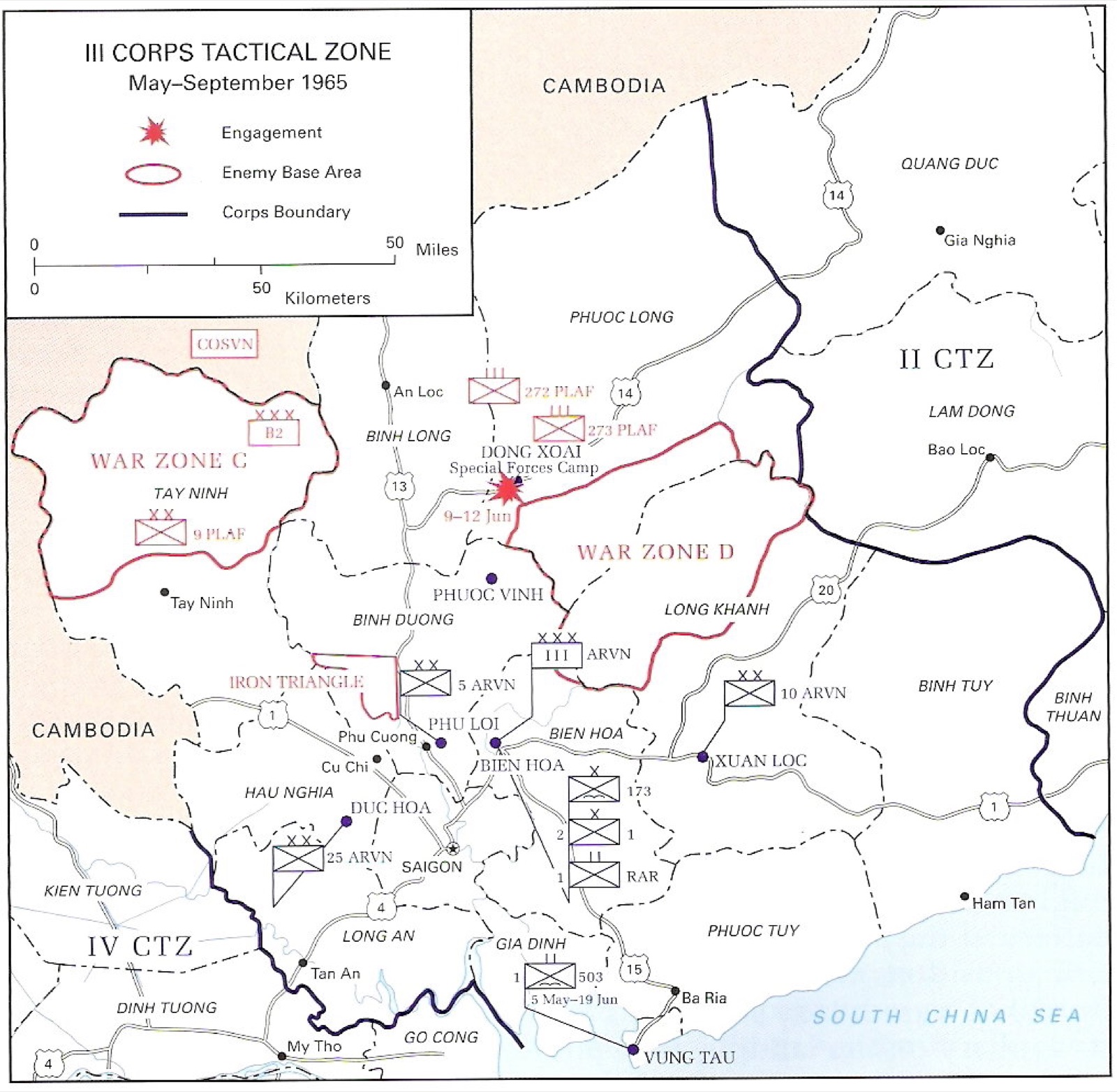
U.S. involvement grew over several stages. American military advisers and aid supported South Vietnam before U.S. combat forces arrived in large numbers. In August 1964, Congress passed the Gulf of Tonkin Resolution, giving President Lyndon Johnson broad authority to take military action in Southeast Asia. In 1965, the United States expanded bombing and deployed ground forces. Marines landed at Da Nang in March, and American troops took on a larger combat role.
U.S. forces had powerful aircraft, artillery, and logistical support. Those advantages could help win engagements, but they could not by themselves produce a stable South Vietnamese government or broad public support for it. Military operations might clear an area without keeping it secure, and battlefield pressure did not resolve disputes about who should rule. South Vietnamese governments faced political instability, while local communities encountered competing demands, violence, displacement, and destruction. The conflict was not a simple contest between a unified South and a unified North.
The fighting also crossed Vietnam’s borders. North Vietnamese supply routes ran through parts of Laos and Cambodia, and American operations and bombing affected both countries. Laos was already caught in a civil war. Cambodia faced mounting political instability and, later, the Khmer Rouge’s rise. These effects make the wider Indochina context essential: the war did not stop at the Vietnamese border, and neighboring societies paid a heavy price.
Why Tet became a turning point
During the Tet holiday in January 1968, North Vietnamese and NLF forces launched coordinated attacks across South Vietnam. They struck towns, cities, and military targets; a small group also reached the grounds of the U.S. Embassy compound in Saigon. Allied forces retook many positions, and the attackers suffered severe losses. In strictly military terms, Tet was not a lasting victory for the offensive forces.
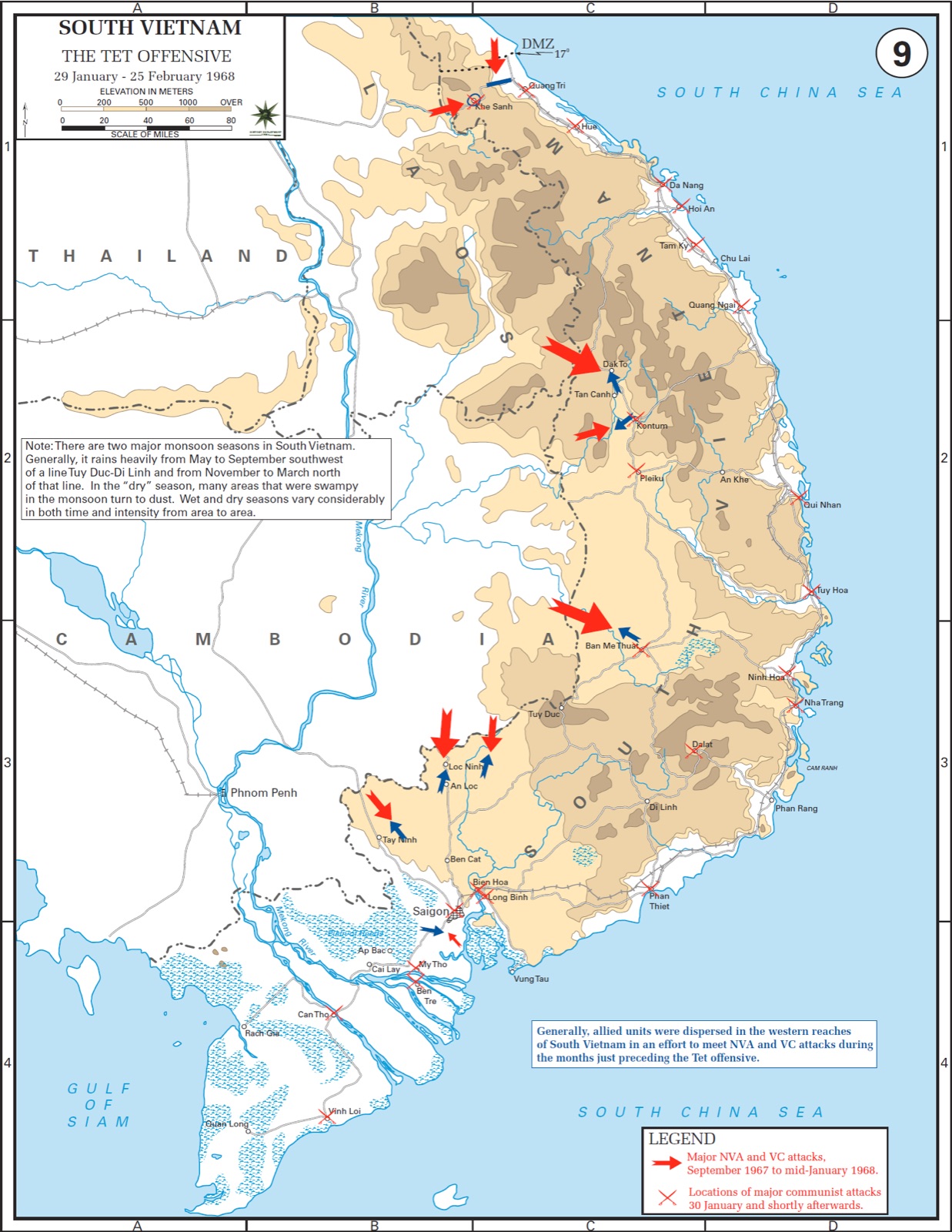
Its political effect was different. The attacks showed that the enemy could still strike widely at a time when U.S. officials had described progress and suggested that victory was approaching. Television coverage and public debate made the gap between official confidence and the reality of continued fighting harder to ignore. Tet did not single-handedly decide the war, but it changed the argument about whether the war could be won at an acceptable cost. It is a clear example of why military outcomes and political outcomes must be judged separately.
Vietnamization, the peace agreement, and 1975
President Richard Nixon’s administration pursued “Vietnamization”: withdrawing U.S. ground troops while asking South Vietnamese forces to carry more of the fighting. The conflict continued, including operations in Cambodia and Laos. In 1972, North Vietnam launched a major conventional offensive. South Vietnamese forces held key positions with U.S. air support, while negotiations proceeded.
The Paris Peace Accords were signed on January 27, 1973. They provided for a cease-fire and the withdrawal of U.S. forces, among other measures. The last American troops left South Vietnam in March. The agreement did not settle the contest between Vietnamese political and military forces. Fighting continued, and South Vietnam faced mounting military and political pressure as American support diminished.
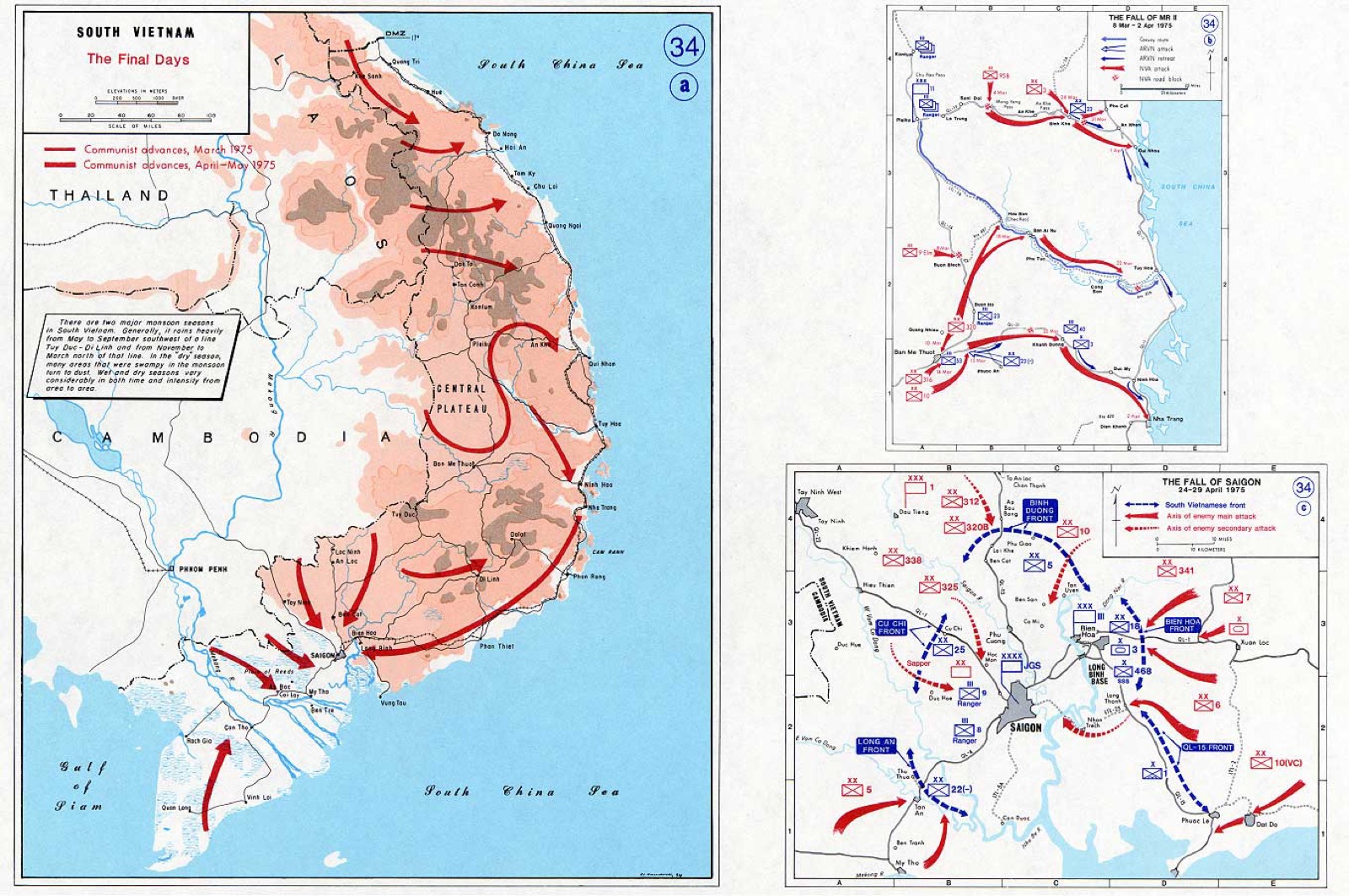
In the spring of 1975, North Vietnamese forces advanced through the South. Saigon fell on April 30, and the South Vietnamese government surrendered. The two parts of the country were formally unified as the Socialist Republic of Vietnam in 1976. North Vietnam and its allies achieved reunification under their government, while the United States failed to maintain an independent South Vietnam. Those facts support the usual answer to “who won,” though they say little about the losses experienced by soldiers, civilians, refugees, and families.
Casualty estimates vary, especially for Vietnamese military and civilian deaths. Records count different groups and use different methods, so a single precise total can create false certainty. The U.S. National Archives records 58,220 American military fatal casualties. The scale of Vietnamese losses was much larger, but estimates vary substantially. A careful account should identify the source and scope of a figure instead of presenting disputed totals as settled fact.
Indochina from 1945 to 1991
This page focuses on the Vietnam War, but the wider period from 1945 to 1991 helps explain its origins and aftermath. Vietnam’s 1945 independence declaration was followed by the First Indochina War, which ended in 1954. The temporary division of Vietnam did not settle the question of reunification. During the 1960s and early 1970s, U.S. involvement expanded and the conflict’s effects spread into Laos and Cambodia.
Regional conflict continued after the South Vietnamese government fell in 1975. In late 1978, Vietnamese forces invaded Cambodia. The Khmer Rouge government was driven from Phnom Penh in January 1979, though conflict in Cambodia continued. In February 1979, China invaded northern Vietnam; the fighting ended after a short campaign, but relations remained tense. Vietnam completed the withdrawal of its forces from Cambodia in 1989. On October 23, 1991, the Paris Agreements on Cambodia established a framework for a political settlement and international transition.
The 1945–1991 span is not one continuous war with one cause. It includes the struggle to end French rule, the division and reunification of Vietnam, foreign intervention during the Cold War, fighting that spread across borders, and the later effort to settle Cambodia’s conflict. These events connect, but each involved distinct governments, movements, and aims. The end of fighting in Vietnam did not immediately bring peace to Indochina.
What exams ask
For AP-style questions, be ready to explain connections, not just list dates. The First Indochina War was an anti-colonial struggle against France. The 1954 Geneva settlement left Vietnam temporarily divided, and the failure to hold the planned reunification elections helped preserve rival governments. Domestic conflict and Cold War intervention then interacted. The United States escalated its involvement to contain communism, while North Vietnam sought reunification and received outside support.
Tet is a useful example of a military result producing a different political effect: attackers were forced back, yet the offensive undermined confidence in claims of imminent victory. Keep the 1973 Paris Peace Accords separate from the 1975 fall of Saigon. The agreement ended direct U.S. military involvement; it did not end the war between Vietnamese forces. Maps should include Laos and Cambodia as well as North and South Vietnam. When discussing casualties, name the source and explain that estimates differ in scope and method.
Read next
For the long history of Vietnamese rule and French colonialism, read Vietnam’s Dynasties and French Rule, which gives context for the First Indochina War.
Saigon and Southern Vietnam follows the history of the southern region and its major city. To focus on the origins of the conflict, read What Caused the Vietnam War?
Vietnam War Timeline lays out the major events year by year. Together, these pages help place the Vietnam War within the wider history of Indochina.
Frequently asked questions
When did the Vietnam War start and end? It is commonly dated from 1955 to 1975. Its background includes the First Indochina War of 1946–1954. Large-scale U.S. ground combat began in 1965, U.S. forces withdrew in 1973, and Saigon fell in 1975.
Why did the Vietnam War start? The conflict grew from an unresolved struggle over independence and reunification after French colonial rule. Vietnam was temporarily divided in 1954, but planned nationwide elections did not take place, leaving rival governments in the North and South. Political conflict within the South continued, while Cold War powers supported opposing sides. These local and international causes reinforced one another.
Who won the Vietnam War? North Vietnam and its allies achieved their central military and political goal: reunification under the northern government. South Vietnam surrendered in 1975, and Vietnam was formally unified under a communist government in 1976. The result identifies the political victor, but does not mean Vietnamese people all supported the same side or experienced the outcome alike.
Did the United States lose? The United States failed to achieve its central goal of preserving an independent South Vietnam, so the outcome is commonly described as a strategic and political defeat for Washington. That judgment concerns the war’s political aim; it does not mean U.S. forces lost every battle. The South Vietnamese government surrendered after U.S. troops withdrew, and the country was unified under North Vietnam’s government in 1976.
What was the Tet Offensive? It was a coordinated series of attacks by North Vietnamese and NLF forces across South Vietnam during the 1968 Tet holiday. The attackers were pushed back from many positions and suffered heavy losses. Politically, the attacks challenged U.S. claims that victory was close and changed public debate about the war. Its military and political effects therefore need to be described separately.