0% • 9 min left

The Taiping Rebellion (1850–1864)

October 30, 2026
The Taiping Rebellion was a civil war that ran from 1850 to 1864 across southern and central China. Hong Xiuquan led the Taiping Heavenly Kingdom, which held Nanjing as its capital until Qing forces retook the city in July 1864. Its death toll is usually put at 20 to 30 million.

Part of: Qing China, Japan and the West (1793–1912)

The Taiping Rebellion (1850–1864)

Key facts

When
1850–1864; the Taiping held Nanjing from 1853 to 1864
Where
Guangxi, then southern and central China; capital Nanjing, renamed Tianjing
Who
Hong Xiuquan's Taiping Heavenly Kingdom against Qing forces and regional armies
Key dates
Jintian Uprising January 1851; Nanjing taken 19 March 1853; Nanjing retaken 19 July 1864
Outcome
Qing victory; the Taiping state lost its capital and ended in 1864
Death toll
Commonly estimated at 20–30 million; estimates vary widely

Timeline

Tap a step for details. Arrow keys move between steps.

  1. 1839–1842

    Britain defeats the Qing in the First Opium War

    The war grew out of conflict over the opium trade, and the Qing lost. The Treaty of Nanjing (1842) required large payments and the opening of ports. The defeat left the dynasty short of money and weakened its authority.

    Also in 1839:More from 1839

  2. 1843

    Hong Xiuquan fails the imperial examinations for the last time

    Hong had tried the imperial examinations several times without success, and 1843 was his last attempt. After reading Christian pamphlets he built a religious teaching of his own. That teaching gave his followers a shared faith and a sense of mission.

    Also in 1843:More from 1843

  3. 1851 (11 January)

    Jintian Uprising and the proclamation of the Heavenly King

    Followers of the God Worshipping Society defeated a government force near Jintian village in Guangxi. Hong then declared himself Heavenly King, the point most sources give as the start of the rebellion. Accounts differ on the date of the formal founding of the state.

  4. 1851 (late September)

    The rebels take Yongan

    Photograph of the Yongan site in Guangxi, the first major settlement the Taiping occupied after the Jintian Uprising.
    STW932, CC BY-SA 4.0, via Wikimedia Commons

    The rebels captured Yongan in Guangxi and used it as their base. Hong set up his government and court there. The Qing besieged the city over the winter until the rebels broke out in spring 1852.

  5. 1853 (19 March)

    Nanjing is taken and renamed Tianjing

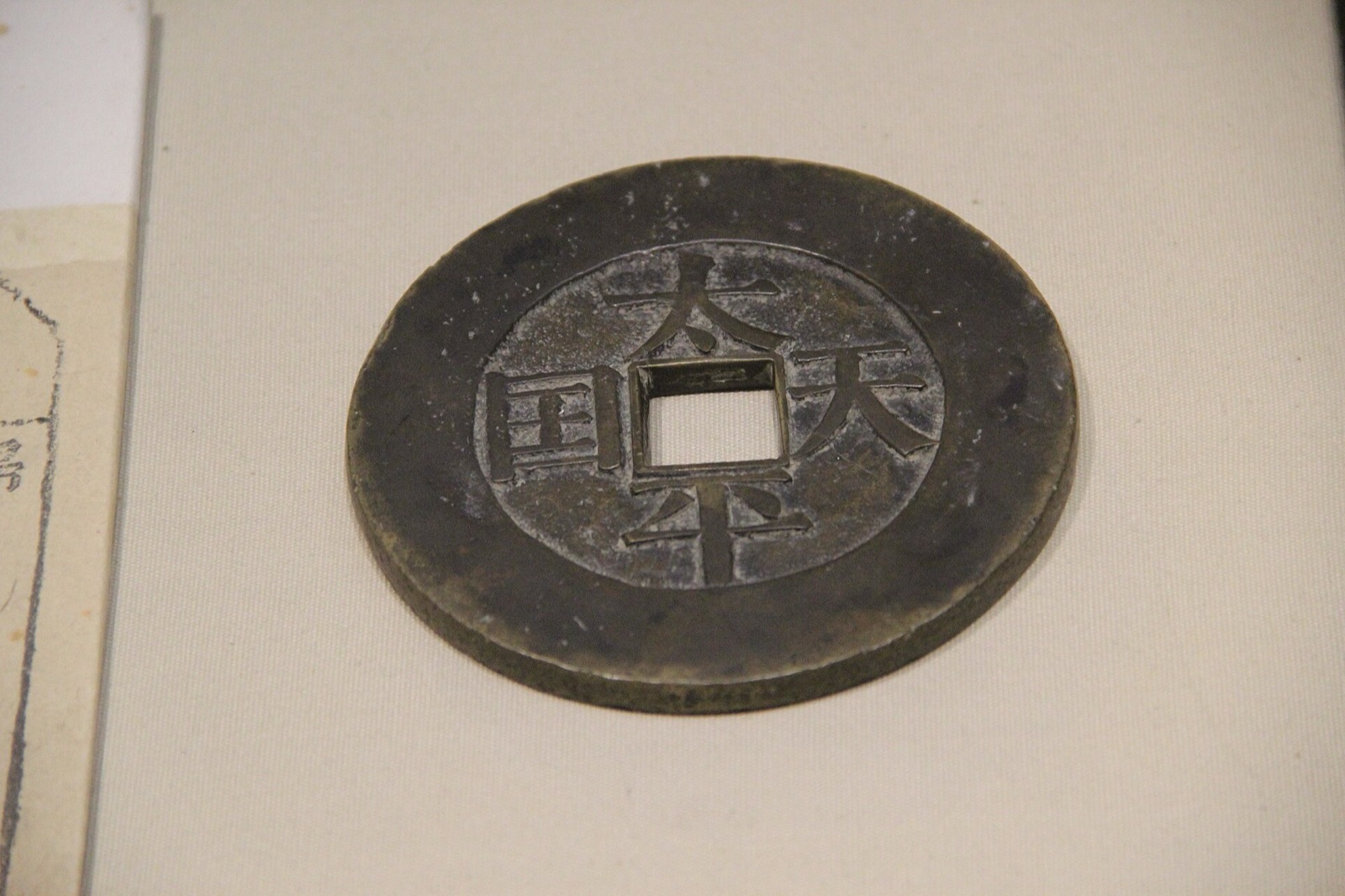
    Museum photograph of a coin of the Taiping Heavenly Kingdom.
    Gary Todd from Xinzheng, China, CC0, via Wikimedia Commons

    The Taiping captured Nanjing on the lower Yangtze and made it their capital, renaming it Tianjing, or Heavenly Capital. It stayed the centre of the Taiping state until 1864. Losing the city was a major blow to the Qing.

    Also in 1853:More from 1853

  6. 1853 (May to October)

    The Northern and Western Expeditions set out

    The Northern Expedition set out for Beijing in May 1853 and reached the Tianjin area by late October. The Western Expedition fought on the middle Yangtze and won a battle at Xiangtan in April 1854. Neither could hold the major cities it took.

  7. 1855 (spring)

    Qing forces destroy the Northern Expedition

    The Northern Expedition failed to take the cities it needed and was destroyed by Qing forces under Senggerinchen in spring 1855. Sources differ on the exact day its leaders were captured, which falls in March or May 1855.

    Also in 1855:More from 1855

  8. 1860–1862

    The Ever Victorious Army fights around Shanghai

    Frederick Townsend Ward's force, later called the Ever Victorious Army, helped retake Taiping-held towns near Shanghai. It also helped defend Shanghai in 1862. Ward was mortally wounded at Cixi in September 1862.

  9. 1861 (early September)

    Zeng Guofan's Xiang Army retakes Anqing

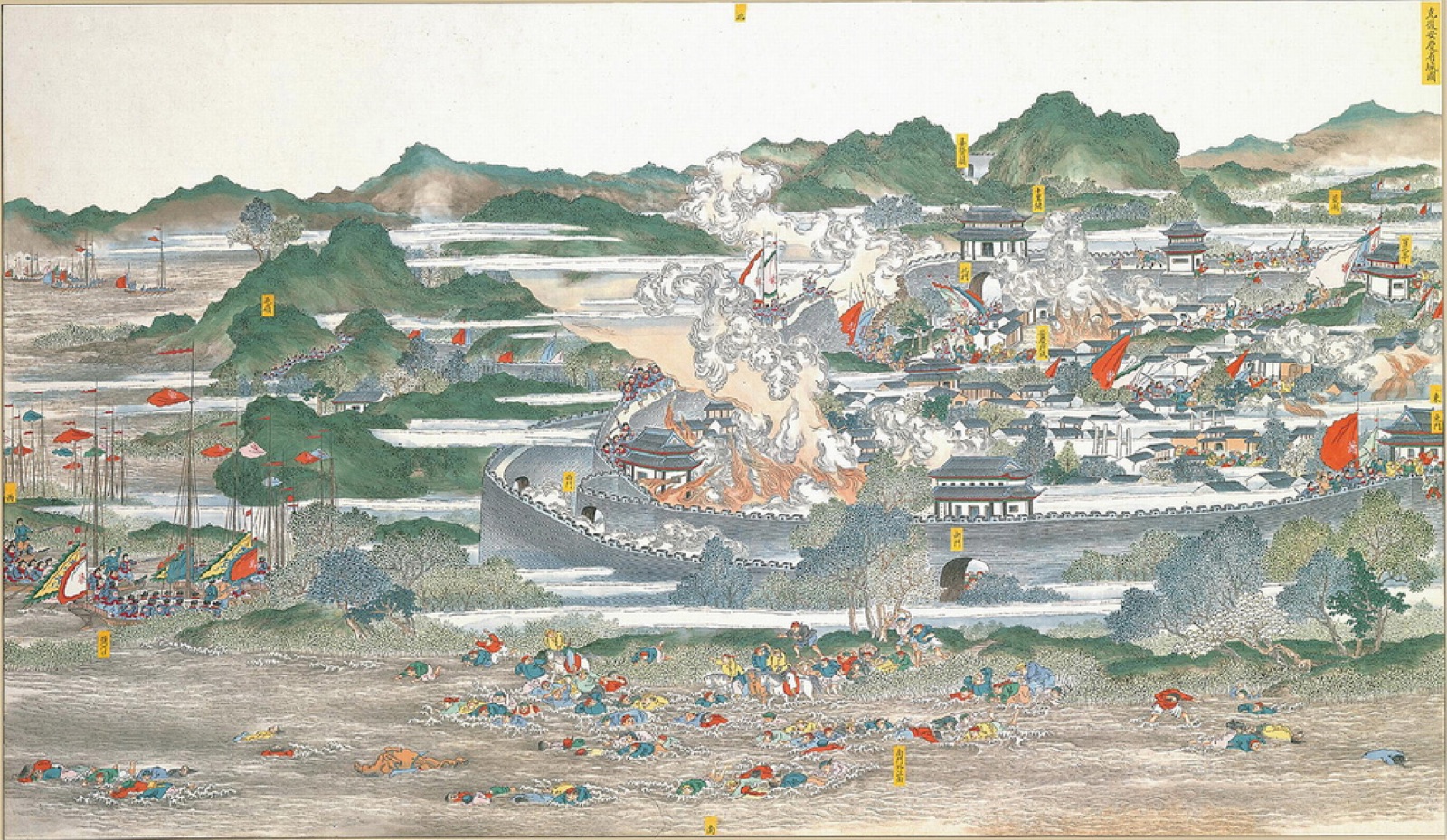
    Wu Youru's 1886 print of Qing forces retaking the provincial city of Anqing from the Taiping.
    Wu Youru, public domain, via Wikimedia Commons

    The Xiang Army recaptured Anqing, a provincial capital the rebels had held since 1853. Zeng moved his headquarters there and prepared the campaign against Nanjing. Sources differ on who led the final assault.

    Also in 1861:More from 1861

  10. 1863 (December)

    Suzhou falls to Li Hongzhang's army

    The Huai Army, which Li Hongzhang had been ordered to raise in 1862, took Suzhou with support from the Ever Victorious Army under Gordon. One source gives 6 December 1863 for the opening of the gates, and another dates the surrender to November. Gordon had taken command in March 1863.

  11. 1864 (1 June)

    Hong Xiuquan dies in Tianjing

    Hong died in Tianjing on 1 June 1864. The most likely explanation is illness after he ate wild plants during the food shortage in the siege. A suicide theory exists but is less well supported, and his son Hong Tianguifu succeeded him.

  12. 1864 (19 July)

    The Xiang Army takes Nanjing

    After explosives brought down part of the city wall, the Xiang Army broke into Nanjing on 19 July 1864 and fought for three days. Li Xiucheng was captured and later executed. The Taiping capital was lost, and the main phase of the rebellion ended.

Maps

Tap a map to zoom

  • Modern map of China showing the territory held by the Taiping Heavenly Kingdom at its height, with Nanjing as its capital.

    The extent of the Taiping Heavenly Kingdom at its height, around 1860.

    M.Bitton, CC BY-SA 4.0, via Wikimedia Commons

  • Period map of south and central China from Augustus Lindley's 1866 history of the Taiping revolution.

    Map from Augustus Lindley's 'Ti-ping tien-kwoh: The History of the Ti-Ping Revolution' (1866), published two years after the fall of Nanjing.

    Augustus F. Lindley, public domain, via Wikimedia Commons

  • Campaign map of the Shanghai and Jiangsu region showing the fields of operation of the Ever-Victorious Army, 1860–1864.

    The area of operations of the Ever-Victorious Army around Shanghai, Suzhou and the lower Yangtze, 1860–1864.

    Unknown author, public domain, via Wikimedia Commons

The Taiping Rebellion in five minutes

The Taiping Rebellion was a civil war that ran from 1850 to 1864 across southern and central China. Its leader, Hong Xiuquan, built a rival state called the Taiping Heavenly Kingdom and made Nanjing its capital. The Qing dynasty survived, but only after regional armies, some of them trained by Western officers, fought the rebels for more than a decade. It is often described as one of the deadliest wars in history.

In short, the Taiping Rebellion was a religious movement with a political programme that grew into a war against the Qing state. Readers usually ask four things: when it happened, why it started, how it ended and how many people died. This article takes them in that order, and it treats the death toll as an estimate with a range rather than a single fact.
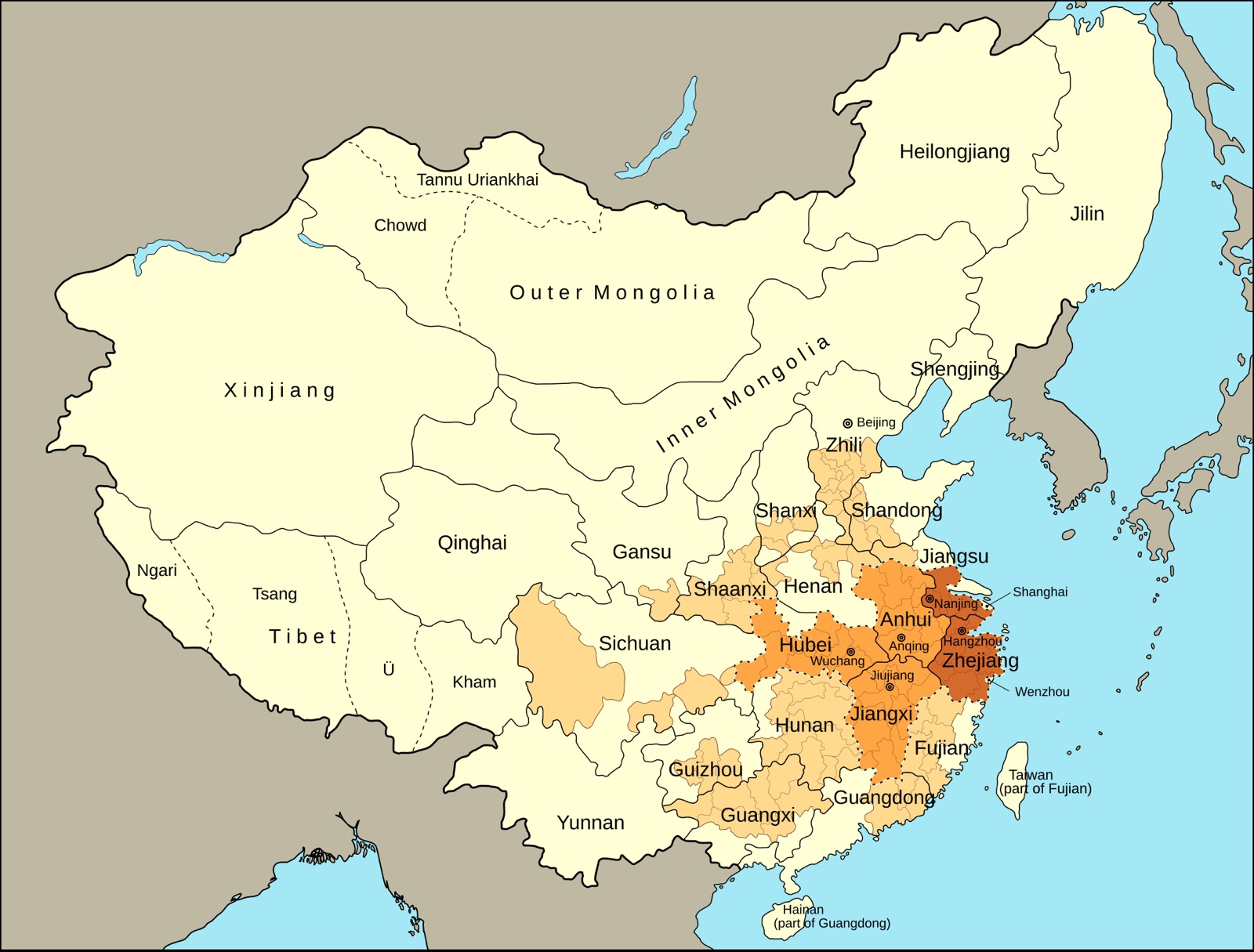
Modern map of China showing the territory held by the Taiping Heavenly Kingdom at its height, with Nanjing as its capital.
The extent of the Taiping Heavenly Kingdom at its height, around 1860. M.Bitton, CC BY-SA 4.0, via Wikimedia Commons

The map shows how far Taiping authority reached at its height. Find the capital, Nanjing, on the lower Yangtze. Its position on a major river made the city important to both sides for the whole war.

Why the Taiping Rebellion started

The Qing state was under strain long before 1850. Its defeat in the First Opium War (1839–1842) and the Treaty of Nanjing that followed left it with heavy payments to make and its prestige damaged. The illicit opium trade had also caused a trade imbalance that hurt the economy. Money was tight, and the court struggled to respond.

The rebellion belongs to the wider story told in Qing China, Japan and the West (1793–1912). Foreign powers pressed for trade and treaty rights while the dynasty faced unrest at home, and the two pressures fed each other.

Hong Xiuquan was an ethnic Hakka, a Han Chinese subgroup from a poor village in Guangdong. Anti-Manchu feeling was strongest among the Hakka of southern China, and Hong's message reached people with reasons to resent the dynasty. He failed the imperial examinations several times, the last in 1843. After reading Christian pamphlets, he developed his own religious teaching and founded the God Worshipping Society, which spread through Guangxi.

In early 1851, near Jintian village in Guangxi (now Guiping), the society's followers defeated a government force. Hong declared himself Heavenly King, and the most common date given for the proclamation is 11 January 1851. Some sources treat the formal founding of the state as a separate event, so January 1851 is the safest start date for the rebellion.

From Jintian to Nanjing

The rebels moved out of Guangxi and took towns as they went. In late September 1851 they captured Yongan, where Hong set up his government and court. The Qing besieged the city over the winter, and the rebels broke out in the spring of 1852 and pushed north. Sources differ on the exact days, so the month is the safest reference.

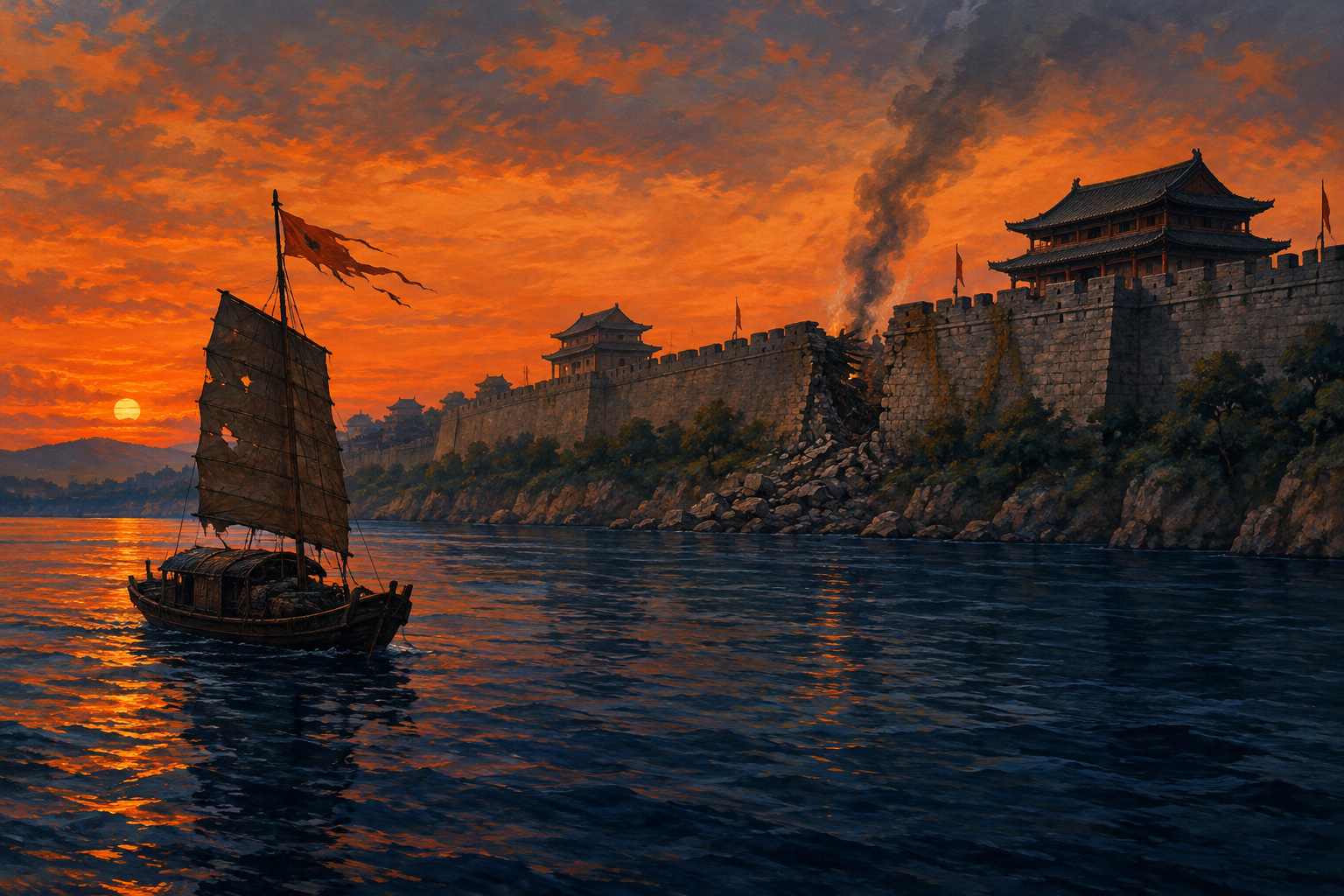
In 1853 they took Anqing, the capital of Anhui province, on the Yangtze. Sources differ on the month, which may be anywhere from February to June. On 19 March 1853 they captured Nanjing, a major city on the lower Yangtze. They renamed it Tianjing, or 'Heavenly Capital', and it stayed the centre of the Taiping state until July 1864, about eleven years. Holding Nanjing gave the rebels a permanent centre, and it made the city the Qing's most important target.

In 1853 the Taiping sent out two expeditions. The Northern Expedition set out in May 1853 aiming for Beijing. It came within reach of the Tianjin area by late October 1853, but it failed to take the major cities it needed, and Qing forces destroyed it in the spring of 1855. The Western Expedition fought along the middle Yangtze around Wuchang and won a battle at Xiangtan in April 1854. It briefly took Hankou and Hanyang but could not hold them.
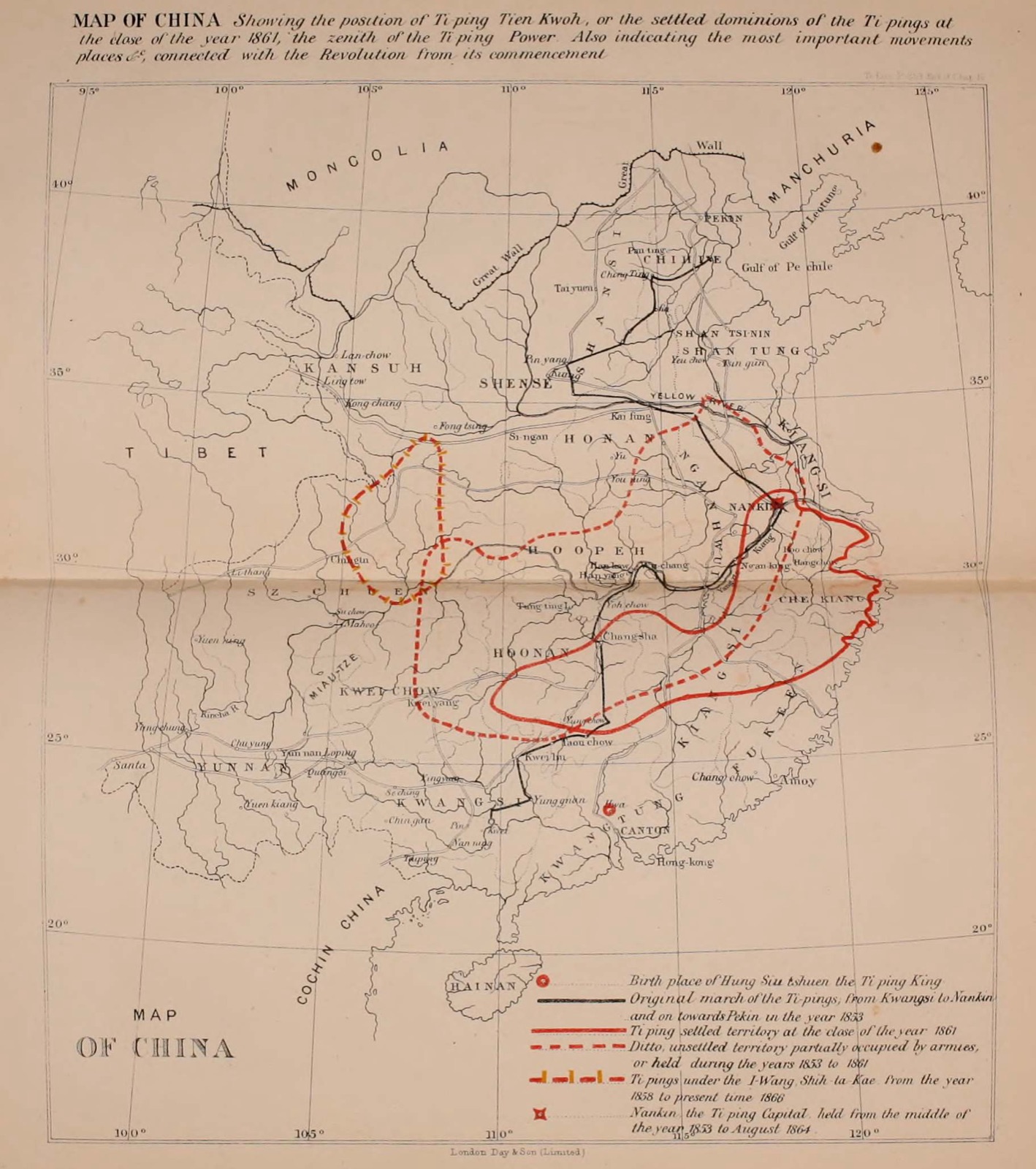
Period map of south and central China from Augustus Lindley's 1866 history of the Taiping revolution.
Map from Augustus Lindley's 'Ti-ping tien-kwoh: The History of the Ti-Ping Revolution' (1866), published two years after the fall of Nanjing. Augustus F. Lindley, public domain, via Wikimedia Commons

This second map comes from Augustus Lindley's account of the revolution, published in 1866, two years after Nanjing fell. Maps like this show regions and cities by the names of the period, which makes them useful for following the expeditions. They do not show army positions on each date, so read them alongside the timeline.

The turning point: regional armies and the Ever Victorious Army

The old Qing army could not beat the rebels on its own. The decisive forces were armies raised by provincial officials, who could recruit and pay soldiers locally and knew their home regions well. Western officers also played a role, especially around Shanghai. The Second Opium War (1856–1860) added pressure from outside: the Treaty of Tianjin (1858) and the Convention of Peking (1860) widened foreign rights in China while the civil war was still raging.

Zeng Guofan (1811–1872), a Confucian scholar-official from Hunan, built the Xiang Army from local militia and personal networks. By one estimate it had grown to about 360,000 men by 1860, and Zeng directly commanded about 130,000 of them. In September 1861 the Xiang Army retook Anqing. Zeng moved his headquarters there and prepared the long campaign against Nanjing.

Li Hongzhang, a protégé of Zeng, was ordered in 1862 to raise the Huai Army in Anhui. It fought around Shanghai and Suzhou, and it outlasted the war as one of the Qing's main forces.

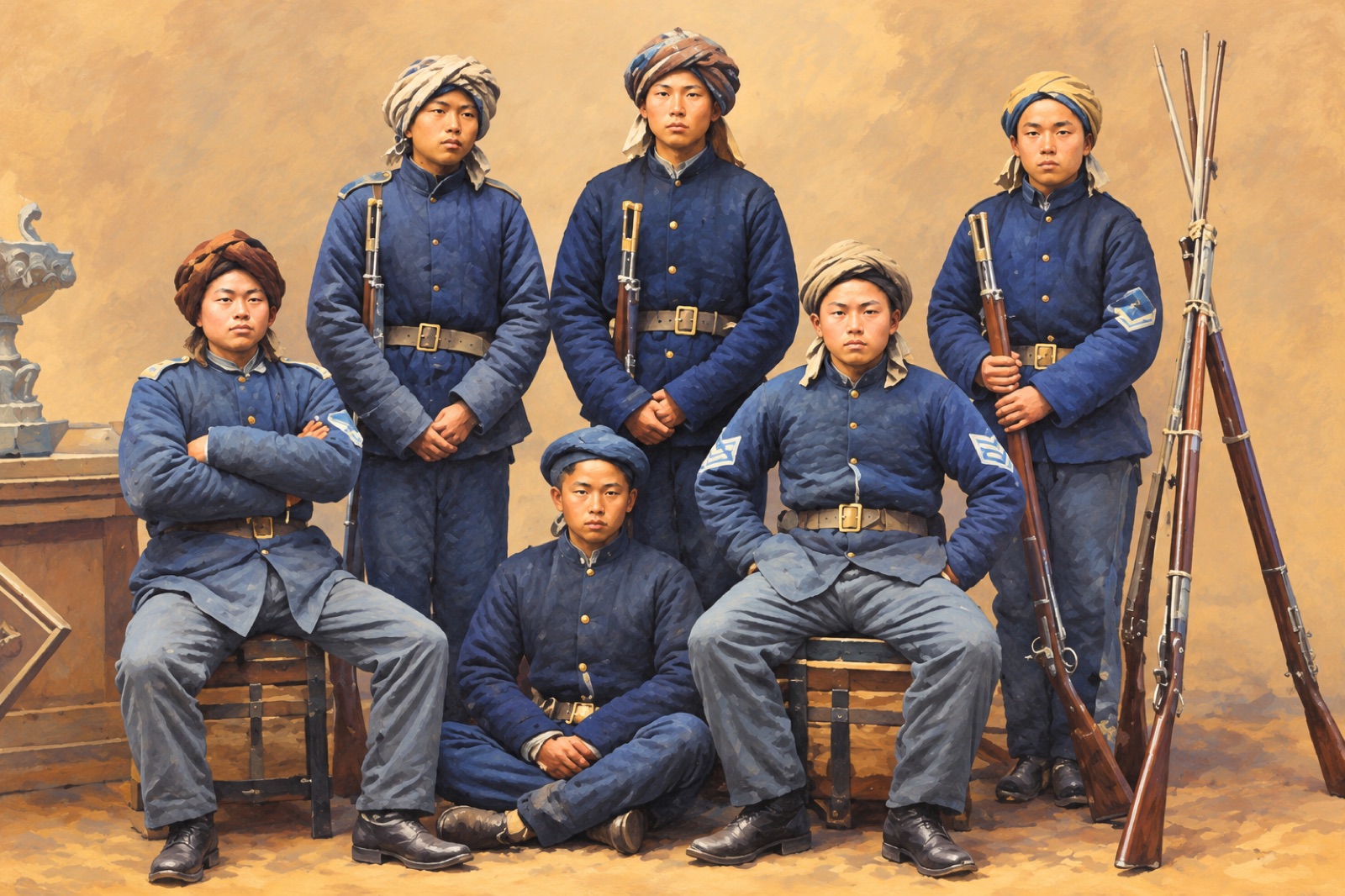
Western-trained units played a part too. The Ever Victorious Army began in 1860 with roughly 100 to 200 mostly European mercenaries; sources differ on the starting number. It grew with Chinese recruits and reached about 5,000 men at its height. The American adventurer Frederick Townsend Ward, born in Salem, Massachusetts, in 1831, led it at first. Ward was mortally wounded at Cixi in September 1862 and died; sources give 21 or 22 September as the date of his death.

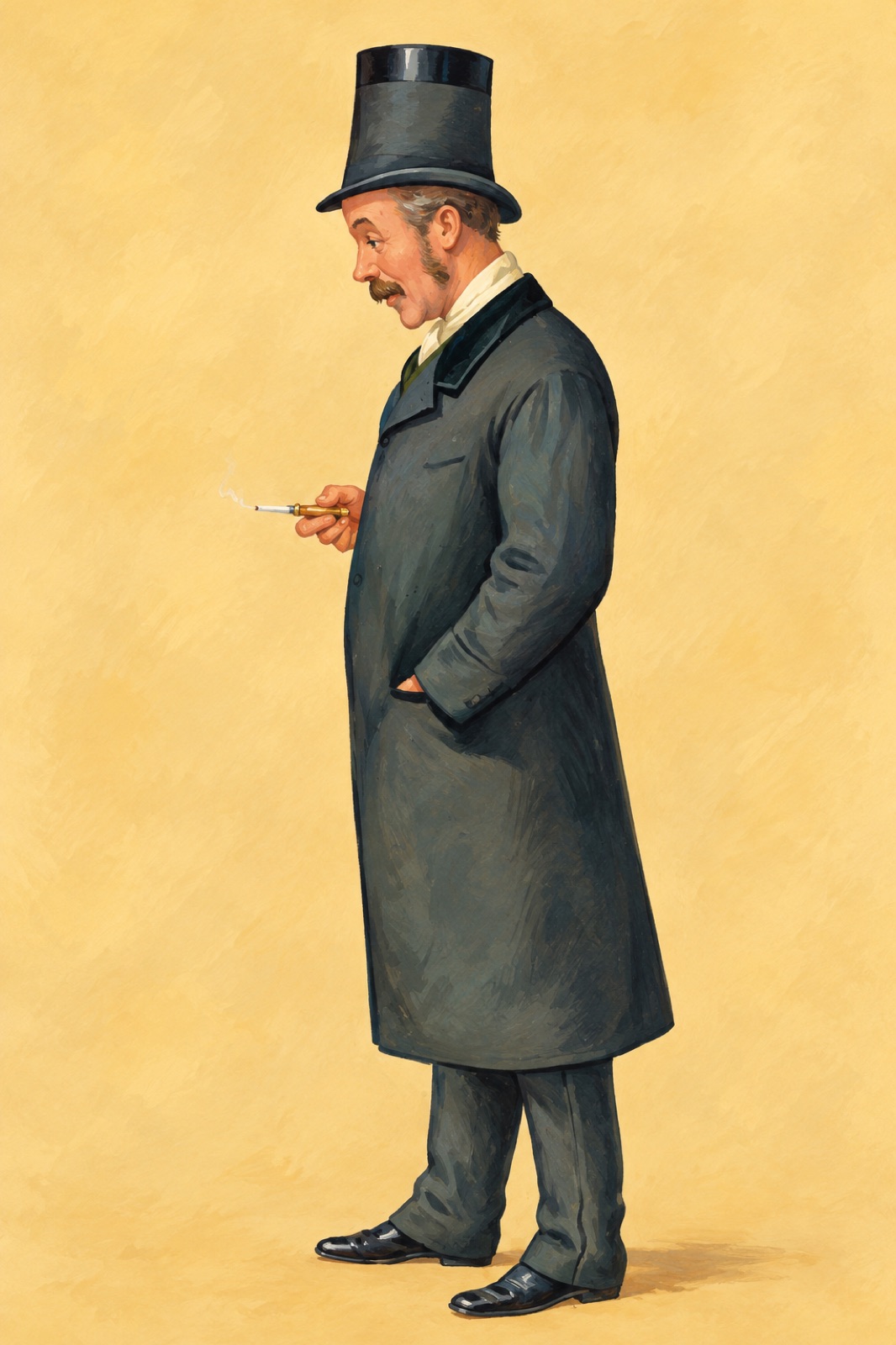
Charles George Gordon, a British Royal Engineers officer, took command in March 1863. His troops supported Li's campaign against Suzhou, which opened its gates in December 1863, and they helped retake Changzhou in 1864. The Ever Victorious Army was disbanded in 1864. Gordon later died at Khartoum in 1885.
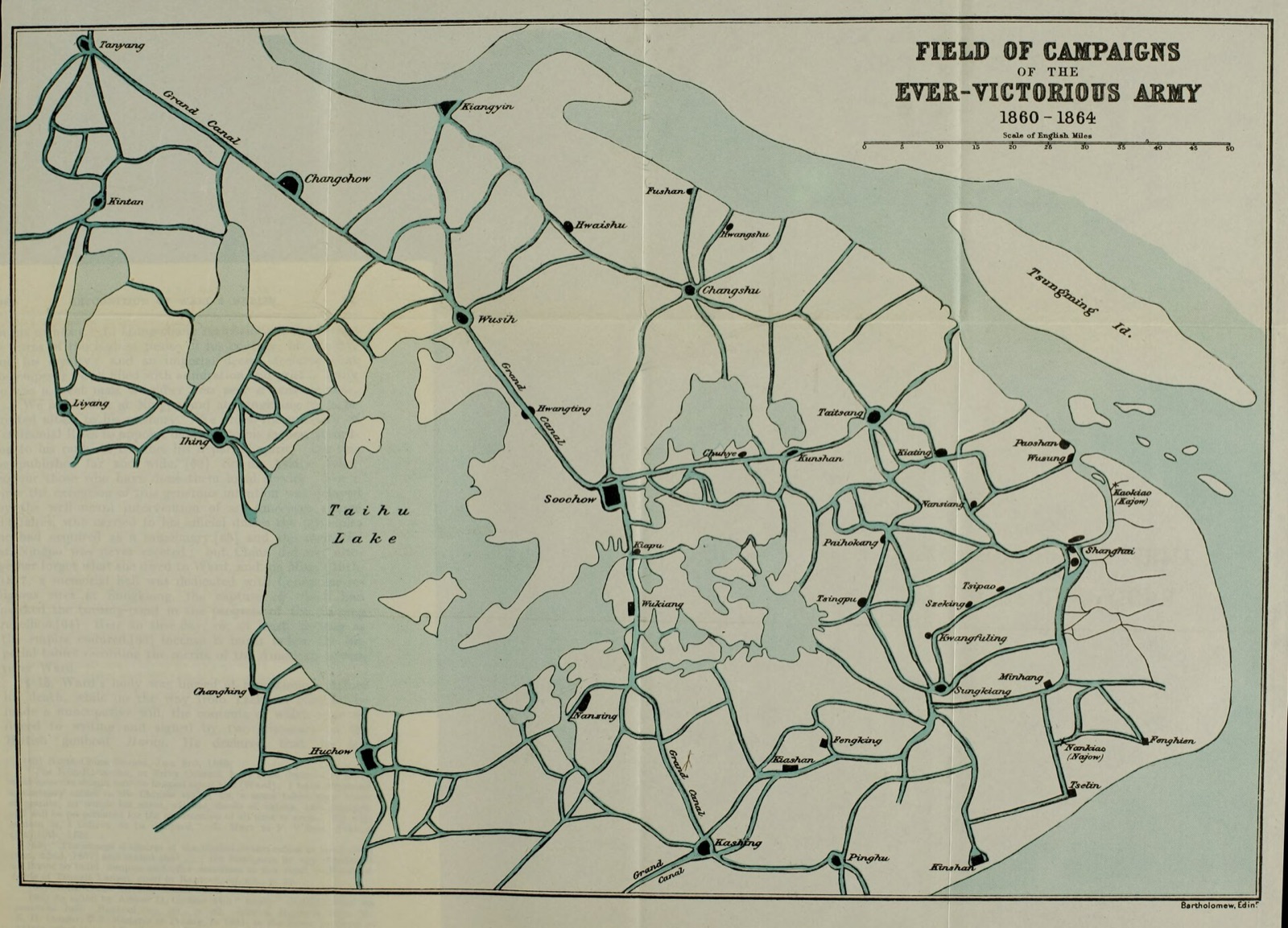
Campaign map of the Shanghai and Jiangsu region showing the fields of operation of the Ever-Victorious Army, 1860–1864.
The area of operations of the Ever-Victorious Army around Shanghai, Suzhou and the lower Yangtze, 1860–1864. Unknown author, public domain, via Wikimedia Commons

The third map shows where the Ever Victorious Army fought around Shanghai, Suzhou and the lower Yangtze. The file record gives a 1918 date, but the map documents campaigns from 1860 to 1864, so use the dates in the caption.

The fall of Nanjing and the death of Hong Xiuquan

Qing forces began a siege of Nanjing in 1862, and food grew scarce inside the city. Hong Xiuquan died in Tianjing on 1 June 1864. The most likely explanation is illness after he ate wild plants during the food shortage. A theory of suicide by poison also exists, but it is less well supported. His son, Hong Tianguifu, succeeded him.

On 19 July 1864 Zeng Guofan's army broke into Nanjing after explosives brought down a section of the city wall. Three days of fighting followed. Li Xiucheng, one of the Taiping's leading generals, escaped with Hong Tianguifu, but both were captured, and Li was later executed. The city burned until about 26 July, and the Taiping capital was lost.

Why the war was so destructive

Fighting moved back and forth across the same cities and farmland, so the damage built up over years. The Nanjing siege, which began in 1862, lasted nearly two years. Famine and disease followed the fighting, and the war displaced large numbers of people. That makes an exact count of the dead very hard, and it is one reason the estimates are so wide.

How many died and what the war changed

The death toll is the biggest debate about this war. Histories and encyclopedias most often give a figure of about 20 to 30 million dead, counting soldiers and civilians. Losses from famine and disease are a major part of that debate, because they are hard to separate from the fighting. Higher figures appear in some sources, and historians treat them with more caution. Records were disrupted in many areas, which is one reason the estimates vary so widely.

Historians commonly point to three effects of the war. First, the Qing court came to depend on provincial officials who controlled their own armies and money, which weakened central control. Second, the Yangtze region was devastated, leaving lasting damage to its population and economy. Third, the rebellion showed how religious ideas and social grievances could combine into a movement of enormous size. The Qing dynasty lasted until 1912, but it governed with a weaker centre than before.

Key people

  • Hong Xiuquan (1814–1864): the Heavenly King, who started the movement in Guangxi and made Nanjing his capital.
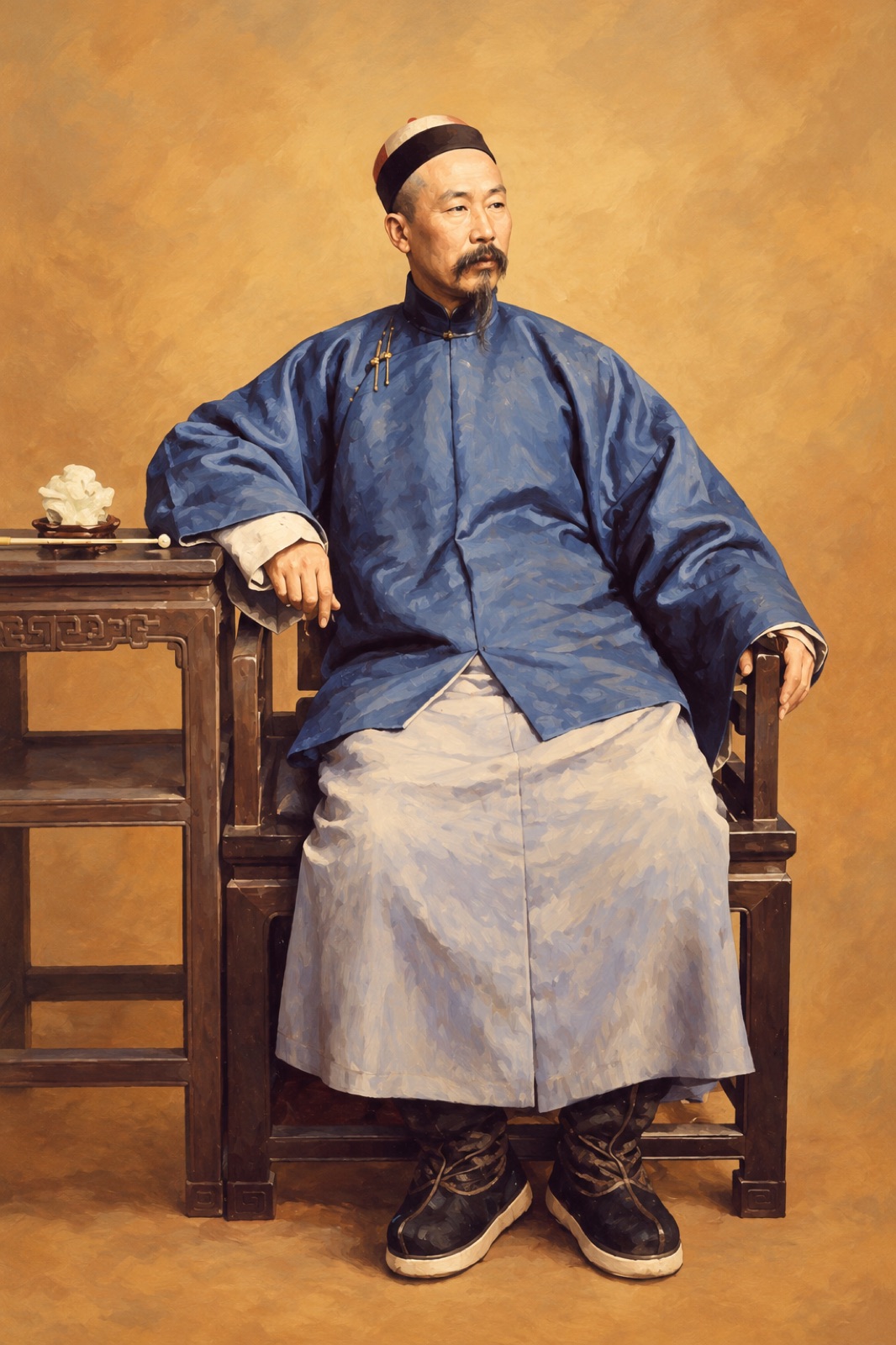
  • Zeng Guofan (1811–1872): the Hunan scholar-official who built the Xiang Army and led the force that took Nanjing for the Qing.
  • Li Hongzhang: Zeng's protégé, ordered in 1862 to raise the Huai Army.
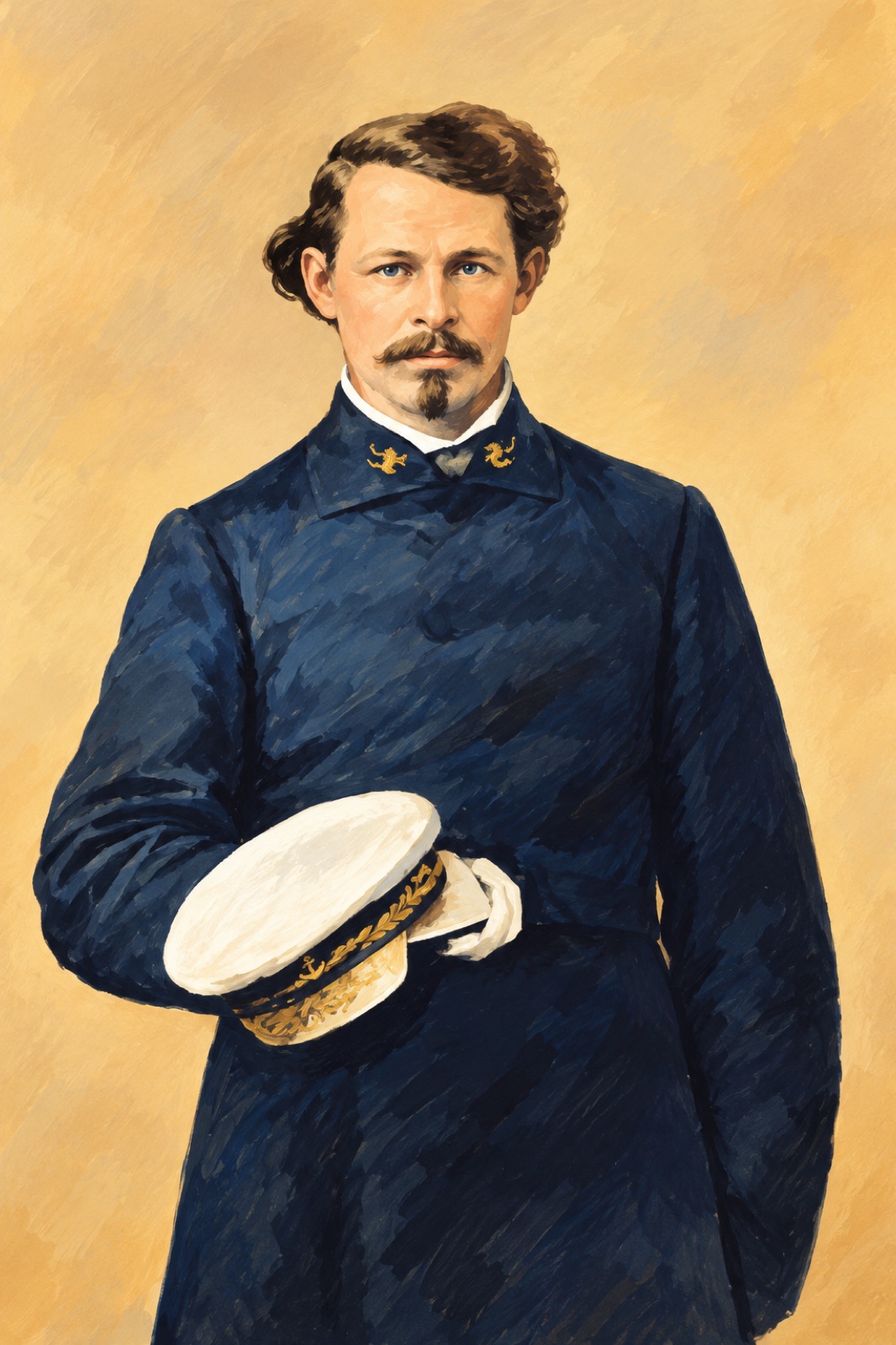
  • Frederick Townsend Ward (1831–1862): the first leader of the Ever Victorious Army.
  • Charles George Gordon (1833–1885): the British officer who commanded the Ever Victorious Army from March 1863.

What exams ask

In AP World History and similar courses, the Taiping Rebellion is a useful case of how internal crisis, foreign pressure and religion can combine. Strong answers link causes to consequences. The Opium War and the treaties weakened the Qing. Hong's religious movement gave the rebels a cause. The rise of regional armies then shifted power away from the centre, and that shift is the lasting result to name.

Use the Second Opium War as evidence that the rebellion and foreign pressure were linked, not separate. The Taiping rising and the Anglo-French war ran at the same time, and both drained the Qing's resources.

Read next

For the background, read The First Opium War (1839–1842) to see how the crisis began. Then The Unequal Treaties explains the rights foreign powers gained in China. For the man behind the movement, Hong Xiuquan: The Heavenly King covers his life and beliefs. To return to the wider period, go back to Qing China, Japan and the West (1793–1912).
Armies and units

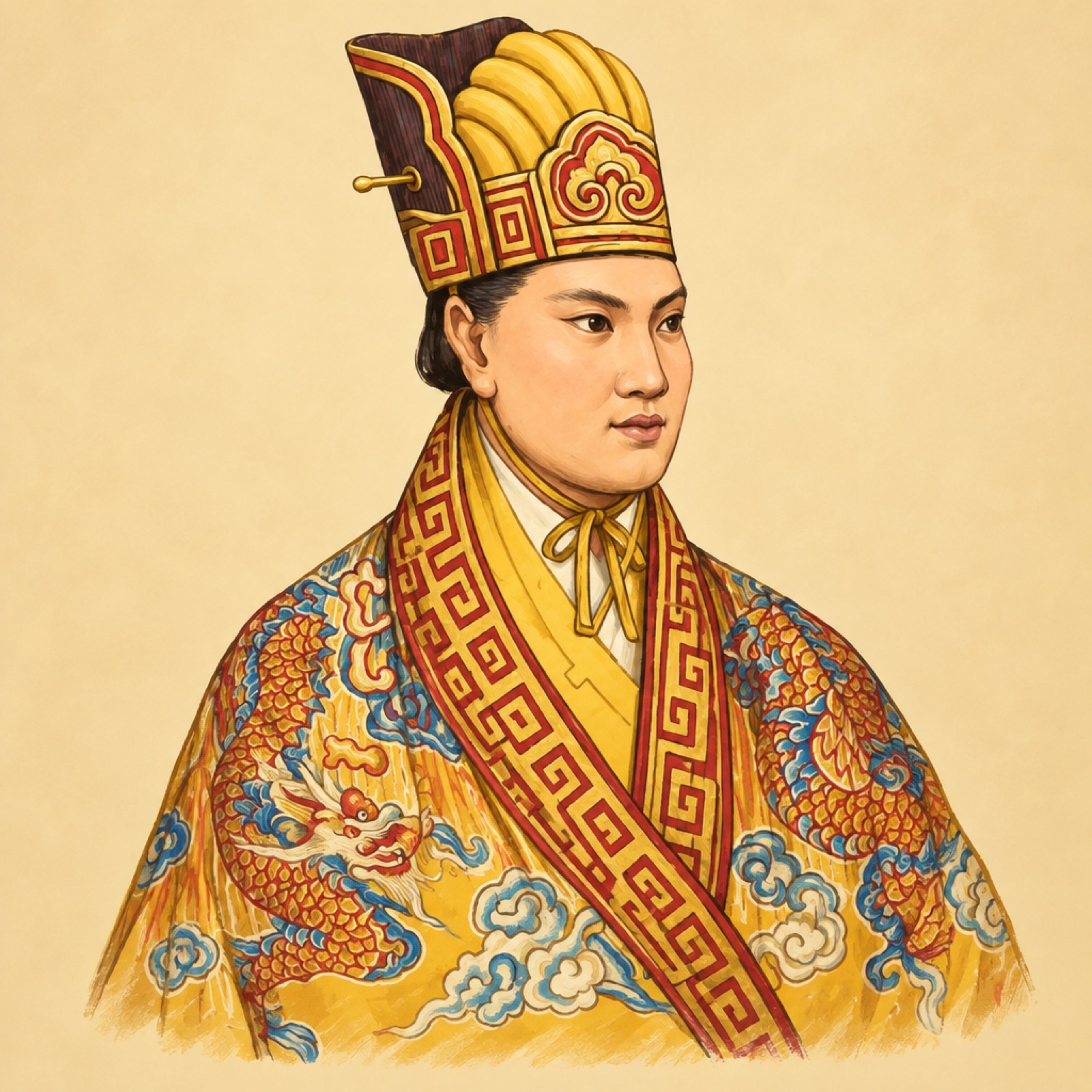
  • 1853 European engraving said to show Hong Xiuquan, the Taiping leader. (illustration) Commander Illustration

    Taiping Heavenly Kingdom

    Hong Xiuquan, the Heavenly King

    Hong Xiuquan (1814–1864), a Hakka who had failed the imperial examinations, led the movement from its start in Guangxi. He ruled the Taiping state from Nanjing and died there on 1 June 1864, about seven weeks before the city fell.

    Illustration after Ford & West Lith, public domain · Original

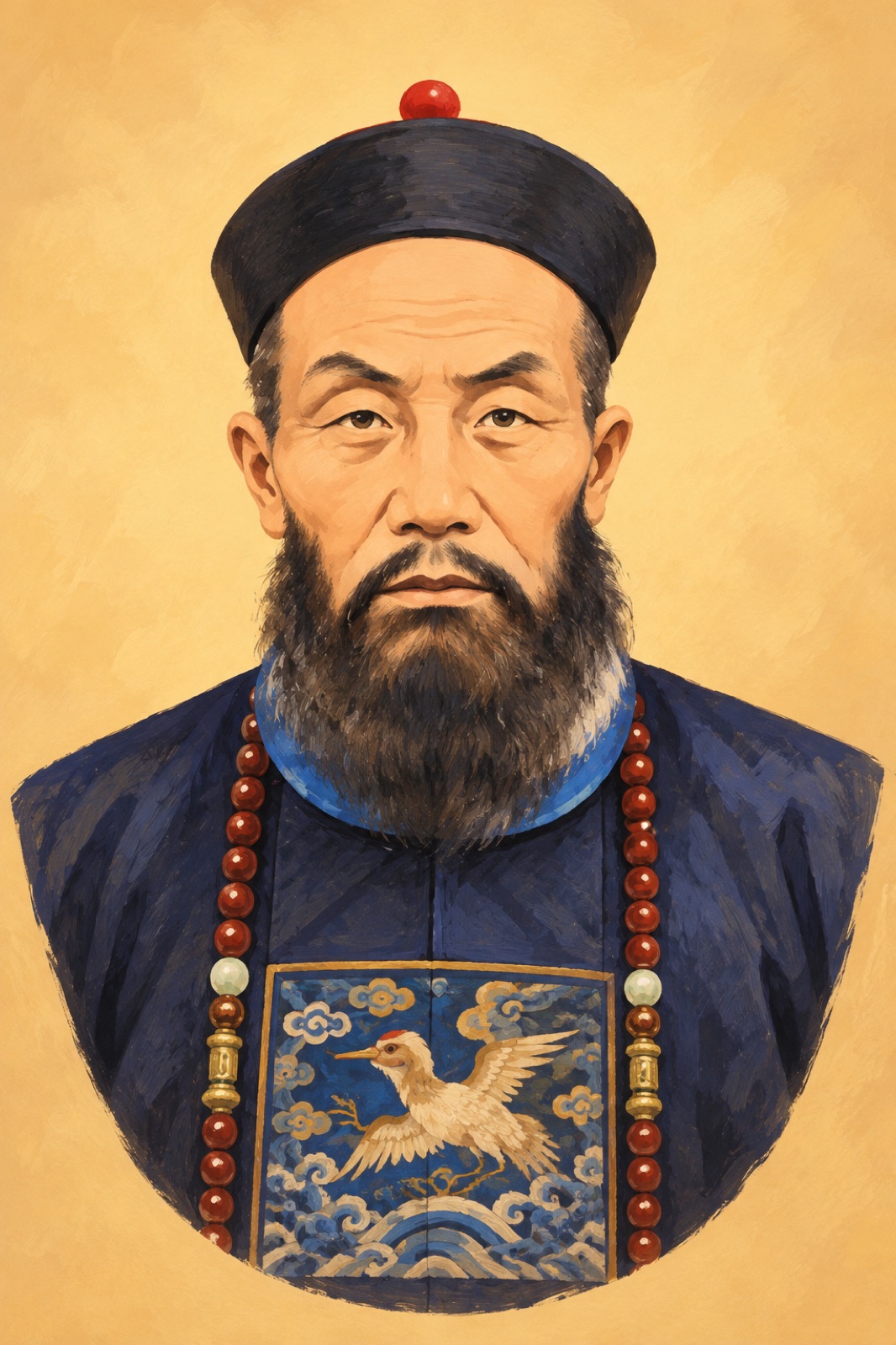
  • Photograph of Zeng Guofan taken in 1871. (illustration) Commander Illustration

    Qing dynasty

    Zeng Guofan and the Xiang Army

    Zeng Guofan (1811–1872), a Confucian scholar-official from Hunan, built the Xiang Army from local militia. He retook Anqing in September 1861 and directed the siege of Nanjing, which fell on 19 July 1864.

    Illustration after 吴嘉善(1818-1885), public domain · Original

  • 1871 albumen print portrait of Li Hongzhang by Lorenzo Fisler. (illustration) Commander Illustration

    Qing dynasty

    Li Hongzhang and the Huai Army

    A protégé of Zeng Guofan, Li Hongzhang was ordered in 1862 to raise the Huai Army in Anhui. Its forces took Suzhou in December 1863, with support from the Ever Victorious Army.

    Illustration after Lorenzo Fisler, CC BY 3.0 · Original

  • Detail from an 1861 photograph of Frederick Townsend Ward. (illustration) Commander Illustration

    Qing dynasty and Western auxiliaries

    Frederick Townsend Ward

    An American adventurer born in Salem, Massachusetts, in 1831, Ward raised the force that became the Ever Victorious Army. He was mortally wounded at Cixi in September 1862.

    Illustration after WP:EN, public domain · Original

  • Photograph from around the 1860s of members of the Ever Victorious Army posing in uniform. (illustration) Infantry Illustration

    Qing dynasty and Western auxiliaries

    The Ever Victorious Army

    A force of Chinese soldiers trained in European style by Western officers, first under Ward and then under Gordon. It reached about 5,000 men at its height and was disbanded in 1864.

    Illustration after Unknown author, public domain · Original

  • 1881 Vanity Fair caricature of Lieutenant-Colonel Charles George Gordon, captioned 'The Ever Victorious Army'. (illustration) Commander Illustration

    Qing dynasty and Western auxiliaries

    Charles George Gordon

    A British Royal Engineers officer who took command of the Ever Victorious Army in March 1863. His force supported Li's campaigns around Suzhou and Changzhou. He was killed at Khartoum in 1885.

    Illustration after Carlo Pellegrini, CC0 · Original

Frequently Asked Questions

When did the Taiping Rebellion happen?

The Taiping Rebellion lasted from about 1850 to 1864. It began with the Jintian Uprising in 1851, and in 1853 the rebels took Nanjing and made it their capital. In practice it ended when Qing forces, led by Zeng Guofan's Xiang Army, retook Nanjing on 19 July 1864.

What was the Taiping Rebellion?

It was a civil war in Qing China led by Hong Xiuquan. His Taiping Heavenly Kingdom controlled large areas of the south and centre for more than a decade. The movement mixed Christian-influenced beliefs with opposition to the Manchu-led Qing government, which made it both a religious and a political challenge.

Why did the Taiping Rebellion start?

The Qing state was weakened by its defeat in the First Opium War and by the financial strain that followed. Hong Xiuquan, a Hakka who had failed the imperial examinations, founded the God Worshipping Society in Guangxi. Its followers came to see him as a divinely inspired leader, and they fought the government from 1851.

How many people died in the Taiping Rebellion?

No figure is certain. The most common estimate is about 20 to 30 million deaths, counting soldiers and civilians. Losses from famine and disease are a major part of the debate, and some sources give much higher numbers. Quote the range and name the source rather than a single figure.

Who won the Taiping Rebellion?

The Qing dynasty survived. Qing forces won, led by regional armies: Zeng Guofan's Xiang Army took Nanjing on 19 July 1864, and Li Hongzhang's Huai Army also played a major role. Western-led units such as the Ever Victorious Army took part as well.

Check Your Understanding

Pick an answer for each question to see if you were right.

  1. In what year did the Taiping take Nanjing and make it their capital?

  2. Which force broke into Nanjing in July 1864?

  3. Who founded the Ever Victorious Army?

  4. What was Nanjing called after the Taiping took it in 1853?

  5. Which war weakened the Qing before the Taiping Rebellion began?

More in Asia & the West

See the full topic guide →
Share:

About the Writer

Alex Ng
Alex Ng

Software Engineer & Writer

Software engineer with a passion for distilling complex ideas into actionable insights. Writes about finance, investment, entrepreneurship, and technology.

Read more →

Keep reading

Explore the topic: Asia & the West

Articles

Summaries