In five minutes: what happened in the Fall of Saigon?
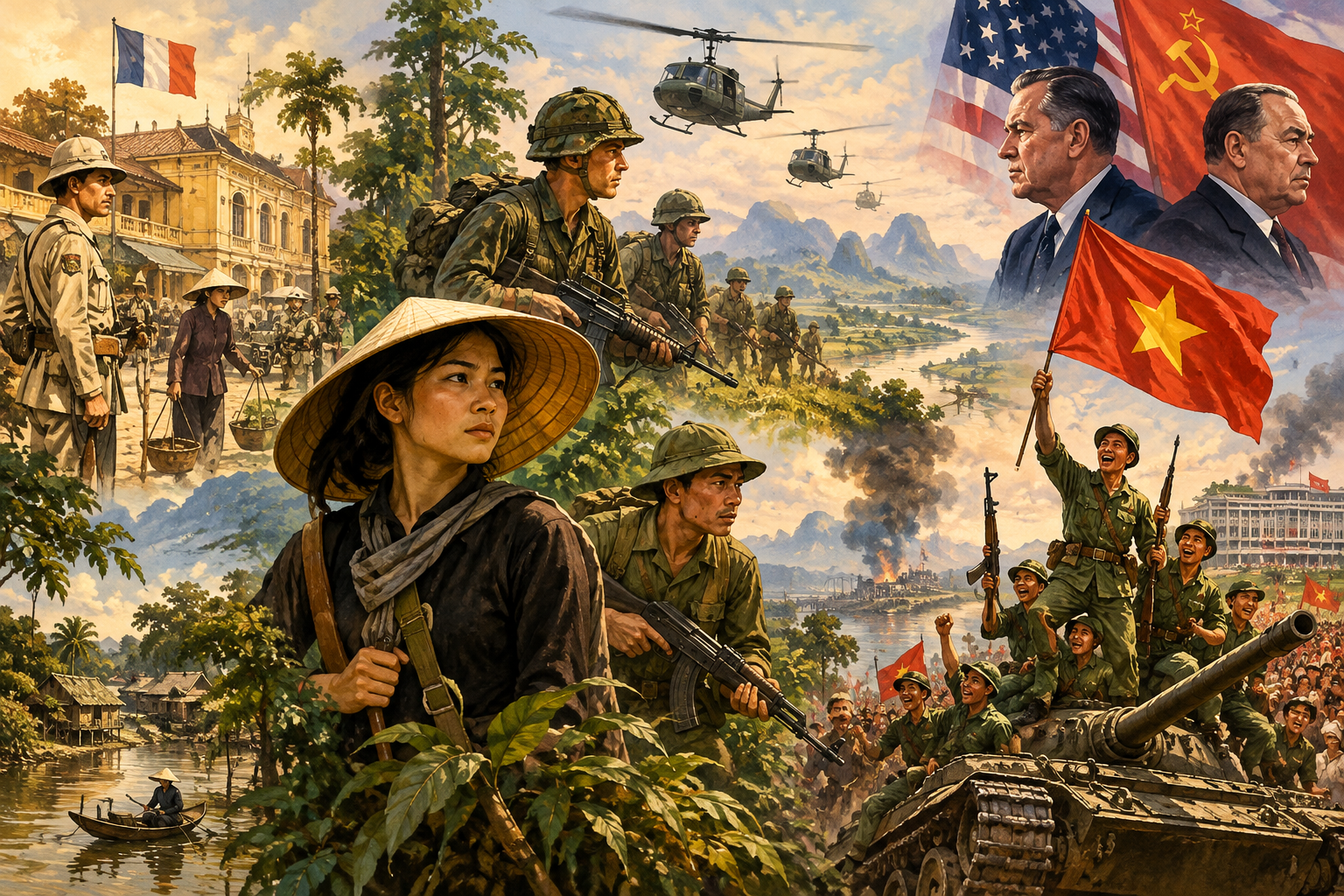
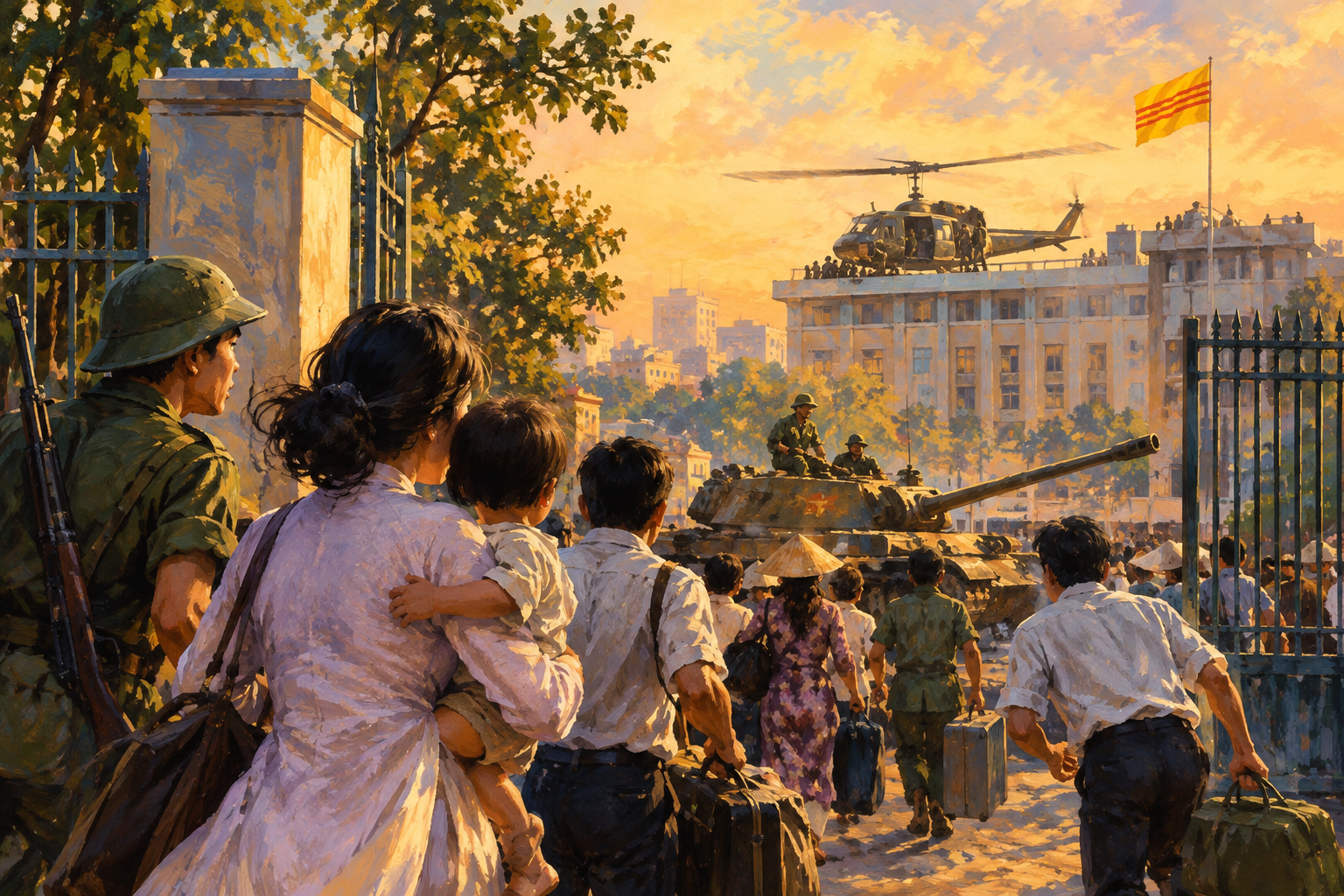
The Fall of Saigon was the capture of South Vietnam’s capital by North Vietnamese forces on 30 April 1975. It ended the Republic of Vietnam and brought the Vietnam War to a close. The last hours are often remembered through two images: helicopters lifting people from rooftops and tanks entering the Independence Palace grounds. Both matter, but neither alone explains why the city fell.
Saigon’s fall came at the end of a much larger campaign. The Saigon and Southern Vietnam hub places the final battle in its regional context. North Vietnamese forces had moved south through the Central Highlands and down the coast after taking advantage of South Vietnam’s deteriorating military position. The Ho Chi Minh Campaign, the final drive toward Saigon, broke through the city’s outer defenses in late April. Inside the capital, political leaders changed, the airport came under attack, and the United States began its final helicopter evacuation.
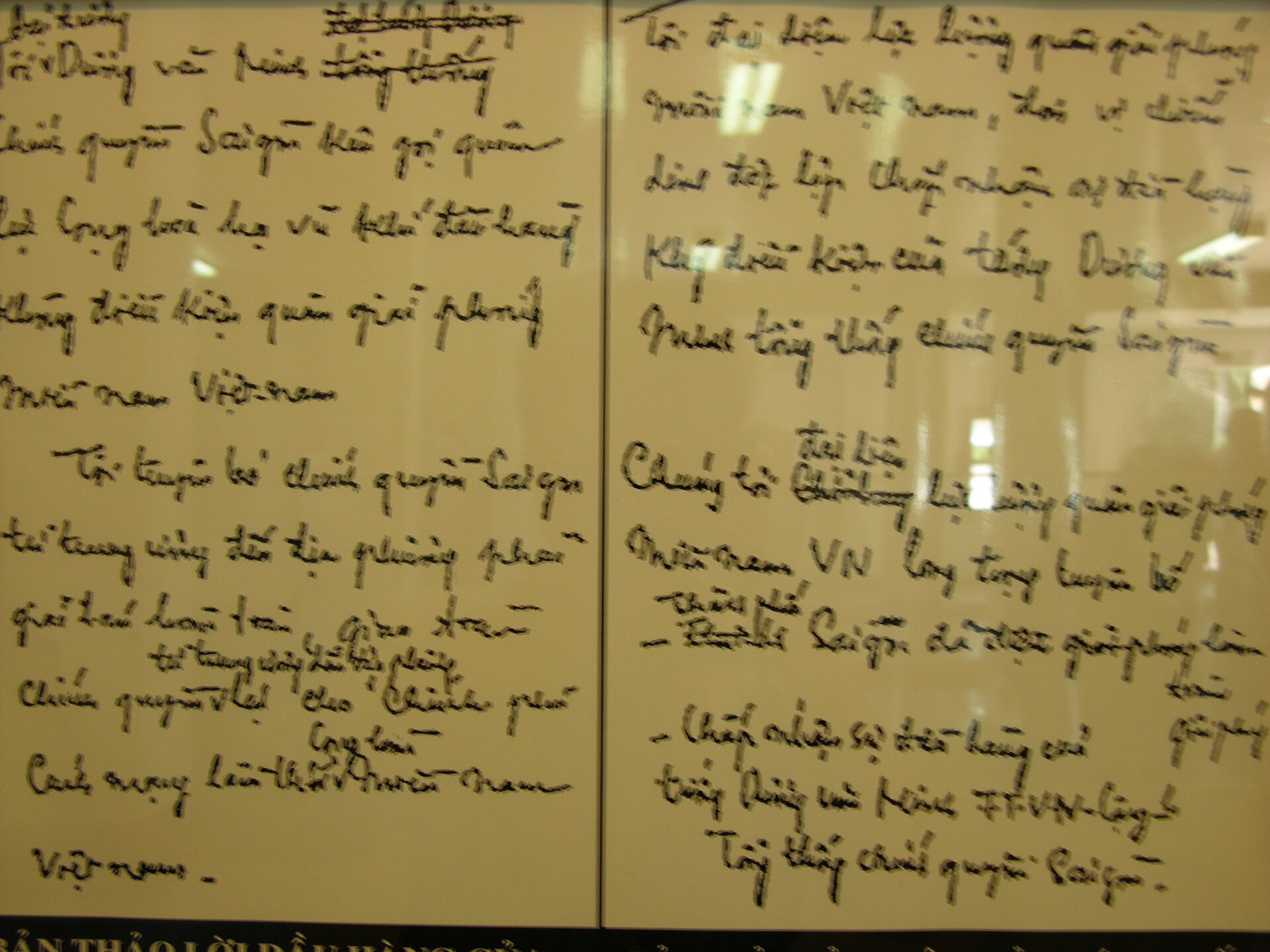
At 10:24 a.m. on 30 April, President Dương Văn Minh ordered South Vietnamese troops to stop fighting. Shortly before noon, North Vietnamese tanks entered the palace grounds. Minh announced the government’s surrender over radio at 2:30 p.m. These events ended the southern government; they did not mean that every person in the city experienced the day in the same way. For many, it brought an end to fighting. For others, it meant separation, flight, or uncertainty about what would follow.
Why Saigon fell so quickly
The capture of Saigon was the final stage of a collapse that had accelerated across South Vietnam. In early 1975, North Vietnamese forces advanced into the Central Highlands. South Vietnamese units withdrew from positions around Pleiku and Kon Tum; the retreat became difficult to control, and other cities fell in March. Huế and Đà Nẵng were lost as the northern front broke apart. The route to Saigon was no longer a distant possibility: the government faced a military emergency with fewer places to reorganize.
Several factors shaped South Vietnam’s ability to respond. After the Paris Peace Accords of January 1973, U.S. combat forces withdrew. The United States continued some military assistance, but the 1973 Case–Church Amendment restricted renewed U.S. military action in Indochina without congressional approval. When the North Vietnamese offensive gained momentum in 1975, Washington did not send combat forces back. South Vietnamese troops, meanwhile, faced shortages of ammunition, fuel, and spare parts. Those shortages made it harder to move units, sustain air operations, and hold a connected defensive line.
Political instability added pressure at the top. President Nguyễn Văn Thiệu resigned on 21 April. Trần Văn Hương took over, then resigned on 28 April; General Dương Văn Minh became president. A new leader could not reverse the military situation in a matter of days. North Vietnamese forces had reached the capital’s approaches, while South Vietnam’s government had to consider whether resistance would protect the city or expose residents to further fighting.
Those conditions help explain the pace of the end, but they should not reduce the outcome to a simple story of one side’s strength or the other’s weakness. The wider war, the withdrawal of U.S. combat troops, changing political choices, and the speed of the 1975 offensive all mattered. “Why did South Vietnam lose?” has no single cause: the final defeat reflected a combination of battlefield reversals, limited resources, fractured command, and the absence of renewed U.S. military intervention.
The Ho Chi Minh Campaign closes in
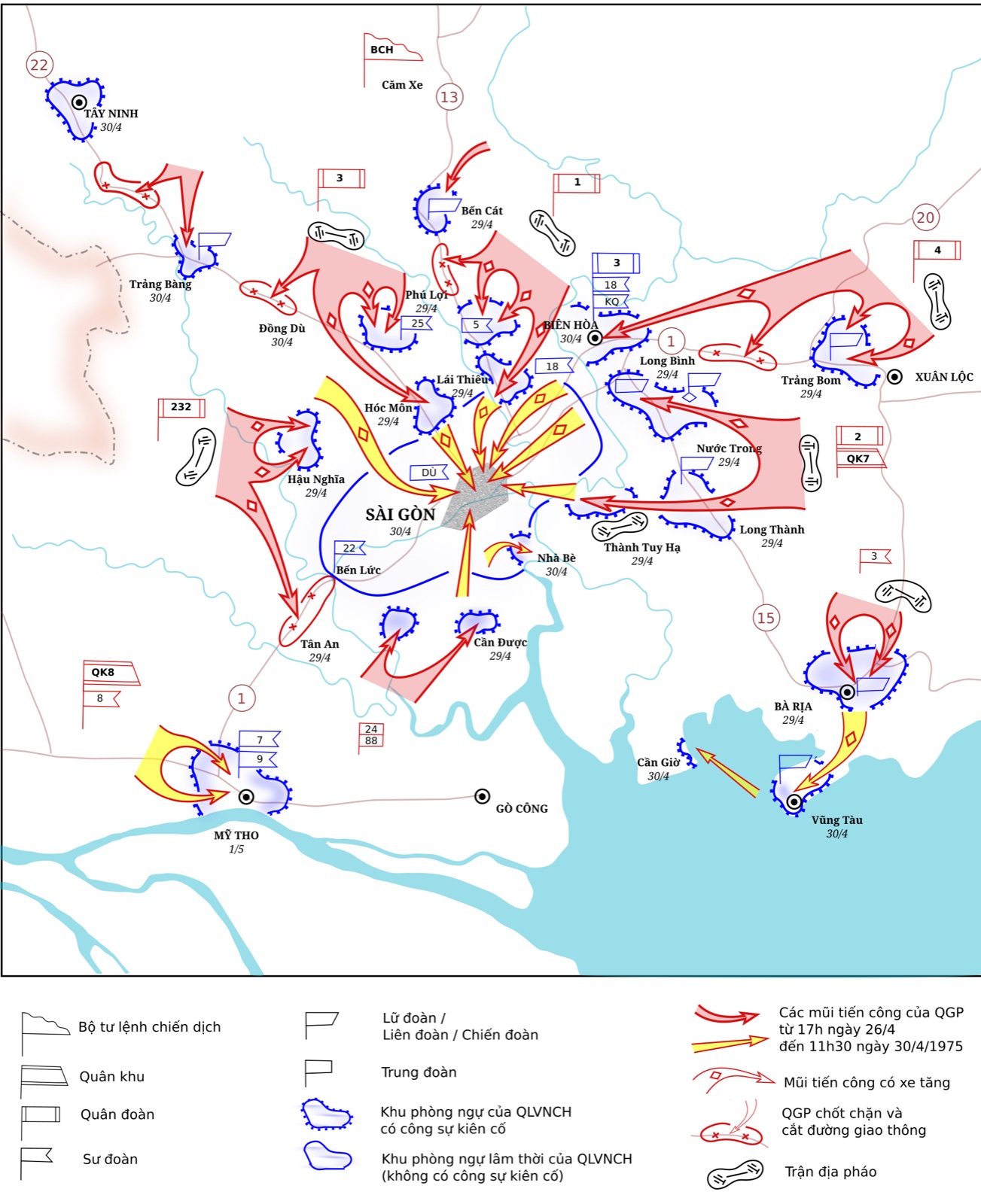
The final offensive toward Saigon became known as the Ho Chi Minh Campaign. The name placed the operation within the longer North Vietnamese struggle for reunification and independence. North Vietnamese troops advanced from several directions toward the capital and its surrounding defenses. Their objectives included the airport, military headquarters, radio facilities, and the presidential palace. The campaign’s decisive days were not confined to the city center: control of roads, bridges, and approaches shaped whether Saigon could still be defended or supplied.
South Vietnamese forces tried to hold the eastern approaches, especially around Xuân Lộc, while the capital prepared for an assault. Once that defense gave way, North Vietnamese units could push toward Saigon with less delay. By 27 April, roughly 100,000 North Vietnamese troops had surrounded the city, according to the U.S. Census Bureau’s historical account. The figure describes the force around Saigon, not the number of troops that entered the palace or the city center. As the encirclement tightened, artillery and rockets struck locations across the capital.
At 5 p.m. on 26 April, the campaign’s main assault began, according to the Vietnamese government’s account of the operation. Attacks from several directions pressed against South Vietnam’s outer defensive line. On 29 April, the offensive pushed into the final approaches while the evacuation was underway. North Vietnamese forces’ advance and the evacuation thus unfolded at the same time, but they were separate operations: the campaign aimed to take the capital, while U.S. forces moved people to ships offshore.
Maps make this distinction easier to see. Saigon was not simply reached by a column driving along one road; units approached from around the city, while the airport and the routes out were contested. The campaign ended when the capital’s institutions and command structure could no longer continue organized resistance. Minh’s surrender broadcast was the political confirmation of a military outcome already taking shape around the city.
Operation Frequent Wind: the last airlift
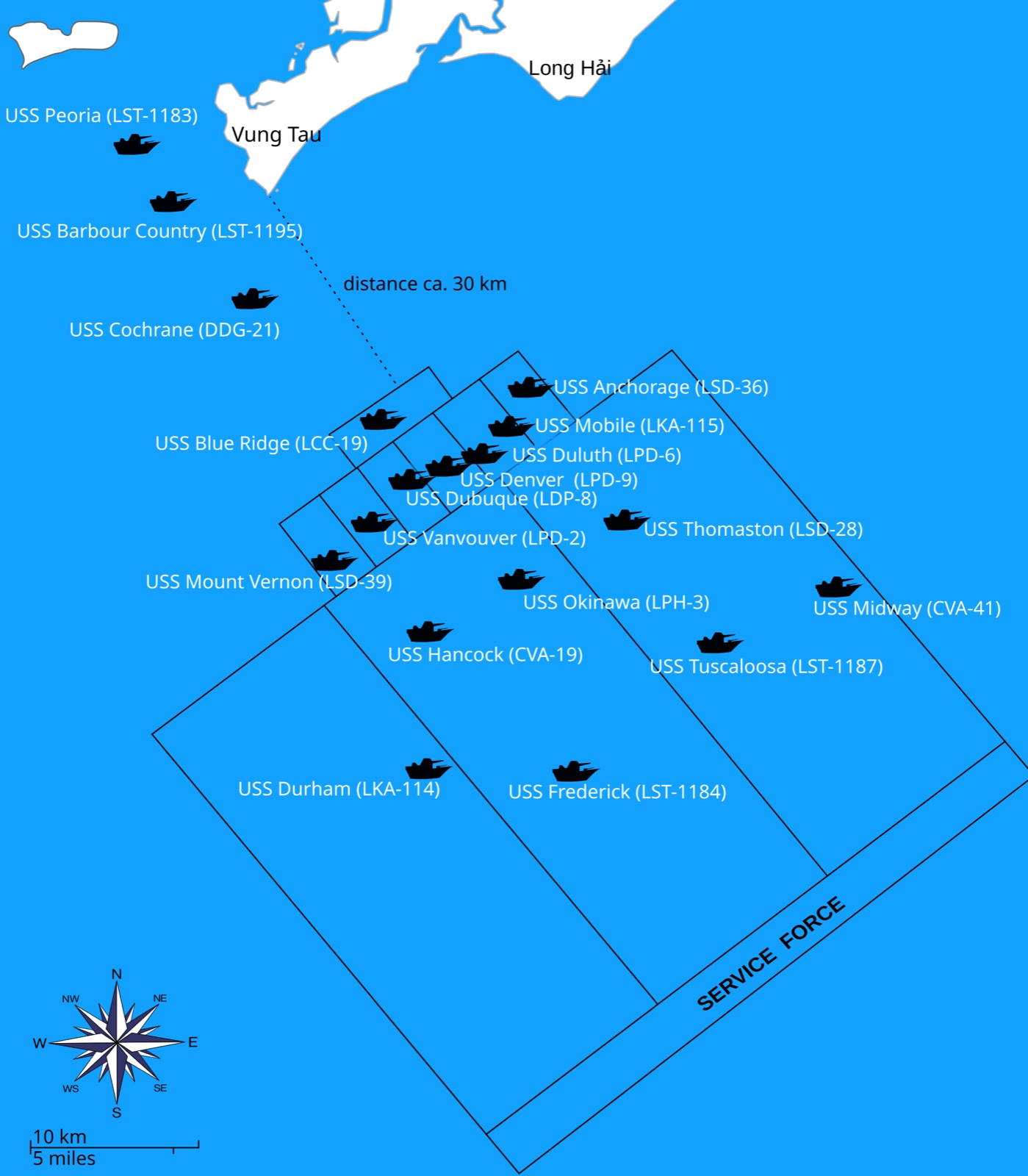
The evacuation of Americans and South Vietnamese people at risk had been underway before the final helicopter operation. As the military situation worsened, flights carried people out of Tan Son Nhut airport. On 28 April, aircraft attacked the air base. Repeated attacks made fixed-wing departures too dangerous, ending that phase of the evacuation. The United States then prepared to move people by helicopter from sites in Saigon to ships of the Seventh Fleet offshore.
Operation Frequent Wind began on 29 April. Helicopters flew from the ships to the Defense Attaché Office compound and the U.S. embassy, as well as other pickup sites. The embassy lift grew far beyond its initial plan: the Naval History and Heritage Command describes a site expected to handle about 100 evacuees that instead held around 2,500. People waited in crowds, tried to reach designated assembly points, or sought a way into the compound. U.S. personnel had to manage landing zones and crowd control under pressure, while helicopters crossed a city where fighting continued.
Frequent Wind moved more than 7,000 people by helicopter, according to the Naval History and Heritage Command. That figure covers the helicopter evacuation, not all the people who had left by air before the airport became unusable, and not the many South Vietnamese who were not evacuated. The operation’s scale should not hide that limit. The United States had decided whom it could take within a narrow window; many people who feared what might come after the takeover could not get aboard.
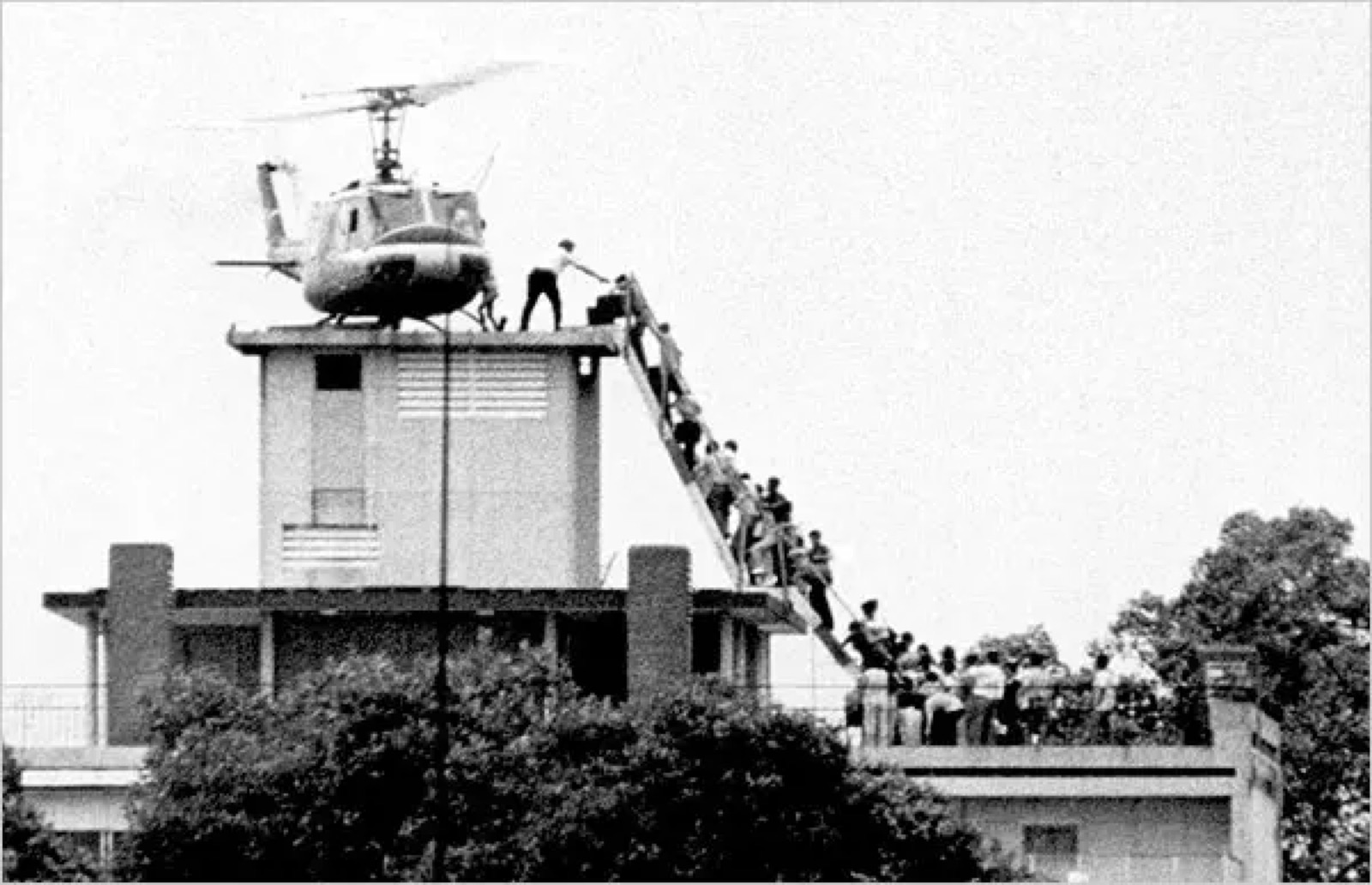
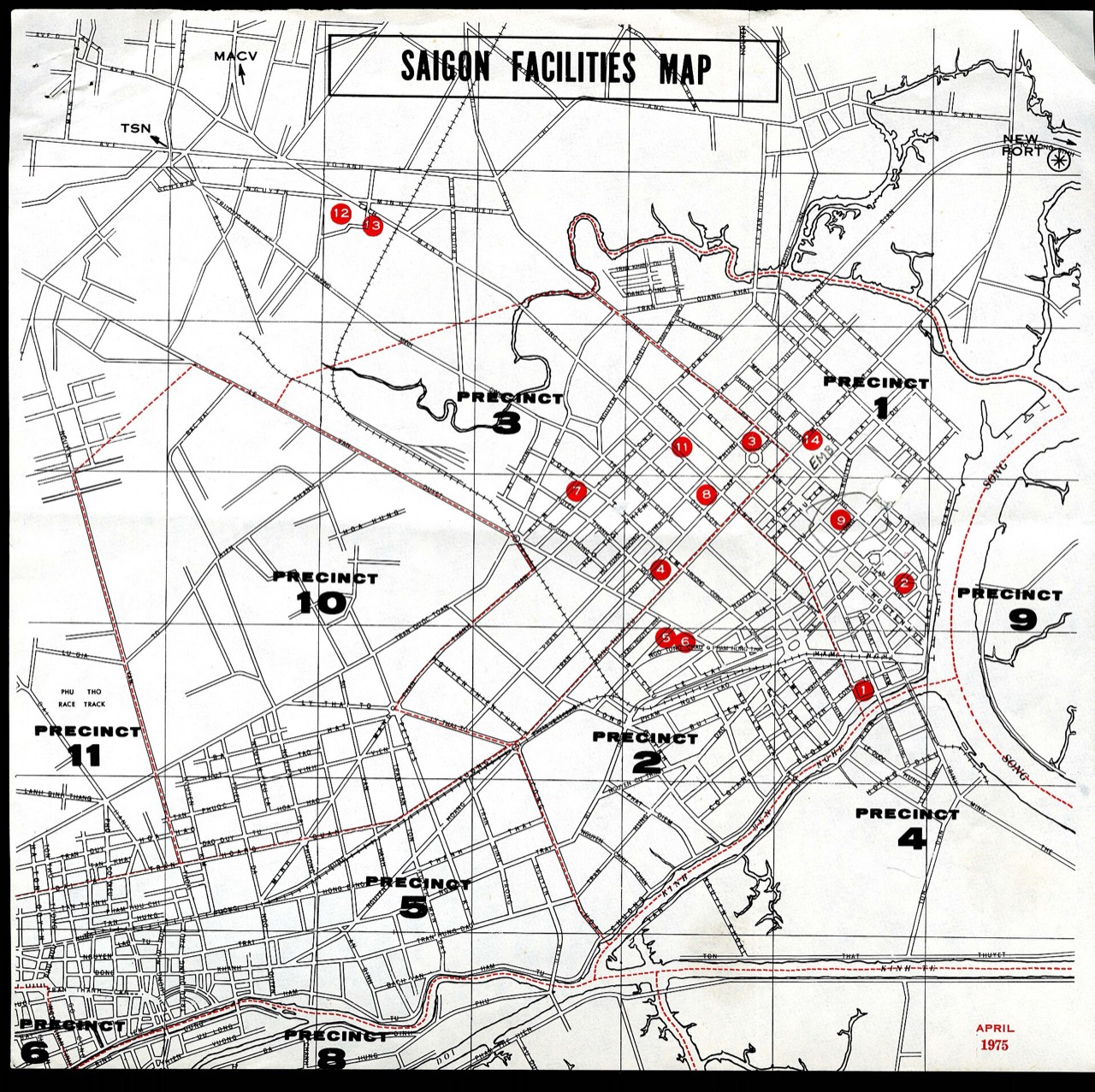
The famous rooftop photograph shows people climbing toward an Air America helicopter on 29 April. The image is frequently mistaken for a scene at the U.S. embassy. It was taken from the roof at 22 Gia Long Street, an apartment building used by the CIA station chief. That distinction matters because the evacuation was spread across separate sites, and popular memory has often compressed a complicated citywide operation into a single rooftop scene.
30 April: surrender at the palace
The final morning joined the evacuation and the campaign in the same few hours. At 4:58 a.m., a Marine helicopter carried Ambassador Graham Martin from the embassy to the USS Blue Ridge. The U.S. embassy’s Marine security detail left the rooftop helipad at 7:58 a.m. Those times, recorded by the U.S. Census Bureau, distinguish the ambassador’s departure from the final departure of the embassy guards. The last helicopter did not mark the end of fighting in the city; it marked the end of the official U.S. evacuation from the embassy.
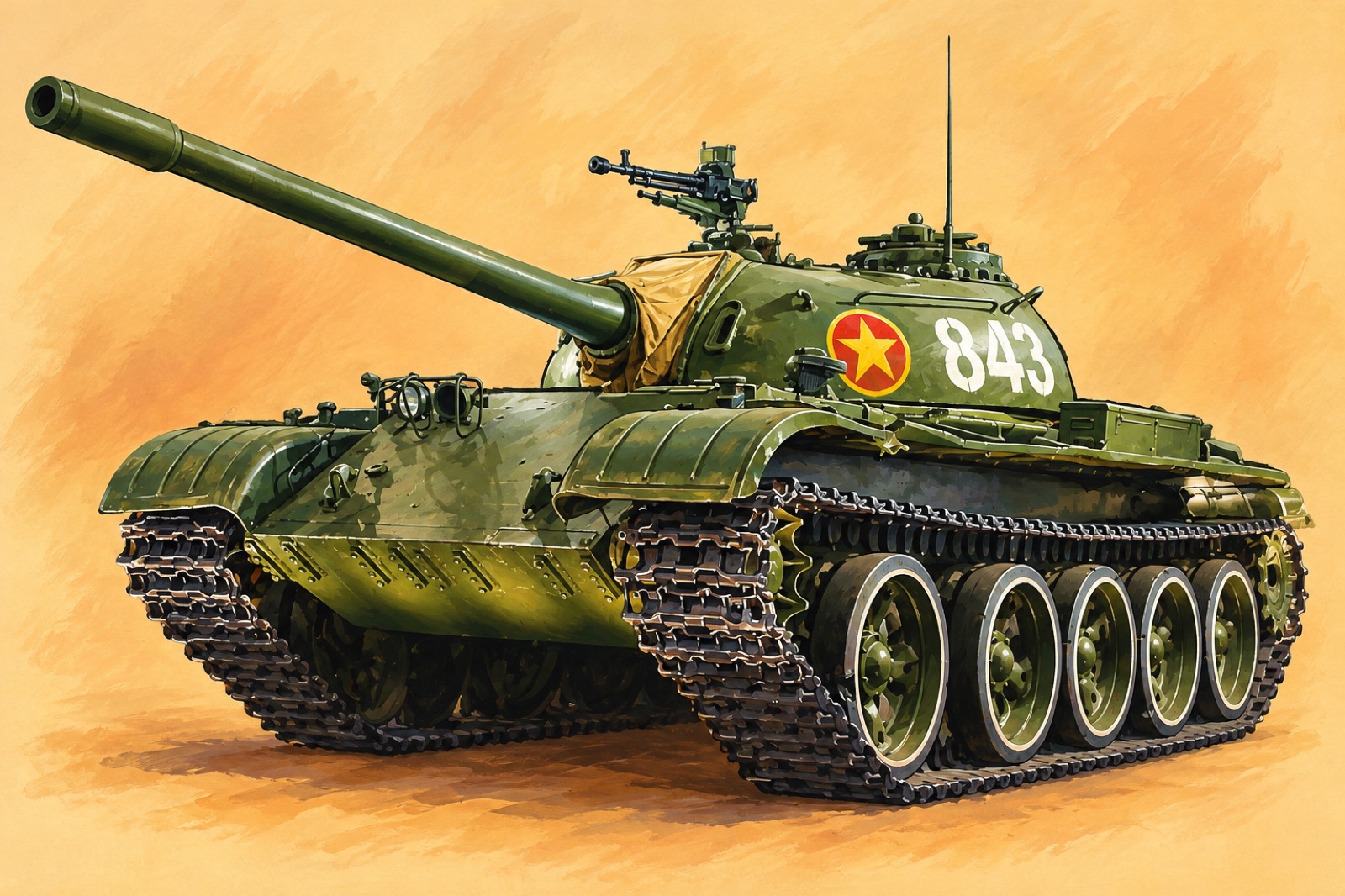
At 10:24 a.m., Minh ordered the Army of the Republic of Vietnam to stop fighting. North Vietnamese tanks entered the grounds of the Independence Palace shortly before noon. The event is often described through the image of Tank 843, but it was one of two tanks associated with breaching the palace grounds; the specific vehicle’s role has become part of later public memory. The image of a tank at the gate became an enduring shorthand for the moment the southern government ended.
Minh and members of his cabinet remained at the palace. At 2:30 p.m., he announced the surrender over Radio Saigon. The timing matters: the tanks’ arrival and the public declaration were not the same event. Together, they show the shift from a military advance to the formal end of the Republic of Vietnam’s government. U.S. sources often call the day the “fall” or “capture” of Saigon. In Vietnam, official accounts commonly use the language of liberation and reunification. The wording reflects different political memories; this article uses “Fall of Saigon” as the established English name for the event.
The surrender stopped organized resistance by the southern government, but the city’s residents faced very different consequences. Some welcomed the end of fighting; others feared punishment, lost homes or employment, or left Vietnam in the months and years afterward. The fall of the capital was a turning point, not a neat ending for everyone caught in the war.
What the Fall of Saigon changed
The capture of the capital ended the Republic of Vietnam and the Vietnam War. It did not create the unified state in its final legal form that same day. Vietnam was formally reunified as the Socialist Republic of Vietnam in 1976. The distinction helps clarify why historians refer both to the fall of Saigon in 1975 and to reunification in 1976: one was the end of the southern government and the fighting; the other was the establishment of the unified state.
The evacuation’s images became powerful symbols, especially in the United States, where the helicopter lifting away from a rooftop represented the end of a long and costly intervention. For Vietnamese people, 30 April carries other meanings as well: victory and reunification for some, loss and displacement for others. A careful account can name both without pretending they cancel each other out.
The story also shows the difference between a dramatic final scene and the chain of events that made it possible. Tanks at the palace gates were visible proof that the capital had fallen. Behind that image were the rapid military reversals of March and April, shortages that constrained South Vietnamese forces, political transitions, the loss of the airport, and an evacuation that could carry thousands but could not carry everyone. Looking at the campaign and the airlift together gives a clearer answer to what happened on 30 April and why.
What exams ask
For a world history answer, connect the fall of Saigon to the 1973 Paris Peace Accords and the withdrawal of U.S. combat forces, then explain the renewed North Vietnamese offensive in 1975. Be precise about the sequence: the Central Highlands and northern cities fell first; the Ho Chi Minh Campaign then closed on Saigon; Frequent Wind evacuated people by helicopter on 29–30 April; Minh ordered a ceasefire on the morning of 30 April and announced surrender that afternoon. Avoid saying that all U.S. personnel left Vietnam in 1973: a small U.S. presence remained until the final evacuation.
A strong short response distinguishes three dates and events: 30 April 1975 was the fall of Saigon and the end of the southern government; 1976 was the formal establishment of the unified Socialist Republic of Vietnam; 29–30 April 1975 was the helicopter phase of the U.S. evacuation. Use “about” for estimates such as the troops surrounding Saigon, and avoid turning a single tank photograph into the whole military story.
Read next
Saigon and Southern Vietnam: A History from Funan to 1975 places the final campaign within the region’s longer history. The Paris Peace Accords (1973) explains the agreement and the conditions that preceded the final offensive. Reunification (1976): The Socialist Republic of Vietnam follows the political changes after the fall. The Boat People and Japan’s Indochinese Refugees examines displacement and the refugee journeys that followed the war.
FAQ
When did Saigon fall? North Vietnamese forces captured Saigon on 30 April 1975. President Dương Văn Minh ordered South Vietnamese troops to stop fighting at 10:24 a.m. and announced the surrender over Radio Saigon at 2:30 p.m. These were separate steps in the end of the Republic of Vietnam.
What was the Ho Chi Minh Campaign? The Ho Chi Minh Campaign was the final North Vietnamese offensive to capture Saigon in April 1975. Forces advanced from several directions against the capital’s outer defenses and key sites. The campaign culminated in the capture of the presidential palace grounds and the surrender of South Vietnam’s government.
What was Operation Frequent Wind? Operation Frequent Wind was the U.S. helicopter evacuation from Saigon to ships offshore on 29–30 April 1975. It moved Americans and Vietnamese people considered at risk from several city locations. The Naval History and Heritage Command reports that more than 7,000 people were evacuated by helicopter.
Why did South Vietnam lose? No single cause explains the collapse. Rapid battlefield reversals, shortages of ammunition, fuel, and spare parts, political instability, and the lack of renewed U.S. military intervention combined to weaken the defense. As northern cities fell, South Vietnamese forces had less time and fewer secure places to reorganize.
Was Vietnam unified in 1975? The Republic of Vietnam’s government ended and the fighting stopped in 1975, but the unified state was formally named the Socialist Republic of Vietnam on 2 July 1976. The fall of Saigon and formal reunification are closely connected milestones, but they happened at different times and describe different political changes.