Geneva Accords in five minutes
The Geneva Accords were a set of agreements and declarations reached at the 1954 Geneva Conference to end fighting in Indochina. For Vietnam, the military agreement established a provisional demarcation line near the 17th parallel: the Vietnamese People's Army would regroup north of it and French Union forces south of it. The line was a ceasefire measure, not a permanent international border.
The conference's final declaration envisaged nationwide elections in July 1956 to unify Vietnam. Those elections did not happen. The United States and the State of Vietnam did not join the final declaration, and the southern government later refused consultations under the Geneva framework. The settlement ended one phase of war but left the question of political authority unresolved. That gap is central to understanding the later Vietnam War.
Why the conference met
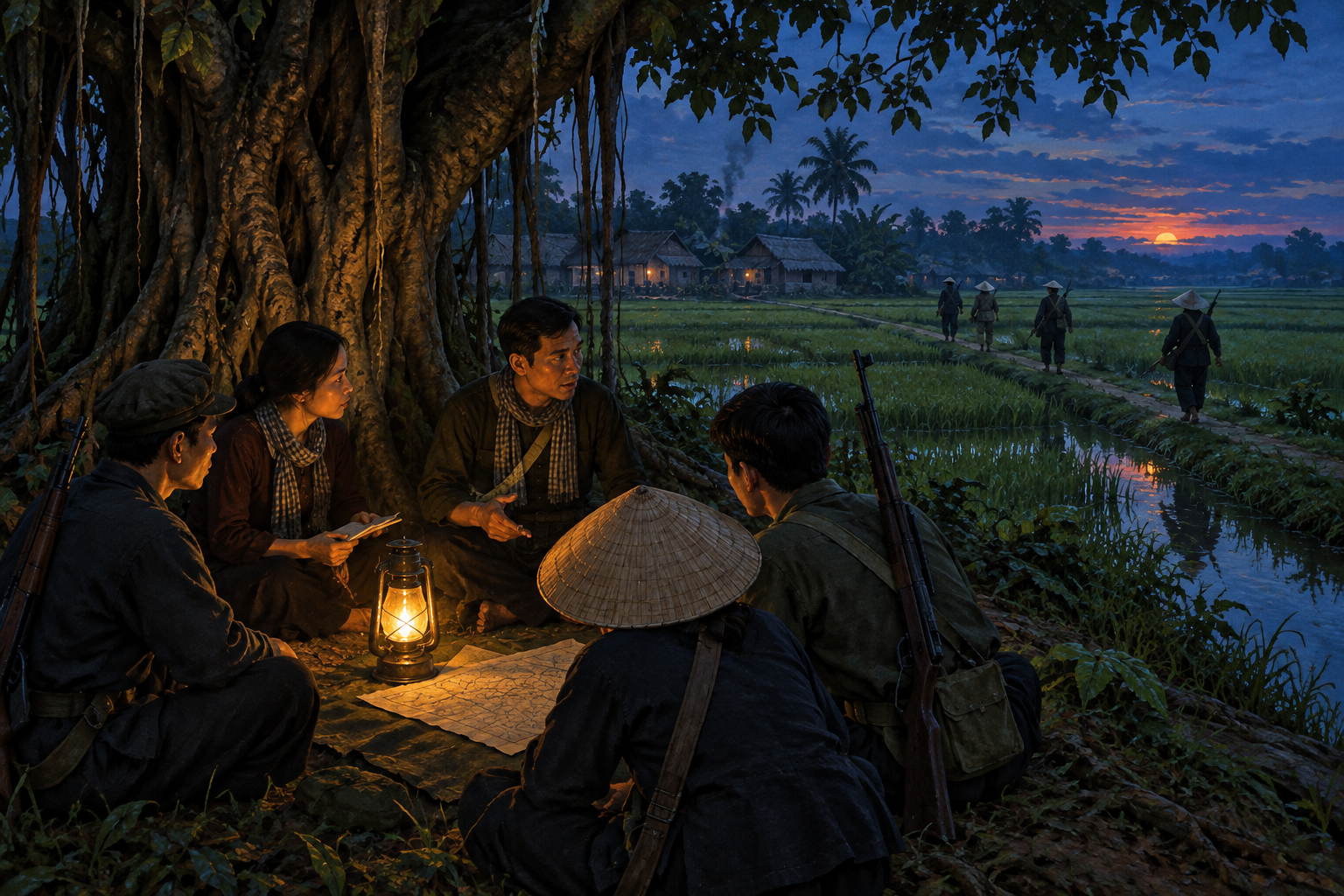
After the Second World War, France sought to reassert control in Indochina. The Viet Minh, led by Ho Chi Minh, fought for Vietnamese independence. The resulting First Indochina War drew in a wider Cold War: China and the Soviet Union supported the Democratic Republic of Vietnam, while the United States supported the French war effort and the associated State of Vietnam.
By 1954 the cost of the war was mounting for France. Representatives met in Geneva to discuss Korea and Indochina; talks on Indochina began as the fighting continued. On 7 May, the French garrison at Điện Biên Phủ fell to Viet Minh forces. The defeat strengthened the case in France for a negotiated end to the war. The battle of Điện Biên Phủ explains the military pressure behind the settlement.
The participants included France, the Democratic Republic of Vietnam, the State of Vietnam, Cambodia, Laos, China, the Soviet Union, Britain and the United States. Their aims differed. The negotiations had to address both how to stop armies fighting and how Vietnam would be governed afterward. These were related questions, but they did not produce one simple agreement accepted equally by everyone.
What the Geneva Accords said
On 20 July 1954, representatives of the French Union forces and the Vietnamese People's Army signed the agreement on the cessation of hostilities in Vietnam. Separate military agreements dealt with Laos and Cambodia. The Vietnam agreement provided for a provisional military demarcation line and a demilitarized zone on either side. The two forces were to regroup in their respective zones within 300 days.
The line followed the Bến Hải River for much of its course, near the 17th parallel. Describing it as the 17th parallel is a useful shorthand, though the actual demarcation line did not follow a straight line of latitude across the entire country. Its immediate purpose was to separate military forces and reduce the risk of renewed fighting. The agreement also restricted the introduction of foreign military personnel and arms, with specified provisions for replacement.
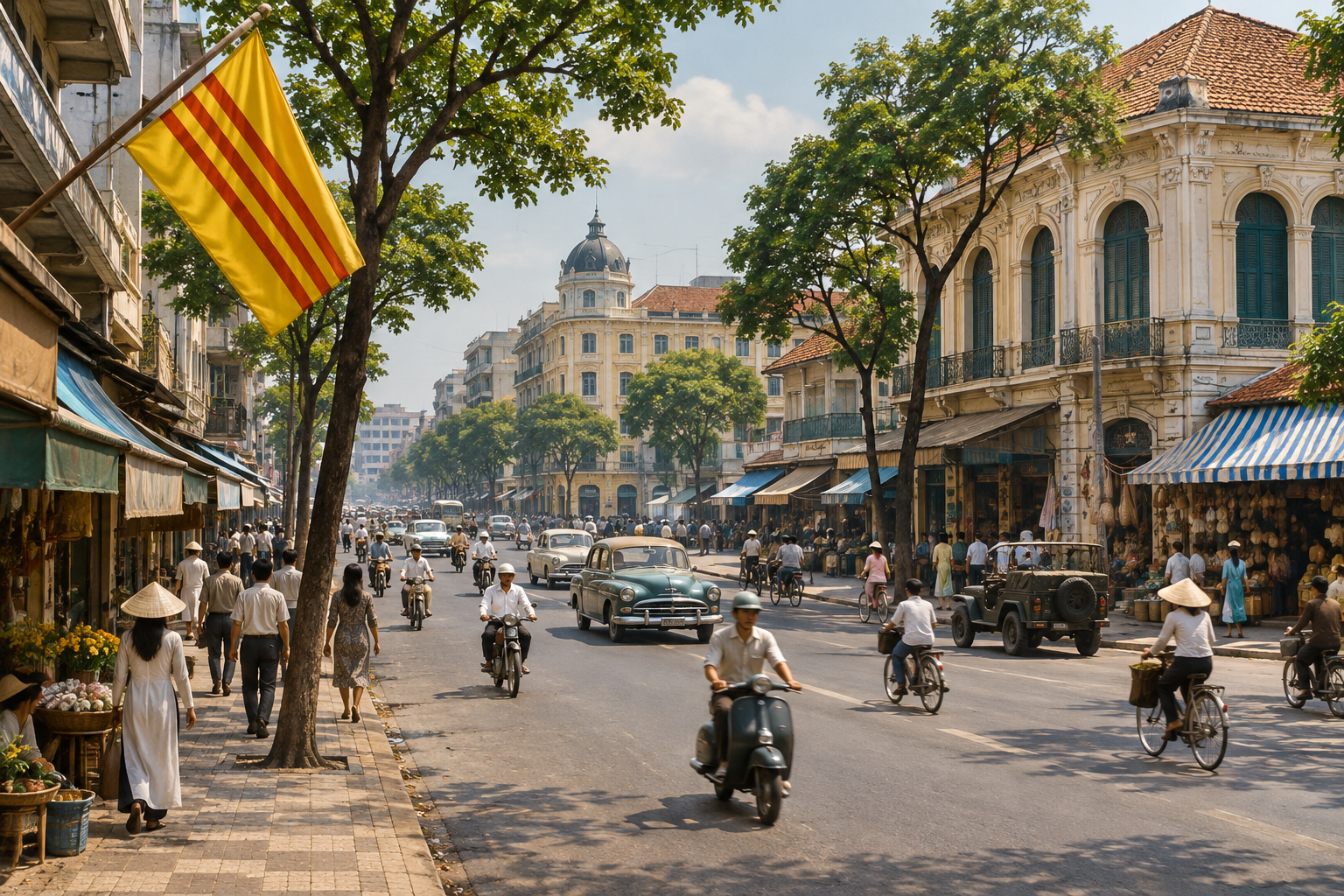
For a period after the ceasefire, civilians could move to the zone of their choice. Large numbers moved, especially from north to south; people also went north. For families, the decision could involve religion, politics, livelihoods and fears about the authorities they would live under. The movement made a military arrangement a deeply personal division as well.
An International Commission for Supervision and Control, with representatives from India, Canada and Poland, was established to oversee implementation. A joint commission of the parties had responsibilities for carrying out the ceasefire. Supervision could record and investigate problems, but it could not by itself settle the political struggle over Vietnam's future.
The agreement's military and civilian provisions addressed different immediate needs. Soldiers had to regroup on opposite sides of the line, while civilians faced decisions about where they would live. The supervisory commission, meanwhile, was meant to monitor the settlement rather than choose a government for Vietnam. Keeping these roles separate helps explain why a ceasefire could take effect without resolving the country's political future.
The 17th parallel and the election that never happened
The final declaration of 21 July distinguished the military line from a political or territorial boundary. It called for general elections in July 1956, under international supervision, to establish a unified government. Consultations between the authorities in the two zones were to begin in July 1955. The election provision appeared in the conference's final declaration, not in the signed Vietnam ceasefire agreement itself.
The distinction matters because the participants' positions differed. The final declaration carried no signatures. The State of Vietnam protested partition and did not accept the declaration. The United States also did not join it, but separately stated that it would refrain from using or threatening force to disturb the agreements and would view renewed aggression with grave concern. It expressed support for free elections under United Nations supervision.
By 1955, Ngô Đình Diệm's government in the south rejected consultations conducted under the Geneva framework, arguing that it was not bound by the settlement and questioning whether a free vote was possible in the north. The United States backed the southern government and shared concerns about electoral conditions. No nationwide election was held in 1956. The result was not a legal declaration that the temporary line had become a permanent border; it was the failure of the proposed route to unification.
The proposed vote was meant to be nationwide, not two separate elections to establish permanent northern and southern countries. It depended on consultations between authorities whose positions had already diverged. When those consultations did not produce a route to an election, the timetable in the declaration passed without the political settlement it had envisaged.
Consequences for Vietnam and Indochina
In the north, the Democratic Republic of Vietnam consolidated its authority. In the south, the Republic of Vietnam was proclaimed in 1955, with Diệm as president. Each claimed a role in Vietnam's future, while foreign support and local political struggles deepened the division. The North Vietnam guide follows the northern state; the South Vietnam guide traces the government that emerged in the south.
Geneva also addressed the fighting in Laos and Cambodia through separate ceasefire agreements. Their situations should not be reduced to the Vietnamese demarcation line: the line and the proposed 1956 nationwide election applied to Vietnam. Across Indochina, ending immediate hostilities did not remove the political conflicts and outside involvement that would shape later wars.
The settlement's significance is therefore double. It brought a ceasefire to the First Indochina War in Vietnam and offered a temporary military arrangement. It also left a disputed political timetable whose failure helped make the division more durable. Neither outcome can be understood from the map alone.
What exams ask
For a world-history question, connect the sequence: French defeat at Điện Biên Phủ in May 1954; the Geneva settlement in July; provisional military separation near the 17th parallel; and the proposed 1956 election that was not held. Explain the line's intended temporary status before discussing the rival governments that followed.
Distinguish the signed ceasefire agreement from the unsigned final declaration. The former arranged military separation; the latter set out the proposed election. Also distinguish the First Indochina War from the later Vietnam War. A question about continuity may ask how a ceasefire could end one war while leaving conditions for another.
Read next
The Battle of Điện Biên Phủ explains the defeat that preceded the settlement.
North Vietnam follows the Democratic Republic of Vietnam after the division.
South Vietnam examines the southern government and its development after 1954.