In five minutes
Vietnam reunification was completed on 2 July 1976, when the country became a single state, the Socialist Republic of Vietnam, with Hanoi as its capital. For more than twenty years before that, Vietnam had been split in two: a communist North and a South backed by the United States. The war that divided it ended in 1975, but the country was not one state until the decisions of 1976. This page explains how that happened, what the new state did in its first years, and why the period still matters for understanding modern Vietnam.
If you want the whole war first, our Vietnam War explainer covers 1955 to 1975 in one place. This page picks up where the fighting stopped.
The road to Saigon's fall
The 1954 Geneva Accords ended the French war in Indochina and split Vietnam along the 17th parallel. The North, under Ho Chi Minh, was ruled by a Communist-led government based in Hanoi. The South, the Republic of Vietnam, was based in Saigon and relied on US support. The accords envisaged national elections in 1956 that would decide the country's future. Those elections never took place; the government in Saigon did not agree to hold them.
The Geneva settlement was intended as a temporary military division, not a permanent international border between two agreed successor states. The proposed elections were meant to settle the question of government, but rival authorities and their supporters disagreed over the conditions for a vote. By the time the United States sent combat forces, that unresolved question had become part of a much wider Cold War confrontation. The distinction helps explain why military victory in 1975 was followed by a separate process of political unification.
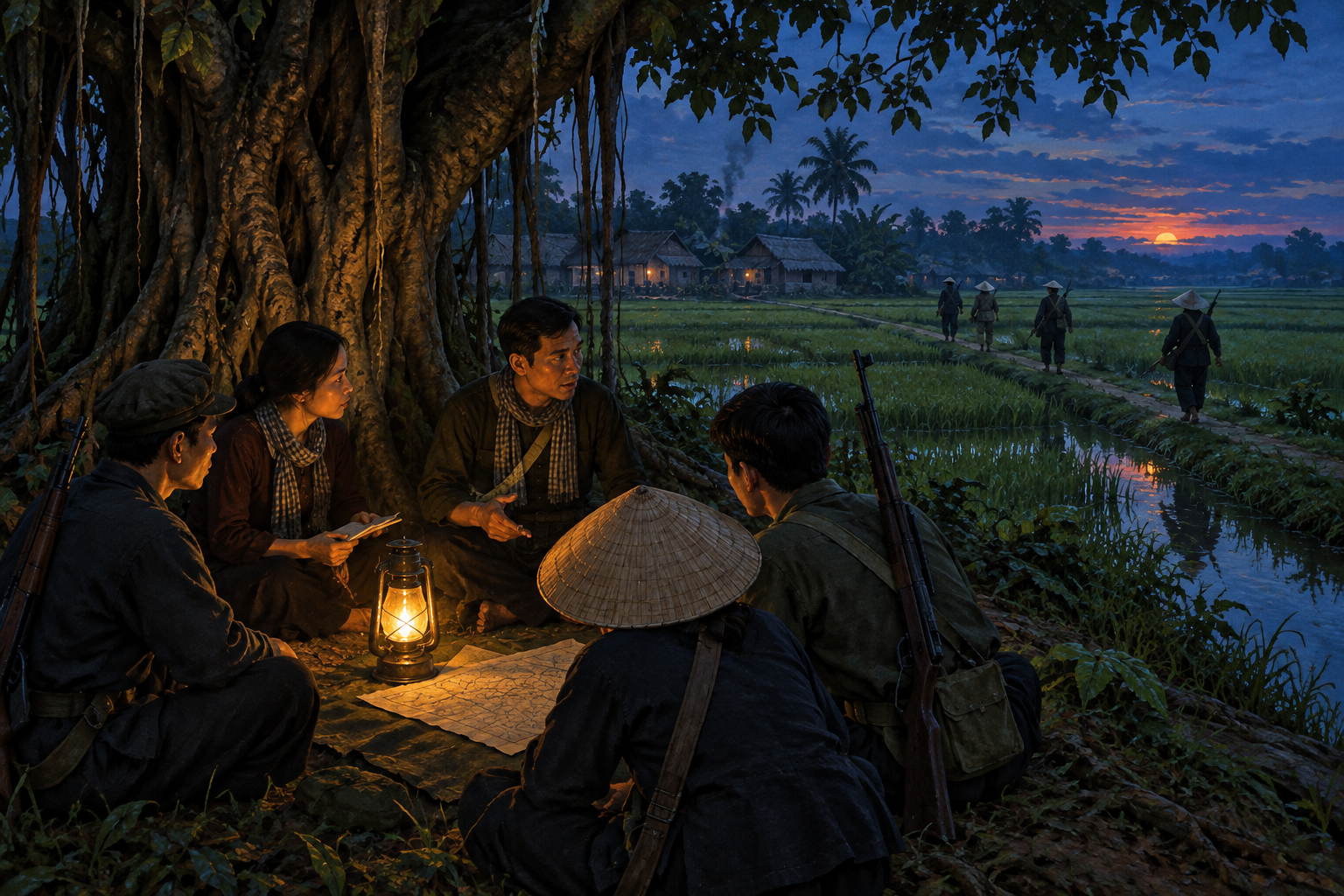
Over the next decade the conflict grew. The National Liberation Front, which the North supported, fought in the South, and from 1965 the United States sent large numbers of combat troops. Ho Chi Minh died on 2 September 1969, before the war ended, and did not live to see the country reunited.
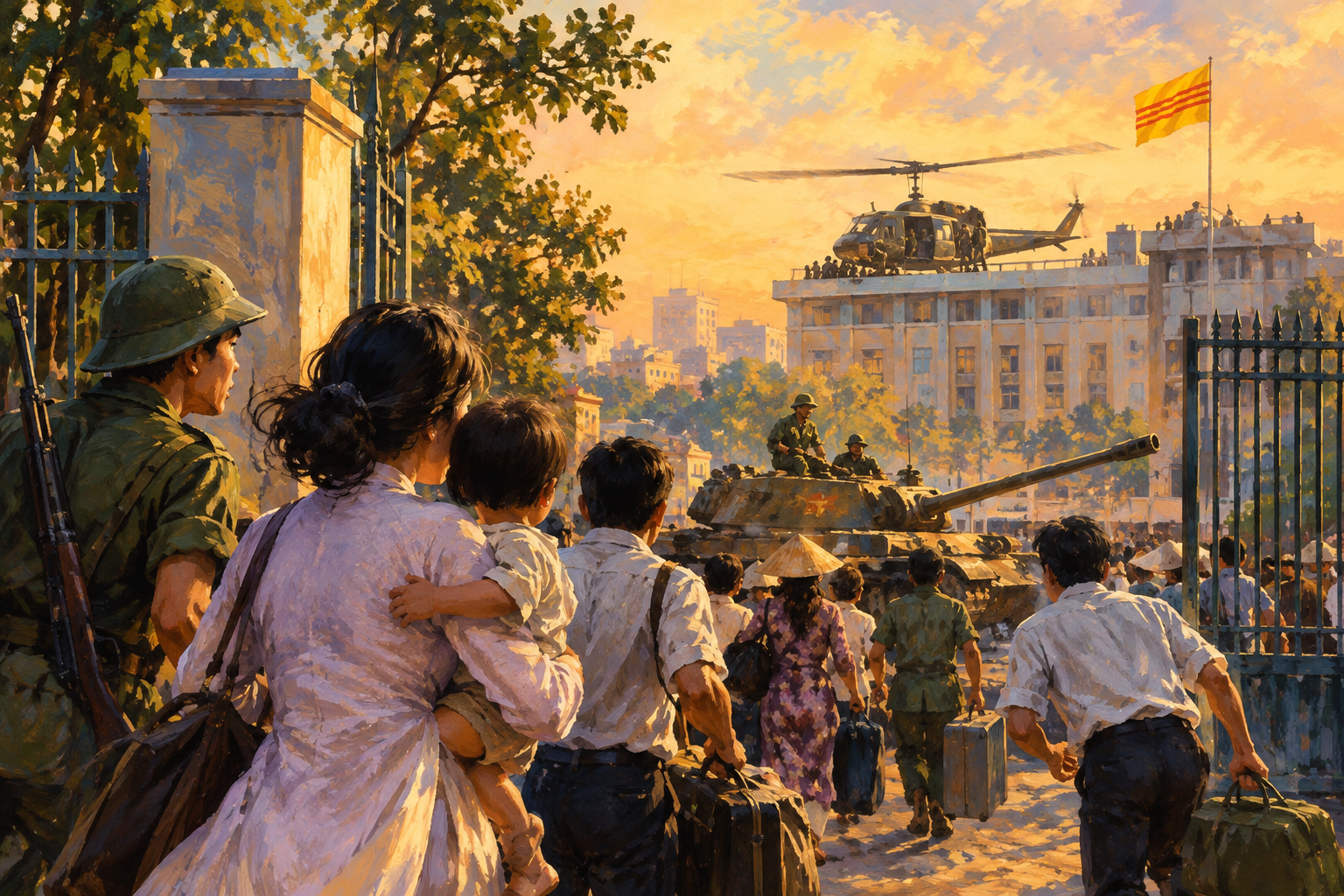
The Paris Peace Accords, formally the Agreement on Ending the War and Restoring Peace in Viet Nam, were signed on 27 January 1973. American forces left Vietnam by the end of March that year. Fighting continued, however, and the agreement did not settle who would govern the South. In early 1975 the North launched a final offensive. President Nguyen Van Thieu resigned on 21 April, and on 30 April forces from the North took Saigon. That day is known as the fall of Saigon, and our separate article covers it in detail.
How Vietnam reunification happened
The end of fighting did not make the country one state overnight. For about a year the South was run under military management while the two halves were brought together politically. Reunification then moved through three steps: a nationwide election, the first session of a single National Assembly, and a set of decisions that gave the country its name and institutions.
The South was administered by a provisional revolutionary government after Saigon fell. It existed alongside the government in Hanoi until the new national institutions were established. A single legislature made it possible to adopt common symbols and a common name, but bringing two societies together also meant reorganizing administrations, workplaces and property under the new government's policies. The formal decisions were a beginning of that process, not proof that every difference between North and South had disappeared.
On 25 April 1976, voters across the whole country elected one National Assembly of 492 deputies. The Assembly met in Hanoi from 24 June to 3 July 1976. As the first legislature of a unified Vietnam, it passed resolutions on the country's name, flag, emblem, anthem and administrative structure.
On 2 July the country was formally united as the Socialist Republic of Vietnam. The same decision renamed Saigon, which had absorbed the surrounding Gia Dinh province, as Ho Chi Minh City. The new name honoured the leader who had died in 1969. In everyday speech many people still say Saigon, and the old name remains common today.
After unification
In December 1976 the Communist Party held its Fourth National Congress in Hanoi, from 14 to 20 December. Delegates renamed the party the Communist Party of Vietnam, replacing the earlier Vietnam Workers' Party name. The party's top post changed from First Secretary to General Secretary, and Lê Duẩn held it. The congress also set priorities for the next five-year plan, including the development of agriculture and industry.
A new constitution was adopted on 18 December 1980. It set out the leading role of the Communist Party in the state.
The treatment of people linked to the former South Vietnamese government was harsh for many. Former officers and officials were sent to re-education camps, where detainees were made to study communist doctrine and to do hard labour. Many were released after weeks or months. Others, mostly senior officers and officials, were held for years, and some for more than ten years. Families of detainees often faced hardship and restrictions in daily life.
Many people also left the country. From 1975, and especially in the late 1970s, large numbers fled by sea in small boats. They became widely known as the boat people, and hundreds of thousands reached other countries in Asia and beyond. The government also moved many city residents to rural new economic zones to farm the land, and the economy struggled through the 1980s.
The consequences of the war and the policies that followed were experienced differently. A unified country brought an end to the division for which many had fought; imprisonment, displacement and departures also marked the lives of many families. Refugees faced dangerous sea crossings, and arrival abroad did not erase the loss of homes or separation from relatives. These experiences are part of the history of unification alongside the decisions made in Hanoi.
Why it matters
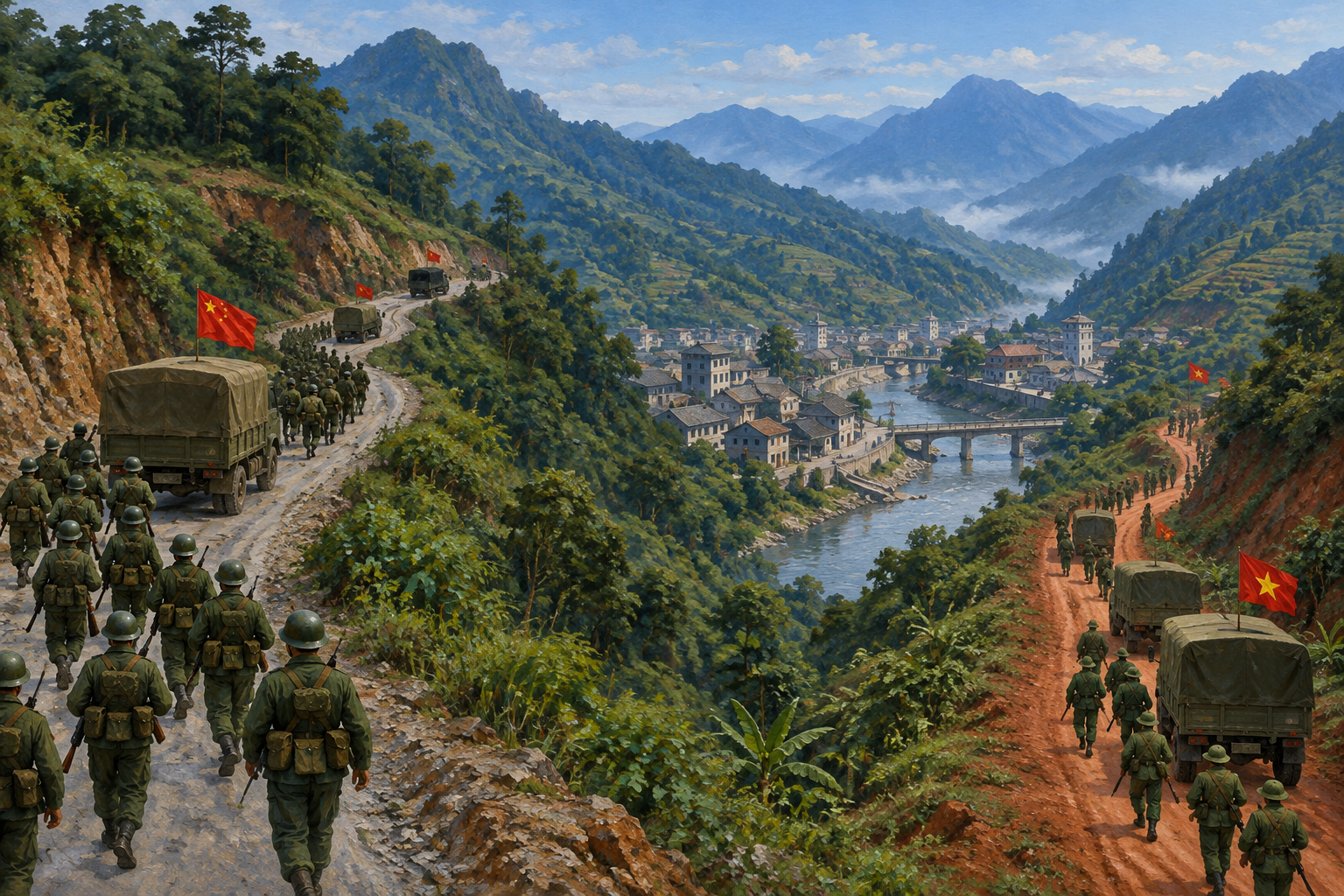
Reunification ended the division set in 1954 and closed the last chapter of the war. It also shaped the region around Vietnam. In December 1978 Vietnamese forces invaded Cambodia, and by January 1979 they had overthrown the Khmer Rouge government in Phnom Penh. In February 1979 Vietnam and China fought a short border war. Our article on the invasion of Cambodia covers that conflict in more depth.
By the mid-1980s the economy was in serious difficulty. In 1986 the Sixth Party Congress launched Đổi Mới, a reform policy that brought market mechanisms into the economy and opened the country to foreign investment. The Đổi Mới article explains that turn in detail.
What exams ask
- Sequence: learn the order of 1954, 1973, 1975 and 1976. Questions often test which event came first and why the Paris accords did not end the conflict by themselves.
- 1975 versus 1976: 1975 ends the fighting; 1976 creates the unified state. Keep the two separate.
- Names and places: the Socialist Republic of Vietnam, Hanoi as capital, Saigon renamed Ho Chi Minh City, and the 17th parallel.
- Comparison: AP-style essays often compare Vietnam with other divided states. Germany was reunified in 1990, while the Korean peninsula remains divided. A strong answer names the political and military conditions behind each outcome.
Read next
- The Fall of Saigon (30 April 1975): the day that ended the war in the South and set up reunification.
- Vietnam's Invasion of Cambodia (1978–1989): what the unified state did in the region after 1976.
- Đổi Mới: How Vietnam Reformed Its Economy (1986): the reform policy that followed the difficult years after unification.