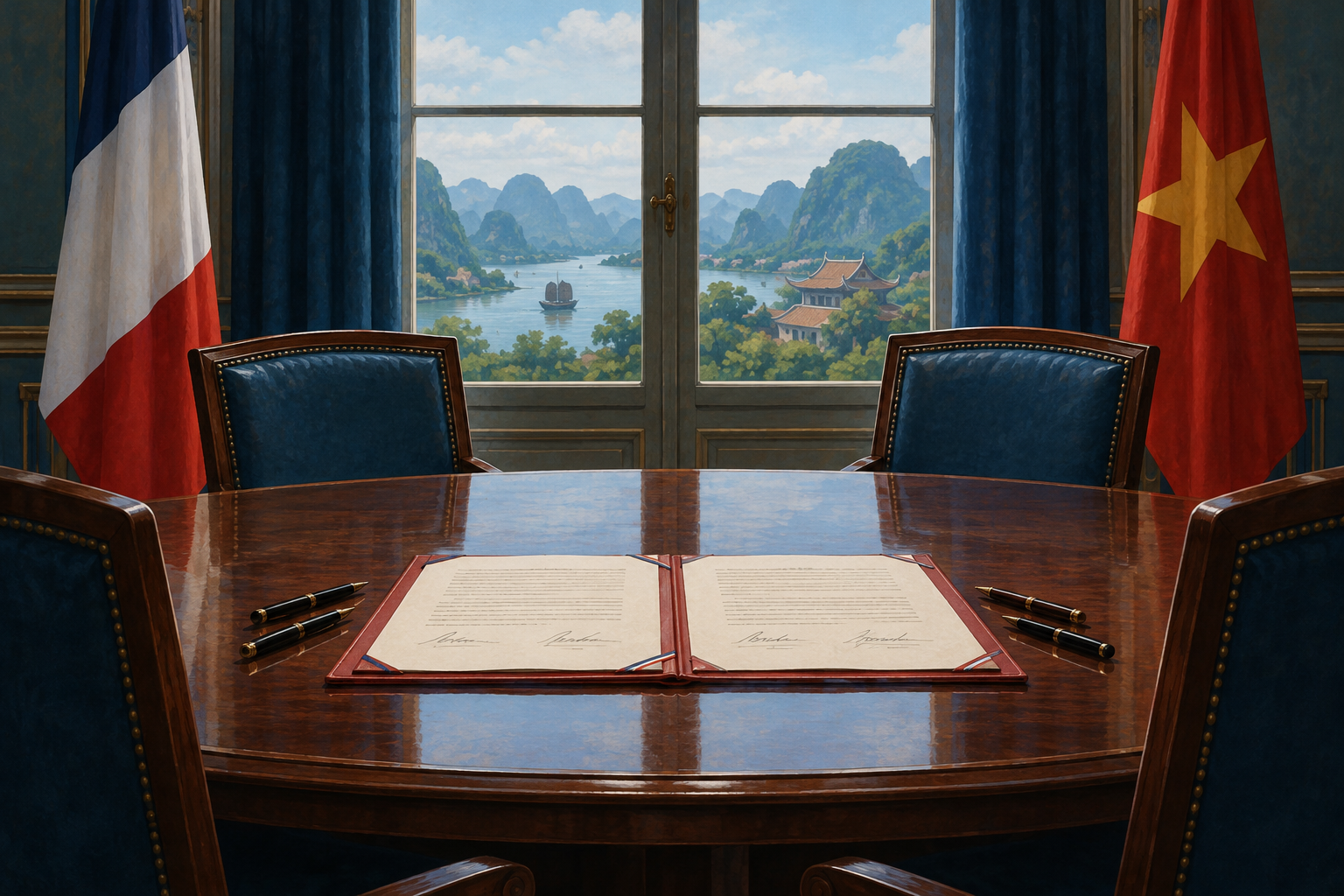
Paris Peace Accords in five minutes
The Paris Peace Accords were an agreement to end the war and restore peace in Vietnam, signed in Paris on January 27, 1973. The United States, North Vietnam, South Vietnam and the Provisional Revolutionary Government of South Vietnam took part. The agreement called for a ceasefire, the withdrawal of US and allied foreign forces within 60 days, and the return of captured personnel.
The distinction that makes the agreement easier to understand is this: it arranged an American military exit, but it did not resolve who would govern South Vietnam. US forces withdrew, while forces fighting for control of the South remained. The ceasefire was repeatedly violated, and the war continued. North Vietnamese forces entered Saigon on April 30, 1975.
For the larger sequence of causes, intervention and outcomes, see our guide to the Vietnam War. The Paris agreement belongs near the end of that story, but it is not the same event as the fall of Saigon.
Why the parties negotiated
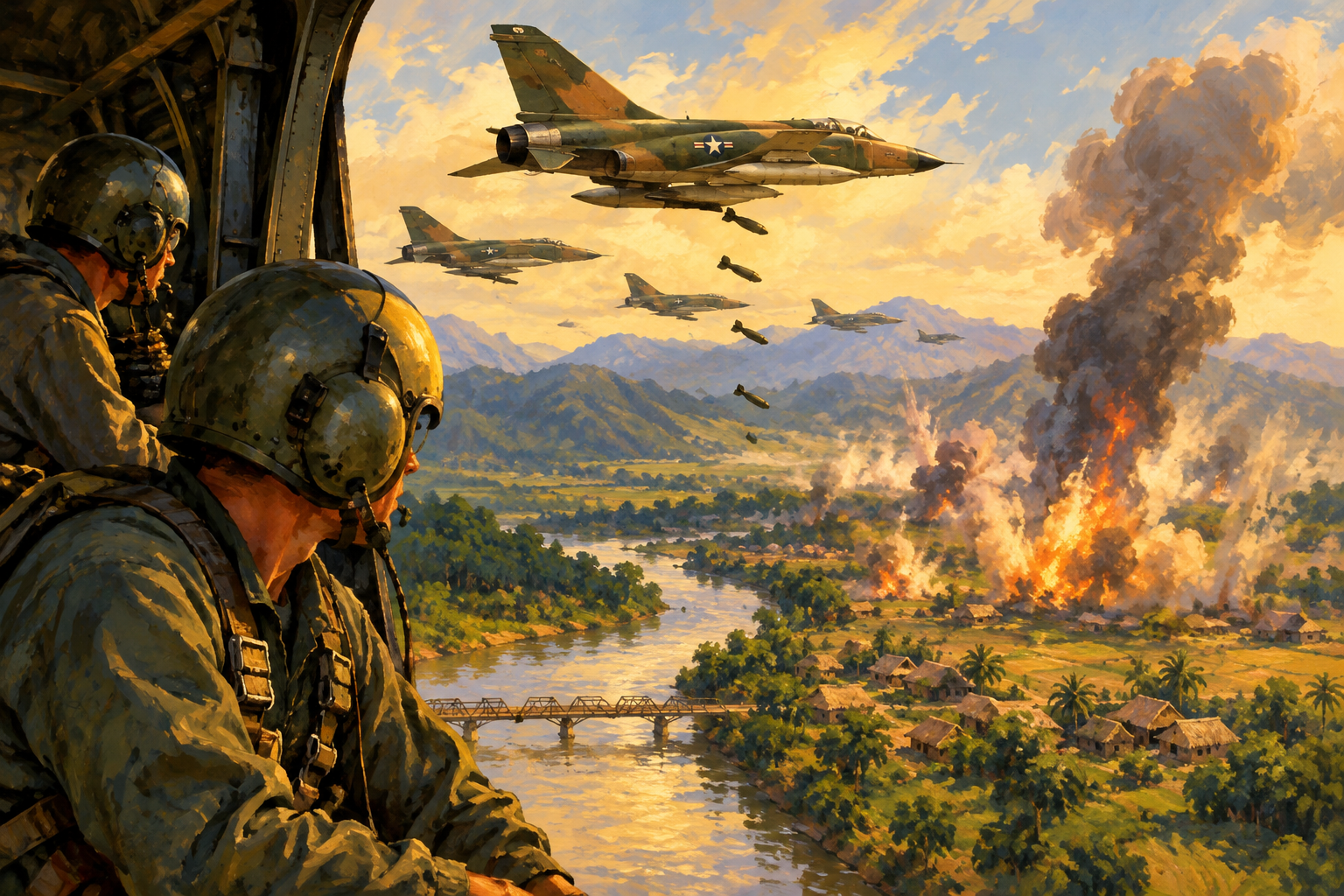
By the late 1960s, the war had become a costly and divisive conflict for the United States. Washington supported the government of South Vietnam against North Vietnam and revolutionary forces in the South. The Tet Offensive of 1968 showed that the fighting remained intense despite years of American involvement. Peace talks began in Paris that year, but negotiations and military operations continued alongside one another.
President Richard Nixon's administration pursued Vietnamization: transferring more responsibility for ground combat to South Vietnamese forces while reducing the American troop presence. Withdrawal was a process, not a single decision made in January 1973. The United States also sought the return of its prisoners and an agreement that would permit its ally in Saigon to remain in place.
North Vietnam wanted US forces to leave and opposed the South Vietnamese government. The South Vietnamese government feared an agreement that would leave its enemies in a position to fight again. The Provisional Revolutionary Government represented the southern revolutionary side. These different aims made a settlement difficult: the parties had to agree on immediate military steps while leaving the political future of the South to further negotiation.
US adviser Henry Kissinger and North Vietnamese negotiator Le Duc Tho held secret talks as well as participating in a wider diplomatic process. Their negotiations helped produce a text, but the final agreement involved four parties. It is therefore misleading to describe the document as an arrangement made only between two individual negotiators.
What the agreement said
Ceasefire and withdrawal. The agreement called for a ceasefire throughout South Vietnam and an end to US military activities against North Vietnam. It required US forces and specified allied foreign forces to withdraw within 60 days. This deadline mattered because it linked the paper agreement to a concrete change in the military balance.
Prisoners. The parties agreed to return captured military personnel and foreign civilians in conjunction with the withdrawal. The agreement also addressed the return of Vietnamese civilian personnel captured and detained in South Vietnam, leaving the two South Vietnamese parties to settle the details. The distinction matters: the provision was not simply a single exchange of all detainees on one day.
South Vietnam's future. The agreement affirmed the South Vietnamese people's right to determine their own political future. It called for the two South Vietnamese parties to work toward reconciliation and free elections, with a national council to help organize the process. These provisions described a political settlement to be achieved; they did not themselves create a unified government or decide an election result.
Supervision. Joint military commissions and an International Commission of Control and Supervision were established to help oversee implementation. The international commission initially included Canada, Hungary, Indonesia and Poland. A monitoring body could investigate and report on violations, but its existence did not ensure that the opposing forces would stop fighting.
The text also respected Vietnam's independence, sovereignty, unity and territorial integrity, and envisaged reunification by peaceful means. At the same time, it left major practical questions unresolved. In particular, it did not explicitly require North Vietnamese troops already in the South to withdraw. The territory held by rival forces and the terms of a durable political settlement remained contentious.
The agreement distinguished the withdrawal of outside forces from the political process within South Vietnam. Its military timetable could be measured in days; the proposed reconciliation depended on rival parties agreeing on institutions and elections. That difference helps explain why implementation could proceed on one track while the larger settlement remained fragile. A signature established commitments, but did not remove the mistrust built up during years of war.
What happened after the signing?
The withdrawal of US forces and the return of American prisoners proceeded during the 60-day period. This was a major change from the years when large numbers of American troops fought in Vietnam. It did not mean the United States immediately ended every form of support for South Vietnam, or that all foreign involvement in the conflict ceased.
On the ground, the ceasefire did not produce lasting peace. Both South Vietnamese sides accused the other of violations, and fighting continued. The commissions operated in a setting where the parties had competing interests, disputed control of territory and retained armed forces. Monitoring could record problems, but it could not by itself settle the political conflict or remove the incentives to fight.
For people living in South Vietnam, the ceasefire was meant to change daily life as well as diplomacy. A durable halt to fighting would have required opposing forces to respect the same rules in contested areas. Where control remained disputed, each side had reason to fear that concessions could leave it vulnerable. The agreement offered a way to negotiate those disputes, but it could not guarantee agreement on the ground.
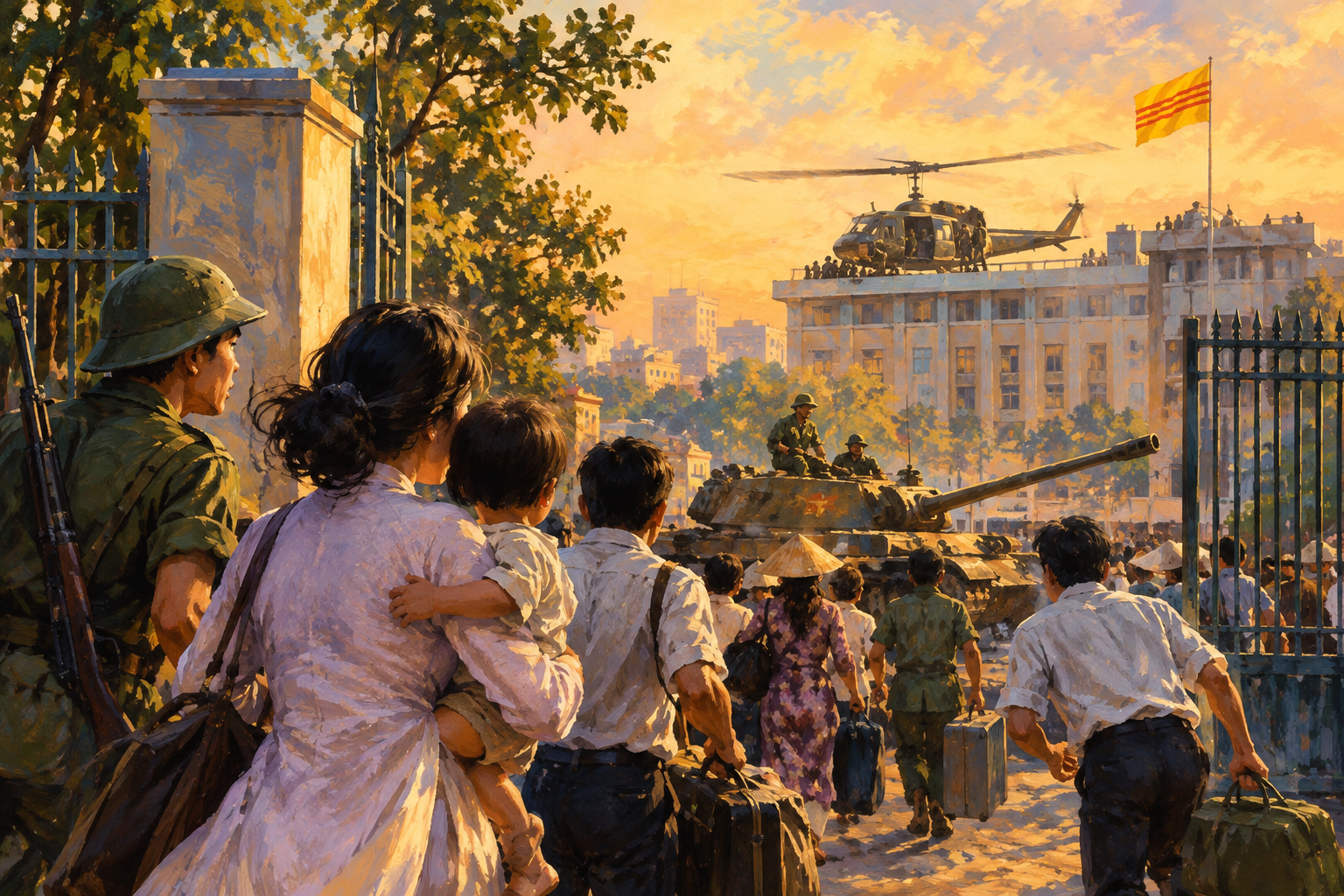
In 1975, North Vietnamese forces and their allies advanced against South Vietnam. Saigon fell on April 30, bringing the South Vietnamese government down. That outcome followed more than two years after the Paris signing. The agreement is consequently best understood as a turning point in American involvement and an attempted framework for peace, not as the day on which all fighting in Vietnam ended.
The Paris settlement also illustrates the difference between ending a foreign military intervention and resolving a civil and international conflict. American troops could leave under a timetable even while the forces and governments competing in Vietnam continued to pursue opposing goals. Keeping those processes distinct makes the interval between 1973 and 1975 easier to understand.
What exams ask
Keep three dates in order: the 1954 Geneva settlement, the 1973 Paris agreement and the fall of Saigon in 1975. The Geneva settlement followed the war between France and the Viet Minh and temporarily divided Vietnam. The Paris agreement addressed the later war, US withdrawal and South Vietnam's political future. Saigon's fall marked the collapse of the South Vietnamese government.
A common question asks why the 1973 agreement did not secure lasting peace. Connect the clauses to events: US forces had a withdrawal deadline, but the document did not explicitly require the withdrawal of North Vietnamese forces from the South; rival southern authorities still had to negotiate a political settlement; and ceasefire supervision could not make the parties cooperate. None of these points alone explains every later decision, but together they show why signing and implementation were different problems.
Read next
Vietnamization explains the policy of shifting combat responsibility to South Vietnamese forces before the agreement.
The Tet Offensive shows why the war's course helped drive debate and negotiations in 1968.
The Fall of Saigon follows the conflict from the failed ceasefire to the South Vietnamese government's collapse in 1975.