Japan and the Vietnam War in five minutes
Japan’s connection to the Vietnam War ran through military bases, business contracts and public debate. The Japanese government supported its American ally, while the Self-Defense Forces did not fight in Vietnam. That distinction matters: a country can contribute to a war without sending its own soldiers into combat.
Okinawa was central to that contribution. Under US administration until 1972, it hosted bases from which American aircraft flew bombing missions. Elsewhere in Japan, US facilities helped sustain military operations. Japanese firms also benefited from orders connected with the war, a rise in demand known in Japanese as the Vietnam War special procurement boom.
Those ties were contested. Anti-war campaigners, including the citizens’ group Beheiren, protested against the fighting and against Japan’s involvement. To understand why the war reached Japan in these different ways, it helps to begin with the wider history of the Vietnam War.
Why Japan became involved
After the Second World War, Japan and the United States built a security relationship in which American forces could use facilities in Japan. During the Cold War, Japanese leaders regarded that alliance as central to national security. As American involvement in Vietnam expanded, the alliance connected Japan to a conflict taking place far from its shores.
Supporting the United States did not mean that Japan entered the war as a combatant in the same way. The Self-Defense Forces did not deploy to fight in Vietnam. Yet American forces relied on facilities and services in Japan, and Japan’s government faced political questions about how those facilities were used. The practical distinction between direct combat and support is essential to understanding the period.
The security treaty created a framework, but its application remained politically sensitive. The question was not simply whether an American base existed: it was how that base could be used, who authorized its use and who bore the consequences. These questions became especially sharp in Okinawa, where the authorities making decisions and the communities living beside the bases did not have equal power.
The war also exposed a difference within Japan. Before Okinawa’s reversion, the Japanese government did not administer the islands in the same way as the mainland. American authorities held administrative control there, and residents lived with a particularly extensive military presence. Looking only at decisions made in Tokyo misses much of the experience of the war.
Okinawa and the bases
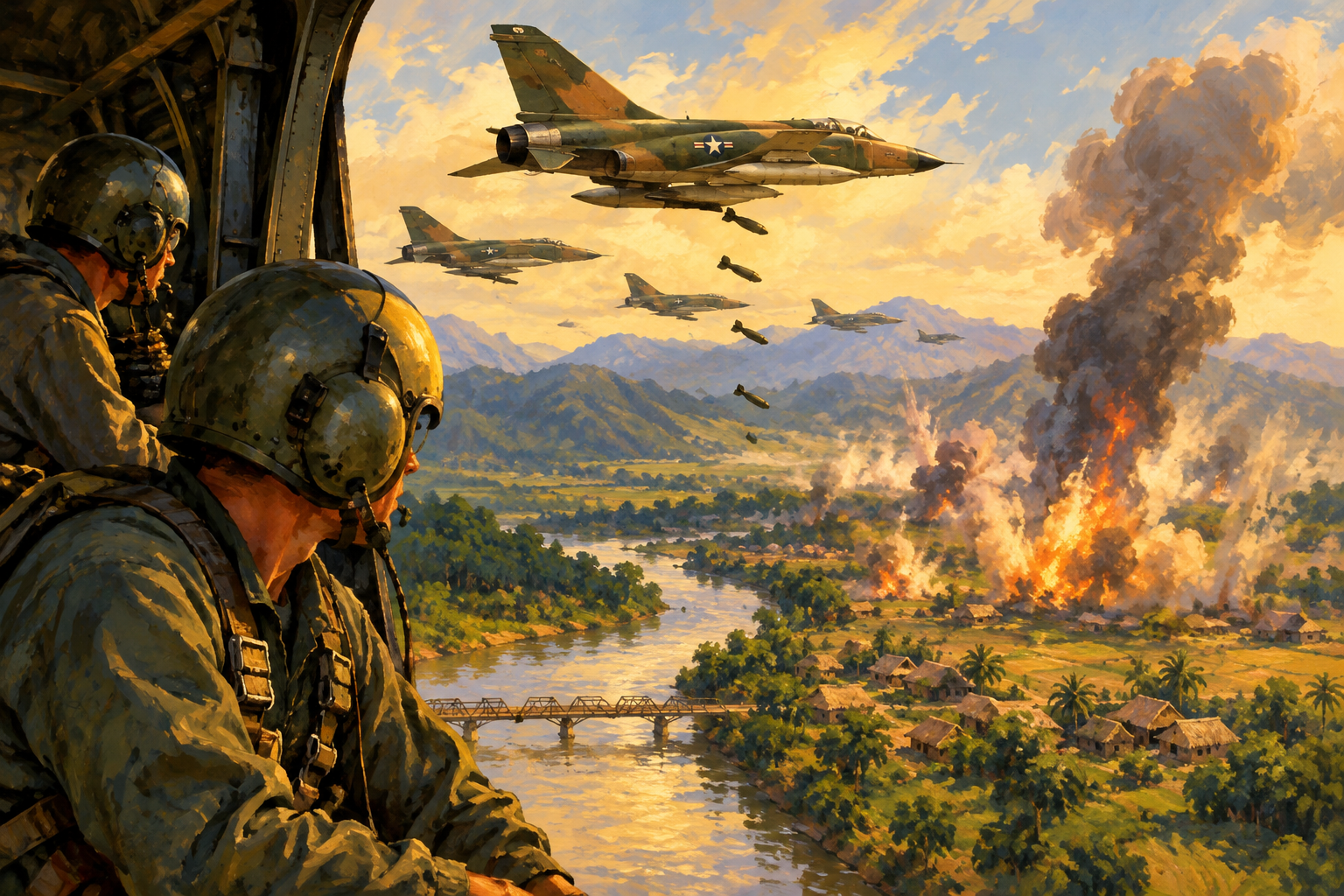
Okinawa’s location and large American military facilities made it an important base for the war. B-52 bombers flew missions against Vietnam from Kadena Air Base. Aircraft, personnel and supplies moving through the islands tied Okinawan communities to the fighting. The bombing itself is examined in the guide to the bombing of North Vietnam; the base system shows how operations could be sustained far from the battlefield.
For residents, a base was also a neighbor. Aircraft noise and the possibility of accidents affected everyday life. Many Okinawans objected to their land being used for military purposes, and demands for a return to Japanese administration were connected with hopes of reducing the base burden. Okinawan opinion was not uniform, but the wish to have a greater say over the islands’ future was a powerful political force.
In 1969 Prime Minister Satō Eisaku and President Richard Nixon agreed on reversion in 1972. On May 15, 1972, administrative control returned to Japan. Reversion changed the legal and political framework, but it did not remove the US military presence. American bases remained, now under the arrangements governing US forces in Japan. Reversion and the removal of bases were separate questions.
The Vietnam War boom
Wartime procurement meant orders for goods and services connected with American military operations. Japanese businesses supplied goods and carried out work such as repairing ships. These orders brought revenue and employment to firms and communities connected to the American military supply system. The Japanese term Betonamu tokuju, or Vietnam War special procurement, describes this demand.
A war-related order could pass through many hands. A ship needing repairs required a dock, materials and workers; the money paid for that work could reach a firm and its employees. Following such a chain helps explain why an overseas conflict appeared in local economic life. It also shows why the effects of war cannot be measured only by counting the soldiers a country sends abroad.
The word “boom” should be used carefully. A particular business might gain from a repair contract even while citizens elsewhere opposed the war. And although wartime orders supported parts of the economy, Japan’s high-growth era had several causes, including investment and exports. The Vietnam War boom was one connection between war and economic activity, not a complete explanation of Japanese prosperity.
It is also useful to distinguish orders from combat. A company providing a service could profit from a war without the Japanese government sending its own troops to fight. That separation made the ethical and political debate sharper: opponents asked whether economic gain and military support made Japan implicated in the conflict.
Anti-war protest and Beheiren
In 1965 writers and other citizens formed the group known as Beheiren, short for the Citizens’ League for Peace in Vietnam. The writer Oda Makoto was among its prominent participants. Its members organized demonstrations and meetings, and some activists helped American soldiers who had deserted. The movement gave people a way to oppose the war and question Japan’s relationship with it.
Beheiren was not the whole anti-war movement. Students, labor groups and many other citizens also protested, often with different political aims and methods. Nor did every Japanese person oppose the government’s position. Examining these differences makes the debate clearer than treating Japan as a single voice. The separate guide to Beheiren and Oda Makoto follows the citizens’ movement in greater detail.
Opposition did not erase the economic or strategic ties that kept the bases useful. It did, however, make those ties visible in public life. Marches and support for deserters asked citizens to consider how a war overseas depended on decisions and actions at home.
The same event could look very different from each position. A government official might emphasize the alliance, a business owner the value of an order, and a resident the daily effects of a nearby airfield. An activist might ask whether enabling a military operation was compatible with a demand for peace. These perspectives did not cancel one another; they describe different parts of the same relationship.
What exams ask
For Japanese history, connect three terms with three different kinds of relationship: Okinawa and US bases with military operations; Vietnam War special procurement with the economy; and Beheiren with citizens’ opposition. Then place Okinawa’s 1972 reversion in context: it restored Japanese administration, while US bases continued to exist.
A strong answer also distinguishes Japan’s support for the United States from direct participation by the Self-Defense Forces. Avoid treating special procurement as the sole cause of high economic growth or assuming that all Okinawans and all mainland residents held the same view. The relationship between the war and Japan was political, economic and social at once.
For an exam answer, start with the war’s escalation, then explain the channels through which it reached Japan. Use the return of administration in 1972 as a turning point, and finish by noting the continued presence of bases. This sequence connects dates to causes and consequences rather than leaving them as isolated facts.
Read next
Beheiren and Oda Makoto explores the people and methods behind Japan’s citizens’ anti-war movement.
The bombing of North Vietnam explains the air campaign that formed part of the wider war supported by the base network.
Việt and Đức follows a later human story that connected Vietnam and Japan.