Who was Ho Chi Minh? In five minutes
Ho Chi Minh was an organizer of Vietnamese independence and the founding leader of the Democratic Republic of Vietnam. Born in 1890 under French colonial rule, he spent years abroad, joined the international communist movement and helped build organizations seeking an end to colonial domination. In 1945 he declared Vietnam independent in Hanoi.
Independence did not settle who would govern the country or how. France fought to regain control, and the 1954 Geneva agreements temporarily divided Vietnam. Ho remained president in the north as another long war developed. He died in 1969, six years before the fighting ended in 1975. For the wider conflict, see the Vietnam War explained.
From colonial Vietnam to a revolutionary movement
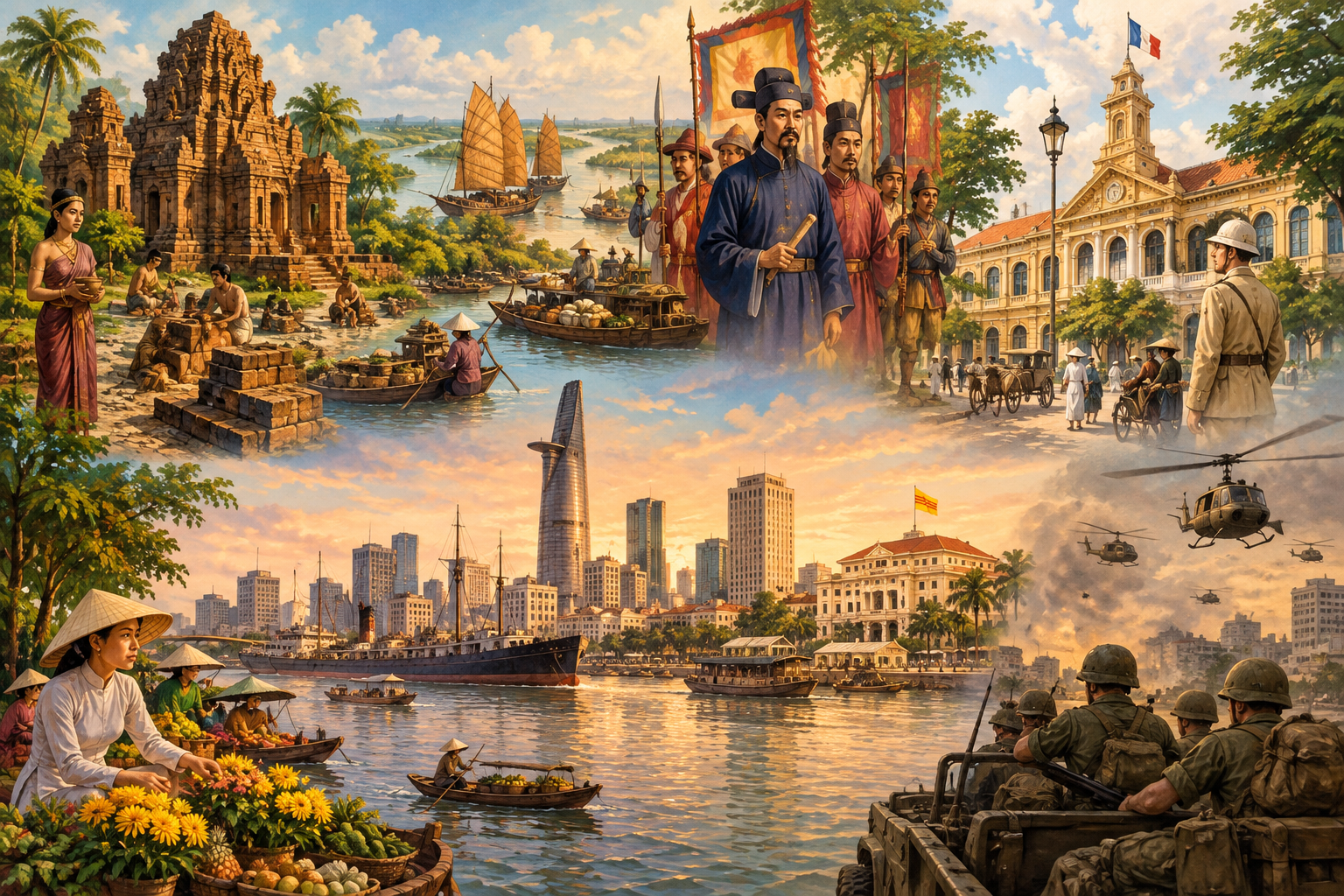
Ho was born Nguyễn Sinh Cung in central Vietnam. French authorities controlled Indochina, while Vietnamese people experienced colonial rule through taxes, economic demands and restricted political power. Ho left Vietnam as a young man and worked and traveled overseas. His time abroad exposed him to different political movements and to the gap between European claims about rights and colonial realities.
In France he used the name Nguyễn Ái Quốc and advocated rights for Vietnamese people. He became involved in communist politics and later worked with the Communist International. National independence and social revolution were linked in his thinking: he saw colonial rule as part of a wider system of exploitation, and he sought allies and an organization capable of challenging it.
In 1919, at the Paris peace conference, he sought recognition of rights for the people of French Indochina. His appeal did not win the changes he wanted. The episode helps explain why debates about self-determination after the First World War could inspire colonized peoples while leaving colonial rule intact. For Ho, organizing across borders became a way to connect Vietnamese demands to wider political movements.
Ho helped bring communist groups together in 1930. The movement faced imprisonment and repression, and he spent long periods outside Vietnam. His career was not a simple march from protest to power. It depended on networks, political organizing and changing international circumstances as well as his own leadership.
Independence in 1945 and war with France
Ho returned to Vietnam in 1941. The Viet Minh, a broad independence front led by communists, organized resistance in a country affected by French colonial rule and Japanese occupation during the Second World War. The famine of 1945 devastated northern Vietnam and added to the crisis of authority.
The Viet Minh was a front, not simply another name for the government that later ruled the north. Its appeal to independence helped it reach beyond a narrow group of communists. The distinction matters because a political coalition can include people with different reasons for joining, even when its leading organization has a clear ideology.
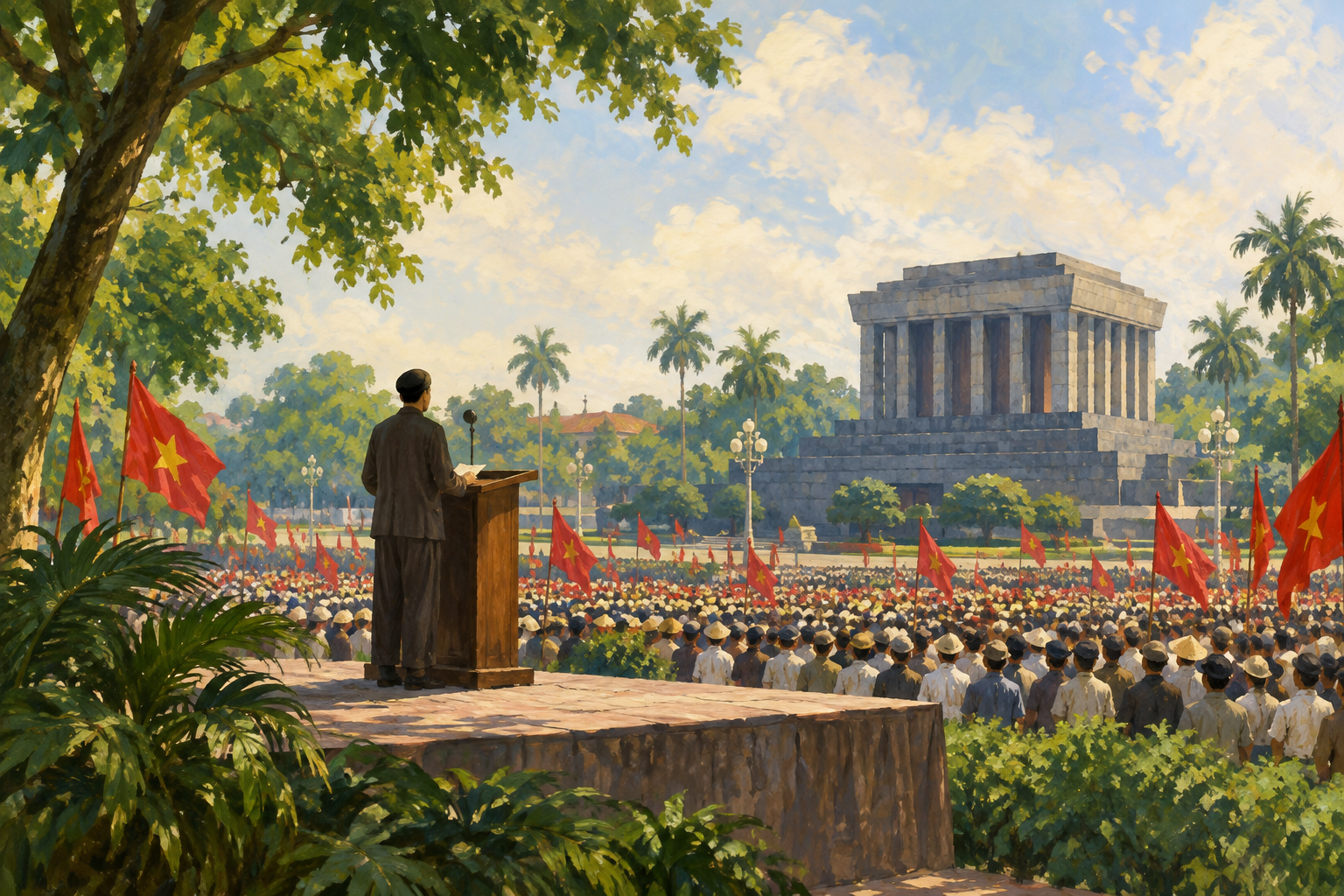
After Japan surrendered in August 1945, the Viet Minh moved to take power. On 2 September, Ho read a declaration of independence in Hanoi, announcing the Democratic Republic of Vietnam. The new government’s authority was fragile: other political forces, foreign troops and the returning French all shaped what happened next. The August Revolution explains how that opening became a struggle for control.
The declaration announced a claim to sovereignty; it did not automatically secure recognition or control over all of Vietnam. Foreign powers and rival Vietnamese groups had their own interests. The move from a public declaration to a functioning state therefore involved negotiation, competition and, ultimately, war.
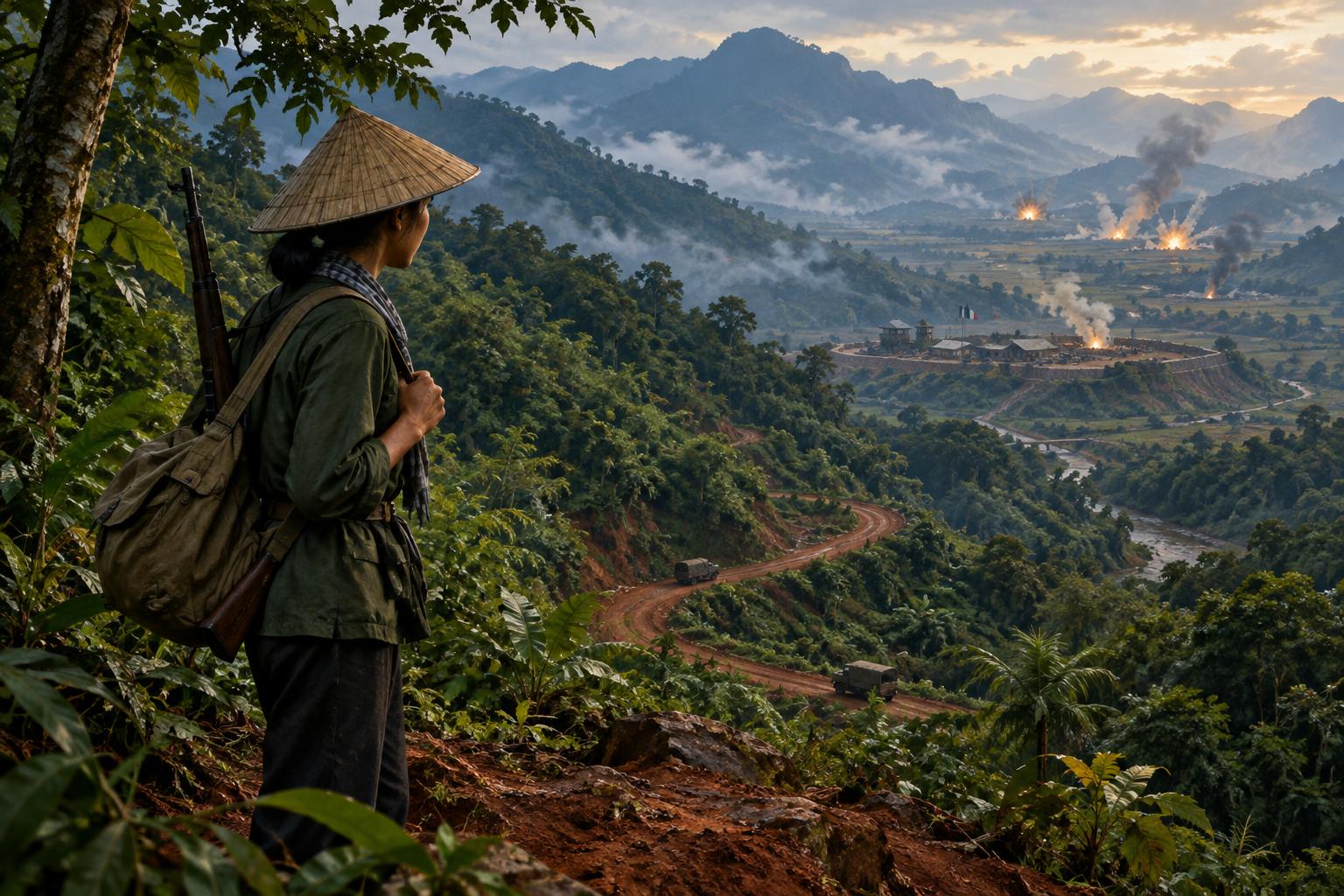
Talks with France failed to produce a lasting settlement, and full-scale war began in 1946. The Viet Minh fought French forces in the First Indochina War. In 1954 the French defeat at Dien Bien Phu preceded the Geneva agreements. Those agreements established a temporary military division near the 17th parallel and envisaged elections for reunification; nationwide elections did not take place. Read more about the First Indochina War.
The Geneva settlement ended the fighting with France but did not establish two permanent countries as its stated solution. Its military boundary was intended to be temporary. The absence of nationwide elections and the consolidation of rival governments turned a provisional arrangement into a lasting political and military confrontation.
President in the north and the Vietnam War
After 1954, Ho headed the Democratic Republic of Vietnam in the north. Its government pursued land reform, redistributing land while using coercive campaigns against people classified as landlords. Serious abuses, including executions and wrongful accusations, accompanied the campaign. The leadership later acknowledged errors and carried out a correction campaign. Independence from colonial rule and the consequences of one-party revolutionary government both belong in an account of his life.
In the south, a separate government emerged under Ngo Dinh Diem, supported by the United States. Conflict grew between that government and its opponents, including communist forces. North Vietnam supported the southern insurgency and later sent regular forces south; the United States expanded its military intervention. Vietnamese civilians suffered displacement, bombing and violence from the war.
Cold War alliances affected the resources and choices available to each side, but Vietnamese leaders and communities were not simply passive pieces in a contest between larger powers. Their own goals, disagreements and experiences of colonialism shaped the conflict. At the same time, outside support helped prolong and widen the fighting.
Ho was an important public symbol of the northern cause, but he did not make every decision alone. Communist Party leaders and military commanders shared power, and his direct role changed over time. He died in Hanoi on 2 September 1969. The war continued after his death: communist forces took Saigon in April 1975, and Vietnam was formally reunified in 1976.
The mausoleum, the city and his legacy
Ho Chi Minh’s mausoleum stands in Hanoi’s Ba Dinh Square, where he declared independence. His preserved body is displayed there. He had asked to be cremated, but the leadership chose preservation and a mausoleum. It is a place of state commemoration as well as a reminder that public memory can differ from a person’s own wishes.
Commemoration can also simplify a complicated life. The mausoleum presents a national symbol in a public setting, while the historical record includes both anti-colonial mobilization and the actions of the state that Ho led. Visitors and students can distinguish the purpose of a memorial from the task of examining evidence about a government and its opponents.
Saigon was renamed Ho Chi Minh City after the war. The city and the person are related by that later act of commemoration, but they are not the same subject. For the city’s longer history, see Saigon and southern Vietnam.
Many Vietnamese remember Ho as a leader of independence and national unity. Others emphasize political repression, the damage of land reform and the costs of war. These perspectives address different parts of the same history. Understanding him means following both the anti-colonial movement he helped lead and the government and conflicts that followed.
What exams ask
For world history, connect a person to a sequence: French colonial Indochina, the Viet Minh and the 1945 declaration, war with France, the 1954 division and the later Vietnam War. Do not place reunification in 1945 or during Ho’s lifetime. A useful AP-style question asks how decolonization and the Cold War overlapped: Vietnamese independence was a local political struggle, while France, the United States, China and the Soviet Union also influenced its course.
Read next
The Viet Minh and the August Revolution follows the movement’s seizure of power in 1945.
The First Indochina War explains the fight with France and the 1954 settlement.
Saigon and Southern Vietnam puts the renamed city in its longer regional setting.