In five minutes
The Russian Empire lasted from 1721 to 1917, and the Romanov dynasty ruled it the whole time. It began when Peter the Great, fresh from defeating Sweden, took the title of emperor. It ended when Nicholas II gave up the throne in March 1917, in the middle of the First World War. In between, Russia beat Napoleon, pushed its borders to the Black Sea, the Caucasus, Central Asia and the Pacific, and became one of Europe's great powers.
Yet it stayed an autocracy resting on serfdom long after its rivals had changed. A modern army and court sat on top of a vast, poor peasant society. That gap runs through the whole story: each defeat forced a burst of reform, and each reform raised hopes the tsars would not meet. This hub is part of our World History 1700–1918 guide and gives you the big picture before the pages on single events.
A note on dates. Russia used the old Julian calendar until 1918, which ran 12 days behind western Europe in the nineteenth century and 13 in the twentieth. That is why the “February Revolution” of 1917 happened in March by the western calendar. This page uses western dates unless it says otherwise.
How the Romanov dynasty built an empire
The Romanovs came to power in 1613, when an assembly chose the young Mikhail Romanov as tsar after the chaos known as the Time of Troubles. Their Muscovy was huge but boxed in. Sweden held the Baltic coast, and the Ottoman Empire and its Crimean Tatar allies held the Black Sea. Russia had almost no ports that stayed free of ice, a tiny navy and an army that lagged behind Europe's.
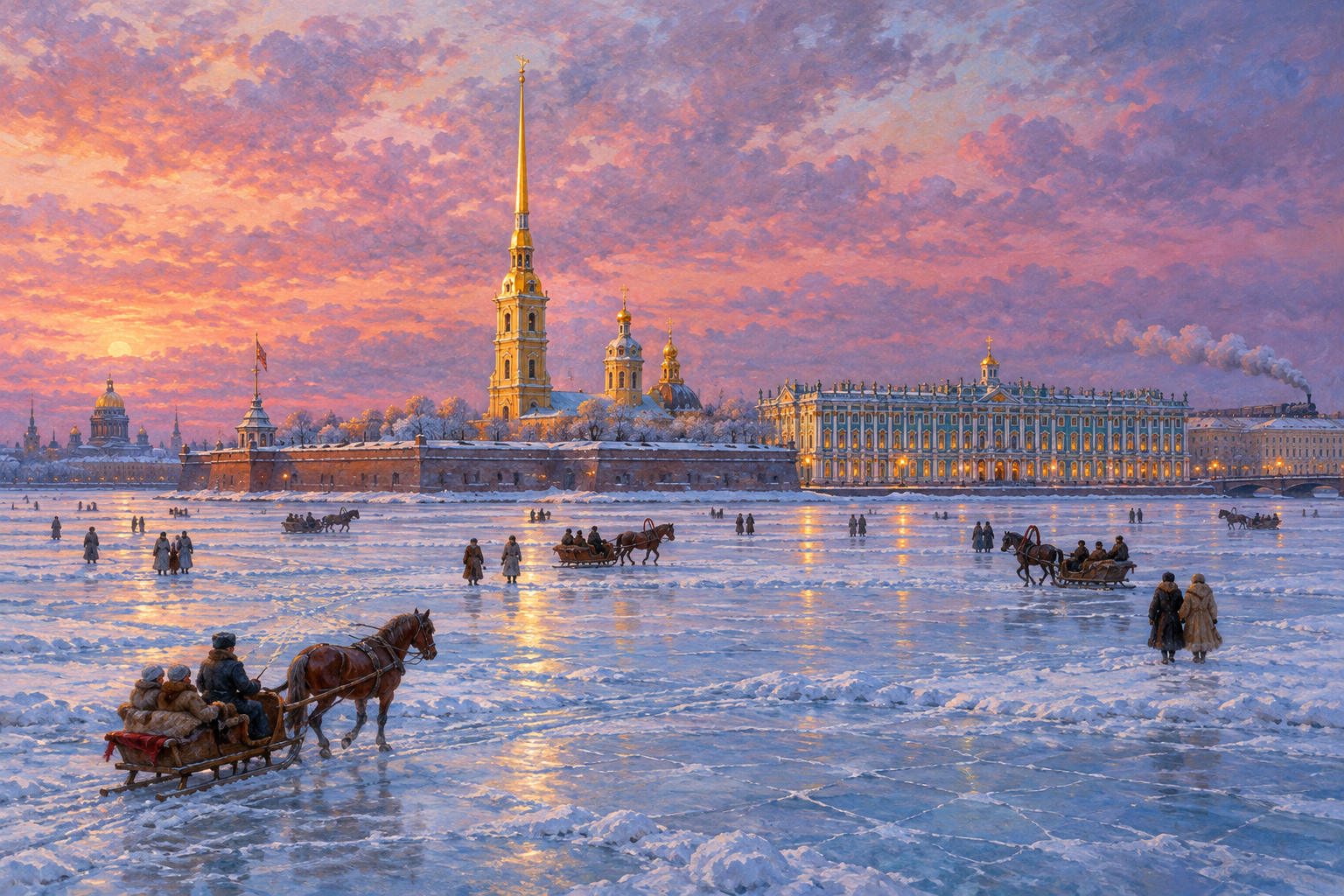
Peter I (reigned 1682–1725) set out to change that. In 1697–1698 he toured western Europe with his Grand Embassy, studying shipyards and workshops. Back home he rebuilt the army on western lines, founded a navy and in 1703 began a new city, St Petersburg, on marshland taken from Sweden. His victory at Poltava in 1709 broke Swedish power, and the Treaty of Nystad in 1721 gave Russia the Baltic coast from Vyborg to Riga. The Senate then named him emperor.
Peter also remade the state. The Table of Ranks of 1722 tied noble status to service in the army or the bureaucracy, and a poll tax on every male peasant paid for the wars. The price was heavy. Forced labour built St Petersburg, and peasants were bound more tightly to their lords than before. Russia now looked west at the top while serfdom hardened at the bottom.
Empresses, coups and expansion (1725–1801)
After Peter died, the guards regiments in the capital made and unmade rulers. Four women held the throne for most of the century, the longest-serving being Elizabeth (1741–1762) and Catherine II (1762–1796). Catherine, a German princess, took power in 1762 in a coup against her own husband, Peter III.
Catherine the Great wrote to Voltaire and talked of Enlightenment law, but she gave nobles even more power over their serfs. In 1773–1775 the Cossack Yemelyan Pugachev led one of the largest peasant revolts in Russian history before the army crushed it. Abroad she was strikingly successful. Wars with the Ottomans won the northern coast of the Black Sea, Crimea was annexed in 1783 and the port of Odessa was founded in 1794. With Prussia and Austria she divided Poland in three partitions (1772, 1793 and 1795) until it vanished from the map.
1812 and the “gendarme of Europe” (1801–1855)
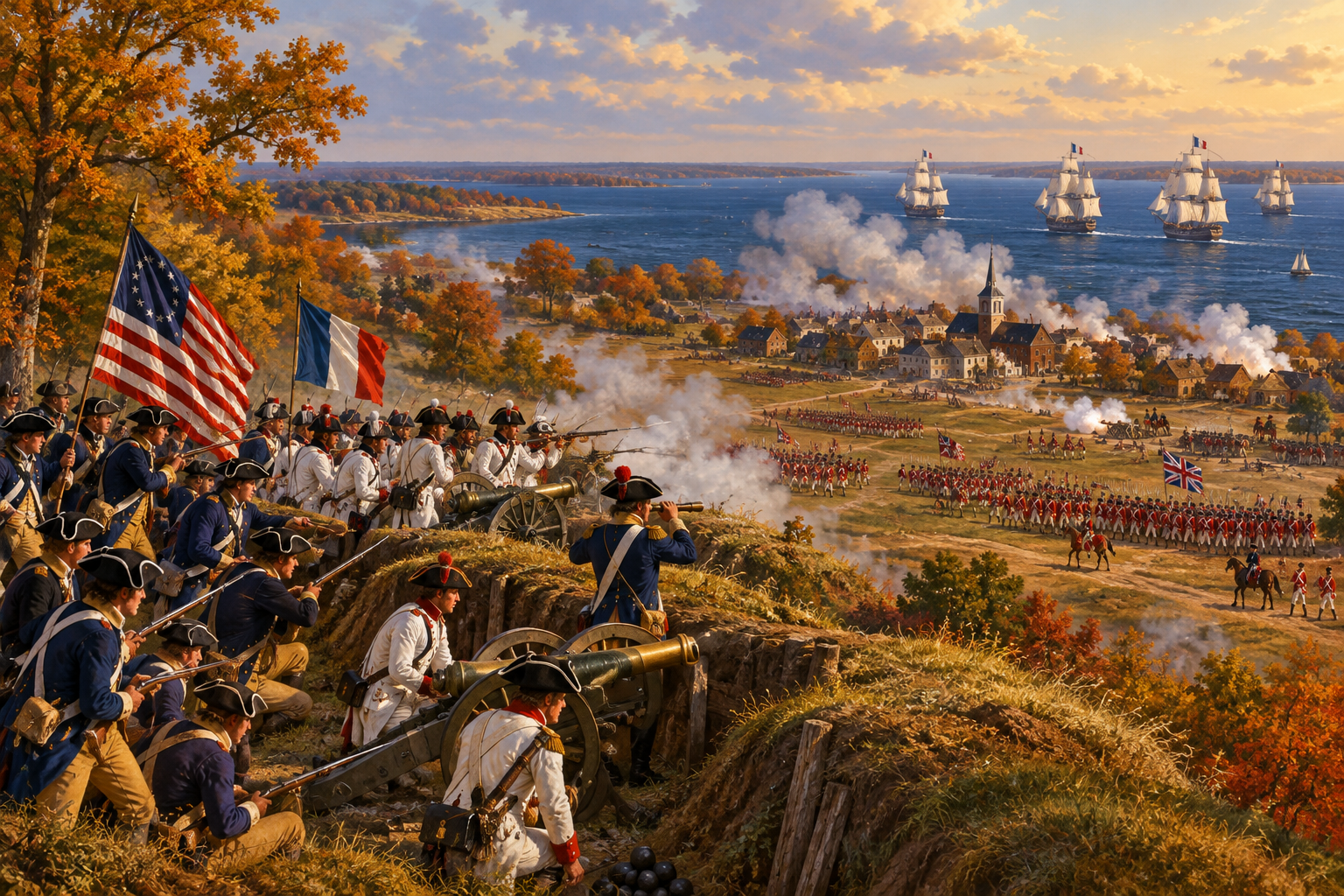
Alexander I (1801–1825) faced Napoleon's invasion in June 1812. The Russians fell back, fought the bloody battle of Borodino in September and abandoned Moscow, which burned. With no peace offer and winter coming, the French retreated, and cold, hunger and Cossack raids destroyed most of their army. In 1814 Russian troops marched into Paris. At the Congress of Vienna Russia gained most of Poland, having already taken Finland from Sweden in 1809, and Alexander launched the Holy Alliance of monarchs.
Young officers who had seen Europe came home wanting a constitution. When Alexander died in December 1825, some of them led troops onto Senate Square in St Petersburg. The Decembrist revolt was crushed in a day, and its leaders were hanged or sent to Siberia. The new tsar, Nicholas I (1825–1855), answered with secret police and censorship. He crushed a Polish rising in 1830–1831 and sent troops to help Austria defeat the Hungarian revolution in 1849, which earned him the nickname “gendarme of Europe”. That same year the young writer Fyodor Dostoevsky was arrested for joining a discussion circle, faced a mock execution and was sent to a Siberian prison camp.
The Crimean War and the Great Reforms (1853–1881)
Russia's push south toward warm-water ports and the weakening Ottoman Empire, often called its southward policy, led to the Crimean War (1853–1856). Britain, France and the Ottomans, later joined by Sardinia, besieged the naval base of Sevastopol for almost a year. Russia lost. It had no railway to the south, its rifles were outdated and its serf army could not match industrial powers. The Treaty of Paris in 1856 banned Russian warships from the Black Sea.
Defeat convinced Alexander II (1855–1881) that Russia had to change from above before it broke from below. His Emancipation Manifesto of 1861 freed more than 20 million privately owned serfs. Freedom came with strings: peasants paid for their land over 49 years, often got less than they had farmed, and stayed tied to the village commune, the mir. More reforms followed: elected local councils called zemstvos and independent courts with juries in 1864, and universal military service in 1874.
The empire kept growing. Treaties with China in 1858 and 1860 gave Russia the Amur region and the coast where Vladivostok was founded. Russian armies took Tashkent in 1865 and conquered the khanates of Central Asia. In 1867 Russia sold Alaska to the United States for 7.2 million dollars. A war with the Ottomans in 1877–1878 freed much of the Balkans, but the Congress of Berlin cut back Russia's gains.
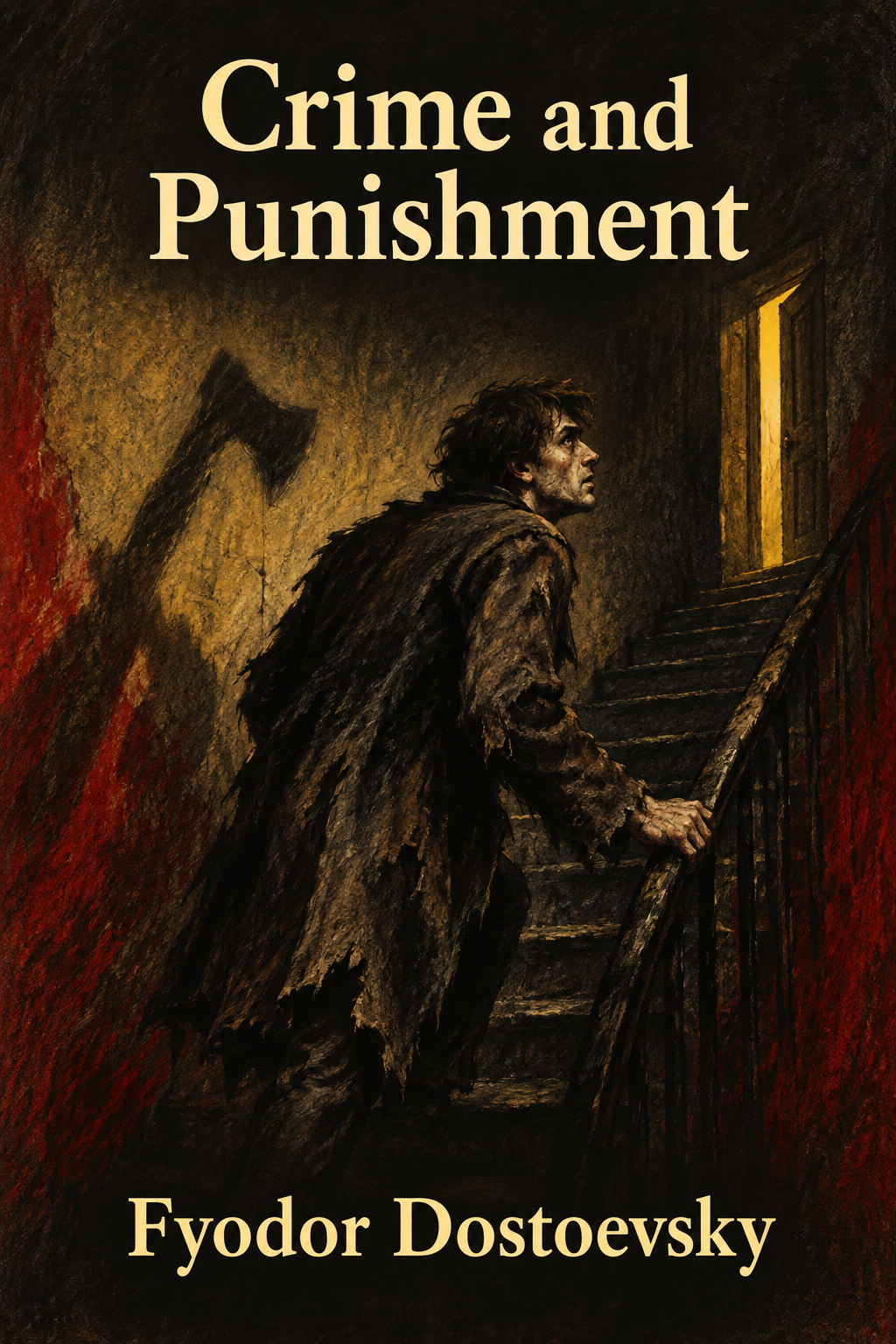
The reforms raised hopes they did not satisfy. In 1874 students “went to the people” to stir the peasants and were arrested in large numbers. A terrorist group, People's Will, then hunted the tsar himself, and in March 1881 a bomb killed Alexander II in St Petersburg. The restless, poor and idea-filled city of these years is the setting of Crime and Punishment (1866).
Industry, repression and the 1905 revolution
Alexander III (1881–1894) rolled reforms back. He strengthened the police, pressed Poles and other peoples to adopt Russian language and culture, and tightened laws against Jews after a wave of pogroms. At the same time the state drove fast industrialisation. Finance minister Sergei Witte attracted foreign loans, especially from France, put the rouble on the gold standard in 1897 and pushed the Trans-Siberian Railway, begun in 1891. Factories grew in St Petersburg and Moscow, and with them a working class. Marxists founded the Russian Social Democratic Labour Party in 1898; in 1903 it split into Lenin's Bolsheviks and the Mensheviks.
Nicholas II (1894–1917) believed firmly in autocracy. Expansion into Manchuria brought war with Japan in 1904. Russia lost Port Arthur, the battle of Mukden and, at Tsushima in May 1905, the fleet it had sailed halfway round the world. At home, on “Bloody Sunday” in January 1905, troops fired on a peaceful march of workers led by the priest Georgy Gapon. Strikes, peasant risings, the mutiny on the battleship Potemkin and the first workers' councils, or soviets, followed. Nicholas made peace with Japan at Portsmouth in September 1905, then gave way at home with the October Manifesto, which promised civil rights and an elected parliament, the Duma.
The concessions were partial. The Fundamental Laws of 1906 kept the emperor's control of ministers and the army, and he dissolved the first two Dumas. Prime minister Pyotr Stolypin hanged rebels but also let peasants leave the commune and own private farms. He was shot dead in Kiev in 1911, long before his land reform could remake the countryside.
War and collapse (1914–1917)
Allied to France since 1894 and linked to Britain from 1907 in the Triple Entente, Russia entered the First World War in August 1914 to back Serbia. Within weeks its army suffered a crushing defeat at Tannenberg, and over the next two years millions of soldiers were killed, wounded or captured. In 1915 Nicholas took personal command at the front, leaving the capital to the empress Alexandra and her favourite, the holy man Grigori Rasputin, until nobles murdered him in December 1916.
By early 1917 Petrograd, St Petersburg's wartime name, was short of bread and fuel. Strikes and a women's march grew into a citywide uprising, and the garrison joined the crowds. Nicholas abdicated on 15 March 1917. His brother Michael refused the crown, and three centuries of Romanov rule were over. A Provisional Government shared power with the Petrograd Soviet, kept fighting the war and lost support. In November 1917 (October by the old calendar) the Bolsheviks seized power. In July 1918 Nicholas, his wife and their five children were shot in Yekaterinburg.
Why did the empire fall? Three causes worked together. The tsars refused to share power, so moderate reformers had nowhere to go. Peasants wanted land and workers wanted rights, and neither got enough. And total war broke a state that was already under strain.
What exams ask
- Key dates: 1721 empire proclaimed; 1812 Napoleon's invasion; 1825 Decembrist revolt; 1853–1856 Crimean War; 1861 emancipation of the serfs; 1905 revolution; 1917 fall of the monarchy.
- Defensive modernisation: AP questions often compare Russia's reforms from above with Meiji Japan and the Ottoman Tanzimat. All three borrowed western armies and technology to survive, with different political results.
- Emancipation compared: Russia freed its serfs in 1861, two years before Lincoln's Emancipation Proclamation, and in both cases the freed people stayed poor and short of land.
- Causes of 1917: separate long-term causes (autocracy, land hunger, uneven industrialisation) from the short-term trigger (the First World War).
Read next
- World History 1700–1918: Revolutions, Industry, Empire and War: the era hub that places Russia beside the other great powers.
- 19th-Century America: Expansion, Civil War and the Gilded Age: another continental power that ended unfree labour in the 1860s and bought Alaska from Russia.
- Latin American Independence (1791–1826): how the same Napoleonic wars that Russia won broke Spain's empire apart.
- Crime and Punishment: Dostoevsky's novel of poverty and dangerous ideas in reform-era St Petersburg.