In five minutes: the Monroe Doctrine
The Monroe Doctrine is the United States' declaration, made in 1823, that the Americas were no longer open to new European colonies, and that the United States would not meddle in Europe's quarrels. President James Monroe announced it in his annual message to Congress on 2 December 1823. Much of the thinking behind it came from his Secretary of State, John Quincy Adams. For the wider story of the country in this period, see our hub, 19th-Century America: Expansion, Civil War and the Gilded Age.
The message rested on three ideas:
- Separate spheres. Europe and the Americas had different political systems, and each should keep out of the other's business.
- No new colonies. The American continents were “not to be considered as subjects for future colonization by any European powers.”
- Existing colonies left alone. The United States would not interfere with European colonies that already existed, such as Cuba or Canada.
In 1823 the United States was a young country with a small navy. The statement was a warning that the country could not yet enforce alone. What gave it teeth at first was that Britain wanted much the same result and had the fleet to back it.
Why Monroe spoke: the world in 1823
Between about 1810 and the mid-1820s, Spain's colonies in the Americas fought for independence. Argentina, Chile, Colombia, Mexico and Peru all broke away. The United States recognized several of the new republics in 1822, partly out of sympathy and partly because it wanted their trade.
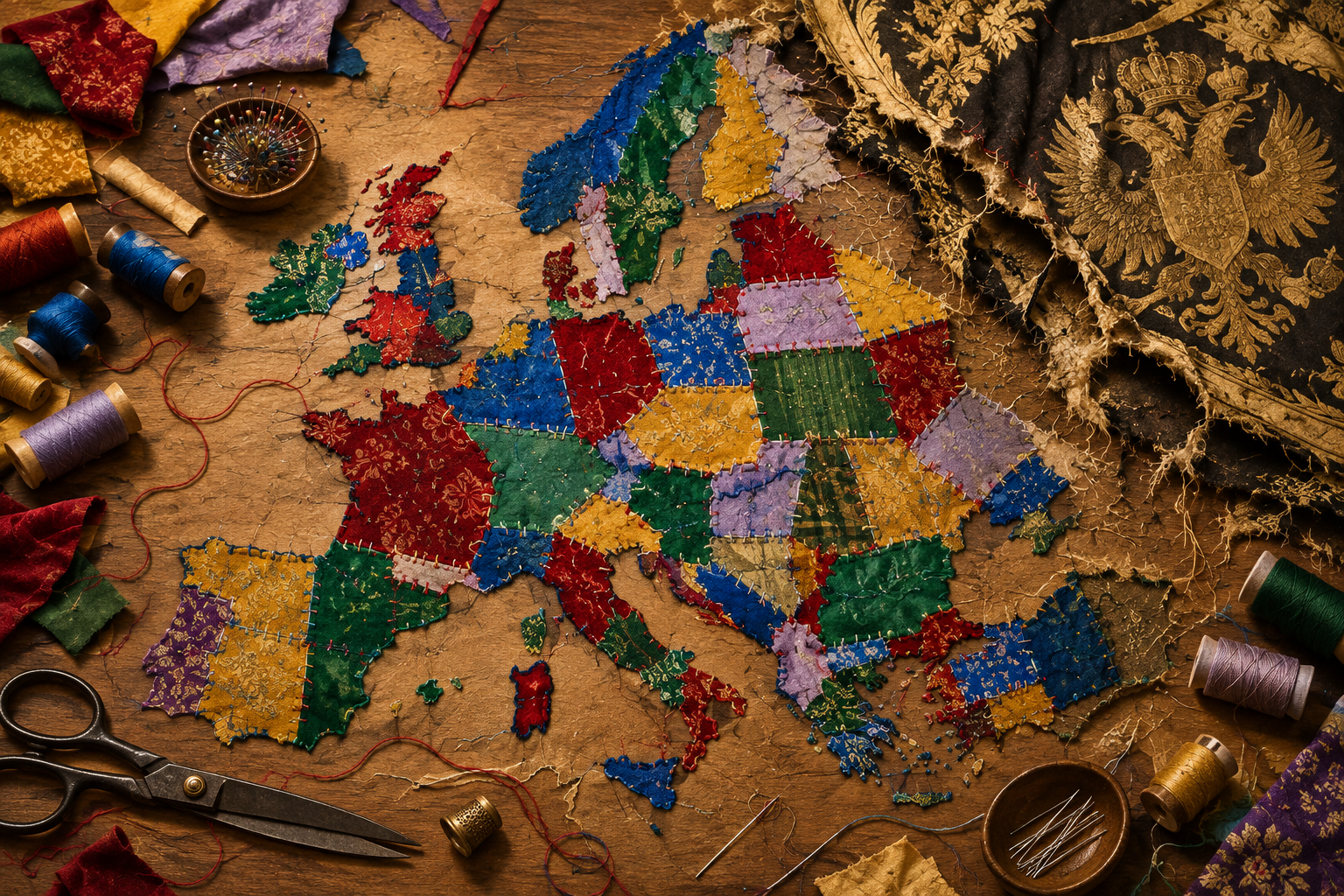
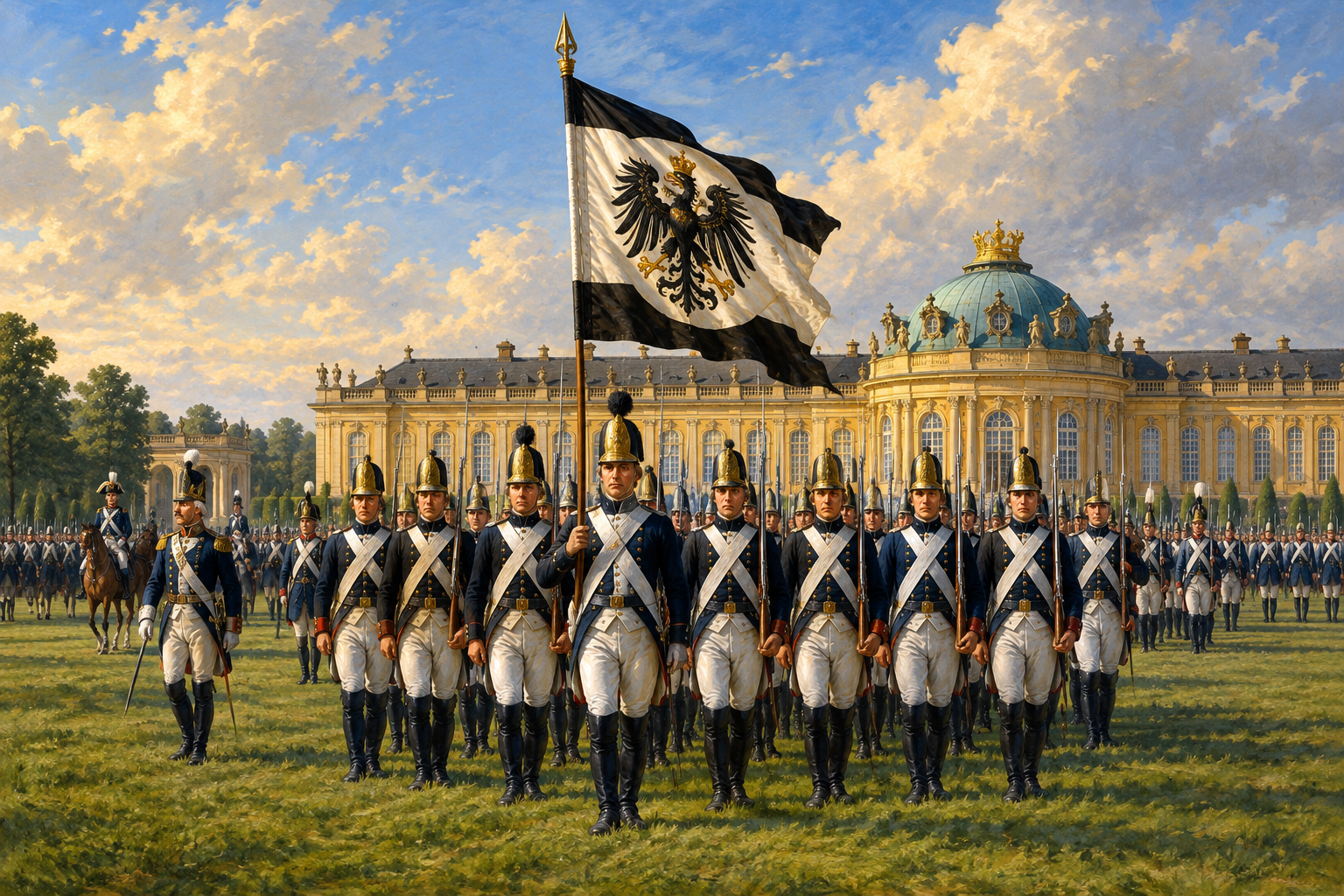
Europe was moving the other way. After the defeat of Napoleon, the conservative monarchies of Russia, Austria and Prussia, joined in the Holy Alliance, had worked to defend kings against revolution. In April 1823 a French army crossed into Spain and, with the backing of those powers, restored King Ferdinand VII to absolute power. Americans asked an obvious question: would France or the Holy Alliance next help Spain win back its colonies?
A second worry lay in the northwest. In 1821 Russia had claimed the Pacific coast of North America down to latitude 51°N and tried to close the waters nearby to foreign ships. Adams objected strongly, and his protests to the Russian minister in the summer of 1823 contained the seed of the non-colonization principle.
The United States had also just grown more secure. Under the Adams–Onís Treaty, signed in 1819 and in force from 1821, Spain handed over Florida and the two countries settled a boundary running to the Pacific. With its southern border calmer, Washington could look outward.
Britain's offer and Adams's answer
In August 1823 the British foreign secretary, George Canning, suggested to the American minister in London, Richard Rush, that the two countries issue a joint statement opposing European intervention in Latin America. Britain had no wish to see Spain or France regain control of markets it had begun to trade in freely.
Monroe took the offer seriously and asked former presidents Thomas Jefferson and James Madison for advice. Both leaned toward cooperating with Britain. Adams disagreed. He argued that the United States should speak in its own name rather than appear, in his famous image, like a small boat trailing in the wake of a British warship. A joint declaration might also tie American hands, for example by promising never to annex Cuba or Texas.
Events helped settle the matter. In October 1823 Canning obtained a statement from the French ambassador in London, Prince Polignac, that France did not intend to use force against Spain's former colonies. The immediate danger had eased, yet Monroe and Adams still chose to state the American position publicly.
What the Monroe Doctrine said
The principles appear in several passages of Monroe's long message, not in one tidy paragraph. They can be summed up as follows:
- Non-colonization. Because the American nations were free and independent, they were no longer open to colonization by European powers.
- Non-intervention by Europe. Any attempt by European powers to extend their political system to any part of the hemisphere would be seen as dangerous to the peace and safety of the United States.
- Non-intervention by the United States. The United States had not interfered with existing European colonies and would not interfere in Europe's own wars and internal affairs.
Notice what the message did not do. It created no alliance with Latin America and made no promise of troops. It did not give the United States the right to police the region. Those later meanings were added by presidents who found the Doctrine useful.
What happened next
The immediate reaction was mixed. Many Latin American leaders welcomed the words but knew that British sea power, not American promises, protected them. European governments mostly ignored the speech or disliked its tone. In 1824 the United States and Russia signed a treaty fixing Russia's southern limit in Alaska at 54°40′N, which ended the Russian claim farther south.
For some twenty years the Doctrine was rarely mentioned. The name “Monroe Doctrine” itself came into common use only later, in the mid-nineteenth century. President James K. Polk revived it in 1845, citing it against European interference in Texas and Oregon as the country expanded west.
A real test came in the 1860s. While the United States was absorbed in the Civil War, France under Napoleon III installed Archduke Maximilian of Austria as emperor of Mexico. After the war ended in 1865, Washington pressed France to leave and sent forces to the border. French troops withdrew in 1867, and Mexican republicans captured and executed Maximilian that year. The Doctrine got credit, though Mexican resistance did most of the work.
From shield to police power
As American power grew, the meaning of the Doctrine changed. In 1895, during a boundary dispute between Venezuela and British Guiana, Secretary of State Richard Olney declared that the United States was “practically sovereign” on the continent and that its fiat was law there. Britain accepted arbitration.
In December 1904 President Theodore Roosevelt added what is now called the Roosevelt Corollary. If a Latin American country showed “chronic wrongdoing” or could not pay its debts, he said, the United States might act as an international police power so that European governments would have no excuse to step in. Over the following decades US forces and financial agents intervened in places such as the Dominican Republic, Haiti and Nicaragua.
Many Latin Americans came to see the Doctrine as a cover for US dominance. The United States retreated from the Corollary in the 1930s with the Good Neighbor Policy. During the Cold War, officials invoked the Doctrine's spirit against Soviet influence in Cuba. In 2013 Secretary of State John Kerry said that the era of the Monroe Doctrine was over, though debates about outside powers in the hemisphere continue.
What exams ask
- Context. Explain how Latin American independence movements and the conservative European monarchies shaped Monroe's message.
- Content. Name the main principles: separate spheres, non-colonization and non-intervention.
- People. Monroe delivered it; John Quincy Adams shaped it; Canning proposed a joint statement.
- Enforcement. A common point to make is that Britain's navy, not US power, protected the Doctrine at first.
- Change over time. Be ready to compare the original defensive message with the Roosevelt Corollary of 1904, and to argue whether the Doctrine protected Latin America or justified US control.
- Isolationism. Link the pledge to stay out of Europe to the broader American tradition of avoiding European entanglements.
Read next
- The Monroe Doctrine Political Cartoon Explained: see how artists later pictured the Doctrine, including Roosevelt's “big stick” era, and how to read such a source.
- The Lewis and Clark Expedition: the early push westward that helped create the confident, expanding country behind the Doctrine.
- Who Was Abraham Lincoln?: the president whose Civil War years gave France its chance in Mexico.