In five minutes
Marxism is a body of ideas about history, economics and politics, developed by Karl Marx and Friedrich Engels in the middle of the 1800s. Its central claim is that the way a society produces and shares wealth shapes its laws, its politics and even its beliefs, and that capitalism, like the systems before it, produces the conflicts that will eventually change it.
The conflict is between two classes. The bourgeoisie own the factories, land and money. The proletariat own nothing but their ability to work, so they sell it for a wage. Marx argued that this arrangement lets owners keep part of what workers produce, and that workers, once organised, could take control of production and end class divisions altogether.
Marxism is both a method for analysing society and a political programme. It is also not one fixed doctrine. Lenin, Mao, European social democrats and Western university scholars all called themselves Marxists and disagreed sharply. This page covers the original ideas, how they spread and how historians judge them. It belongs to our series Ideas That Shaped the 19th Century.
Where Marxism came from
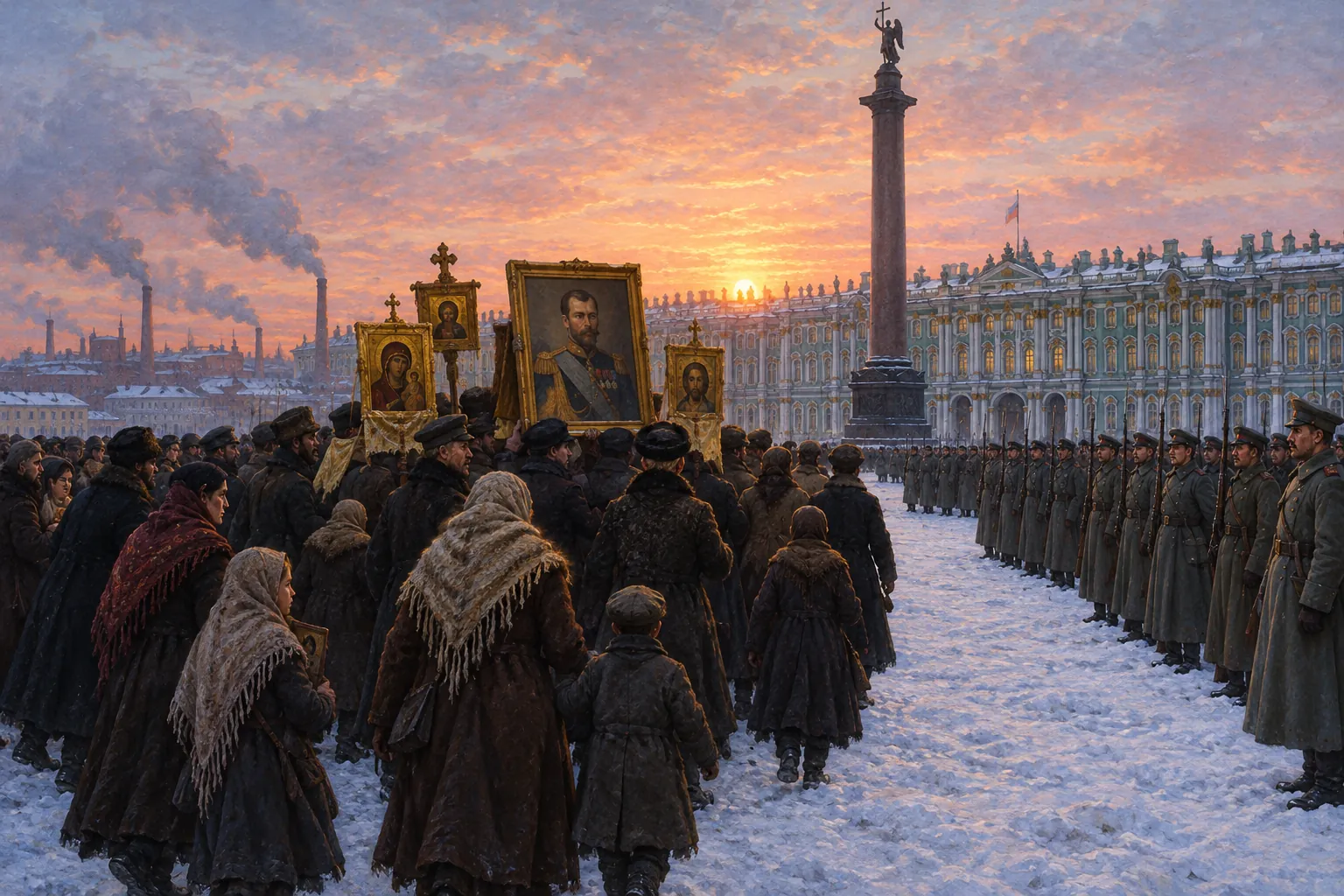
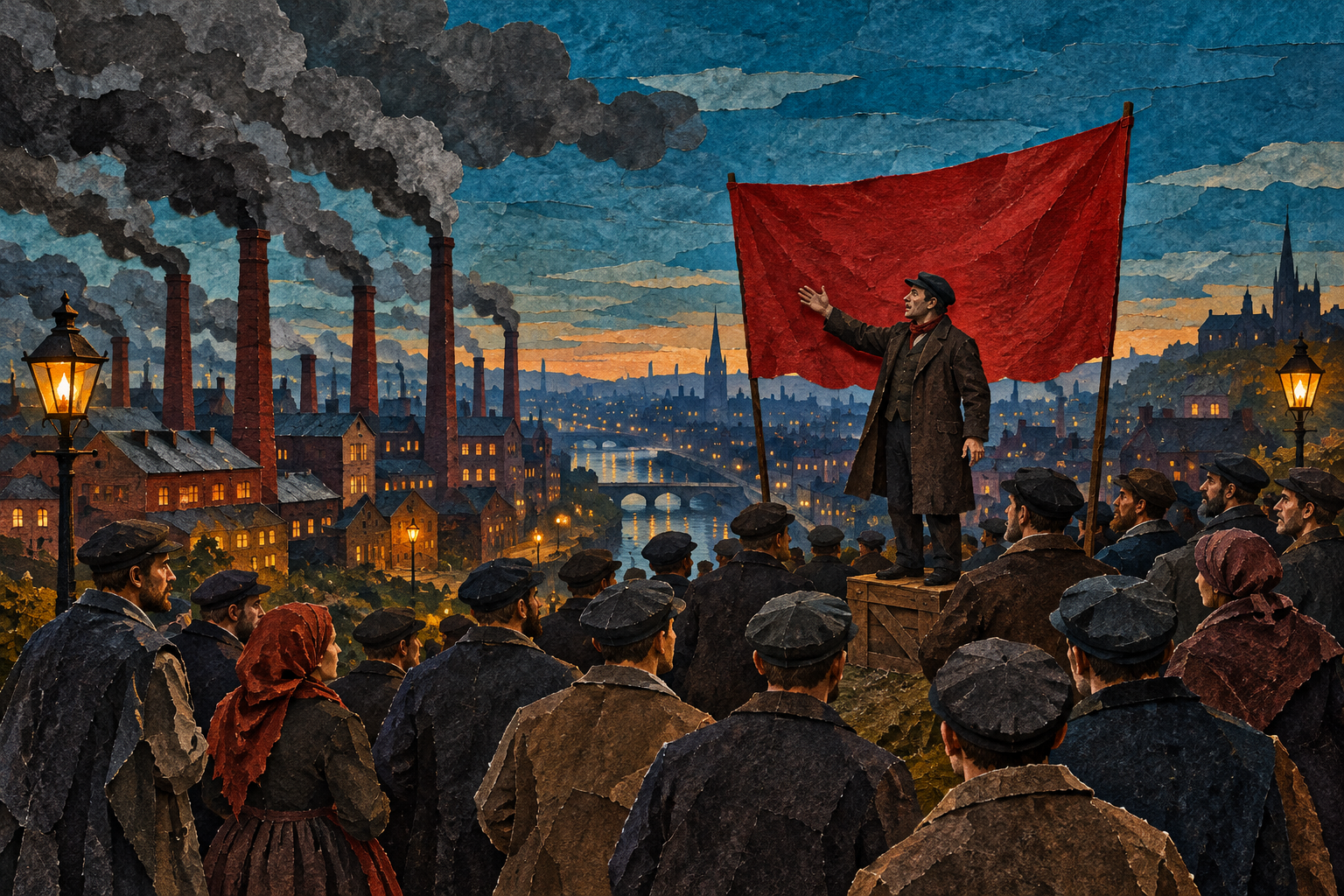
The industrial revolution began in Britain in the late 1700s and spread across Europe in the first half of the 1800s. Factories multiplied and output soared, but many people who moved from the countryside to the new cities faced long hours, low pay and crowded, unhealthy housing. Children and women worked in mills and mines. In 1845 Engels published The Condition of the Working Class in England, a study based on what he saw in Manchester, where his family had business interests.
Politics added to the pressure. The French Revolution of 1789 had promised liberty and equality, yet it was mostly property-owning citizens who gained power. By the 1830s and 1840s, thinkers across Europe were asking how ordinary workers could share in the new wealth. Saint-Simon, Fourier and Robert Owen sketched ideal communities. Marx and Engels later labelled them utopian socialists, because they described a better world without showing which social force could build it.
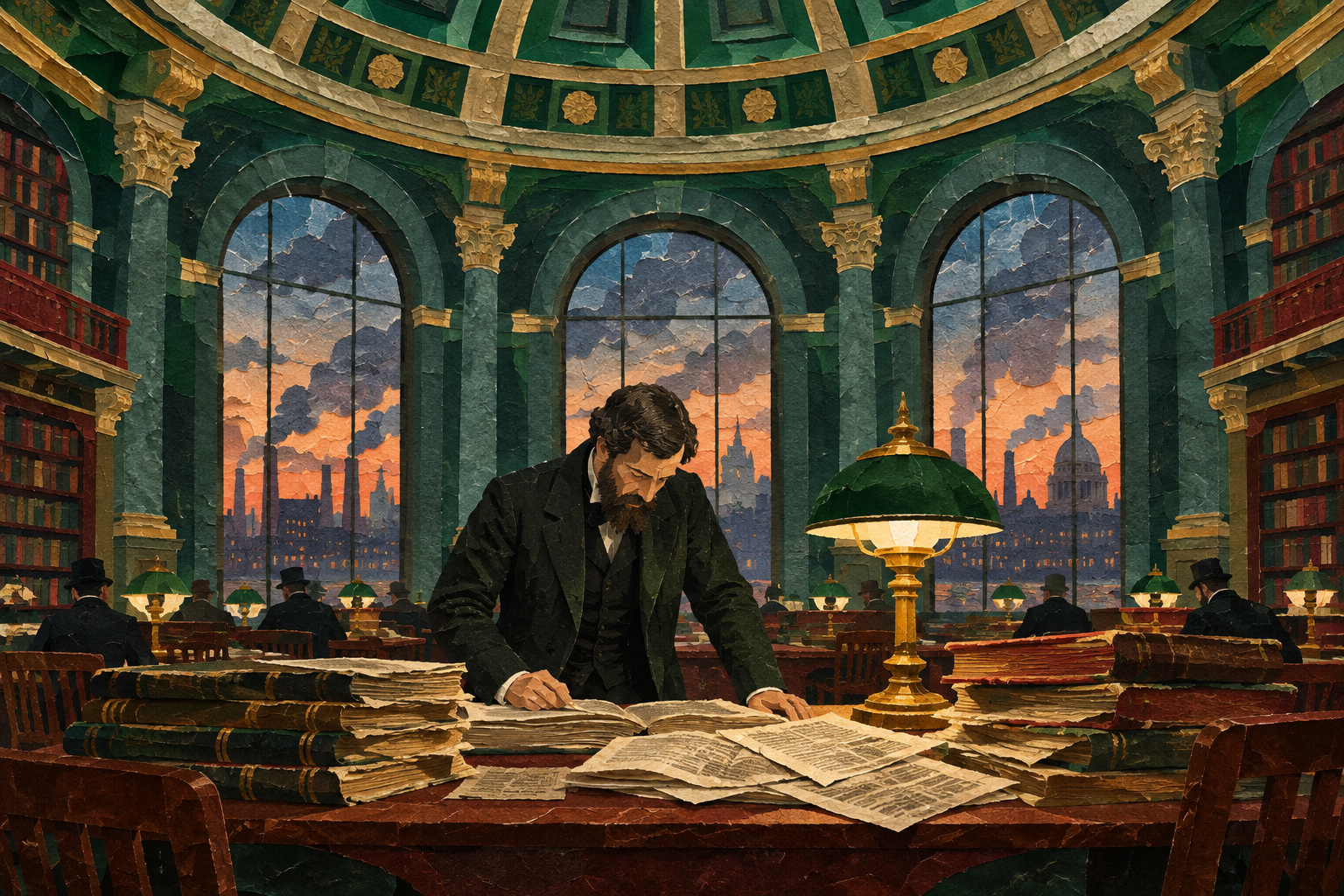
Marx himself drew on three traditions: German philosophy, especially Hegel's idea that history moves through conflict; British political economy, especially Adam Smith and David Ricardo; and French socialist thought. Born in Trier in 1818, he worked as a newspaper editor, was forced out of Germany for criticising the authorities, and lived in Paris, Brussels and finally London. He met Engels in Paris in 1844, and the two worked together for the rest of Marx's life. For his story, see Who Was Karl Marx?
The core ideas
Class struggle
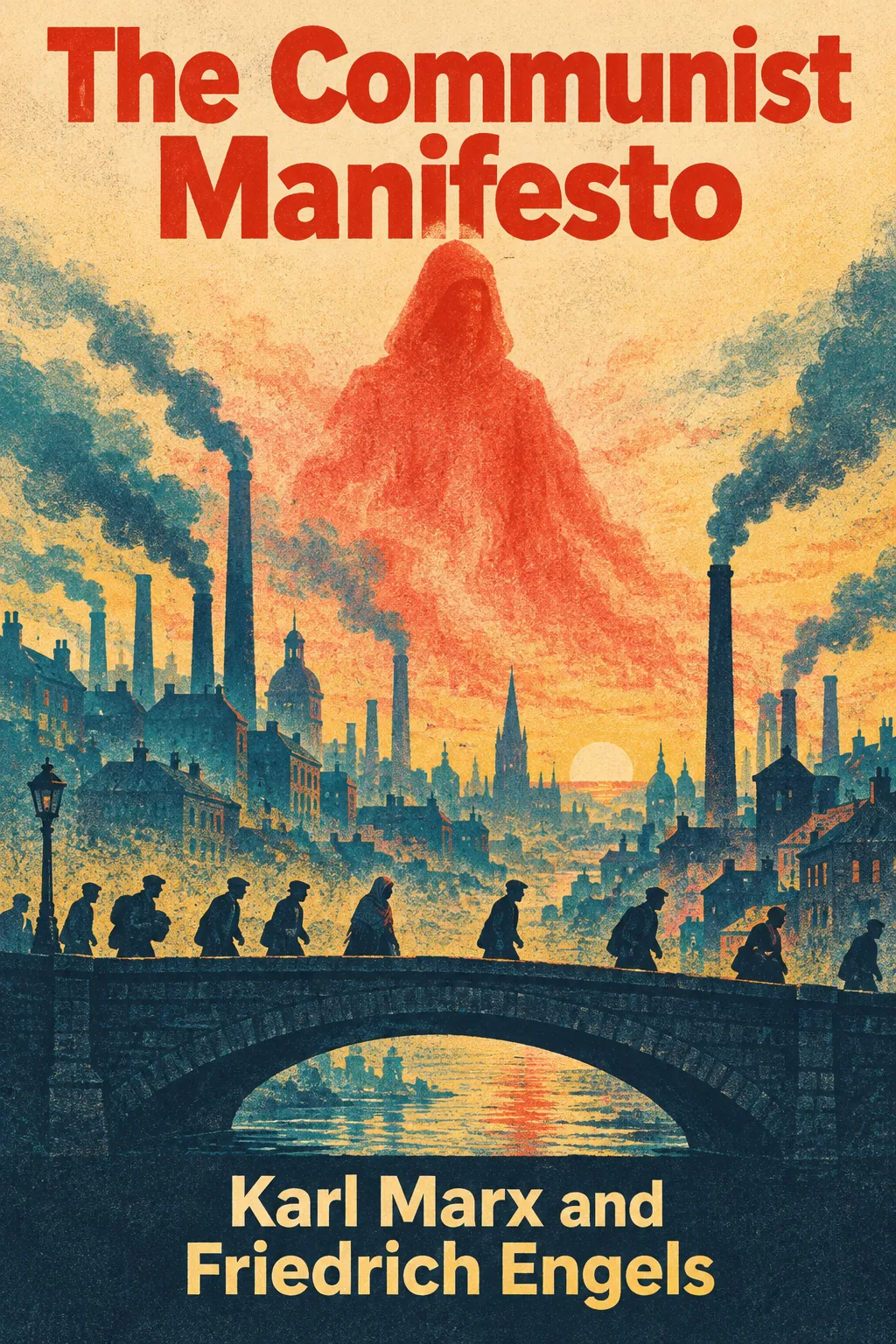
The Communist Manifesto, published in London in February 1848, says that the history of society so far has been a history of class struggle: free citizens against slaves, nobles against serfs, guild masters against journeymen. In modern times, the two great camps are the bourgeoisie and the proletariat. Marx and Engels credited capitalism with enormous achievements, but argued that it also creates the working class that will challenge it.
Historical materialism
In the preface to A Contribution to the Critique of Political Economy (1859), Marx summed up his approach. The economic base of a society, meaning its tools, techniques and the relations between owners and workers, shapes the superstructure of law, politics and ideas. When productive forces grow beyond the old arrangements, tension builds and an era of social change begins. This is often called historical materialism. It does not say that ideas are unimportant. Engels warned in the 1890s that economics is decisive only “in the last instance”, and that politics and beliefs also push back.
Surplus value and alienation
In Capital, whose first volume appeared in 1867, Marx tried to show how profit arises. A worker is paid a wage, but in a working day produces more value than the wage is worth. The difference is surplus value, which the owner keeps. For Marx, this was not a matter of individual greed but a feature of how the system works. The book is covered in Das Kapital (Capital) Explained.
An earlier theme, from his 1844 manuscripts, is alienation. Under wage labour, Marx argued, people become cut off from what they make, from the work itself, from other people and from their own creative capacity. This idea became hugely popular among later philosophers and sociologists.
Revolution and communism
Marx and Engels expected the working class, organised as a political force, to take power and bring the main means of production under common ownership. In his 1875 critique of the Gotha Programme, Marx described a transition period before a fully communist society, in which the principle would become “from each according to ability, to each according to need”. He gave no detailed blueprint of what that society would look like, and later movements filled the gap in very different ways.
How Marxism spread
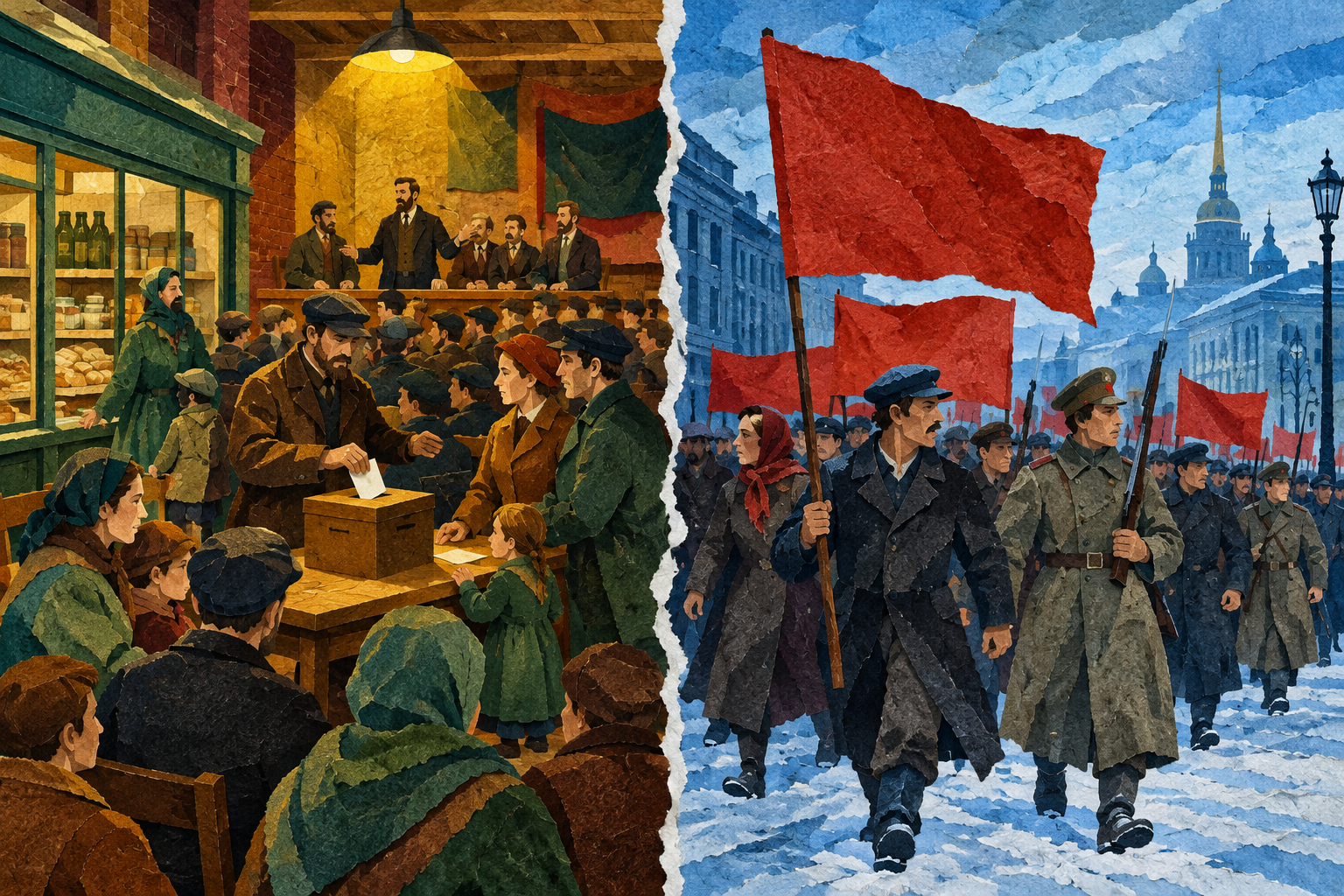
In 1864, workers' groups from several countries founded the International Working Men's Association in London, known as the First International. Marx wrote its founding address. It split in the 1870s, partly over quarrels with anarchists, but it showed that socialism was becoming an international movement. In 1871 the short-lived Paris Commune gave Marx a real example to analyse, though historians still debate how far it was a workers' government.
After Marx died in 1883, Engels edited the second and third volumes of Capital (1885, 1894) and became the movement's guide. A Second International formed in 1889, and the German Social Democratic Party grew into the largest socialist party in the world. Inside it, a dispute opened. In 1899 Eduard Bernstein argued that socialism could be reached through reform and elections rather than revolution. This position, called revisionism, was condemned by party leaders but became the practical path of many European socialist parties.
The decisive turn came in Russia. Vladimir Lenin argued that a small, disciplined party of professional revolutionaries should lead the workers. After the revolutions of 1917, his Bolsheviks took power in a largely agricultural country, not the advanced industrial society Marx had expected. Lenin's version, later systematised under Stalin as Marxism-Leninism, became the official ideology of the Soviet Union. In China, Mao Zedong adapted it to a peasant society, and the People's Republic was founded in 1949. Elsewhere, scholars such as those of the Frankfurt School, founded in 1923, used Marxist ideas to study culture and power, often critically of the Soviet model.
Criticism and legacy
Critics point to several problems. Revolution did not come first in the most industrialised countries, as Marx had predicted. Workers in Western Europe and North America saw rising wages, trade unions and welfare states, and a large middle class grew. Planned economies in the Soviet bloc struggled with inefficiency, and one-party rule led to repression and mass suffering. Defenders reply that these states departed from Marx, who stressed democratic self-rule by workers. The Soviet Union dissolved in 1991.
Even so, Marxist ideas remain in use. Historians use class and economic interest as tools of analysis. Economists and sociologists still discuss inequality, insecure work and the power of large corporations in terms that owe something to Marx. Whether one admires or rejects him, the vocabulary of class, ideology and exploitation is part of modern political debate.
Common mix-ups
- Marxism and communism: Marxism is the theory; communism is the goal it describes, and also the name of the political movements and parties that claimed it.
- Marx and the Soviet Union: Marx died in 1883 and never saw a communist state. Soviet policy was shaped by Lenin and Stalin.
- Socialism and Marxism: Socialism is a wide family of ideas; Marxism is one branch of it.
What exams ask
AP-style questions usually ask you to connect Marxism to industrialisation: explain how factory conditions encouraged class-based thinking, and compare Marx's ideas with liberalism and nationalism. Know these items: the Communist Manifesto (1848), Capital (1867), the First International (1864), bourgeoisie and proletariat, surplus value, historical materialism, utopian versus scientific socialism, revisionism, and the Russian Revolution of 1917 as the first state to claim Marxist inspiration. Be ready to say why the revolution happened in Russia and not in Britain or Germany.
Read next
- Who Was Karl Marx? The life behind the theory, from Trier to exile in London.
- Das Kapital (Capital) Explained How Marx tried to prove that capitalism runs on surplus value.
- What Is Nationalism? The rival idea that divided the workers' movement in 1914.