In five minutes: Adam Smith
Adam Smith was a Scottish moral philosopher who became the founder of modern economics. Born in 1723 and dead in 1790, he spent most of his life as a professor, a tutor and a quiet customs official. His fame rests on two books. The Theory of Moral Sentiments (1759) asks how people judge right and wrong. The Wealth of Nations (1776) asks why some countries become prosperous. The second book is the one that changed the world, and it appeared in the same year as the American Declaration of Independence. It belongs to the story of the ideas that shaped the 19th century.
The short answer to "what did Adam Smith do?" is this: he explained how wealth is created. In his view, wealth is not the gold in a king's treasury. It is the goods and services a whole population can produce and enjoy. Work gets more productive when people specialise, and markets spread the results.
Early life and education
Smith was born in Kirkcaldy, a small port town in Fife, Scotland. His father, a customs officer, died before he was born, and he grew up with his mother, who stayed close to him all her life. He entered the University of Glasgow at 14, where Francis Hutcheson taught him to think about ethics and society. In 1740 he moved to Balliol College, Oxford, on a scholarship. He later said the teaching there was poor, and he left in 1746 and went home.
He then gave public lectures in Edinburgh on literature and rhetoric. They went well, and in 1751 Glasgow made him Professor of Logic. A year later he took the chair of Moral Philosophy. At that time, economics was not a separate subject. It was one part of the study of human society.
The Theory of Moral Sentiments
Smith's first book looked at conscience. Why do we feel for strangers, and how do we know what is right? His answer rested on sympathy: we imagine how a situation feels to someone else, and we picture how an impartial observer would judge our own behaviour. He called this inner observer the "impartial spectator". The book made him well known across Europe. It also shows that Smith never thought people were only selfish. He believed that self-interest and concern for others both shape human life.
France and the road to The Wealth of Nations
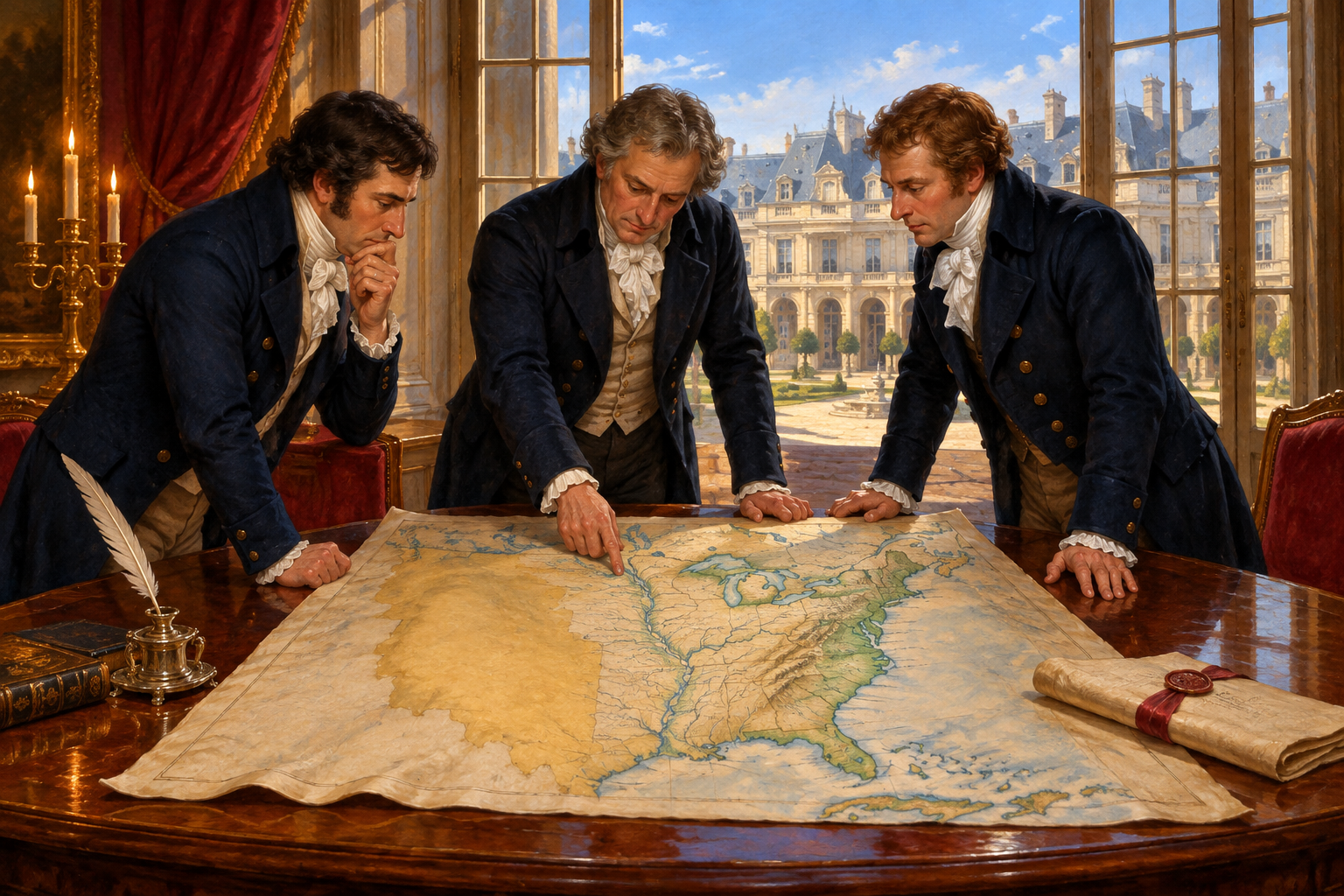
In 1764 Smith left his chair to tutor the young Duke of Buccleuch on a tour of Europe. In France he met thinkers such as Voltaire and the economist François Quesnay. These conversations pushed him to study how nations make a living. His close friend David Hume, the philosopher, encouraged him throughout. After the tour Smith went back to Kirkcaldy and spent about ten years writing. The Wealth of Nations came out on 9 March 1776.
What The Wealth of Nations argued
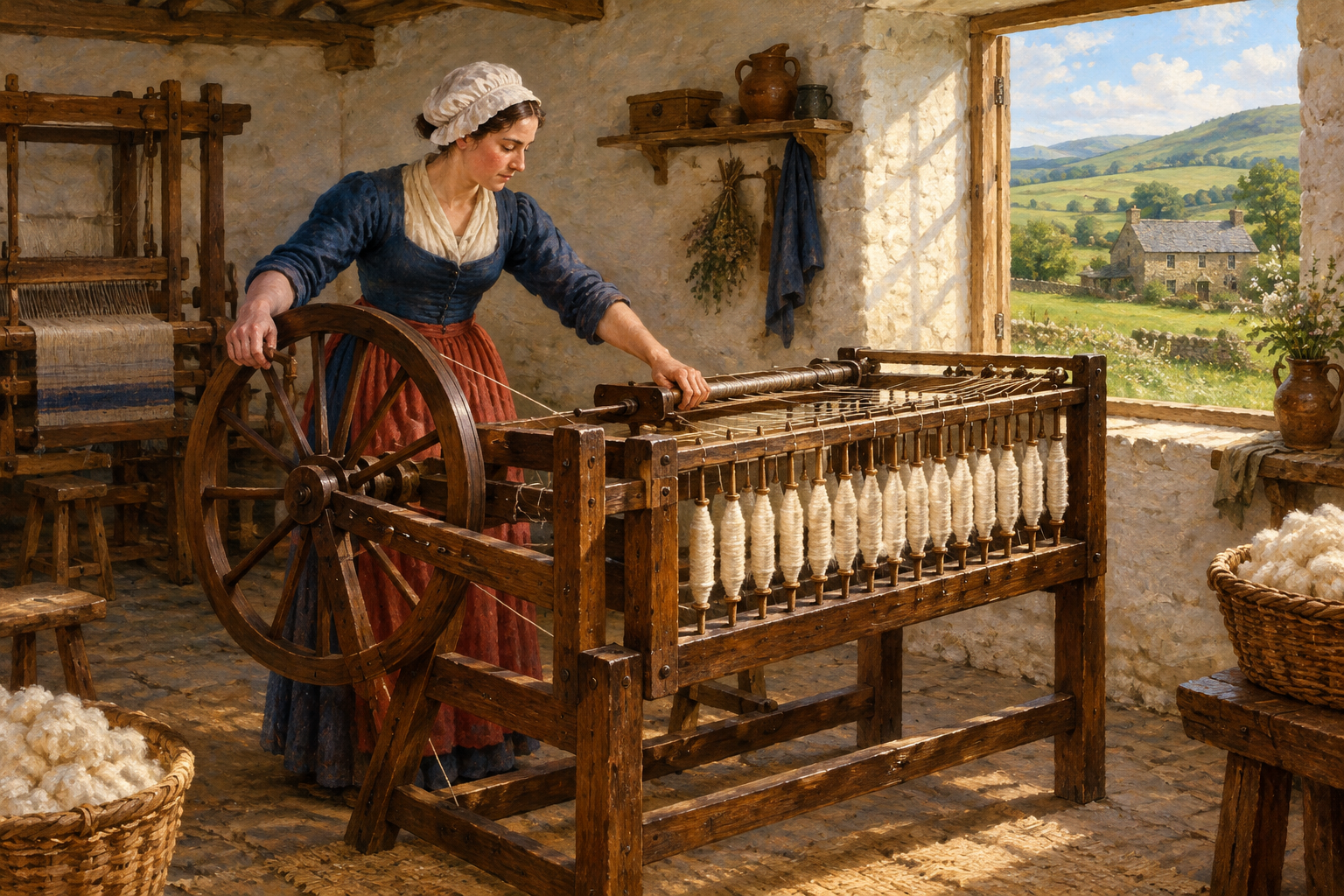
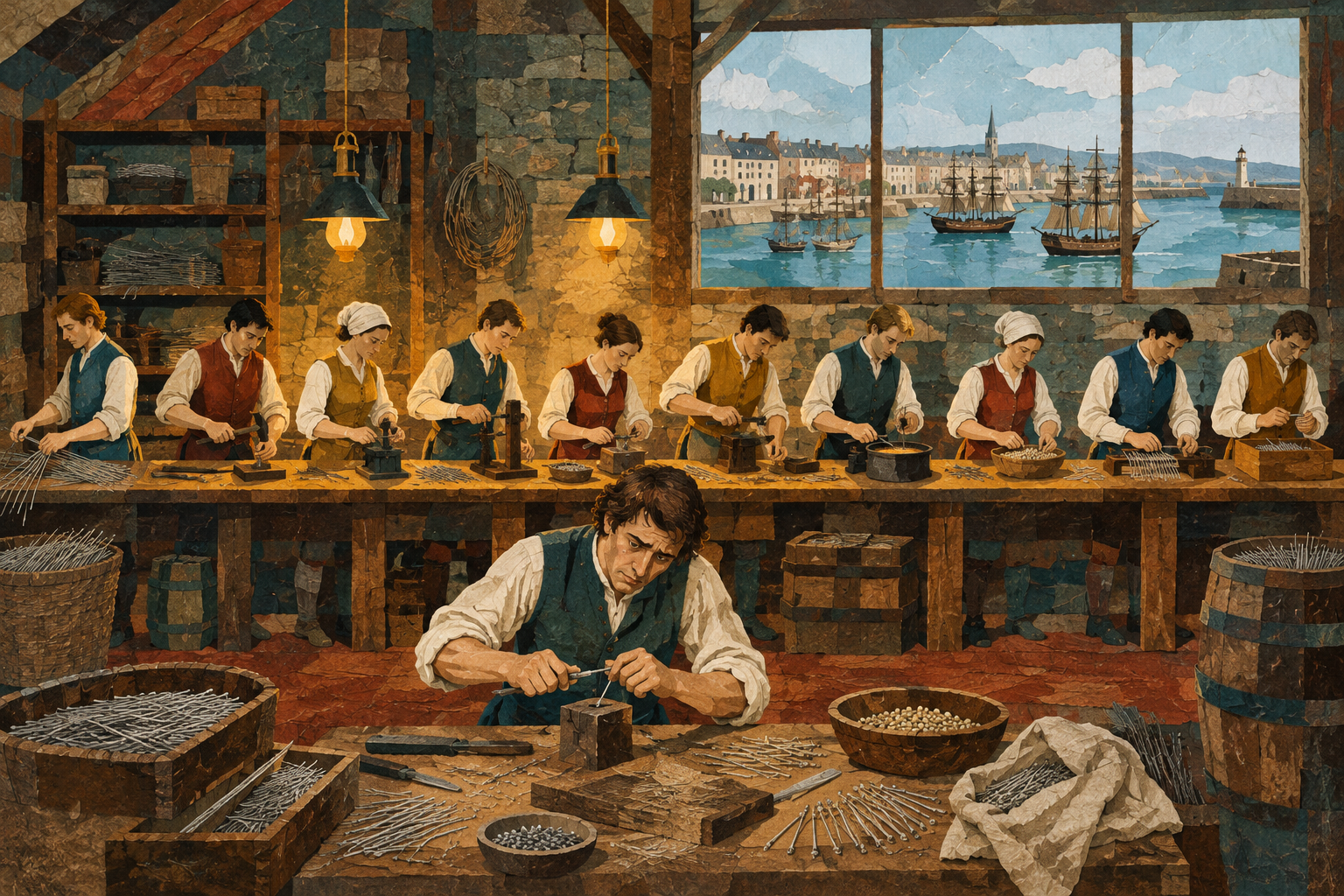
Division of labour. The book opens with a pin factory. Smith wrote that one worker alone could hardly make a single pin in a day. Ten workers who each did one or two steps, such as drawing the wire, cutting it or sharpening the point, could make about 48,000 pins between them. Specialisation, he argued, is the main reason that output per person rises.
Self-interest and exchange. We get our dinner, Smith said, not because the butcher, brewer and baker are kind, but because they want to earn a living. Trade works because both sides gain. He thought people have a natural tendency to swap and bargain, and that this tendency makes specialisation possible.
The invisible hand. Smith used the phrase once in The Wealth of Nations, when he discussed merchants who prefer to invest at home. Such a person, he wrote, is led by an invisible hand to help society without meaning to. Later writers made the phrase a slogan. Smith himself used it lightly, and he did not claim that markets always work perfectly.
Against mercantilism. In Smith's day most European governments followed mercantilism: pile up gold and silver, export more than you import and protect favoured companies with monopolies. Smith said this confuses money with wealth. He attacked trade monopolies, including the East India Company, and argued that freer trade makes both partners richer. He also criticised colonial restrictions as costly for Britain itself.
What Smith did not say
Smith is often turned into a symbol of unlimited capitalism. The text is more careful. He wanted the state to do three jobs: defend the country, run a fair justice system and provide public works and institutions that private people would not build, including some education. He worried that merchants who meet together tend to plot against the public, and he did not trust business owners to write the laws. He supported good wages for workers and warned that endless repetitive work could dull the mind. He also thought taxes should reflect people's ability to pay. He did not use the term "laissez-faire", and he did not say greed is good.
Later life and death
In 1778 Smith became a commissioner of customs in Scotland and settled in Edinburgh, so the man who criticised trade barriers spent his later years working in the customs system. He never married. In 1787 the students of Glasgow elected him Rector of the University. He died on 17 July 1790 and is buried in the Canongate Kirkyard in Edinburgh. Shortly before his death he had most of his unpublished papers burned.
Legacy
Smith's work gave rise to classical economics, carried on by David Ricardo and John Stuart Mill. Karl Marx used the same classical tradition to build a different argument, which you can read about in Who Was Karl Marx?. Economists still debate how far markets should be left alone, and both sides cite Smith. The Bank of England put his portrait on the £20 note in 2007. For a close look at his main work, see The Wealth of Nations Explained.
What exams ask
Typical questions test a few points. Smith is the key figure of the Scottish Enlightenment in economics. His 1776 book criticised mercantilism and defended free trade, the division of labour and competition. In an AP-style essay, link his ideas to the Industrial Revolution, to the growth of liberalism and to the critics who later challenged market economies, including Marx. Be ready to explain the invisible hand without turning it into a claim that markets need no rules.
Read next
- The Wealth of Nations Explained: a closer look at the book's five parts and its main arguments.
- Who Was Karl Marx?: shows how a later thinker built on, and rejected, parts of classical economics.
- What Is Nationalism?: explains another force that shaped how states thought about trade and power.