German unification in five minutes
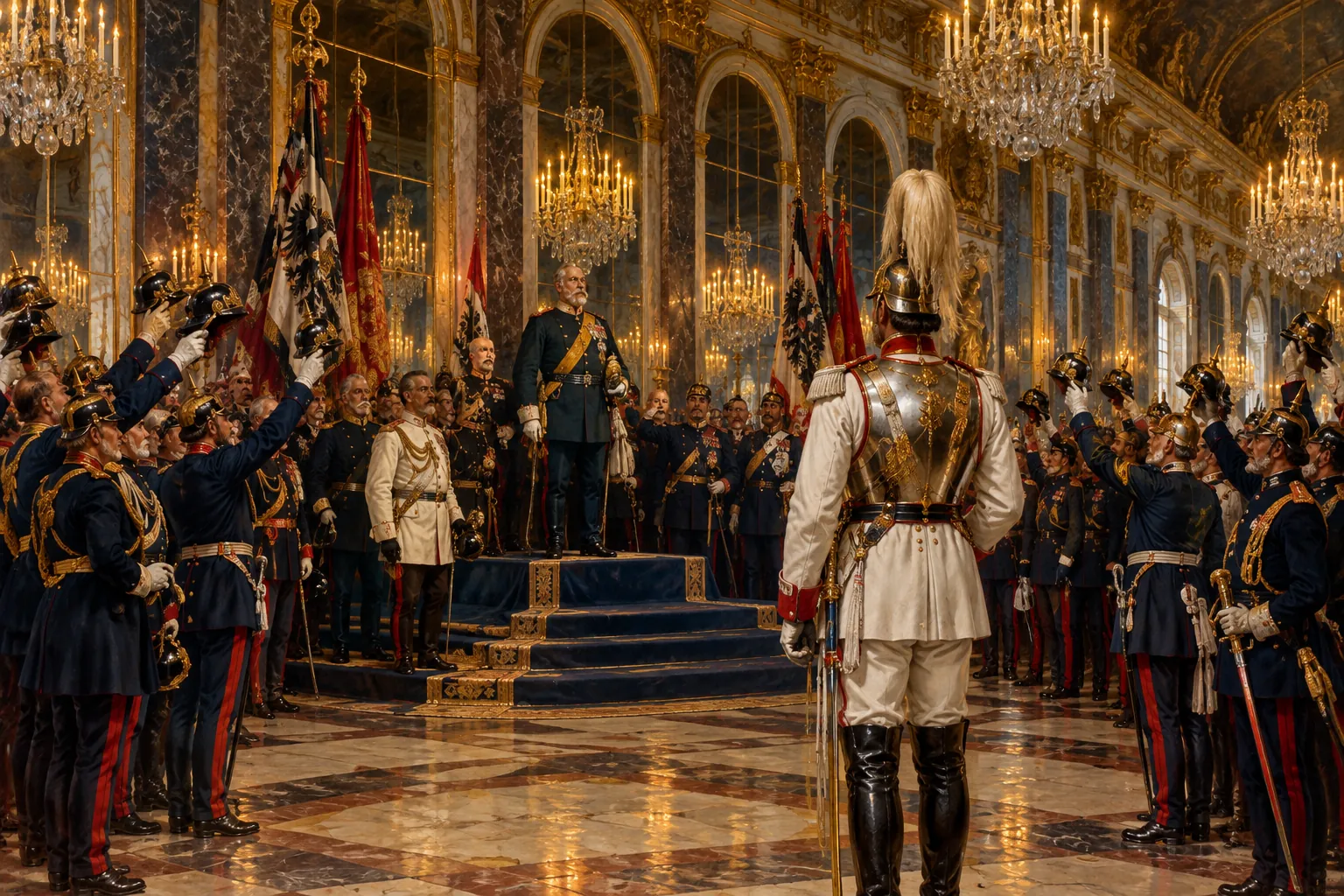
German unification is the story of how a patchwork of around three dozen states became one country. In 1815 the German Confederation held 39 states, with Austria and Prussia as the two great powers. On 18 January 1871, in the Hall of Mirrors at Versailles, the Prussian king William I was proclaimed German Emperor. The new German Empire joined 25 states under Prussian leadership, with Berlin as its capital.
The short answer to "when was the unification of Germany" is 1871, but the process ran for decades. Customs agreements came first, then failed revolution, then three wars between 1864 and 1871 steered by Otto von Bismarck. This page is part of our 19th-century Europe topic, which covers the wider age of nationalism.
Causes: why Germany was divided and why that began to change
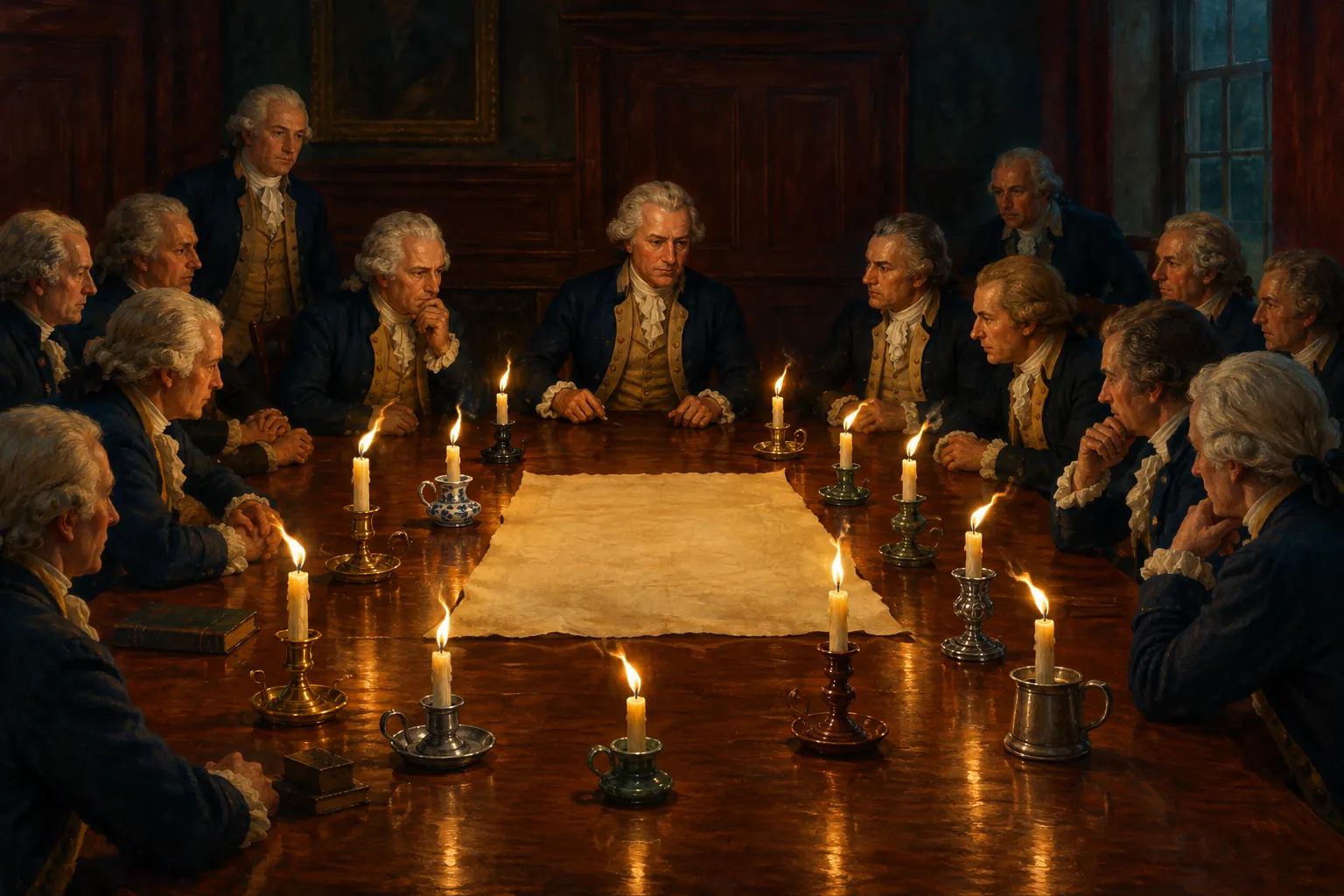
After Napoleon, the Congress of Vienna (1814–1815) created the German Confederation. It was a loose league of princes, not a state. It had no common army, no common government and no single currency. Its main purpose was to keep order, and it did that in the interest of Austria and the conservative monarchs.
Three forces pushed against that order.
- Economics. Prussia founded the Zollverein, a customs union, in 1834. It removed tolls between member states and left Austria outside. Over the next decades most German states joined, so trade already pointed toward a Prussian-centred Germany.
- Nationalism. Writers, students and singing societies spread the idea that people who shared a language and culture should share a state. Railways and a growing middle class made that idea easier to spread.
- Liberal revolution, and its failure. In 1848 revolts broke out across the German states. The Frankfurt Parliament drafted a constitution and in 1849 offered the imperial crown to the Prussian king Frederick William IV. He refused a crown that came from an elected assembly, and the revolution collapsed. Germans had shown they wanted a nation, but not that they could make one by debate alone.
Historians also describe two rival plans. The "Greater German" (Grossdeutsch) solution would have included Austria. The "Lesser German" (Kleindeutsch) solution left Austria out and put Prussia in charge. The wars below decided in favour of the second.
Bismarck and the three wars
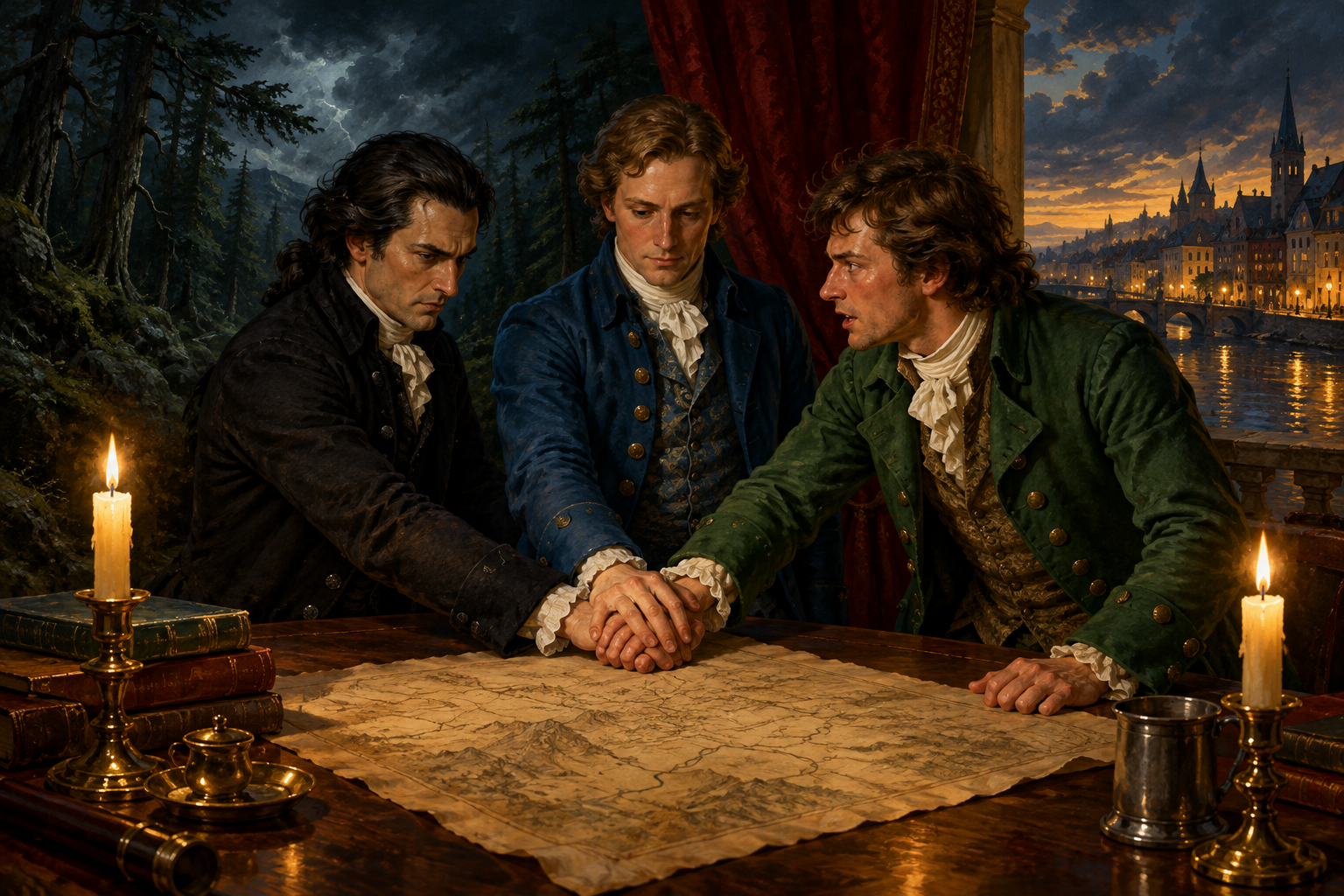
In 1862 King William I of Prussia was locked in a dispute with parliament over army funding. He turned to Otto von Bismarck, who became minister-president in September of that year. In a speech to a budget committee he said that the great questions of the time would be decided "by iron and blood" rather than by speeches and majority votes. The phrase gave his policy its nickname, but his real skill was diplomacy: he isolated opponents and let others look like the aggressor.
1864: the war against Denmark
The first war was fought over Schleswig and Holstein, duchies tied to the Danish crown but with large German populations. Prussia and Austria fought together and defeated Denmark. Under the settlement they ran the duchies jointly, which created a quarrel that Bismarck could use later.
1866: the war against Austria
Bismarck pushed the dispute over the duchies until Austria and Prussia went to war in 1866. Prussian forces, helped by railways and breech-loading rifles, won a decisive victory at Königgrätz (Sadowa) on 3 July 1866. The Peace of Prague of August ended the German Confederation and excluded Austria from German affairs. Prussia annexed several northern states, including Hanover, and created the North German Confederation in 1867 with Prussia as its leader. The Lesser German path was now the real one.
1870–1871: the war against France
The southern states, including Bavaria, Württemberg and Baden, stayed outside the North German Confederation, and France under Napoleon III did not want a strong neighbour. A crisis over a Hohenzollern candidate for the Spanish throne gave Bismarck his chance. He published a shortened version of a telegram from Ems about a meeting between William I and the French ambassador, the Ems Dispatch, which made the exchange sound sharper than it was. France declared war on 19 July 1870.
The southern states fought alongside Prussia. German armies won quickly, and at Sedan on 1–2 September 1870 Napoleon III was captured. The war against the new French republic continued through the siege of Paris, with an armistice at the end of January 1871. In November 1870 the southern states agreed to join the new union.
The proclamation at Versailles, 18 January 1871
While German troops still surrounded Paris, William I was proclaimed German Emperor on 18 January 1871 in the Hall of Mirrors at Versailles. The choice of place was deliberate: France had once shown its power there, and now the German princes gathered in it. The constitution of the new empire took effect in April 1871, and the Treaty of Frankfurt of 10 May 1871 ended the war. France lost Alsace and most of Lorraine and had to pay an indemnity of five billion francs.
Notice what kind of unification it was. It was an agreement among princes and a victory by the Prussian army, not a decision by a parliament. That is the main contrast with 1848.
What the new empire looked like
- A federation. The empire had 25 states, including kingdoms such as Bavaria, Saxony and Württemberg, plus three free cities. They kept their own rulers and many local powers.
- Prussian weight. Prussia held about two thirds of the territory and population. The Prussian king was the Emperor, and Bismarck, the new Imperial Chancellor, was usually also Prussia's minister-president.
- A parliament with limits. The Reichstag was elected by men over 25, a wide vote for its time. But the chancellor answered to the Emperor, not to the Reichstag.
- A new border dispute. The annexation of Alsace-Lorraine left lasting bitterness in France, which later shaped European alliances.
For what came next, see the German Empire (1871–1918).
Why German unification matters
The change reshaped the balance of power. Europe now had a large, industrial state at its centre, with Berlin rivalling London, Paris and Vienna. Bismarck spent the following years building alliances to keep France isolated and the peace stable. Those arrangements did not outlast him. Many historians see the unification as one of the long-run background factors of the tensions before 1914, although the road to the First World War had many other causes.
What exams ask
- Order of events: Zollverein (1834), 1848 revolutions, Bismarck in office (1862), Denmark (1864), Austria (1866), France (1870–1871), proclamation (1871).
- Significance (AP style): nationalism combined with state power and military reform. Compare with Italian unification, where Piedmont-Sardinia played a similar leading role.
- Key terms: Zollverein, Realpolitik, "blood and iron", Ems Dispatch, North German Confederation, Kleindeutsch versus Grossdeutsch.
- Typical question: to what extent was unification made by Bismarck, and to what extent by economic and nationalist forces already at work?
Read next
- The Franco-Prussian War (1870–1871): the war that completed unification, in more detail.
- Otto von Bismarck: The Iron Chancellor: the man behind the policy and what he did after 1871.
- The German Empire (1871–1918): how the new state worked and how it ended.