In five minutes
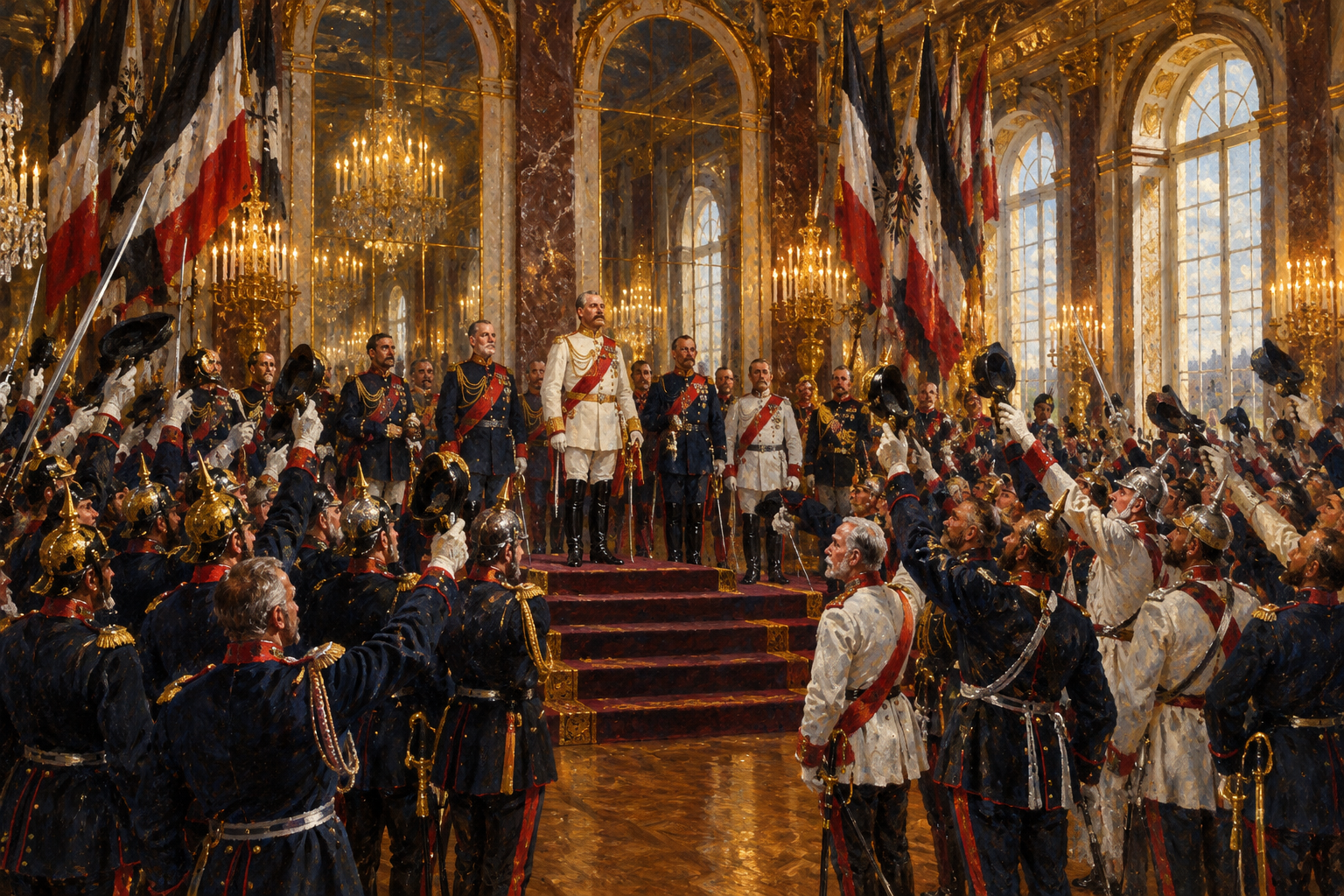
The German Empire (in German, the Deutsches Kaiserreich) was the state that joined most of the German-speaking lands of central Europe into one country from 1871 to 1918. Before 1871 there was no single Germany, only a patchwork of kingdoms, duchies and free cities. Prussia, led by its minister-president Otto von Bismarck, won three short wars. Then King Wilhelm I of Prussia was proclaimed German Emperor on 18 January 1871 in the Hall of Mirrors at Versailles. The empire lasted 47 years. It became Europe's strongest industrial and military power, then collapsed in the defeat and revolution of November 1918. It is often called the Second Reich, because the medieval Holy Roman Empire was counted as the first.
This page is part of our topic 19th-Century Europe: Revolutions, Nationalism and Unification. For the wars and diplomacy that created the empire in detail, see German Unification (1871).
How the empire came about
After Napoleon's defeat, the Congress of Vienna in 1815 created the German Confederation, a loose union of 39 states led by Austria. Many Germans wanted more. In 1848 an elected assembly met in Frankfurt and offered an imperial crown to the Prussian king, who refused it. Unity would therefore come from power politics, not from a popular movement.
Bismarck, who became Prussian minister-president in 1862, pursued unity through war. Prussia and Austria defeated Denmark in 1864. In 1866 Prussia crushed Austria in the Austro-Prussian War, decided at Königgrätz, dissolved the old Confederation and set up a North German Confederation under its own lead. Southern states such as Bavaria and Württemberg stayed outside. They distrusted Prussia but also feared France.
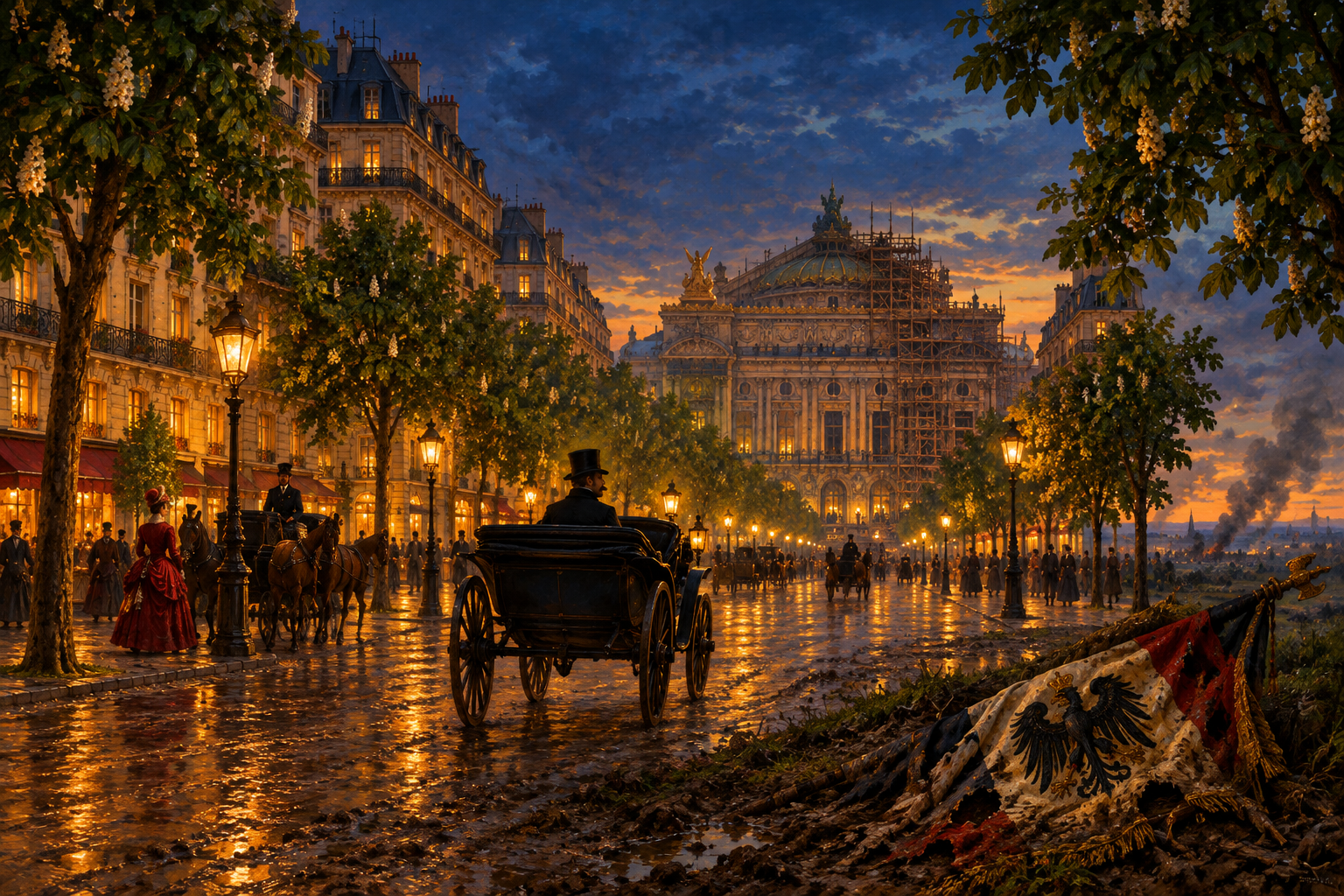
The turning point was the Franco-Prussian War. In July 1870 a dispute over the Spanish throne, sharpened by Bismarck's edited version of the Ems telegram, led France to declare war. The southern states fought alongside Prussia, and German armies captured Napoleon III at Sedan on 2 September 1870. While Paris was still under siege, the German princes agreed to form an empire, and Wilhelm I was proclaimed emperor on 18 January 1871. The Treaty of Frankfurt in May 1871 gave Germany most of Alsace and part of Lorraine and imposed a payment of five billion francs. France remained bitter about the loss for decades.
How the empire was governed
The constitution of 1871 made the empire a federation of 25 states, plus Alsace-Lorraine, which Berlin ruled directly as imperial territory. The four kingdoms (Prussia, Bavaria, Saxony and Württemberg) kept their own kings and many powers, such as education and policing. Prussia was by far the largest, with about three-fifths of the population, and the Prussian king was always the German emperor.
- The emperor (Kaiser) appointed and dismissed the chancellor, commanded the army and had the last word on foreign policy.
- The chancellor led the government. He answered to the emperor, not to parliament.
- The Bundesrat was the council of the state governments. Prussia held enough votes there to block changes to the constitution.
- The Reichstag was elected by all men over 25 by secret ballot, one of the broadest voting rights in Europe at the time. It could pass or reject laws and the budget, but it could not choose or remove the chancellor.
The result was a modern national parliament with real power still held by the emperor, the chancellor, the army and the Prussian elite. Inside Prussia, a voting system divided by tax payments favoured the wealthy until 1918.
The Bismarck years, 1871–1890
After 1871, Bismarck's aim was to keep what Germany had won. At home he fought two battles that he largely lost. The Kulturkampf ("culture struggle") of the 1870s tried to curb the Catholic Church and the Catholic Centre Party, but it only strengthened Catholic loyalty, and he eased it from the late 1870s. The Anti-Socialist Laws of 1878 banned socialist organisations but not their candidates in Reichstag elections, and the Social Democratic Party kept growing. To win workers away from socialism, Bismarck introduced the first national social insurance system: health insurance in 1883, accident insurance in 1884, and old-age and disability pensions in 1889. In 1879 he also introduced protective tariffs, which pleased heavy industry and large landowners.
Abroad, Bismarck tried to keep France isolated and avoid a big war. He chaired the Congress of Berlin in 1878 as a mediator on Balkan questions. He built a web of agreements: the Dual Alliance with Austria-Hungary (1879), the Triple Alliance with Austria-Hungary and Italy (1882), and the secret Reinsurance Treaty with Russia (1887). Historians call this the Bismarckian system. He was at first reluctant about colonies, but after the Berlin Conference of 1884–85 Germany claimed territory in Africa and the Pacific, including Togo, Cameroon, South West Africa and East Africa.
Economy and society
The population grew from about 41 million in 1871 to about 67 million in 1914. Coal, iron, steel, chemicals and electrical engineering expanded fast, helped by railways, a common currency (the mark, from 1873), universities and technical schools. By the early 1900s Germany produced more steel than Britain. Cities such as Berlin and Essen swelled as millions moved from farms to factories, and trade unions and the Social Democratic Party grew with them. The party won the most seats in the Reichstag in 1912, yet governments were still not formed from the Reichstag majority.
Wilhelm II and Weltpolitik, 1890–1914
Wilhelm I died on 9 March 1888. His son Friedrich III, already ill with cancer, died after only 99 days, so 1888 is called the Year of Three Emperors. The third, Wilhelm II, was 29 and wanted to rule personally. In March 1890 a clash with him forced Bismarck out, and the Reinsurance Treaty with Russia was not renewed. Russia then moved toward France and signed an alliance with it in the early 1890s.
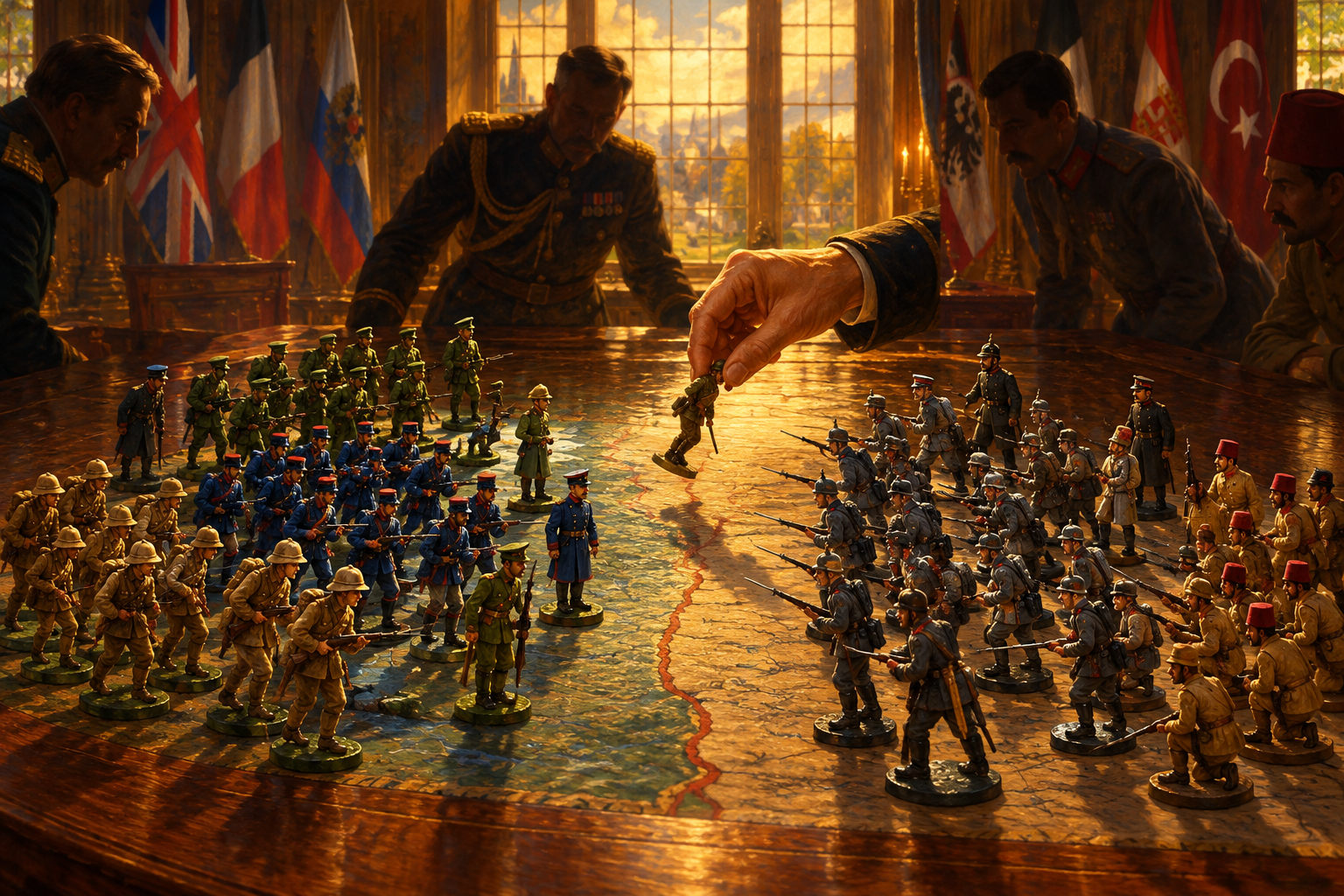
Wilhelm II's government pursued Weltpolitik ("world policy"), a drive for the status of a global power. Admiral Tirpitz's Navy Laws of 1898 and 1900 began a large battle fleet. Britain, the leading sea power, saw it as a threat, and a naval race began. Britain signed the Entente Cordiale with France in 1904 and an agreement with Russia in 1907, forming what is called the Triple Entente. The Moroccan crises of 1905 and 1911 only showed how isolated Germany had become.
Germany's colonies were small and costly. In South West Africa (today's Namibia), German forces crushed the Herero and Nama uprisings of 1904–1908 with great brutality and killed many thousands. The German government now calls this a genocide.
War and collapse, 1914–1918
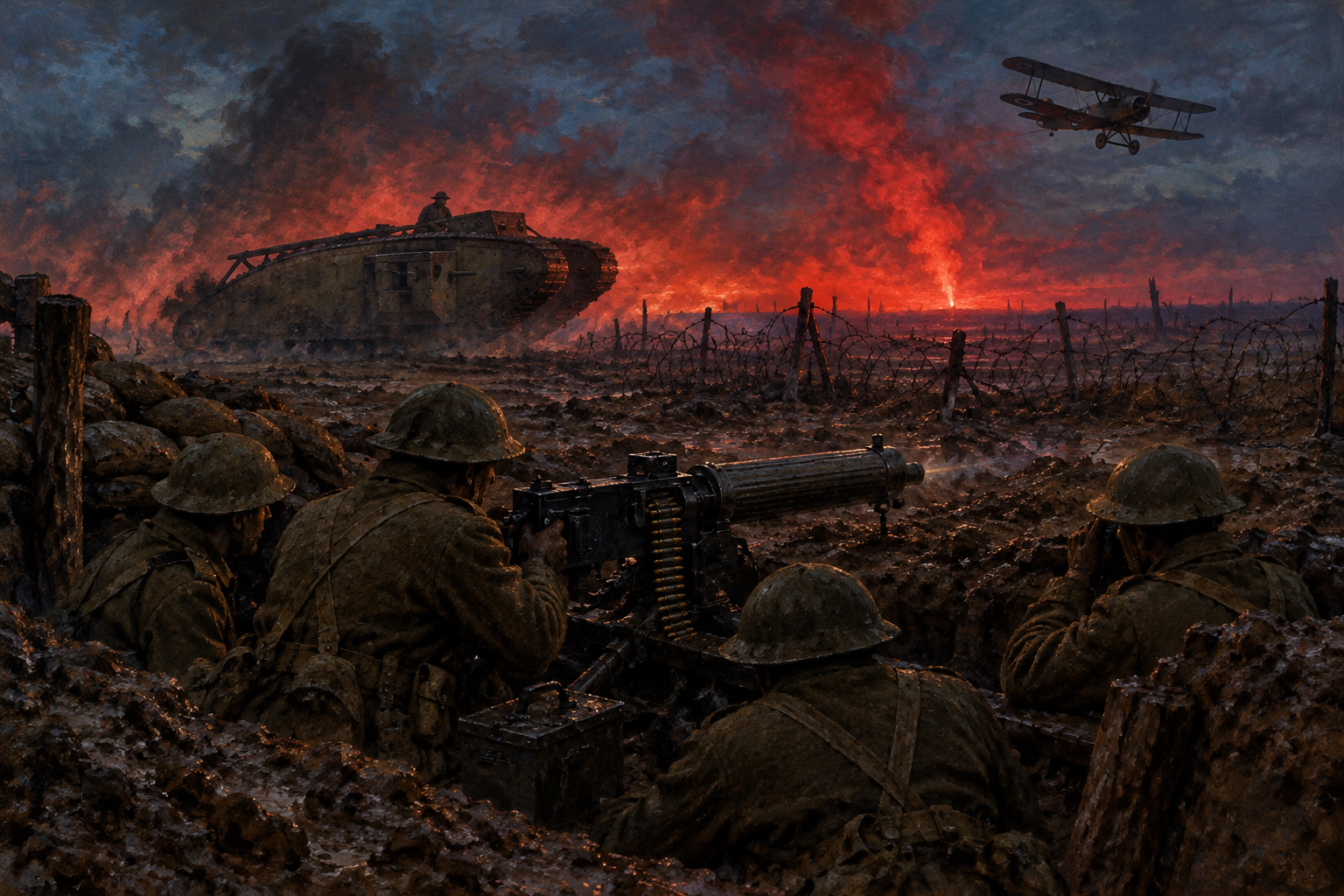
After the assassination of Archduke Franz Ferdinand in Sarajevo on 28 June 1914, Germany promised Austria-Hungary full support in early July, often called the "blank cheque". Germany declared war on Russia on 1 August and on France on 3 August. Its invasion of neutral Belgium on 4 August brought Britain in. The Schlieffen Plan, meant to defeat France quickly, failed at the Marne in September, and the war became a long struggle of attrition.
The British naval blockade caused severe food shortages, and the winter of 1916–17 is remembered as the "turnip winter". From 1916 Generals Hindenburg and Ludendorff held the real power. Unrestricted submarine warfare in 1917 helped bring the United States into the war. Germany ended the war in the east with the Treaty of Brest-Litovsk in March 1918, but its spring offensive in the west failed, and by autumn its allies were collapsing.
At the end of October, sailors at Kiel refused to sail out on a final fleet order, and revolt spread across the country. On 9 November 1918 Chancellor Max von Baden announced that Wilhelm II had abdicated, and the Social Democrat Philipp Scheidemann proclaimed a republic. The Kaiser went into exile in the Netherlands, and an armistice was signed on 11 November. The Treaty of Versailles followed in June 1919, and Germany became the Weimar Republic.
Why it matters
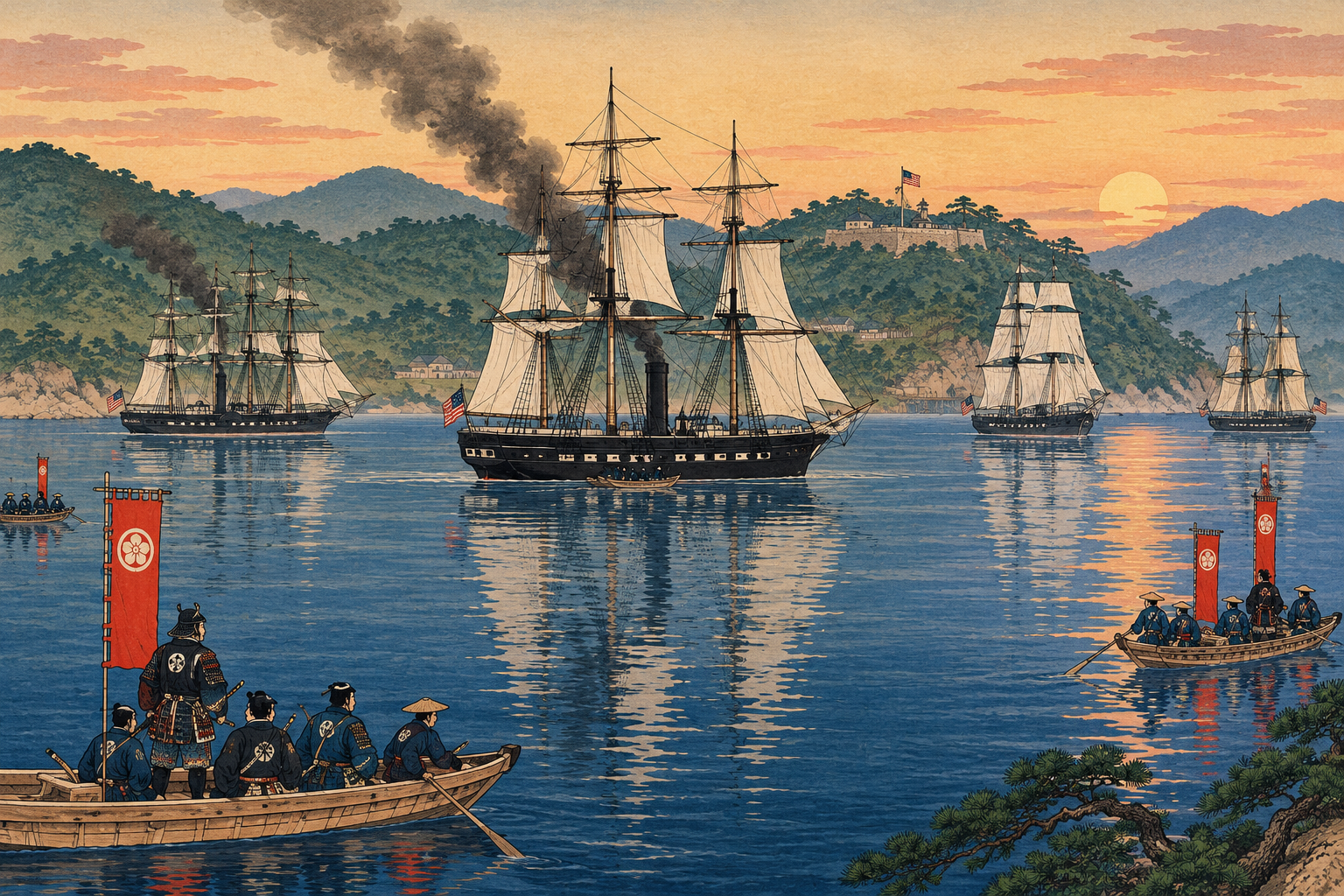
The empire created the modern German nation-state under Prussian leadership, and it made Germany the economic centre of Europe. Its mix of an elected parliament and a strong monarchy influenced other countries. Japan's Itō Hirobumi studied constitutions in Berlin and Vienna in 1882–83, and the Meiji Constitution of 1889 drew heavily on the Prussian model. Historians still debate how far the empire's political system shaped what came after 1918, but most agree that the loss of the war and the harsh peace created conditions that the Weimar Republic had to face.
What exams ask
- How was Germany unified? By Prussian-led wars against Denmark (1864), Austria (1866) and France (1870–71), which Bismarck described in terms of "blood and iron".
- What was the constitution like? A federation with a strong emperor and chancellor, a Bundesrat dominated by Prussia, and a Reichstag elected by universal male suffrage but without control over the chancellor.
- What was Bismarck's domestic policy? The Kulturkampf against the Catholic Church, the Anti-Socialist Laws, and social insurance, a mix of repression and reform.
- What was his foreign policy? Isolating France through the Dual Alliance, the Triple Alliance and the Reinsurance Treaty.
- How did Wilhelm II change things? He ended Bismarck's system, pursued Weltpolitik and a battle fleet, and helped create the rival blocs of 1914.
- How did it end? Military defeat, the Kiel mutiny, the revolution of November 1918, the abdication of the Kaiser and the armistice of 11 November.
Read next
- German Unification (1871) tells the story of the three wars and the diplomacy that produced the empire.
- Otto von Bismarck: The Iron Chancellor follows the man who designed the empire's institutions and alliances.
- Giuseppe Garibaldi and the Red Shirts shows how Italy's unification, led from below, differed from Germany's.
- 19th-Century Europe: Revolutions, Nationalism and Unification places both unifications in the wider story of the century.