In five minutes: the two sides of World War I
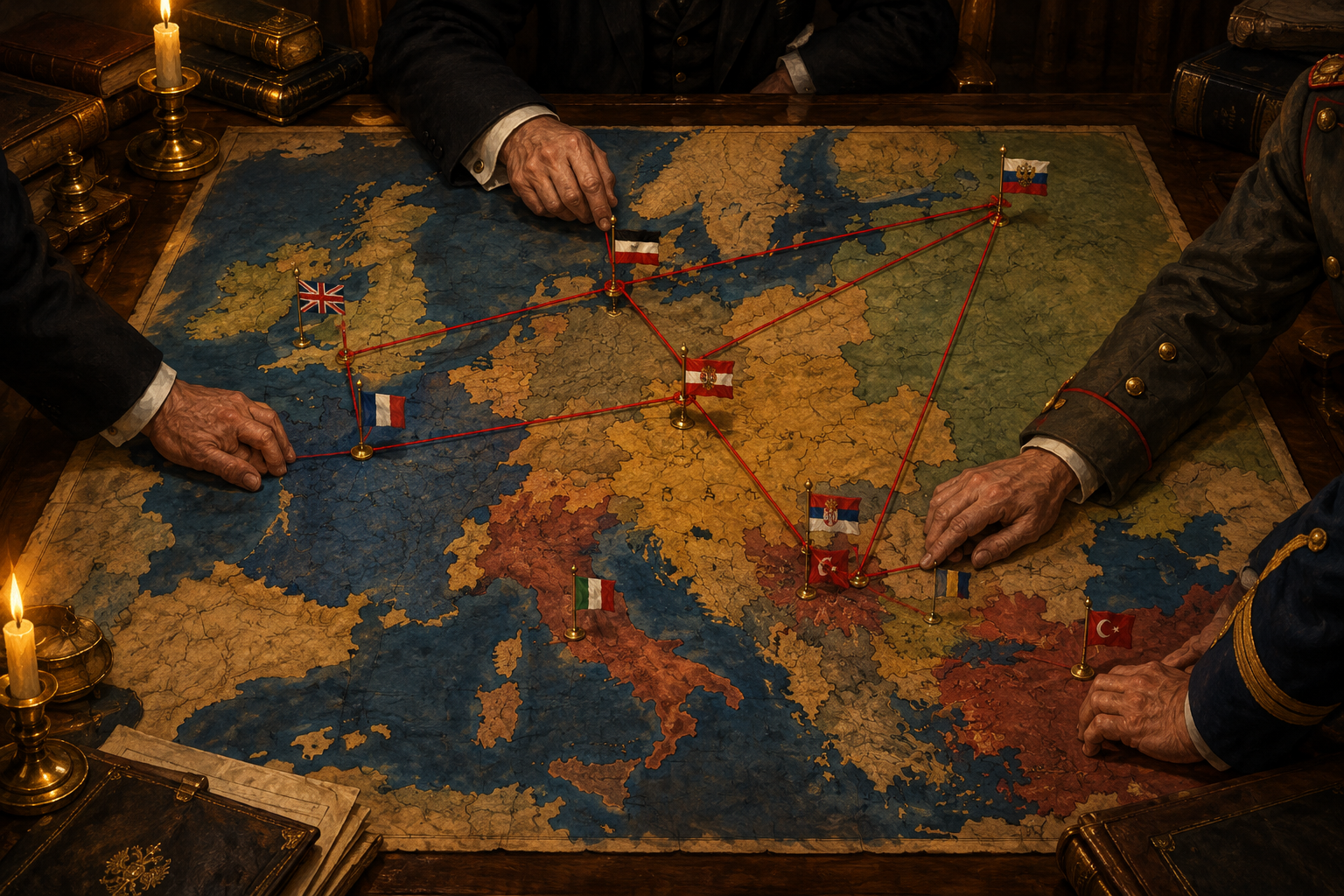
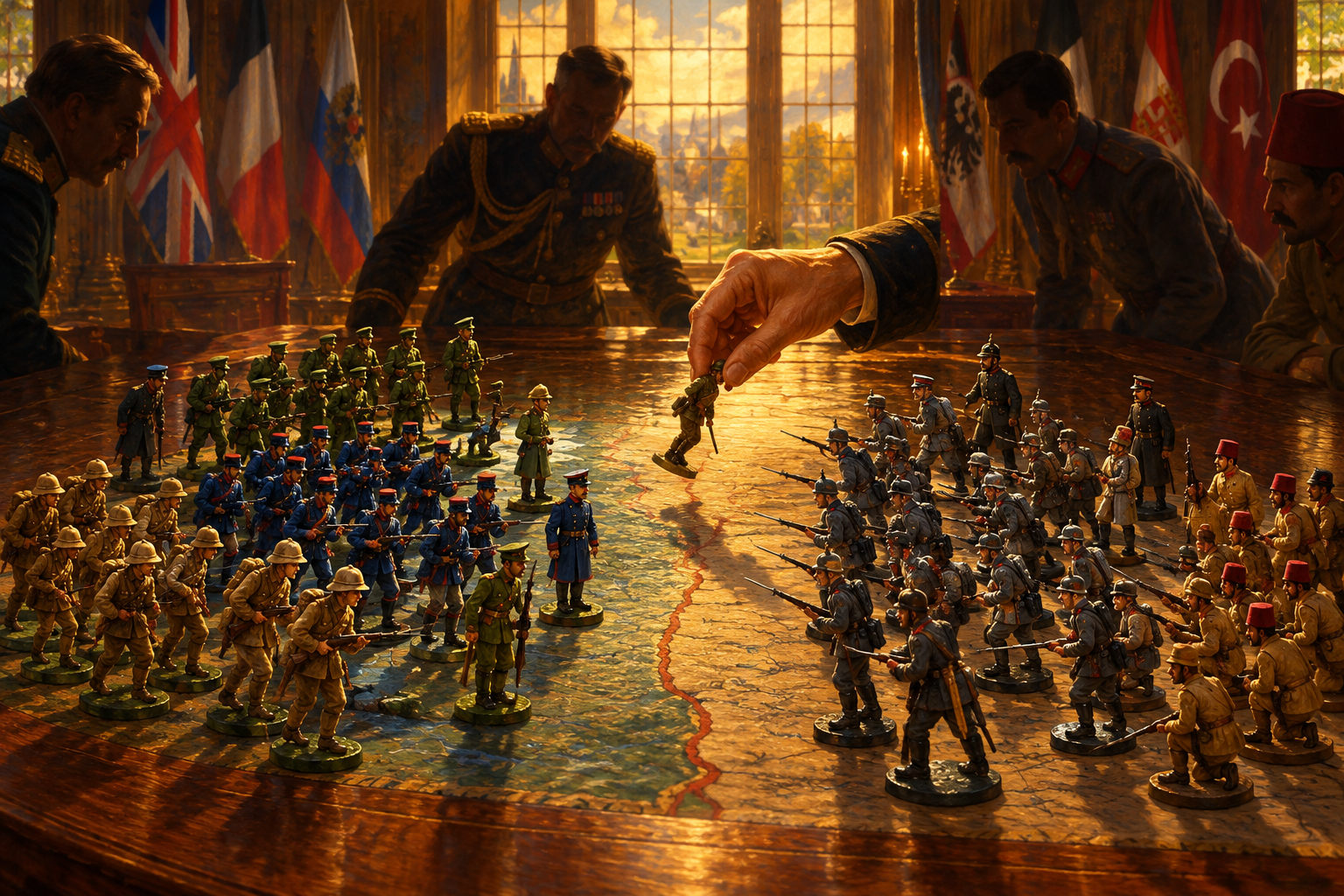
World War I was fought between two coalitions. The Allied Powers (also called the Entente Powers, or simply the Allies) were led by Britain, France and Russia. The Central Powers were Germany, Austria-Hungary, the Ottoman Empire and Bulgaria. The war's two sides were not identical to the alliances that existed in 1913, because the lines moved during the fighting. Italy left its alliance with Germany and Austria-Hungary and joined the Allies in 1915. Japan and the United States joined the Allies later. Russia dropped out in 1918.
This page puts the two sides next to each other: who belonged, when each country joined, what each hoped to win, and how each bloc ended. For the whole war, start with the hub article World War I (1914–1918): Causes, Course and Consequences.
How two blocs formed before 1914
The first bloc came from Germany. In 1879 Germany and Austria-Hungary signed the Dual Alliance, a defensive pact aimed mainly at Russia. In 1882 Italy joined them, and the group became the Triple Alliance. Italy's motive was mostly to protect itself from France, not to share Austria-Hungary's goals.
The second bloc grew in answer. After losing Alsace and Lorraine to Germany in 1871, France looked for friends. It found Russia in the 1890s, when the two signed an alliance that promised mutual help if either was attacked by Germany or its partners. Britain, meanwhile, ended its old habit of staying out of European alliances. It settled colonial quarrels with France in the Entente Cordiale of 1904 and with Russia in the Anglo-Russian Convention of 1907. Together, France, Russia and Britain are called the Triple Entente.
The two blocs were not equal in design. The Triple Alliance was a set of written defensive treaties. The Entente was looser, and Britain had made no promise to send an army to the continent. What pushed Britain closer to France and Russia was fear of Germany's growing navy and army, a fear that is part of the story of militarism and how it led to WWI.
July 1914: how the sides took shape
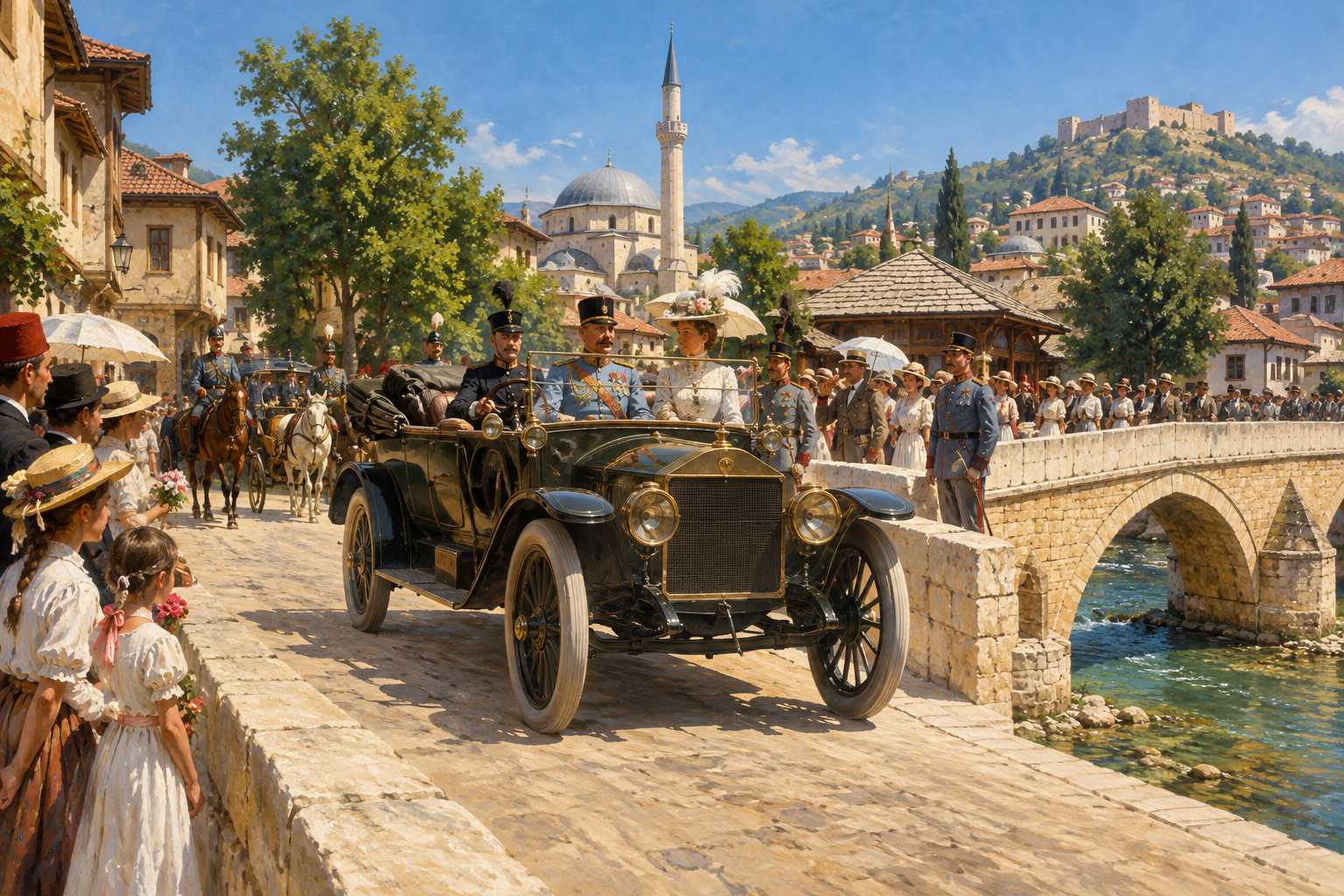
On 28 June 1914 a Bosnian Serb, Gavrilo Princip, shot Archduke Franz Ferdinand in Sarajevo. Austria-Hungary, backed by Germany, declared war on Serbia on 28 July. Russia mobilised to defend Serbia. Germany declared war on Russia on 1 August and on France on 3 August, and its army marched through neutral Belgium. Britain, which had guaranteed Belgian neutrality by treaty in 1839, declared war on Germany on 4 August.
Not every treaty partner followed its alliance. Italy said the Triple Alliance was defensive and that Austria-Hungary had started the war, so it stayed neutral. Japan, tied to Britain by the Anglo-Japanese Alliance of 1902, declared war on Germany on 23 August 1914.
The Allied Powers: who joined and when
- 1914: Serbia, Russia, France, Britain and its empire (Canada, Australia, New Zealand, South Africa, India), Belgium, Montenegro and Japan.
- 1915: Italy, which signed the secret Treaty of London in April and declared war on Austria-Hungary on 23 May.
- 1916: Portugal and Romania (Romania on 27 August).
- 1917: the United States (6 April), Greece, China and Brazil.
The United States called itself an Associated Power rather than an Allied one. President Wilson wanted to fight for his own goals, not for the secret treaties that Britain, France and Italy had signed. His aims are laid out in Woodrow Wilson and the Fourteen Points.
The Allies hoped to defeat German power, recover lost territory (France wanted Alsace-Lorraine) and, for some, gain new land. Russia wanted influence in the Balkans and access to the straits at Constantinople. Italy was promised Trentino, South Tyrol, Trieste and parts of the Dalmatian coast.
The Central Powers: who joined and when
- 1914: Germany and Austria-Hungary.
- 1914: the Ottoman Empire. It signed a secret alliance with Germany on 2 August, then entered the war when its warships raided Russian Black Sea ports on 29 October.
- 1915: Bulgaria, which signed with the Central Powers in September and attacked Serbia in October. Bulgaria wanted land in Macedonia that it had lost in the Second Balkan War of 1913.
The name comes from geography. These states sat in the middle of Europe, with Russia to the east and France and Britain to the west. That gave them short lines to move troops between fronts, but it also meant fighting on two fronts at once. Germany wanted a stronger position in Europe and overseas, while Austria-Hungary wanted to stop Serbian nationalism from breaking up its many-peopled empire.
Who switched or dropped out
Italy is the clearest case. A member of the Triple Alliance on paper, it joined the Allies in 1915 because the Allies promised more than Austria-Hungary would give. Italians still living under Austrian rule were called the “unredeemed” Italians, which gave the move a nationalist flavour. Italy declared war on Germany only in August 1916.
Russia left. After the February Revolution of 1917 toppled the tsar, the Bolsheviks took power in November and signed the Treaty of Brest-Litovsk with the Central Powers on 3 March 1918, giving up large areas in the west.
Romania joined the Allies in August 1916, was overrun, made a harsh peace in May 1918, and returned to the Allied side on 10 November 1918, the day before the armistice.
Comparing the two sides
- People and resources: over the whole war the Allies mobilised roughly 40 million men and the Central Powers about 25 million. The Allies also drew soldiers and workers from their colonies.
- The sea: the Royal Navy blockaded Germany, which led to serious food shortages by the winter of 1916–17. The Central Powers could not match this, though German U-boats tried to cut Britain's supplies.
- Position: the Central Powers could move troops by railway across their own territory. The Allies were split, and for much of the war Russia and the western Allies could hardly help each other.
- Unity: Austria-Hungary had many nationalities and relied heavily on German support. The Allies argued over aims too, but they could keep supplying one another by sea.
How each bloc ended
The Central Powers fell apart one by one in autumn 1918. Bulgaria signed an armistice on 29 September, the Ottoman Empire on 30 October, Austria-Hungary on 3 November and Germany on 11 November. Austria-Hungary broke up into new states.
Peace was made separately, and each treaty carries a different place name: Versailles (Germany, 1919), Saint-Germain (Austria, 1919), Neuilly (Bulgaria, 1919), Trianon (Hungary, 1920) and Sèvres (Ottoman Empire, 1920). The Turkish republic later replaced the Sèvres treaty with the Treaty of Lausanne in 1923.
Where Japan fits
Japan was an Allied Power, but it fought a very different war. It seized Germany's base at Qingdao in China and German islands in the Pacific in 1914, pressed China with the Twenty-One Demands in 1915, and sent destroyers to the Mediterranean in 1917. It was counted among the great powers at the Paris Peace Conference. The full story is in Japan in World War I: A World-History View.
What exams ask
- Name the members of the Triple Alliance and the Triple Entente, and say which came first.
- Explain why Italy stayed neutral in 1914 and joined the Allies in 1915.
- Explain why the United States was an “Associated Power”.
- Place the exits in order: Russia (March 1918), Bulgaria, the Ottoman Empire, Austria-Hungary, Germany.
- In AP-style essays, the key point is that alliances were defensive on paper, yet they turned a regional crisis into a continental war, and that the line-up kept changing.
Read next
- World War I (1914–1918): Causes, Course and Consequences: the hub for the whole war.
- What Is Militarism? How It Led to WWI: why the great powers were so ready for war.
- Japan in World War I: A World-History View: how an East Asian ally fits in.
- Woodrow Wilson and the Fourteen Points: the American plan for peace.